
If you ask any deeply interested wine lover where is hot right now you may get a variety of answers, but I would argue that the place with the buzz is Czechia (or the Czech Republic if you prefer). It may not be the deafening buzz of a swarm of bees coming over the garden fence, or the buzz you get in your ears the day after seeing Napalm Death at the Electric Ballroom, but it’s a buzz for sure. Southern Moravia, close to the borders of both Austria and Slovakia, can make some fairly forgettable wines, but if you delve down to the level of the small artisans there has long been a solid cohort of a couple of dozen producers who are beginning to make waves in overseas markets.
Most readers will have drunk, or at least heard of Milan Nestarec, who has been exporting to Europe and the USA for some years. Some will have also come across the wines of Krásná Hora from Dolni Poddvorov, who have been supplying the well-known chain of Ottolenghi restaurants in the UK with some of their house wines. Stapleton-Springer are also making fine Pinot Noir but as they are the only Moravian winery mentioned by Jancis et al in the World Atlas of Wine (8th edn) we can presume they don’t need my help.
I’m sure those who subscribe to Wideworldofwine will know that I am an evangelist for Moravian wine, and will have read many tasting notes and descriptions of them because hardly a month goes by without me drinking something Czech. As it is more than a year since I wrote more generally on Moravia, that being when I visited the region in August 2022, I thought perhaps I could safely bombard you to try some Czech wine if you haven’t already done so.
It isn’t easy to select which Czech artisans to profile in a short article, but if truth be known, the following three winemakers sort of chose themselves. They offer a blend of tradition and innovation, with perhaps a hint of mysticism thrown in for good measure. The wines are exciting, stimulating, interesting and much more, but the three individuals also happen to be great human beings. Thoughtful, kind and committed to a more sustainable way of farming.
They are also part of a great tradition which goes back centuries, one only interrupted by the very different priorities of the communist era. When we speak of the Austro-Hungarian Empire we omit one major part, and influence. If that is most often considered to be Prague, and the culture of Bohemia, let us not forget Moravia as the kingdom’s agricultural heartland.
Yes, when we say “sustainable” these three gentlemen are making what we would call natural wines. This is something of a surprise in a region which has previously been known somewhat for covering wine faults with any chemical going, a practice which goes back to the former communist era and one which you will see today at many of the larger producers in the region, one which boasts more than 16,500 hectares of vines.
It might be a shock to some to discover that a more restrained way of making wine always survived in Moravia, certainly among pockets of home winemaking where agro-chemicals were neither available to a small farmer, nor affordable. So, there are pockets of untreated vines with healthy soils and ecosystems ready to be exploited, though “exploited” of course is completely the wrong word to use here.
If there is a father of Moravian natural winemaking it is Jaroslav Osička. Jaroslav works three hectares of vines around Velké Bílovice, but he taught for thirty years at the local wine college. Here, he was forced to teach conventional viticulture but he was always the maverick and drew around him a group of students who are now following his personal philosophy, creating a balance between man and nature. Some have called him the Czech Pierre Overnoy, which is ironic because he will tell you that it is the wines of The Jura which have most inspired him. He himself has inspired a generation of young Czech natural winemakers, which is where any similarities to Overnoy lie.
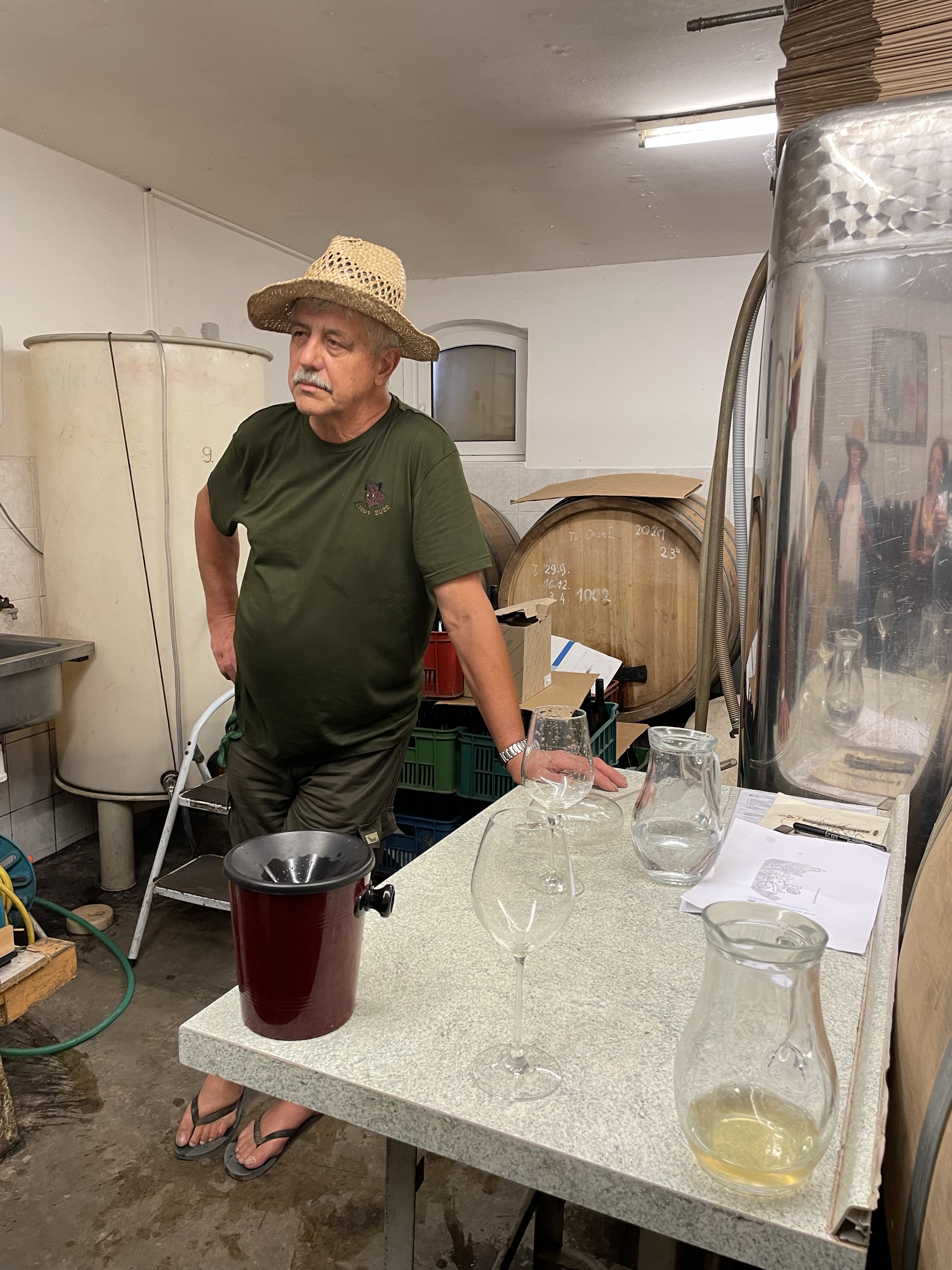
Biological sprays, low yields, the guy even puts out salt licks for the deer population, which most local wine growers would rather shoot. He believes the grapes are to share. In the winery fermentations are spontaneous and additions to the wine are limited to a little sulphur, but only if required, at bottling. Some whites macerate in barrel with the addition of whole berries and lees ageing is frequently used, and wines often spend a long time on lees. Tradition and innovation combine here.
Wines to try:
- Milerka – A blend of Müller-Thurgau and Neuburger, full of exotic fruit with a freshness which is a genuine characteristic of Osička’s wines.
- Modry Portugal – This is in fact a varietal Blauer Portugieser, taken way more seriously than most instances. Dark, sappy, berry fruit gives richness and concentration, but despite an air of seriousness it is still eminently gluggable.
- Moravian Rhapsody – The new name for Akacia, Moravia being the southern Czech counterpoint to Bohemia of course. Mostly Rhine Riesling with around 20% Pinot Gris and 5% Neuburger in 2021. As Jaroslav described it, “no chemistry, just artistry”. I would say just purity. Not only for Queen fans.
In some ways Richard Stávek bears some similarities to Jaroslav Osička. They both appear to be very much “old school”, though looks are deceptive. I’ve certainly called them both mavericks, but Richard is also very much a magician-philosopher. The magic comes from thinking deeply about his wines, and every part of their creation and presentation. He seems to understand his vineyards and wines on both a practical, and perhaps a metaphysical, level. He seems a shy man, one not to make a fuss, but a tasting with him is absorbing and inspirational, and you will come away with a far deeper appreciation of what he is doing.
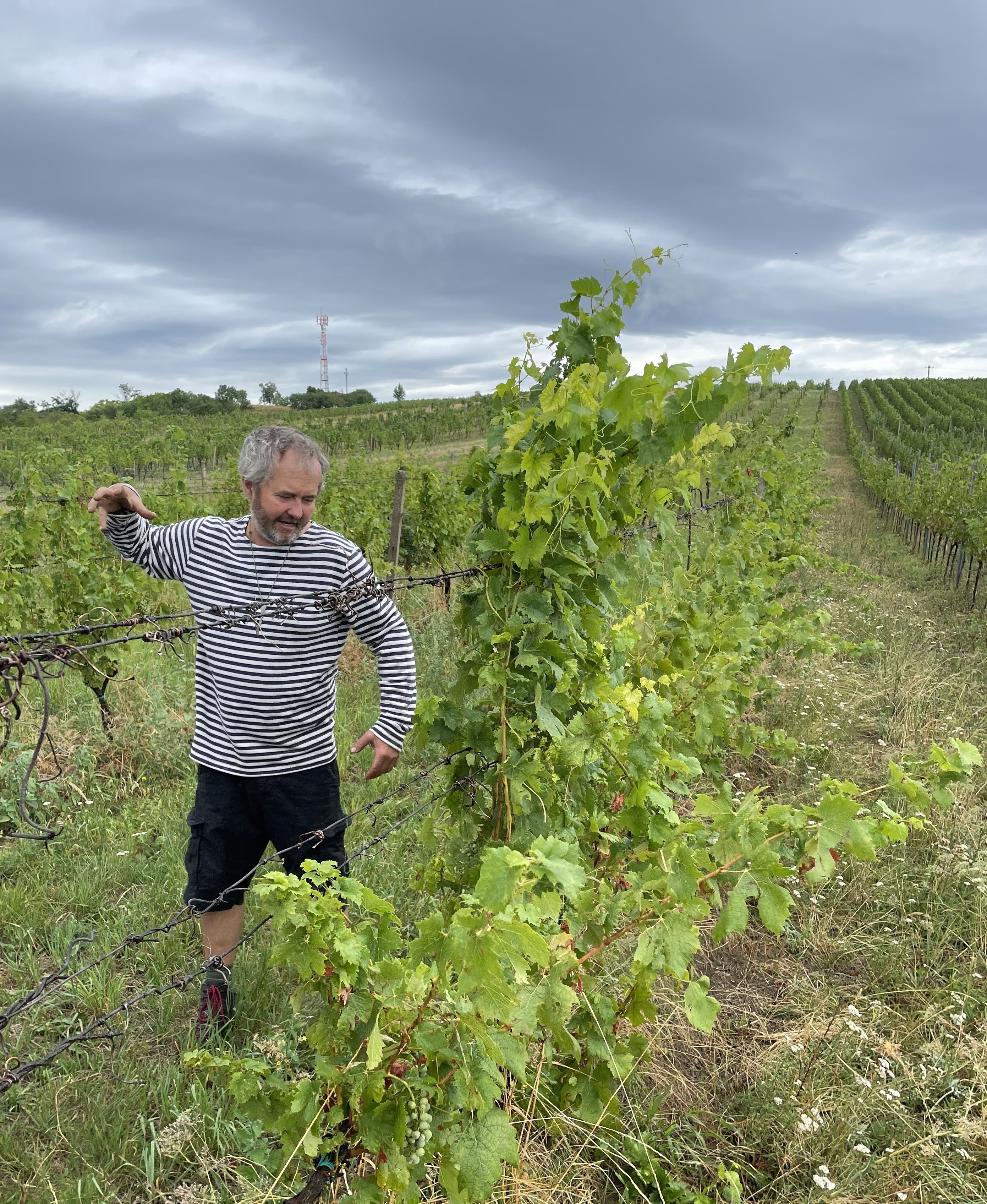
Richard farms fifteen hectares around Němčičky. Nearly five hectares are under vine, the rest are for goats (for cheese), apricots, cherries, vegetables, and honey. He uses the beeswax to seal his bottles too. Grapes are foot-trodden as whole bunches, gravity moves everything, fermentation is in wooden vats…this is a holistic approach to creating wine, one which often seems like alchemy. Even his cellars are magical, down a hobbit-like tunnel buried into the hillside which I believe is part of a UNESCO World Heritage Site. Water at the house comes from its own well. You get the picture. That said, Richard does have a less tolerant attitude to the local deer population, hardly surprising as I am told they ate most of his Welschriesling this year.
Wines to try:
- Ryzlink Vlašský – The local synonym for Welschriesling, a variety which has always lived in the dark shadow of its Rhine counterpart, but you will do well to find a more serious version. Some texture, some funk to be sure, but a soulful wine which evolves great presence in the glass.
- Veselý – A multi-varietal field blend comprised of seven varieties. A slow press gives a wine with some colour and quite extraordinary aromatics, a moving picture of floral and savoury scents. It has been listed at Noma!
- Odměry – Richard tends to favour co-planted and co-fermented field blends, but this is a varietal Pinot Blanc, planted on a hill which has been a vineyard since medieval times. A ten-day maceration and twelve months in old oak produces just 11.7% alcohol and is a remarkable savoury version of a much under-appreciated variety.
Richard also makes some of the finest brandy I know, but that’s another story.
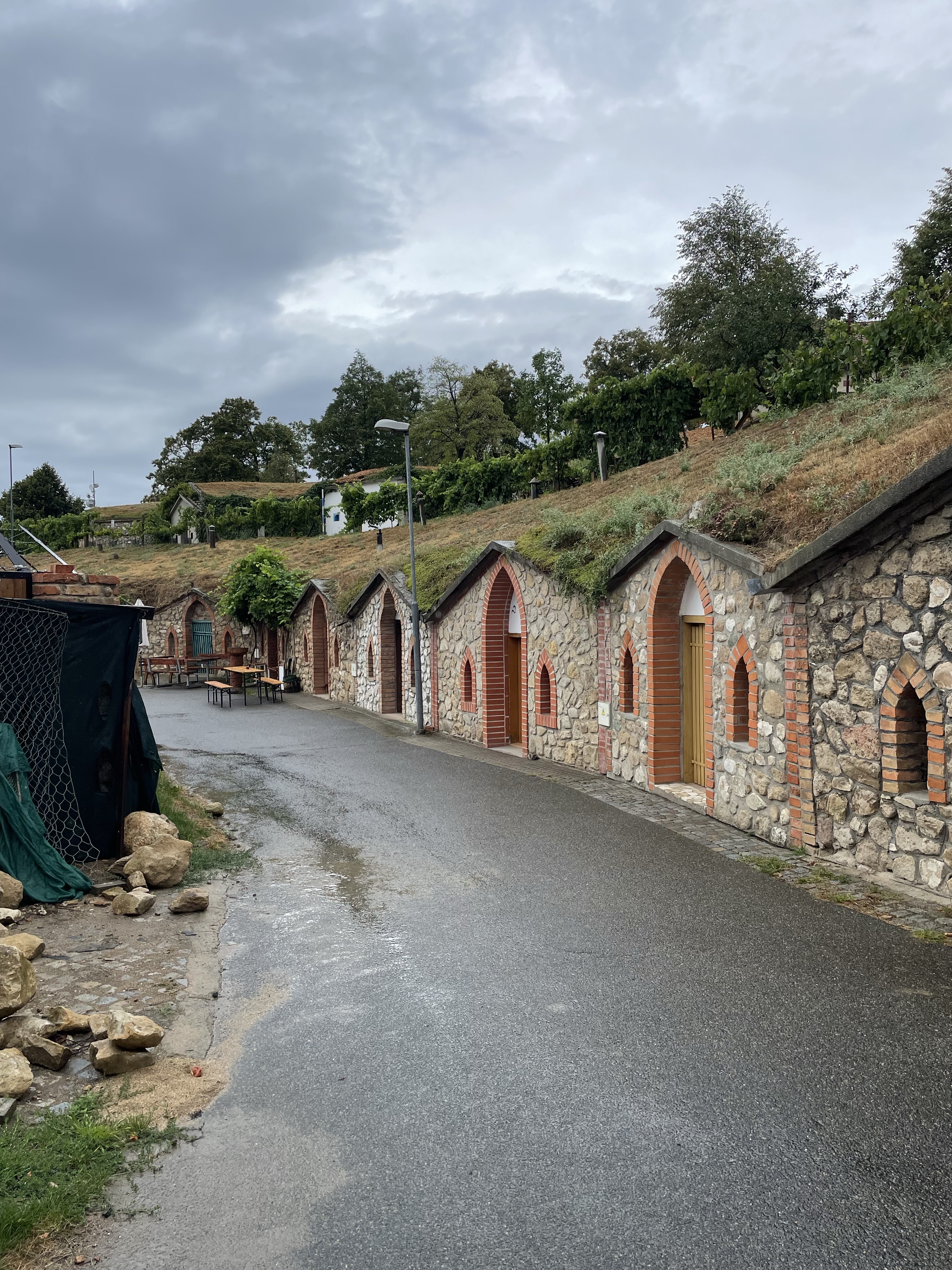
Hobbiton in Moravia, where Richard makes his wine
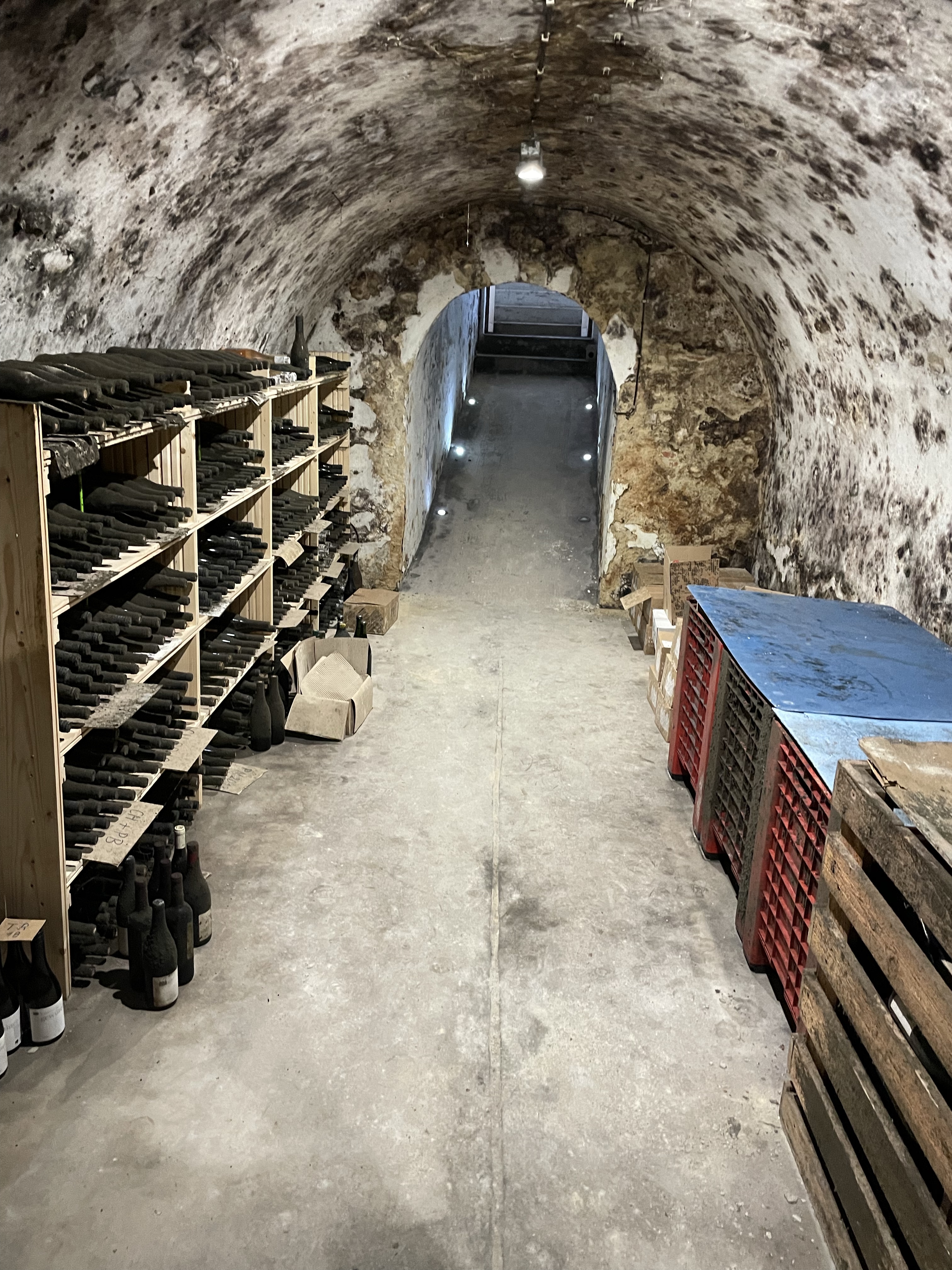
If we want to look for a contrast with our first two artisans of Moravia, we couldn’t find a greater one than Petr Koráb. Petr works out of a beautiful cellar above the village of Boleradice. He farms vineyards covering four hectares, some owned, some rented, but all old vines of Moravian clones with low yields. Viticulture is biodynamic, and in the winery there is no pumping of the must, and only partial racking. This all requires absolutely healthy fruit, about which Petr is meticulous.
If this young winemaker has one frustrating trait for some, it is that he rarely makes the same wines every harvest. You discover a favourite and never see it again. This is because he’s a restless innovator, but it does lead to a level of excitement you won’t find in many other cellars. You just need to trust in him to be thrilled, and occasionally challenged of course. Buy hey, we are explorers, are we not?
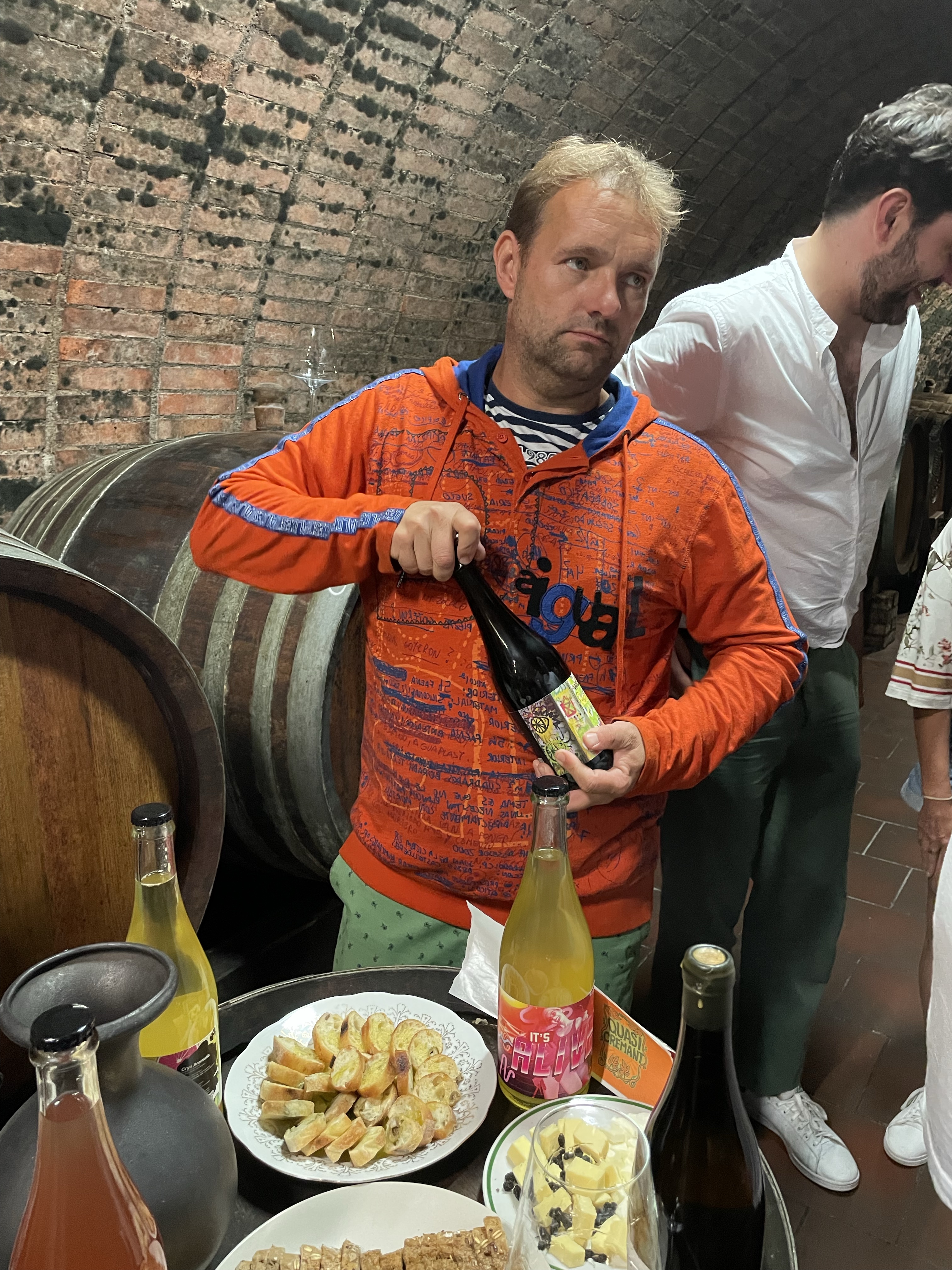
So, wines to try? I would suggest keeping an eye on my blog, wideworldofwine.co for some ideas, but of the bottles I’ve drunk in the past year I’d recommend snapping up any of his petnats (you will either love or hate the labels depending on how conservative you are about these things). Lemonade (from Welschriesling) is a super-refreshing example and Quasi-Crémant is another sparkler that seems to be available at the moment. Solar Red was a new addition this year, a light “summer red” for all seasons made from a blend of Pinot Noir, Karmazin (a local name for Frankovka/Blaufränkisch) and Zweigelt, the latter variety of which Petr is a master. He also made one of the most refreshing wines I drank last year, Raspberry on Ice (Pinot Noir and St Laurent). It was pure alcoholic fruit juice.
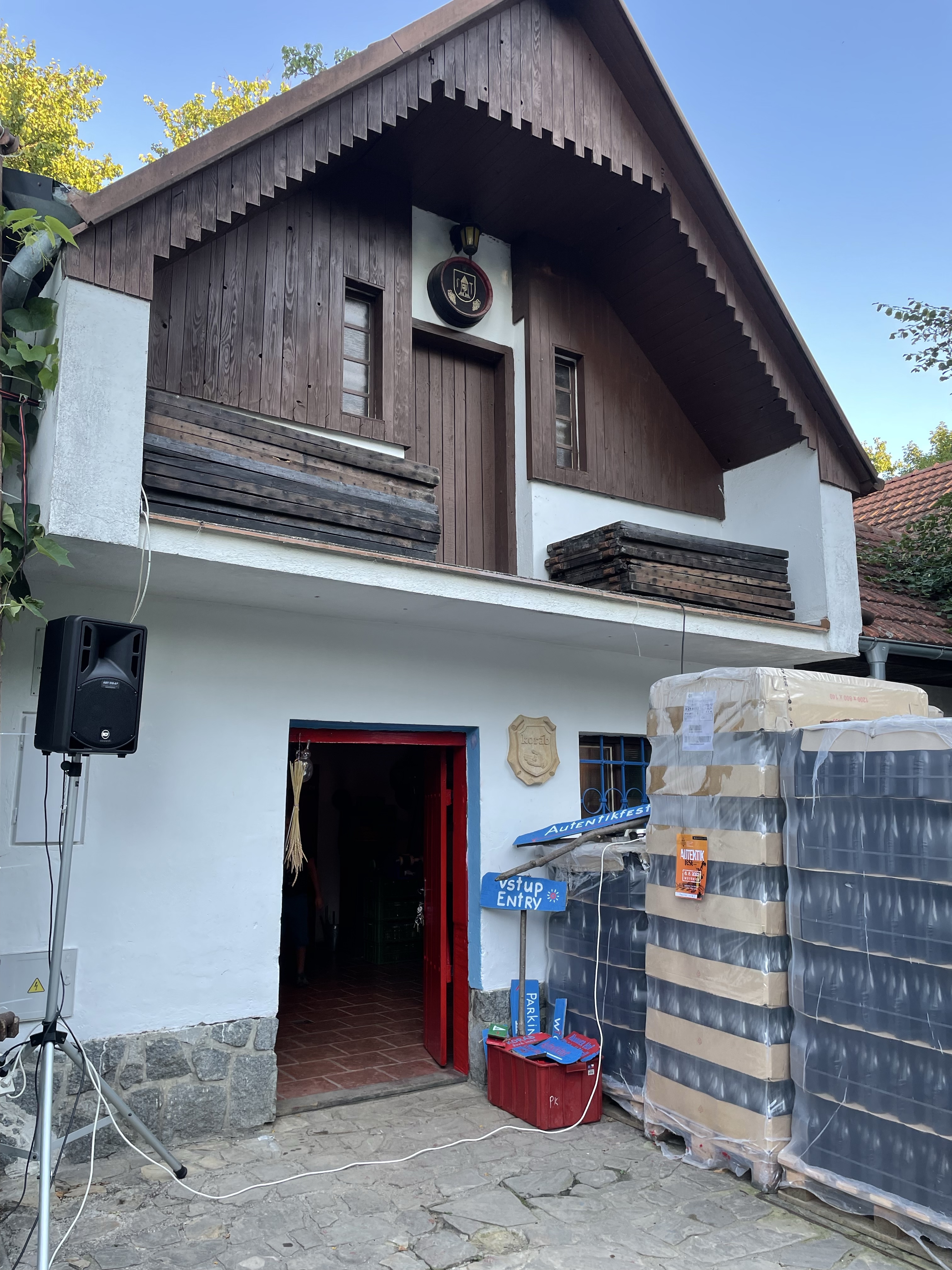
Petr’s cellars at Boleradice
Moravian wines are starting to appear on shelves and on restaurant lists, where they currently represent amazing value. Few wines are truly expensive but they are becoming better known. They are definitely worth serious exploration. I cannot fathom why more shops don’t try them. They often have a similarity, like cousins, with the popular wines of Burgenland in Austria, and they are without doubt priced better than Swiss wines, which a few very good wine shops stock whilst ignoring Czechia (come on guys!)
If you are anywhere near Moravia in August, then the local moveable feast that is Autentikfest, the festival of the Autentiste natural wine movement and charter, would be well worth attending. A good selection of Moravian artisan producers will be there, plus guests and a few interlopers from Bohemia (Dorli Muhr from Austria’s Carnuntum was there in 2022). But hopefully these wines will be popping up all over Europe, the USA, and Japan in the near future.
Southern Moravia is a short drive from the region’s main city, Brno. Alternatively, you can fly to Vienna and drive up from there. As wine regions go, the rolling hills are attractive, even more so some of the old wine cellars which often tunnel underground, seeming from another age. Hospitality, of course, goes without saying.
UK readers can obtain Moravian wines from their main UK importer, Basket Press Wines. Occasionally, you may find a wine is sold out (they are wines from small artisan producers), but check out Prost Wines too. In the USA you will find a good selection of Czech wines at Jenny & François Selections.
Of course, Milan Nestarec, who I only didn’t mention because he has become easily the best known of the producers from Czechia and perhaps the producer you are most likely to have drunk, is brought into the UK by Newcomer Wines. Such is Milan’s fame now that you will find his wines in almost every country in Europe, along with North, Central and South America (including Canada, Mexico and Brazil), and further afield (including China, Japan and Russia, and more). An impressive achievement! It doesn’t seem too long ago (although in truth it is, time just passes swiftly as you get older) that Peter at Newcomer introduced me to my first taste of Czech wine, a couple of years before I’d met Jiri and Zainab from Basket Press.
I’ve mentioned three producers here, and I’d try any of their wines if you get a chance, not just my random selections. Equally, try any other Moravian wines. At one time or another I’ve sampled the majority in the Basket Press Wines portfolio and I can’t think of any that weren’t worth buying.

 David Crossley's Wide World of Wine
Wonderful overview!
LikeLiked by 1 person
Speed reader! Thank you Valerie.
LikeLike
Nice summary. I have had Osicka and Stavek wines, both were really interesting and to my taste as I think you’d expect. One of the Clos Fantine picking team was heading to Stavek for harvesting and wasn’t sure what to expect so I assured her she’d have a fascinating time.
Must seek out more of these. I think the whole Central/Eastern Europe region is progressing at a rate of knots. y only reservation after tasting quite a few at Soaked event in Newcastle was that some seem to prefer extremely lean characteristics and lack fruit but there are some gems.
LikeLiked by 1 person
Was she South African?
LikeLike
No, French
LikeLiked by 1 person
Ah, someone else of my acquaintance also picked at Stavek.
LikeLike
Hi David,
Hope all is well.
Do you know any really good Czech wines not imported yet into the UK?
Cheers, Ben
LikeLiked by 1 person
I wish I did Ben. When I went out there I visited a few producers but all of them were via introductions from Basket Press. I think there are others. I think I saw Aaron Ayscough had been out there and it might be worth looking at his blog? If I come across any I will let you know. Definitely something to explore.
LikeLike
Great to see an overview of Czech wine, most people outside the country don’t even know that wines are produced there.
I think no general overview of Czech wines should omit Petr Kocarik; some of his wines are exceptional. Osicka I am a bit less keen on than most. Nestarec can be really fantastic (eg Podfuck), though sometimes a bit much. Springer (not Stapleton-Springer) has some wines that deserve more love than they are getting. Milan Sukal should not be missing from any list, either.
Gurdau makes simply fantastic Rieslings, some of the very best in the Czech Republic. And in many ways their wines are more representative of Czech wine making than those represented here as natural wines still make up a minor part of Czech winemaking (though they are certainly the wines that get the most attention internationally).
LikeLiked by 1 person
I know the first ones here but not Sulla, nor Gurdau. It’s really a case of what we get here in the UK for me to try. I did visit Moravia in 2022, a few producers (including Stavek) and Autentikfest. I’m no fundamentalist about natural wines, but that’s what I seem to see. Osicka I think deserves as much credit as a teacher as he does as a winemaker. Many of the younger guys studied under him.
LikeLike
You are right about Osicka’s mentor role, very important. FWIW, despite having grave objections to Suckling as much as the next man, this is pretty spot-on about Gurdau: https://www.gurdauvinarstvi.cz/en/jamessuckling
If you are ever interested in any Czech wine recommendations or Prague wine bar / restaurant recommendations, do feel free to drop me a line. I know plenty of places that focus on the winemakers you mention or winemakers of those sorts of philosophies. (Btw, I say “Czech” rather than just Moravian wines because even though only 4% of Czech wine is produced outside of Moravia, there are some stunning cold climate Rieslings, Pinot Noirs and others in Bohemia. Lots of terrible swill as well, but it’s easy to ignore :-))
LikeLiked by 1 person
Thank you
LikeLike
I don’t understand why it gives a random new name to my response – I am Lukas, the person you were originally responding to.
LikeLiked by 1 person
Ah, thanks Lukas. Never seen that before. Must admit I did think you were different people.
LikeLike
I posted the initial comment without creating a password. When I tried to post the second comment it said I had to log in, but there was no obvious way to create a password so I clicked on ‘forgot password’ and created one that way. Maybe that somehow had something to do with it?
LikeLiked by 1 person