
June has sped past and we have also drunk slightly fewer wines at home this month too, a result of frequent trips away. I shall still split this into two parts, the first containing wines from Burgundy, The Jura, Moravia and my favourite Austrian sparkling wine. Part One ends with a rare treat in an old pink(ish) wine from The Lebanon (one guess).
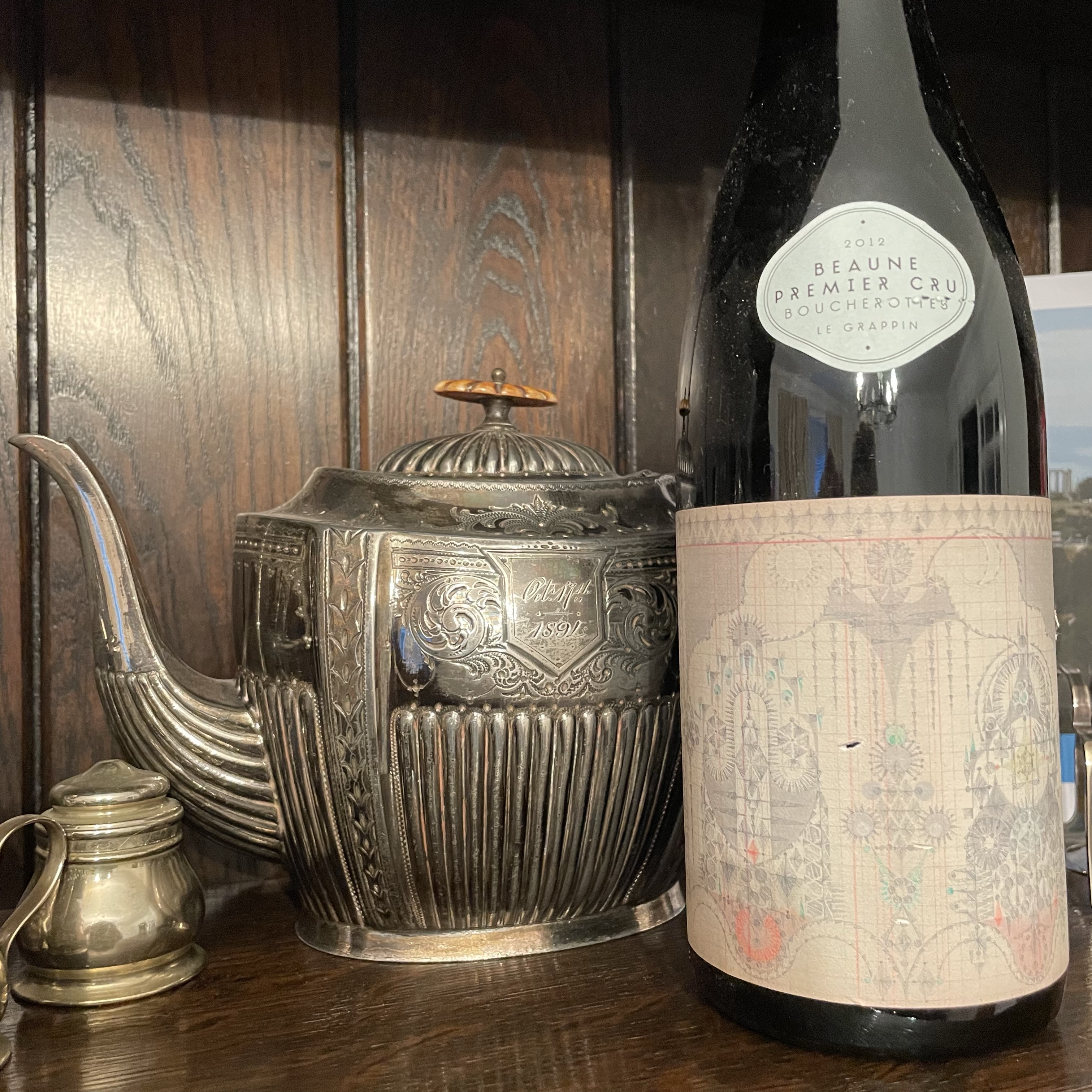
Beaune 1er Cru “Boucherottes” 2012, Le Grappin (Burgundy, France)
My stash of Le Grappin’s Beaune Boucherottes dwindles, but I still have a small number of bottles from the early vintages. These were exciting times. Emma and Andrew injected a bit of life and excitement into the region from their original cellar in the walls of Beaune, an old gunpowder store. Their championing of some of the Côte de Beaune’s lesser-known sites added to that excitement and none more so than this forgotten Premier Cru.
Boucherottes is an eight-and-a-half-hectare site on Beaune’s southern border with Pommard. Although you never used to see it in the UK, Jadot, that exemplar of the Beaune Premiers, bottled one. Jasper Morris (Inside Burgundy, BB&R Press 2010) says that it “is actually more a fruity expression of Beaune than a tannic one” and he is very much spot on in relation to Le Grappin’s rendition.
Andrew made seven barrels of this 2012 but I suspect it is mostly all gone now? This was my own penultimate bottle from this vintage. At just over a decade old, this is very fine. In fact, I’d say magnificent. Very smooth, soft velvet, cherry fruit is the order of the day, but there is a touch of texture and a hint of liquorice on the finish.
Purchased at the cellars and nowadays mostly sold directly from Le Grappin via their annual mailing (usually available in the January of the second year after harvest).
Betty Bulles Petnat Rouge Vin de France, Domaine de L’Octavin (Jura, France)
This has always been among my favourite handful of petnats. It has a vivacity rather like its incomparable maker and this hasn’t diminished in a bottle I had left over from last summer’s purchases. It isn’t always easy to pin down the grape sources for this, though. Most will tell you it is Gamay. I was told it is made from Ardèche-sourced Gamay, but with the addition of some Muscat grapes coming from close to Perpignan. Alice Bouvot has created a frothy petnat, light and fresh with a distinctive red berry nose and palate.
As with all of Alice’s wines, this is bottled as Vin de France with no direct vintage labelling (only a batch number). For all her negoce wines, she manages the vineyard, and usually picks the grapes and transports them back to Arbois herself. She benefits from having a great many friends (and perhaps admirers) who are willing to sell her fruit. This has become a necessity following recent shortfalls in Jura harvests due to frost and hail, something which has put a massive strain on French winemakers who refuse on principle to use synthetic chemical treatments on their fruit.
L’Octavin is an exemplar of natural wine from the Jura and although prices seem to have risen quite a lot, haven’t all French imports! Alice is imported by the equally exemplary Tutto Wines, which may only have the white (Chardonnay and Molette + Muscat) Betty Bulles right now, but even if they have sold out, they can usually be trusted to have a few L’Octavin cuvées in their Tutto a Casa online shop.

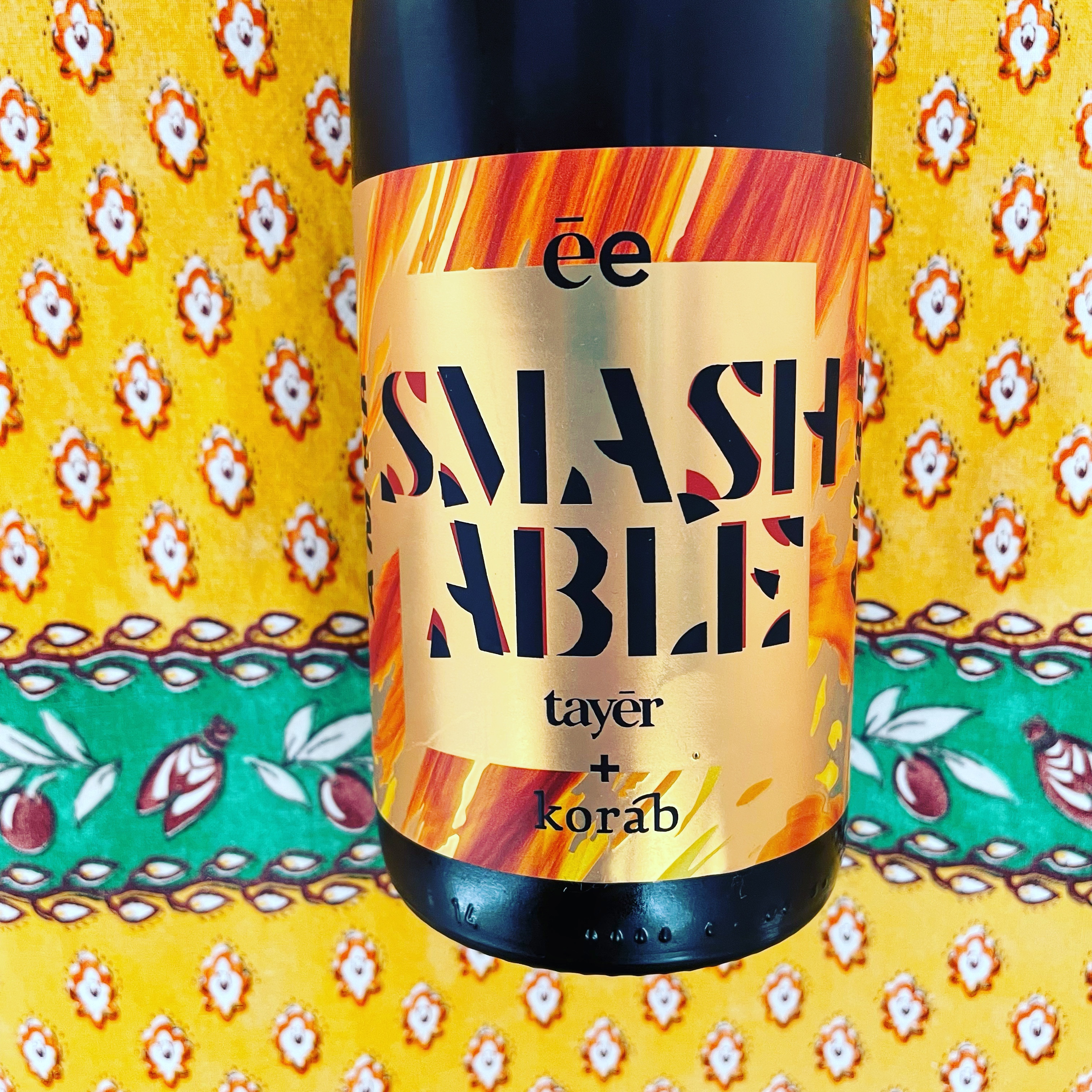
Smashable/AMBR 2021, Tayēr/Petr Koráb (Moravia, Czech Republic)
If I was to compare Petr Koráb to anyone I think it would be one of the new Alsace producers, based purely on the number of cuvées he produces and the degree of innovation present in his cellar, I should add, a very beautiful old underground cellar just outside the village of Boleradice in Czechia’s prime wine country. But even then, the list of wines he produces not only exceeds that of the most profligate producers from Alsace, he exceeds them by far. Come to think of it, the other obvious name with so many bottlings that comes immediately to mind would be Stéphane Tissot, but at least in Stéphane’s case he tends to make the same wines every year.
If I am sometimes disappointed not to see the return of a favourite label next vintage, I have come to trust Petr’s experiments. When a winemaker is this good, and this confident of his fruit, there’s never any need to worry. This wine is a departure for him, however, a special bottling for Tayēr + Elementary, an equally innovative bar, restaurant, and bottle shop on East London’s Old Street. The blend consists of four varieties. Traminer, Riesling and Grüner Veltliner saw twelve months on skins in a ceramic cask, and Hibernal, a Moravian native variety, was aged in French oak.
So, the wine is described as an “amber banger”, but it is far from a tannic, orange, monster (despite 13.5% abv). Traminer seems to the fore on the nose, but that nose increases in complexity as the wine warms. I served it a little too chilled on reflection. We have violets, satsuma, and apricot, thankfully not all at once but one after the other. The palate has predominant orange citrus with spices (I’m going with ginger and fenugreek). It’s all totally balanced and an unqualified success (including the label, but that’s pretty much a given with Koráb).
The collaboration was facilitated by Petr’s UK importer, Basket Press Wines. They have done the same thing acting as the facilitator for Ottolenghi’s collaboration with Krásná Hora, another of their agencies. This small Czech wine specialist is thereby increasing the profile of Czech wines in the UK. These restaurants get fabulous wines, and perhaps a few more customers will go out and explore this fantastic emerging wine country.
Smashable/AMBR is available from Tayēr’s online shop for £35. The range now has two further cuvées, “Cherrylicious” (red blend, £35) and “Bubbletastic” (a traditional method Riesling/Chardonnay sparkling wine, £60).
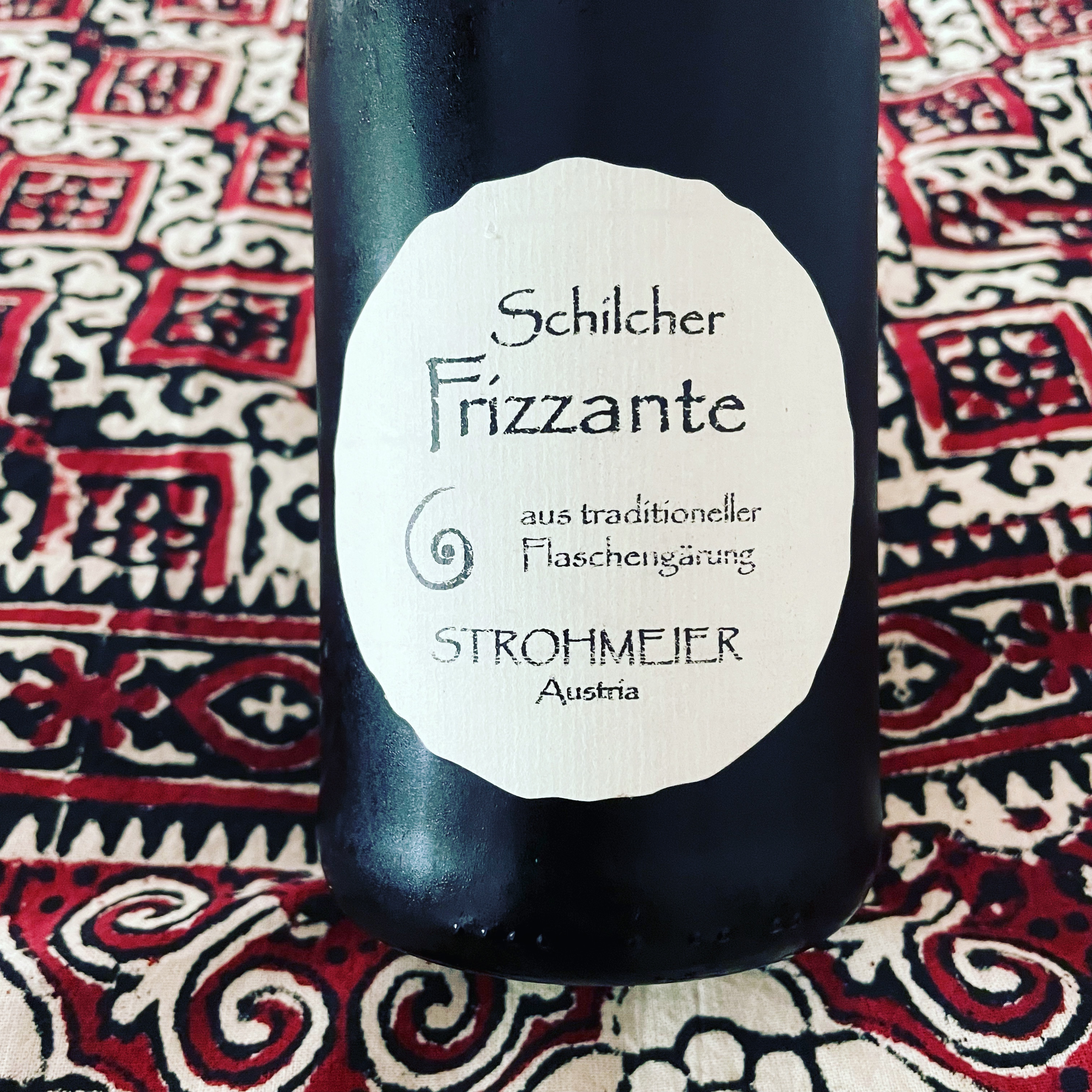
Schilcher Frizzante, Ströhmeier (Styria, Austria)
Western Styria, or specifically the region known in Austria as Weststeiermark, is famous (at least in Austria) for the autochthonous grape variety Blauer Wildbacher. This grape occupies around three fifths of the region’s five hundred hectares of vineyard, yet it is almost unknown in the UK. Neither is the speciality made from it, Schilcher. Schilcher is often Rosé, though sometimes appearing more like a red wine in colour (it can be very red), and its high acids often shock those who taste it for the first time. For me, it is the sparkling version, Schilcher Sekt, which appeals most.
Franz Strohmeier tends around ten hectares of vines with his wife, Christine, on a mixed farm around the village of St-Stefan ob Stainz. This is a producer who believes in minimal intervention with a capital M. Of course, the location is fortuitously perfect for viticulture, with sunshine and generally optimum levels of precipitation, just at the eastern edge of the Alps. The microclimate is created by the warm air off the Adriatic meeting the cold Alpine air from the north and west.
This particular version of Schilcher is labelled “frizzante”, the Italian nomenclature perfectly describing a lightly sparkling red wine. It is therefore not a “Sekt” as such. Fermentation is in stainless steel, the second fermentation taking place in bottle like a Sekt, but here less pressure induces what seems like a million tiny bubbles which softly caress the palate almost like gentle pin pricks. Aromatics veer from blueberry to strawberry and the fruity intensity makes this cuvée seem a little less acidic than a full on Schilcher Sekt. It is just so refreshing, and totally different to any other sparkling wine I know. A wine of tradition too. Those whom I have introduced to this wine over the years have all loved it, unless they were merely being polite.
Strohmeier produces a wide range of small production, artisan, wines, all of them delicious. They are imported by Newcomer Wines.
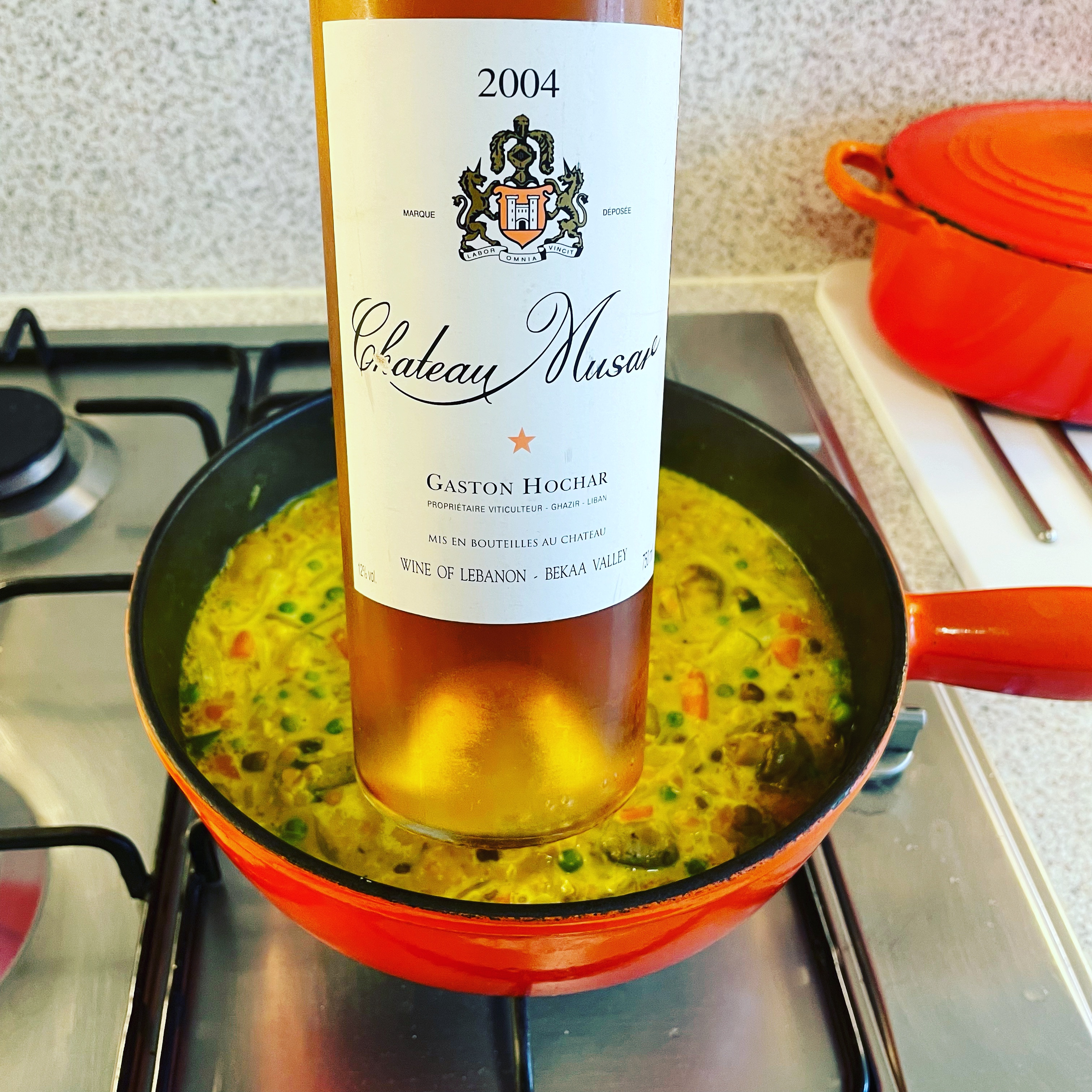
Château Musar Rosé 2004, Hochar Family (Bekaa Valley, Lebanon)
I guess Château Musar has become a true wine icon. Even our builder cited it as his favourite wine recently. It has seen out most vintages in one of the world’s great conflict zones, many under remarkably difficult conditions. This alone would not create an icon. Although Musar is quirky, sometimes an understatement, it is a fine wine capable of great age. This, you will have guessed, is the Château red I am referring to. Although seen much less frequently, the Musar family also bottle a white wine and a Rosé under the Château label.
The estate was founded by Gaston Hochar in 1930, but from the time Serge Hochar took over from his father in 1959 the estate was destined for fame. Serge was a great believer in Musar’s potential, and equally, a great ambassador and communicator.
The vines lie around the villages of Kefraya and Aana in the Bekaa Valley. They sit sufficiently far from the winery that bringing them in during wartime has proved problematic. But although the red wine for which Musar is best known has remarkably missed few vintages, this 2004 is only the estate’s fourth rendition of a pink wine. The varieties forming the blend are the native varieties Obaideh and Merwah, old bush vines growing on different mountain terroirs (mostly chalky limestone with elements of schist). The colour derives from about 5% Cinsault.
The winemaking style is a deliberate nod to the blending of red juice into white wine practised in Champagne. A long fermentation (6-9 months) takes place in French oak barrels, with the wine being bottled after a year, and released generally two years later. Released in 2007, this vintage has seen a long period in my cellar. The colour has faded to onion skin, more ramato than full Rosé. Ethereal scents of clementine, apricot, quince, sweet almond, and tea leaf tease the nasal passages. The palate is like a clementine infusion on a misty, humid, morning.
I think this is definitely best served cellar cool, not fully chilled. It goes well with olives and what we might call Provençal cuisine, as recommended by the producer. I would also highly recommend North African dishes, though perhaps not too spiced. Another dish I’d suggest is that wonderful, legendary Ottoman aubergine dish, Imam Bayildi. [My culinary hero Claudia Roden has a recipe in her essential “Mediterranean Cookery” (BBC Books 1987, p/b 1989, p134 in the latter)].
The origin of this bottle is also obscured by the mists of time, but Solent Cellar is a possible source.

 David Crossley's Wide World of Wine