
This Part 4 is the final part of my coverage of the Clay Wine Fair 2026. Here, we have some of the wines presented by Woodwinters with special guest Shota Natroshvilli of Teliani Valley/Ibero Winery in Georgia, and by Slonk Selections. Woodwinters is an importer that is very well known in Edinburgh, with a shop on Newington Road, about a twenty minute walk from Waverley Station and the city centre.
Slonk is an international wine consultancy run by Edinburgh-based Isobel Salamon, who is also the organiser of the Clay Wine Fair. It covers branding, sommelier services, wine education (trade and consumer), team and business development and more. Australian native Isobel has a legal background but has a host of wine qualifications from WSET to regional wine certification. Anyway, you can find out the whole list of what Isobel does at www.slonkwine.com . She deserves a plug for organising such and important, instructive, and fun event in Edinburgh.
WOODWINTERS
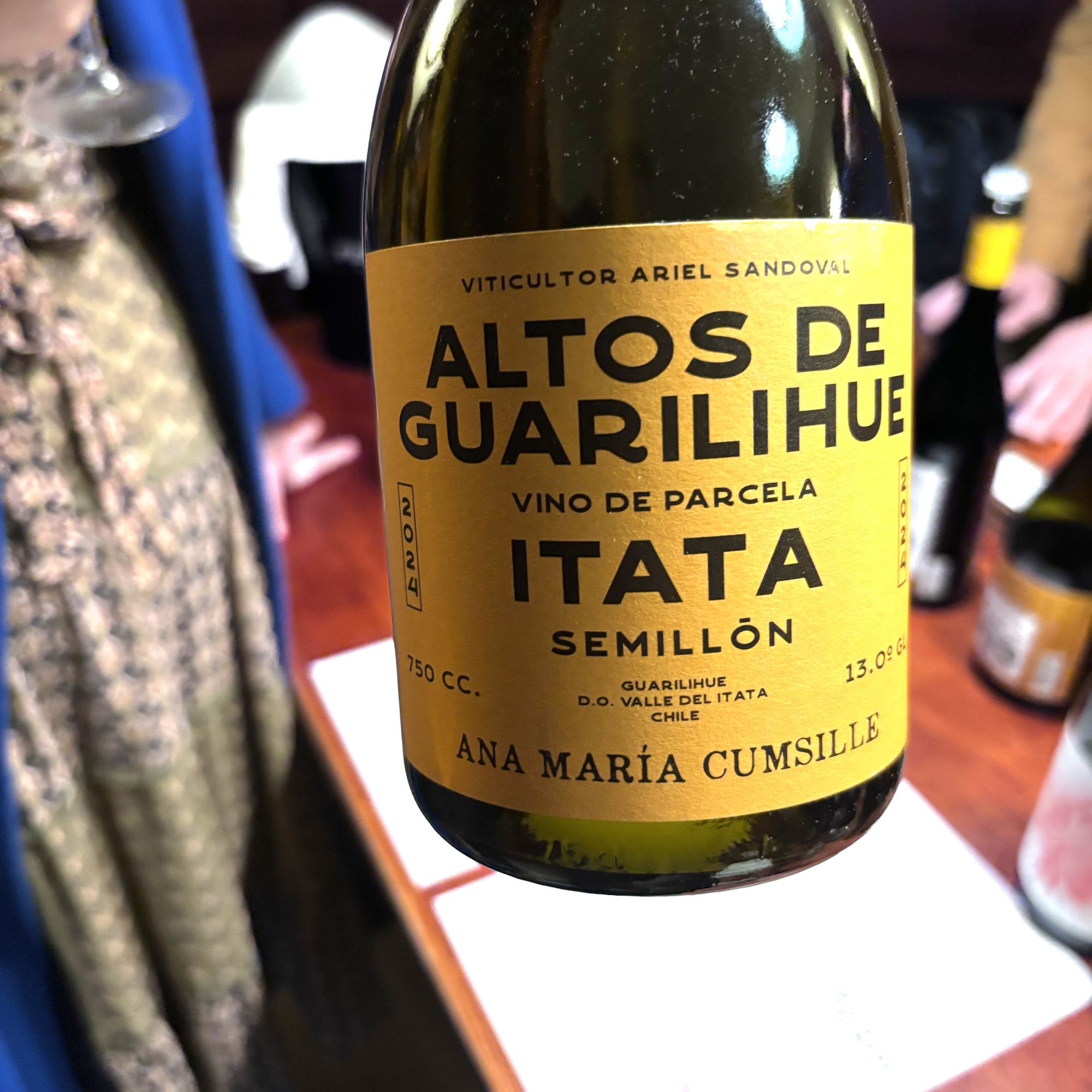
Altos de Guarilihue Semillon 2023, Ana María Cumsille (Itata Valley, Chile)
Itata is towards the south of Chile in wine terms, just north of Bio Bio, and close to Chillán. It is colder and wetter this far south, with less protection from the ocean, but wine regions on the edge can often thrill. The main variety here, with very old vineyards, is País, but this wine is made from 80-year-old Semillon. Ana María Cumsille is chief winemaker of the well-known Viña Carmen, but she had previously worked in the Itata Valley and fell in love with it. She makes single parcel wines where she buys fruit, acknowledging the grape grower on the label.
This Semillon was grown at altitude (well, around 300 masl) about 20km from the Pacific by Ariel Sandoval. The fruit goes partly into amphorae and partly oak. Skin contact and amphora give this wine some texture, but it is not at all overwhelming. Loads of purity in the fruit and not tannic. Delicious. I really liked this. At £26 a cert next time I’m down Newington way.
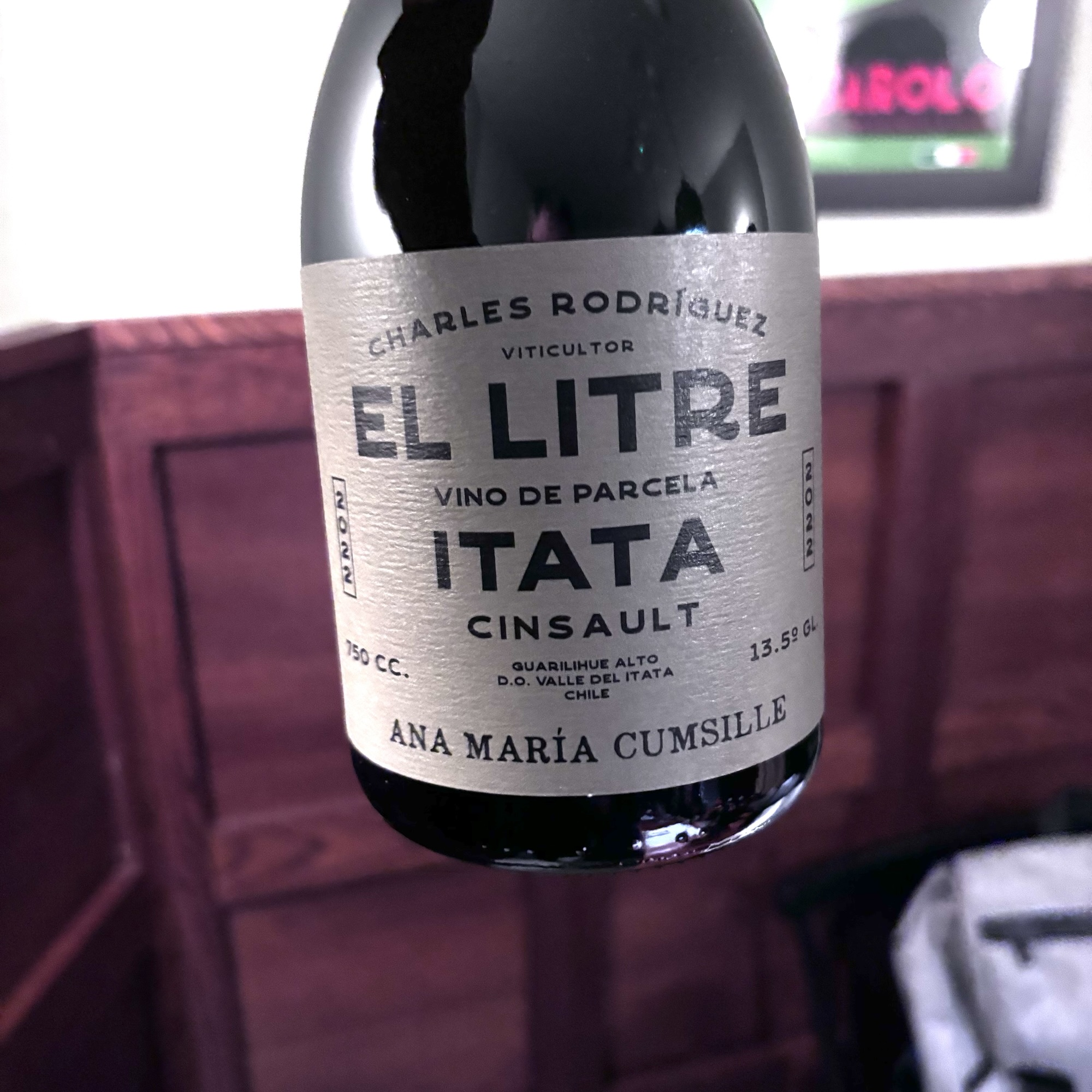
El Litre Cinsault 2022, Ana María Cumsille (Itata Valley, Chile)
The grower here is Charles Rodriguez and this Cinsault parcel is 100 years old, sited at Guarilihue Alto, head-pruned vines on granite. The grapes go mostly into amphorae, a small batch being aged in older oak. Ripe fruit gives 13.5% alcohol. It has a fruity yet savoury richness but a nice linear acidity and grippy texture (but not harsh). I liked this too and would buy it, but I did prefer the Semillon slightly. £25. NB, despite what the name suggests this is a 75cl bottle.
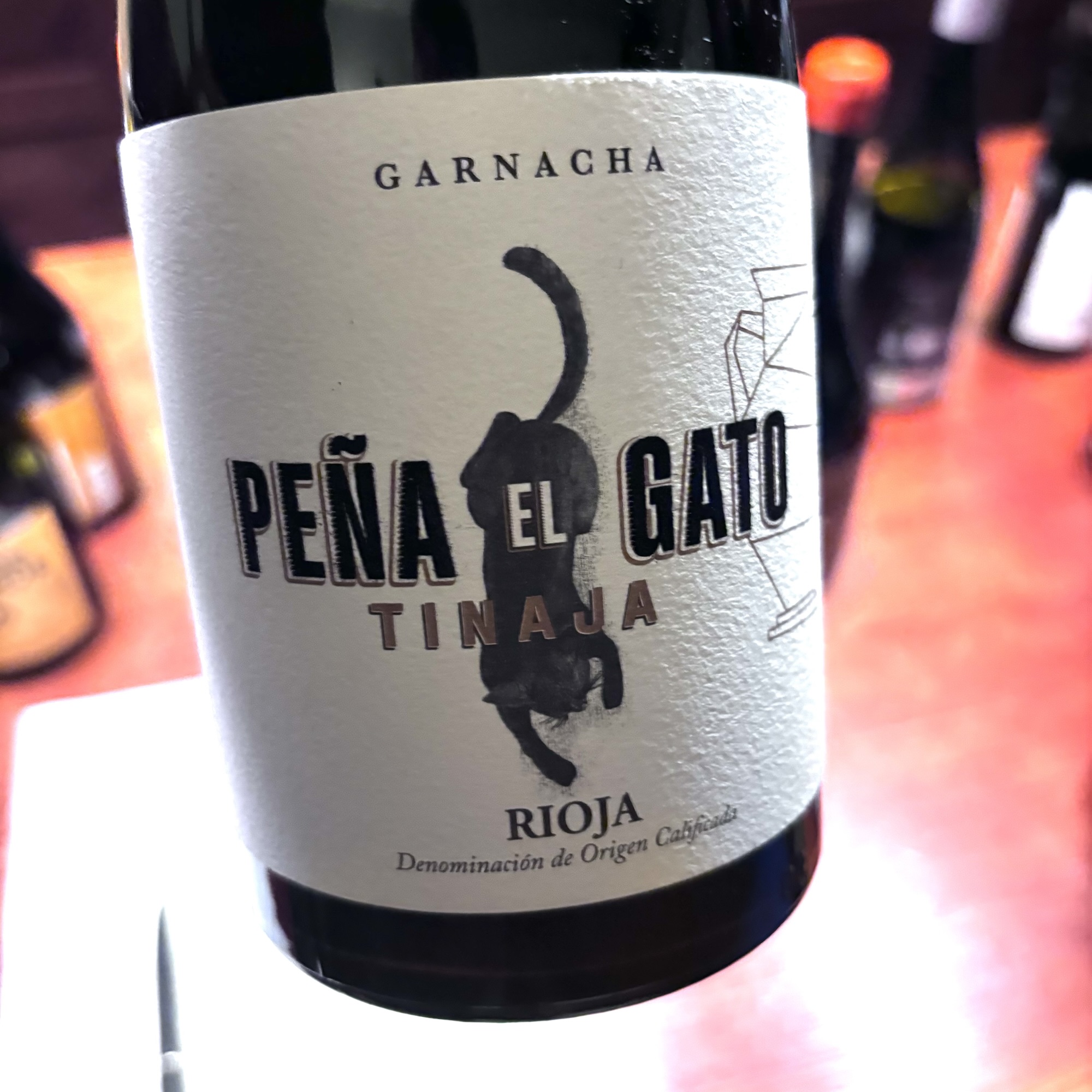
Rioja Tinaja 2022, Peña el Gato, Bodega Juan Carlos Sancha (Rioja, Spain)
This is a family producer from Rioja Alta with vines at 650 masl which were planted in 1927. This cuvée is made (I’m told) in small amphora, although generally their wines are made in large oak or granite vats. This is a natural wine with very low sulphur addition. The result is dense and dark to an extent, but the Garnacha fruit (100%) is beautiful, with smoky blackberry mixed with black pepper and a mix of tannic structure and richness that verges on voluptuous. Despite the high-altitude vines, the alcohol does hit 15%. £27.
Next were several wines from special guest Shota Natroshvili of Teliani Valley Winery and Ibero Winery, in Kakheti, Georgia. I tasted three wines.
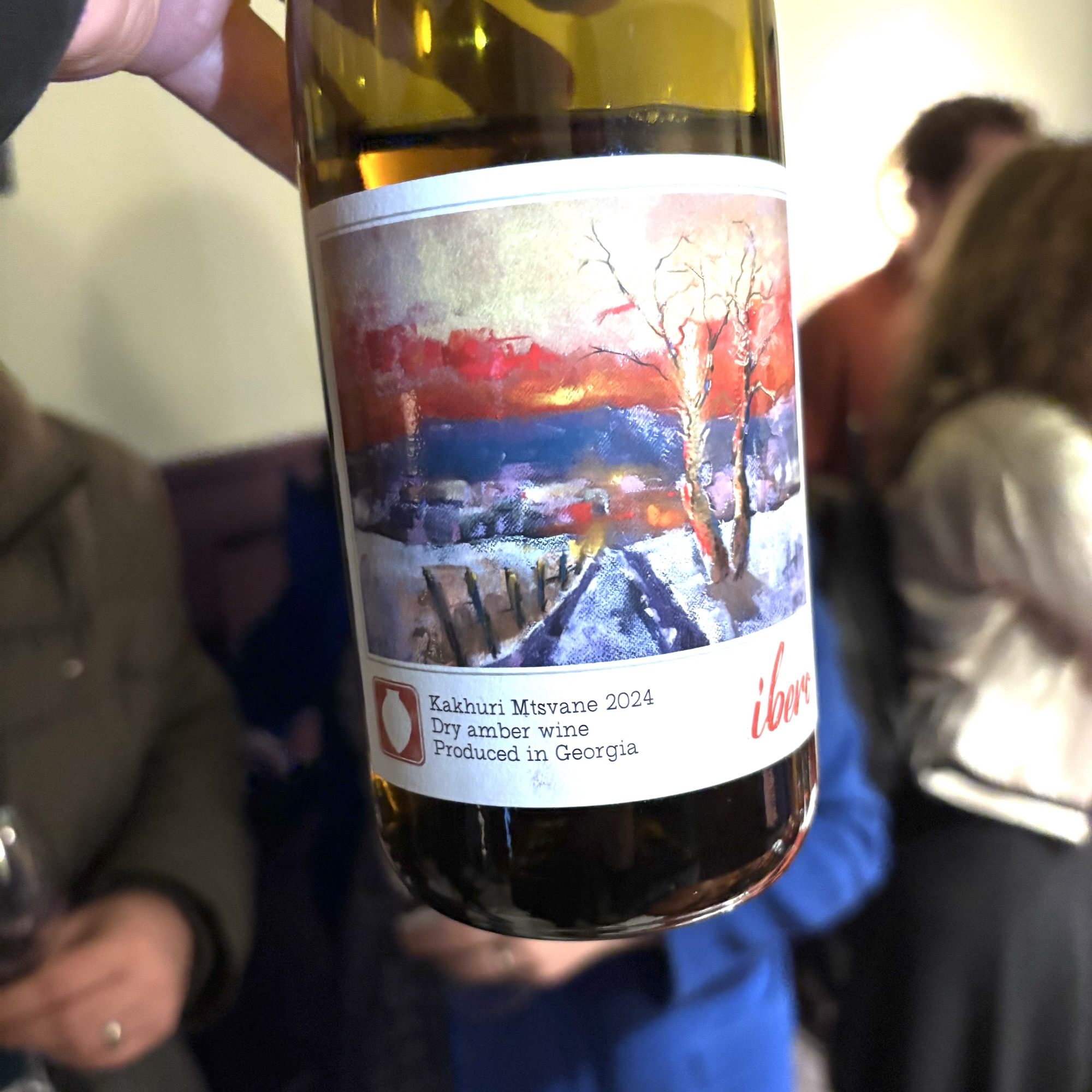
Kakhuri Mtsvane 2024, Ibero Winery (Kakheti, Georgia)
About four-to-five thousand bottles of this wine are made. It’s fruity and, for Georgian wine, quite zippy, made with six months buried in qvevri. It has some texture, but far from overwhelming for anyone reticent to buy the full-on orange experience. Very user-friendly. The art on the label is also by the winemaker. No price listed, but the red with the same label (last of the three, below) is £21.
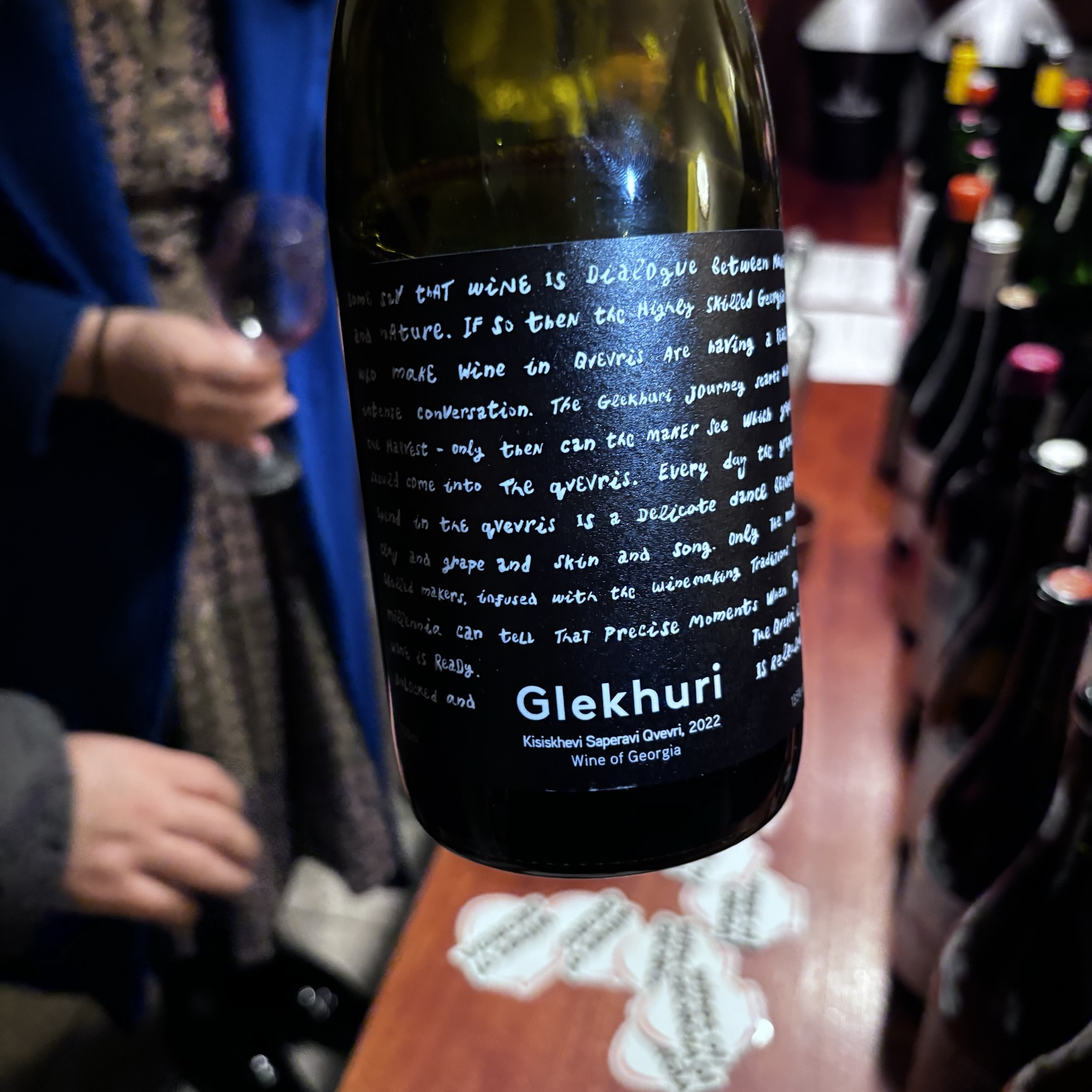
Glenkhuri Kisiskhevi Saperavi Qvevri 2022, Teliano Valley Winery (Kakheti, Georgia)
Kisiskhevi is a village in Kakheti where the fruit is grown. This is a cuvée of around 6,500 bottles. Deep garnet coloured, it has red fruits (cranberry) and a bit of something darker, but it is definitely fruit-forward, despite the traditional qvevri ageing. It is also quite intense and structured, so it’s very much a traditional Georgian red, yet fruity more than tannic. No price given.
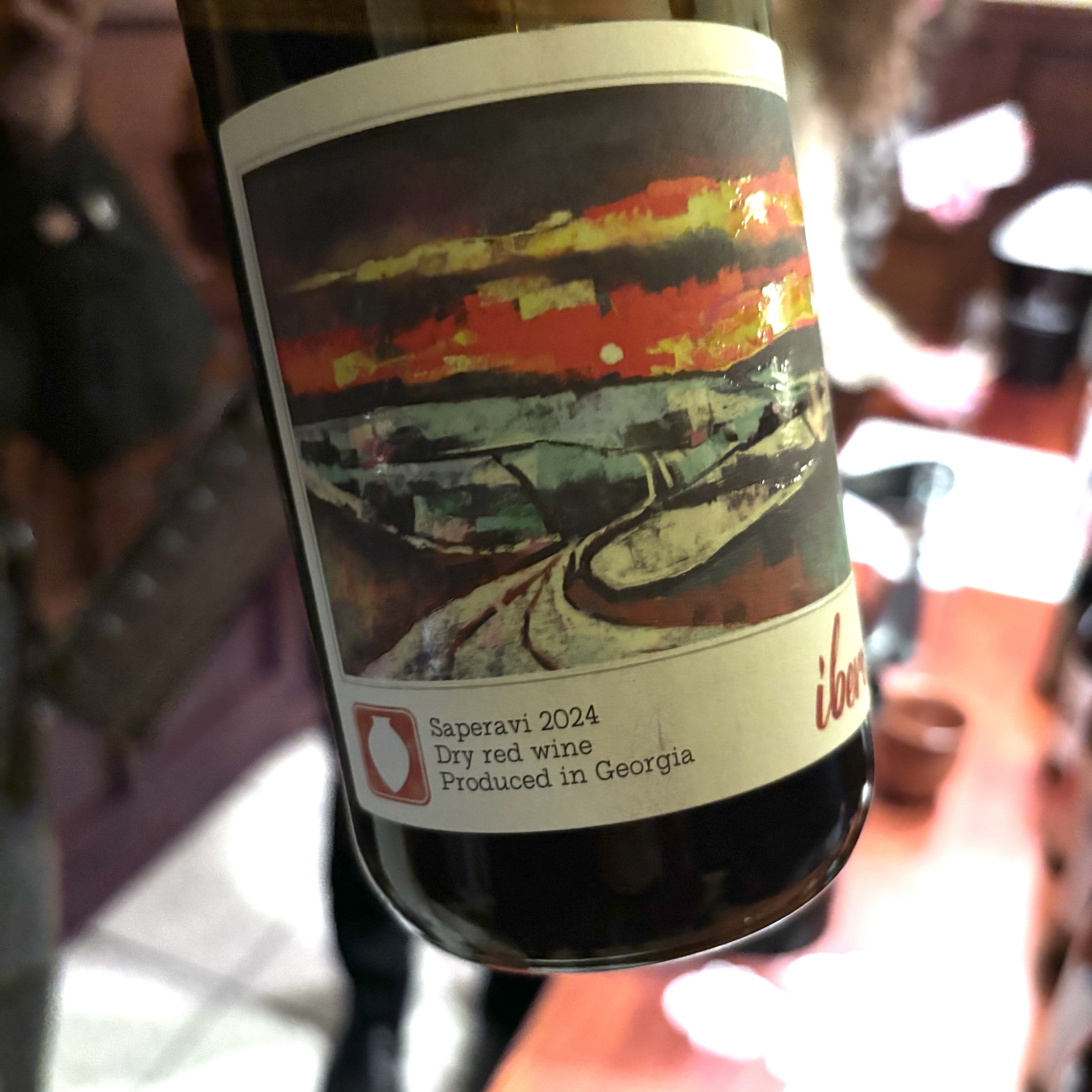
Saperavi 2024, Ibero Winery (Kakheti, Georgia)
This is a lighter Saperavi, just 12.5% alcohol. It is very fruity with good acidity and it is very easy to drink. It saw just a couple of weeks on skins and six months in qvevri. The fruit is sourced from the village of Vachnadzion in the Central Kakheti Region’s Mukuzani PDO. £21.
That’s a brief description of three very nice and, I think, quite inexpensive Georgian wines (if the retail prices are correct). Shota was a nice guy, which also makes a difference, so long as the wines are good. I’m not sure whether this is correct, but someone told me that Waitrose has a Teliani Valley Saperavi? I couldn’t find it on their web site.
SLONK WINE SELECTIONS
For stockists contact isobel@slonkwine.com
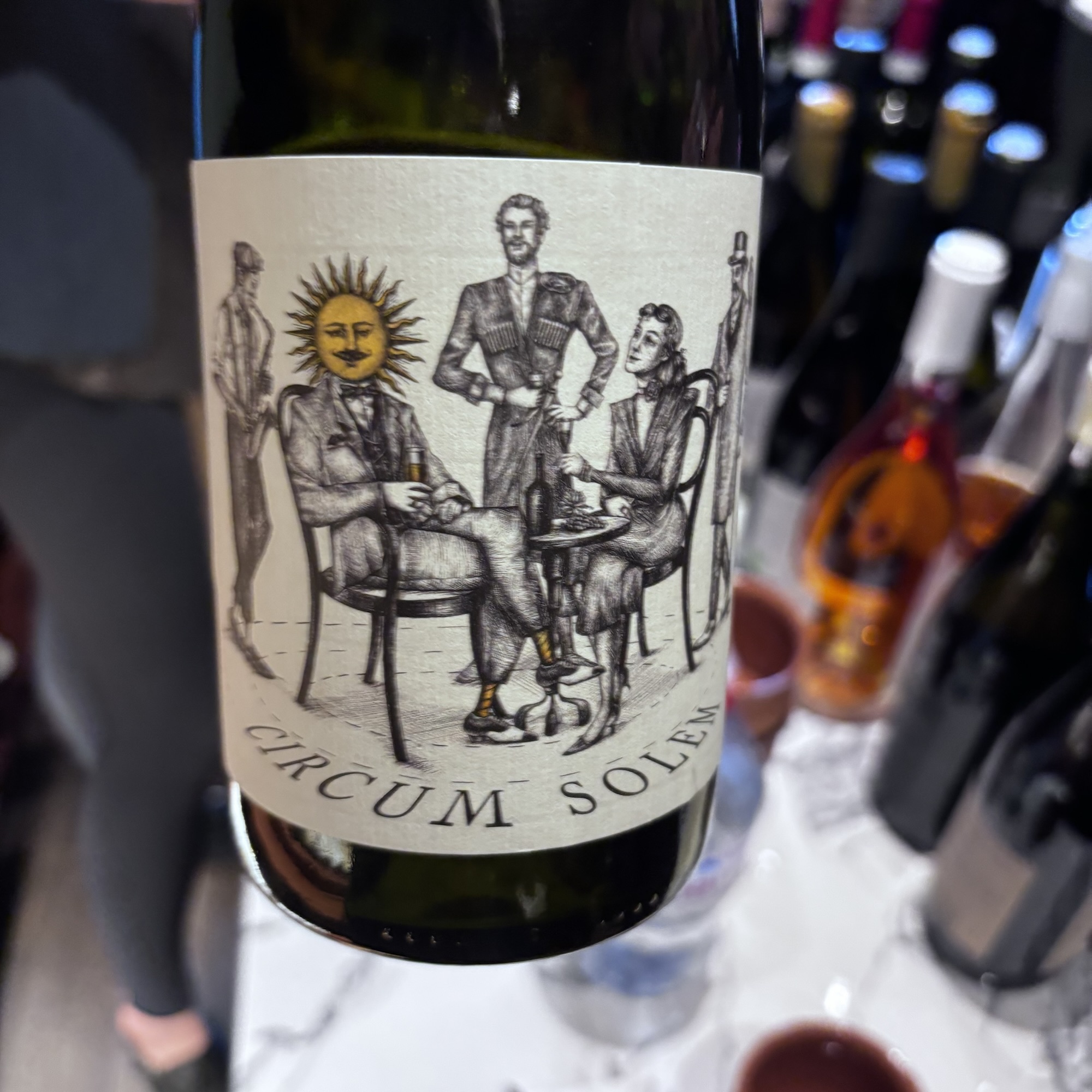
Circum Solem 2020, Labara Wines (Imereti, Georgia)
Tsolikouri is a major white variety of Western Georgia, mostly found in Imereti. It usually produces wines with lively acidity, and the qveveri tradition here (where the vessels are often called churi ) is for less skin contact than in Kakheti. But here we do have a full six months in clay. The fruit is nicely rounded and I was getting greengage notes with quince and pear. There’s a little texture. The vintage is 2020 so there’s some nice bottle age, and 13.5% abv adds a little food-friendly richness. A nice wine, especially for £19.50.
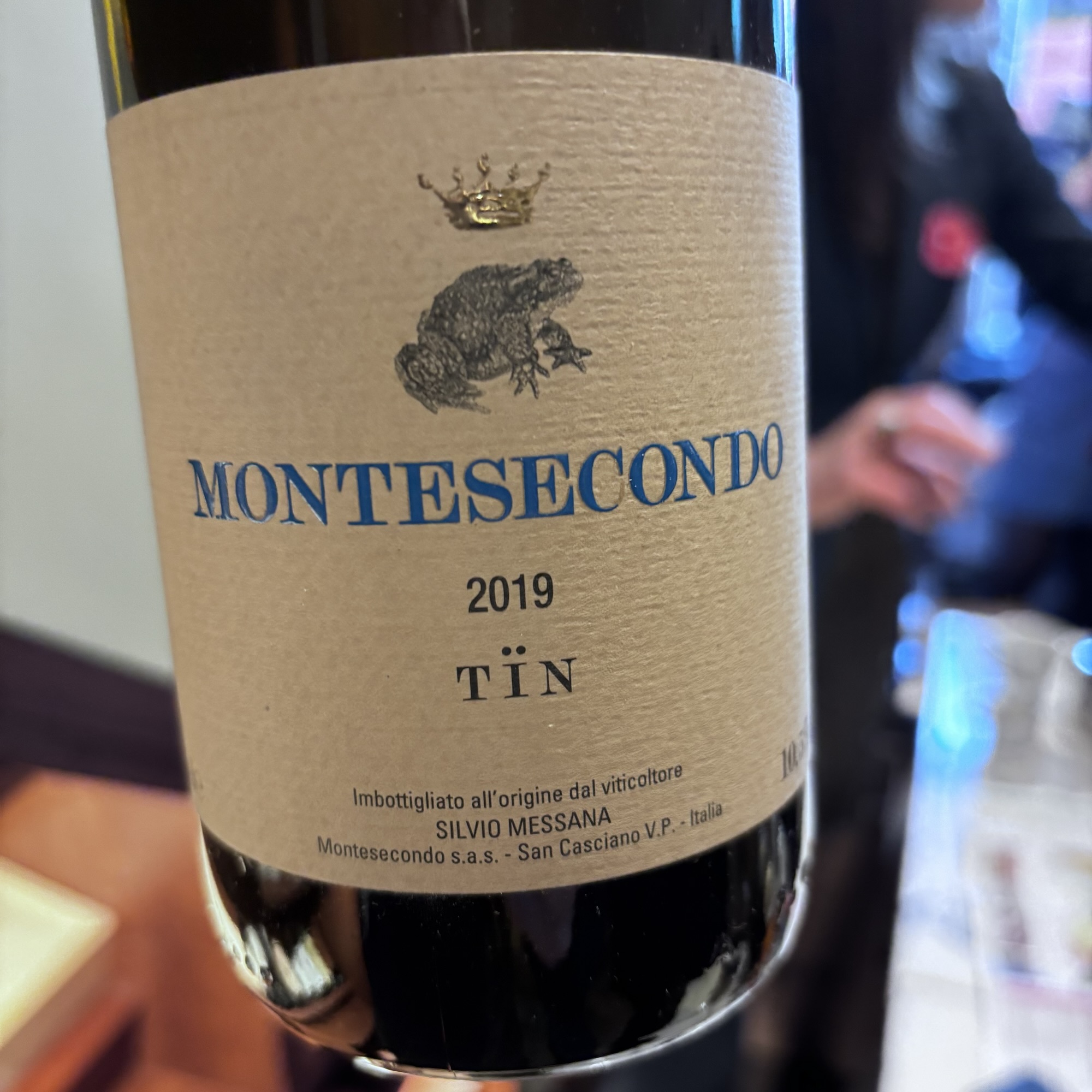
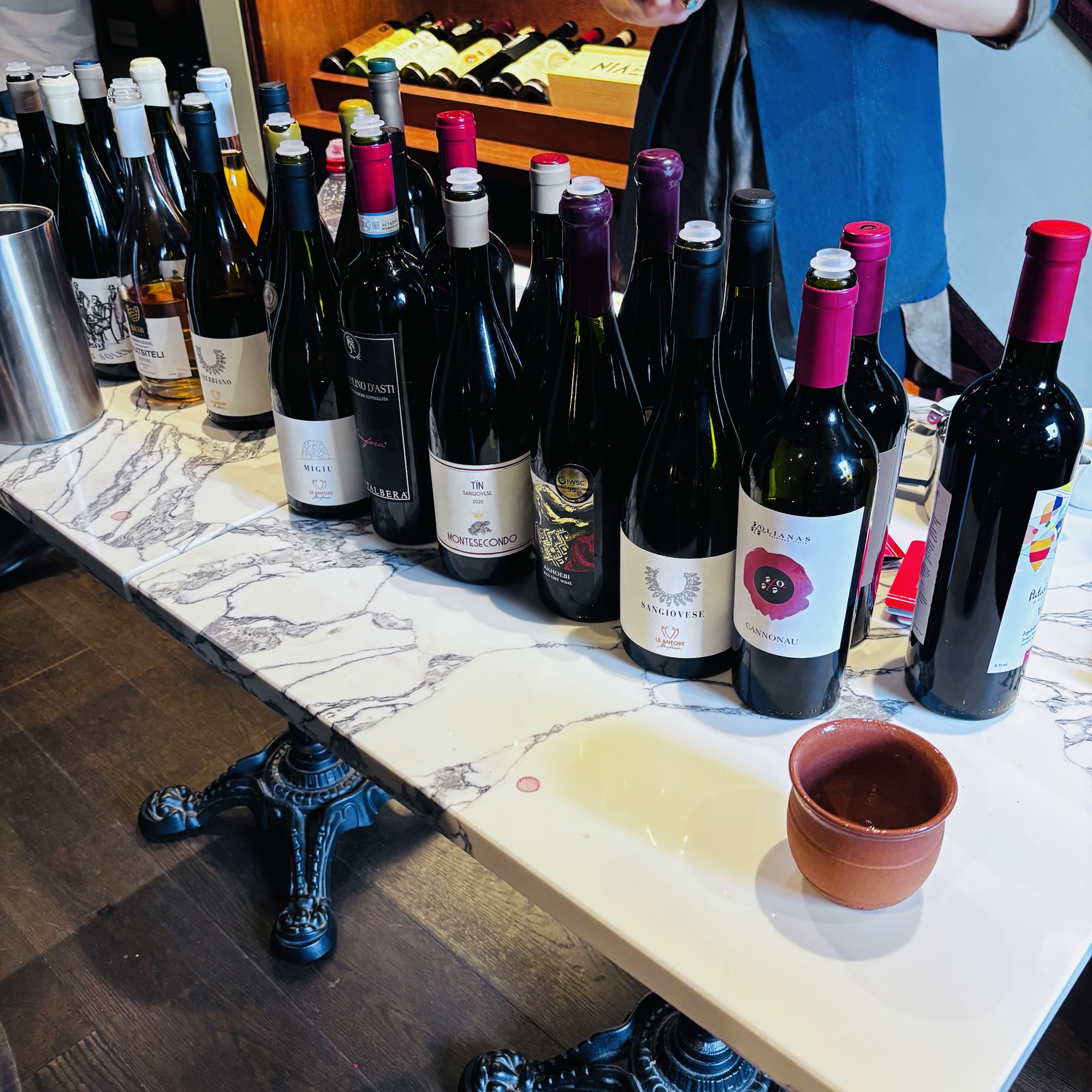
Tïn 2019, Montesecondo (Tuscany, Italy)
This is a very interesting IGT wine made from Trebbiano in the Val di Pesa (San Cascino). The fruit is grown at 300 masl. It is fermented in amphora with indigenous yeasts, and aged for ten months on skins (sulle bucce). This adds tannin and structure as well as colour. The wine retains a classy freshness but has a lot more depth than most Trebbiano. It’s an example of how amphora and skin contact can enhance all sorts of grape varieties (as we saw with amphora Bacchus in Part 3, with “Artefact”). Pretty good for Trebbiano, and at £42 it reflects this, and its age. Still cheaper than Valentini though.
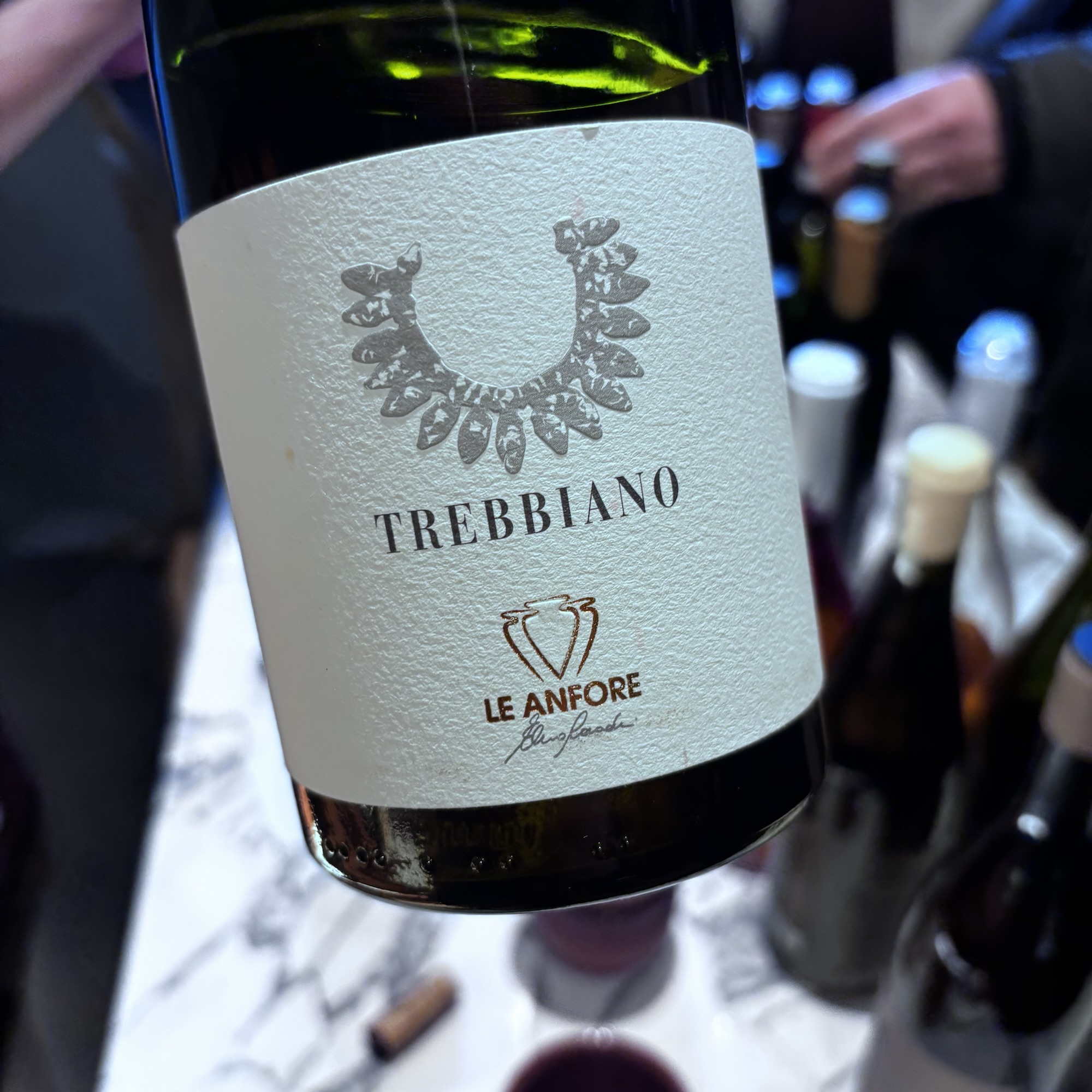
Le Anfore di Elena Casadei 2021, Castello del Trebbio (Tuscany, Italy)
This is part of Elena’s Anfore project. More Trebbiano, aged in amphora because Elena believes that the clay best shows the wine’s terroir. You don’t find a lot of people believing in Trebbiano as a terroir wine, but wines like this suggest they should. This is an attractive wine which clearly shows the life in the soil from where it came, in this case close to the winery at Pontassieve, near Florence. £34.
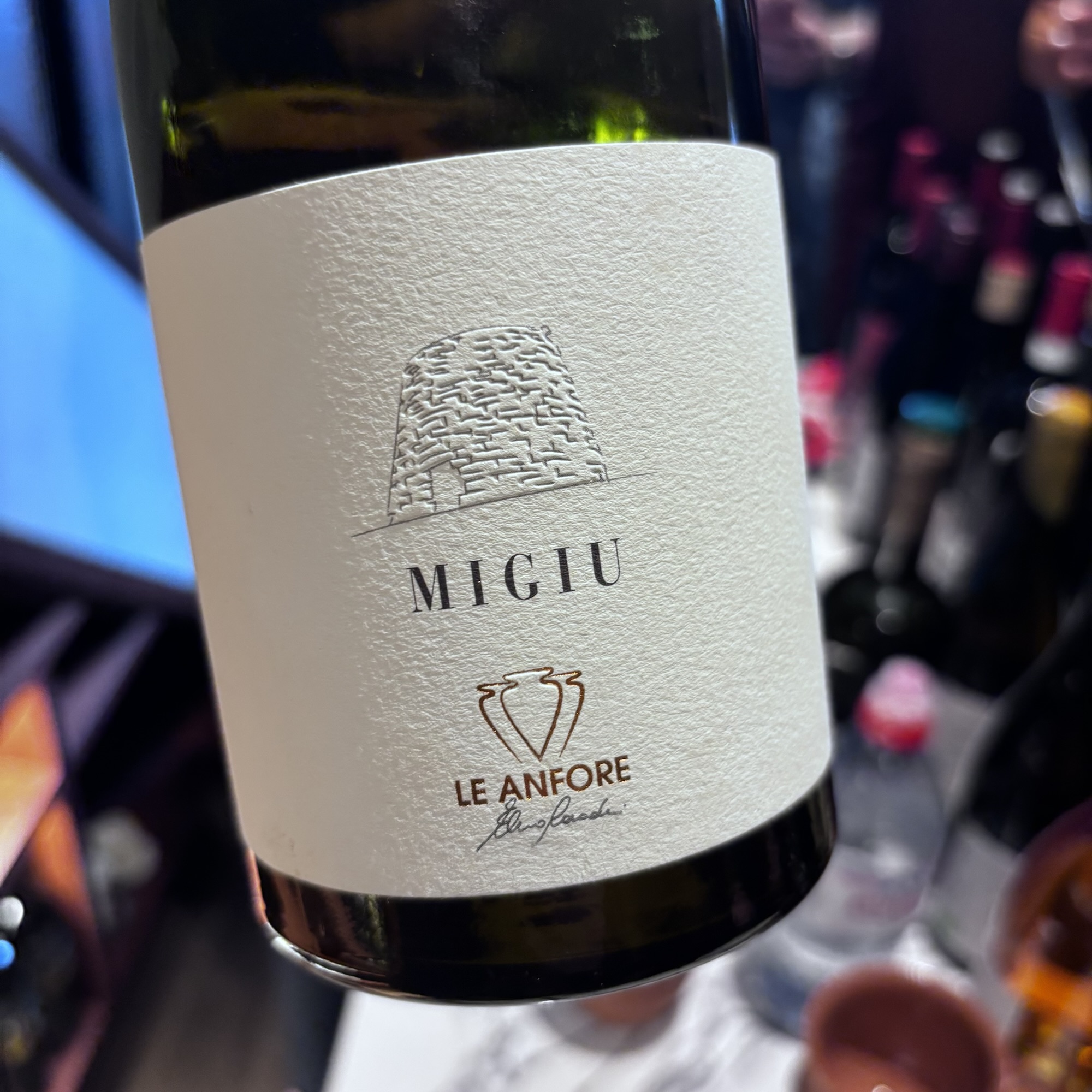
Elena also makes several more wines from her Anfore Project, one being Migiu 2022. It’s labelled Isola dei Nuraghi Bianco IGT, from Sardinia and is made at the Olianas Winery (see below). Here we have perhaps my first taste of a wine made from the autochthonous white variety, Semidiano, grown at just under 400 masl. It’s an “orange wine” with a bit of texture/structure, both interesting and delicious. £34.
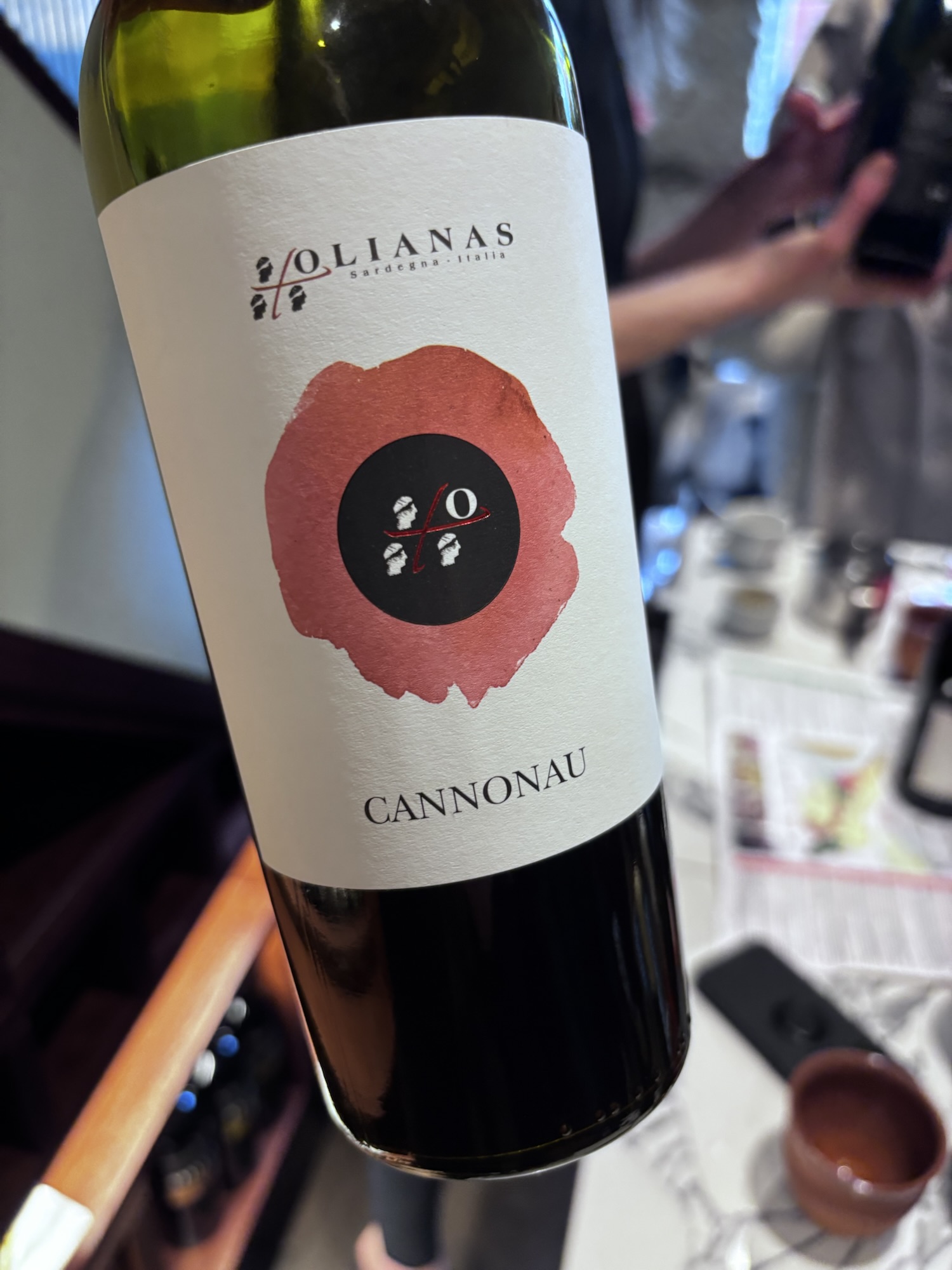
Olianas Cannonau di Sardegna 2023 (Sardinia, Italy)
Although it doesn’t bear her name on the label like the previous two wines, this is also made in Sardinia by Elena Casadei. It’s a vibrant red, quite dark in colour for the variety (Cannonau is a synonym of Grenache, of course), but with nice lifted fruit, very clean with a bit of grainy texture which gives it a nice edge. It hits 14% but not in a bad way as it’s a lovely wine. It also retails for £34
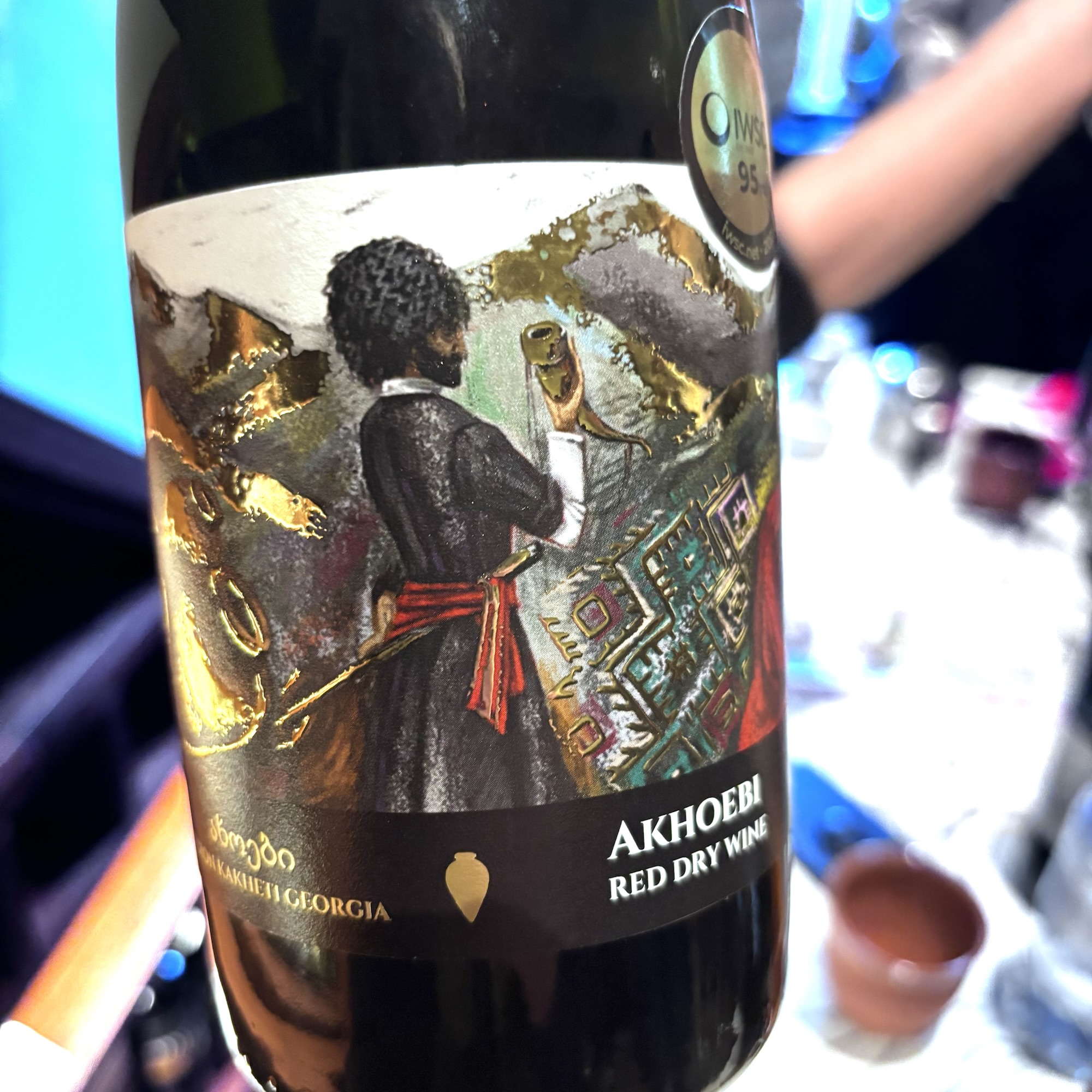
Akhoebi Saperavi 2022, Alexander Mtivlishvili/Alazani Wines (Kakheti, Georgia)
It’s always good to end a tasting on a high note and this wine was one of a handful of favourites. Grapes come from the Akhoebi “micro-zone” in Kakheti, which I admit I couldn’t find on my map, but it appears to be in Kardenakhi, which is at the southeastern end of Kakheti. This is quite a powerful qvevri red wine, dark, with good acids balancing a mix of fruits and savoury elements. It has a big mouthfeel which blends the fruit with a bit of tannin from the qvevri maceration. But the alcohol is balanced at 13.5% and the palate is super-fresh. It was bottled in April 2024, so it has had a good period to mature a little in bottle. The label is very Georgian, isn’t it. No price given.
This brings to an end a mega-set of articles on Clay Wine 2026. It deserves the coverage because aside from being a great concept for a wine fair, it always throws up some brilliant bottles that you might otherwise miss on the shelf.
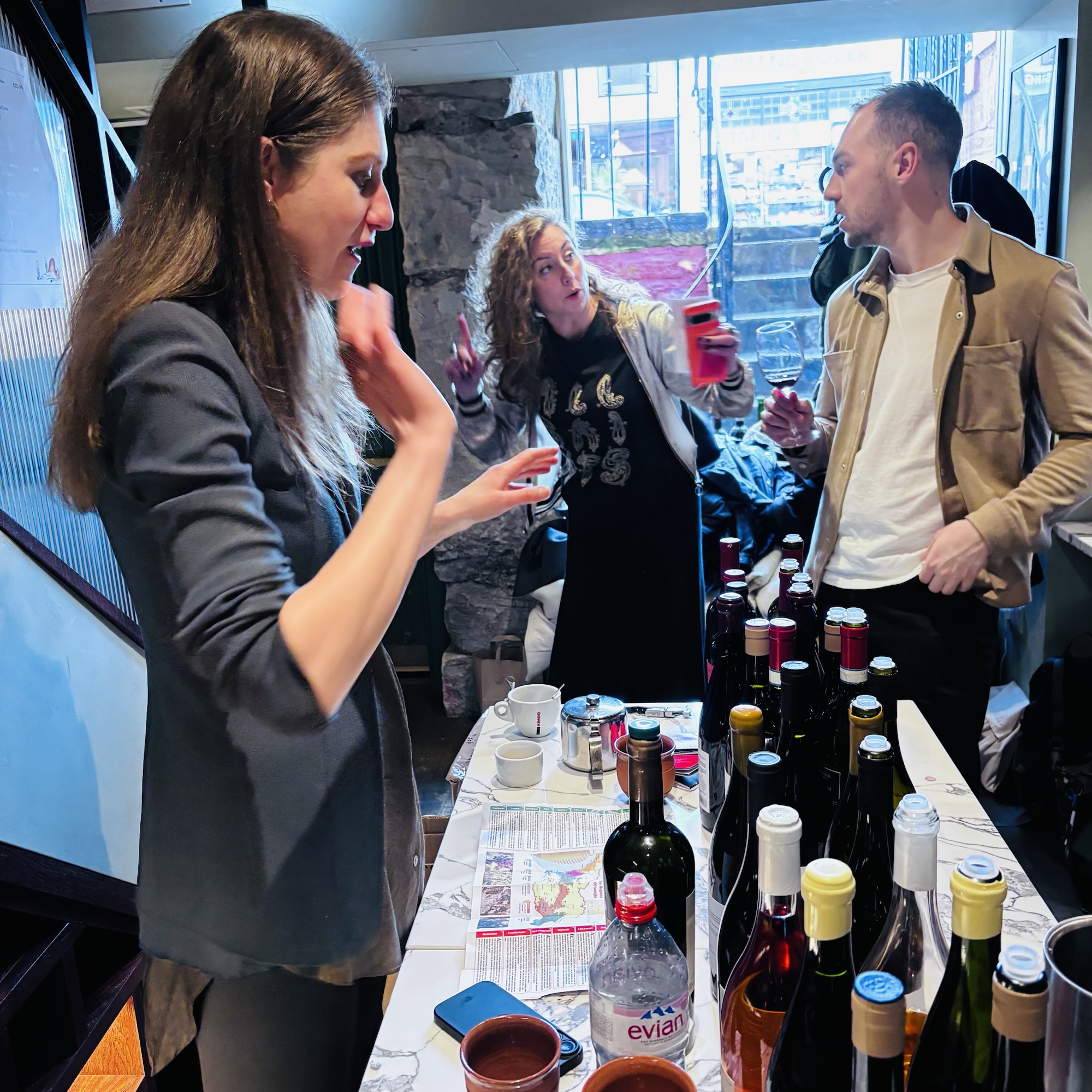
Slonking (To slonk: Scots/Northern dialect, to swallow greedily, devour or gulp down)

 David Crossley's Wide World of Wine