
I spent half of my life living in Brighton. It was a tolerable (at first) commute to London, and what could be nicer that bringing up children by the sea? But we are hill and mountain walkers at heart, and although the South Downs are not mountains by any stretch, we did find ourselves spending way more time up in those chalk hills than down on the stony beaches.
One of our regular walks took us westwards along the South Downs Way, and one deviation south took us ever more regularly along a path that skirted an old flint farmhouse, outbuildings set back, and both sides surrounded by vines with a small flock of sheep on the hillside above. It took me zero minutes to decide that this was the most beautiful vineyard in England. In fact, it rivalled any vineyard I knew, for its romantic location, and for the tranquility which surrounded it (and still does).
You see, Breaky Bottom is set in, well, a Bottom, which is a hollow in the rolling Chalk Downland. To reach it, other than on foot, you have to head to one of the quaint villages on the north side of the Downs, near the East Sussex County Town of Lewes, and take a sharp right up a narrow dirt track, which others suggest is two miles long. I’m lucky only to have driven up and over the ridge into the farmyard in dry weather. If it was muddy I doubt even my trusty vehicle would make it. I’ve seen the track in snow and ice. No way a Tesco (or Waitrose) driver would attempt it, and I know they get snowed-in here, regularly getting much more snow than I’ve yet seen in our new Scottish habitat.
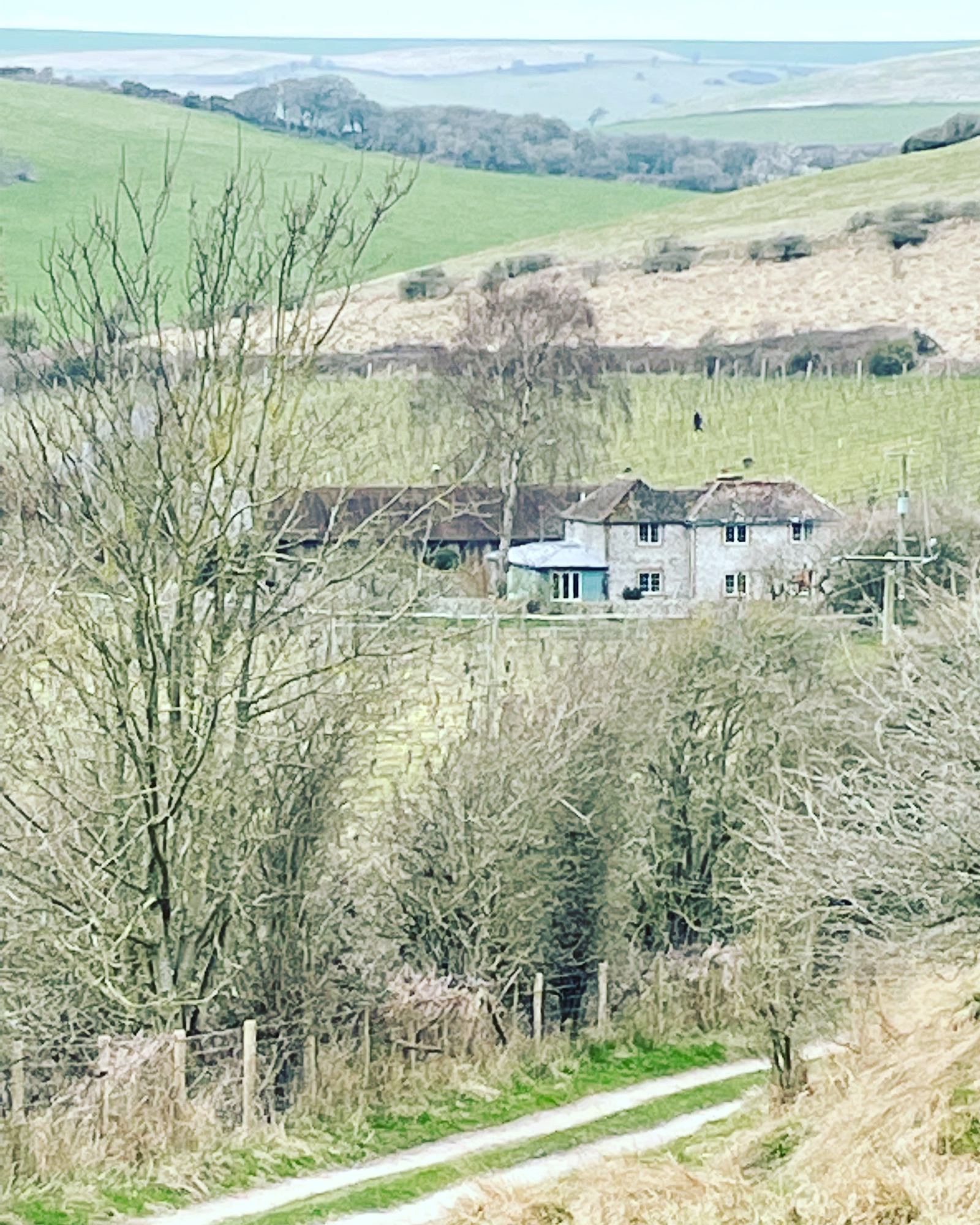
Peter Hall came here in the early 1970s as a shepherd, and leased the house and buildings to raise pigs, but he planted the first vineyard on the site in 1974. There’s a wonderful photo of Peter sitting on a tractor, bare-chested, that comes from this period. He’s hardly recognisable from the ancient mariner image I know. Life was tough and Peter and his then wife had a lot of struggles. A house in need of TLC, a messed-up first harvest in 1976 (not by Peter), and flooding and pollution caused by farming neighbours were just a few of the trials he faced.
The worst was when a local farmer started a corporate pheasant shoot in 2010. The pheasants loved the grapes. In fact, over six years an estimated 30,000 bottles worth. I have one of their home-made dvds which provides the evidence. Breaky Bottom took legal action, but the compensation awarded didn’t come close to the loss, either financial or emotional.
Back in the 1970s there were vineyards in England, but not many making and selling wine. Some were started by people who had made money elsewhere, such as road building. Peter was a true artisan, in the mould of the great French winemakers of the 70s and 80s, in Burgundy, the Rhône and Loire etc.
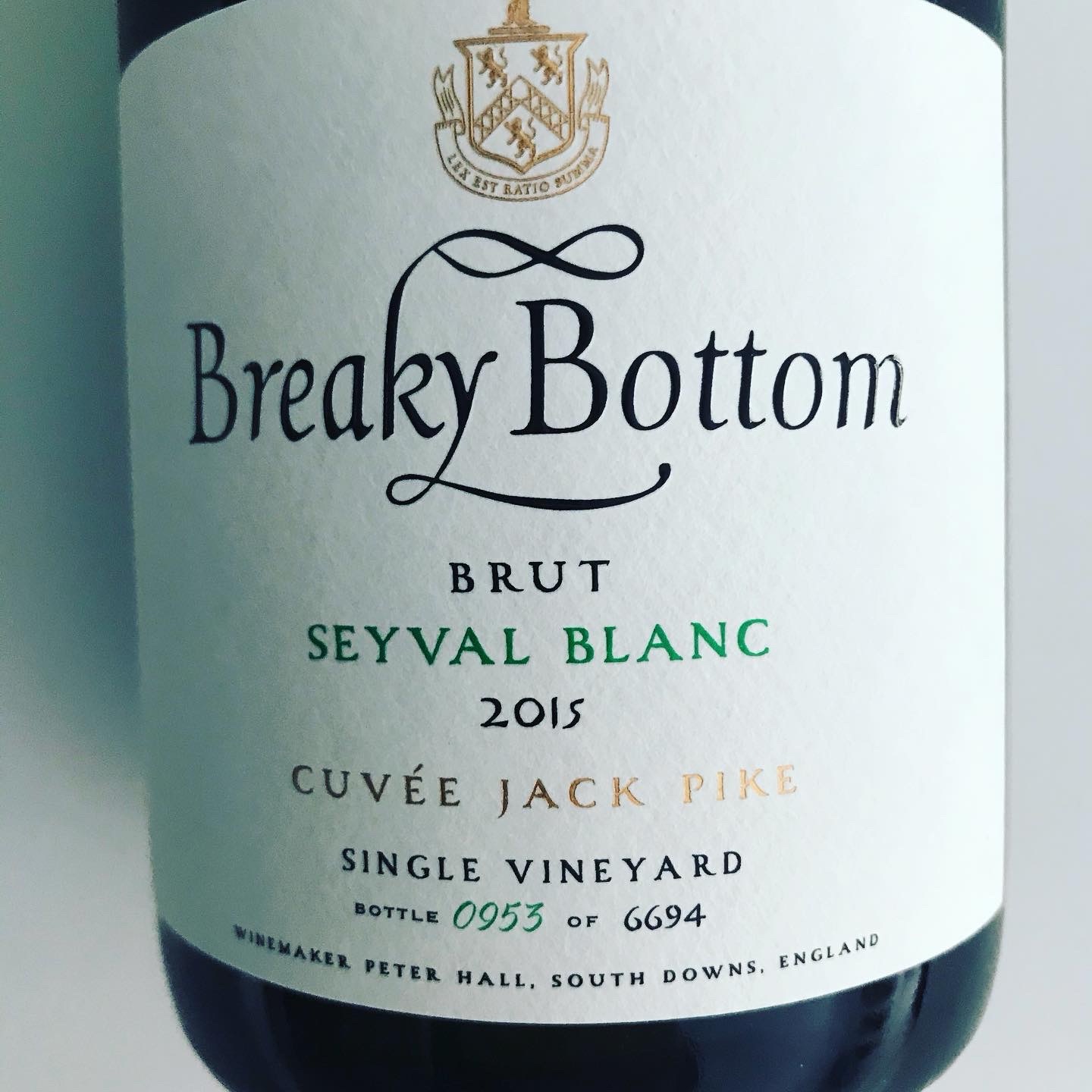
As such, Hall wasn’t all that well known in the wider world, but he kept plugging away. At first, he made still wines, but in the 1990s production began its slow shift to sparkling wine. The first was made from Seyval Blanc, but 2004 saw the rest of the 2.4 hectares not planted to that particular variety planted to the three Champagne grapes. I believe that a good few rows of the original Seyval Blanc that he planted in 1974 are still there, comprising some of the few healthy and productive fifty-year-old vines in England. May they live to be centenarians.
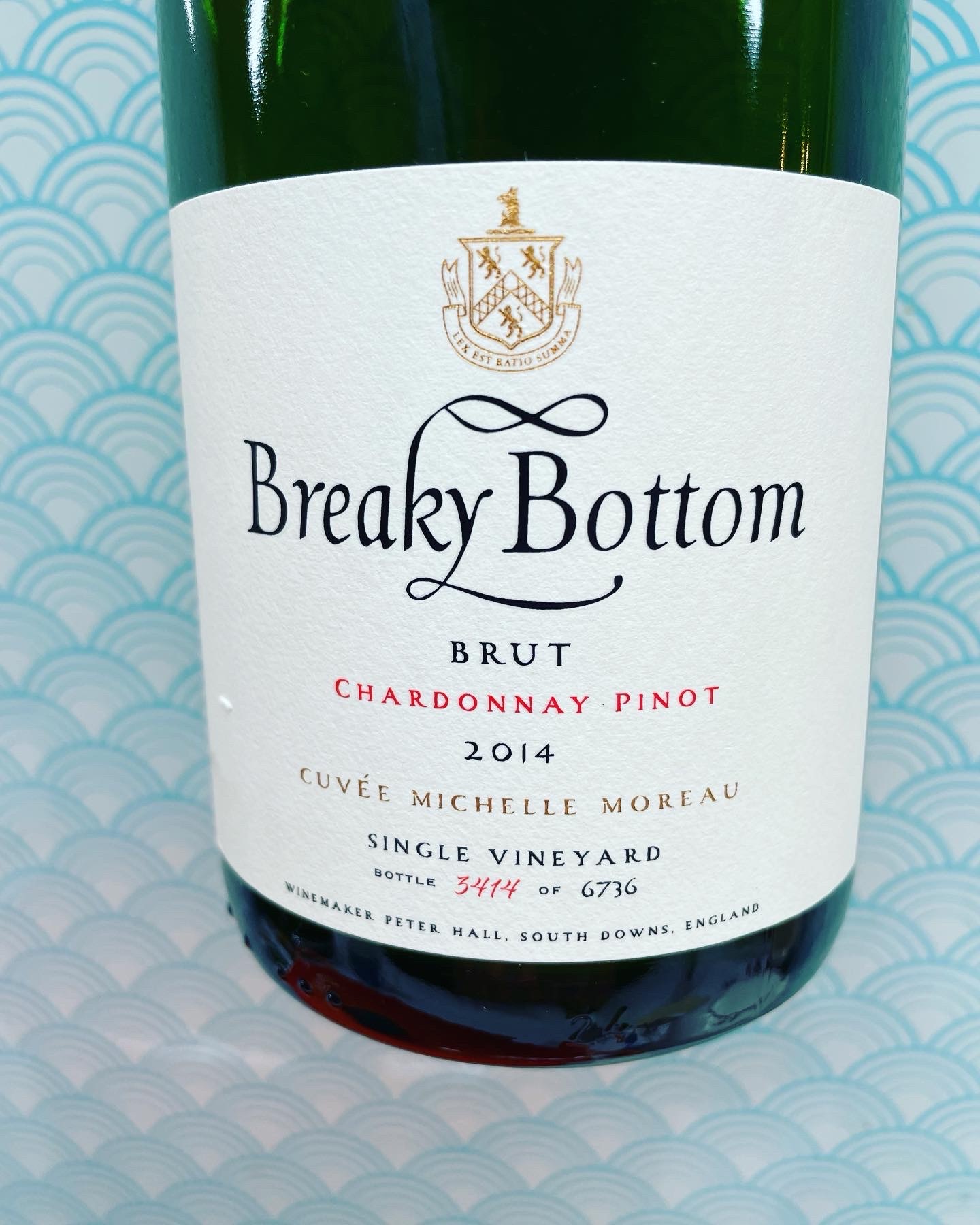
Usually, your two Pinots and Chardonnay would be the wines to garner the plaudits, and of course they did. These are fantastic wines. But Peter Hall may be remembered best for what he achieved with Seyval Blanc. His 2010 Cuvée Koizumi Yakumo, made from said variety, is surely one of the finest English sparkling wines ever made (and if you are wealthy, you could still score a bottle today).

I’m writing about Peter not because I wish to jump on a bandwagon. He has many close friends who are better able to write a warm obituary. I’m writing because I have for many years told anyone who will listen that Breaky Bottom makes the best commercially available sparkling wines in England.
Many have already written about Peter since his passing last week, faster off the mark than me, away in Switzerland. I wish people had seen how important Breaky Bottom was many years ago, meaning as one of the pioneers of a less corporate iteration of English wine, helping to establish the artisanal tradition here that has only really taken off in the past decade. I think that latterly he was acknowledged as he deserved to be.
For me, the only real rivals for the soul found in the outer edges of English (and Welsh) Wine are people like Tim Phillips at Charlie Herring Wines in Hampshire. Tim’s sparkling Riesling is Peter’s Seyval Blanc, so to speak. Also, Adrian Pike (Westwell), Will Davenport, David Morris (Mountain People in South Wales) and Dermot Sugrue. But the numbers are thankfully increasing, currently at quite a rate, following the footsteps of the pioneers.
Peter has been described using many words, some not wholly complimentary, though the latter are always by very close friends and meant with affection (one of his closest friends said “he could be a little sod sometimes”, but it came from a man who could not love him more dearly). I will only use one word. Peter was kind. You could see it in his eyes, alongside their mischievous sparkle. In any event, he was very kind to me, and even though I did not see him after moving to Scotland, he was kind enough to message me from time to time.
I should also add that Peter was an enigma. Each of his cuvées is named after mostly good friends, some of whom are pretty famous. This ex-shepherd artisan was not always a hermit in this idyllic chalk hollow. When in London it was usually in the smartest company. Actually, the previously mentioned Koizumi Yakumo is the naturalised Japanese name taken by Peter’s famous great-uncle, Patrick Lafcadio Hearn (1850 – 1904), the great traveller who was perhaps as instrumental as anyone in bringing Japanese culture and literature to the West.
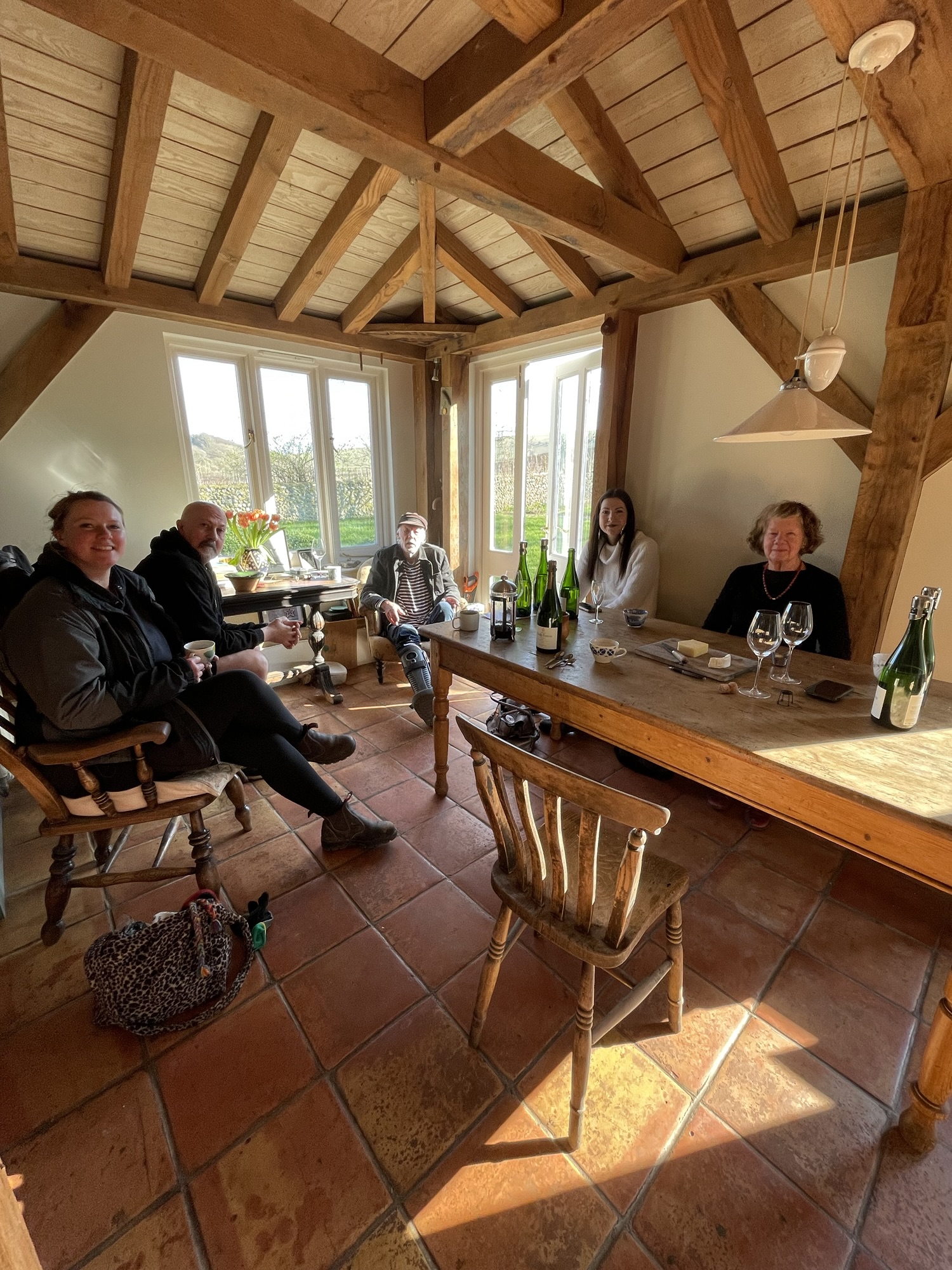
Louisa, Henry B, Peter, Cassie B and Christina at BB, March 2022
So, now I seem to run out of words. Some of the most moving writing about Peter Hall can be found in Henry Jeffreys’s book Vines in a Cold Climate (Allen & Unwin 2023, but now in paperback). I suspect that many who own it will be taking it off the shelf and combing the index for references to Peter. I first got interested in Henry’s writing after Peter Hall warmly told me about Henry’s visit to Breaky Bottom whilst researching this book.
Margaret Rand also wrote a very good article on Breaky Bottom in World of Fine Wine in October 2022, which should be available online. All the books on English Wine tell the story: Stephen Skelton, Oz Clarke, and Ed Dallimore, whose photo of Peter on page 258 of his The Vineyards of Britain (Fairlight Books, 2022) is seminal.
I have written about Breaky Bottom a number of times. If you are interested, see my article “Breaky Bottom – A Different Perspective on English Wine” from 15 March 2022 on this site.
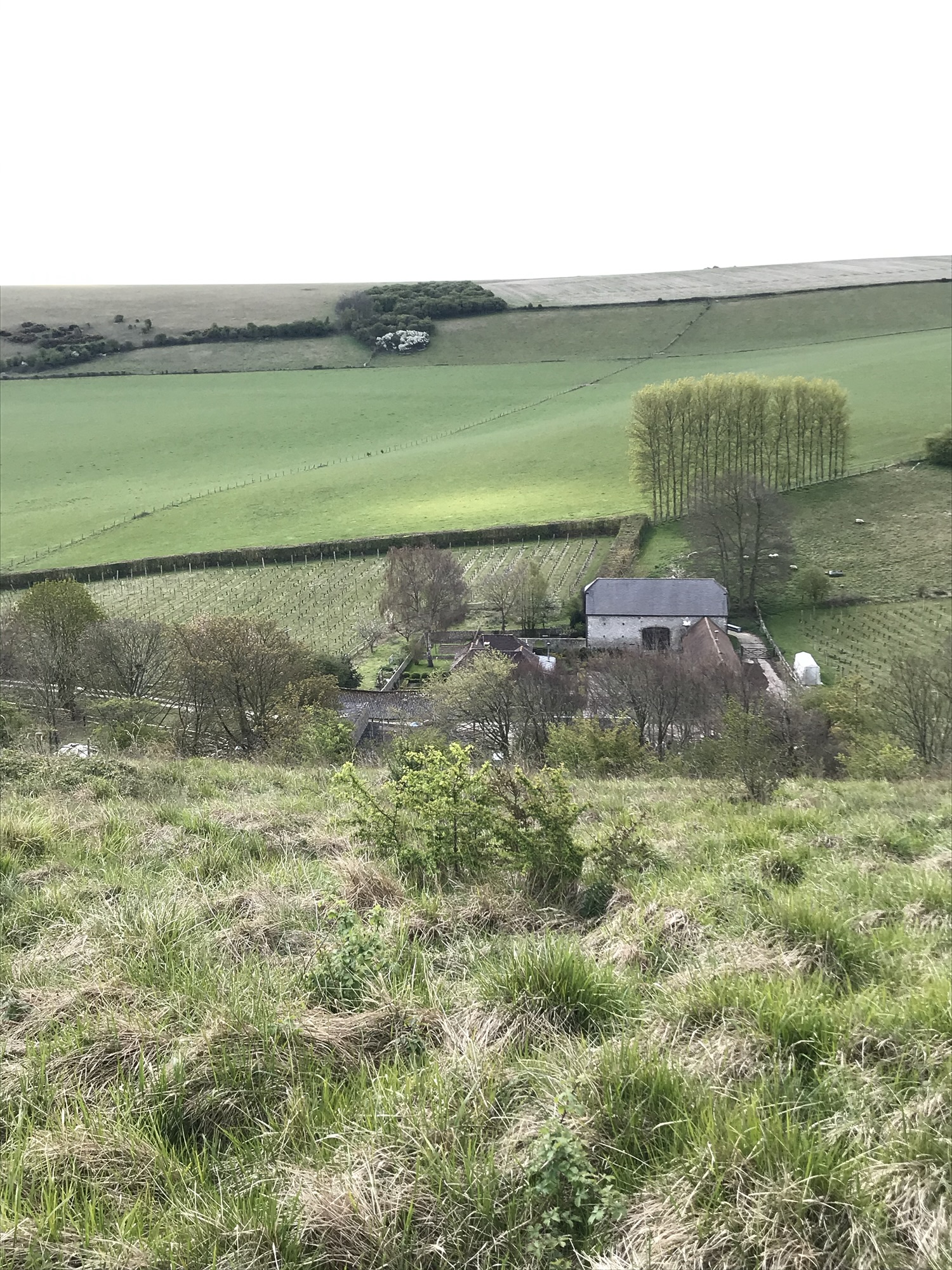
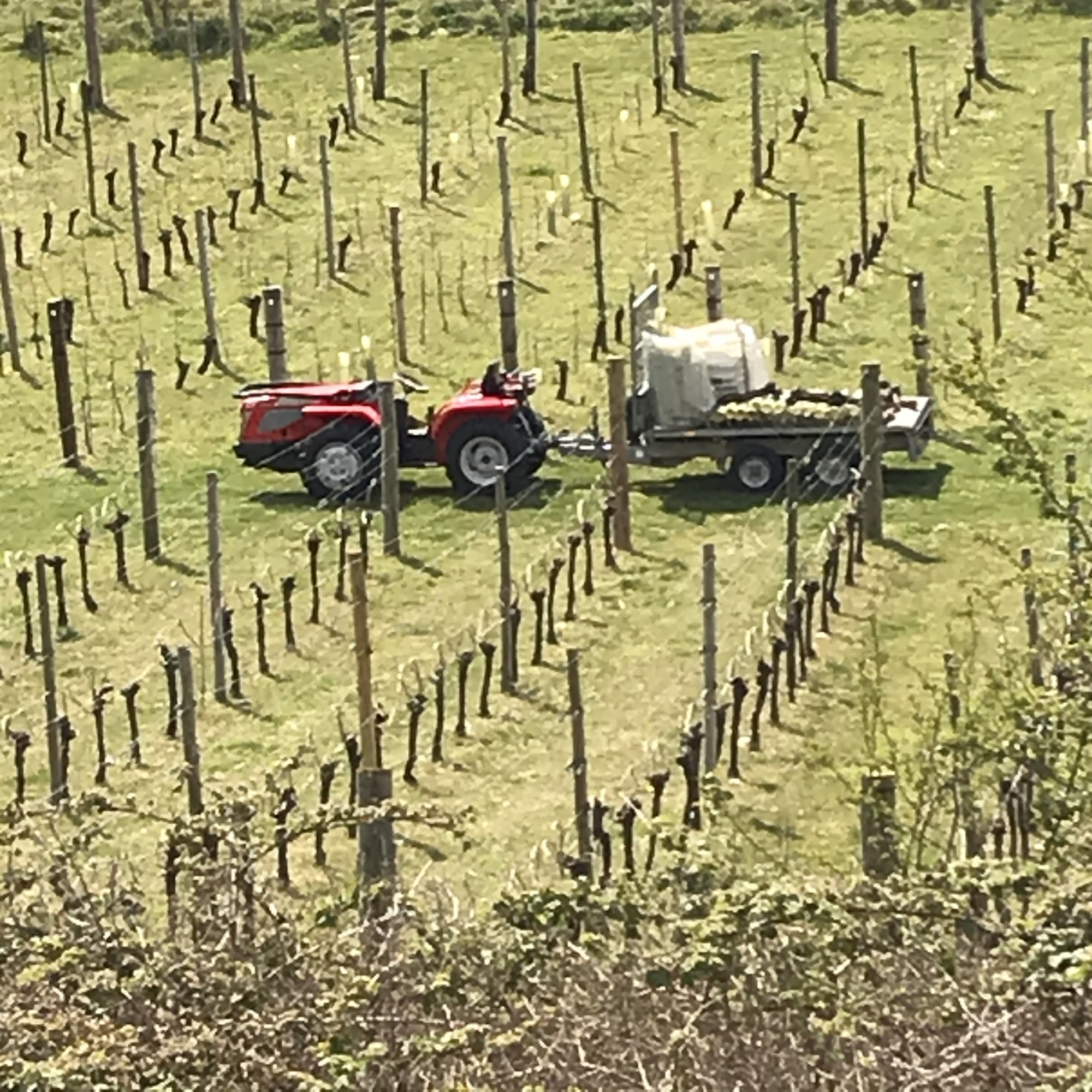
What of the wine now? It’s too early to say. I’ve been away for three weeks and as Peter was not really sending out emails anymore, I didn’t know what state the 2025 harvest was at. Of course, the Halls had a little help in the vines and winery (that’s you, Louisa). I read just now on Jancis Robinson’s site that the grapes will be harvested next weekend by family and friends. The vineyard is so perfect I hope it continues, and as an artisan project. I know Peter had offers in the past.
But of course, anything made in the future will not have Peter’s stamp on it. If you wish to grab a few bottles of this true icon of English Sparkling Wine, you are not too late. Prices have been creeping up, and doubtless will increase some more, but there are still more recent (and eminently ageable) vintages that can still be had for under £40. Breaky Bottom’s official agent is Corney & Barrow, who also have a BB cuvée under their own label.
I have always bought my bottles from Butlers Wine Cellar in Brighton. Henry Butler and his wife Cassie (the B’s in the photo) have been very close friends of the Halls for a long time. Henry used to visit as a child with his own parents, not then as enamoured with the wine as he was of the Halls’ large and very friendly pig. I know both couples were close and genuine friends, and that Henry and Cassie feel Peter’s loss deeply.
For my part I am genuinely sad too. I feel the loss of a man who has not only filled my cellar with wonderful wines over the years, but who I think for many years was the great unsung hero of English Wine. My warm wishes and condolences go to his wife, Christina, and Peter’s children. If there is, as I have seen intimated, a 2025 Cuvée Peter Iglis Hall, I pray I may get some when it is eventually released.

 David Crossley's Wide World of Wine