
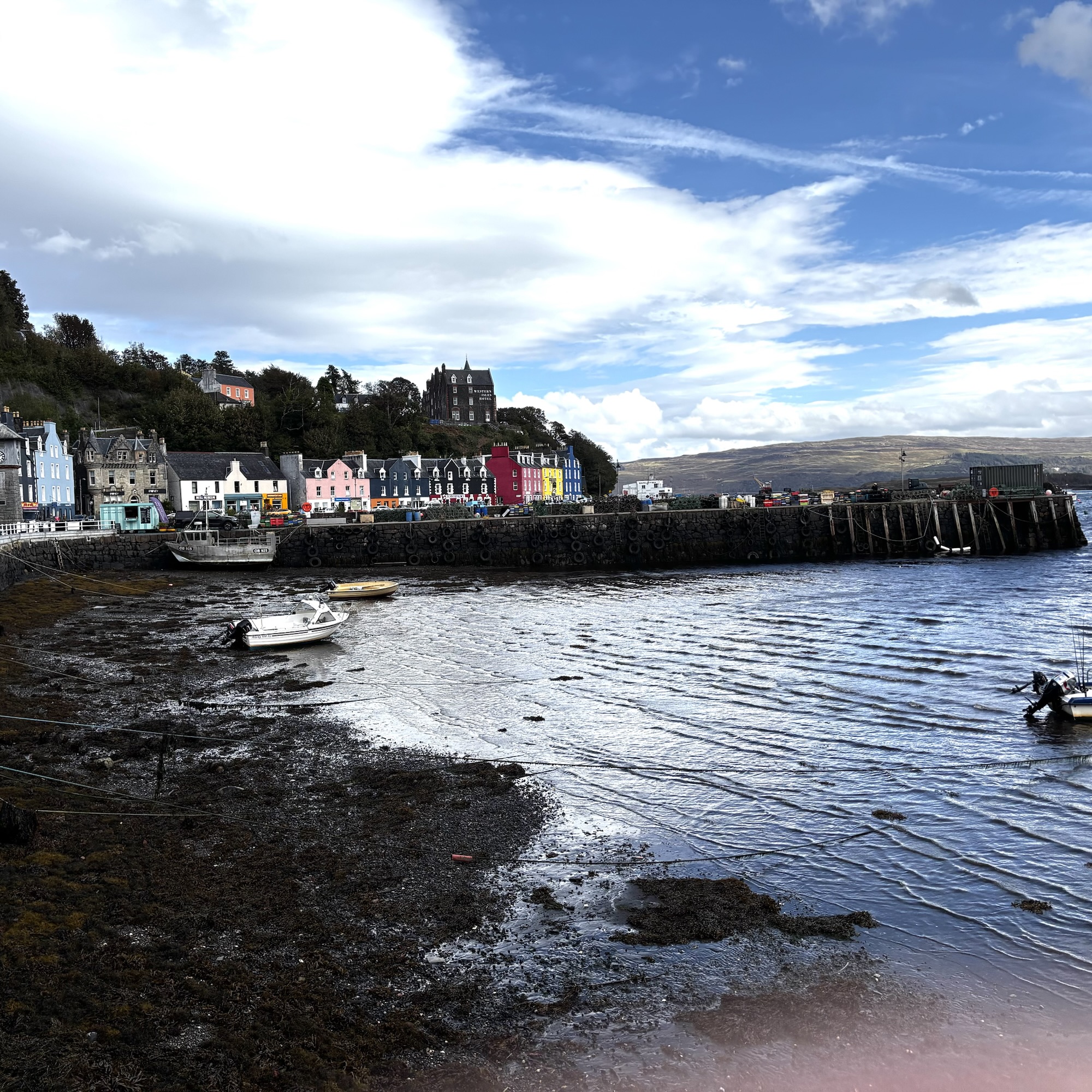
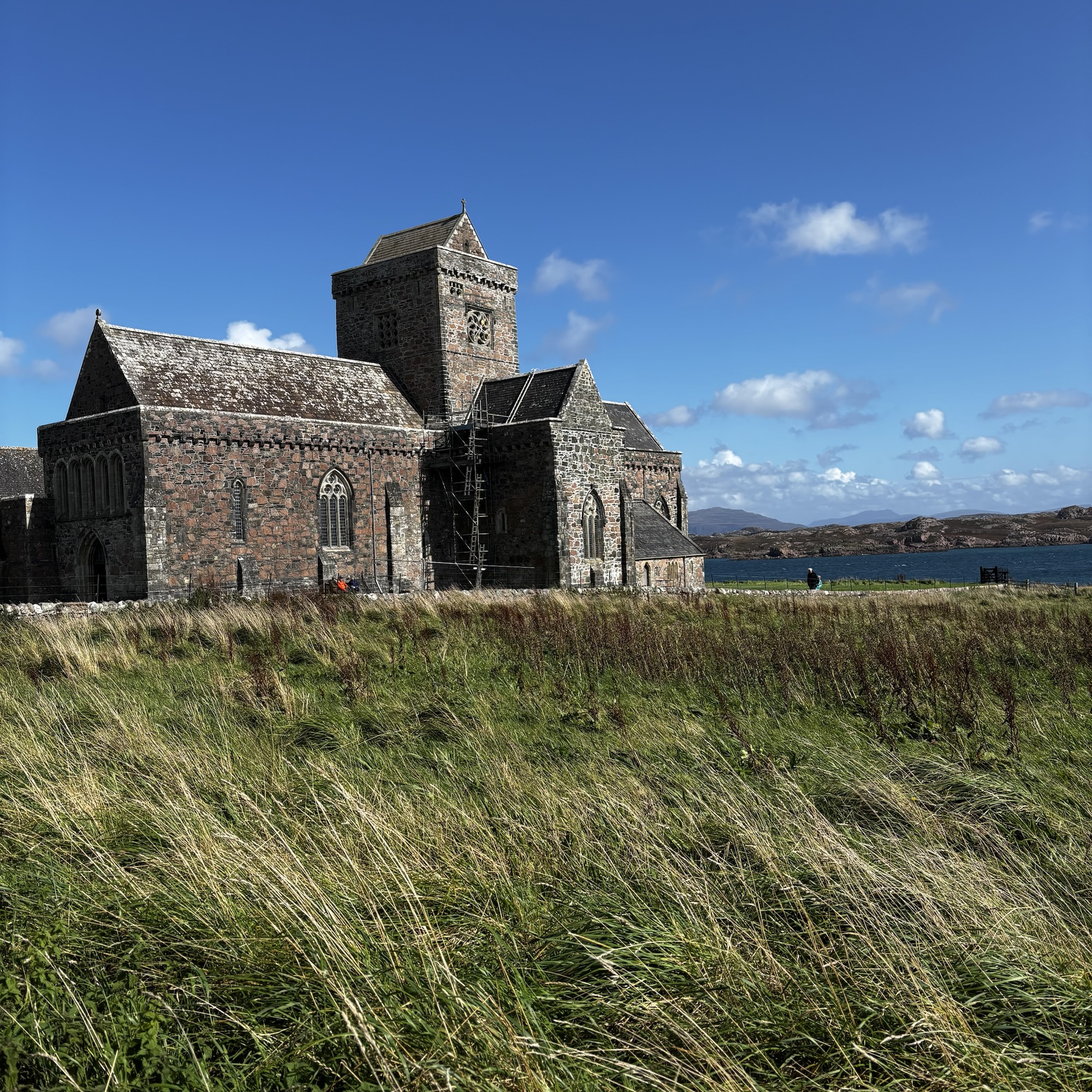
The most observant of my Instagram followers will know I’ve been on Mull, an island that I have to say ticks all the boxes for me. You can seek out some wonderful home-grown produce from land and sea to go with some excellent walking, especially on the island of Ulva off Mull’s western coast (a three-minute ferry). A trip to Mull should also always include the ten-minute crossing to Iona. I haven’t met anyone who has been to Iona who doesn’t say that it is a very special place, with a very special atmosphere, there’s something in the air (and I would not describe myself as a “religious” person, as such).
All that said, Mull might not be the first of the islands off Scotland’s west coast that comes to mind when we mention Whisky. Islay has so many distilleries, and all of them have their followers. Skye has Talisker, which might be famous enough. Even those distilleries on Jura and Aran are probably better known, and now Harris has a fashionable distillery producing its first few whisky releases, after popularising its gin to the extent that it is my own favourite, and that of at least four of my friends and acquaintances.
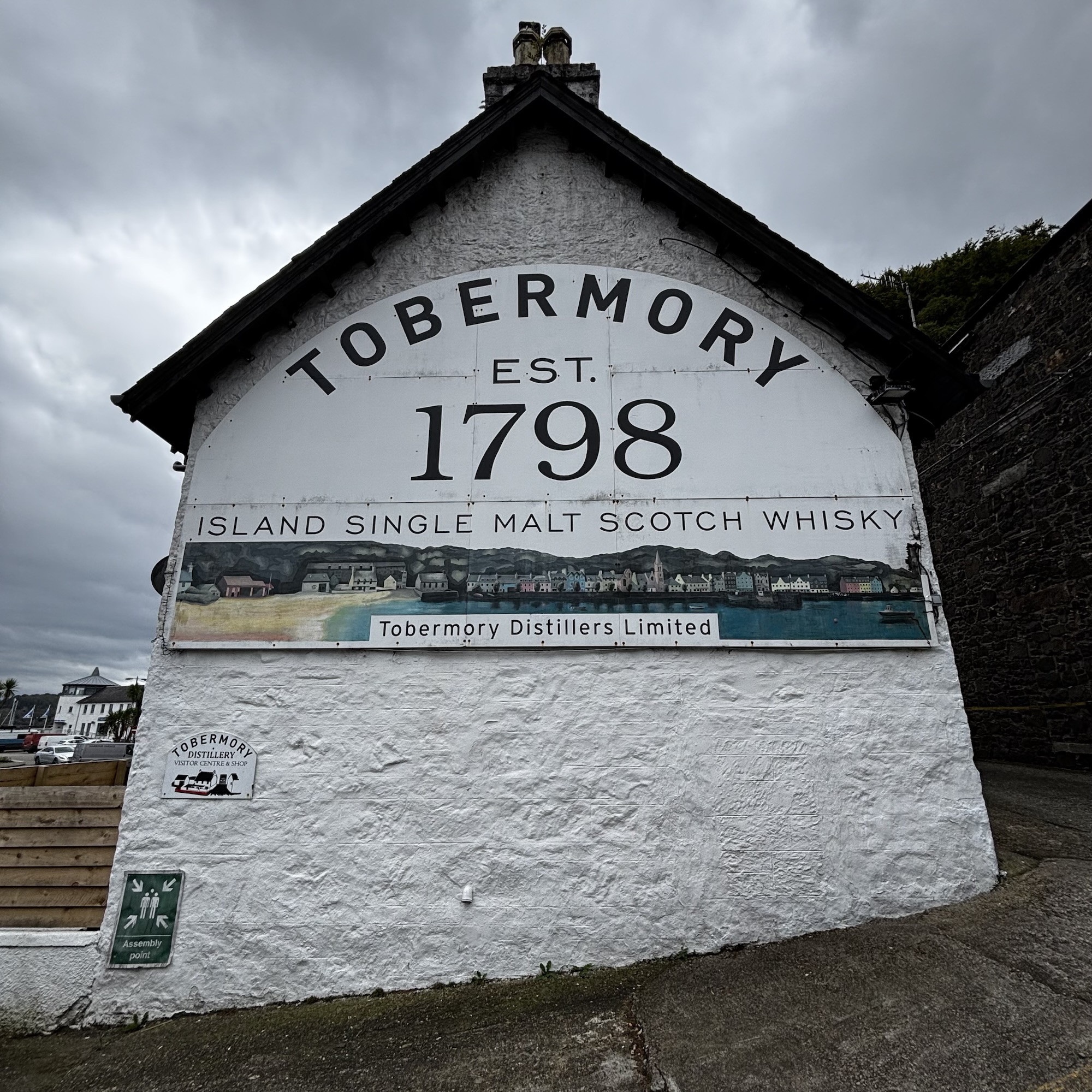
Mull has Tobermory Distillery. Set on what is literally a picture postcard harbourfront, its painted shops and houses being one of the best-known images of any Scottish island, it has had, as the writers say, a chequered past. It was technically founded in 1798 by John Sinclair, a local merchant, but it appears under the name of Ledaig just over a decade later. The distillery was mothballed in 1930 and only went back into distilling in the early 1970s. By 1982 it was closed again and used to store cheese.
I will just interrupt the story here to say that Isle of Mull Cheddar is a wonderful cheese and its dairy is up the hill, just above Tobermory. It has the best café on the island, located in a very pleasant glass house, with a well-stocked farm shop attached. The cheesemakers follow a zero-waste policy which includes making a whey-based spirit in a plethora of forms which is well worth trying (there are always tasting samples in the shop).
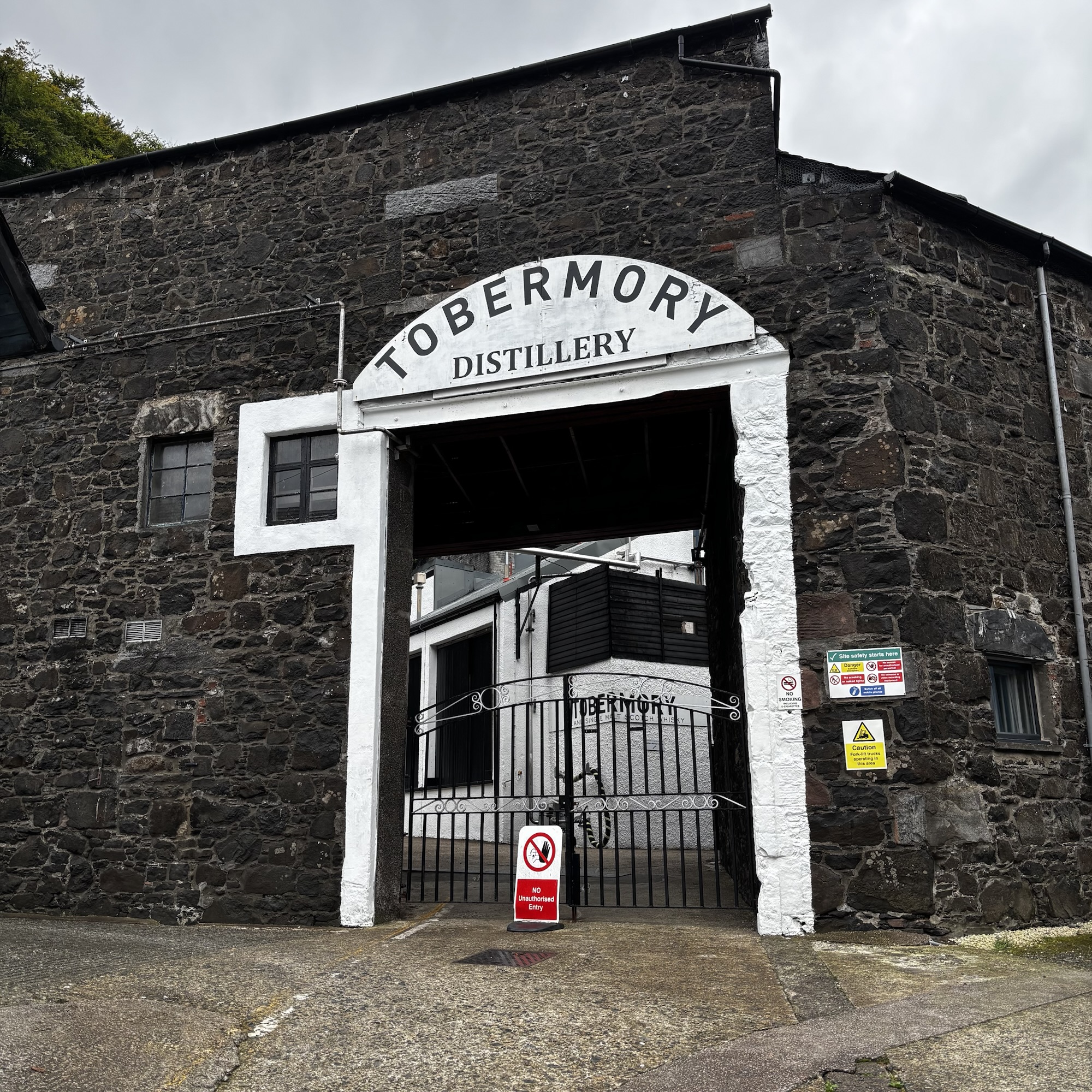
Back to the distillery. More opening and closing culminated in a major refurbishment in 2017 and its now sort of fully operational. I say “sort of”. The whisky industry’s fortunes, like those of the football team I support, swing like a pendulum. They have recently cut back production because of the changing market, which of course reflects the economy in general, but even more harmful, will be affected by Trump’s tariffs into a major export market.
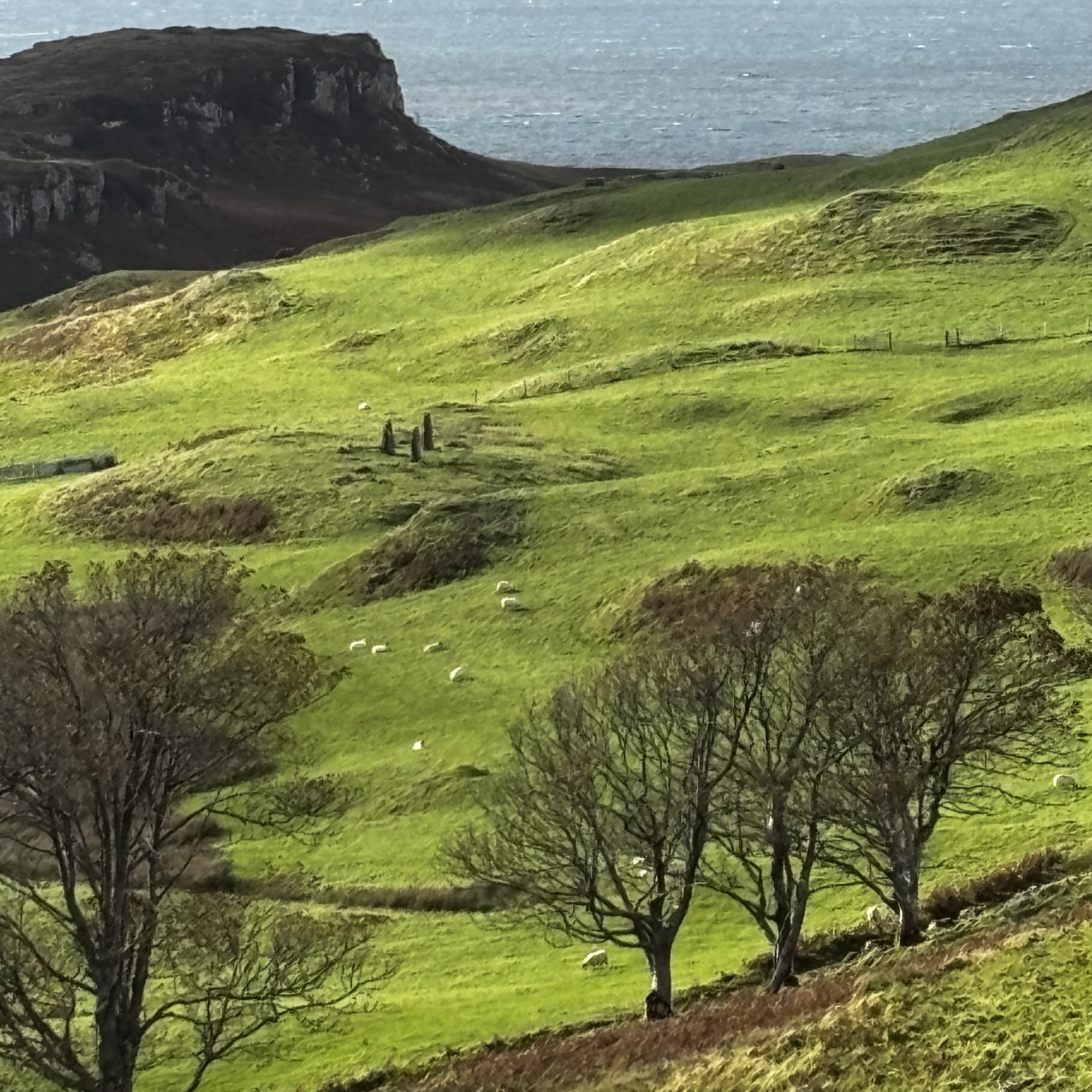
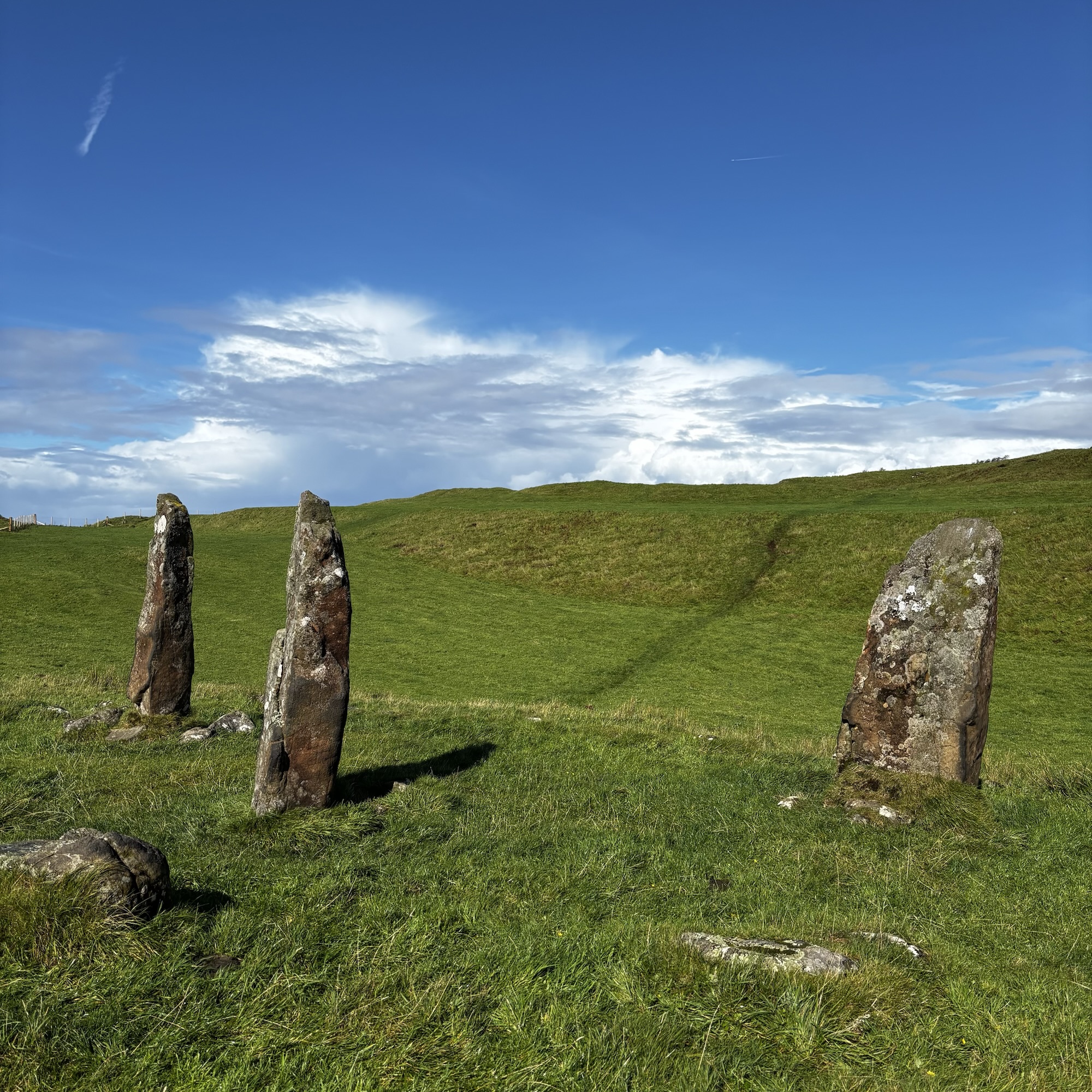
This is a shame because I would argue that at no time previously has Tobermory Distillery made better whisky. The range divides into two labels, Tobermory and Ledaig. Tobermory is an unpeated single malt, which in its 12-y-o version has citrus notes and a sweetness (relatively speaking, in a whisky sense of course, we’re not talking dessert wine). Ledaig is a peated whisky, smoky and rich. It’s more autumnal, and if Tobermory reminds me of the white sandy beaches like Calgary, out west, Ledaig reminds me of a volcanic landscape littered with standing stones and dolmen.
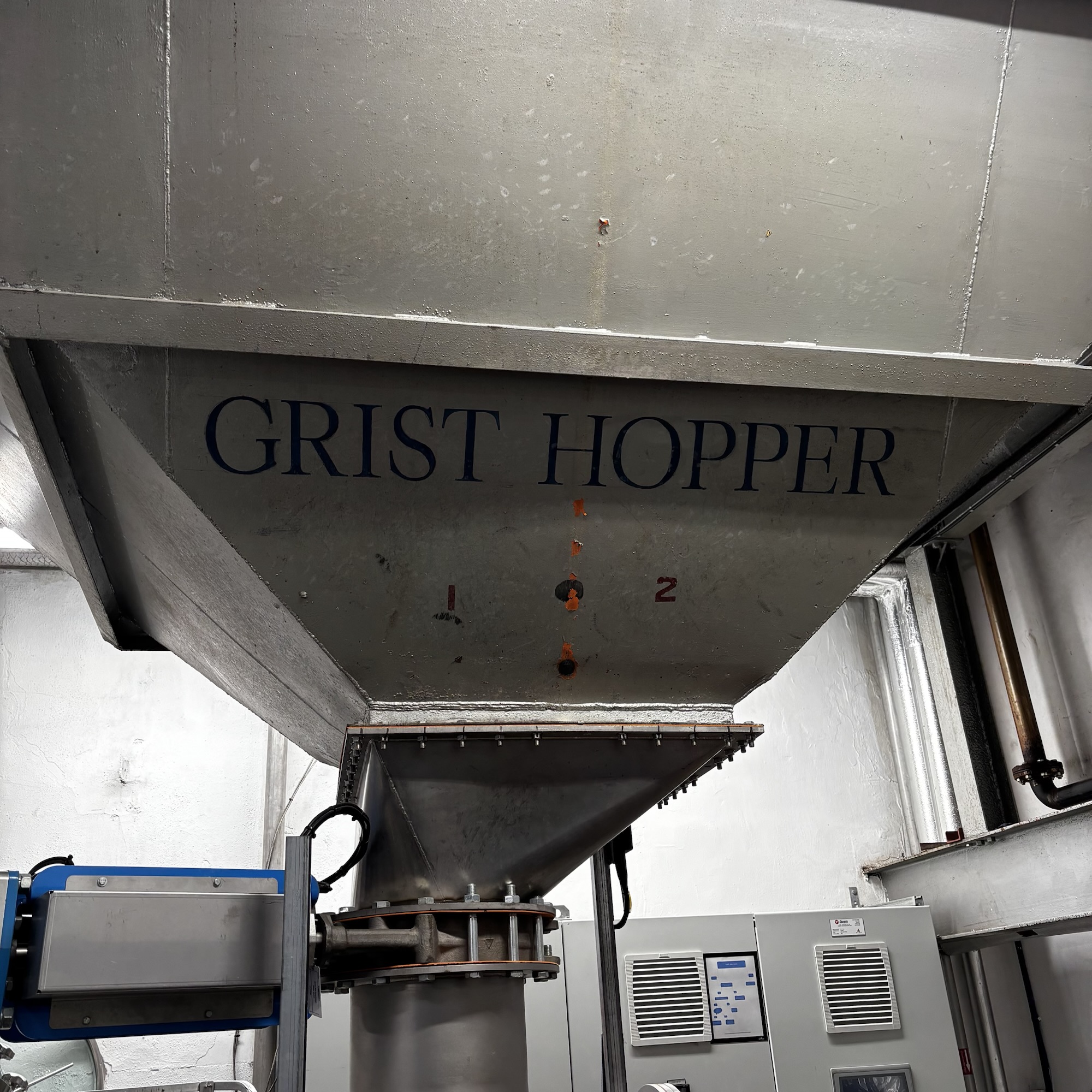
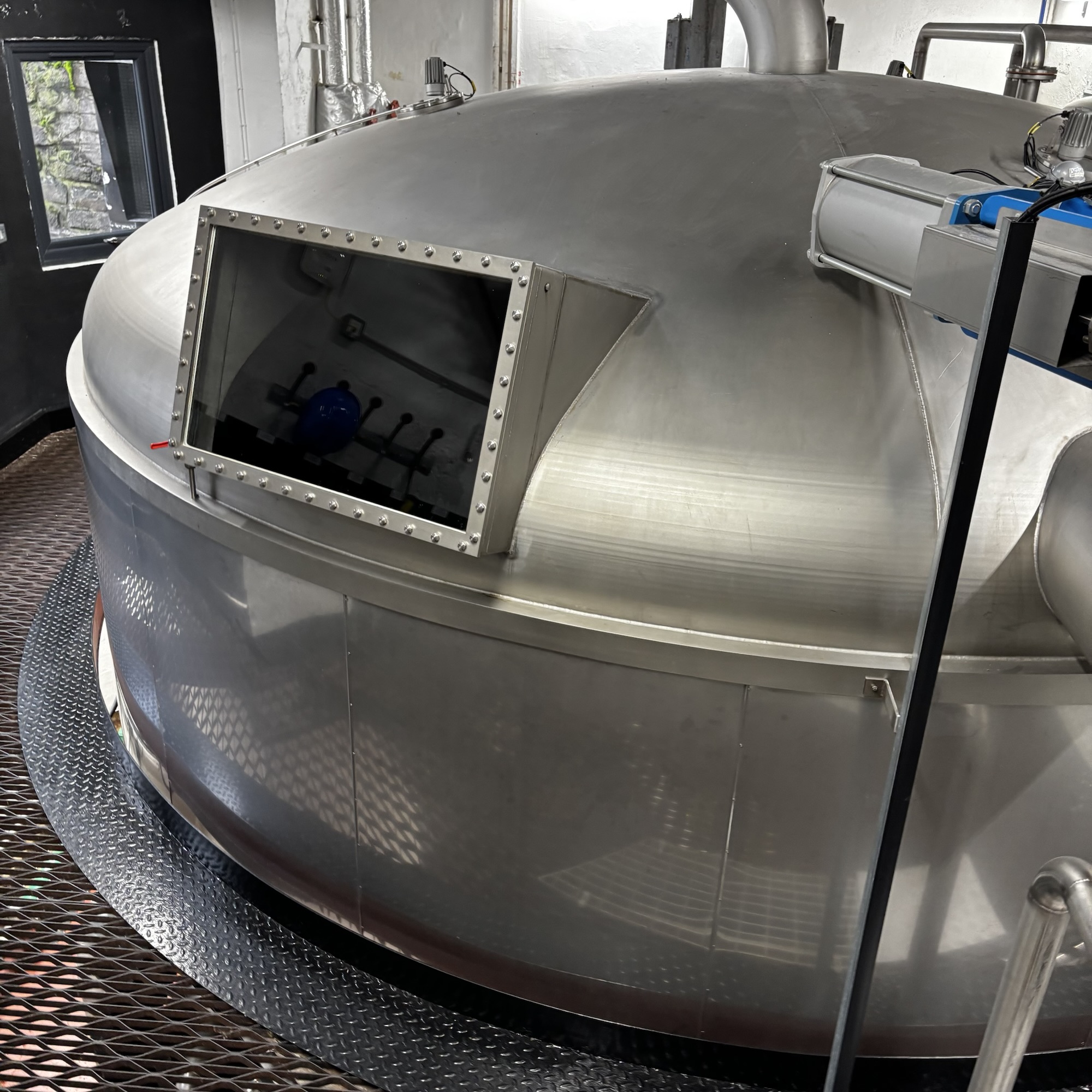
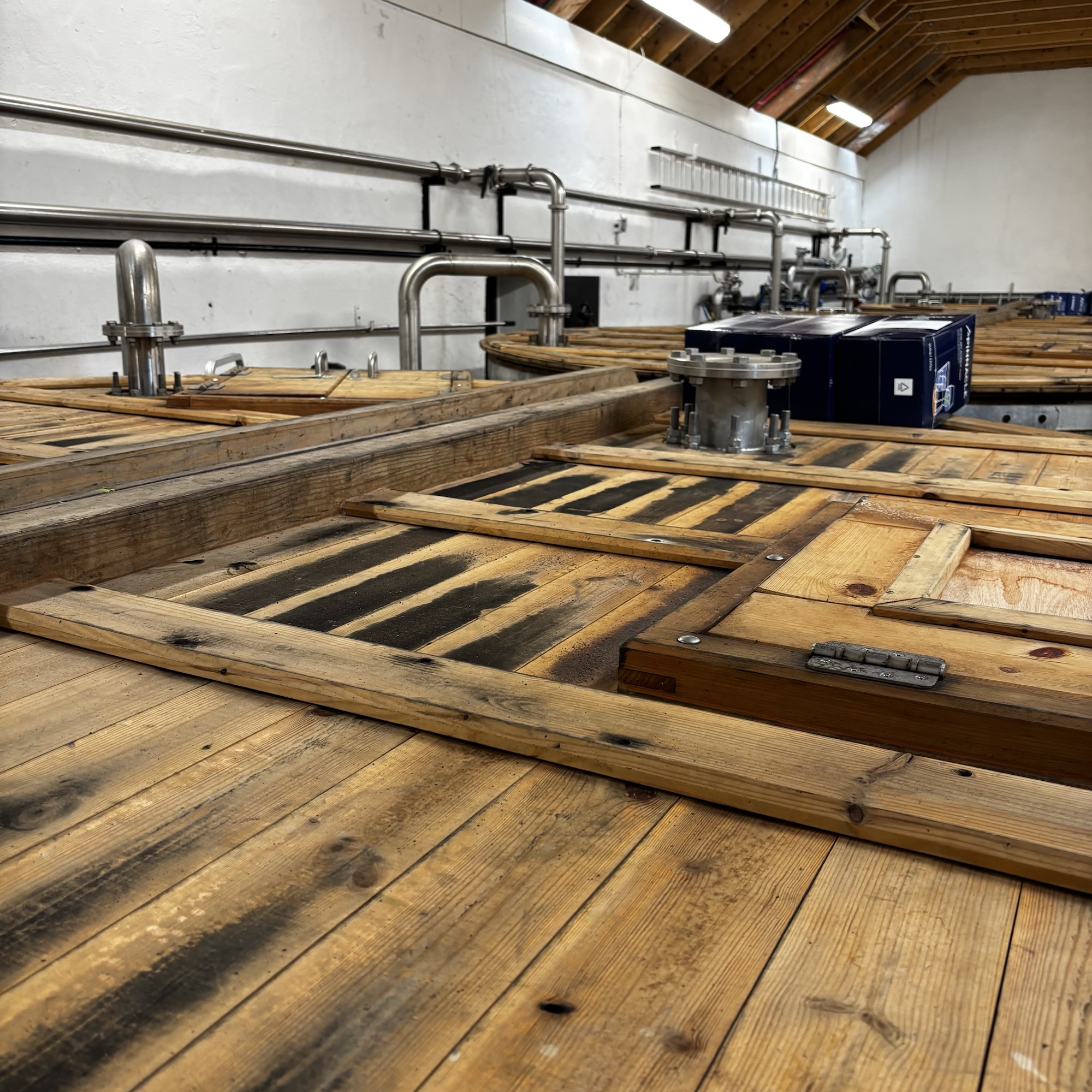
There is no barley grown on Mull but the peated malt comes from Port Ellen (35ppm). The distillery now has a new, shiny, mash tun, and four Oregon pine washbacks. The copper stills sit almost cramped together in a small, warm, room. They may occupy a small space, but they are things of beauty. Julieann Fernandez is the talented Master Blender here.
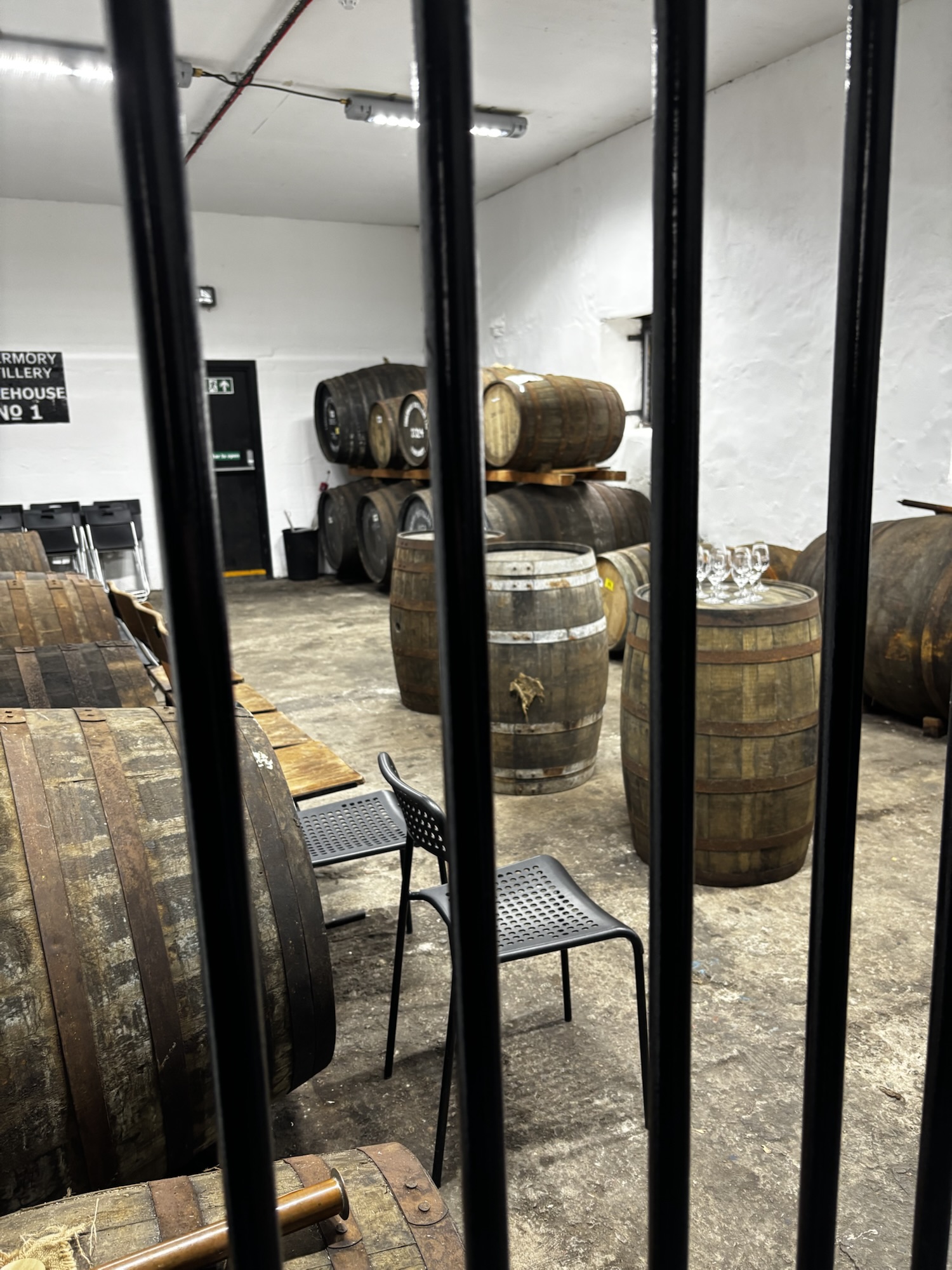
There are some special casks locked away behind bars at the distillery, but generally the distillate is matured off-site at Deanston Distillery. Random fact: Deanston is at Doune in Perthshire. Doune Castle, built in the fourteenth-century is well preserved, which led to its selection as various locations in Monty Python and the Holy Grail.

I won’t list all the different bottlings they put out under the two labels here. The distillery shop is well-stocked with an array of different ages and cask finishes. I like the lightness of the Tobermorey 12-year-old, but although my taste for peated whisky has declined a bit with age, I find that it is the Ledaig (pronounced more like Lech-ig, it means safe haven in Gaelic) that I lean more towards. I naturally came away with a bottle, and it was the Ledaig Sinclair Series Rioja Cask Finish that got my money.
This is a “creamy, peppery and berried” single malt made with well-peated barley. Originally, like most of the distillery’s output, matured in ex-Bourbon casks, it was finished in “hand-selected” Rioja casks. This is a whisky without a given age, which means we know at Tobermory it is younger than ten years old. The benefit to the consumer is the chance to try an interesting cask finish for a lot less than you’d usually pay for one (in this case, it retails for almost £40 but if, like me, you went on the tour, you get a £5 discount off any 70cl bottle).
I was recommended this bottling both for its value and interest. The cask finish has certainly influenced the whisky, which not only has the kind of colour you get from a red wine cask finish, but it also has aromas which remind me of Rioja (orange peel, leathery notes, raspberry, almond, cinnamon and black pepper, to mention a few). It’s bottled at 46.3% abv, standard, but with younger spirit a cask strength bottling would have been too much.
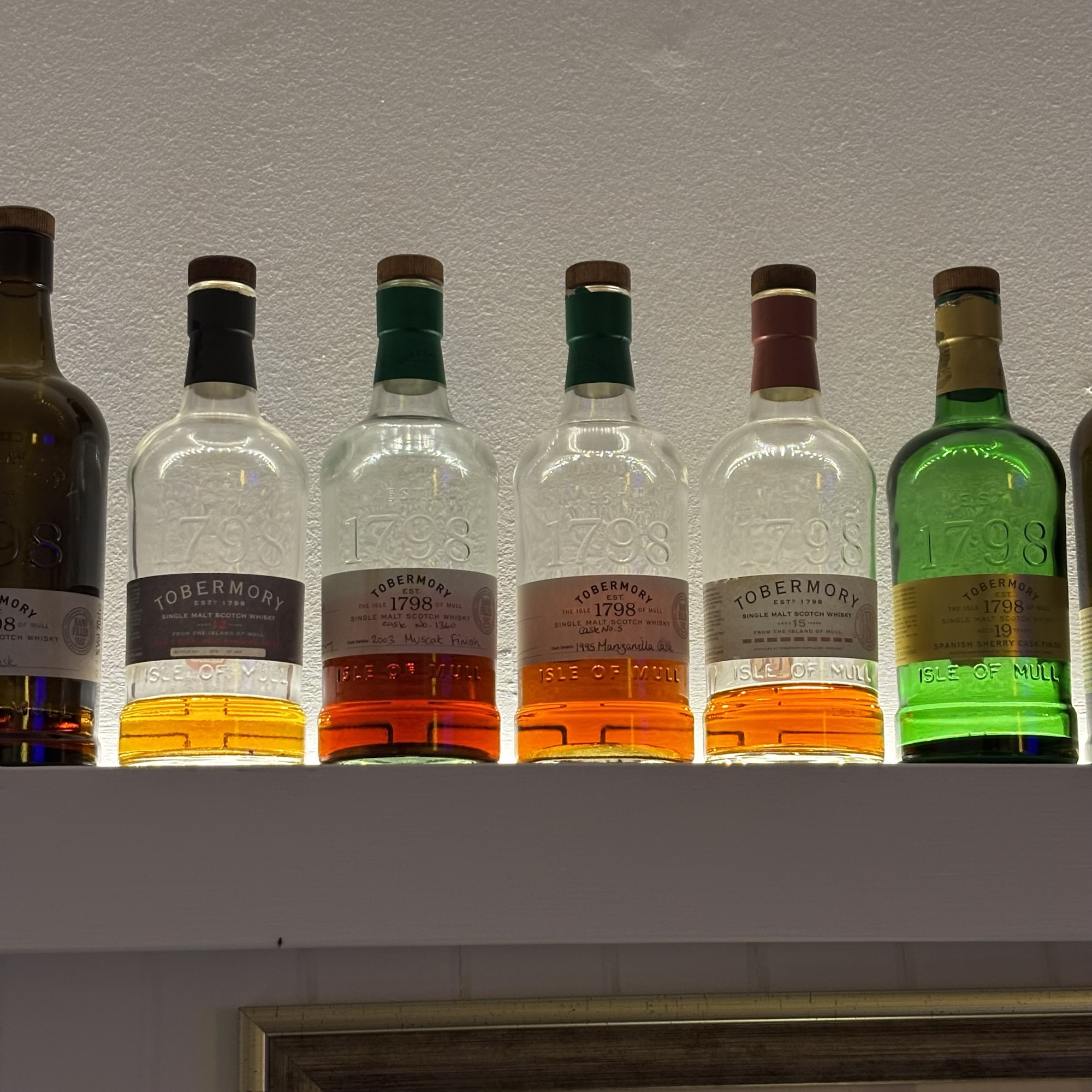
As for the tour, there are several versions you can go on, with various tasting options. I went on the basic distillery production tour. You get an introductory talk, a tour of the production facilities and a tasting, two samples, one each of Tobermory and Ledaig’s standard bottlings. It cost £19.50 per person (advance booking), with £5 of that recovered on my bottle purchase. I also grabbed a few miniatures of various ages, as one does. As is usual, drivers can elect to take away their 1.5cl samples (see photo), but here we were also given a tiny taster to be able to nose, and at least allow the tongue to experience the two whiskies.
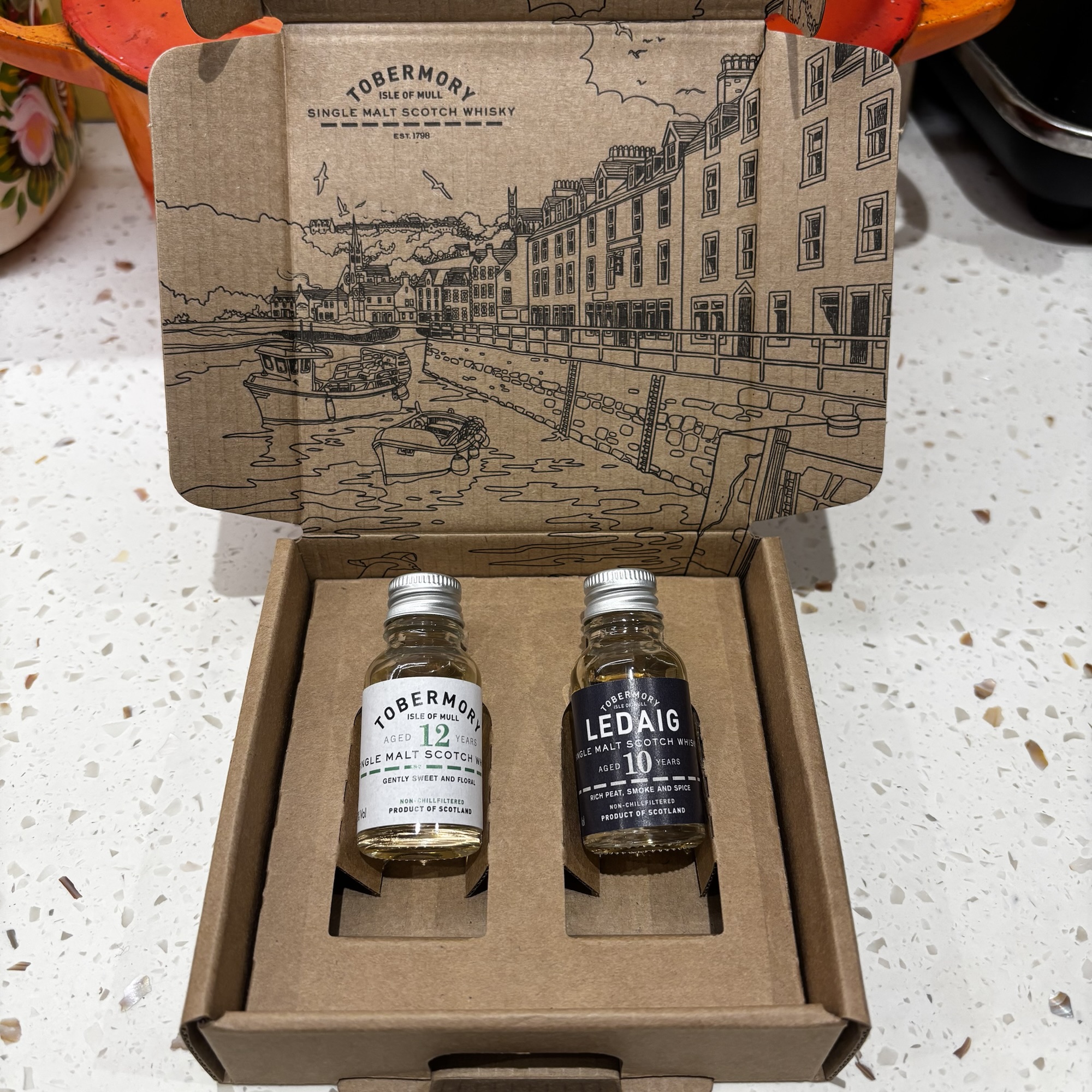
I would say that distillery tours are often very much down to your individual guide, and of course how “commercial” the distillery might be in outlook. This was an excellent tour, the best I’ve been on so far, which was down to a very open and friendly guide who was experienced and knowledgeable. The distillery feels more artisanal than some bigger ones, and although the tour itself took maybe forty minutes of a one-hour experience, I liked this rickety and cramped old building.
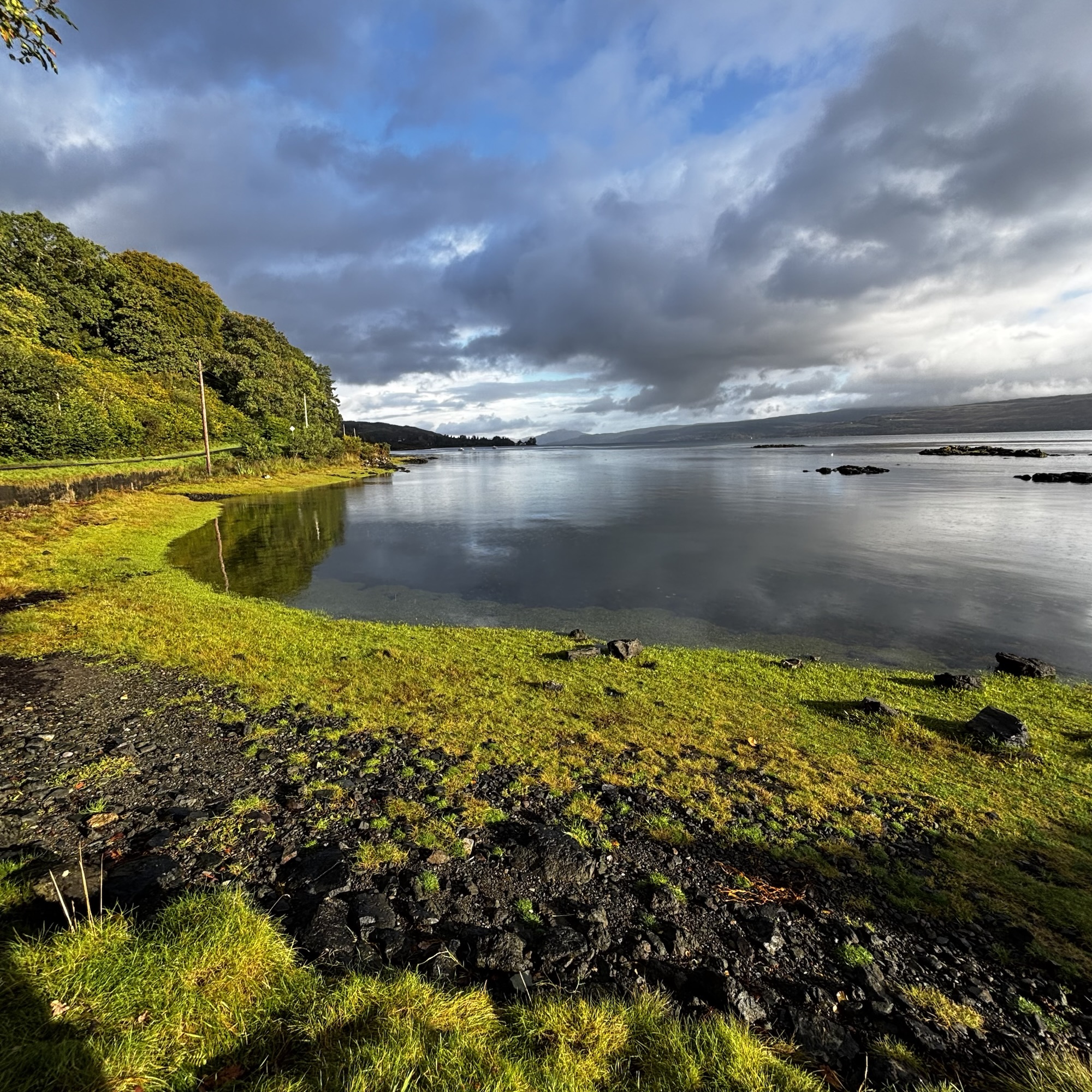
I also like Tobermory, and Mull itself. It was my first visit, although the island plays an important part in my wife’s family history. I make no apology for saying that I somewhat fell in love with the Isle of Mull, so I would recommend it to anyone thinking of exploring the Inner Hebrides. True, it rained quite a lot during our week there, but with one notable exception, it failed to fall on me. The island looks beautiful even in a storm, but even more so in sunshine, especially after a heavy shower.


 David Crossley's Wide World of Wine
Great Share. Thank you.
LikeLiked by 1 person