
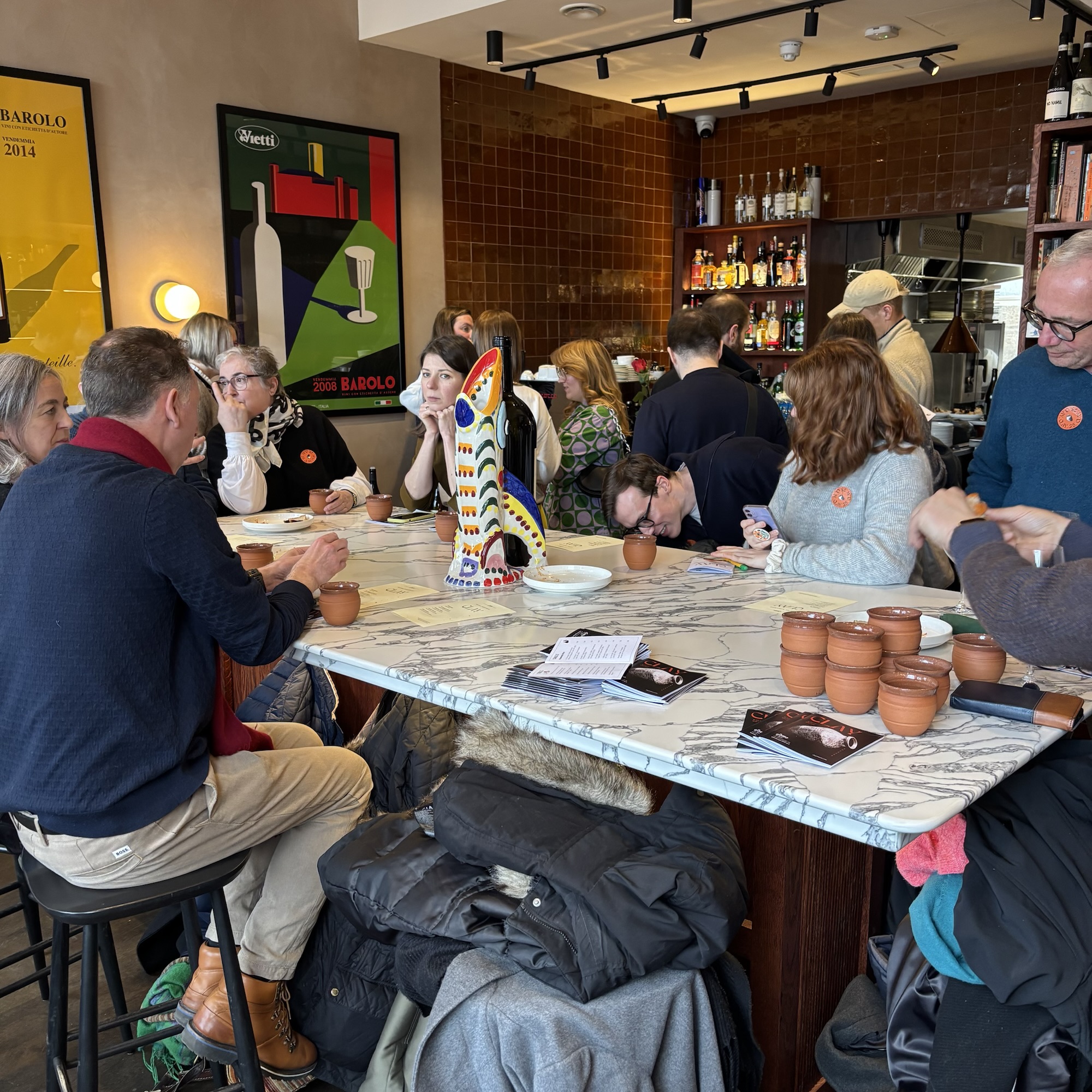
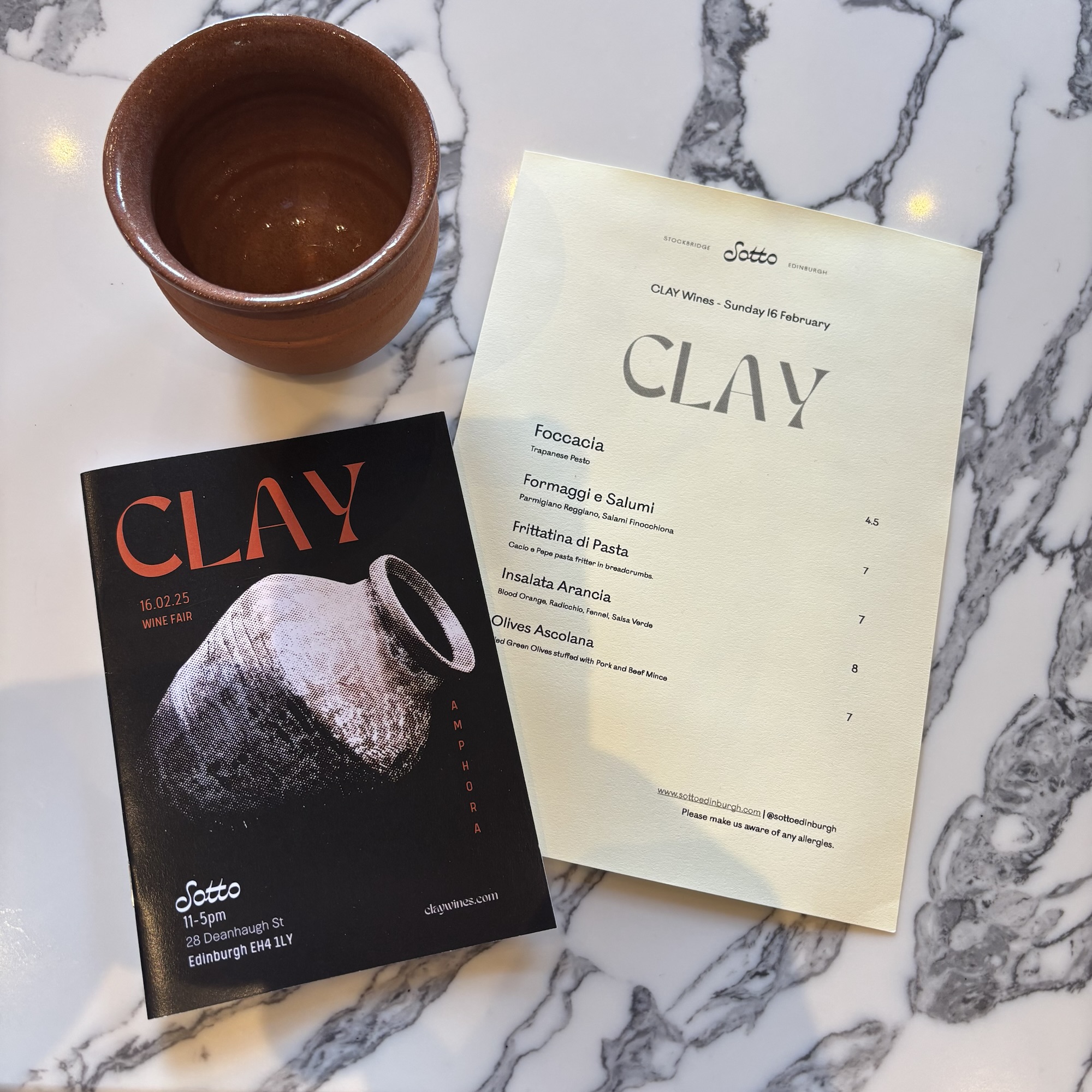
On Sunday I was lucky enough to grab a space at the inaugural Clay Wine Fair at Edinburgh’s Sotto Trattoria in Stockbridge. The event, a celebration of wine made in amphora and other terracotta/clay vessels, was organised by Isobel Salamon. Isobel runs Slonk Wines, an international wine consultancy which provides a whole range of wine services (education, business and wine list development, sommelier services etc) to wine brands, distributors, retailers, other wine businesses and consumers. Isobel also works as a wine judge, writer and events organiser. That’s why elsewhere I called her Edinburgh’s wine polymath.
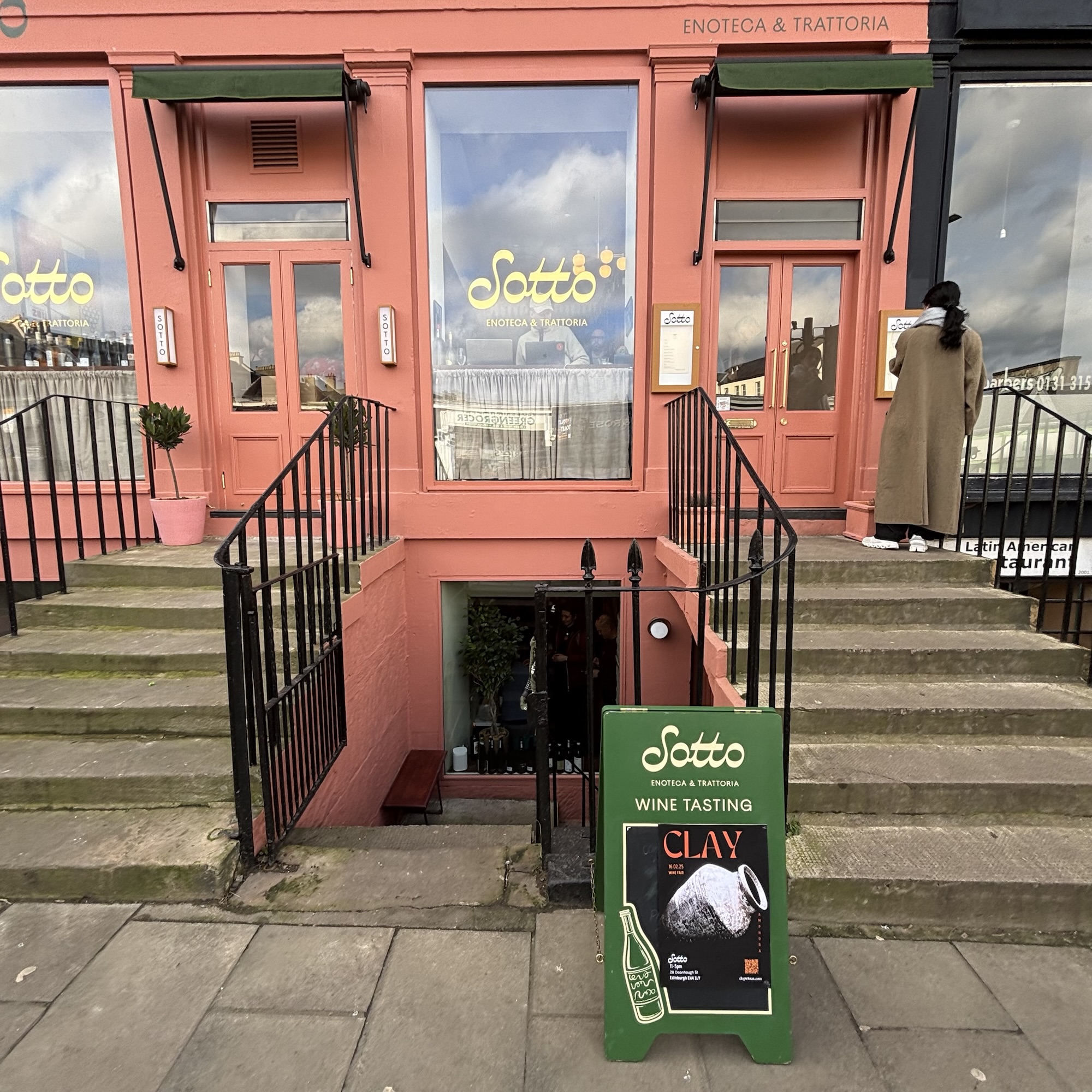
I’m going to divide my piece on the fair into two parts. There were more than one hundred wines to taste, from a surprising number of countries and regions, all at tables taken by wine importers and agents. I didn’t taste every wine, not so much through lack of stamina but more as time progressed the venue became a bit too full. At one particular table I waited in vain for ten minutes. With a one-hour trade-only slot followed by public access one has to expect table-hogging later on, but nevertheless the fair was a massive success. It was also simply much more popular than one might have imagined.
A quick word about stemware. There wasn’t any. We were given a lovely clay cup made by potter Claire Henry. I’ve seen similar cups to these being sold by natural wine shops in Australia and France and they seem a great idea for slugging natural wine from. They remind me a little of the sake cups one finds in Japan, and I was gutted to somehow manage to leave mine behind. They are lovely, though it has to be said that for professional tasting they do pretty much take away the opportunity to assess colour. I don’t think the cups (glazed inside) affect the palate, but I felt that the bouquet perhaps showed less well than from a glass. I could have procured a glass, as some trade members did, but I wanted to go with the pots.
In this first part I will cover the Slonk Wines table, along with Passione Vino and Raeburn Fine Wines. Part Two will cover L’Art du Vin/Clark Foyster, Parched (formerly Natty Boy Wines), Sevslo (Glasgow’s star importer) and Hallgarten/Novum Wines. I’m not giving you long tasting notes, have no fear. Just an overview and some pointers to follow, with a few amazing bottles highlighted. The overall quality was really good and there were a few special wines here that I’d like to seek out from sources I don’t usually buy from.
SLONK WINES
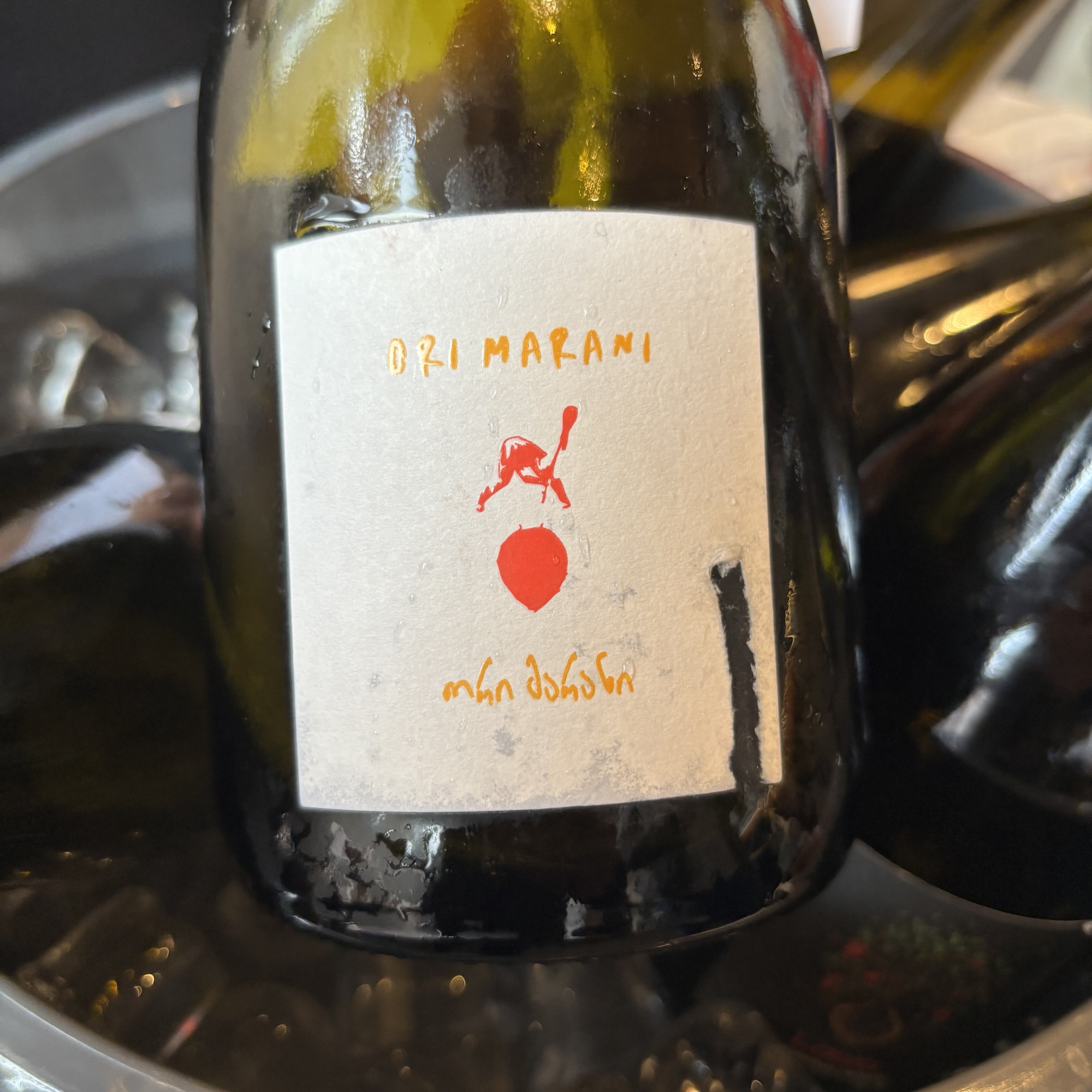
Isobel Salamon was representing a broad range of producers, but I want to especially highlight Ori Marani, a small artisan winery (est 2017) in Igoeti, a village in the Shida Kartli region of Georgia. I tasted a gorgeous Rosé petnat blend of 2021 and 2022 fruit, fragrant with strawberry and pomegranate, blending Chinuri with Mtsvane and Tavkveri, and a collaborative cuvée with Champenois’ Antoine and Maxime Bouvet from Mareuil/Ay (fermented in oak, 2022 vintage disgorged October 2023). These are imported by 266 Wines, who really do have a good number of very special bottles on their list. Get them in the shops, please!

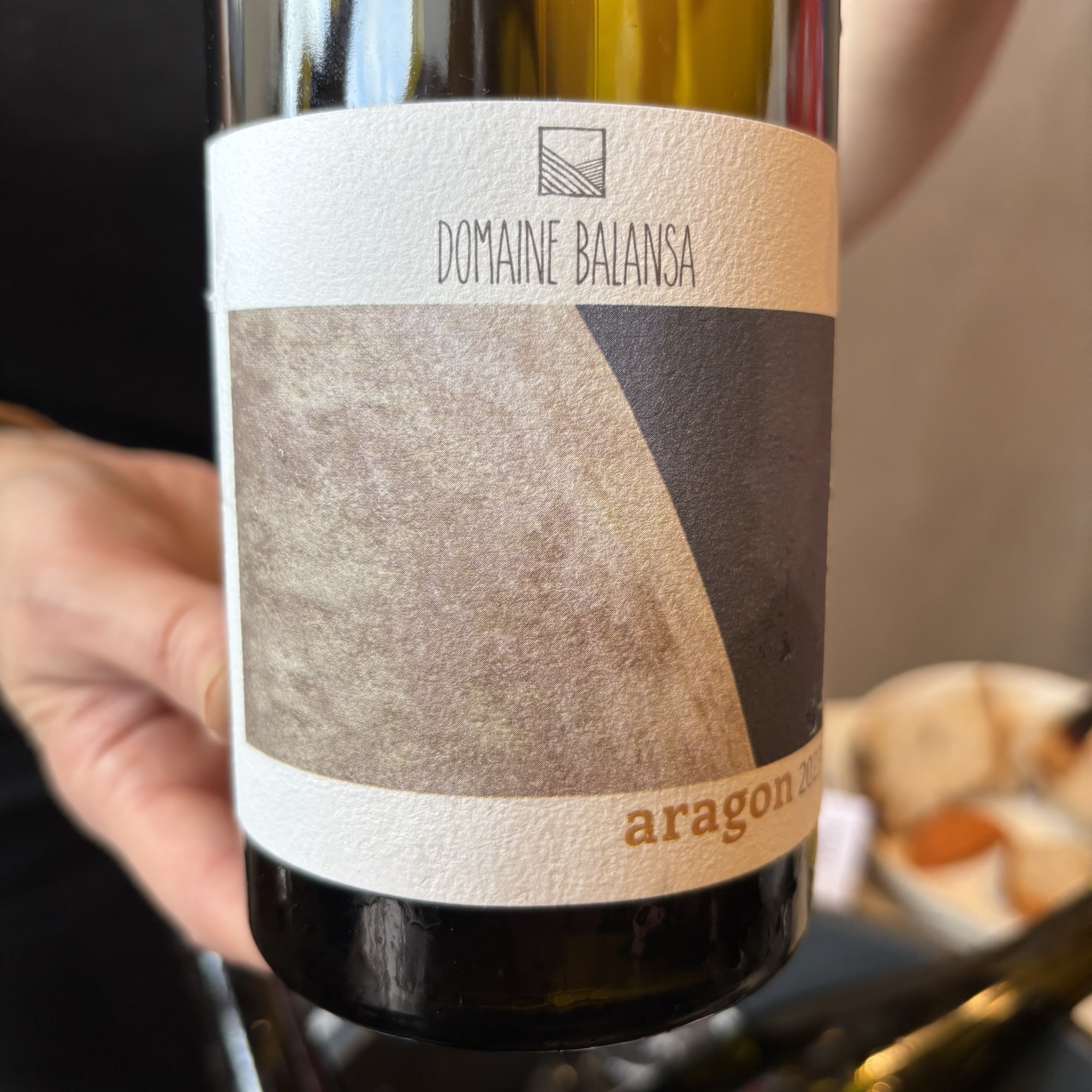
Domaine Balansa “Aragon” threw me, not Spanish but a cuvée from Corbières. It’s an amphora Muscat (a great grape for these vessels all over the Mediterranean, but for me, especially over the border in Catalonia, where you look for “Brisat” to describe the amphora style). Just 4mg/l sulphur, rounded fruit plus a little texture. Texture is pretty much a given, of course, with all wines tasted at the fair.
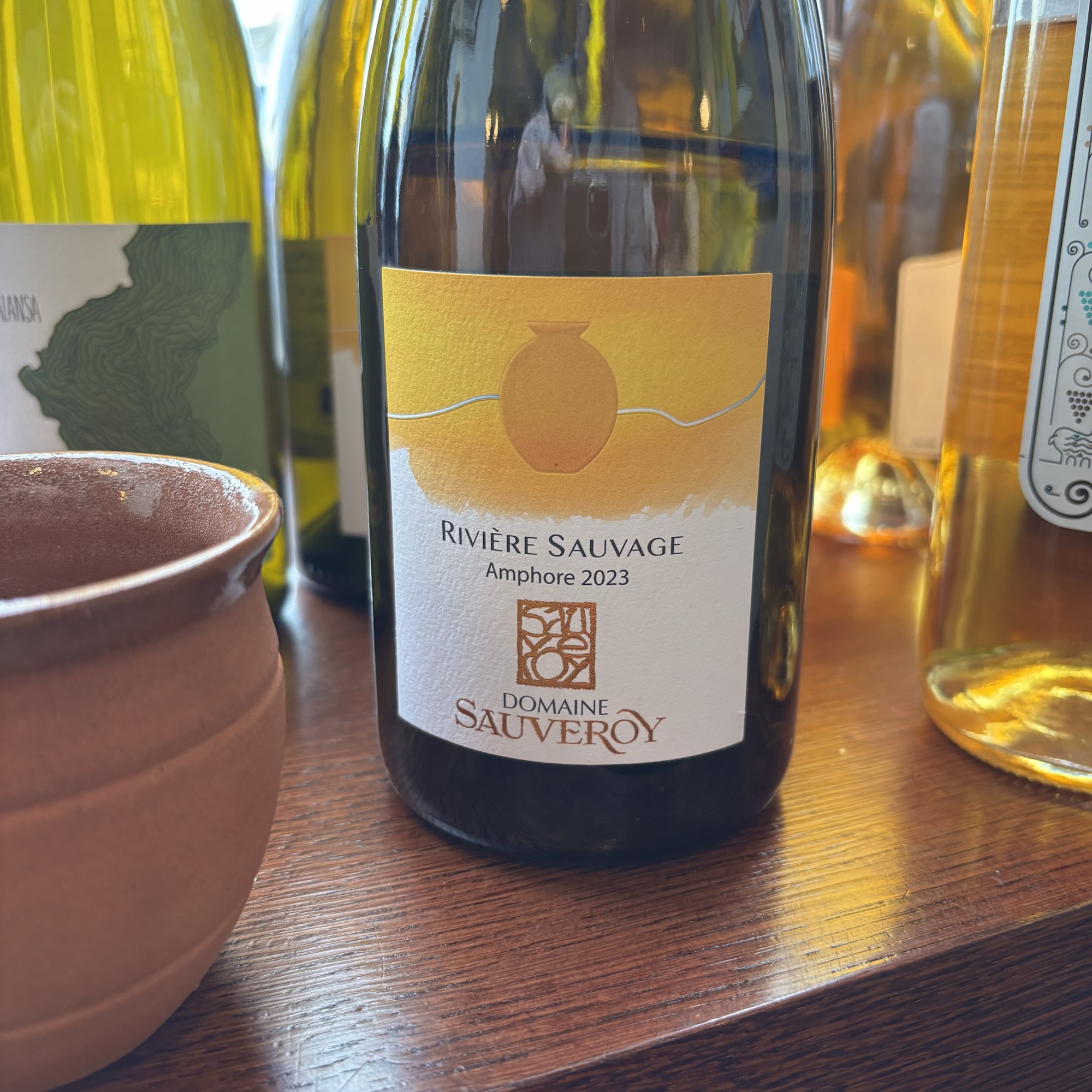
Domaine Sauveroy is the work of Pascal and Quentin Cailleau, who are at Saint Lambert du Lattay in the Val du Layon. Their Anjou Blanc (Chenin) 2023, called Rivière Sauvage, is medium-bodied and already showing nascent complexity, plus minerality. I do love a good amphora Chenin, like this. The red version (Cabernet Franc, “Victoire”) comes off schist, and was a lovely surprise, with fruit, tannins/texture and tension. I haven’t found a UK importer?

Finally, a shout for an amphora wine from Piemonte. Enrico Rivetto’s Nebbiolo d’Alba “Lirano” 2022 comes from vines in that named hillside site at Sinio, on the border of the Barolo DOCG. This 14.5% abv Nebbiolo may not be a Barolo by name, but it is highly sought after. It’s really young right now, but it is potentially exceptional. Try Cambridge Wine Merchants. It costs just under £40, but Enrico’s Barolos start at around £60-65, and this will age like one.

PASSIONE VINO
I was especially wanting to taste at this table. I see no PV wines in Edinburgh (maybe I need to look harder), but the company’s only non-native Italian, Greg Turner-Deeks, took me through some super bottles. They are an Italian specialist with (as many readers from London will know) a wine bar on St Leonard Street (EC2A) between Old Street and Shoreditch.
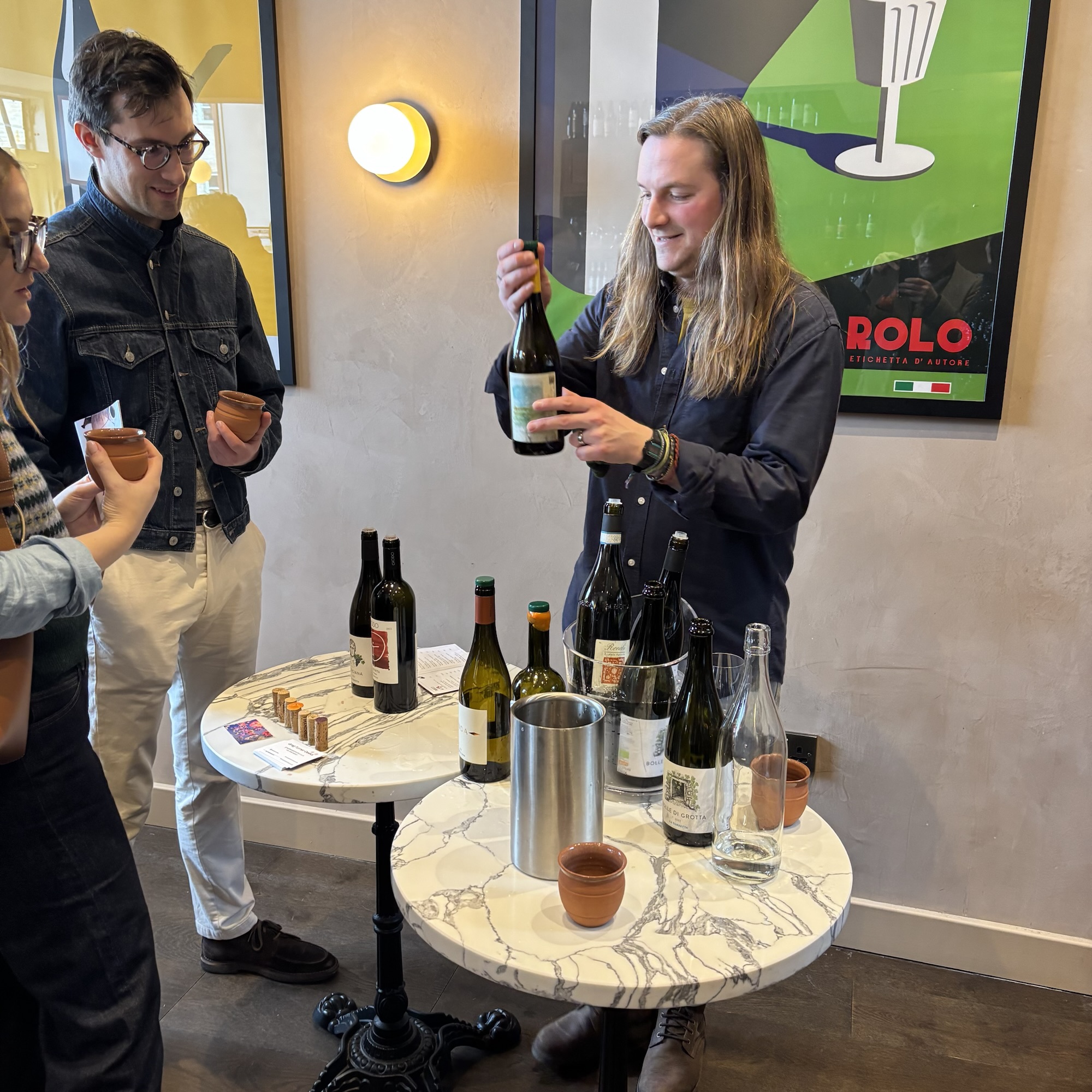
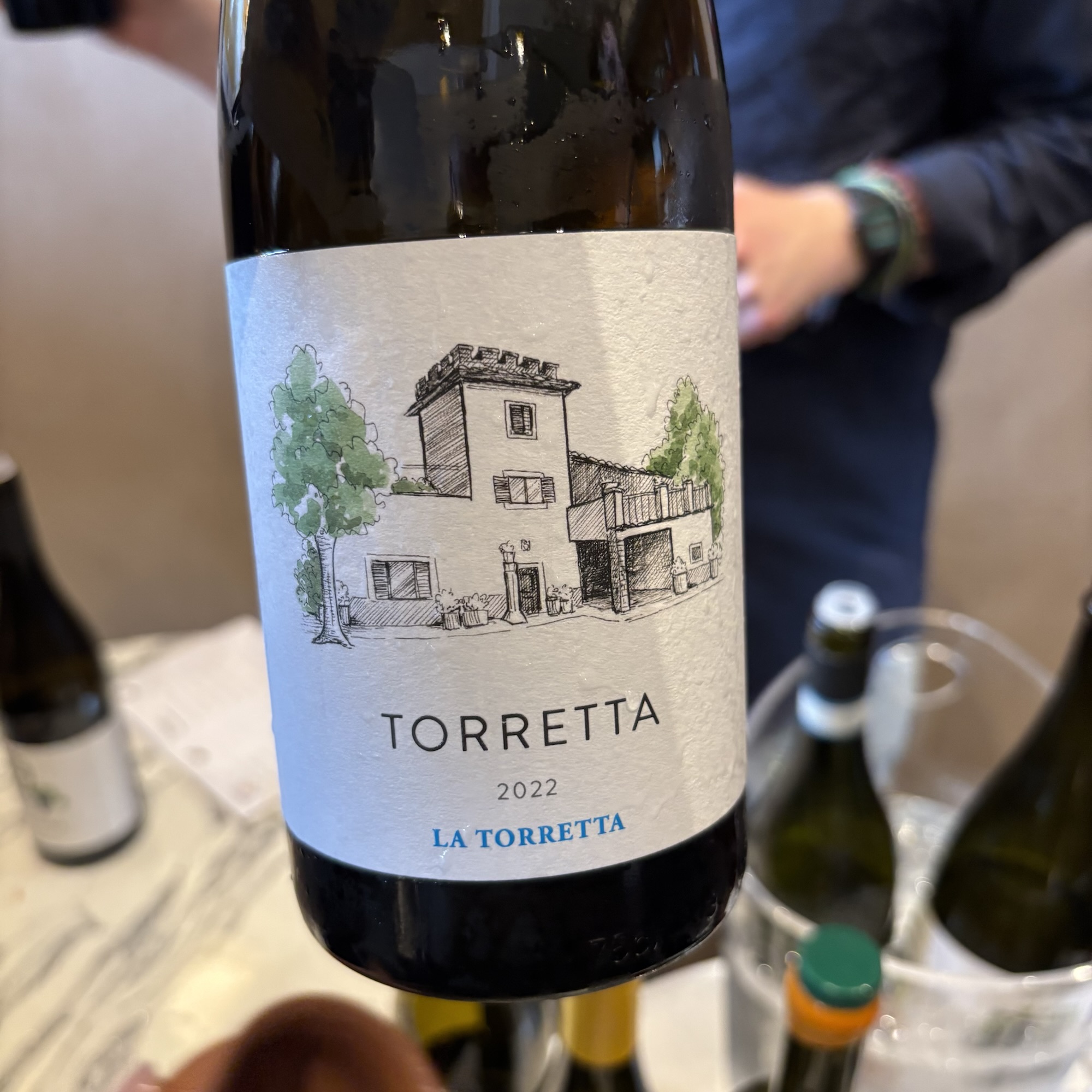
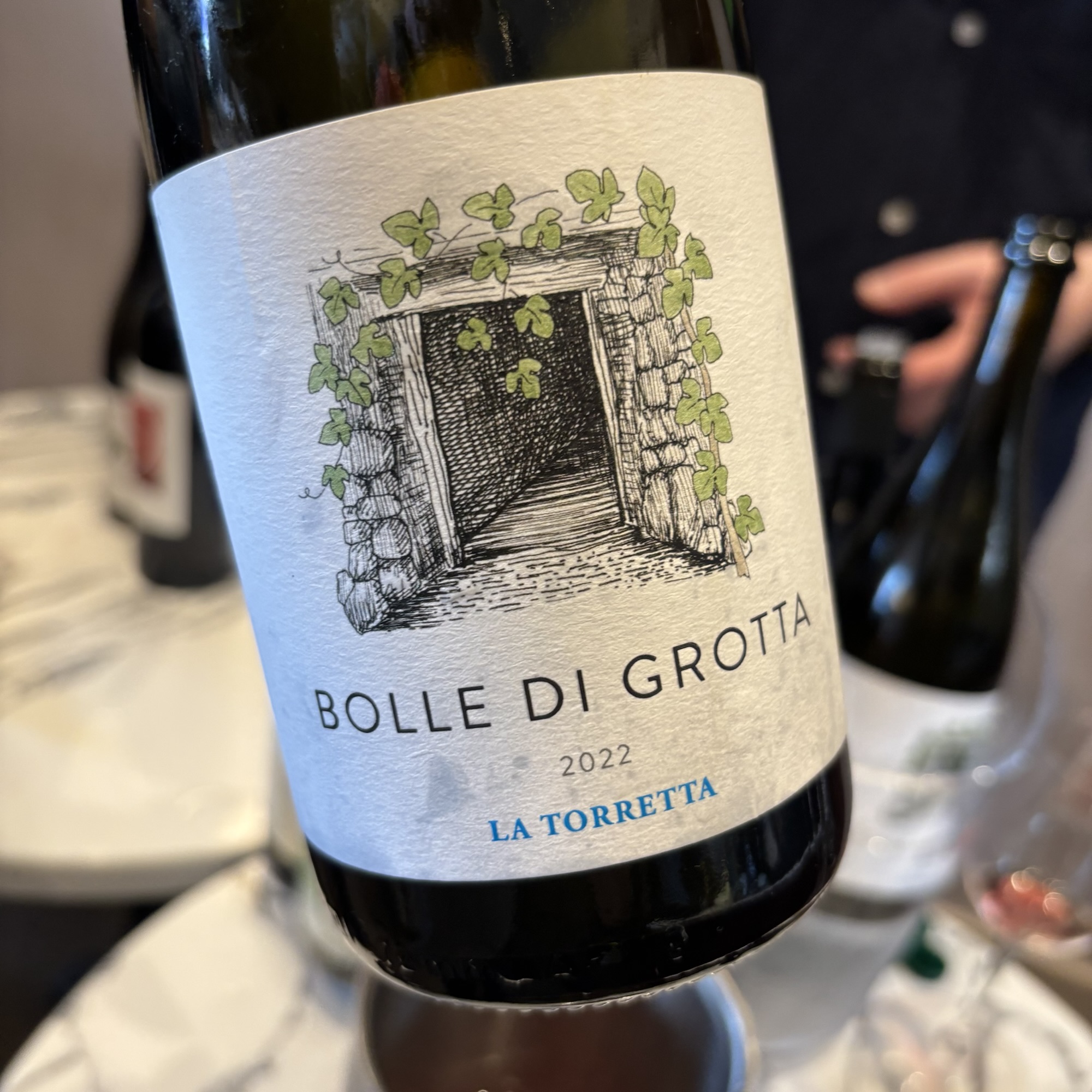
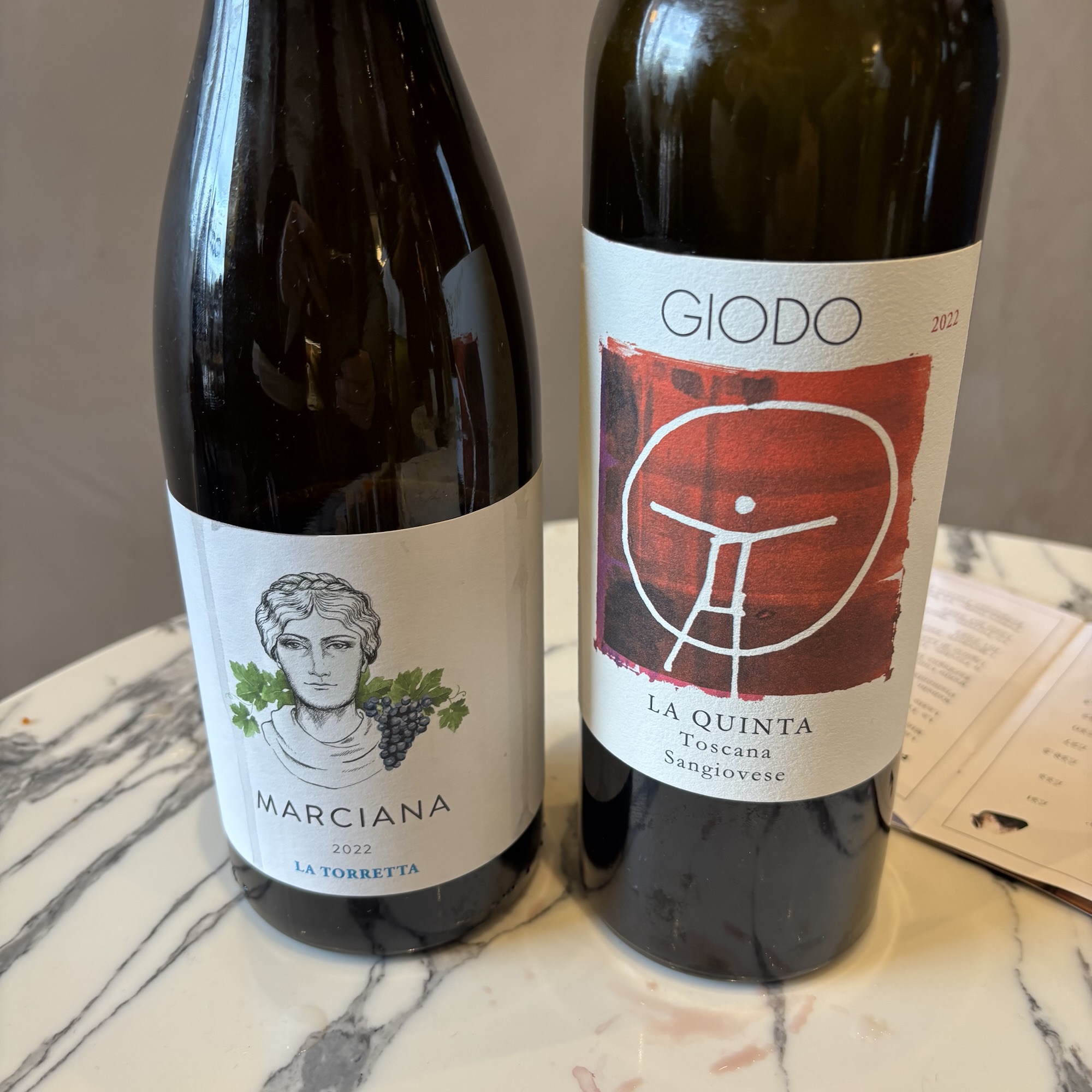
First, I tried the wines of La Toretta in Lazio. A nice Bianco (2022) was trumped by a delicious frizzante from the same vintage, called Bolla de Grotta (100% Trebbiano).
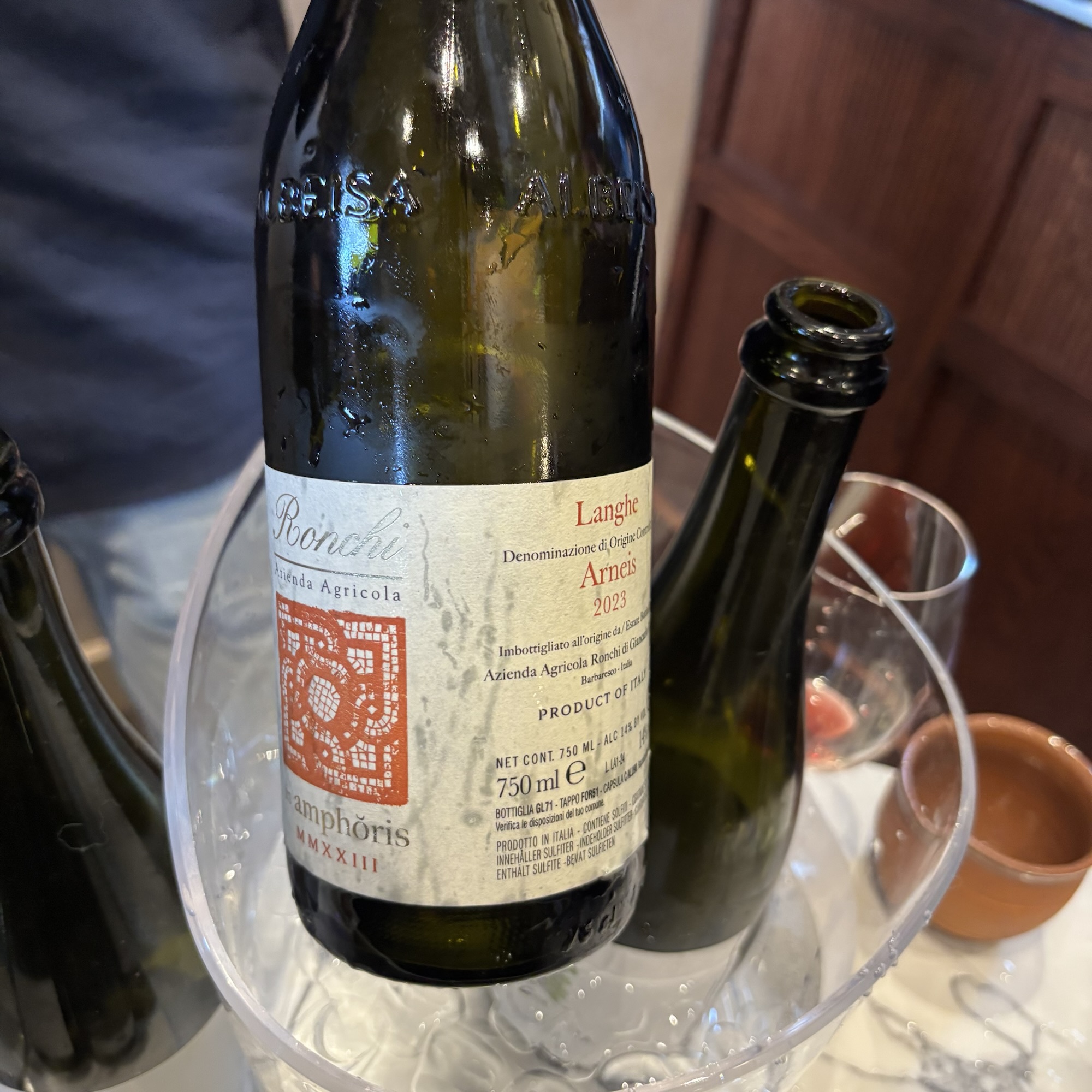
Azienda Agricola Ronchi’s Langhe Arneis 2023 was a lovely expression of that variety in amphora, rounded mouthfeel but fresh, the acidity well-balanced and not too prominent.
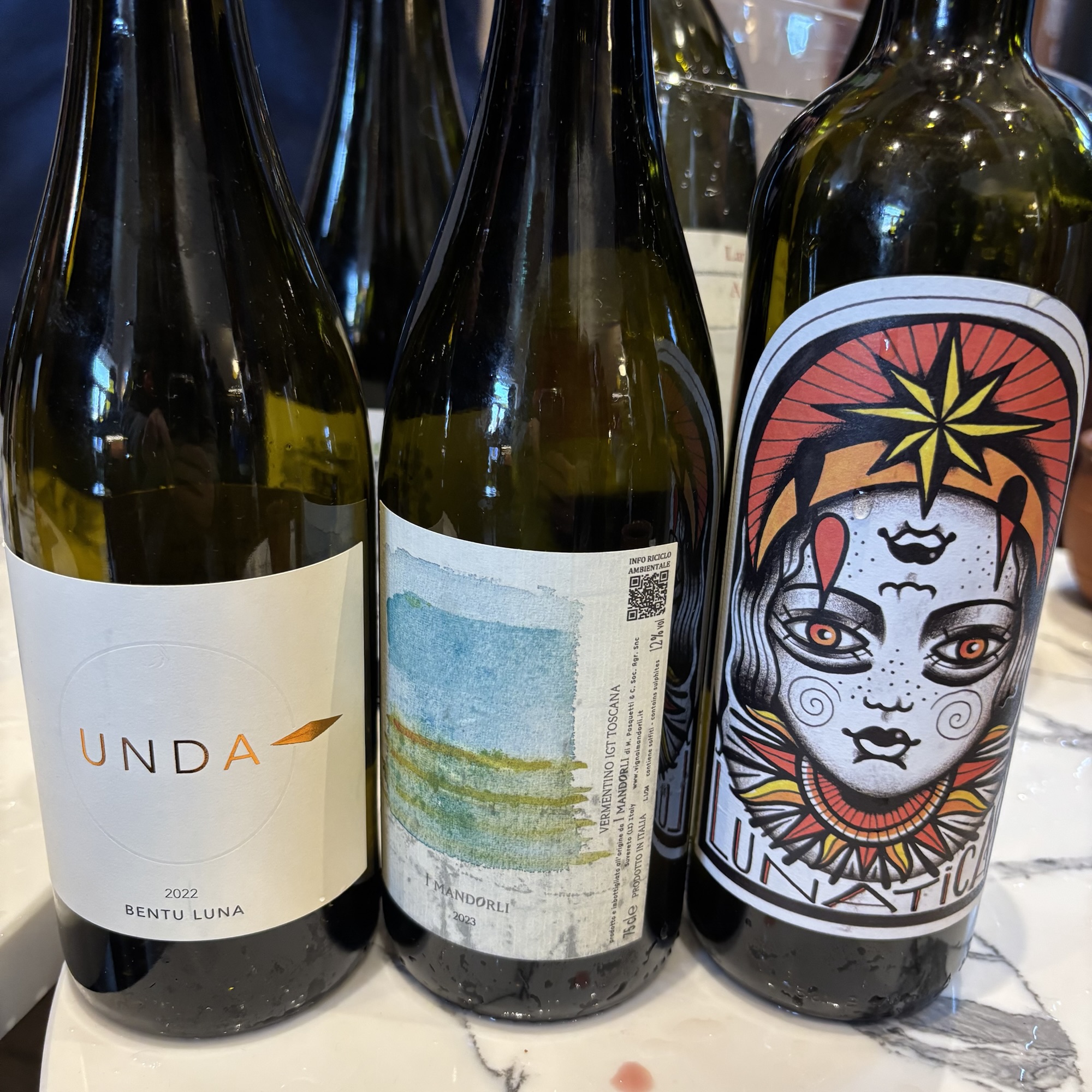
The three Vermentino wines shown on Sunday really stood out. Bentu Luna’s “UNDA” comes from Sardinia’s west coast, whilst Il Torchio’s “Lunatica” (2019 shown) is from Liguria di Levante.
I Mandorli makes an amphora Vermentino in another hot spot for the variety, increasingly so, Suveretto in Tuscany. This is a hilly DOC southeast of Bolgheri, so slightly inland from the Tuscan Coast.
Nine months in amphora (three on skins, six without), this was very good indeed. Maybe my favourite of the three Vermentinos, though a close call. There’s lots of bright yellow stone fruit and herbal notes adding more interest. All three wines are expensive, the Ligurian and the Tuscan are £50 or more, but the quality really is up there.
If that wasn’t enough excitement, the last wine was from a very much lauded Brunello producer, Podere Giodo. I was told they came top in a recent Decanter Magazine Brunello tasting, but those wines are off-the-scale, if not for oligarchs then certainly London bankers. You might stretch to the £62 retail price for their “La Quinta”, a Sangiovese Toscana IGT 2022, that if I could afford it myself, I would find a happy substitute. You know, I’ve visited Montalcino a couple of times and used to drink the wines back in the day, but even £62 is over budget for a lot of poor wine writers these days.
Some exceptional wines here.
RAEBURN FINE WINES
Raeburn showed seven wines, and the quality was uniformly high. They were on what was probably the most inaccessible table, so I hope everyone got to try them.
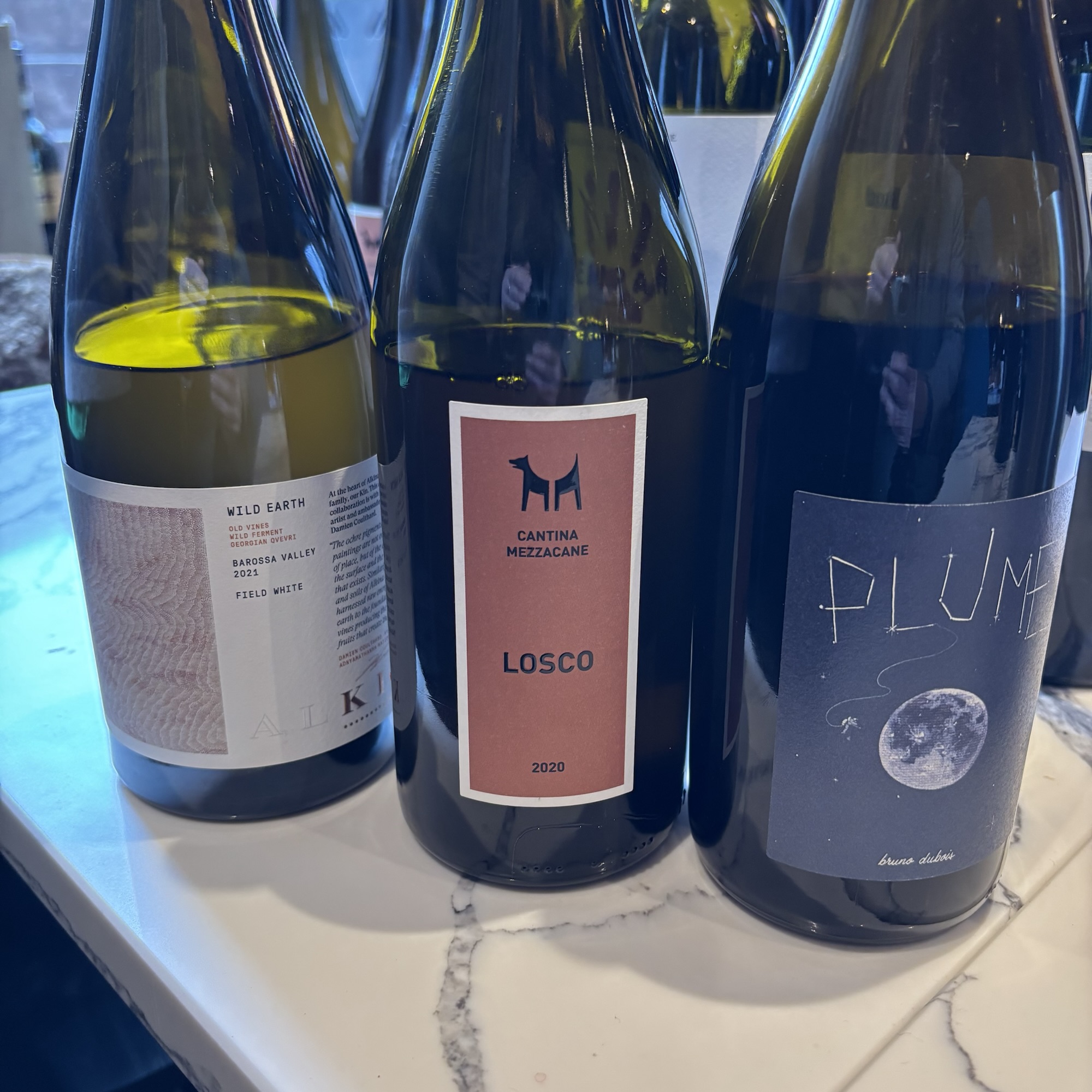
First up, a Barossa amphora white which I’d love to buy, and may well try to next time I’m near their shop on Comely Bank. Wild Earth “Field White” 2021 is a blend of 95% Semillon plus several other co-planted varieties, fermented and aged in Georgian Qvevri. Smooth, savoury and textural, it was delicious.
I followed that with an equally delicious Timorasso “Losco” made by Cantina Mezzacane near Gavi. The variety made famous by Walter Massa is really taking off here, and this has seven months in amphora. The difference between the two? Merely price. £31 for the Aussie, £49 for this cracking white.
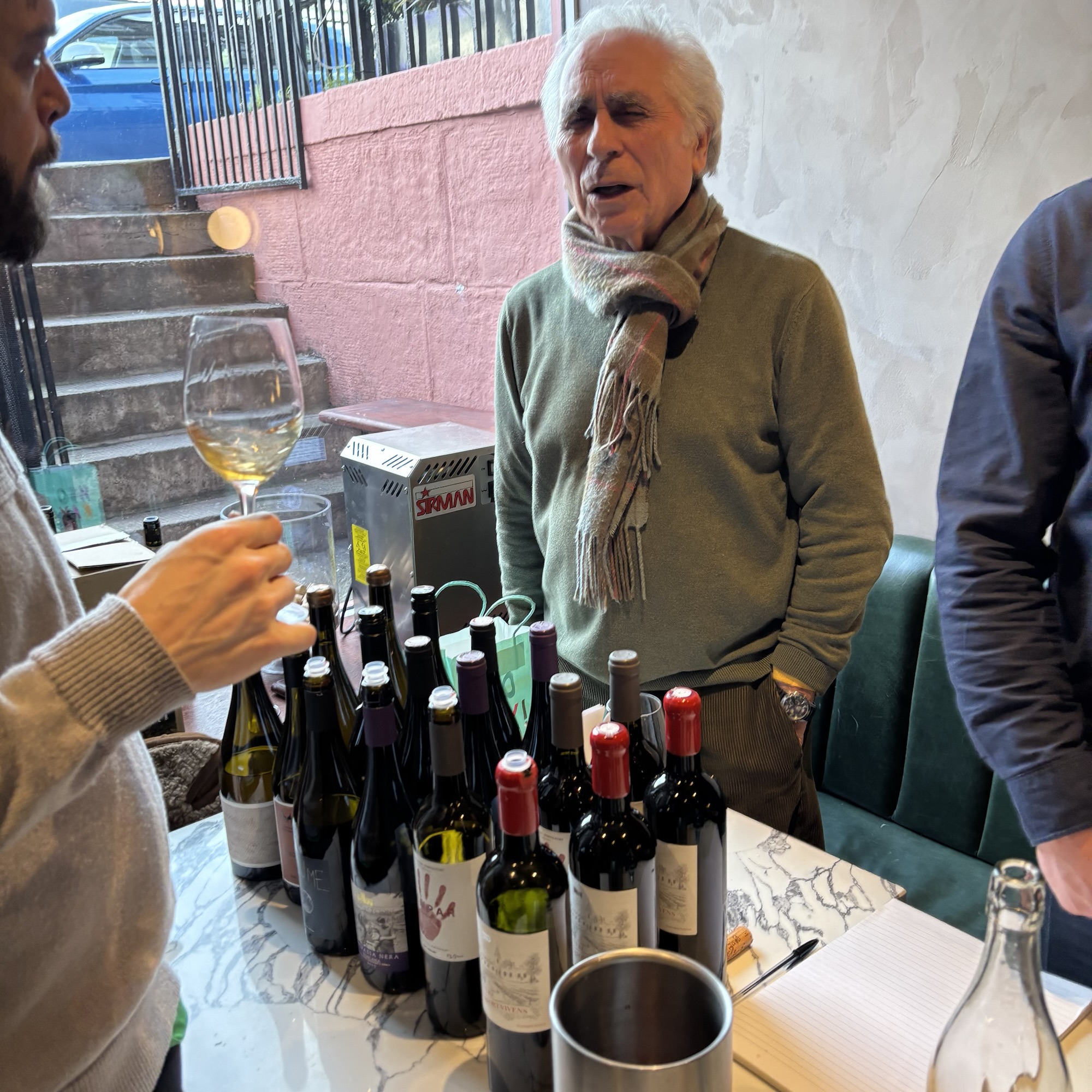
Bruno Dubois’s 100% Cabernet Franc Saumur-Champigny “Plume” (£22) is another good example of the increasing experimental use of amphora for red Loire wines, and Vallone di Cecione (in second photo, below) gave us an equally interesting Toscana IGT Malvasia Nera (£25), very different to examples I’ve tasted before with a sharpness that was thrilling rather than intrusive.
Our first Portuguese wine of the tasting was Sempar Alentejo-Portalegre DOC 2017. Dirk Niepoort is behind this gem which sees 36 months in amphora. It’s a multi-varietal blend based on Trincadeira, but one component is the teinturier variety Alicante Bouschet, whose red pulp helps make this wine dark and inky. Amazing value if the retail price given (£17) is correct.
Next up, two rather exceptional wines, one listed on the tasting sheet, the other not. La Nature de Durfort-Vivens 2019 is a wine that sees four months in oak and then 14 months in amphora, made by Margaux Second Growth, Château Durfort-Vivens, a Lurton family property. Bordeaux is secretly a hotbed of experimentation. Did you know that Feral Art et Vin, Bordeaux’s natural wine shop, has a host of customers from famous Bordeaux properties? This 100% Cabernet Sauvignon is very young still (2019 vintage), tannic of course, but I was very impressed and would certainly pay the £40 retail price, but of course I would age it a good while before opening.

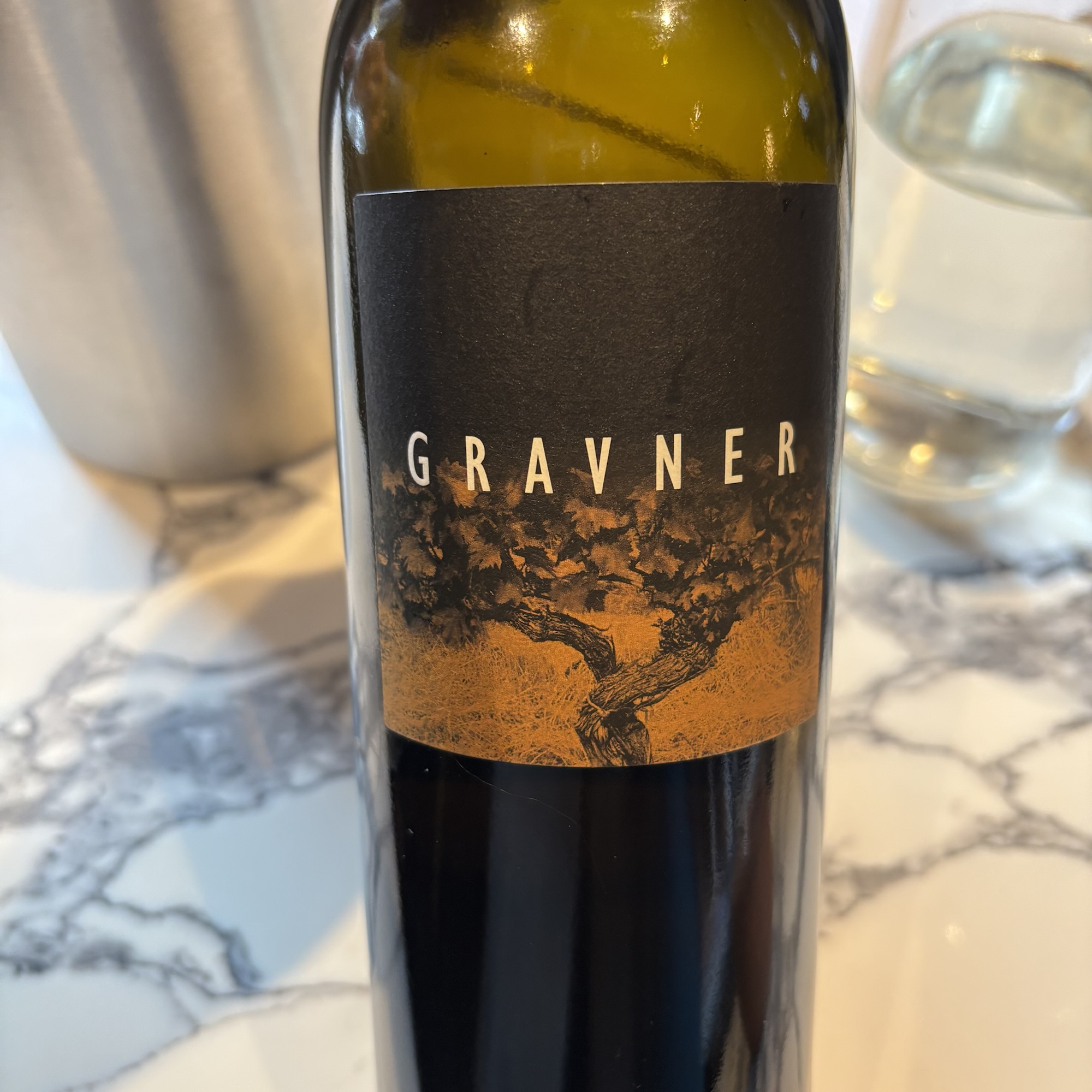
Unlisted but there to pour was Gravner’s Ribolla 2016. Whacking out 14% abv, this is nevertheless very much a world class wine. It’s world class even now, at an early stage in its evolution, and I’d drink it given the chance. Age is what it really needs. There was a masterclass at the event which I didn’t stay for, but I was told they tried the 2009, which was, as one would expect, magnificent. The 2016 had an intensity like no other wine at the tasting. But be careful! This wine is actually quite widely available, and in a number of vintages, but prices vary wildly.
That brings to a close Part One. I hope it has whetted your appetite for the next selection in Part Two. The notes here are, as I said, brief, but we are already seeing the breadth of wines available in the UK made in terracotta/clay vessels. Part Two will add some more wines from Portugal, Georgia, Alsace, the Rhône, Beaujolais, Southern France, Greece and Tuscany. Not one single wine I tried from the whole event tasted like a tannic old-school orange wine. That’s a testament to the evolution of amphora winemaking since the 1990s/2000s.
As such, and as the style becomes better appreciated by a wider public, I can see Clay Wine Fair really taking off, though with no disrespect to the inaugural event’s wonderful hosts, Sotto, it may need a larger venue. In fact such a great idea would definitely go down well in London too.

 David Crossley's Wide World of Wine
Interesting. I had one of Jeff’s amphora wines the other day, a pure Syrah and it was so elegant and youthful. Fair to say he and many others are adapting to the use of the amphorae in order to improve the results. I have a jereboam tucked away of one of the earlier wines, it’ll be interesting to taste alongside a newer version.
So much work goes into preparation of the white versions in particular, meticulous sorting. Muscat is so well suited as you say about the Corbieres wine.
LikeLiked by 1 person