
I’m sure I’ve talked more than once about Tim Phillips being one of the most thoughtful of all the English winemakers I know. Not all of the thoughtful ones are wholly willing to share their thoughts, but Tim is. A morning is never enough. One thing is for sure, a visit to see Tim is no longer merely about wine. In fact, sometimes wine might seem to come somewhere down the list.
On the morning which I spent with Tim this month we visited all three of his sites, the walled vineyard, the old vine plot and the winery. We were never far from vines and wine but the first thing we talked about, at length, were Tim’s new batch of chickens. These are rescue birds and he is spending several hours a day acclimatising them to their new and very pleasant surroundings within the Clos du Paradis.
Rescue birds need to learn everything anew, how to roost, where to feed, and they are requiring treatment for the wounds suffered in the free-for-all of the shed in their previous life (life seeming a rather inappropriate word for their existence). Chickens are very sociable, they love to be held, and reassured, and they are slowly beginning to have a happier time of it. I’m dwelling on the chickens because they reveal a certain intelligence in Tim that is not always present in others.
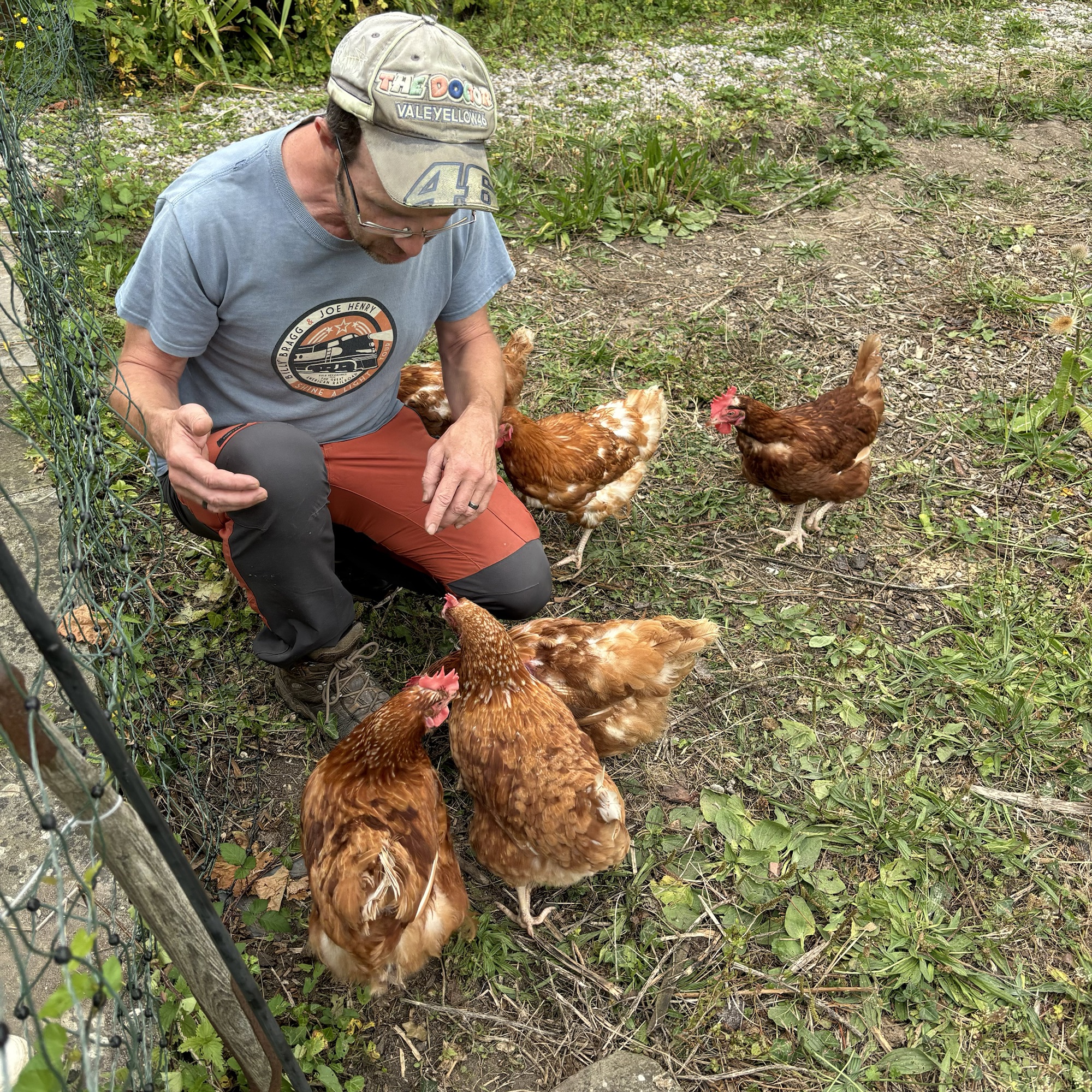
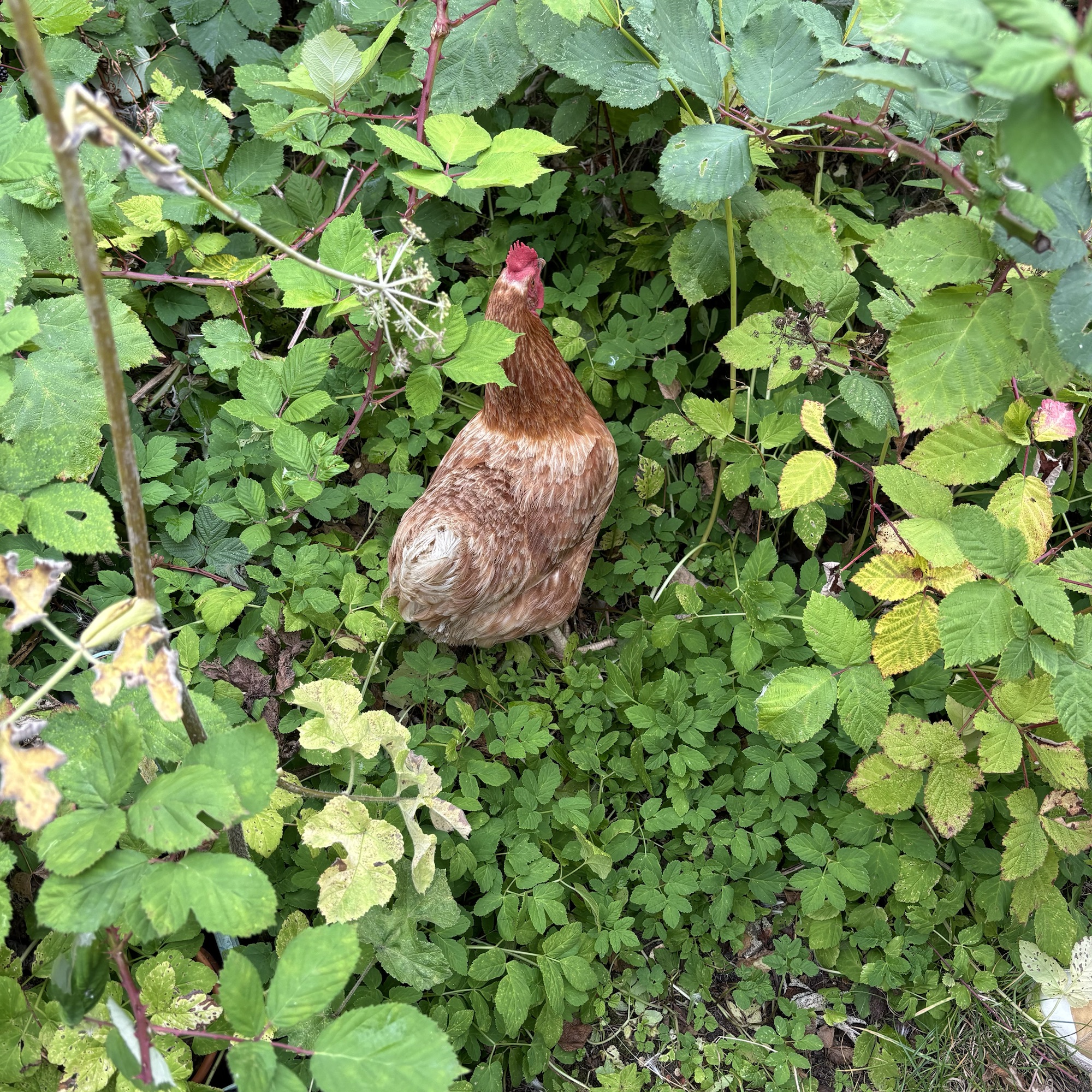
Someone visiting the vineyard suggested that a few hens are not worth it. The cost involved is way more than the value of the eggs. It doesn’t take a genius to see that for Tim it’s not about the eggs. Of course, it’s about fertiliser, which also breaks down cuttings more quickly, and it is about eating bugs on the vines. It is about creating a biodiverse eco-system that will ultimately profit the soil and the grapes. Tim estimates that all his hens, including those he already had roaming the vines, could produce 250 kilos of droppings per year. That’s reason alone to have them. They also make nice companions for someone who spends much of the day in the vineyard.
Traveling down the vine rows it is easy to see that this has been a difficult year. Signs of incipient downy mildew have to be nipped in the bud, and applying (non-systemic) sprays in a timely fashion is time consuming but necessary. The most easily affected is the Chardonnay. The leaves are demonstrably thinner than the Riesling and the Sauvignon Blanc, and so it is the most susceptible to fungal disease.
Tim is not deterred. He’s doing pretty magnificently with Riesling and Sauvignon Blanc. That he can make excellent bottles of Riesling in the UK is a near-miracle, but of course if you have a walled vineyard a quarter of the size of the Clos du Mesnil you have some serious heat retention in those brick walls. Sauvignon Blanc’s success here lies in Tim being able to make something very distinctive. I don’t mean “distinctively English” but distinctive to this site. A genuine terroir wine.
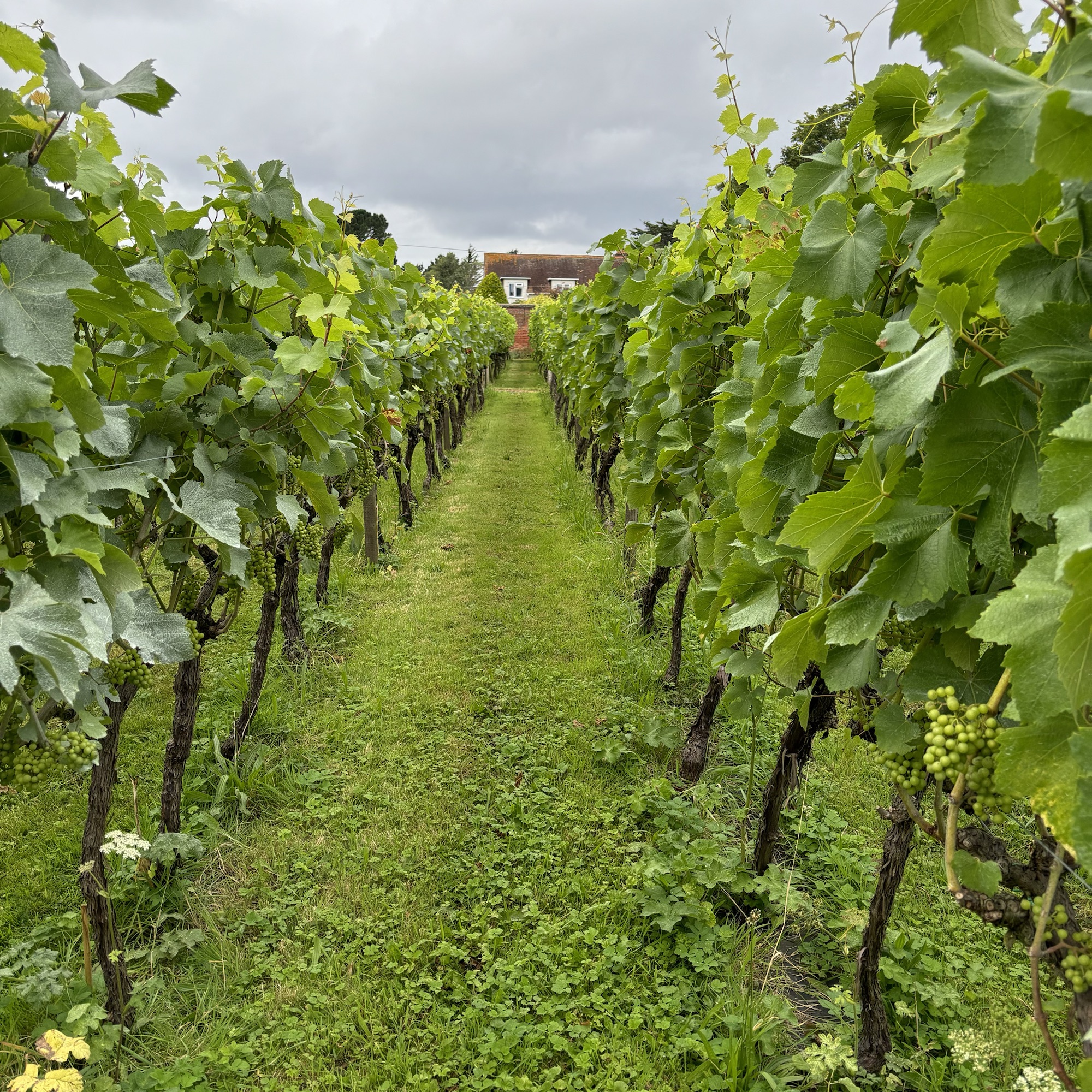
Chardonnay will succumb to Tim’s stimulation, eventually. It already works so well as a sparkling wine, but Tim wants to create a world class still wine from an English site. He’s not alone. Kit’s Coty, on Kent’s North Downs, has become perhaps the most celebrated site for Chardonnay in England, with Chapel Down making a cuvée many will have tasted. Lyme Bay Winery (Devon) make a couple of different cuvées from single sites in Essex, a part of the country which is racing to the fore for this variety, and indeed Pinot Noir, in and around the Crouch Valley. Many others are seeking the Holy Grail.
We discussed Tim’s plans for Chardonnay, which includes investing in another barrel, assuming that he has a Chardonnay crop that looks viable for a still wine. It will be a François Frères half-barrique (114 litres). For a small artisan grower like Tim, this is a massive investment which can only be made if he can get it to start paying for itself immediately, but thankfully they can knock one out for him in five or six weeks, so he can afford to wait just a little longer to see how the grapes are looking.
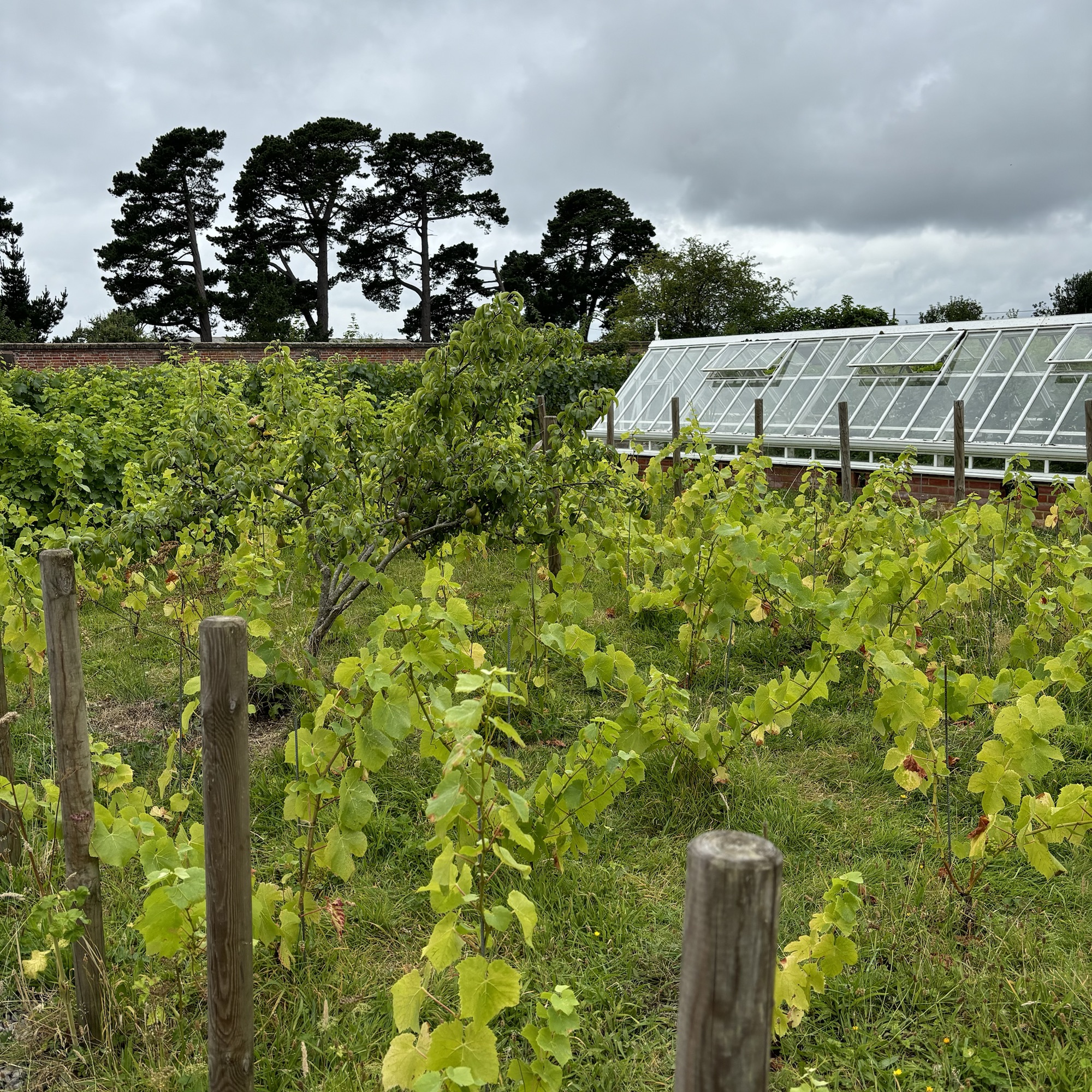
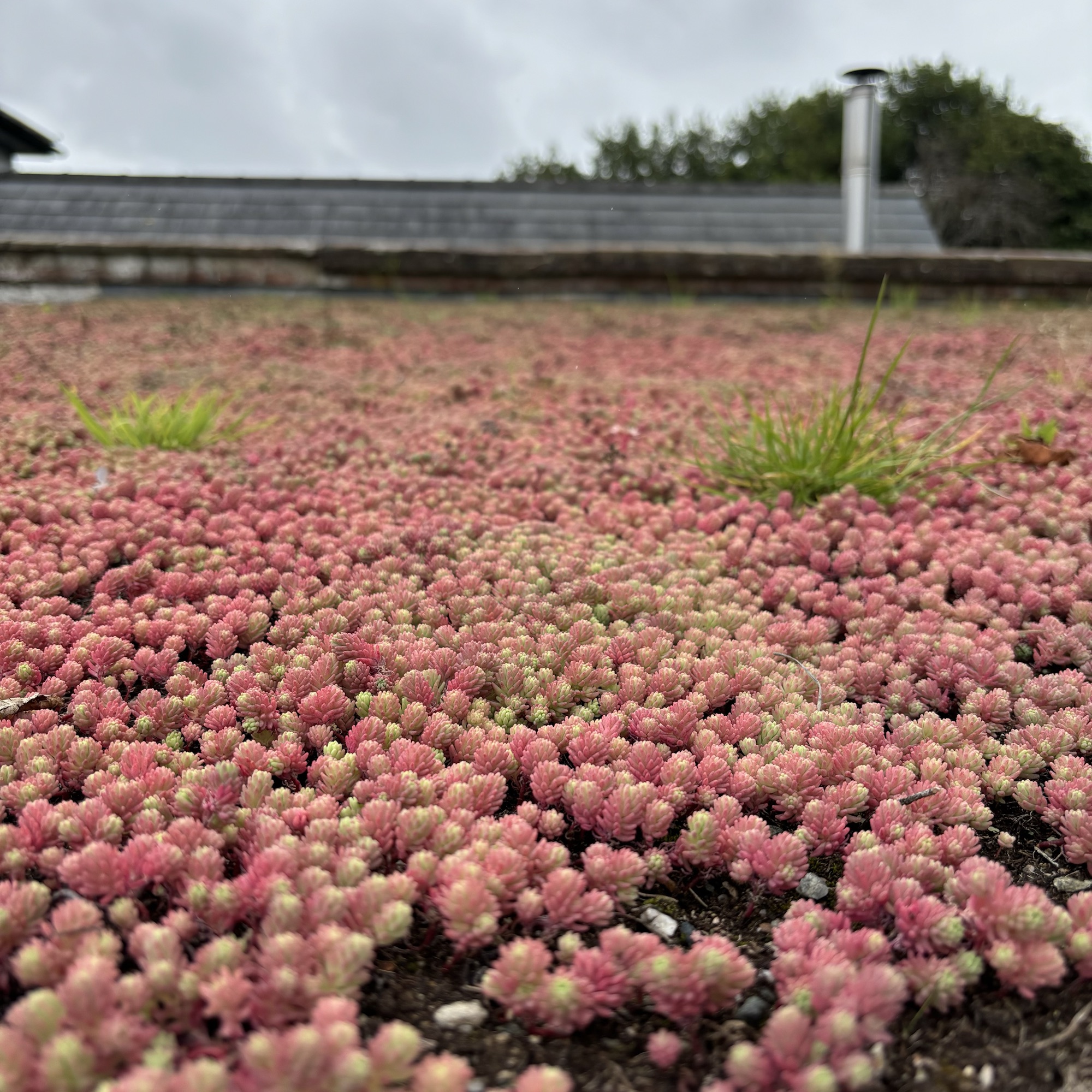
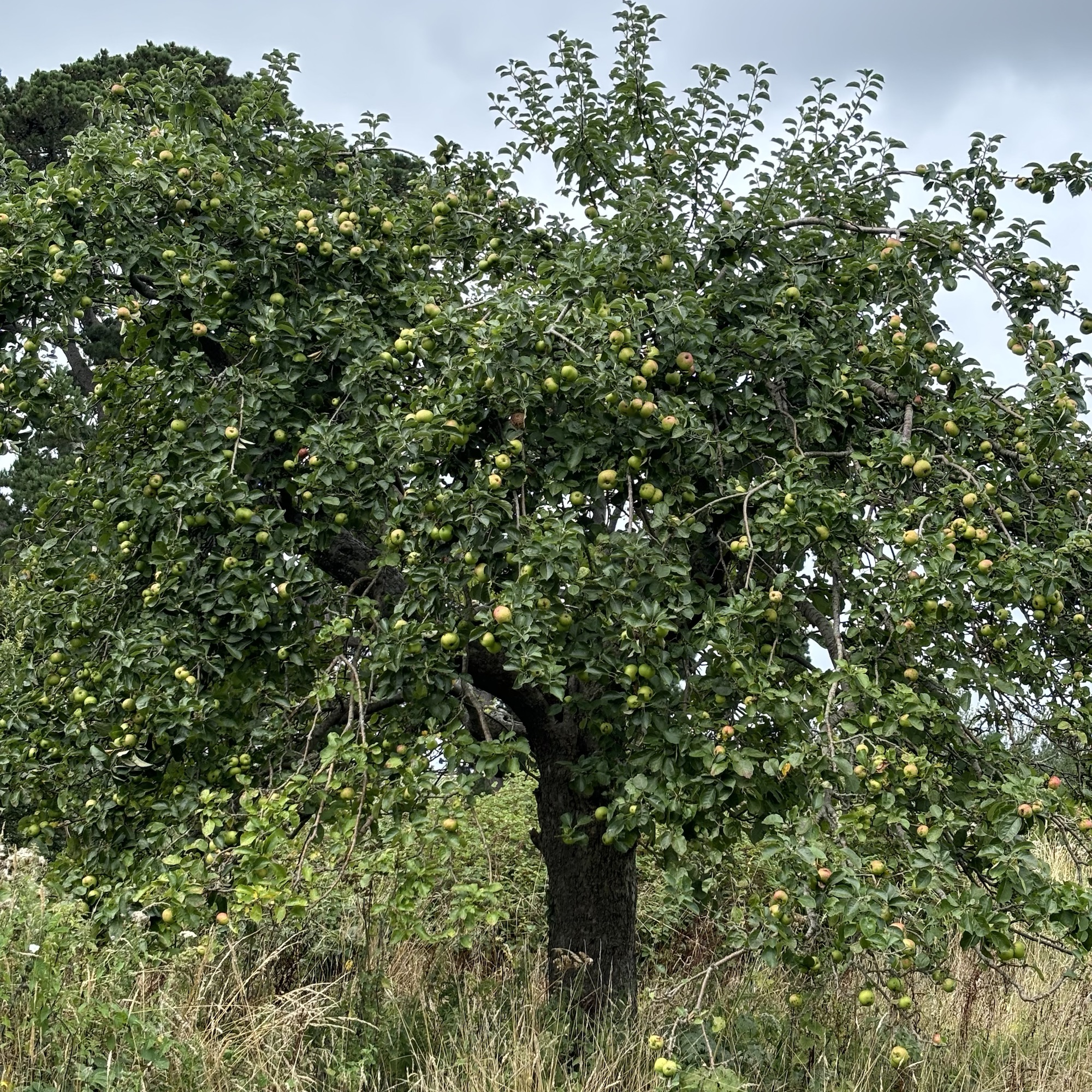
Since my last visit Tim has completed his new store shed and I climbed a stepladder to inspect his new sedum roof, which is looking healthy. As are the apple trees. I was keen to talk apples as I’ve just planted an espalier apple tree. Tim’s new trees are doing well and they will complement the old ladies you can see in the photos.

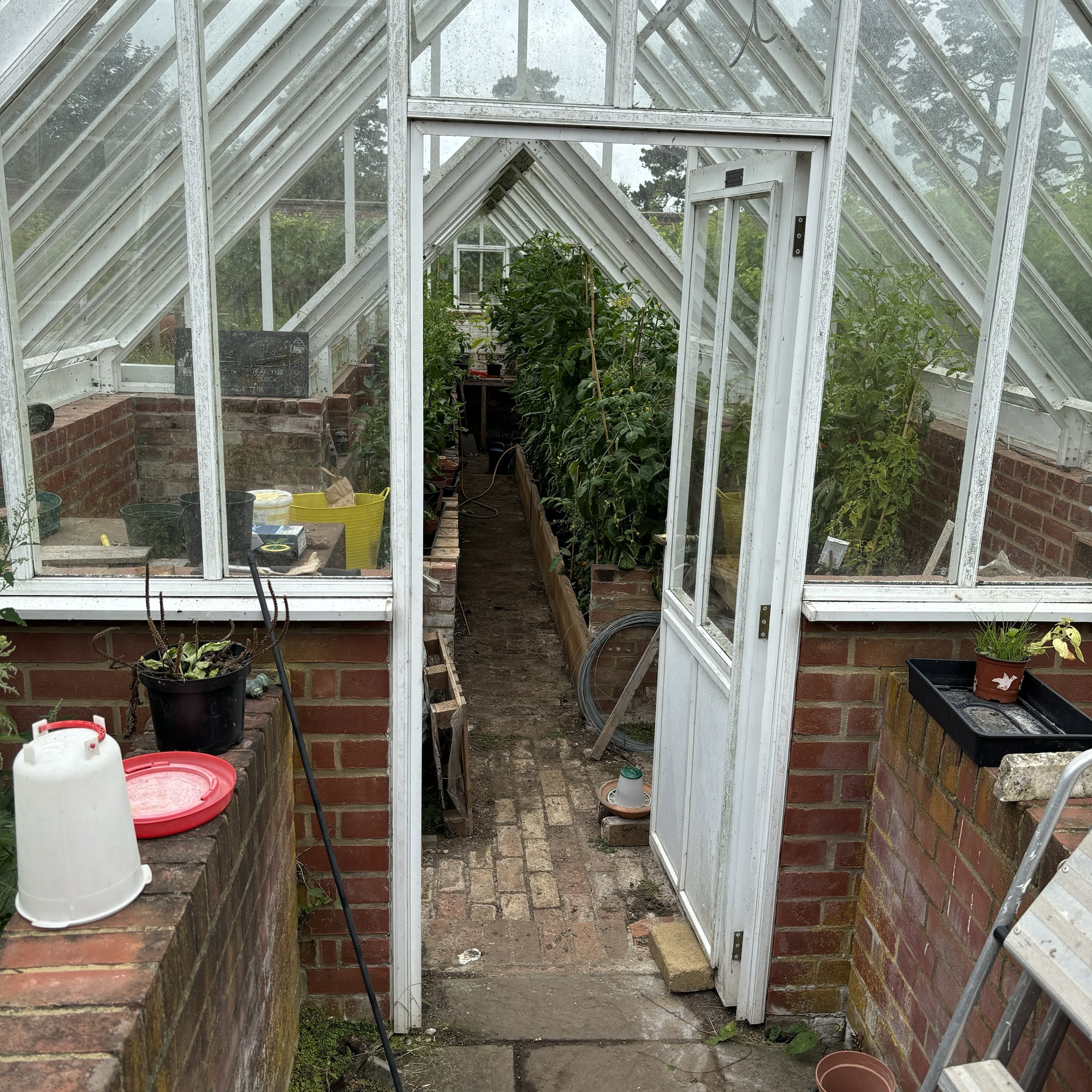
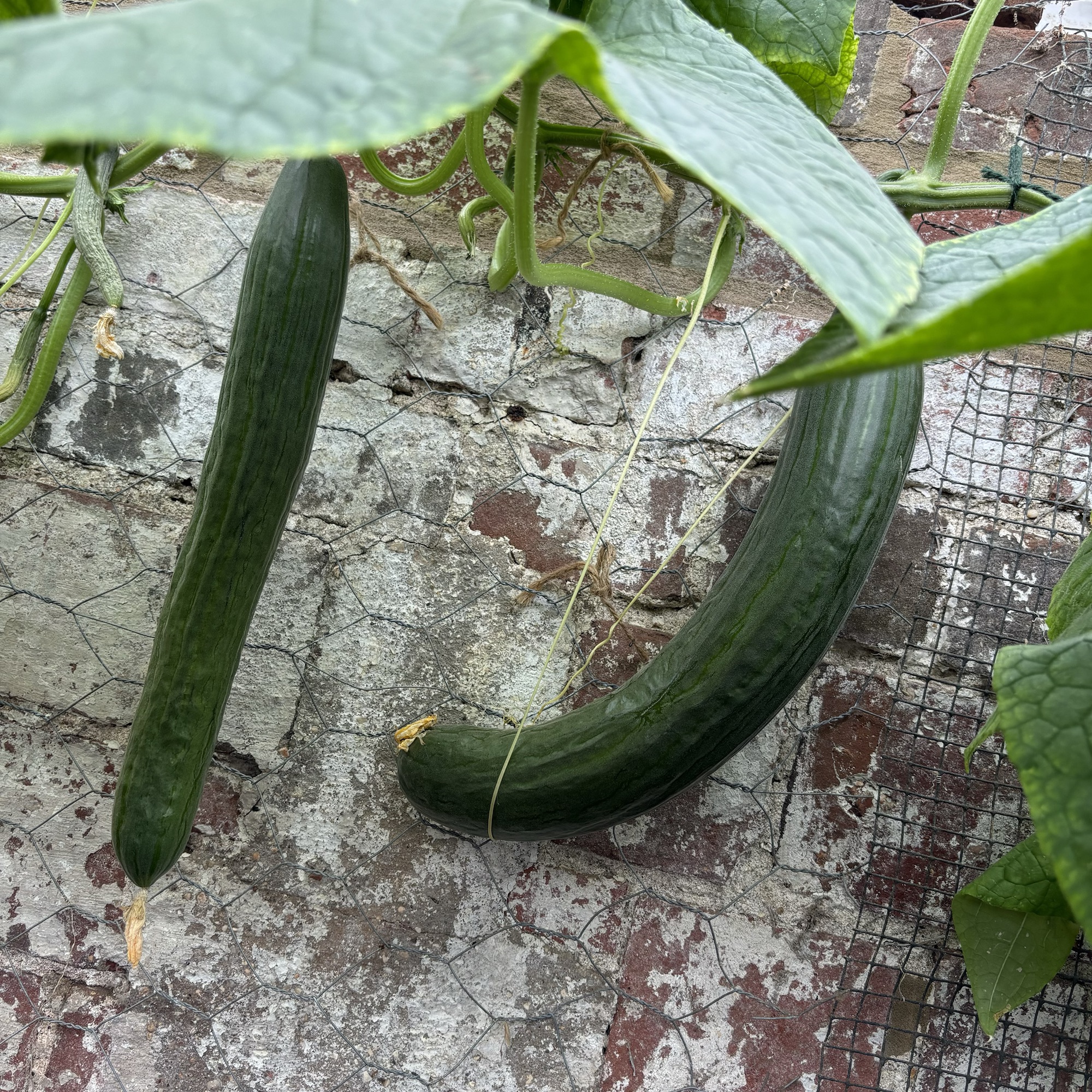
And then there’s the vegetables. The old Victorian glass house has now been turned over to helping feed his family and the tomatoes, cucumbers, and especially the wonderful array of peppers, are more than impressive.
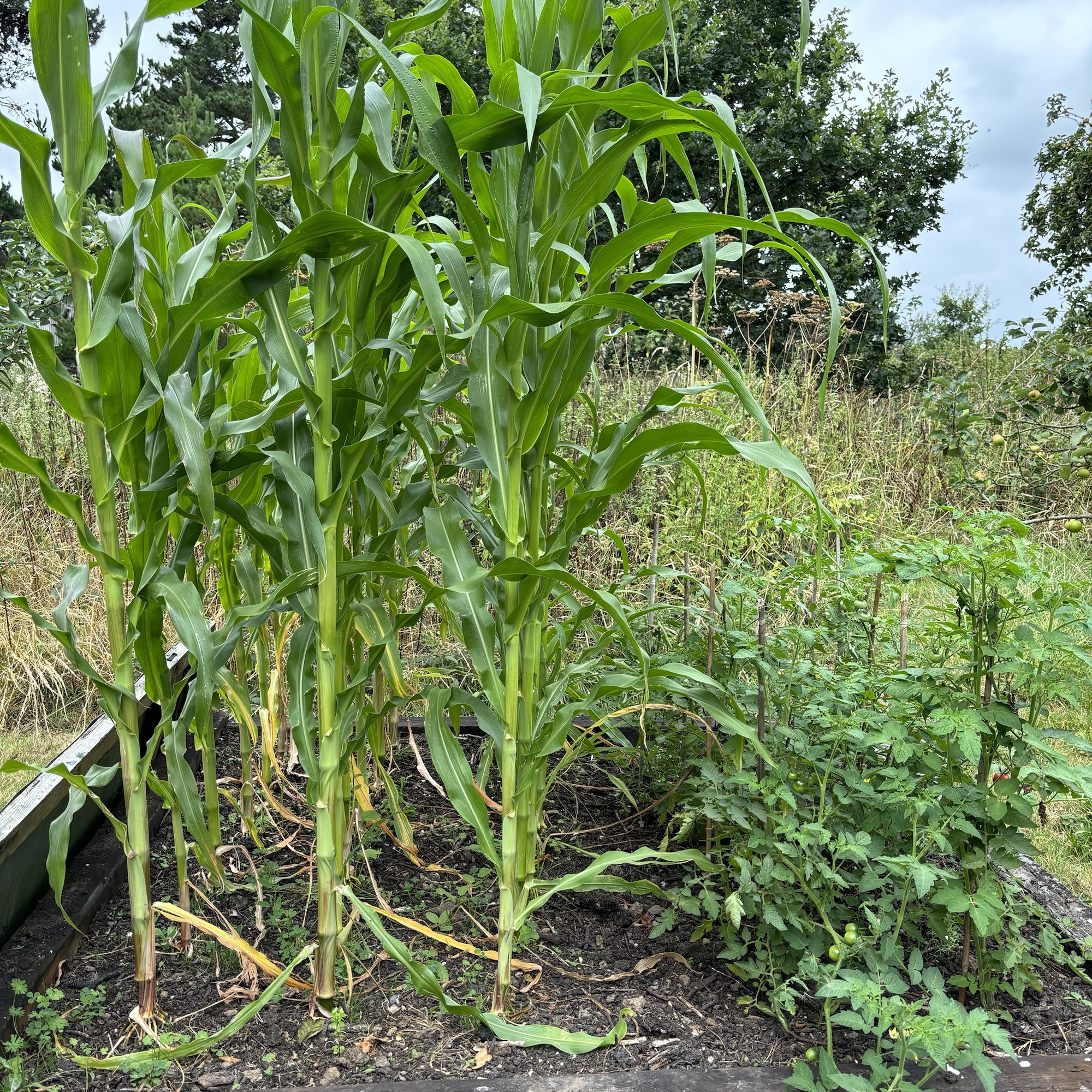
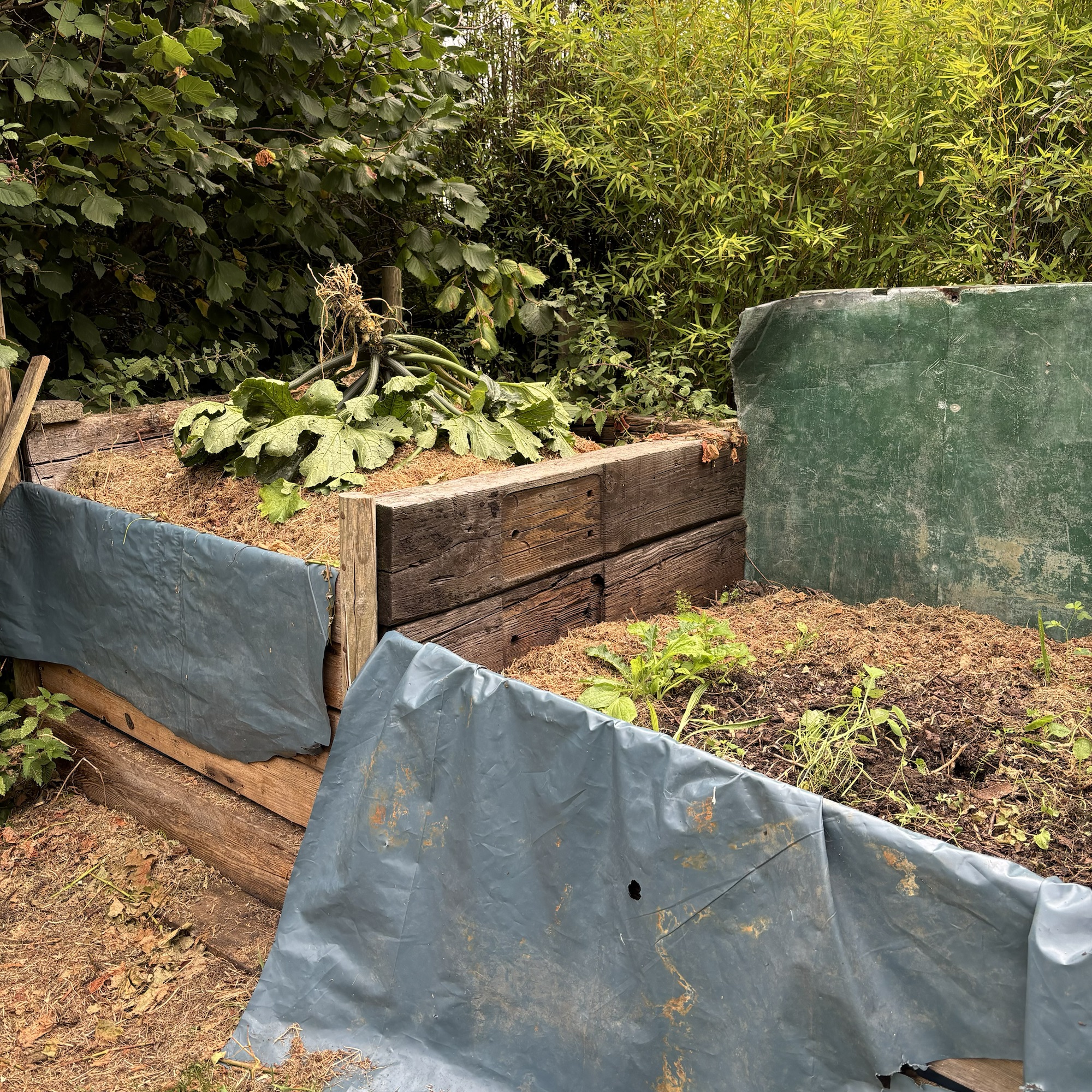
The orchard is where Tim keeps his compost bins, and with the kind of space he has he can make a lot. He has a three-bin system, a bit like a compost solera, I suppose. He moves the compost along the line as it decomposes. It’s nice and warm in there, and this is where a grass snake had made its home, accidentally disturbed by Tim after we left, the photo of which he posted on Instagram. Of course, Tim was naturally gentle with the poor creature, though at least it wasn’t hibernating, neither was there a writhing mass of babies.
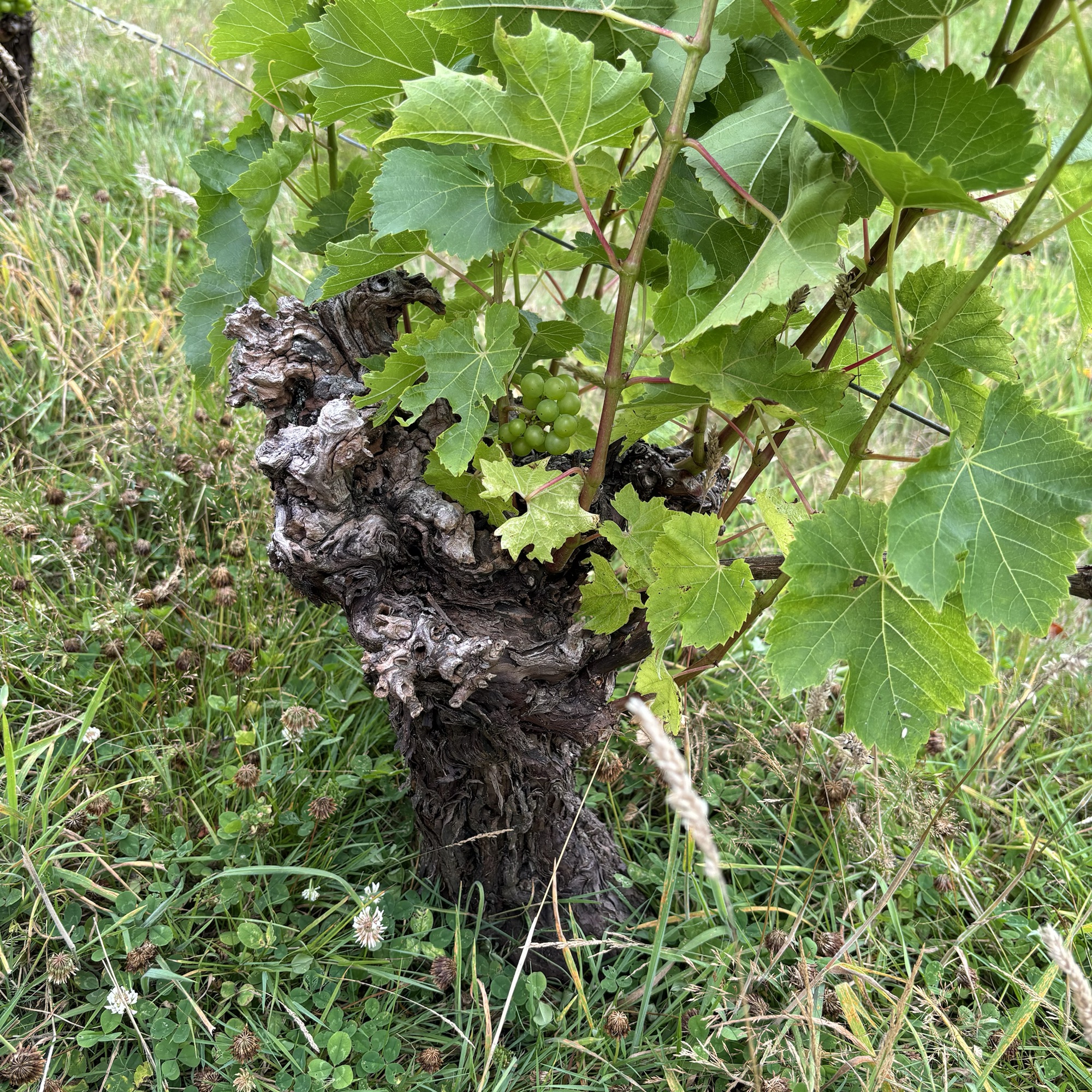
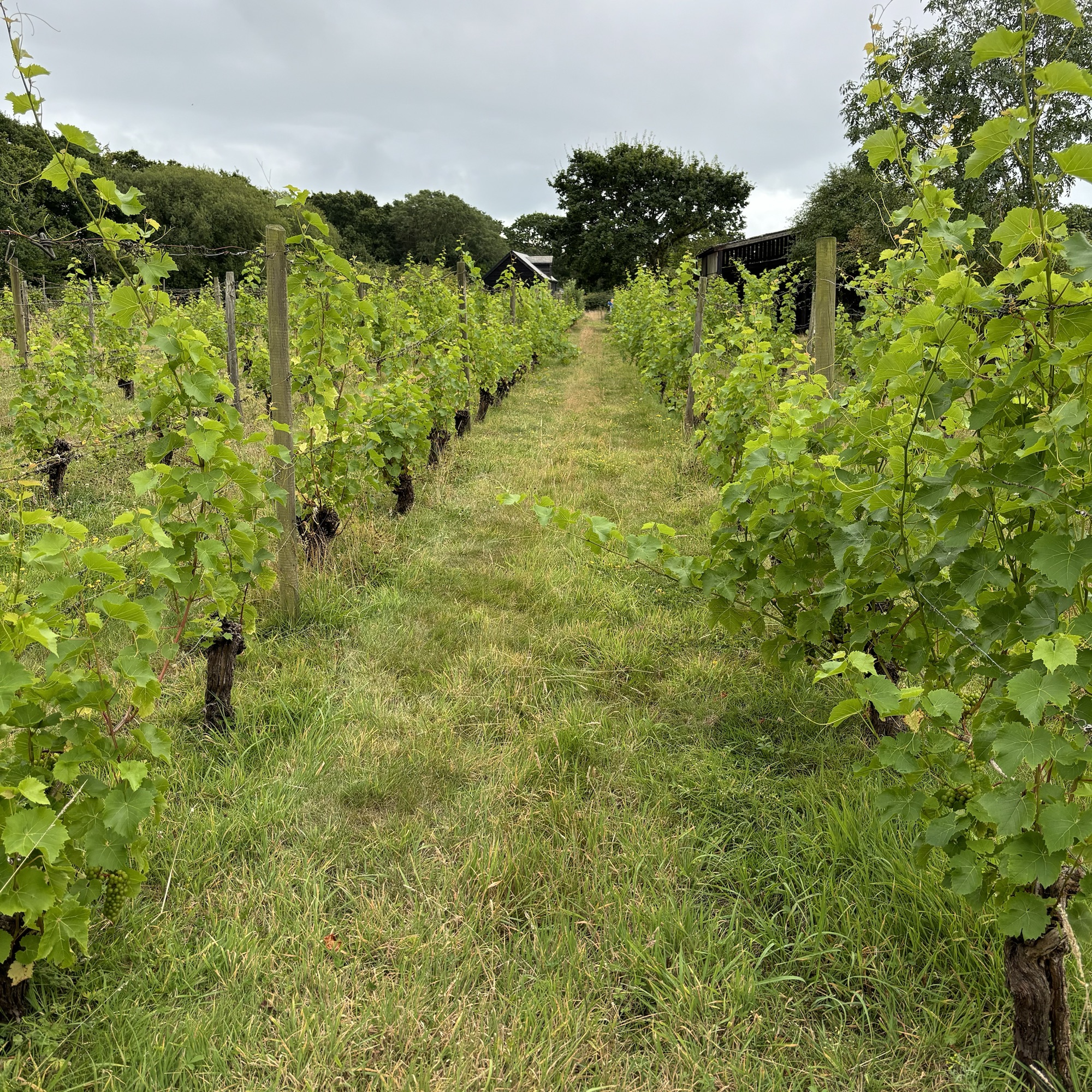
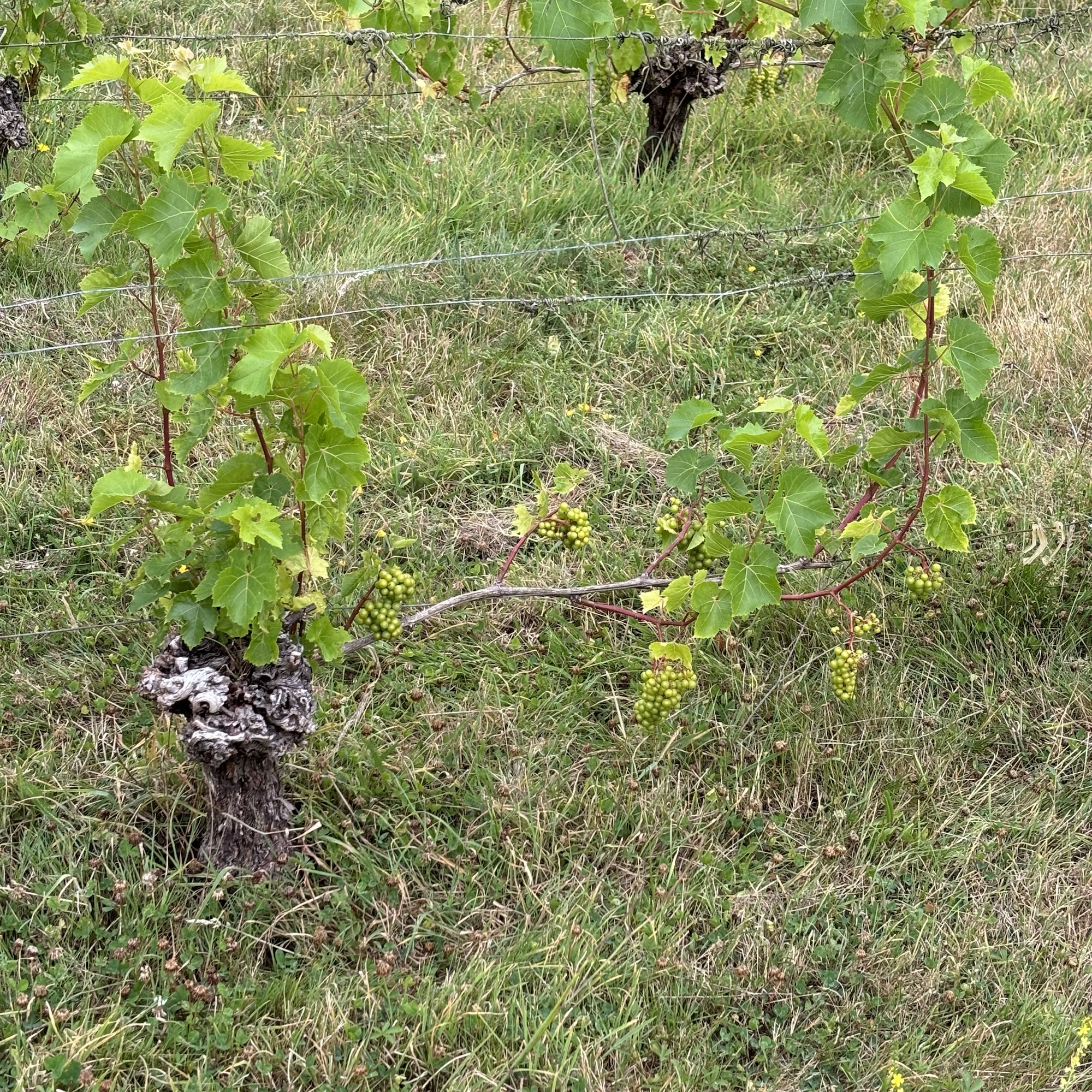
Next stop, the old vines, accessed by several twisting tracks in a field in the middle of nowhere. These are three-hundred Seyval Blanc vines, gnarly old ceps which are sixty years old. That is very old by English standards. They belong to Mark Hurley, but Tim has an arrangement to work the vines now as well as make the wine, and they split the bottles accordingly. As those who have tasted Tim’s Seyval already will know, it is very good indeed. It might not quite challenge Peter Hall’s Breaky Bottom Seyvals yet, but then Tim doesn’t have any 2010s on the market with which to compare.
Tim agrees with me that this variety is underrated. It was chosen early on as a variety which would suit the wet and humid English climate, but it probably fell out of favour because it is a hybrid vine, a cross between Seibel 5656 and Rayon d’Or (aka Seibel 4986). It is 50% vinifera, 37% vitis rupestris and 13% vitis licencumii. As I have eluded to, it can make exceptional sparkling wines when treated with respect. Interestingly, I have just read, thanks to Wink Lorch’s new book, that Seyval Blanc is one of the hybrids some growers are trialling in the Jura, part of the attempt there to tackle the climate shock, especially the late frosts and unseasonal rain/drought spikes.
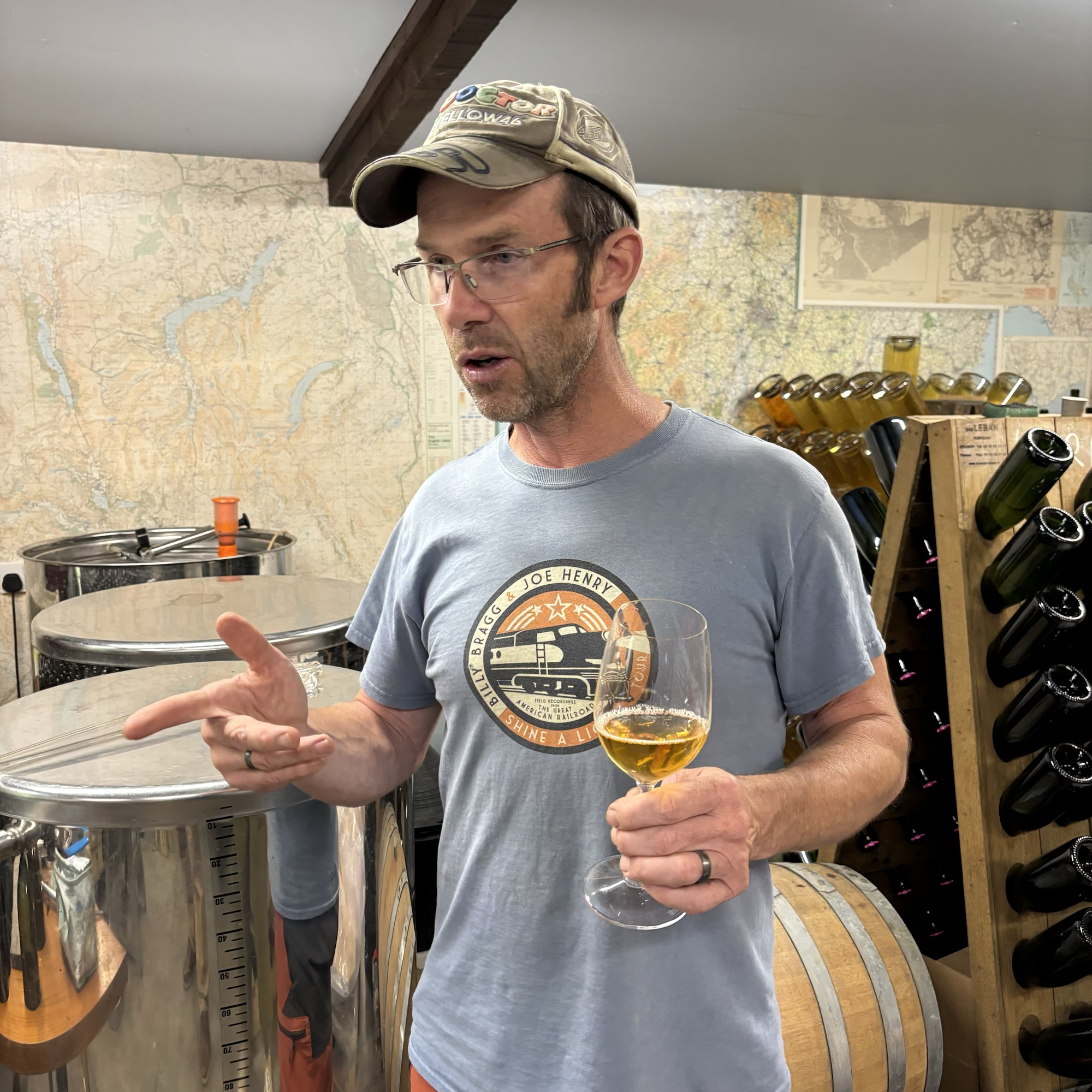
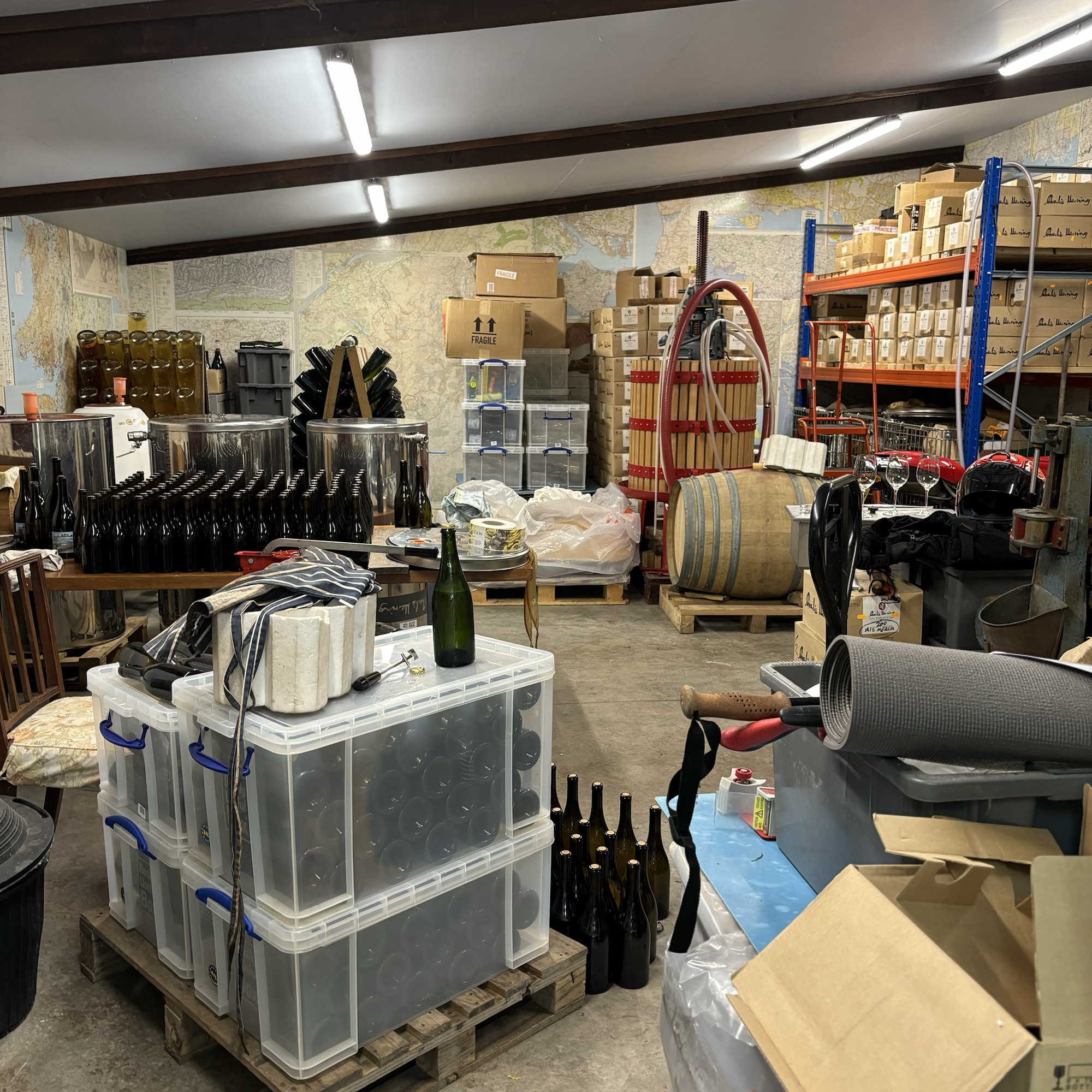
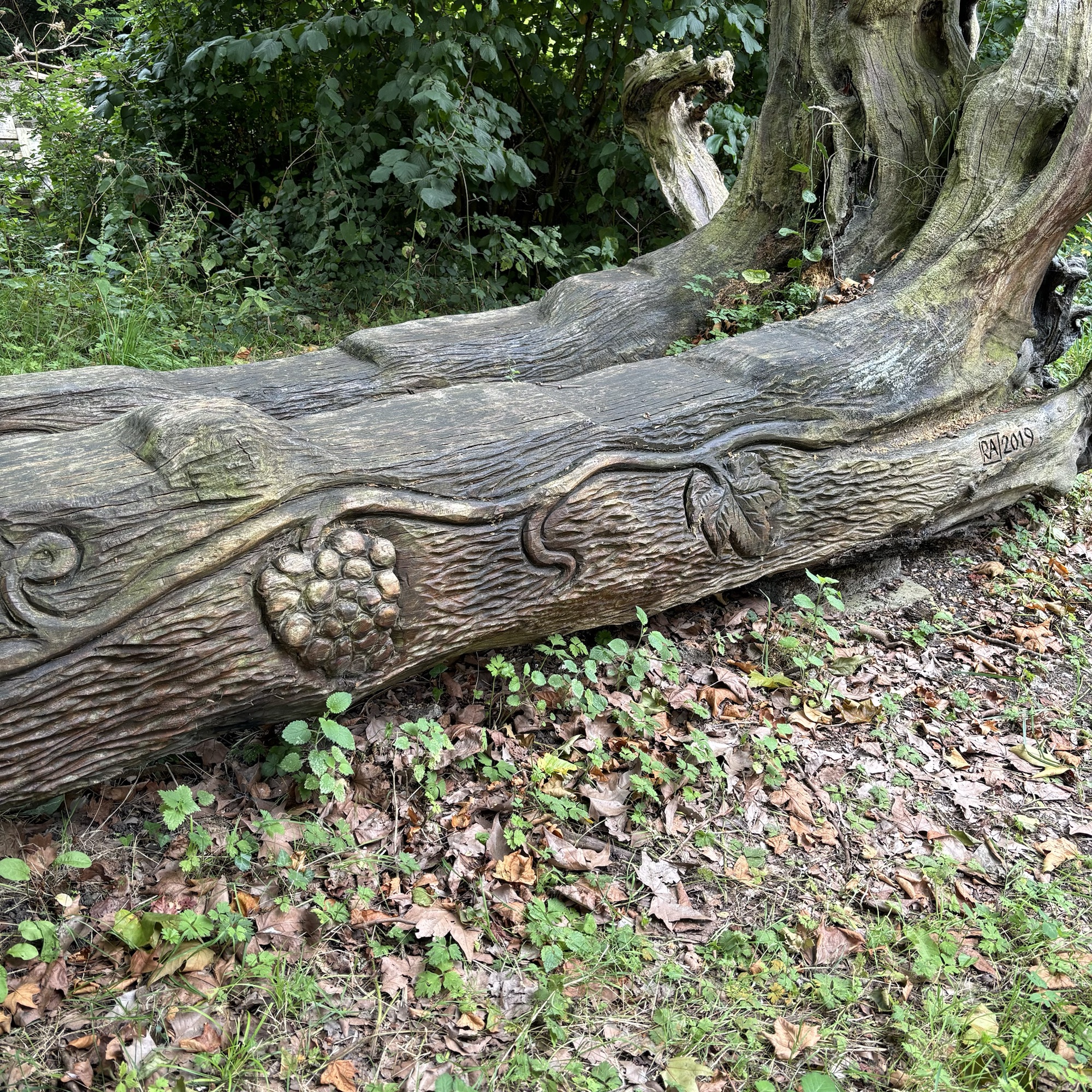
Our final stop of the day was to the winery, and even that involved a long chat on arrival with the joiners who have sliced and diced a fallen tree into planks and beams which Tim will eventually use on a future project. Nothing, yet everything, changes and Tim’s active mind is always planning ahead and full of new ideas.
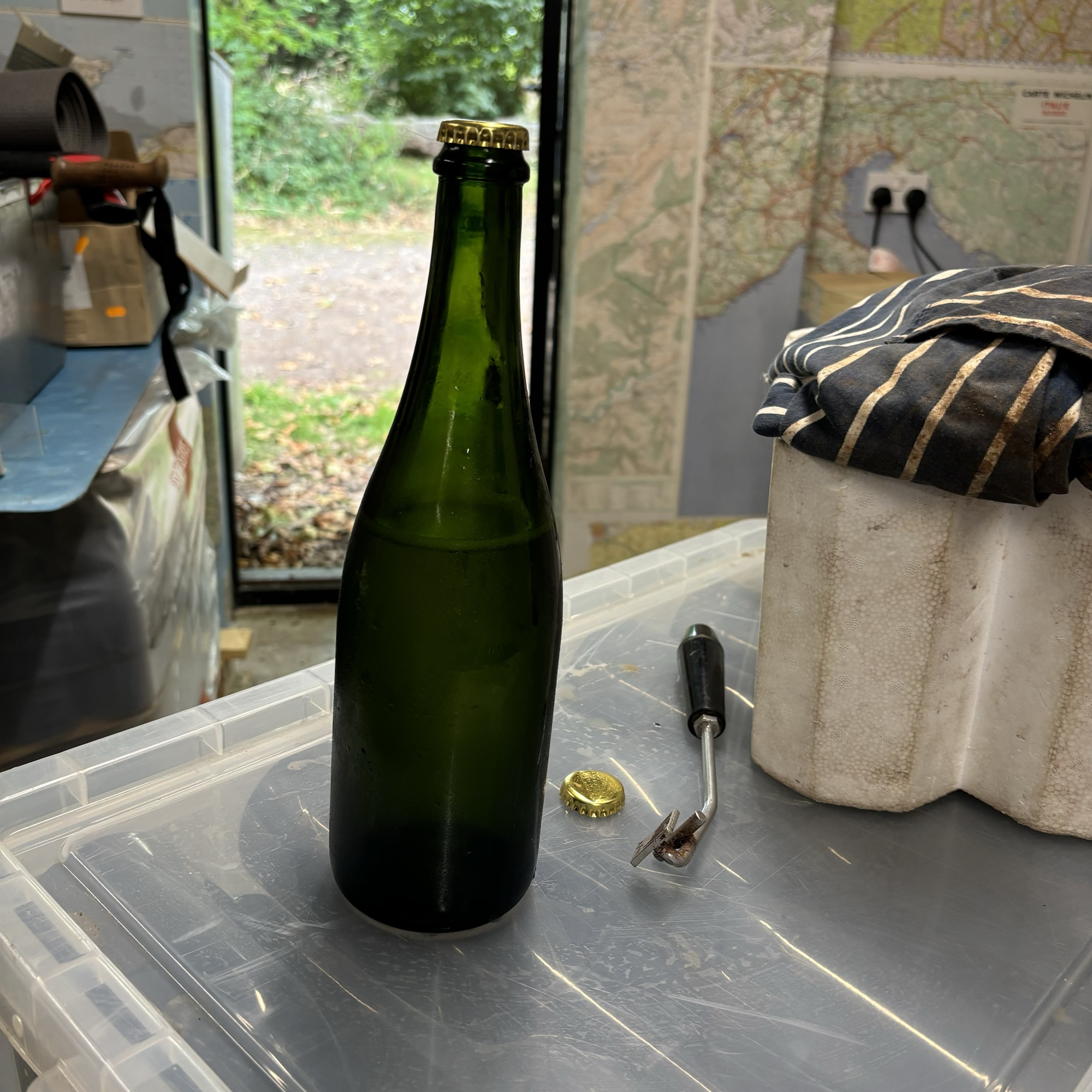
I was pretty honoured to be present when Tim opened the first bottle of his Riesling 2018. This is a zero-dosage sparkling wine which surprise, surprise, turned out to have a lovely fine bead and already some real depth on the nose, a floral element rising above the mousse. It tastes very dry with a nice mineral texture but it has richness too, with a bit of viscosity, and has pure varietal character. Fresh, steely and impressive, although of course it will age and is intended to do so. I’d love to be like Florian Lauer with his dad’s Sekt and find a half-case of these hidden in a corner in 2044.
Next a little gem Tim has created, though what its future may be. I don’t know. When Tim was learning to make wine in South Africa, way back, he had to make a fortified, and indeed I can’t be the only one for whom Tim has pulled out his Saffer Tawny on some previous occasion. Here, Tim has fashioned something from local honey, cider and eight litres of spirit from Capreolus Distillery in Cirencester. This is just beginning its journey. At one year old it is becoming integrated, the alcohol still evident but not dominating. We next tasted a batch made this June and it was dominated much more by the honey.
I was very lucky to be able to leave with a bottle, my second, of Tim’s new wine, Legion. It’s a solera Sparkling Chardonnay, and at £55 retail is the most expensive wine from Tim so far. But I guess we have to realise that this wine was a decade in the making, and it’s no more expensive than, say, Domaine Hugo’s Brut Nature. Over my budget now, really, but sometimes an exception has to be made.
I also grabbed a bottle of Tim’s latest cider, a cuvée that comes from the 2018 vintage. It rested on lees until it was disgorged in May this year (2024). It’s an attempt to prove that vintage cider can age, as one or two other small-scale producers are attempting to show.
Unsurprisingly I am looking forward to trying it, and as I plan to open it tonight (Weds 21st, as I write), you may have seen a pic on Instagram before you read this. Don’t worry, I have no plans to switch from wine to cider, but with my last article on Aeble Cider Shop and Bar I am definitely reflecting the increased popularity of artisan cider right now. [It was amazing, but you’ll have to wait for the last part of my Recent Wines for August to read more about it].
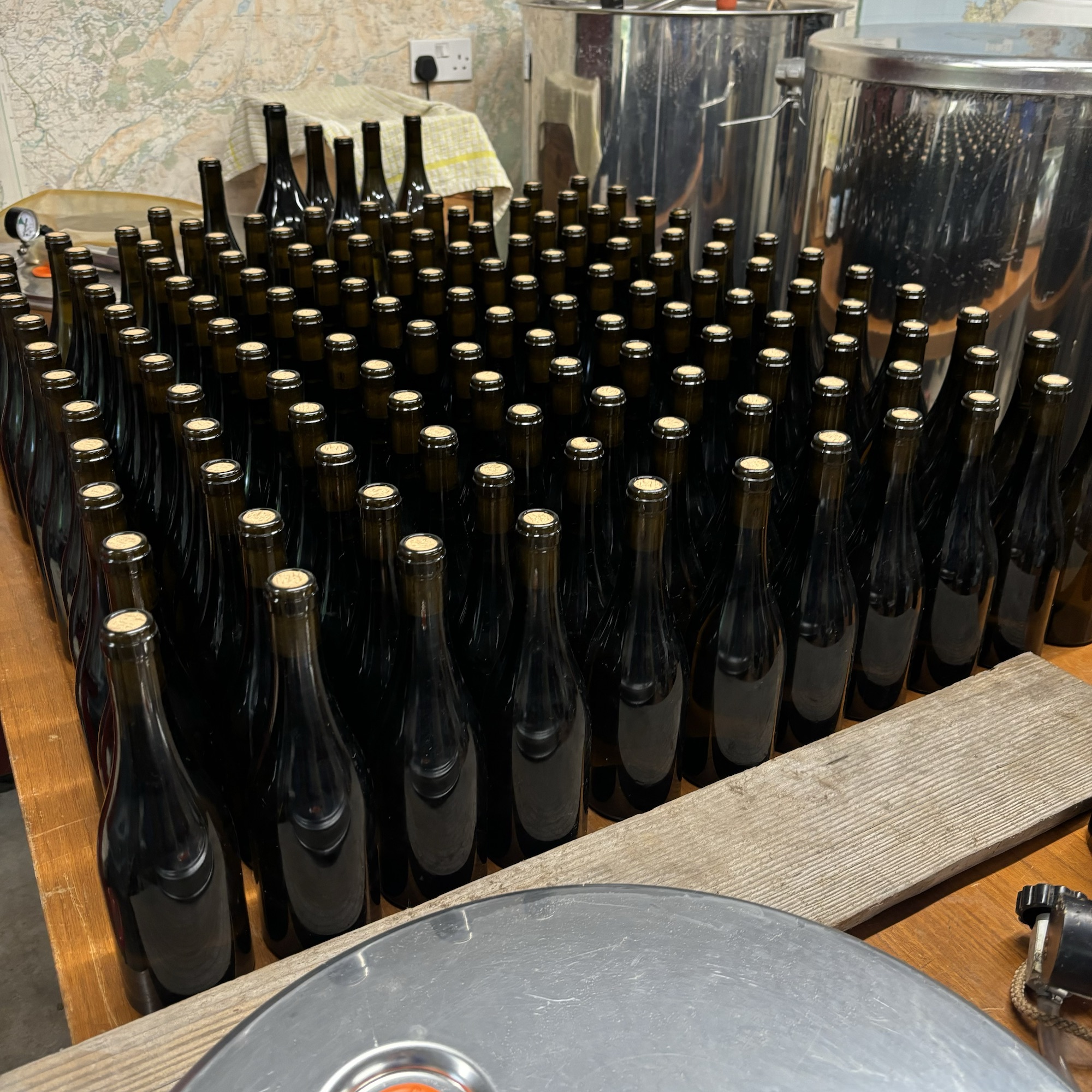
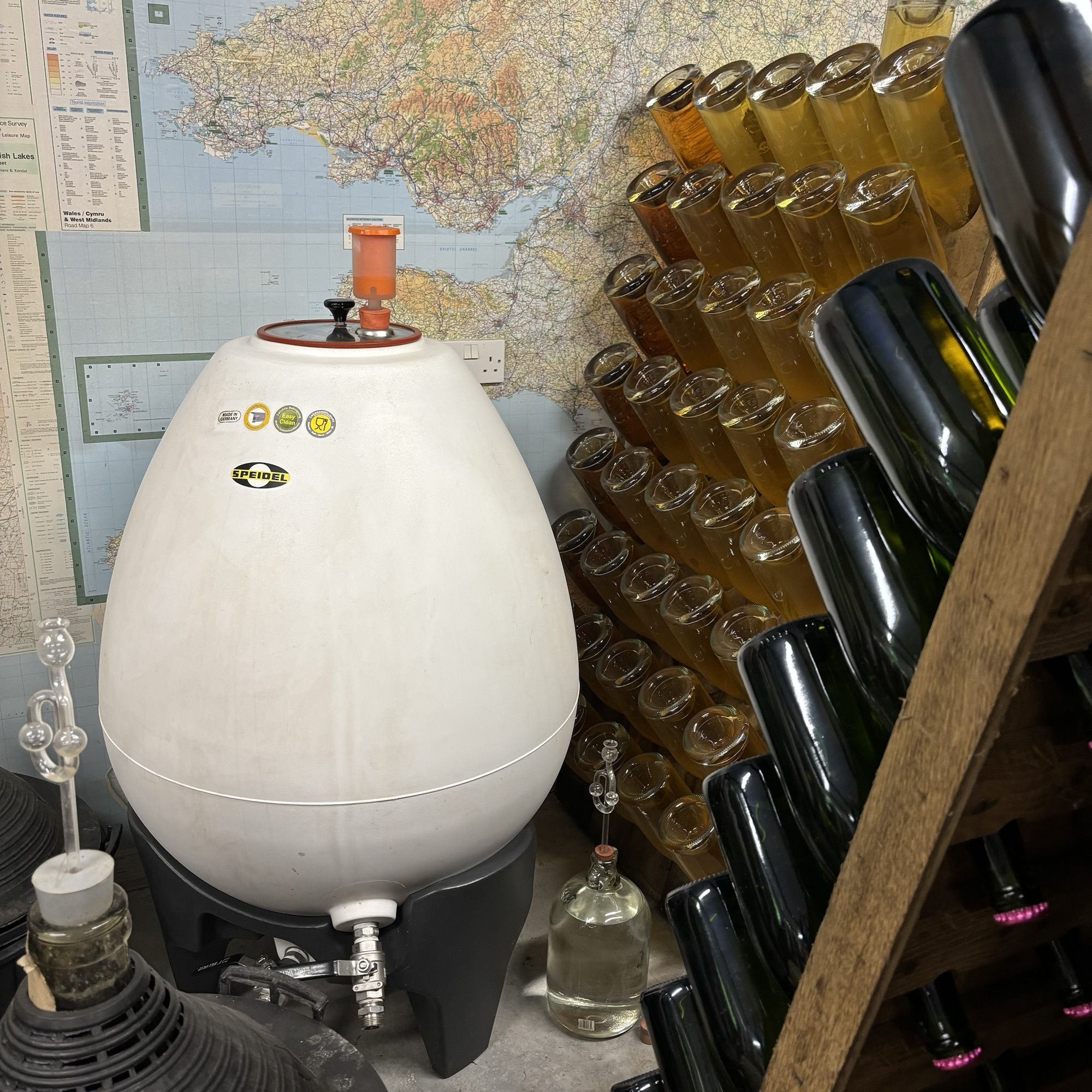
As always, a visit to Tim’s place ends up with me having a head full of questions, and realising I’ve learnt a whole lot more than I knew before, but I am pleased to be able to contribute my own knowledge. Tim is not just a philosopher and a very good teacher, but he’s a sponge too and soaks up any tiny scrap of information he can file away for potential use in the future. It always feels a privilege to learn from Tim. He’s already taught me how and when to propagate some vines from next spring’s prunings, because after my successful 2021 Frühburgunder Rosé I’m definitely thinking that with the right vine variety I can do something in Scotland. You may think I’m mad but if they can do it in Nova Scotia, you never know. If Tim has taught me anything, it’s to give it a go.

 David Crossley's Wide World of Wine
I found a Seyval Blanc down here in the Hérault the other day and really good it was too. Sixty year old vines in England must be quite rare, that sounds like a very interesting wine.
An inspiring man from your account, I love that holistic, dedicated approach – reminds me of a few of the best vignerons I know.
LikeLiked by 1 person
Great read. I especially enjoyed the section on the hens. We had the pleasure of keeping rescue hens at a time when they were still kept in battery farms. The eggs were lovely, but the hen’s recovery and new life was worth so much more. As an add on benefit, our lawn never looked greener!
I am currently in the process of trying English sparkling wines from as many producers as possible, however Tim’s wines have evaded me so far. Hopefully, one day.
LikeLiked by 1 person
The Solent Cellar usually have something of Tim’s but they can be as rare as hens’ teeth 😬
LikeLike