
Part 2 for April is, somewhat similarly to Part 1, made up of a mix of the wines I usually drink and a bottle which doesn’t feature very often these days. We begin in Jerez, zip around Europe via Côte-Rôtie, Alto Douro and Hungary’s Great Plain, before a long-distance flight to Gippsland in Australia.
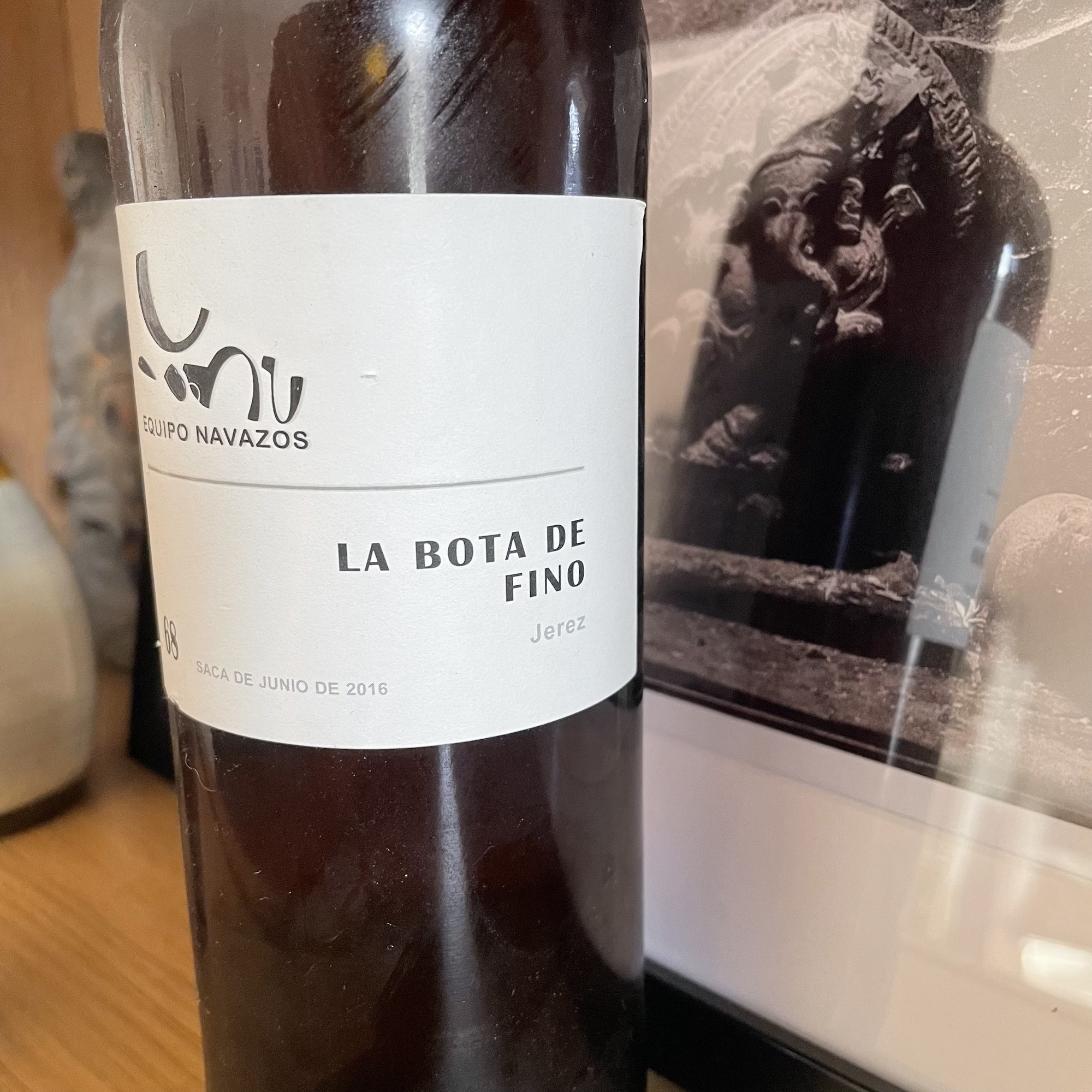
La Bota de Fino 68, Equipo Navazos (Jerez, Spain)
This is a bottling of June 2016 (6,500 bottles to be precise) from a solera at Valdespino. The grapes all came from the single site of Macharnudo Alto. The average age of the wines on release was between ten and eleven years old, the casks selected from criaderas 1-3. It was, of course, bottled unfiltered and without additives.
This is an old EN Fino, as those familiar with their Bota numbers will be aware, and it has had eight years in bottle resting in…I’d like to say my cellar but this was introduced into my Brighton cellar and it has now spent the past two years in three others, finally settling here in our new house. All I can say is that although I sadly don’t have any Vintage Port, nor very much Bordeaux these days, perhaps it’s for the best.
For all the old fuddy duddy folks who say the Fino is not for ageing, I say drink this. They are simply wrong! The yeast influence does feel strong here, making for a pungent, spicy, wine of enormous complexity and some considerable intensity, though it’s a very different intensity than that of its youth. “Muted” would definitely convey the wrong impression, although the restrained beauty of the sound made by a muted trumpet might be an apt analogy. In fact, I see that EN themselves suggest “connoisseurs may age [it] for many years”.
This sensational wine would be hard to track down now, I presume. This came directly from the producer on release, but Alliance Wine is the UK agent for Equipo Navazos. You could take any current release Fino and age it like this.
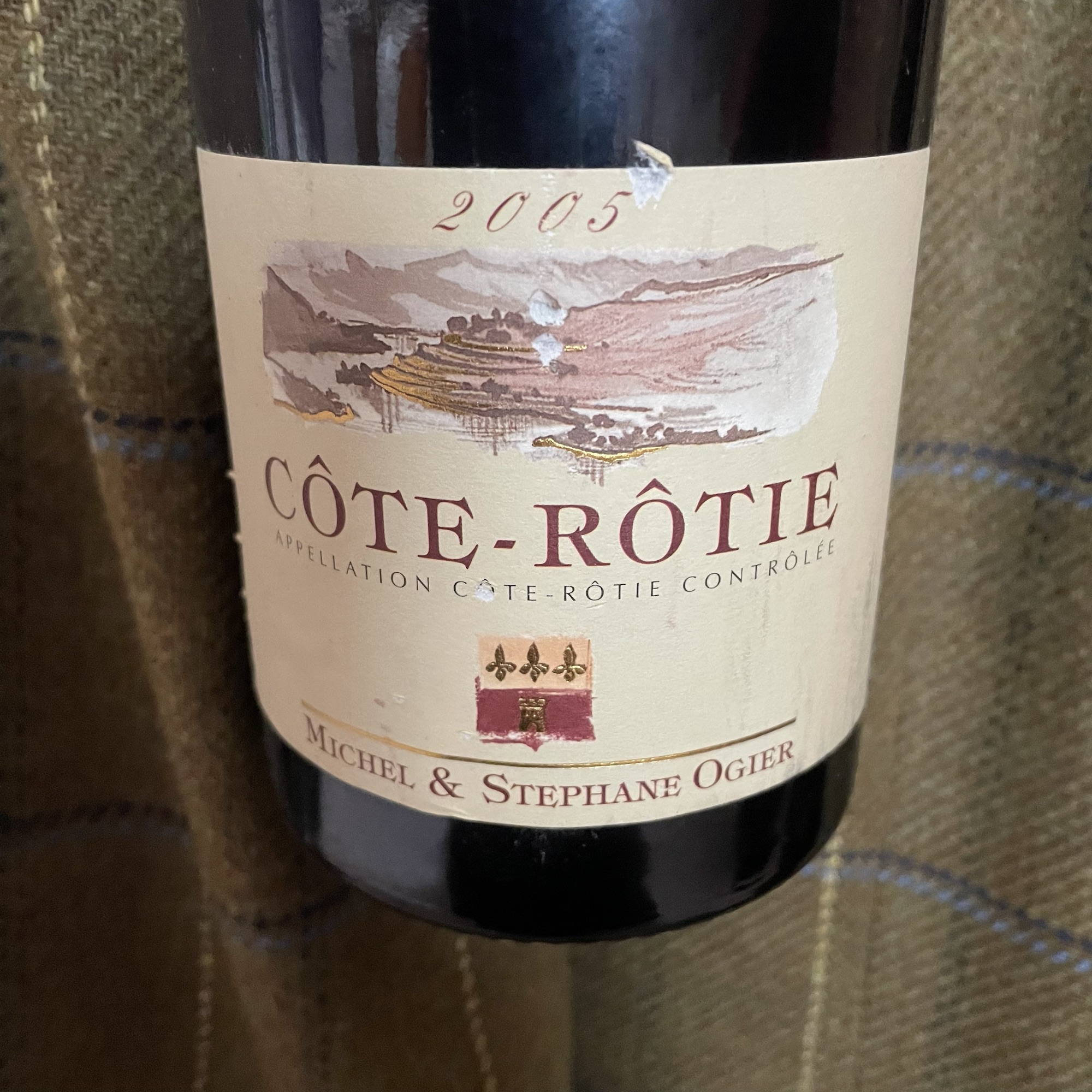
Côte-Rôtie 2005, Michel & Stéphane Ogier (Rhône, France)
I used to be a big drinker of the wines of the Northern Rhône. I remember my first visit to the vineyards of Hermitage, Condrieu, Château-Grillet, Cornas and Côte-Rôtie with great affection, as I remember those wonderful bottles of Georges Vernay, Auguste Clape, and especially Gérard (at that time) Chave. The wines of Michel Ogier sort of became a Chave substitute. I began buying them as I had to stop buying Chave. It helped that his wines used to be sold by Waitrose, at least at their key London locations. A fair few were purchased during their “25% off all wine” promos back in the day (along with the odd Prestige Cuvée Champagne).
This 2005 harks back to the days when Michel was still pretty much at the helm of the domaine, albeit with his son, Stéphane, effectively making the wine. The Syrah fruit is a blend from the two larger sites of Côtes Brune and Blonde. To this is added a splash of Viognier, and the Ogier Viognier has always been quite special in my view. Not one of the naysayers, I am convinced that the seasoning with this white variety does make a difference, whether here in the Northern Rhône or at one or two special producers in Australia.
At nineteen years old this is, I think, fully mature, but magnificently in its prime. The colour is purest translucent ruby, the fruit on bouquet and palate ranges from raspberry high notes to a plummy base. If there is any hint of bacon then the fruit smothers it, perhaps unexpectedly. It’s smooth and clean, the tannins having given way to a soft, velvet, texture. Splendid sounds a good word to describe it. It was my last of their 2005s, and despite some critics giving this a drinking window up to 2020, this is the best 2005 I’ve drunk from this father and son team. Indeed, I think it was my best Ogier wine so far.
My sources for Ogier were the Waitrose food hall in the basement of John Lewis on Oxford Street, but their web site no longer lists Ogier (the overall range has changed considerably from those halcyon days), but also Berry Brothers & Rudd. They continue to stock much of Stéphane’s now expanded range of cuvées.
Uivo Rabigato Branco 2022, Folias de Baco (Alto Douro, Portugal)
What a contrast to the previous wine, you might think. True, but make no mistake, this is a cracking wine and one that offers remarkable value. Despite the undoubted quality of the Côte-Rôtie above, you couldn’t really say that about it. Like the red version of this I drank back in March (Renegado), this hits well above its weight/price.
Tiagio Sampaio makes these wines in the Alto Douro’s Cima Corgo. It’s fascinating that even though the Douro is now much better known for unfortified wines (mostly red, it must be said) than it once was, the steep slopes of the Cima Corgo do grow some of the best fruit for Port, the region’s more famous wine.
This white wine is a field blend, but the dominant variety is the autochthonous Rabigato. The soils are schist-based. The wine was fermented in stainless steel and then aged four months on lees, then a further four months off the lees. It’s a natural wine and was bottled unfiltered.
Now, I can’t say I can pinpoint the exact location for these grapes, but I know Cima Corgo is pretty hot. This white, however, is super fresh, cleanly mineral, with citrus zip. The bouquet seems to blend an array of garrigue-type herbs with a wafting note of violet. Unusual but pleasant. Just a tiny addition of sulphur here.
Not only does Tiagio follow biodynamic practices, the vineyards of Folias de Baco are part of a wider project for biodiversity and wildlife restoration in the Upper Douro.
This was purchased from Cork & Cask, Edinburgh (£22). The importer is Modal Wines.

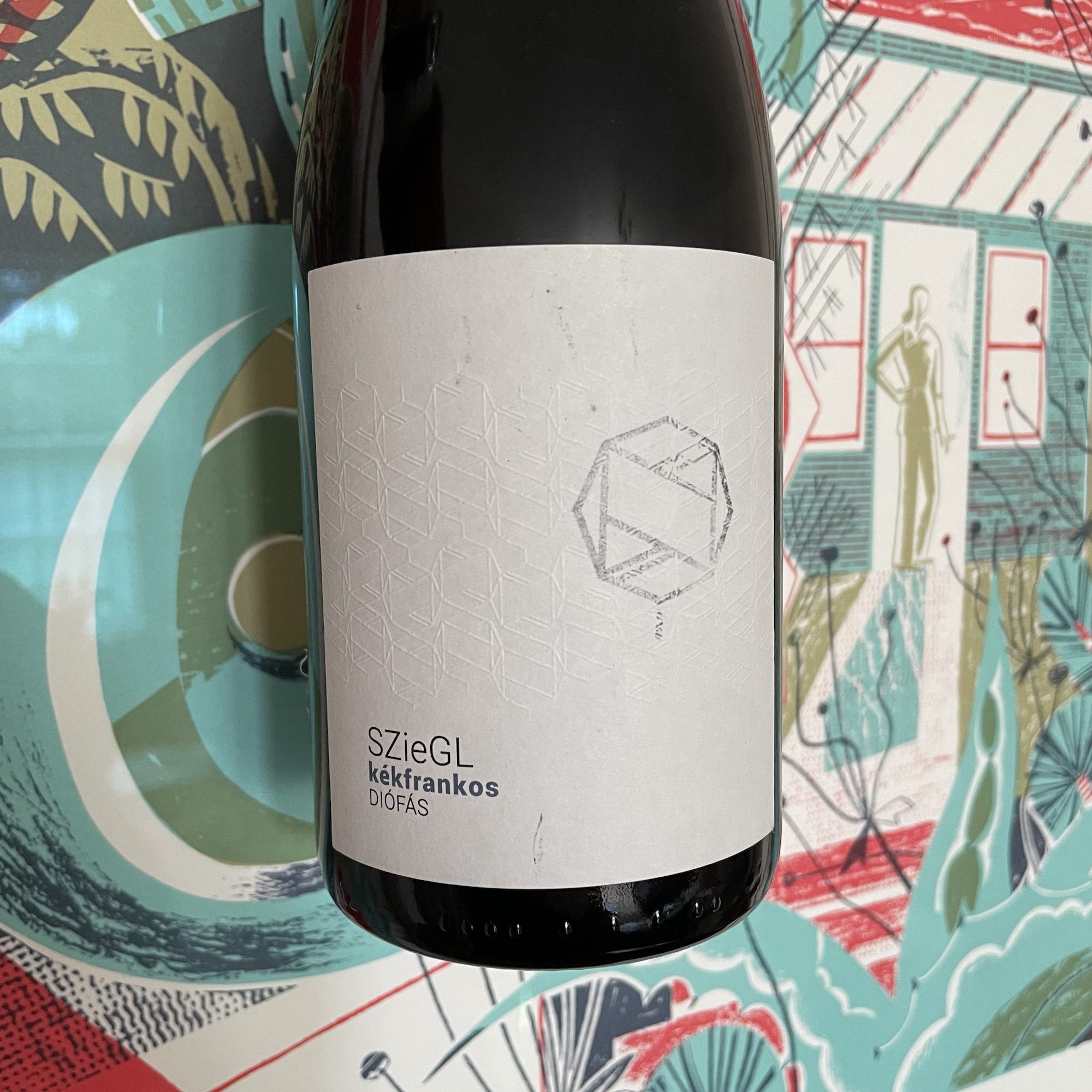
Kékfrankos Diófás 2019, Sziegl Pince (Hajós Baja, Hungary)
As Blaufränkisch, its name in Austria, this variety is just beginning to gain justified wider recognition as a producer of fine red wines. Kékfrankos, its name in Hungary, has always been a mainstay of that country’s red wine scene, arguably producing its finest red wines too.
This wine comes from Hungary’s Great Plain, a region with sandy soils, once best known for supplying the country’s urban workforce with high volume, cheap wine. Things are obviously changing. The couple synonymous with Sziegl Pince began grape farming when, as postgraduates in their very early twenties, they were given a parcel of old vines as a gift in 2012. They have since increased their holding to 8.5 hectares.
A profound love of their home and its nature means that no synthetic chemicals are used to make the wine, and the vines never saw the industrial farming of the Soviet era because the sandy soils weren’t suitable for mechanised farming. Diófás is a single site, one of the best plots they have. The fruit ripens without loss of acidity, which needs to be retained in the best wines made from this variety. Fermented via a mix of crushed fruit and whole clusters in open vats, ageing is 18 months in used oak. The wine then rests in bottle a further 18 months before release.
The bouquet is lovely, nice peppery, crushed cherry. The palate has good juicy fruit, but there’s also a bit of grippy tannin. It makes for a nice food wine, but equally it will age further. I think this is a very impressive wine, especially for the price. £25 from Basket Press Wines.
I tasted this late last year and it really impressed then, even more so as a whole bottle drunk at home in late April, after a little more time resting. I think it has now sold out, and I can’t find it at any of the retailers who stock the Sziegl Pince wines. However, more may arrive in the UK. This is very highly recommended, and would surely cost more if it was an Austrian Blaufränkisch with a louder label.
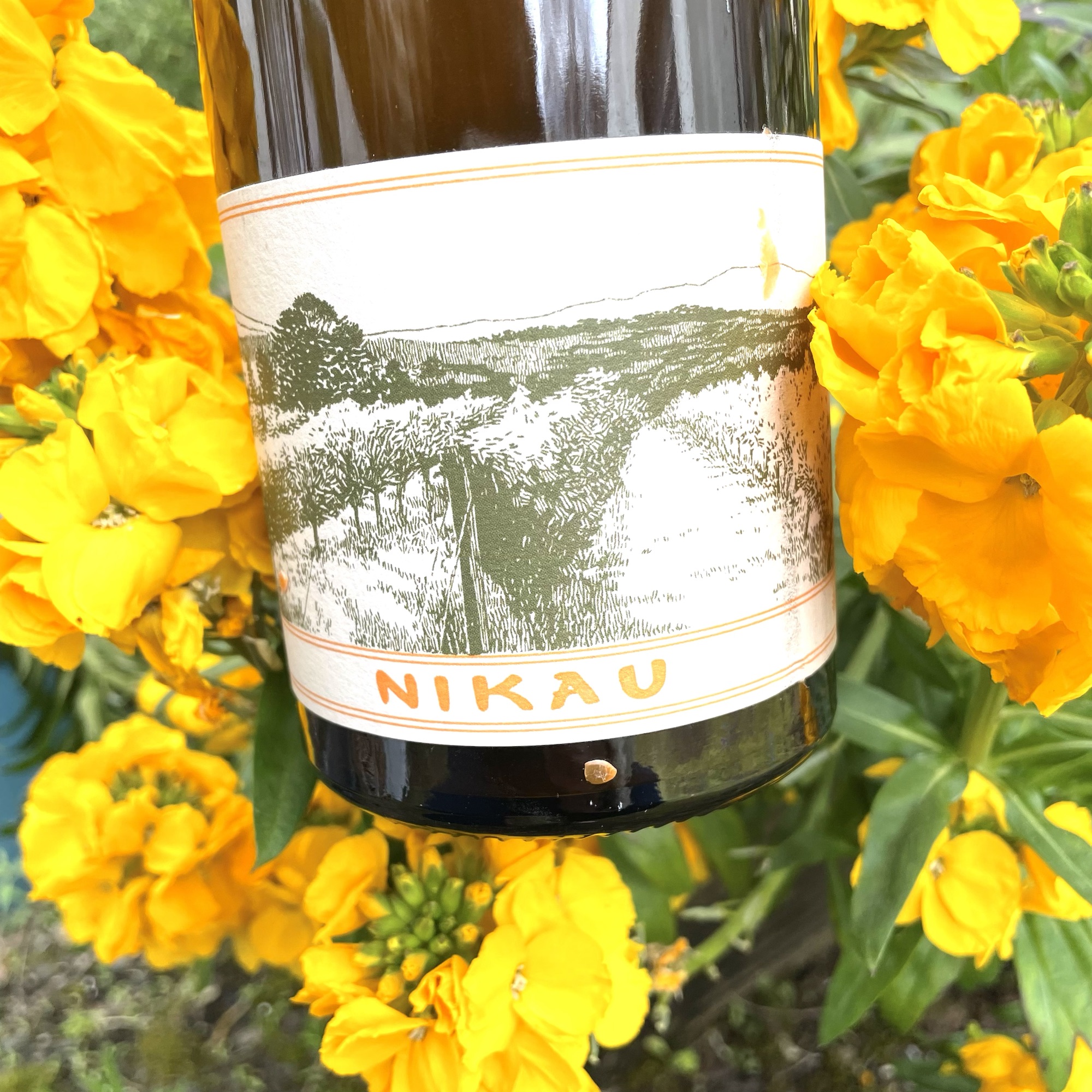
Tonimbuk Amphora Granite 2020, Nikau Farm (Victoria, Australia)
New Zealand native Dane Johns continues to plough his own very special Australian artisan furrow at his family’s farm, where he lives with wife Hannah, in Gippsland, SE Victoria. The farm totals 95 acres, but there are just two hectares of vines right now.
Dane started out in wine, after a decade working as a Melbourne barista, working with William Downie, and first became known individually for his Momento Mori label, mostly using Italian varieties. From the start Dane followed a zero-zero approach to additives, including a no-sulphur regime. It perfectly reflects Dane’s approach to his first career as a musician, making electronic music but using analog equipment.
Tonimbuk is the district, amphora is the vessel and granite is one of the soil types, among several, in the vineyards. The wine is a blend of Pinots Grigio and Gris (listed as separate varieties, I’m not sure why), Chardonnay and Sauvignon Blanc. The result is an amber wine of some complexity, a wine you’d probably guess spent time in amphora. That said, it isn’t too overtly textured. Adjectives which come to mind are alive, generous, vibrant, with hits of orange and ginger. Ironically, this is an easier drink than the 2019 “Tolone” Riesling, my last Nikau Farm wine. I loved that wine’s individuality, but with 10% abv it was quite lean and bony, probably not for the uninitiated.
However, all of Dane’s wines are thought-provoking, and perhaps deliberately challenging. This is almost certainly why I would place him in a clutch of Australia’s most exciting winemakers, pushing boundaries with wines of genuine personality. UK prices are somewhat steeper than back in Australia (I can tell you from having bought Dane’s wines there as well). I was lucky as The Solent Cellar had this discounted from £45 down to £35 (perhaps a tough sell), though I think I got the last bottle. I’ve seen Tonimbuk for £60 in other stores here.
The abovementioned Tolone Riesling is still available (the web site says two bottles) at The Solent Cellar. £48, but that is reduced from £65. If you want something really different…
All of Dane Johns’s wines, including Momento Mori as well as Nikau Farm, are imported by Les Caves de Pyrene.

 David Crossley's Wide World of Wine