
Before we get onto Part 2 of the wines I drank in December, a quick plug for a wine book project close to my heart. Some of you may have already seen that Wink Lorch has launched a Kickstarter campaign to raise money for a companion volume to her Jura Wine (2014). She plans to publish a “Jura ten years on” supplement this year. She’s doing pretty well. I think she raised half of her small target in 48 hours. However, a pledge now will not only ensure that the project goes ahead, it is also by far the easiest way to obtain a copy. If, like me, you have a passion for Jura Wines, I’m sure you will want to be onto this. The campaign has a very short run time, of less than a month, so don’t delay.
Right, December. In Part 1 we visited Hungary, Alsace, Hampshire, North Canterbury (NZ) and Slovakia. Here in Part 2, we have some delicious wines from Jura, Rheinhessen (two, but very different), Alsace and Carnuntum.
“Point Barre” 2020 Vin de France, Tony Bornard (Jura, France)
Tony’s father was one of the people who really built on Pierre Overnoy’s work to make Pupillin as famous as its “World Capital of Ploussard” signs would have it. Philippe founded his domaine in 2005, and is in fact a good friend of Overnoy. Recently, his son, Tony, has fully taken over winemaking. The estate remains a shining beacon of natural winemaking in the village. Tony took over in 2017, having started his own label a few years earlier in 2013. By merging both sets of vineyards, Tony can now farm just shy of 12 hectares. Everything is farmed biodynamically, and these remain benchmark Jura natural wines.
This cuvée is basically a fruit-forward, glouglou Ploussard (Poulsard). The terroir is based on a mix of marls and the grapes see a 21-day whole berry, carbonic, fermentation. The wine is aged in large old oak. What you notice first is that the colour is darker than many of Philippe’s later vintages. However, if it is slightly more grippy and even a little tighter that previously, it is still very much fruit-driven with cherry, blackberry and raspberry all on nose and palate. To this I would add a bit of Moroccan spice and a real vibrancy, which has always been this cuvée’s hallmark.
Very much a “drink or keep” wine, and very much like father, like son. The orange fox is in safe hands. My bottle came from The Solent Cellar, though wines like this disappear in days. Nowadays you will pay (after a little research) probably between £50 and £58 if you can find a bottle. That’s my only gripe, and I can feel and article about wine prices coming on. I think Les Caves de Pyrene is still the importer.

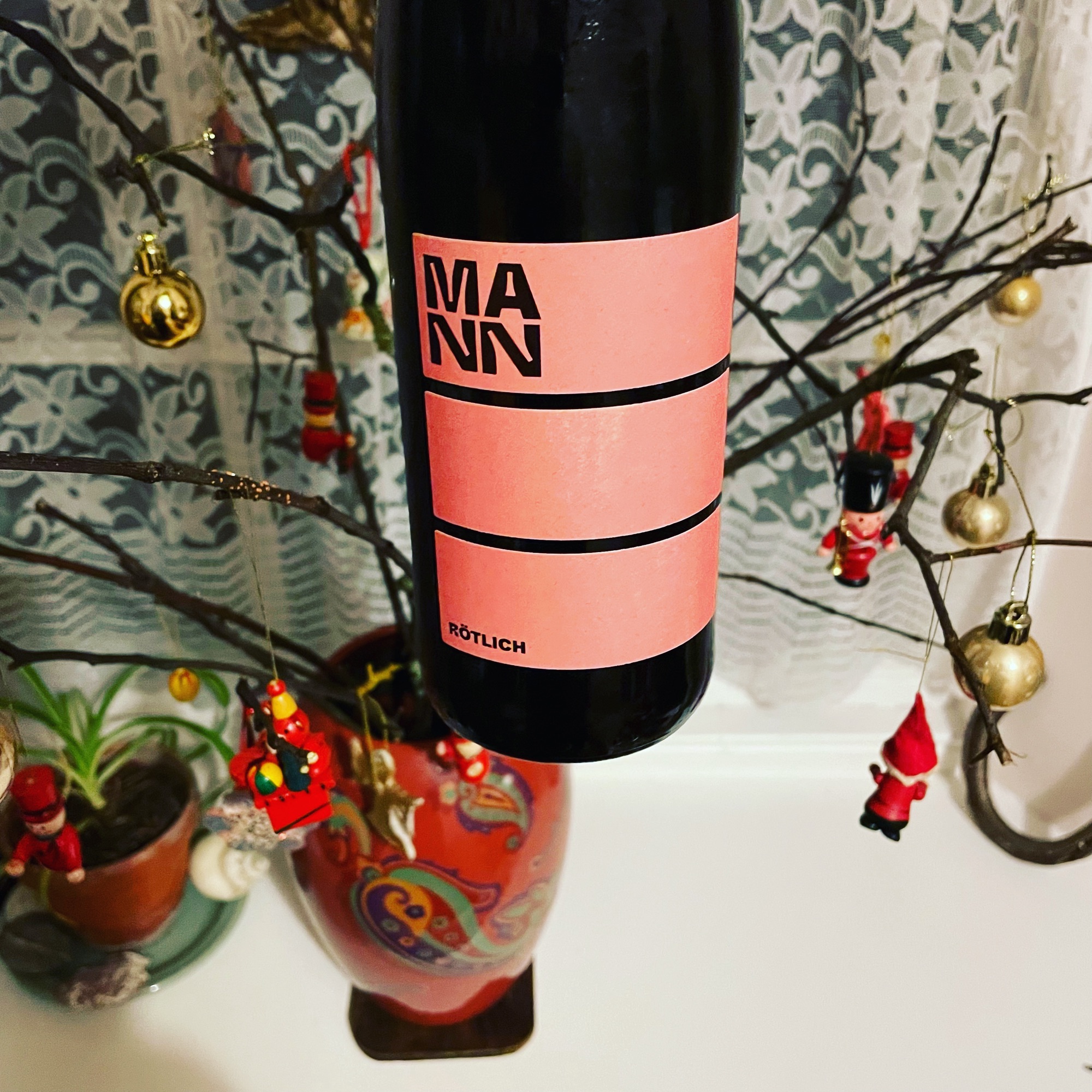
Rötlich 2021, Andi Mann (Rheinhessen, Germany)
This light, 10% abv, red wine comes from one of the newer (at least to me) names in Rheinhessen natural wine. Andi farms at Eckelsheim, where he grows vines with an average age of 30-y-o on limestone and porphyr at around 150 masl. This is an old family domaine, dating from the end of the 17th century, but Andi has introduced a wildly experimental attitude, along with a strict natural wine philosophy. Intensity is perhaps his main objective.
I tasted Andi’s Müller-Thurgau back in November and really enjoyed it. I already had this red in the cellar, and light as it is (10% abv), I found a bright winter’s day to pop it open. The main variety is Blauer Portugieser (45%), with 30% Cabernet Dorsa (a Blaufränkisch x Dornfelder cross), with Dornfelder, Merlot and a little Bacchus making up the rest. Part of the blend was direct-pressed and part was fermented as whole bunches. Ageing was in 2,400-litre vats for 12 months, with no sulphur added at any stage.
We get a very lively strawberry bouquet, and a cherry crunch on the palate. A fresh wine, it has quite high acidity, but is light and refreshing, easy going and tasty. In view of how I concluded on the last wine, this is somewhat less expensive at £24.50 (from Cork & Cask via importer Roland Wines). I would describe it as an excellent summer glugger. Look out for Andi Mann as the days get longer.
Westhofener Steingrübe Chardonnay “R” 2021, Weingut Seehof (Rheinhessen, Germany)
I suppose I should admit that I do try to get a degree of variety into my wine drinking, and it’s fairly unusual for me to drink two wines from the same region in immediate succession at home. In my defence, these two wines could not be more different, at least in terms of style and flavour. This is a serious Chardonnay, and if you didn’t really expect to see one from Rheinhessen, perhaps neither did I.
Florian Fauth makes this wine from a fairly large vineyard which reaches up the slope from the houses of Westhofen, and which happens to lie right in between the somewhat more famous Westhofen crus of Morstein and Kirchspiel. It is, like its neighbours, an ancient vineyard on sandy loam, first mentioned in 1295.
I must say, this was impressive, and, with apologies to the Fauth family, a bit of a surprise (in terms of the variety/location). The bouquet had lots of toasted nuts, and was very Burgundian, but the fruit had a touch of the New World to it (albeit cool climate New World). It was a nose which suggested the wine might be a little young, but the palate showed that it was very enjoyable now, though will doubtless get even better.
It may gain in complexity, but I loved the rich Chardonnay fruit, which had a creamy sweetness to it, though the wine is dry, and saline at the finish. You get a full mouthfeel, but the alcohol (13%) has good balance with the fruit. The wine also has poise. Nothing spills over the edges so to speak.
My bottle came from The Solent Cellar (£25). Other options would include Butlers Wine Cellar (£25.50) and The Good Wine Shop (branches in London) (£28). I think Chardonnay is joining Pinot Noir amongst the grapes to seek out in Germany, almost certainly a sign of climate change, even if it will still very much play second fiddle to Riesling in Rheinhessen, one assumes.

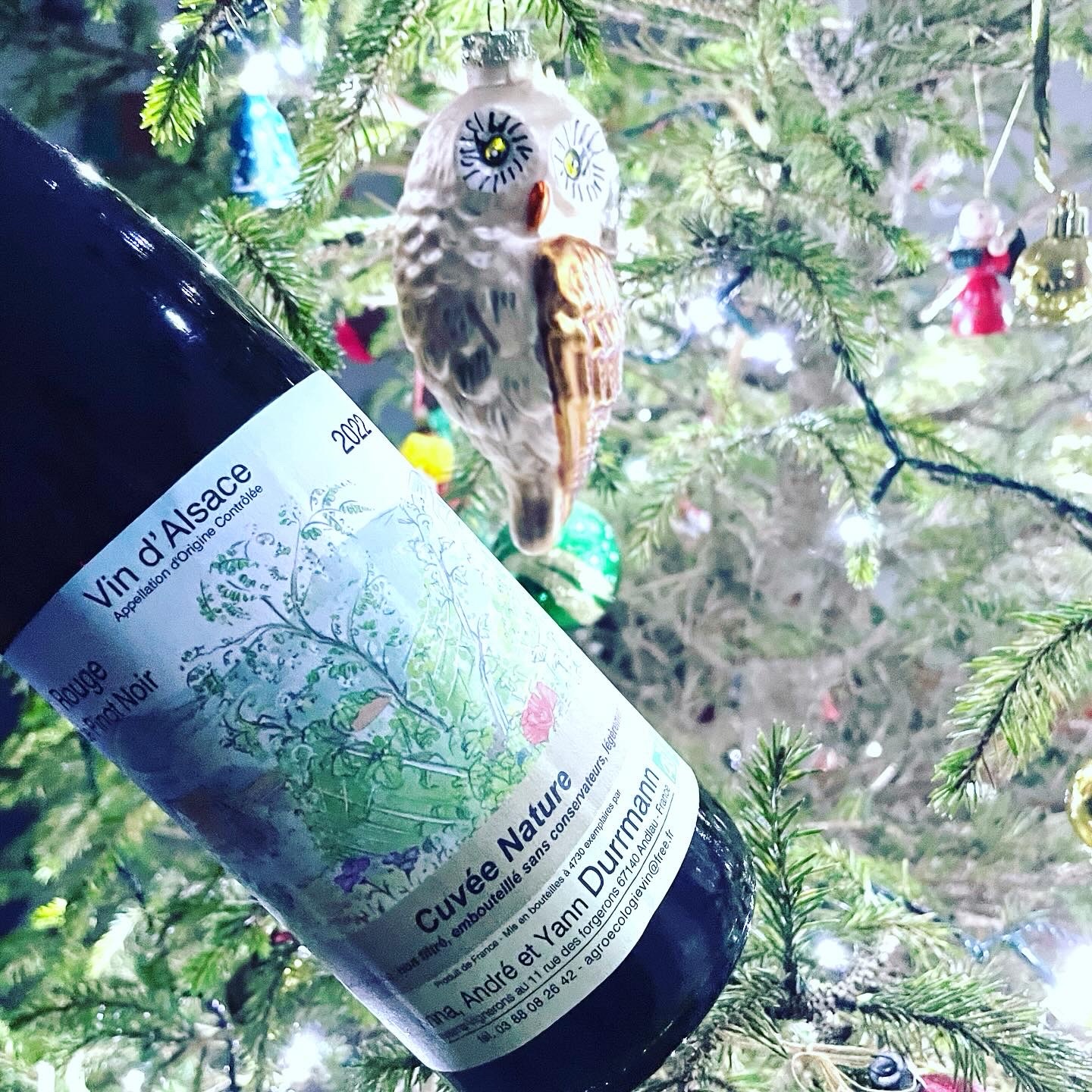
Rouge de Pinot Noir Cuvée Nature 2022, Anna, André and Yann Durrmann (Alsace, France)
Yann Durrmann has taken over at this exciting Andlau domaine where his father, André, inherited the small vineyard started by his own father as part of a mixed farm. Yann has continued the work André began, creating natural wines with, more often now, zero added sulphur (the Cuvée Nature wines). The key to this family’s philosophy lies in the vineyard: ecology, sustainability and biodiversity, of which I’ve perhaps written too often to repeat here.
The Pinot Noir comes off schist and sandstone. It undergoes a four-week maceration before ageing in a mix of stainless steel and older oak. The result is a pale red wine smelling so clearly of our English summer pudding (which blends red and dark fruits encased in a red juice-stained bread case). Like many Durrmann wines, it has a slight funkiness to it, but most people will appreciate the fruit-forward nature and its concentration. There’s a good lick of acidity, of course, and a very nice length. A great picnic wine, or one for lunchtime (with only 11.7% alcohol on the label).
Another wine from Cork & Cask (Edinburgh), £28. Imported by Wines Under the Bonnet. Also potentially available from a good few independents like Gnarly Vines, Forest Wines and Natty Boy Wines.
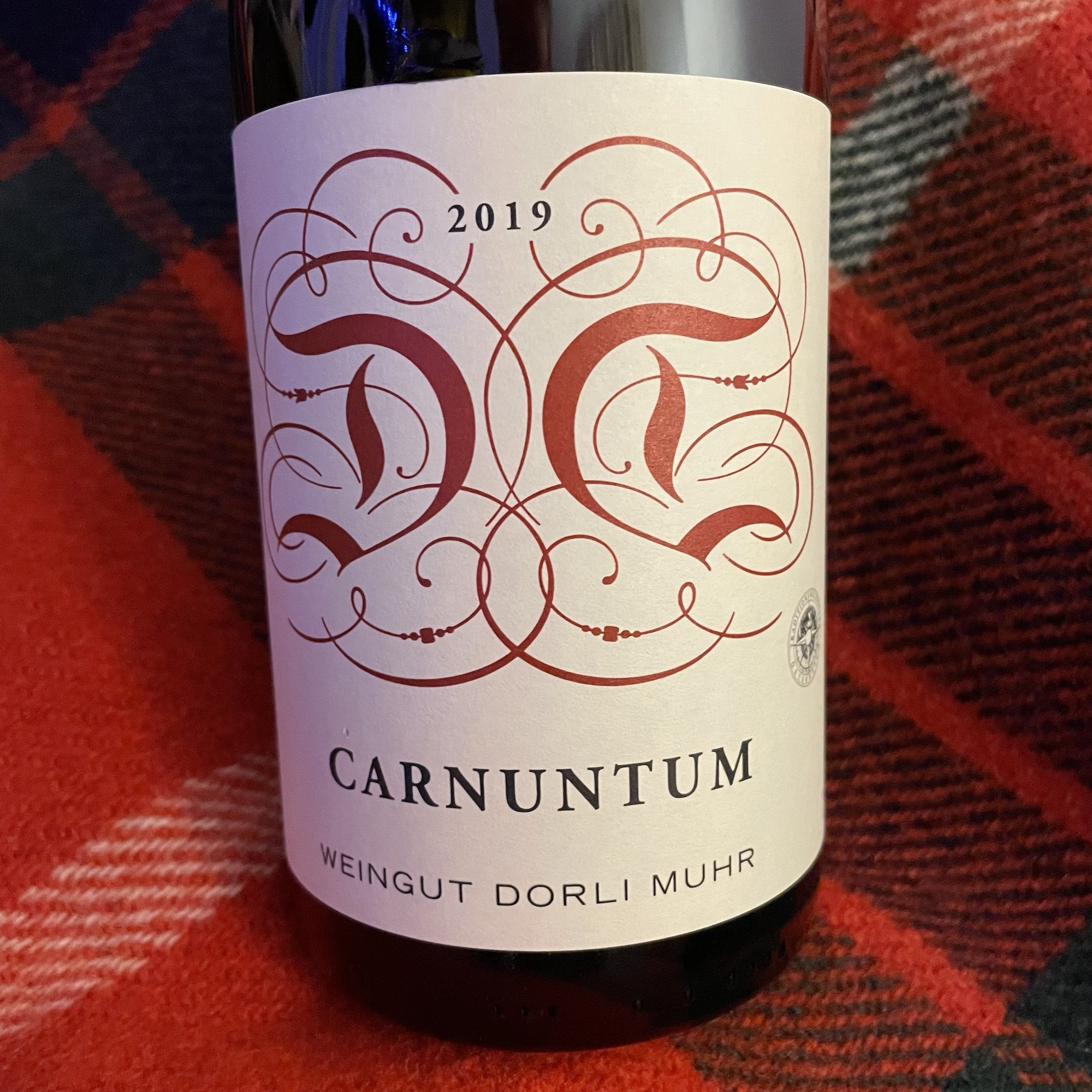
Carnuntum 2019, Dorli Muhr (Carnuntum, Austria)
A decade ago, I’m not sure I’d drunk a Carnuntum (I think my first record of one was in 2015), but the first bottles I drank from this region of Lower Austria were some of Dorli Muhr’s impressive single vineyard wines, especially those off the Spitzerberg (from where Dorli now makes several cuvées) in the far east of the region, up towards the border with Slovakia.
Carnuntum, named after a Roman City in the region, boasts around 900 hectares of vines, east of Vienna, but south of the Danube. The revolution, if it can be called that here, began in the early 1990s, when red varieties started to take over from the old white field blends.
Dorli Muhr grew up in Carnuntum, before a well-documented international career in wine PR. She began making wine on a small scale in the early 2000s, but her success has led to a growth in production. I think it fair to say that she has the biggest international profile of those producers from the region, although you will likely find one or two other recognisable names here.
This wine is a blend of Blaufränkisch (65%) with Syrah, which come off lower-lying vineyards. The grapes are fermented in large wooden vats and the wine is matured for two years, with only one racking. Although I don’t come across a lot of blends containing these two varieties, they do go very well together. This combines red and darker fruits, a plumpness and smoothness which to a degree is simple but not dull. A nice peppery spice on the finish grounds the fruit.
Dorli converted her estate to organics some time ago, but as I saw her at Autentikfest in Moravia in 2022, the only Austrian producer I noticed at this natural wine fair, I am assuming that these are able to call themselves natural wines as well now. This Carnuntum is certainly an “everyday” kind of wine, but then look at the price: £16 from Smith & Gertrude in Edinburgh’s Portobello. That makes it easy to say you can’t go wrong.

 David Crossley's Wide World of Wine