
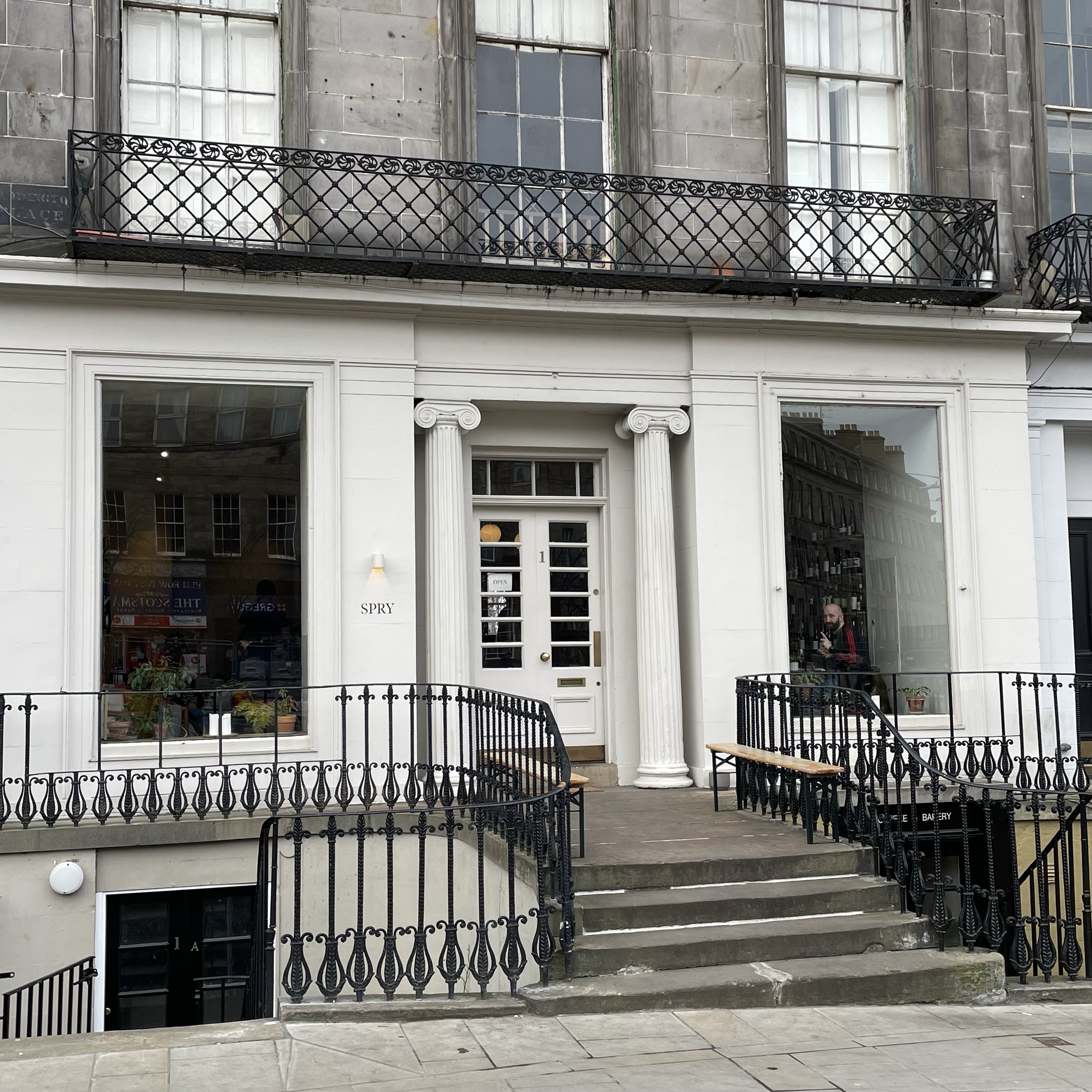
Modal Wines held their Edinburgh Trade Tasting on 6 November at Spry Wines which, at 1 Haddington Place, is at the top of Leith Walk. For anyone who doesn’t know Spry, it is a natural wine-focused bar and restaurant which serves very good food by way of small dishes, with an accompanying list of natural wines, dozens of which are available off the shelves at retail prices. Within a fifteen-minute walk from Edinburgh Waverley Station, and opposite Valvona & Crolla, Edinburgh’s fancy Italian deli, Vinyl Villains for second hand records and cds, and the famous Toppings for books, Spry is highly recommended for lunch or dinner (open Tues to Sun from 1-10pm, booking recommended).
Modal had Roman on hand to show 31 wines, ten as a free pour and 21 as a tutored tasting. I have chosen to mention seventeen wines, hoping to give you just enough information to entice you to try them. It’s not that I didn’t like the others, it’s merely that these are the ones which interested me the most. As far as I know, all the wines can be described as “natural”, although some will have what the producers describe as “minimal” added sulphur. In case it’s unclear, the format below goes producer, wine, region.
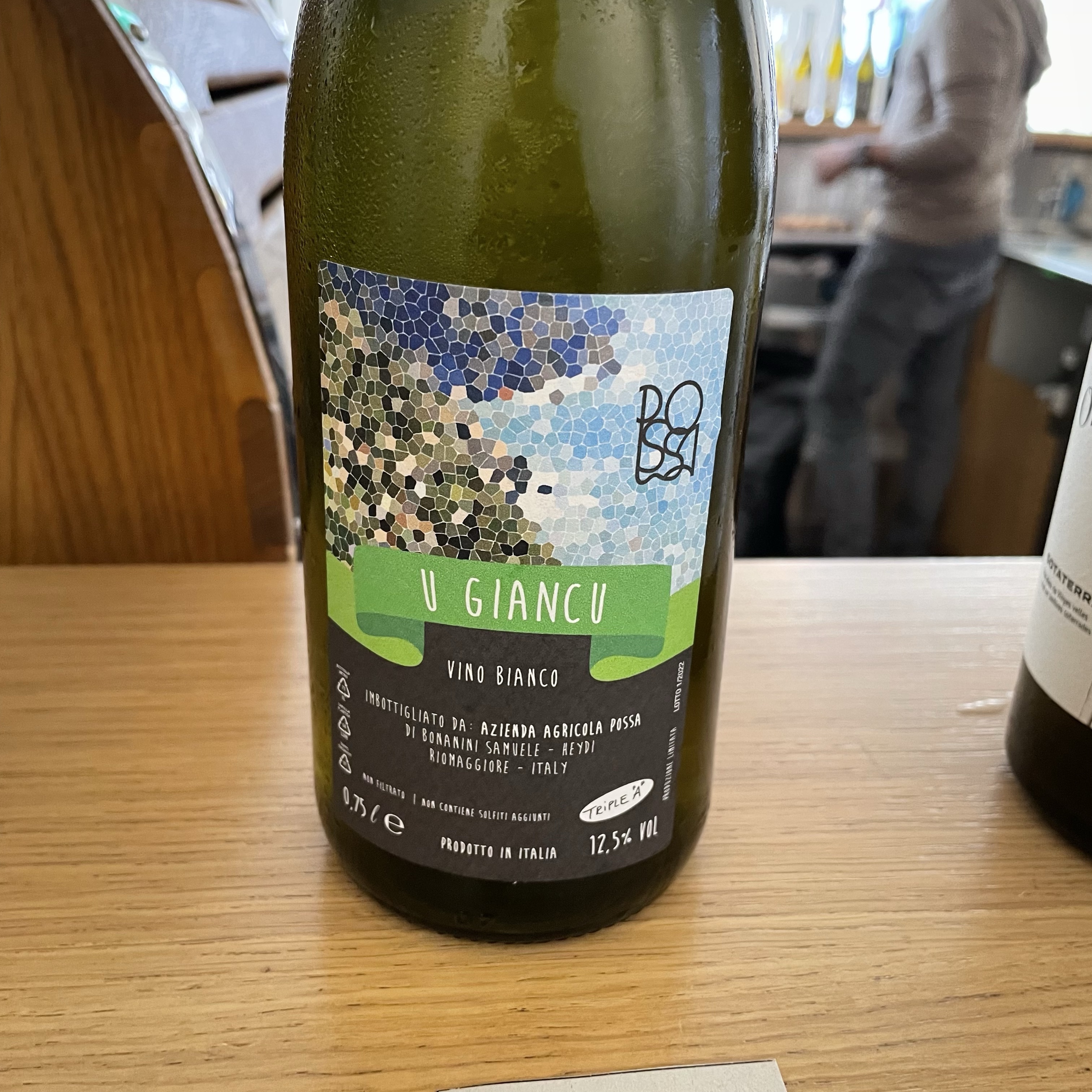
Possa, U Giancu 2021 (Liguria, Italy)
I’ve tried this producer many times and purchased their wines, so this is a nice one to start with. The grape variety is the autochthonous Albarola, grown right up on cliffs in the beautiful Cinque-Terre. Savoury, mineral and fresh with a little texture and a hint of the sea. Zero additives, including no added sulphur. Ligurian wines hide away but they are seriously worth trying.
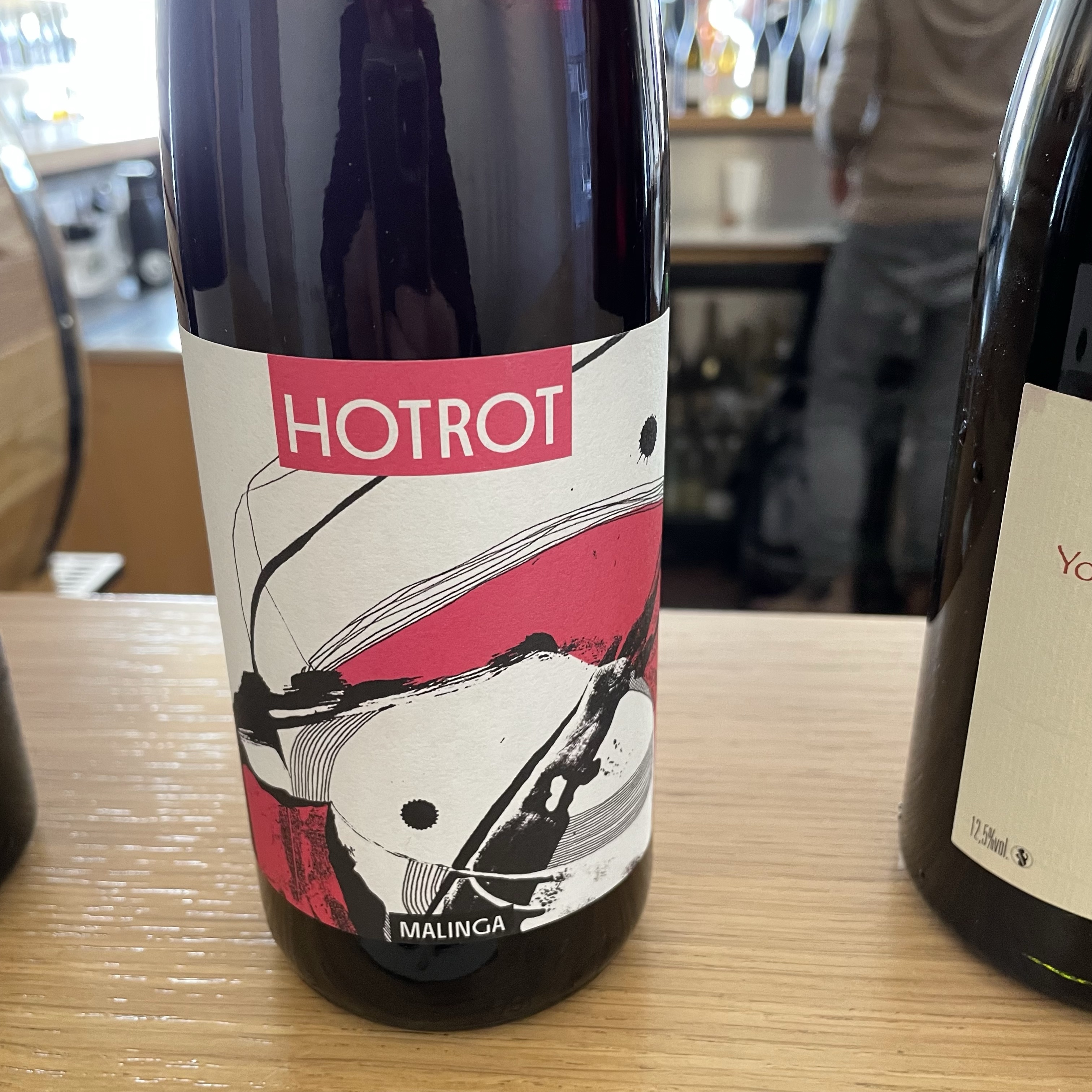
Malinga, Hot Rot 2022 (Kamptal, Austria)
This is made from Rötburger, which you may recall from a recent article is the preferred synonym for Zweigelt among increasing numbers of natural winemakers due to the political leanings of “Zweigelt’s” creator in the nursery. It is blended with St-Laurent and a little Müller-Thurgau and Blauburger. It’s one of an increasing number of excellent “glugging” Zw…Rötburgers, full of cherry and strawberry fruit and deliciously fresh fruit acidity.
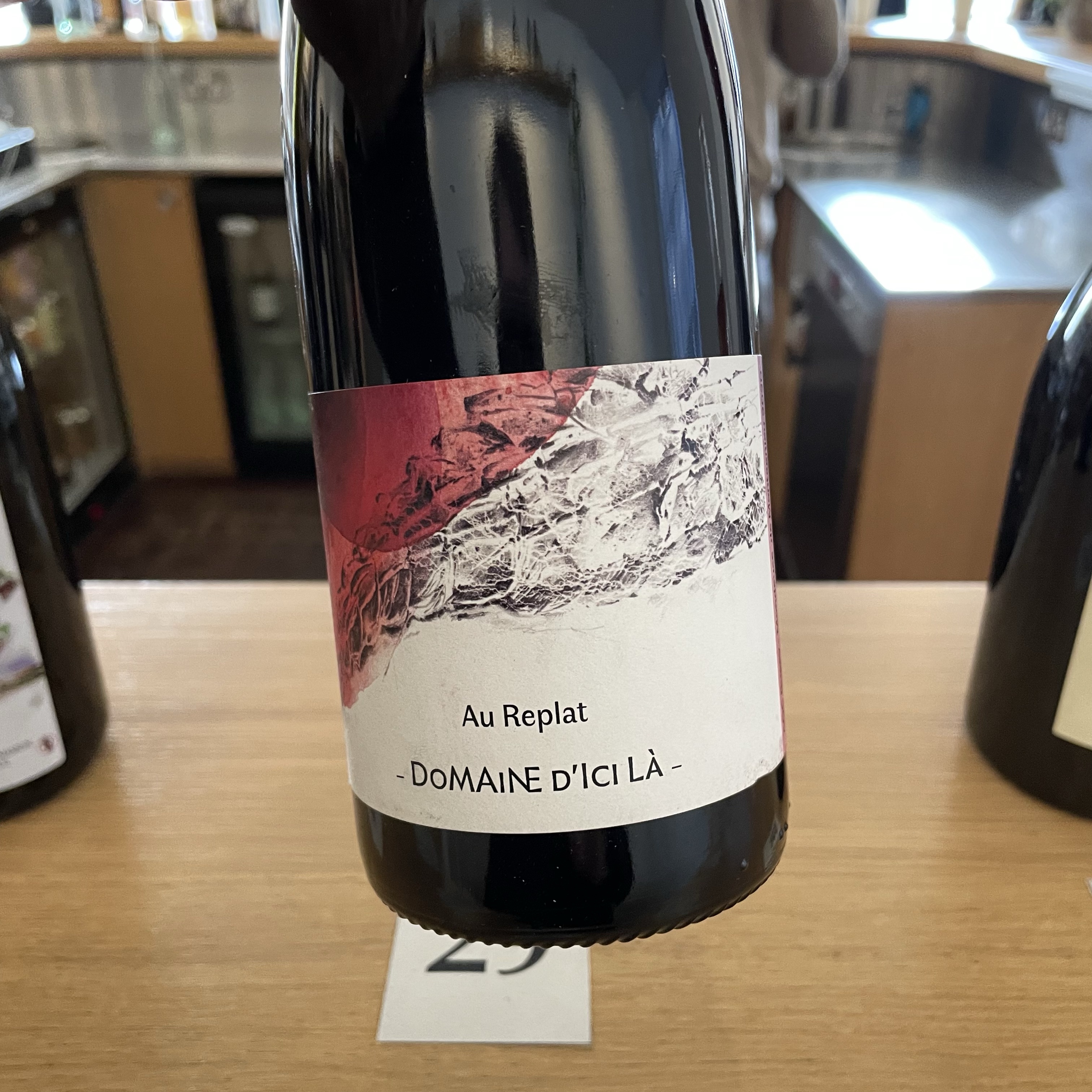
Domaine d’Ici Là, Au Replat Mondeuse 2020 (Bugey, France)
You know me and Bugey! This newish addition to the Modal portfolio was introduced to me via their Mondeuse Rosé this year. A young couple, Florie Brunet and Adrien Bariol, run this 5ha domaine from Groslée-St-Benoît in the region’s southern sector. This red Mondeuse is whole-bunch fermented for fruitiness yet as the grapes come from a stony and rocky slope, perhaps this is why the wine nevertheless has structure, and mineral texture. Approachable but with a serious side. Lovely wine. I see Modal has half-a-dozen from this producer now, and I want more. This one should retail for around £35.
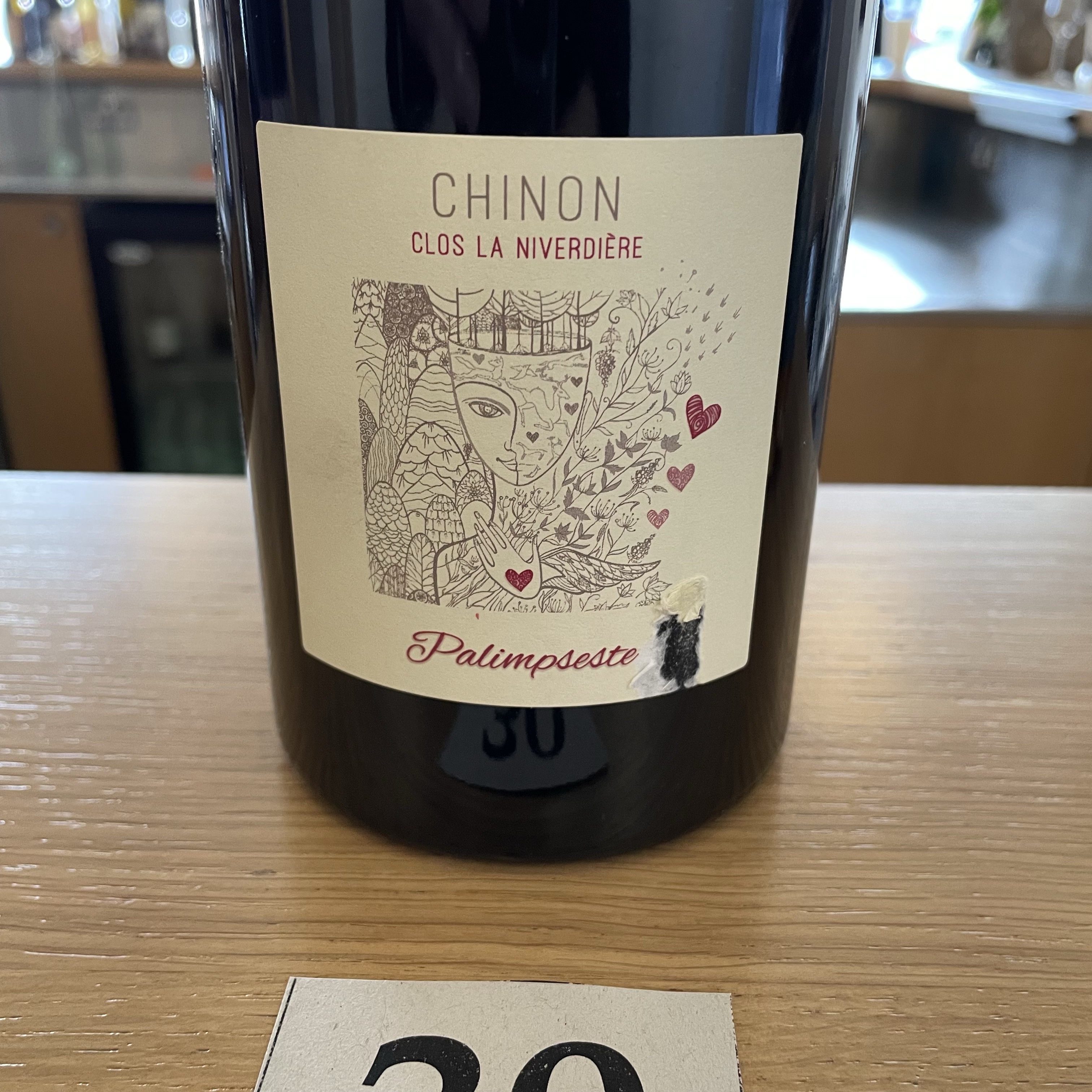
La Niverdière, Palimpseste 2018 (Loire, France)
Martine Budé is making lovely wines out of the Chinon appellation. She is a self-taught vigneronne working on her own on an estate founded in 2015. This is a delicate wine, the importer likening it to Pinot Noir in this respect. She uses an infusion technique for winemaking with a very light extraction, and ageing is all in concrete tank. This is silky and gentle, but 13% abv. A very interesting discovery. Also, around £36 I think (retail prices were not given at this tasting, but I will give an approximation where I can find one).
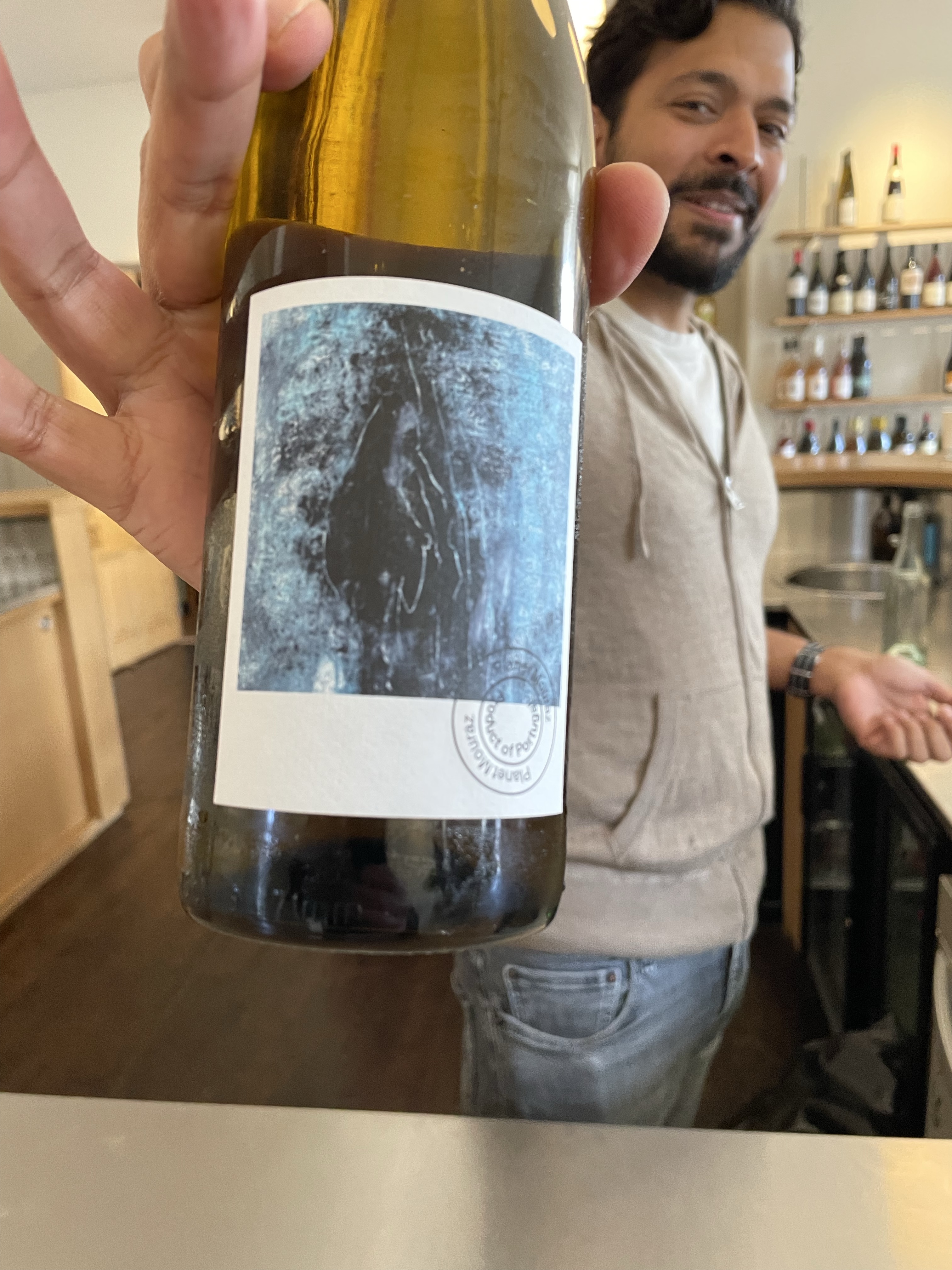
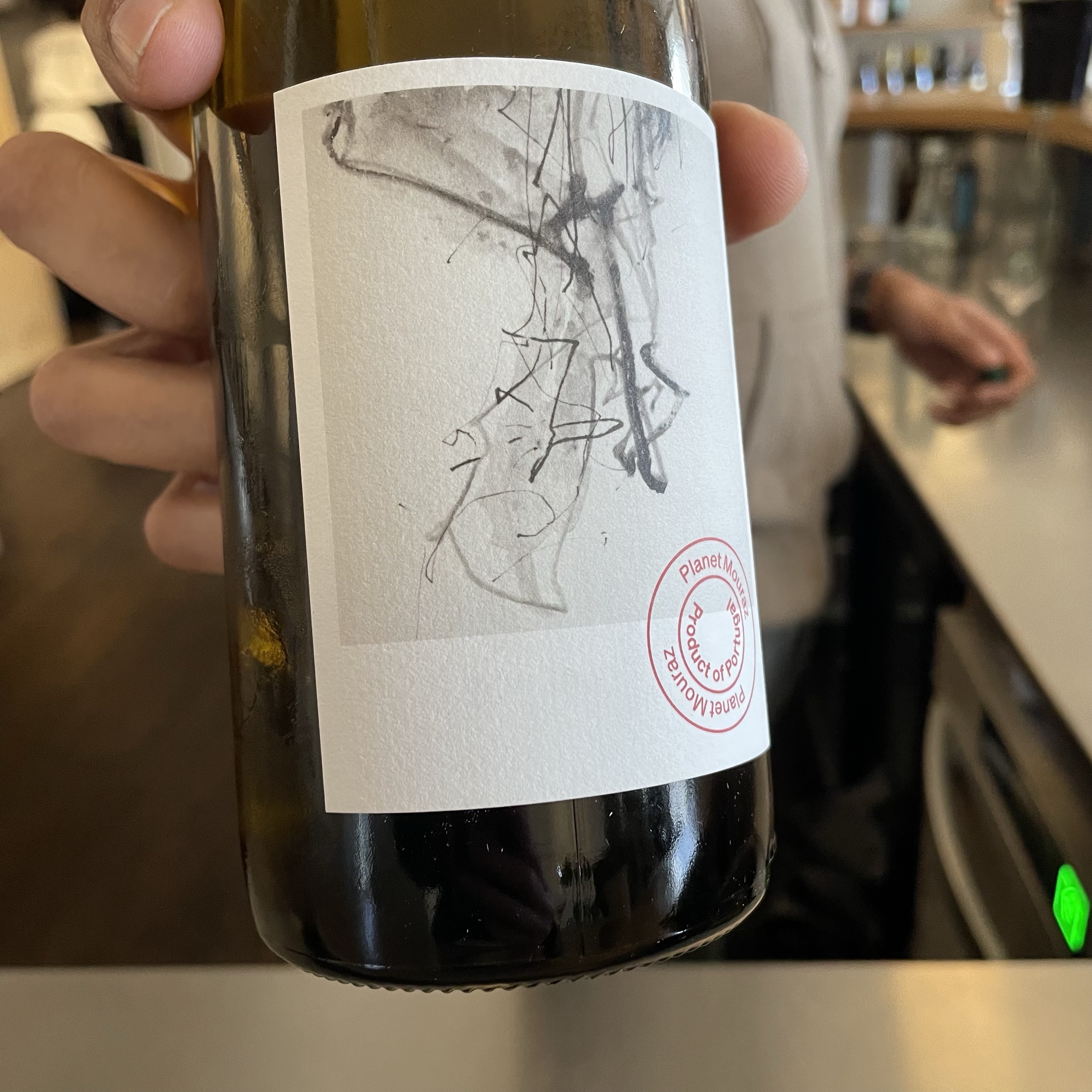
Casa de Mouraz, Vinho Verde Branco 2021 and Dão Branco 2022 (Dão, Portugal)
You may have read that I’m on the lookout for more Portuguese wines and Modal has long been a source for just that. It’s simply that when purchasing from Modal I’ve more often been drawn elsewhere, especially Austria, Germany and France. The biodynamic Vinho Verde was made unfiltered in 2021 especially for Modal, and was aged on lees for 18 months. You really do get some good lees texture and this has way more depth than most Vinho Verde.
The white Dão, also biodynamic, is a multi-grape field blend of twenty or more local varieties based on Encruzado. This ’22 spent a slightly longer 11 months in stainless steel and has energy, salinity and texture. A savoury white wine, around £25. Complexity is hard to come by for that price, but this has it.
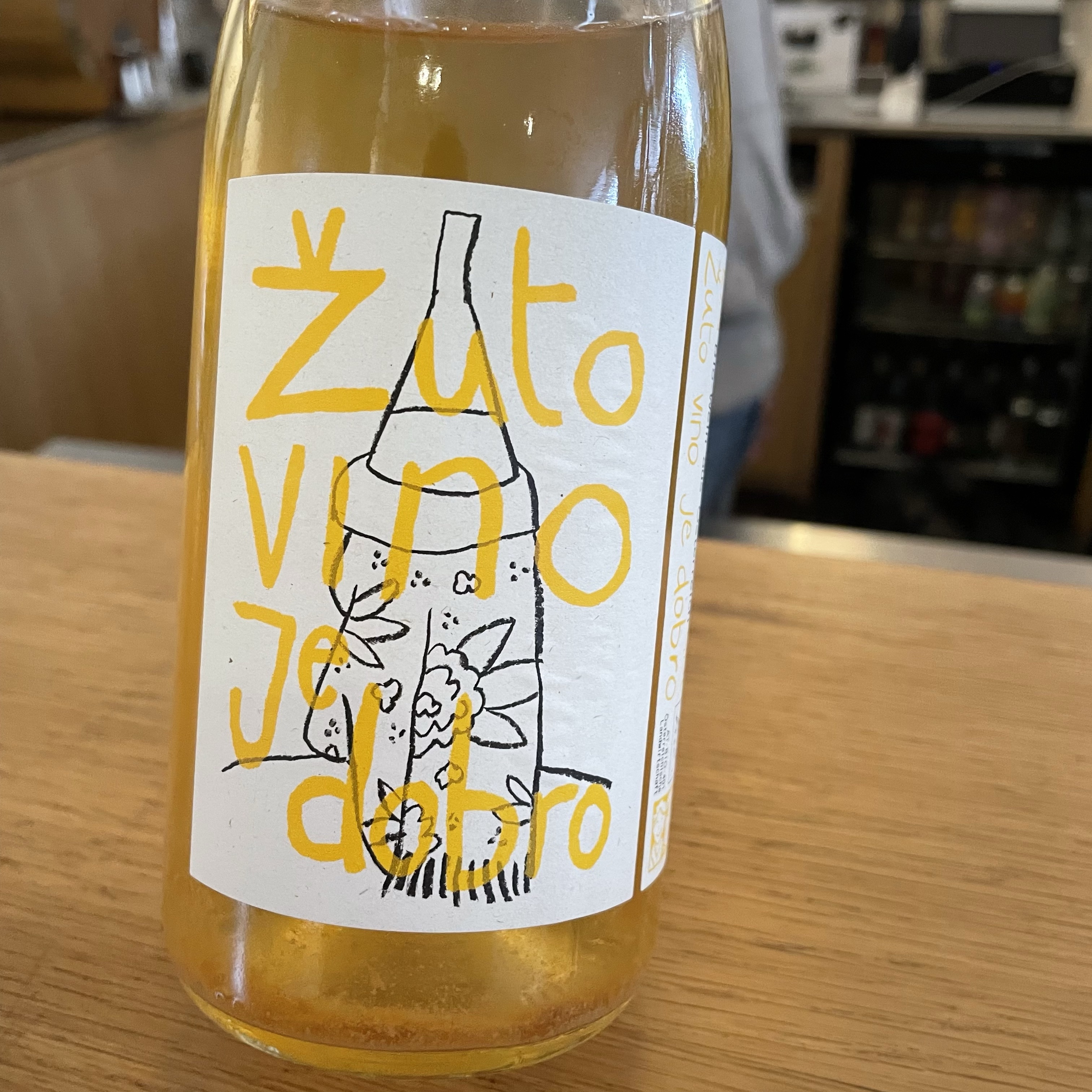
Luka Zeichmann, Zuto Vino Je Dobro 2022 and Ujča Henrik (Burgenland, Austria)
You may know Luka’s wines from the partnership that makes “Joiseph” from Jois. He has revived some old family vines about an hour further south, in Mittelburgenland, and also works with a few local growers now, to also produce his own wines. This is a small range of natural wines made in tiny quantity, but Modal has worked with Luka from the beginning, so has been lucky enough to secure some for the UK. I’m pleased to finally try them.
“Dobro” is a blend of Chardonnay (two-thirds) and Welschriesling, with a little skin contact on the Chardonnay. It goes into a mix of 200-litre and 300-litre oak. Juicy, spicy and very drinkable, and at just under £30 retail I think this, and the wine below, may be the cheapest pair of Luka’s own range of wines.
Uncle Henrik (I think Luka is writing his labels in Croatian to highlight his family heritage, but I might be mistaken) is made from a blend of Blaufränkisch, Zweigelt, and Blauer Portugieser, the rest being a mix of ten more varieties, all co-fermented from a co-planted field blend. Lightly vinified, the result is pale but bright and vibrant. A cherry bomb on the nose, it’s zippy on the palate, but there’s more here than just glouglou simplicity. Not cheap at £28, but justified because Luka is such a fine winemaker.

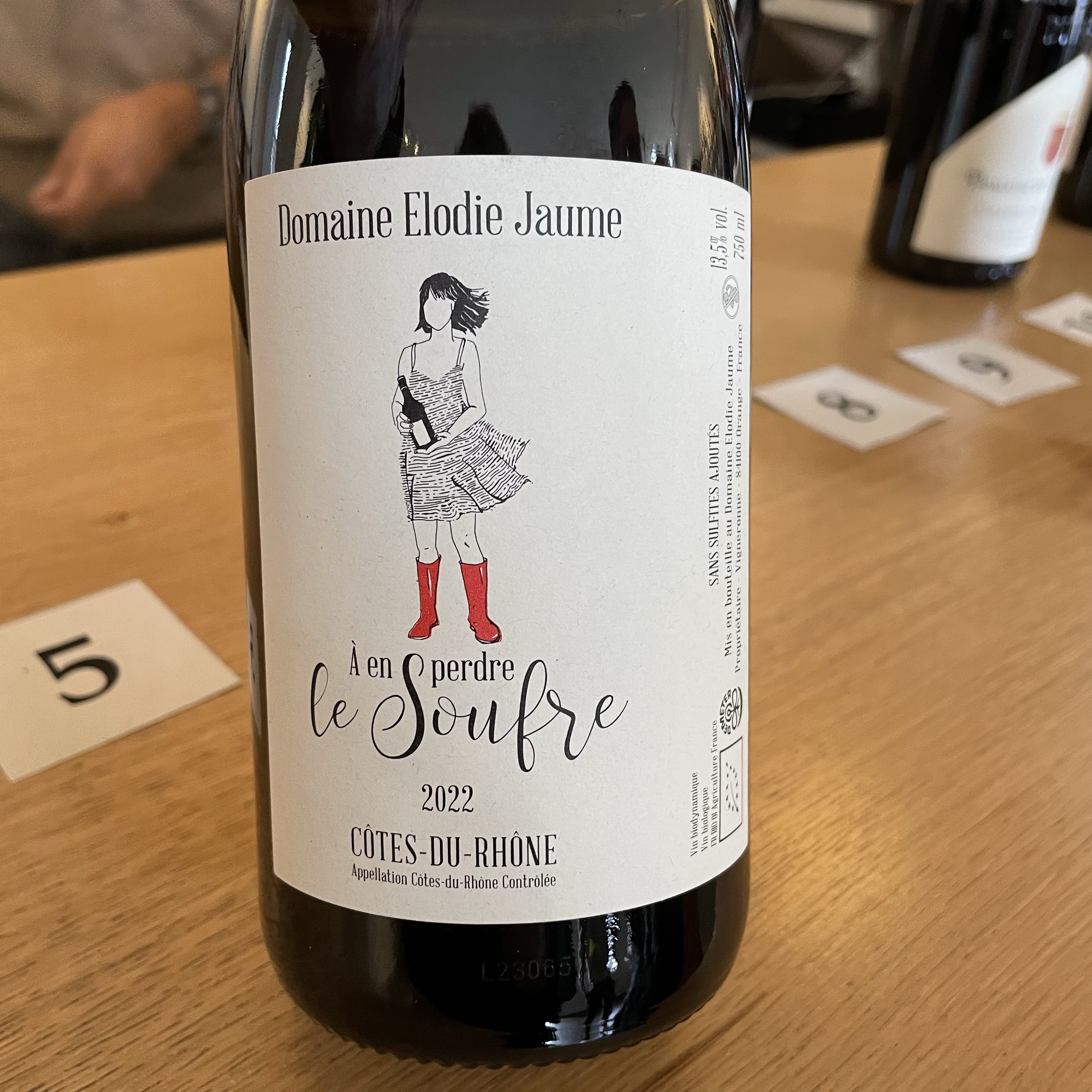
Elodie Jaume/Domaine des Chanssaud, Côtes du Rhône « À En Perdre La Souffre » 2022 and Châteauneuf-du-Pâpe Rouge 2021 (Rhône, France)
Elodie Jaume has taken over her family domaine and is converting it to biodynamic, low-impact, farming. This Côtes-du-Rhône, which currently goes under her own label (there is also a domaine CdR) is a zero-added-sulphur blend of 80% Grenache and 20% Carignan, aged in concrete. Very pure red and darker fruits, lots of blueberry richness, and good body for a generic CdR. Impressive, but at the same time £30.
The domaine Châteauneuf (no photo) is 90% Grenache, some vines more than 100 years old, the other 10% apparently containing every other variety allowed in the appellation (now 18 varieties in all). This is another of those appellations where alcohol has reached astonishing levels for an unfortified table wine, but this wine is positively restrained, despite 14.5% on the label. It has some structure but plenty of elegance too. Black-fruited and spicy. Circa £40. From 2023 this estate will be known as Domaine Elodie Jaume.
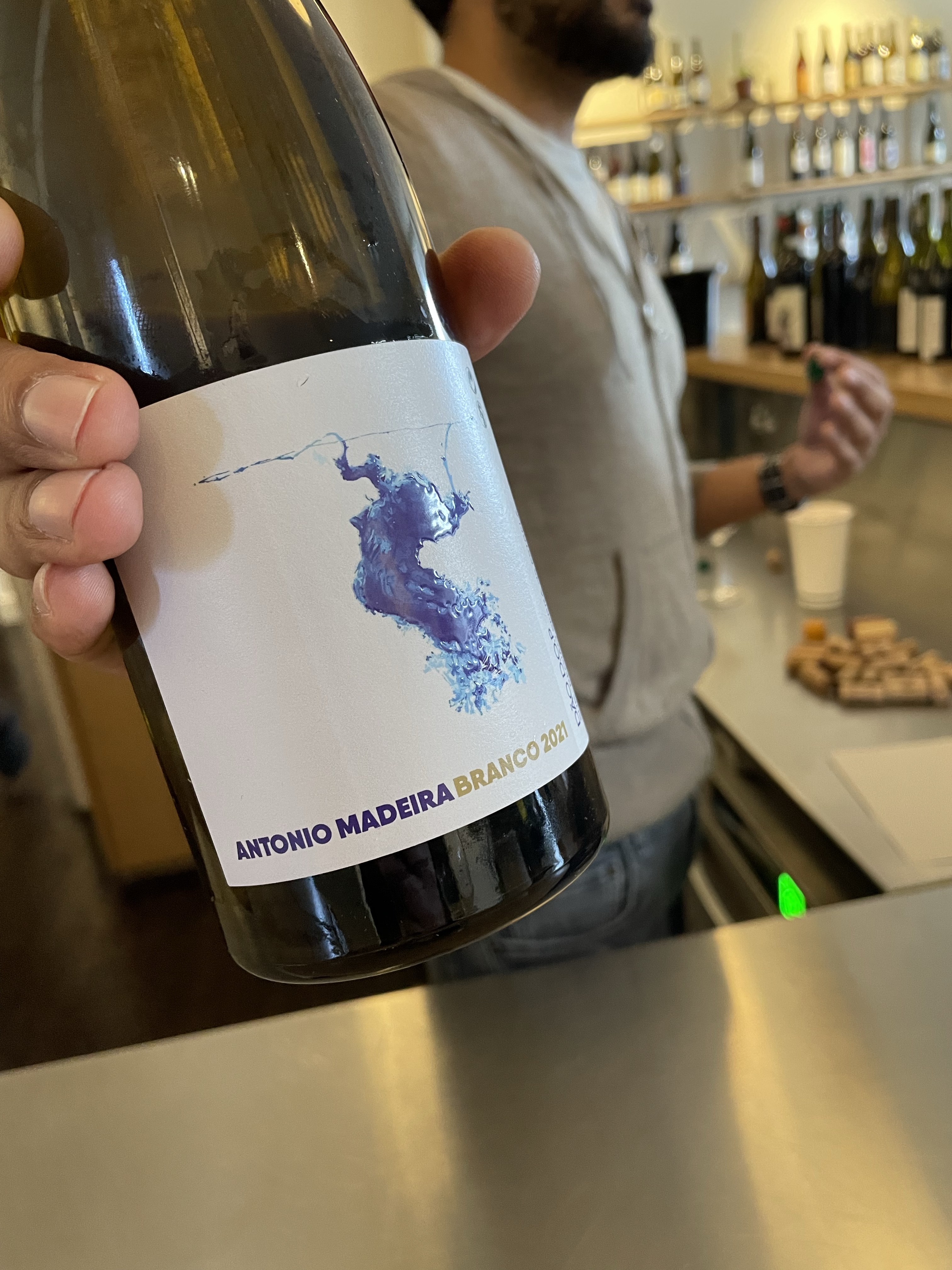
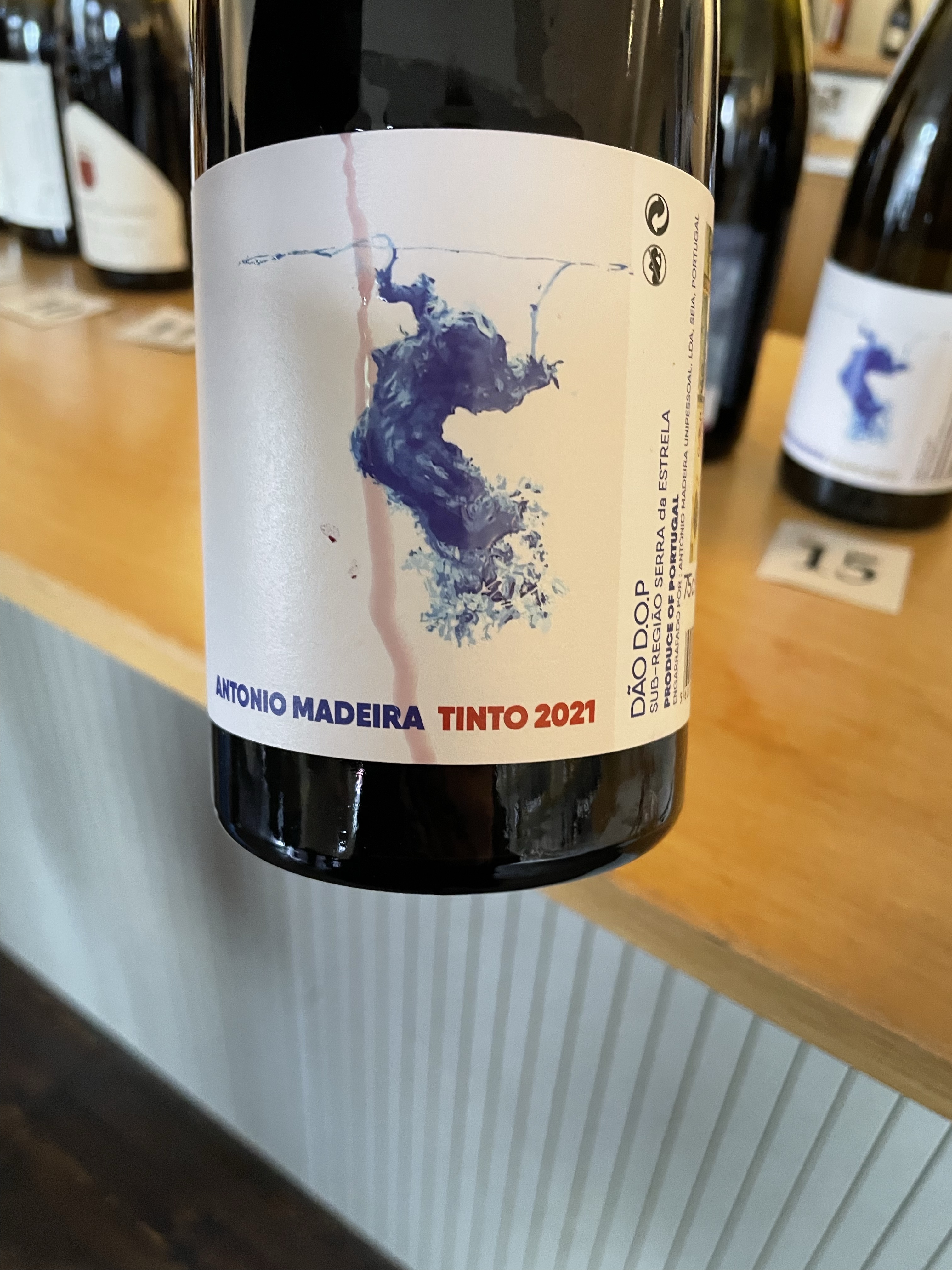
António Madeira Branco 2021 and Tinto 2021 (Dão, Portugal)
One feels Modal Wines knows Dão. They have worked with this producer for some time. António moved back from Paris to farm in his grandparents’ village, on a mission to rescue Dão’s ancient grape varieties, regenerating old and often abandoned vineyard plots. This white wine, released under the Dão DOP, comes from the Serra da Estrela zone. A multi-varietal blend (15 varieties), it is made, after a cold soak, half in stainless steel, and half in tight-grained oak. It’s herbal, savoury, flinty and fresh. It has both a modern feel but also more than a nod to tradition.
The Tinto is made in a similar way, a mix of stainless steel and oak, from several small field blend plots in the same zone. It’s an earthy red which speaks of its terroir with grip, but I reckon you pair this with some cabrito off the fire and you are away. There are more expensive António Madeira offerings off Modal’s list, but this pair are a good place to start.
Schödl Family (Weinviertel, Austria)
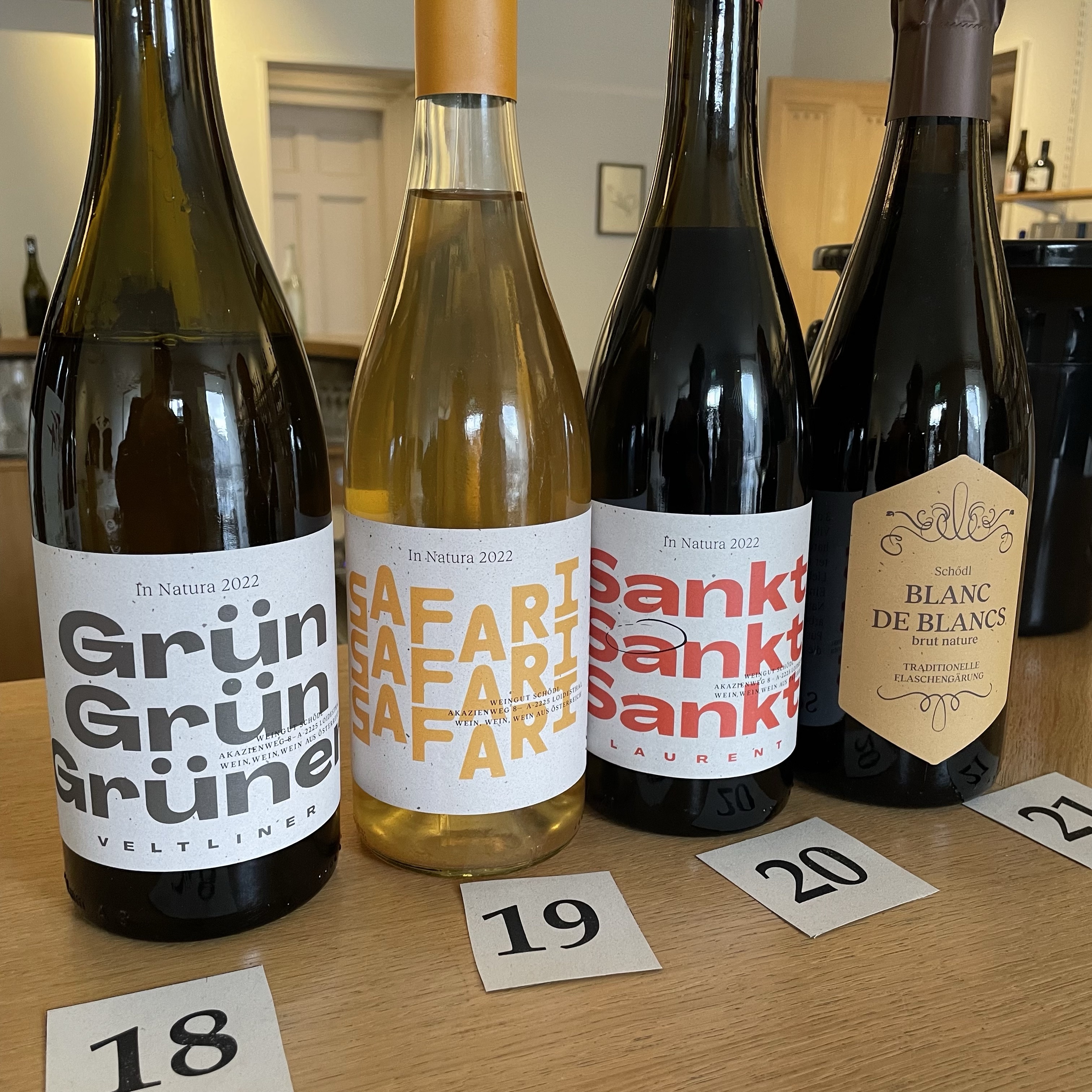
Modal Wines now list quite a range of cuvées from this young family. Like the Renners in Gols (Burgenland), this domaine is now run by the three siblings (Viktoria, Mathias and Leonhard) who converted their parents’s estate to biodynamics and are now very much part of the Weinviertel revival. Roman poured four wines.
Grün Grün Grüner Veltliner 2022 is a blend of plots and a mix of fermentation and ageing vessels. The wine has an aromatic bouquet with a spicy, textured palate. A wine which one supposes will develop even more, given its pristine flavours, but holding just a little back. About £33.
Safari 2022 is a white blend which has a little skin contact. The colour is a pale orange, but it isn’t over-textured, being more “fresh and fruity”. I think this is a little cheaper, around £28.
Sankt Laurent 2022 – this is apparently the wine that did it for Modal. You don’t find too many single varietal Saint/Sankt Laurent cuvées and this does make you wonder why? It is fruity yet with a bitter edge. It has a Pinot-like elegance, and although most will be drunk now, it will age a year or two. £34.
Blanc des Blancs Brut Nature is a very impressive traditional method sparkling wine whose grapes (Mostly Chardonnay with 10% Weissburgunder (Pinot Blanc)) come from Loidesthal in Weinviertel. You think Austria doesn’t make great bottle-fermented fizz? Well one of the best sparkling wines you may ever drink will be a decade-old Chardonnay Sekt from Ebner-Ebenauer, made not too distant from Loidesthal, in Poysdorf. This may not quite reach those heights, but it’s really good and a lot cheaper.
Ten months in a mix of stainless steel and large oak, then twenty months on lees, zero dosage of course. Brioche, creamy, mineral and with a hint of oxidative development from the yeast autolysis. Unlike the other Schödl wines, this has a somewhat dull label, presumably intentionally traditional, but at £44 it could rightly be called very good value. As Champagne prices gouge deep, other sources like this are perfect for those who prefer what’s in the bottle to what’s on it.
Borgatta Lamilla 2016 (Piemonte, Italy)
This is quite a special wine, perhaps appropriately saved until last. Emilio Oliveri is in his mid-80s and has been working two-hectares with his wife, Marisa since the 1960s. Located in the Monferrato Hills, near Ovada, they are a half-hour drive east of what is the often forgotten town of Southern Piemonte, Acqui-Terme (with a weekly market to rival any in the region, and atrocious but fun outdoor opera in the summer…but I’m digressing).
This is a well-aged Dolcetto. Vines planted in the 50s and 60s, old school slow fermentation, aged for a minimum of four years, a little sulphur during fermentation but none at bottling. This is very different to most Dolcetto you will taste. Okay, lots of deep blueberry and cherry fruit, but it is also a structured wine, and quite powerful at 14.5% abv. Imagine it with a winter stew of venison or wild boar sausages. This is very much an echo of a traditional way of winemaking which you hardly ever see today, a past which is rapidly disappearing. And it is only £24 at the cheapest retailer I can find (up to £27.50 elsewhere). There’s also a Barbera at around £30.

This was an excellent tasting in near perfect surroundings, on the day the restaurant is closed. It was a great chance to taste some fantastic, affordable, wines. Now I just need to ask Nic from Modal where I can find them all.

 David Crossley's Wide World of Wine