I had been looking forward to this book for a while. I had my spies…in fact it was Peter Hall at Breaky Bottom who, in March last year, had tipped me off that Henry Jeffreys was writing a book on English Wine. Having read his words on wine before, I knew him to be someone whose narrative style I enjoyed, although how he would approach the subject, I had no idea. I don’t believe we’ve ever met.
There’s an author photo of Henry Jeffreys (so claimed) inside the back cover of Vines in a Cold Climate. The photo is of a dapper man wearing jacket, pullover and tie. As a black and white image, it almost looks 1920s. You can imagine Henry with a glass of Taylors, or Talbot, although don’t think I’m suggesting he’s old or anything. He certainly looks a lot younger in his Instagram profile, very much 2020s. It does say beneath it that he lives in Faversham with his wife and two children. He just happens to have written a rather fascinating book on English Wine. It may be the latest of what is fast becoming almost a glut of books on the subject, but nevertheless there are a number of compelling reasons why you should buy it.

When we look at what is available to read on English wine most of the books follow a fairly standard format of history, viticulture and winemaking, and then producer profiles. To be frank, once you’ve read the debate about whether the Romans made wine here, and lapped up the tales of the English Wine Revival by the Colonels and Majors (aka the amateurs), you don’t really need to read the same stories again and again. As far as producer profiles go, the more current the book the better they will (generally) be, although not all authors dwell on the smaller artisans at the edges of English Wine, many of whom make drinking it that much more interesting.
The last book on the subject I reviewed was Abbie Moulton’s New British Wine, and that was refreshingly different. However, its focus was as much on those selling English and Welsh wines, through shops and restaurants etc, as it was about producers.
Henry Jeffreys’s book is different again. Rather than focus purely on any of the above, his book is thematic, with each chapter seamlessly merging into the next. The book kind of has a narrative thread, which actually makes it read like a novel in some ways. English Wine (the author subtitles the book “The People Behind the English Wine Revolution”) does, after all, have quite a story to tell.
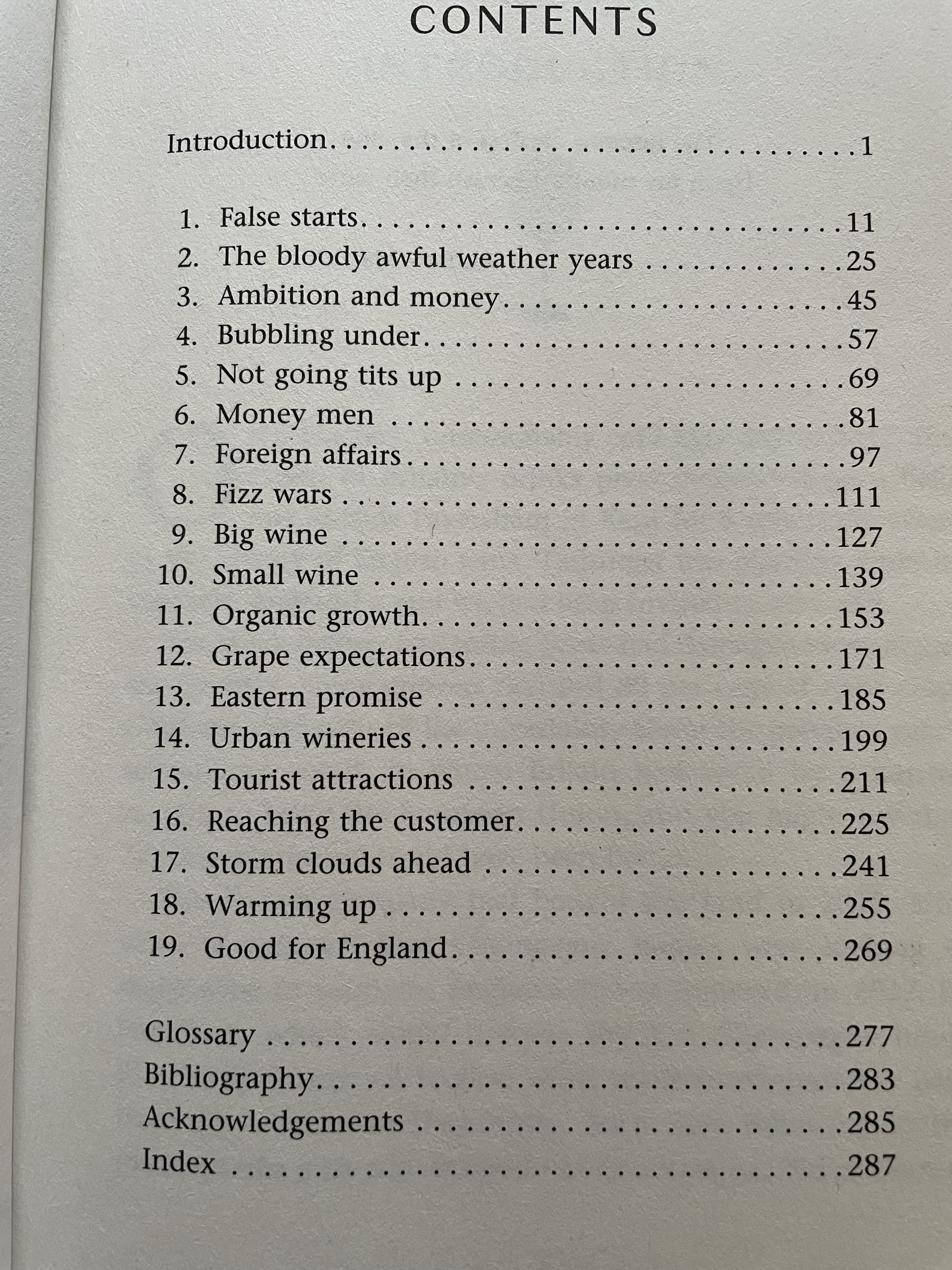
If you look at the Contents page you will pick up on many of the themes. Weather and Money figure strongly, as do grape varieties. The grape stuff is very much past, present, and future, which can be broadly summarised as Germanics, Champagne varieties and the still wine grail of Pinot Noir and Chardonnay, but of course I’m massively over-simplifying things. There is still very much a place for so-called “heritage” varieties, not least if you like a nice, lowish alcohol, petnat in the garden throughout summer. The fizz speaks for itself really, a genre that seems to be even more hyped since Brexit, at least in certain parts of our national press.
Of course, there’s good reason for the hype. There’s money to be lost without it. English wine seems to me to be peopled by two types. On the one hand we have the innovators and artisans, men we know and love, called Ham, Phillips, Davenport and Walgate etc. Then there are men who made a packet in finance or The City and who, for an abundant variety of reasons, decided to invest their millions in English wine production and are hoping for a payout…one day. Henry covers them all.
What he also does is highlight just how many thousands of hectares there are in the ground but awaiting maturity, grapes which are not yet on-stream. The big worry is whether, in a period of high inflation and a cost-of-living crisis there will be a market for these wines when they hit the bottle, especially sparkling wine where the money spent on a costly production process is tied up for several years before release. The export ideal, which many producers factored into their business and marketing planning, is now looking a little bit more problematic, at least for those who I think quite reasonably hoped for seamless exports to Europe and (perhaps with very good reason) Scandinavia. This is why the goal of cheaper-to-produce still wines appeals so much to many producers.
All of this is covered with material drawn from visits all over the country (there’s a map showing where all the producers visited are located), bringing in different views, not least from some who secretly expect to benefit from what ultimately will be a climate disaster as temperatures rise. I think a few English winemakers are ready to rise to the challenge of English Syrah one day, although I’d be happy to see some wonderful “lighter style” reds first.
It is these visits, and these chats with such a variety of different producer types, which drive the narrative. As I said, you don’t get producer profiles, yet estate owners and winemakers weave in and out of the text throughout the book, some making very important contributions.
For now, Pinot Noir appears to be the great red hope, although I think Henry does well to identify Zweigelt as a variety which could make distinctive red wines in Great Britain (those lighter reds, you see), at least in the coming years. Pinot Noir, synonymous with Burgundy, is indeed just starting to make waves here. Again, Henry identifies something I’ve been saying for a few years, that Essex is the unsung hero for red wine grapes.
I was always amazed at how Pinot Noir grapes from the Crouch Valley and the Blackwater, which I now know from this book to be more accurately called the Dengie Peninsula (which for now has nothing to do with the mosquitos we would dread to see in England, that fever is spelt Dengue) were ending up hundreds of miles west, in some lauded wines under much-awarded labels.
Kent, Sussex and Hampshire have been singled out as the English counties where people assume the best wines come from, and true, these counties’ chalk and greensand terroirs do tend to produce the best sparkling wines. Essex is the country’s warmest, sunniest and driest county and is almost certainly where the fruit for our first truly fine red wines will originate from (whether they are indeed made in Essex, or somewhere like Devon). Chapter 13, Eastern Promise, is a very important contribution to an understanding of contemporary grape growing in the UK.
Other subjects covered include (inter alia) interest in planting from abroad (especially the Champagne Houses), organic and natural winemaking, urban wineries, and the all-important wine tourism (which not all producers wish to be involved with). So, there are plenty of topics covered and I can only think of one Henry has missed, at least in terms of a whole chapter…(rather tongue in cheek) the attitudes, good and bad, of English wine writers, wine journalists and the wine press.
Towards the end of the book Jeffreys begins to focus on the future. Chapters 17 (Storm Clouds Ahead), 18 (Warming Up) and 19 (Good for England) address many of the issues which are vexing both producers and, equally, commentators like myself who want English Wine to succeed. That success is not just based on producing wine of great quality but, just as important, doing it within an economic model that works.
I read today that in the past couple of years more than one hundred producers of craft beer have gone broke. There are many reasons, of course, but the two most cited were Brexit (loss of export markets due to the added cost of being outside Europe’s Single Market) and the rising cost of production. The English wine industry is perhaps even more prone to both these pressures, but possibly even more difficult for it has been obtaining the equipment needed to make wine. This is especially problematic for those whose survival means increasing production. Almost all winemaking equipment comes from EU manufacturers, thereby needing to go through an ever more complicated import procedure.
The final chapter addresses an issue which few authors have so far given any real space to, and that is whether English Wine is actually any good? Jeffreys is quite brave here because most of the time you will only get the hype. That hype is overwhelming in some quarters, but there are undoubtedly foreign voices who are asking questions our native commentators are most often avoiding. The question is handled very well, and of course the author’s opinions are nuanced. Nevertheless, he doesn’t shy away from asking, especially, whether all English sparkling wines are up there with the best. It’s an important question to ask when a good bottle of ESW will most often cost you more than forty, if not fifty, quid nowadays.
I read Vines in a Cold Climate quickly, over a few days. I found it rather like a novel you can’t put down. That means that it’s very well written, not something that can be said of all wine books, no matter how valuable the facts within them. The Fortnum & Mason Drink Writer Award Henry Jeffreys garnered in 2022 seems well deserved. I shall definitely read it again at some point. That means something.
Although this book sweeps intelligently over the English wine “industry” as a whole, it is after all a book about people. What Jeffreys understands is that a host of individuals, from enthusiastic amateurs, fired-up artisans, and indeed men with money (and occasionally egos to match), have all contributed enormously to the “English Wine Revolution”. The thing about revolutions…you never know whether they will succeed until the dust has settled. In the case of English Wine that may be a decade ahead, at least. In ten years time we will almost certainly be looking at an industry quite different to the one we see today.
Vines in a Cold Climate was published by Allen & Unwin in hardback this year (£16.99). You can save over £3 on you know where, but if you have to pay postage then you’ll end up paying more, and Henry will probably receive a pittance compared to any royalty he might get if you order it from a decent indie book shop like I did. Just saying. Lord knows it’s hard enough to pay the bills writing about wine! If only you gave me 50p per read I’d be able to eat, if not buy more wine.
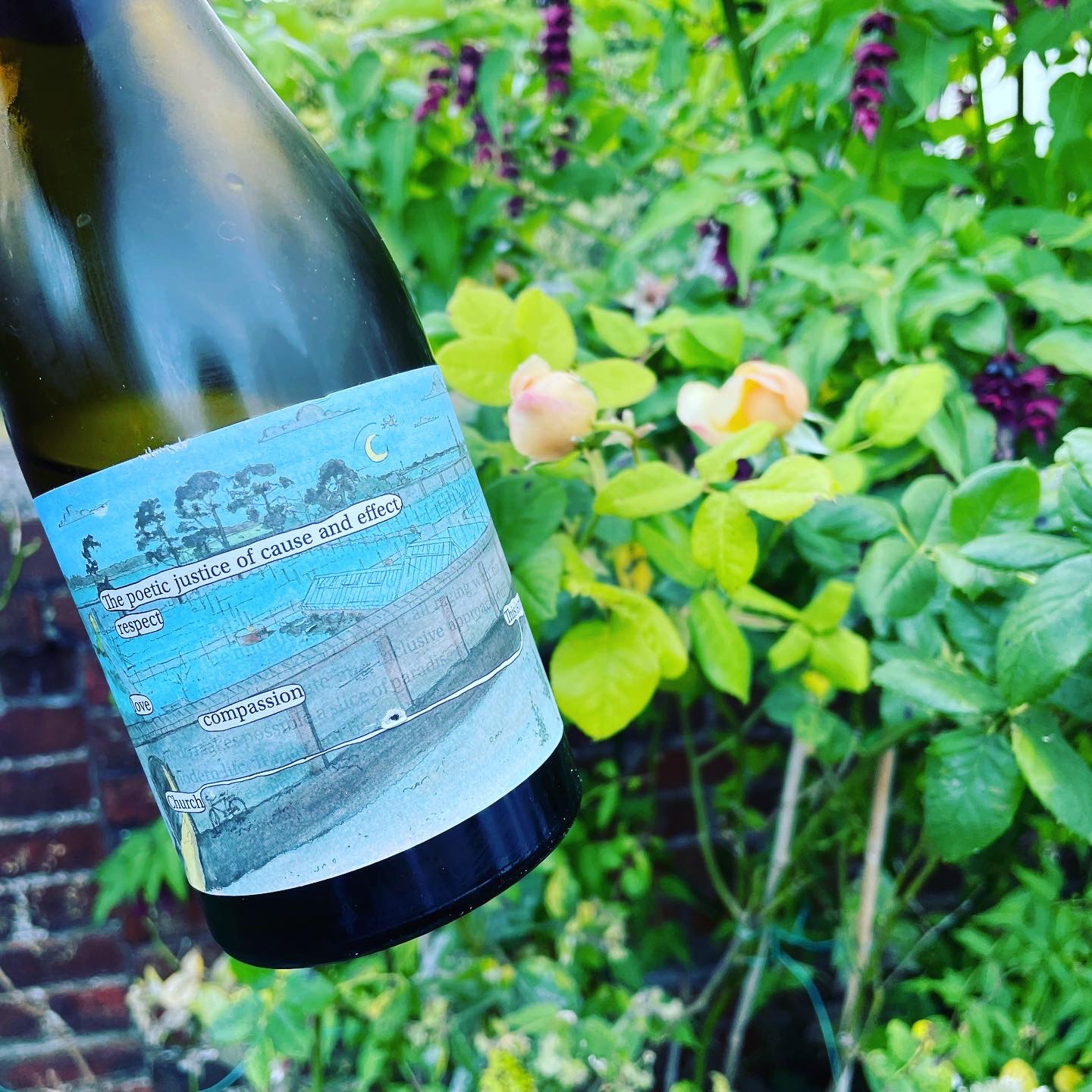
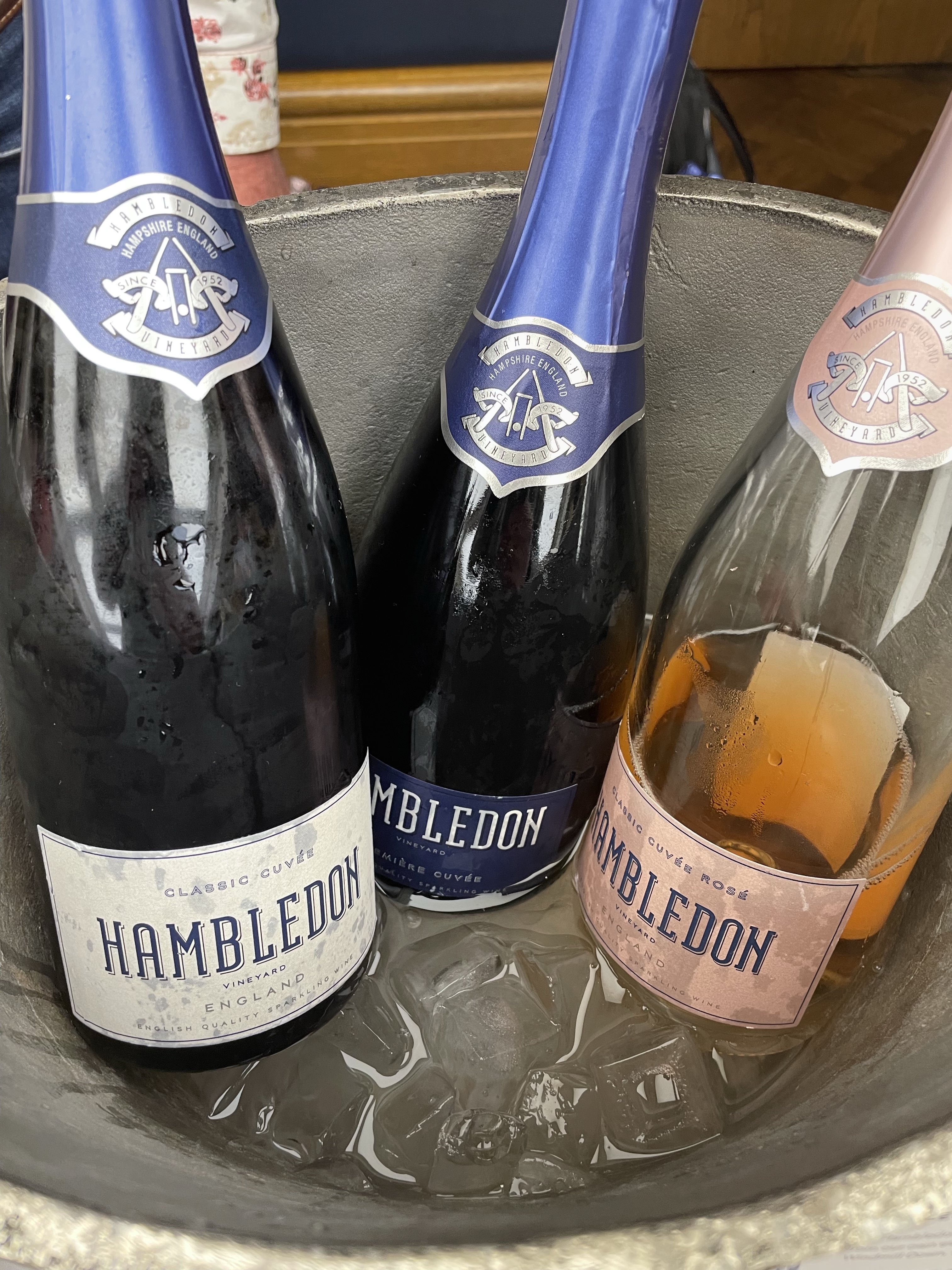
Below, a few English wines to whet your appetite…















 David Crossley's Wide World of Wine
I was on the verge of buying this before your review David. Definitely on my list now.
LikeLiked by 1 person
I was on the verge of buying this before your review David. Definitely on the list now.
LikeLiked by 1 person
In the current economic/political, I am concerned about the future of English wine.
NB. 50p/read – where do I click? 😉
LikeLiked by 1 person
Pingback: Vines in a Cold Climate – events and press | Henry's World of Booze