First of all, a Very Merry Christmas and Festive Season to all my readers. For each small act of reading one of my articles you have my genuine gratitude. It makes me feel it’s all worthwhile, doing something I enjoy (and as I shall reveal in my Review of the Year, coming soon, it has been a good year for Wide World of Wine).
Having just read the mega-masterwork that is Pascaline Lepeltier’s One Thousand Vines (see my review of 17 December, although you probably have, judging by site traffic in the past week), I did need something a little lighter to read, and this turned out to be the perfect little book.
I wondered whether its author considered calling it Pensées, which would have encapsulated its contents rather well. The only problem, that title got taken a few hundred years ago. Pensées by Blaise Pascal is also a work which sets out to prove something, whereas Jamie Goode on Wine sets out to question. Of late, not least in last year’s seminal The New Viticulture, Jamie Goode is always questioning winemaking and viticultural practices, and in this new work he casts his net even wider, becoming perhaps even a little philosophical at times.
What we have is a series of short essays. How short can be ascertained by dividing their number, a little over forty, by the book’s 180 pages. That’s an average of four pages per essay. We are looking at maybe 1,500 words per essay, give or take as some are longer than others. That is at the top end of what some professionals (who I apologise for frequently ignoring) tell me is the ideal length for a blog post or other online article.
The beauty of this book is therefore not only the diversity of territory (and terroir) it covers, but equally its digestibility. It’s perfect reading for when you’ve just got into bed, for when you have found a rare moment to enjoy an after-lunch or mid-morning coffee, or you’re on the train for a regular thirty-minute journey and you fancy a change from looking out the window at the Firth of Forth or counting deer.
Some of the short essays cover technical wine subjects. “Extraction and Maceration”, “Getting to Grips with Brett”, “Does Decanting Work?”, or “Do We Need New Grape Varieties?”. Each of these chapters seem to combine Jamie’s technical knowledge as a scientist with his own particular way of thinking about any problem, not coming at it wearing the blinkers of the traditional approach.
Other essays cover those more philosophical propositions. I love the title “No One Buys a Rolex for its Ability to Tell the Time”, almost in the mould of “The Smoker You Drink the Player You Get”, or maybe ”You Can Tune a Piano but You Can’t Tuna Fish”? No, I went too far, but you know what I mean, don’t you?
“What is the Ideal Wine Critic”, “The Future of Fine Wine”, “The AI Wine Critics” and “The Post Natural Wine Era” are just a few more broader topics Jamie dips into. All of these essays have appeared somewhere before, not all of them in English, so this is a compilation. Perhaps it reminds me of those compilations which music writer David Hepworth compiles, probably because he’s busy on social media promoting another of his Deep 70s Underrated Cuts compilations, the similarity being that these essays are like deep cuts of popular wine writing that will lift the spirits and prod the intellect…and if you finish one and go on to the next, it will do both those things all over again, but in a totally different way.
What I like so much about this book is that many of these essays, in fact I’d say the majority, are on topics I myself have had my own pensées on, in fact frequently when doing the same things that I mentioned four paragraphs above. Many of you will feel the same. In every case, Jamie Goode has either broadened my own knowledge or has brought some idea to my attention which I’d not yet considered.
It’s like a discourse between myself and the author. Sometimes people can take things too seriously, as I found out last week, when talking about the idea that vines are wild plants so to regiment them in a vineyard is like placing them in a prison. Ridiculous, I was told. No, I don’t think the idea of a vineyard (or a wheat field, or an orchard) is remotely similar to sticking a polar bear in a zoo. It’s just an idea to debate, that’s all, and who knows what might come from such a debate (which some talented winemakers are already having with their vines)?
So, Jamie Goode plays with ideas, whether he’s discussing bottle closures or whether professional wine tasters can ever be wholly objective. It’s interesting that as an author Jamie Goode has always been open to the ideas put forward by the natural wine movement, ideas which have led to his recent books on wine science and viticulture. Likewise, he is one of the few professional wine writers, by which I mean ones earning a living by it, to question the role of said writers, and even their “honesty” (viz scoring wines, a bugbear of my own).
Yet this is an author who, whilst embracing regenerative viticulture and permaculture ideas as a way to soil and vine health (and therefore better wine if we are lucky), is very far from being a fundamentalist, like some. It’s why what he writes on those subjects has credibility. But at the same time, he’s got the kind of mind that’s open, along with a good, dry, sense of humour. It’s what makes his writing so readable.
This small book is published by Amazon, so it’s effectively a DIY job. It’s one of their better efforts in terms of production values. The text is small, but not too small for my eyes, and that at least gives you more text to read within a small and light paperback. It has some photos, black and white, soft-focus edges. Sometimes they reflect the text but not always. We are not told where they were taken but it doesn’t matter. They are not in the way and I’d rather them be there than not because they do provide a kind of interval between essays.
Its price is great too, £9.99, which is, as we are always told, less than your average bottle of supermarket wine (goodness, remember about five or six pre-Brexit years ago when that average used to be not a lot more than a fiver!).
There’s only one thing that slightly annoys me, and it has been an issue with every single Amazon-printed book I’ve ever ordered – the front cover curls up by the time a day has passed. Put the book down on a flat surface and it would form a perfect L-shape, were it not for the cover’s curvature. I was tempted to put up a photo, but that would be unfair, because you can tell I’m heartily recommending you grab a copy.
I have to mention typos, mainly because I did in my last review, of One Thousand Vines, and there are many more in Jamie Goode on Wine than there are there. Do they matter? Oddly, perhaps less so in a book like this than in Lepeltier’s text. One or two require a second take, but it’s probably just someone fussy like me who will notice many of them. When self-producing a book to be printed by Amazon it’s difficult, as I well know (my articles get proofread twice and errors still get through). I guess you can’t beat a good professional copy editor, but as Mitchell Beazley proved to Pascaline Lepeltier, even then you won’t always achieve editorial perfection.
I ordered my copy from Amazon as my local indie bookshop told me it wasn’t something they could order-in. That posed one minor problem. Because I resolutely refuse to take out a “Prime” subscription, I had to pay postage. That obviously takes it above that “less than a bottle…” threshold, but that is my choice. Others may feel differently to me. I hope they give Jamie a better royalty than he’d get from Spotify, but then I know that wine book publishers are not exactly throwing money at wine books these days either.
On those musings, I can only direct you towards the first essay in Jamie Goode on Wine, titled “Wine Needs Words”. It certainly does, and (if my maths is not way out) the sixty-to-seventy-thousand words he has written here are well worth entertaining yourself with. Doubtless this review is just too late for Christmas delivery, even if you subscribe to Prime, but maybe grab a copy for New Year, for those moments when a return to work is a far less appealing prospect than hibernation through the rest of the dark months. If some distant relative sent you an Amazon voucher, you’re sorted. If you love wine, Jamie Goode on Wine will brighten up your commute.
I read quite a few wine books each year, or at least when the publishers drip feed them to us. Some are general books, some specialist, some are an easy read and some require focus and concentration for every paragraph. One Thousand Vines definitely falls into the second category in each of those cases. But this is a very important book. We had a work of similar importance last year in Jamie Goode’s The New Viticulture, and like that book, this one requires all of your attention whilst reading. However, in its scope and depth I would agree with those before me who have said that there has really been nothing quite like it in wine writing before.
Pascaline suggests she tried to write the book that she wished had been out there when she began learning about wine. Well, I’m sure Pascaline, with her honed intelligence, would have devoured it. I certainly did, although it is not a book to read when your eyes are drooping and you are ready for sleep.
Pascaline Lepeltier comes from Angers in the Western Loire. Her university studies led her to a master’s thesis in philosophy, but then she needed a break. A teacher suggested she go and work in a wine shop, and this is how Pascaline discovered her true calling. She worked restaurants as a sommelier in Belgium and then in the USA, where she is now Beverage Director at the famous Chambers Restaurant in New York’s Tribeca district. She has many other roles, which enable her to travel widely, but at Chambers she has put into practice her, shall we say, wine philosophy in creating an astonishing list of 3,000 wines, most of which are organic and/or biodynamic.
Pascaline Lepeltier is known as one of the foremost sommeliers in the world, but at the same time she is also known as one of the most influential advocates for what I would like to call the modern philosophy of winemaking and wine appreciation. This book is not a bible merely for those who share this philosophy, but its holistic approach weaves such themes into the narrative in a way that few (perhaps only Dr Goode, from whom she draws quotes from time to time) have attempted before.
So, as you can see from the table of contents (below), we have a work which covers Vineyards (the domestication and nature of the vine and its place in a wider ecology), Landscape (climate, geology and terroir), and Wines (winemaking, wine tasting and serving wine, not to mention marketing).
The detail the author goes into is amazing. Much of the reading is scientific and technical and although all her explanations are easy to understand, the reader does need to immerse themselves in the text and at times proceed quite slowly to fully take it all in.
The text is accompanied by maps and other graphic illustrations which supplement the text, illustrating points made and concepts explained. There are no superfluous photographs, no pretty pictures. What you get resembles a text book, for this is a serious work. It doesn’t read like a textbook though.
The first two thirds of the book are perhaps the densest read in terms of imparting deep technical knowledge, although always in an engaging and readable way. Always, within the detail, we see Pascaline’s philosophical mind working, questioning and broadening the subject matter, especially to take in the most current thinking.
One such example is the reminder that viticulture is in no way just a random use of nature’s bounty. Vines are imprisoned in vineyards, tethered to stakes and wires. That’s not quite how the author puts it, exactly, but a few contemporary-thinking vignerons, perhaps Florian Beck-Hartweg in Alsace, or Oszkar Maurer in Serbia might say that. But Lepeltier does examine the nature of vineyards and different ways of looking at them.
Lepeltier certainly makes very clear man’s influence over nature, exposing so many myths, such as (for example, inter alia) one about terroir. That the most famous vineyards have always been located close to markets because, er, obviously, they needed to sell the wine in a time before railways and road transport made longer and more difficult journeys possible. This might mean, in France, the easy transportation of wine by waterway (first rivers, then canals) to Paris, or it might mean export markets by sea (in the case of Bordeaux). So perhaps this idea of perfect terroir for growing vines is not quite the absolute we presume. It isn’t that terroir, in the narrow, traditional, sense doesn’t matter. It’s just that the author is always throwing a curved ball, or saying to us “but what about…?”.
The scope of the book is immense. In all of the three distinct sections we are taken as far back as Ancient Egypt, through all of history to the present day, or to be accurate to 2022 because this book was first published by Hachette in that year, this English edition being a translation.
Pascaline being French, you will find a strong focus on the development of viticulture, winemaking and everything that goes with it, in France. To be fair, France has had probably the greatest influence on wine from medieval times until the start of the 21st century. That said, she doesn’t ignore other influences, such as to some degree the rise of the Asian market, but more importantly Anglo-Saxon influences which have grown in importance since the late 20th century. These encompass everything from English glass to Robert Parker and beyond.
We also see the author addressing issues which have only arisen in the past ten, twenty, or fewer years. Such issues are naturally strongly related to the influence of the natural wine movement. When natural wine became part of my own consciousness in the early 1990s, I always argued that it is those working at the periphery of wine thinking, those doing the things considered “out there” by many (and considered blasphemy by a few enraged old men) who are pushing the boundaries.
We see the movement’s influence has indeed been significant, and is increasing. It has influenced the way we think about soils, additives, so-called wine faults, about methods of transport and what vessels we sell wine in, and much more. Perhaps even more important than that, natural wine has made us think more openly about how we define quality in wine, and indeed how important some measure of quality might be. I mean, I’m not suggesting anyone should be drinking “bad” wine. Simply that in pursuit of always “the best” we will surely miss out on the experience of tasting “the most interesting”. I’m pretty sure that Pascaline would agree.
My own blog, wideworldofwine.co , is not only dedicated to wine from a wide geographical area, but also to a broader way of appreciating wine. Of course, I love a fine Burgundy or Bordeaux, but I am glad to taste the wines of Japan, Nepal, Armenia or Serbia and I derive as much stimulation from doing so as from a well-cellared fine wine at its peak. I’ve been blessed to drink many of those, and doubtless I shall, if lucky, drink many more. I’ve never tried wine from Ukraine though (yet).
The Conclusion to One Thousand Vines is sub-titled “So, what shall we drink tomorrow?”. This three-page conclusion begins with a stating of a stark fact. Urgent action is required to address the environmental (and one should add, economic) problems viticulture and wine face today. Wine faces threats on all sides, from the anti-alcohol lobby to wine speculation by the rich making good wine so much less affordable to the consumer, especially the discerning consumer who might otherwise fall in love with a well-crafted artisan wine.
As the author says, “wine…holds up a mirror to our civilisation: its crises are our crises, its status and the way it is defined are our social choices…” Wine is no longer what it was, neither a safe food, providing calories when water sources were unsafe, nor is it the cultural “totem” of societies like France and Italy. It has become on the one hand an industrial product shipped around the world and sold in supermarkets, but equally, a collector’s item which is fast becoming too expensive and unobtainable for those passionate about exploring it.
Pascaline Lepeltier suggests that the way forward for wine lovers is through “[r]ediscovering the taste of living wine as an eminently joyful and political act of resistance”. I would agree, although I should point out that those working in wine, those who get to taste and drink wine as part of their job, and indeed to purchase it at a discount or to be given free samples, do sometimes forget that natural wine is of its nature in a wholly different price bracket to the beverage, commodity, wine we see on the shelves of the supermarket. Using a UK yardstick, much supermarket wine will cost below £10 per bottle. I am very lucky if a bottle of my political act of resistance costs me less than £30. Often it is more in the £30-£50 range.
Are there any negatives with this book? Not really. I always get annoyed by proofreading and typographical errors and there were enough here to surprise me, given the prestigious imprint it appears under. That said, such errors probably amount to no more than a dozen or so in nearly 350 pages of text. I think that £45 is expensive and no one has addressed this. I presume most reviewers were sent a free copy. My desire to use local indie book shops means my copy was neither free nor discounted, but at least my own political act of resistance here is to ensure the author gets a fair share of the proceeds (I hope). It’s why I don’t use music streaming services either.
In his Foreword, US sommelier and winemaker Rajat Parr sums up with the following sentence. I could not put it better. If you are sufficiently passionate about wine that you are keen to dive deep into its wide world, then you must find a way to afford it. “This book is destined to become essential reading in the wine world. Reading it once or twice will not be enough; it will be a weekly or daily reference. If you have never [like me] met Pascaline, this book reveals her soul [I think it probably does].”
One Thousand Vines is published in English by Mitchell Beazley (348pp in hardback, 2024, £45). It was first published by Hachette Livre in French in 2022. As you will have deduced, for my average reader/subscriber this will be an emphatic “buy”… if you can afford it. For me it’s like that wine that is definitely over budget, but you just have to have it.
November’s Recent Wines are once again cut short, in this case by our trip to Nepal, taking twenty days of “home drinking” out of the equation, but we did manage to consume six bottles in the ten days we had left in the month. Unsurprisingly we kick off with a bottle from Nepal, before an amazing Czech Sauvignon Blanc, a white wine no less good from Colio, a Pfalz (but only just) Spätburgunder, an orange wine from Hungary and, to draw November to a close, a luxurious Pinot Gris from one of my very favourite winemakers in Alsace.
It is certainly looking like there will be considerably more wines consumed in December, considering what has been opened here so far. As a result, I can’t promise to keep up my wholly unintentional recent habit, as mirrored above, of all the wines being from different countries, but at least among these half-dozen bottles there are no duplicates in that respect.
White Ashish 2020, Pataleban Vineyard Winery (Chisapani, Nepal)
I managed to get hold of three different Pataleban wines in Nepal but didn’t visit the winery this time. The road, and there is only one road, that heads west from Kathmandu to Pokhara is the main transport route to and from India. The road is clogged with traffic close to Kathmandu at the best of times, and last visit we were stuck in traffic for so long that to get back to the Pataleban Resort Hotel they sent a couple of scooters to rescue us. After the recent floods have washed away parts of this road, causing even more chaos, we didn’t risk using it, which also curtailed our plans for a weekend at Sarangkot, above Pokhara.
Pataleban, Nepal’s only producer of “grape wine”, is near Chisapani, 16km west of the capital. They now have three main vineyards at Kaule, Kewalpur and Khani Kola, totalling around 40 acres on the slopes of the Kathmandu Valley, rising to 3,000 masl at their highest extreme. The project began with a small vineyard around the Pataleban Resort Hotel, planted mainly to hybrids with initial assistance from Japan (Nichibi Kaikan Winery) in 2006.
I notice that World of Fine Wine recently ran an article about wine from Bhutan, seeming to imply, incorrectly, that wine in the Himalayas is something new. If, as that article suggests, wine from Bhutan, like Hugh Johnson’s famous definition (for that very journal) of fine wine, is “wine worth talking about”, then come on folks, let’s talk about wine from Nepal!
More recently, technical help for Pataleban has come from Switzerland and Germany, and plantings in the main sites further west along the valley have been predominantly European viniferas. The winemaker’s son, Siddharta Karki, is currently completing various stages in Germany, and will no doubt return with even more knowledge to assist his father, Kumar Karki’s, already heroic efforts (and trust me, making wine in Nepal is heroic on several levels).
There are currently three wines commercialised (though I have seen a photo only of the mythical “Muscat Blue”), and this white wine, as far as I can ascertain, was made from 40% Chardonnay, 40% Gewurztraminer and 20% Heida in the 2020 vintage. It is fruity, off-dry and reminds me a little of a richer Jurançon with bottle age. Or perhaps that Bergerac Moelleux I drank a few months back, though it is certainly not “moelleux” in the sense that any Loire drinker will recognise. It’s more “off-dry”.
It has scents of quince and yellow stone fruit with a touch of melon. I might say that considering where it came from, it’s an amazing wine because it stands up on its own as a decent bottle whatever its origin. The climate can be a struggle, especially the monsoon rains which usually (pre-climate chaos) end in October. Rain and humidity before and around harvest can be more challenging than heat at other times of the ripening cycle.
I will admit that I did have some concerns over the vintage. Wine stores in Kathmandu don’t tend to go heavy on the aircon and summers are hot, but this bottle might have been a recent arrival from the winery’s cool storage, because equally the capital’s stores are not going to hold very large stocks.
This cost between £8-10 in Kathmandu. As far as I know the wines are not exported to Europe, but I have seen it listed on a couple of US web sites at around $10. That’s cheap so the information may be outdated. Good luck in trying to get some and don’t hesitate to let me know if you do.
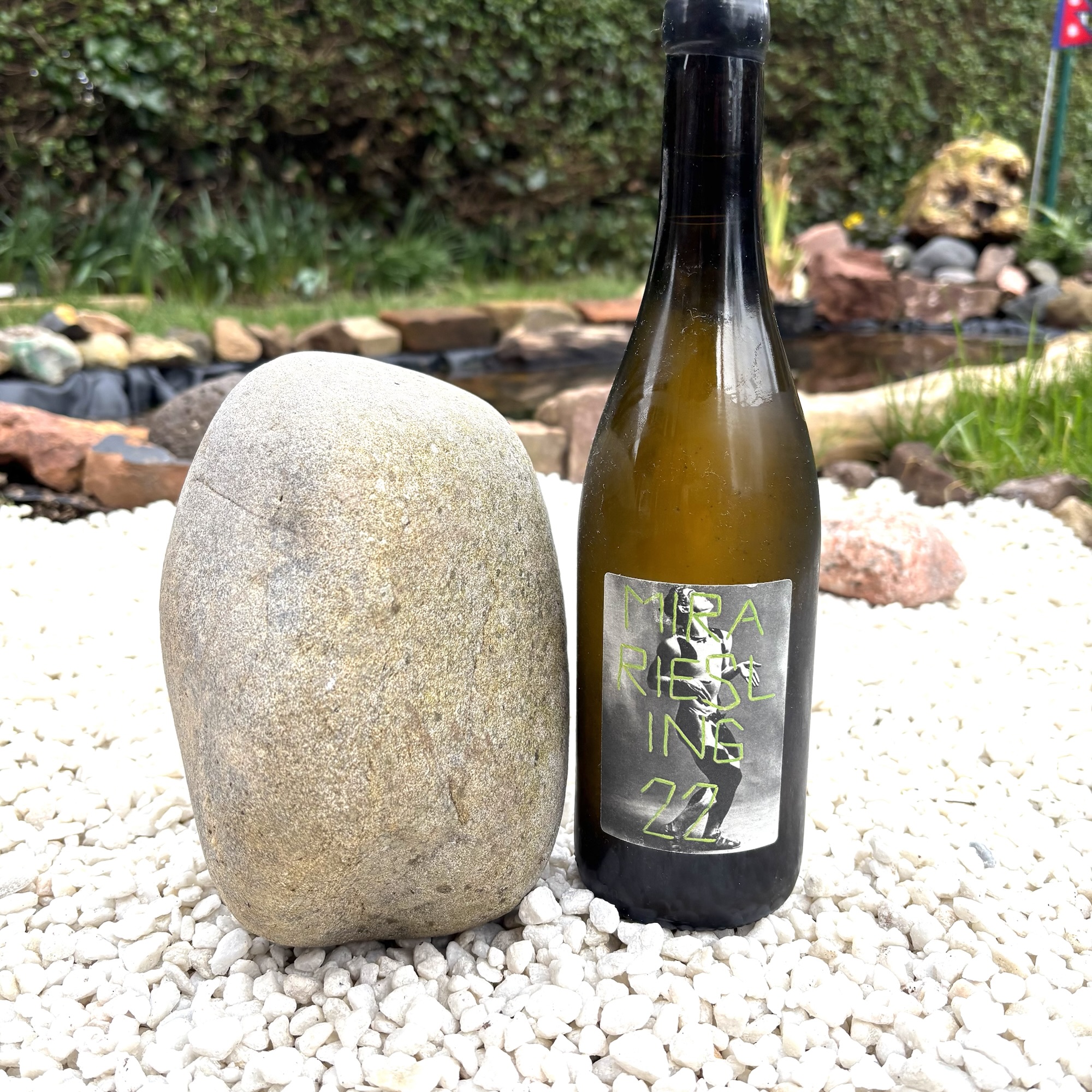
Sauvignon Blanc 2022, Mira Nestarcová (Moravia, Czechia)
Mira works alongside her husband, Milán Netarec, but harvesting from her own vineyards at Velké Bilovice and Moravsky Zickov, in Southern Moravia, vines which are minimally pruned and so produce very tiny berries. Viticulture is organic with some elements of biodynamics incorporated, and a strong focus on regenerative agriculture. In all respect, like Milán, Mira’s wines are made with minimal intervention, naturally, from vines sitting on loess, clay and sandy soils.
Winemaking uses a mix of wood and concrete. The wine, I have to say, is exceptional. I bought a selection of all of the cuvées that the importer brought in and perhaps in some respects the Sauvignon Blanc was the one I was least excited by before I opened the bottle. I was so wrong. For starters, the wine is quite unique for the grape variety. It’s not “Loire”, certainly not “New Zealand”. It perhaps slightly resembles a Styrian Sauvignon Blanc, which is a compliment in itself.
The fruit is concentrated and intense but the acids which are present, and certainly characteristic of the variety, are wholly balanced by the wonderful, pure, pear and gooseberry fruit. Alcohol is just 11%, yet the wine is in no way “thin”. There’s a great mouthfeel which presumably comes from a little skin maceration, though there are no tannins (not something I’d want from SB anyway). There’s definitely some complexity developing. I’m sure this will age a little, but if (no, when) I buy another bottle, I doubt it will last long in the cellar.
This was circa £30 direct from Basket Press Wines. I shall have much more to say about Mira in the future, no doubt.
“K” 2021, Edi Kéber (Collio, Italy)
It’s a tough life when you drink two white wines this good consecutively. Edi Kéber has vines in an amphitheatre at Zegla, within the region of Collio-Goriziano (to give this sub-region its full name) in Northeast Italy. The Kéber vines, close to the border with Slovenia, are farmed without chemical treatments, and the traditional element of the winemaking centres on autochthonous varieties vinified in concrete vats and old casks. I believe he is now making only white wine.
This is a blend, traditional for the region, of Friulano with Malvasia and Ribolla Giala. Friulano, formerly called Tocai, or Tocai Friulano, goes by the rather odd name of “Tai” in the Veneto. I can see why, but don’t like it. The variety is in fact what those with a good knowledge of French viticulture will know as Sauvignonasse (sometimes Sauvignon Vert). In France it is a variety of little note, but you might recall it has also been widely planted in Chile, of all places, where it was mistaken for Sauvignon Blanc. In wider Friuli it can excel like nowhere else.
As is common in the region, the grapes in this blend have seen long skin contact, and it was bottled without fining, nor filtration. It is bone dry, mineral and grassy. It has texture, and fruit, and the palate has an awful lot going on, but the spine of acidity keeps it well in focus. The length is excellent. It is both pristine yet mouthfilling.
Looking back on my notes, I’m not sure they actually convey as much as I’d have liked, but I know it was exceptionally good. Perhaps it’s a wine that is slightly enigmatic? My bottle came from The Solent Cellar (£30). The importer appears to be Third Floor Wines in Manchester, but I’ve also seen it at Shrine to the Vine.
Spätburgunder “B” 2013, Friedrich Becker (Pfalz, Germany)
Another lovely wine from Friedrich, or “Kleine Fritz” as he’s known locally. He’s one of several high-quality producers in the village of Schweigen, right on the southern border between Pfalz (Germany) and Alsace (France). I don’t think it an insult to those other growers, one of whose wines I also much admire (Jülg), to say that Fritz has gained the most praise of all of them from those who truly know German Spätburgunder/Pinot Noir.
The slopes of Schweigen fall quite precipitously towards the Alsace town of Wissembourg, almost ending at the walls of its beautiful eleventh century abbey complex, whose monks planted these slopes. Some of the vines farmed by the Schweigen winzers are actually across the border in France, indeed these are the village’s best sites.
The wines are legally produced under the German wine laws, but a convention has arisen where the vineyard names, which would be Grand Cru in Alsace but whose names are not permitted on the “German” wines, are denoted by their first letter (as is common elsewhere, but for different reasons). It’s a little similar to Collio, the location of the previous wine, where winemakers often have vines over the border in Slovenia.
The terroir here on the slopes is limestone and marl. This particular wine was aged seventeen months in Burgundian casks, 20% new. When Fritz began getting a lot of critical acclaim he was making his red wines very much with Burgundy in mind, perhaps especially the silky Pinots of Musigny. However, latterly he has become more determined to produce wines which express the Schweigen terroirs, and personally I think that is the right way to go.
This wine had quite a bit of extraction and so twenty years plus ageing has not been a problem. It still has grip, a little tannin and texture. The fruit is lovely floating cherry on the nose, echoed on the palate, but here we also have some more evolved earthy notes. There’s plenty of richness all round, and it is surprisingly youthful (it was cellared from purchase). It went spectacularly well with a beef and mushroom rice dish in a red wine stock. Glorious.
I purchased this from the domaine in 2017. There are one or two occasional sightings of Becker’s top wines in the UK. Majestic Wines is an unlikely source for some of his less expensive offerings (their web site currently shows a “Pinot Noir” and I’m pretty sure I’ve seen a Weisser Burgunder in the past, so worth a look if you are ever in a Majestic warehouse).
Ora 2020, Annamária Réka-Koncz (Barabás, Eastern Hungary)
Although some of Annamária’s grapes are sourced from friends further west within Hungary, the grapes for Ora all come from her home vines at Barabás. It is, as the name gives away, a skin contact wine. It’s a blend based on the ever-faithful Királyleanyká variety (aka Feteasca Regala in Romania), with co-planted Rhîne Riesling, Furmint and Harslevelu.
The 2020 comes in at just 11% abv (the 2021 has an extra one percent). The colour is very orange and there is the expected texture and a bit of tannin, but it’s balanced by a lovely richness you might not expect at this lower level of alcohol. I got apricot and mango dominating the bouquet, with the palate pretty similar. It has a nice long finish too. It’s an exciting wine, and a perfect match for a risotto of kabocha, oyster mushrooms and fennel. It did no harm that the wine and the kabocha flesh were pretty much the same colour.
This came direct from importer Basket Press Wines. As always it has sold out, so you need to be in the loop as to when Annamária’s next shipment will be. Prost Wines often has stock after they have sold through at Basket Press.
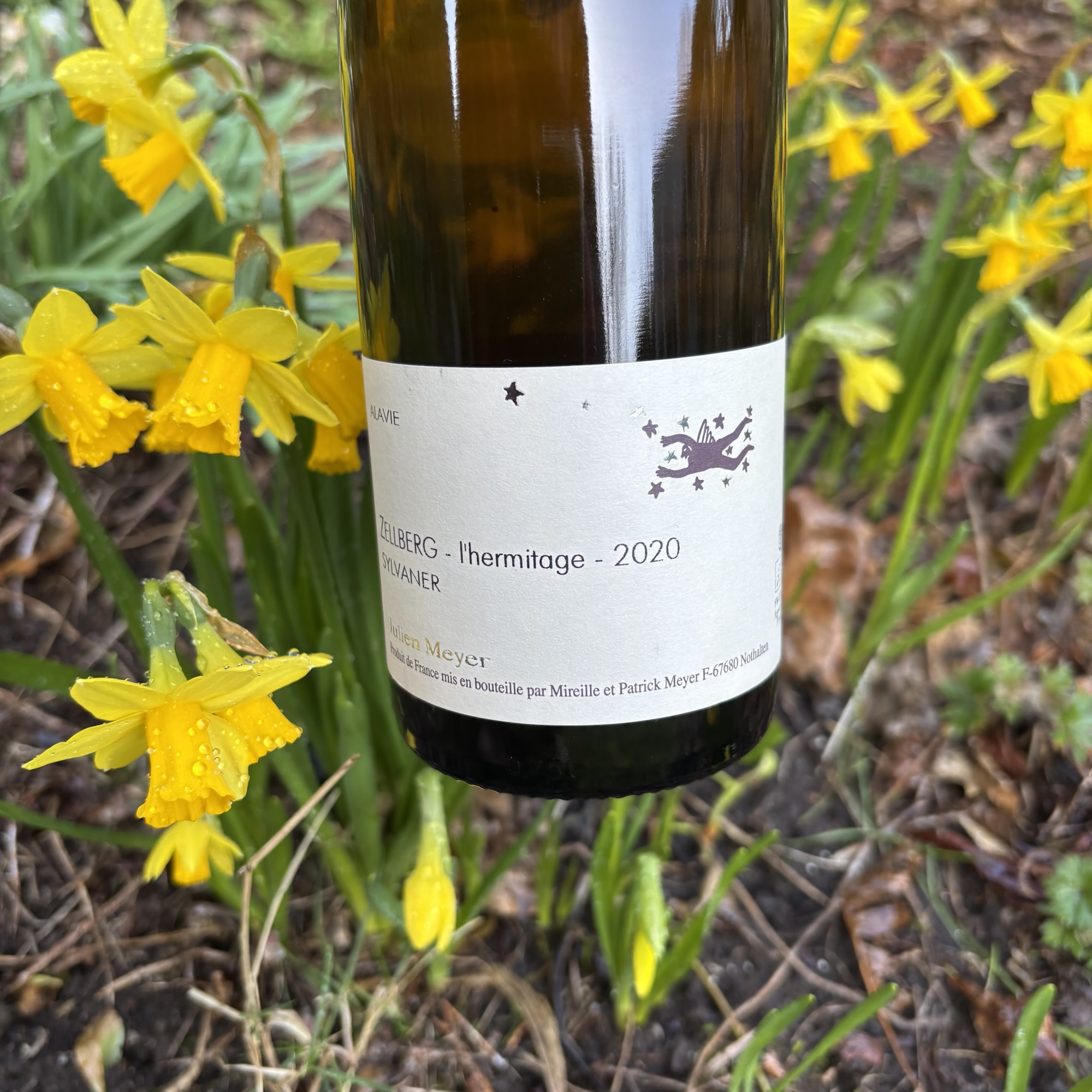
Quand Le Chat N’est Pas Là 2021, Jean-Pierre Rietsch (Alsace, France)
Jean-Pierre farms twelve hectares of vines, mostly in and around the geranium-bedecked village of Mittelbergheim, in the northern part of Alsace, between Andlau and Barr. He’s almost an old-timer now, having taken over from his parents in 1987, but he still doesn’t seem particularly old to me, despite approaching his fortieth vintage. May he have many more.
His wines are as beautiful as his ever-changing labels, though it does mean in that case you need to see the back label details to know specifically what you are getting. That said, you should know that whatever you purchase you are going to drink some of the finest natural wines in the whole of France. Sulphur is rarely used in this cellar, but Jean-Pierre will add a tiny amount on those occasions he deems it absolutely necessary.
This wine, whose name is a play on “when the cat’s away…” (the label artwork making it quite clear), is a single varietal Pinot Gris. It comes from the sand and limestone (calcaro-gréseux) soils of the Stierkopf vineyard at Mutzig, a little way further to the north, just west of Molsheim. J-P produces a number of wines from this site, including Pinot Noir.
The cuvée used whole grape maceration for nineteen days, so there is a pinkish tinge in the wine from the skins. J-P was something of a pioneer in Alsace in using skin contact to help make dry wines from the aromatic varieties here. Ageing is seven months in foudre. No sulphur is added to this completely “natural” wine.
Along with its pinkish hue, we have some gentle red fruits on the nose, so blind-tasting in the traditional sense you might well think it’s a delicate red wine. However, the intense minerality here is definitely that of a white wine. The acids give the wine a brightness on the palate, combining so well with the concentrated fruit. This makes it so “drinkable”, especially as unlike many an Alsace Pinot Gris, this has only 12.5% alcohol yet is dry.
When it comes to my Wines of the Year for 2024, I am really going to have considerable difficulty in choosing between five out of six of this small group of wines for November’s selection. That in no way detracts from the pleasure and fun I had from drinking the sixth, the Pataleban from Nepal.
Imported by Wines Under the Bonnet, this bottle coming from Cork & Cask in Edinburgh. Price: about £30. Cork & Cask has sold out but the importer is listing the 2022 now.
Whenever I visit Nepal, my recent trip being my eighth time there, I usually have some kind of drink-related story to tell, although it’s not always about wine. One of the most enduringly popular articles on my site is about Tongba (4 January 2016). It is often the most read article here when my annual review of the year comes out. Many of you will know that Nepal has a decent wine estate up in the hills outside Kathmandu, called Pataleban Estate. I didn’t visit this trip, but I did buy a few bottles, one of which gets a mention in my next article. What I want to introduce to you here calls itself wine, and indeed it is wine, but it’s made from apples.
Back in 1988 a young Wideworldofwine visited Nepal for the first time and went on a trek up into the Annapurna Region. Back then this was a pretty remote place. You got a bus to a town called Dumre, half way between Kathmandu and Pokhara, where by Phewa Lake there were the first signs of a resort, a few backpacker hotels and market stalls. The trek involves crossing the Thorong La Pass at 5,400 masl, and a half-day walk below it was the village of Manang, a huddle of windswept, flat-roofed dwellings, one shop with a rugged interior, a post office accessed by a ladder, likewise a couple of American medical students dispensing paracetamol, and one “guest house”.
Today, Manang has changed almost beyond recognition. Instead of a walk of over a week to get there you can now access a much-enlarged village by road, although you do need a jeep. There are many more places to stay, and I’m told that now there is even a cinema. Just outside Manang, a little way down the mountain towards the spectacular solitary Pisang Peak, is a village called Bhratang, which is where you will find the Manang Valley Boutique Winery.
Going back to 1988, trekking was a simple life, mostly camping out under the stars with the occasional night spent in a tea house, which to be honest didn’t afford a lot more luxury, perhaps less in certain areas, but in all cases, meals were pretty basic (if tasty), mostly rice, green spinach and occasionally an egg if a chicken had laid. Beverages were mostly endless black tea, though one time I do recall chugging a beer, an interesting experience at high altitude. When we began to approach the Manang district all of a sudden, we were able to buy apples. It being October they were fresh, and I don’t think I had tasted better anywhere before.
A view of the huddled flat-roof houses of Manang taken in 1988
Apple cultivation up here, and we are talking 3,500 masl, is famous in Nepal, as are the quality of the apples. The problem is that there are now too many apples to get eaten. It is one of the sad things about Nepal that it is capable of producing such variety of food in abundance, yet so much of the produce you see in Kathmandu, certainly in the shops, comes up from India, clogging the roads in old, diesel-belching, trucks. I bought some apples a few weeks ago from a barrow and the vendor claimed they were from Mustang, another region known for its mountain apples. They were good enough to make his claim likely.
The Agro family are third-generation apple farmers with around 80,000 apple trees spread over forty hectares in the Manang Valley. That’s a lot of apples, but the idea of making an apple wine was inspired by collaboration with Texas resident, Chuck Ghale, who brought winemaking and brewing expertise to Manang. From the outset the desire was to focus on quality. Nepal has a host of “fruit wines”, and indeed plenty of home winemaking on a small scale, though with the rather potent Chang to compete with, little fruit wine has grabbed my undivided attention up until now.
The apples undergo a selection for the best fruit, which is then micro-vinified in small batches in stainless steel tanks. This preserves the freshness of the fruit, and what freshness. Imagine the clean mountain air (though admittedly its oxygen content is noticeably diminished up here), and after the monsoon season, in October, the many mountain streams are full of clear, cold, and sometimes clean (if the humans can avoid polluting them) water.
More than anything, of course, it’s cold here. We, as visitors, need to be prepared with warm clothing at night, but the apples love it. The climate gives a long growing season, and makes pests and disease far less prevalent, which allows the producer to follow a minimal intervention approach in terms of synthetic inputs. Not only is there a desire to make a premium product without chemicals, but also a knowledge over time of the need to preserve this unique and special environment with its balance of agriculture, hardy mountain plants and relatively small-scale grazing, the yak being the beast of choice here, for both traditional means of transport and for the table.
The family definitely gets it…that the future of the Manang Valley for apple growing hinges on maintaining the delicate ecological balance here, especially in the face of much increased tourism, which puts enormous pressure on a place with little infrastructure to cope with it (though in many ways the lack of infrastructure is not necessarily a bad thing…it’s a question of balance).
What of the wine? Well first we need to deal with that descriptor. At 11% abv the dryer of the two wines produced certainly has all the attributes of a wine. It definitely tastes like wine and emphatically not cider, and although fruit wines are sort of looked down upon in the UK, something made by amateurs and shown at the village fete, the fermented juice of any fruit is very much considered as legitimately described as wine in many countries outside of Europe.
In fact, in Nepal you will be almost as likely to find a fruit wine as you will a bottle of grape wine, usually in the latter case from India (Sula is ubiquitous) or South America (as an aside I have yet to spot any Chinese wine in Nepal, which surprises me).
So, there are two wines made up here, described as “Sweet” and “Semi-Sweet”. I had read about the Manang Valley Winery, and in fact followed them on Instagram for some time, but it hadn’t really crossed my mind to buy some when I was in Nepal as I’d not spotted it in any liquor stores, where I’d been poking around for beer, rum and grape wine. Then I was given a bottle of the Manang “Semi-Sweet” as a gift in Kathmandu and my whole reason for writing about it here is that it was so good, and indeed so interesting.
I guess it was “semi-sweet”, though the sweetness comes over more as “richness” in this case. The bouquet is all apples, but there’s also a freshness. That freshness appears on the palate too. There is acidity to balance the richness, but don’t expect the kind of acidity you find in cider. There’s not a lot of complexity, or not the complexity you would expect with wine made from grapes. However, you get mouth-filling fruit which does linger long on the palate.
In Nepal you will pay around Rs 1,000 for a bottle (a little under £6). There’s an export office in Kathmandu and whilst I don’t see any UK or European importers, it does seem to be available in the US for $8-10. The web site for the wines is somewhat full of marketing platitudes and less hot on the factual detail most readers of this blog might wish for, but if anyone wishes to explore further take a look at http://www.manangbeverages.com . Contact is via manangbeverages@gmail.com .
Of course, if you wish to visit, they have nice looking accommodation on-site at Bhratang, and these days you don’t have to trek there on foot. Bhratang is described as “about an hour’s drive south of Manang”. Of course, for me, this is some of the most beautiful mountain scenery in the world.
I can’t resist adding a few food pics from our recent trip, along with a new brewery and beer, highly recommended. Do look out for the Manang Apple wines out in Nepal. It is yet another Nepalese beverage I’d like to see here in the UK.
Max Allen is very much my favourite writer of Australian wine books, though in the press I also much admire the work of Mike Bennie. Max has written at least a dozen wine books, but I came on board with 2010’s The Future Makers. Even at getting on for fifteen years old, this book still reads like a who’s who of Australian low impact artisan winemakers, the men (and a few women) who shaped the quality end of the bottle.
I reviewed Max’s last book back in July 2021. Intoxicating described itself as “Ten Drinks that Shaped Australia”. Definitely more than worth seeking out. The problem in doing that is that despite his writing being published (mostly) on a major imprint, that last book via Thames & Hudson, his books have proved very difficult, if occasionally impossible, to source here in the UK. I’ve got hold of mine directly from Australia, usually in my, or someone else’s, suitcase.
Max’s latest book is called Alternative Reality and was published last year (2023), but I had to wait for my son to come over to get my eagerly awaited copy. The book is ostensibly about an Aussie wine competition you might have heard of, the Australian Alternative Varieties Wine Show (AAVWS). Max has been involved in this show which takes place in the town of Mildura pretty much since its inception, and the organisers asked him to write a book charting its course to celebrate the competition’s 21st birthday.
Such a subject might seem quite specialised, perhaps a little niche for a reader back here in the UK. In one respect it is. There is a lot about the individuals who have been the driving forces behind a competition which in terms of the Aussie competition circuit is about as alternative as the grape varieties submitted. I found reading about how this competition differs in almost every respect to the usual old grey men in white coats scenario which many readers will have seen, a time-honoured method of crowning Australia’s so-called finest, and preferably with no Sheilas in the building, I’m guessing.
However, there is another side to this book. When many of us began to drink Australian wine in the 1980s and for a long time after, that wine was likely made from three grape varieties: Cabernet Sauvignon, Shiraz (Syrah) and Chardonnay. Okay, there were pockets of other varieties. Hunter Valley had its Hunter Riesling (actually Semillon), and South Australia had its real Rieslings, plus some Grenache and Mataro (Mourvedre).
We probably tasted a bit of Marsanne and maybe an old Rutherglen Muscat, but the continent was very much dominated by those three grape varieties. We also have to thank the likes of James Halliday for Pinot Noir’s success across Australia, which came a little later. Burgundy it ain’t, but some very fine examples exist, albeit at Burgundian prices now.
Today all that has changed, and although the stalwarts still make up a shocking proportion of vines planted, there are dozens of other varieties which you can sample, mostly introduced by artisan producers all over the country. I have asserted elsewhere that we see too few Australian wines made by artisans imported into Europe these days (in fact we probably also see fewer of the bottled-at-home bulk wine imports you find in the supermarkets too). However, when we do find a small importer bringing in Australian wines, we do often find a sprinkling of these alternative varieties. These importers know there is an appetite, at least among some of us, to try them.
The story of Australian alternative varieties is one initially largely driven by Italian immigrants. If you think about it, big alcoholic wines made from those big three varieties are not the most food-friendly of bottles unless your diet consists solely that of burnt bbq fare. The Italians brought their own cuisine to Australia and it didn’t take long before those Italians who began to make wine wanted some good old home varieties to accompany it.
If you look at the awards section of the book, the list of autochthonous Italian grape varieties which appear certainly dominates. The list would include Nero d’Avola, Nebbiolo and Sangiovese for reds, and Vermentino, Arneis, Fiano and Moscato for whites, but the list goes on. In 2006 a “Lambrusco” varietal (Trentham Estate) won an award.
Other rarely seen varieties were also regular winners. Robinvale Kerner in 2007, Quealy Tocai Friulano in 2008. In the early days especially plenty of awards went to Tempranillos, Viognier (Yalumba did well) and Pinot Gris. I remember the first time I visited Mornington Peninsula. It was a trip where I tasted a lot of Pinot Noir and Chardonnay, both varieties which can make some spectacularly good wines in the Peninsula’s Victorian maritime climate. But I made a point of going to a small producer called T’Gallant (my children thought I’d said “Tiggerland” so they were naturally disappointed, but the pizzas made up for it, I think). I wanted to visit because I’d heard great things about T’Gallant Pinot Gris.
Pinot Gris was another grape which featured a lot in the earlier AAVWS’s. T’Gallant themselves have later won awards for Teroldego and Nebbiolo, but there was a real buzz, almost a hype, around their Pinot Gris, or as it was originally named, Pinot Grigio. It won “best Italian variety” in 2005. Actually, Henschke picked up a couple of Pinot Gris awards in 2003, but I have never had so much as a sniff of this wine, which I think comes off their Innes vineyard. They certainly still make it, apparently.
Whether T’Gallant were pleased or not that the variety became synonymous with the winery, I don’t know. But T’Gallant and others were catalysts for Pinot Gris plantings, so much so that this grape was the first to be sort of uninvited from the competition. It was deemed no longer “alternative”.
Towards the back of the book there is a guide to the alternative varieties planted across Australia in 2023. More than sixty get a whole column, which includes information on how much of each variety is planted in Australia, where and for how long it has been planted, and some recommended producers to sample. Then, somewhere between eighty and ninety more varieties get four- or five-line entries with hints as to where to find some in the vineyard. Overall, we see the breadth and diversity of varieties which you can seek out, some way more easily than others for sure, but they are there amid the sea of CS/Sh/Ch.
The list of Awards is at the rear of the book. Eighteen pages detail every winner from the AAVWS by year. In the first year of the show (2001), just four awards were given: for Best Wine of Show, Best Red and White Wines, and Best Italian Variety. Redbank Winery won three of those with a Pinot Gris, the best Red Wine being McGuigan Wines “2000 Verdot”. By 2022, eighteen prizes were awarded, to wines made from varieties including Aglianico, Gruner Veltliner, Vermentino, Fiano, Friulano, Sauvignon Gris, Tempranillo, Gros Manseng, Gamay and Marsanne among others.
Some of the wineries are well known, like Tahbilk or Cherubino, but many I’ve never come across. Perhaps the 2021 roster had a few more well-known names, such as Kangarilla Road, Dal Zotto (always worth grabbing), and Pike’s. This well-known Riesling producer won two awards for their Luccio Albarino (you’ll notice my lack of accents – the Aussies tend mostly not to use them).
One variety which has consistently won awards throughout the history of the AAVWS is Nebbiolo. I highlight this variety because it’s one I always look out for. I think my first Aussie Nebbiolo was made by SC Pannell, who I think first won an award for their Nebbiolo in 2009. Before that Arrivo, and especially Pizzini, had regularly won Nebbiolo prizes at the competition.
There are only around 200 hectares of Nebbiolo estimated to be planted in Australia today, and you won’t find anything resembling Barolo. However, I don’t take much notice of those who say it’s not a variety that will grow outside of its Piemontese homeland. Indeed, I’ve read many critics who argue that outside of Piemonte, Australia is the best place to grow it, and that continent’s diversity of terroirs does suggest that such critics may be right.
It can be found today in the Yarra and King Valleys, Beechworth, Adelaide Hills, the Pyrenees and Heathcote (I’m always a sucker for Jasper Hill’s Nebbiolo). I can think of at least twenty producers making wines from those two-hundred hectares. Versions I know best include Giaconda (some aged in amphora), Jasper Hill, Luke Lambert, Mac Forbes, Timo Mayer and Ravensworth, the latter whose Hilltops Nebbiolo 2021 I was rather enamoured with at the recent Graft Wines Tasting in Edinburgh (see article of 18 October 2024).
But back to Max Allen’s book. It’s a fascinating read for any passionate lover of artisan wine, especially the Australian wines which we should be seeing a lot more of. If you occasionally visit Australia’s vineyards and wineries, this book will be a valuable guide to seeking out wines outside the norm. Perhaps the more generally interested reader might find Intoxicating (2020) and The Future Makers (2010) more their thing, but the wine lover who likes a deep dive into (Australian) wine culture will certainly enjoy this.
I have noticed that Max Allen has been writing for Jancis Robinson’s web site since 2013, and it seems rather odd that his books are hard to find here. This is especially true as his “Red and White” won an André Simon Memorial Prize and “The Future Makers” was named Best International Book at the Louis Roederer Awards in London. I would suggest that he’s a wine writer well worth seeking out.
Alternative Reality by Max Allen is published by Melbourne Books (2023). My hardback cost AUS$50.
October was a strange month because I managed a bout of Covid, which sort of curtailed my drinking for part of the month. Thankfully I recovered in time for a trip to Nepal but it does mean you will be a little short-changed in the Recent Wines department with just seven bottles in one part. Just as well you don’t pay for this! Anyway, we still have seven great wines here from the usual diversity of locations.
I’m very happy to start off with an Australian Cabernet Franc, as I am managing to source fewer Aussie natural wines these days. We follow this with a very interesting Swiss Chasselas, a Moravian Malvasia from Czechia, a first appearance of an excellent Armenian red, a regular appearance of a Bugey-Cerdon (giving me yet another opportunity to bang on a can for Bugey), a Torrette from Aosta and, bringing up the rear, an Ortega from Kent. Only seven wines, but seven different countries.
Cabernet Franc 2021, Tom Shobbrook (Flaxman Valley, South Australia)
If I’m drinking at Winemakers Club in London I will always leave with a bottle or two, and quite frequently I will grab a bottle of Tom’s wine when there’s some on the shelf. This now well-established natural wine maker used to farm at Seppeltsfield, but he has now downsized to just a couple of hectares in the Flaxman Valley (technically within the Eden Valley region) with further land planted to fruit and nut trees. The vines are at 540 masl on sandy loam over yellow/orange clay with rose quartz.
Flaxman, and Eden Valley in general, are at higher altitude than the Barossa and a touch wetter, cooler and greener, producing wines with perhaps greater finesse than the Barossa stereotype. This 2021 is the second release of the Shobbrook Flaxman Cabernet Franc.
This vintage yielded tiny berries of concentrated fruit. Both viticulture and vinification were “natural” with no-intervention, including no added sulphites. The result is nothing if not inky red, a dark and concentrated bramble-fruited wine, super-vibrant and still showing a tiny bit of tannin to add texture. Maybe I should mention the bouquet? The wine’s floral fragrance is simply off the scale. Superb. I cannot get enough of Tom’s wines and I’ve drunk this particular cuvée three times this year, either on Farringdon Street or in this case at home.
If Winemakers Club still has some it will retail just over £30, but you may be out of luck until they get some more. The photo might be a teaser for my next article.
Matthias Orsett is an exciting young vigneron based in Fully, and with more vines at Bex, in the extreme west of the Valais, close to the border with Vaud, and not far from where the Rhône enters Lac Léman. His vines, currently a mere single hectare, are on slopes situated between 450 and 880 masl. Matthias is very particular as to how he works, so everything is done by hand, with zero interventions in the vines or in the cellar (including no added sulphites, indigenous yeasts for fermentation and very evidently no fining, nor filtration).
I’d never come across Matthias before, but he trained with Emmanuelle Houillon and Piere Overnoy in Pupillin no less, before starting out on his own in 2021. He makes six different wines from individual plots, all with a single varietal focus, and this skin-contact Chasselas comes from vines on gneiss at 760 masl at Fully. The fruit was macerated for six days without stems in fibreglass. You probably realise like me that a skin-contact Chasselas is quite unusual.
The result is a lovely wine, delicate, soft and fresh but low in acids. It has a very appealing gentle texture and mouthfeel, but it’s worth standing the bottle for a day (or more) because the sediment is plentiful. The fruit tends towards soft dessert apple. A good word to describe this is “nuanced”. Matthias’s sense of adventure, treating Chasselas differently to the Swiss norm, has definitely yielded a good result.
Imported by Ancestral Wines, I picked this up in Spry Wine in Central Edinburgh. If you are in Switzerland, you might bag one for around €24.
Malvasia 2019, Dva Duby (Moravia, Czechia)
Jiri Sebela grows grapes on rather special volcanic soils underpinned by granodiorite at Dolní Kounice in Moravia. The vines are mature at over 40 years old, and they produce a range of very clearly terroir wines of increasingly high quality.
Malvasia here is actually a synonym for Frühroter Veltliner, a variety which does especially well on this volcanic terroir. Jiri suggests that it does even better if not treated with synthetic chemicals, and Dva Duby is very much part of the exciting Czech natural wine movement.
We have a very fresh bouquet, a mix of floral with a little spice. The palate has breadth. It’s not a wine to over chill. Apple and lemon flavours are to the fore, with secondary savoury ginger, aniseed and fennel. These are all wrapped up in a nice salinity. It’s drinking superbly right now, benefitting from some bottle age at five years old. That savoury quality with its saltiness lingers long on the palate making it very food-friendly (we drank it with Indian food, though not too spicy so it didn’t overpower the wine).
Another excellent bottle from Basket Press Wines for £27.
A bit of a fanfare please, this is my first wine from Armenia. Vayotz Dzor is that country’s most prestigious wine region. Armenia is situated between Georgia, Turkey, Azerbaijan and Iran and has a small population of around three million people. Although it has a developing wine industry and a little over 17,000 hectares under vine, it certainly has the history to back it up with claims to being the cradle of viticulture. The Areni Cave is one of the oldest sources for evidence of winemaking in the world.
Zorah Estate is at the forefront of the revival of Armenian wine. It is described as an Italian-Armenian venture, established in the hills in Southeast Armenia, and they claim to be the first to demonstrate the high potential of the autochthonous Areni Noir variety. This is to be applauded because not only does Areni Noir have potential, but many of the other new producers in the country are favouring the same old international varieties. Like Georgia, whose successes Armenia would clearly like to emulate, I would suggest that autocthones are the way to go..
Six hectares of vines were planted by Zorik Gharibian in the Yeghegnadzor Valley in 2006. Zorik made his millions with a successful fashion business in Italy, after having been sent to school there to escape the Iranian Revolution. They are ungrafted (on their own, not American, rootstocks) and grown at an altitude of 1,370 masl, which gives very cool nights leading to an extended growing season. Harvest is usually at the end of October.
The Italian part of the partnership comes in the form of well-known consultant Alberto Antonini, overseeing winemaking, who, because of the conditions (dry, sunny, low vigour stony soils) says it is one of the most exciting projects he’s been involved with.
The wine is made in karasi, the Armenian word for amphora. The result here is very distinctive with both red and dark fruits to the fore on nose and palate. The grapes have fairly thick skins and so you get good extraction as they macerate in the clay. Another facet of the winemaking is the real freshness which is a highlight, and in this case, elegance, which balances this 14% abv wine. I think it shows great promise for the grape variety, and so much more interesting than yet another Cabernet Sauvignon. More honest to its roots and culture too.
This bottle was brought back for me by a friend who is involved in a university project in Armenia, but it can be found in several wine shops in the UK, including Cambridge Wine Merchants, Hay Wines, Highbury Vintners and Hedonism (to mention just four). Price varies from £30 to £36. Well worth seeking out.
Bugey Cerdon NV, Domaine Philippe Balivet (Bugey, France)
After the long entry above I shall keep this one short, because any regular reader will be fed up with how often I mention this gently sparkling, low alcohol (7% abv), semi-sweet wine, and if you are a first-time visitor, you can easily search this site for more background information.
Philippe Balivet probably did more than anyone to keep Cerdon, a sub-appellation of Bugey and old Ancestral Method wine, alive and kicking. Cécile and Vincent Balivet now head up the domaine at Mérignat in Bugey’s northern sector, close to the Lyon-to-Geneva Autoroute.
Cerdon should appeal to the eye as well as nose and palate. It’s a beautiful shade of deep pink, frothy, and with a bouquet that lifts the spirit with sweet, fragrant floral and strawberry fruit. The sweetness of the unfermented sugars is very much balanced by the vibrant fruit acidity, and if anything, this is extremely refreshing. You really do feel that it would be little effort to drink a whole bottle, though it’s more fun to share.
Whilst some Cerdon once contained a little Poulsard, this is sadly becoming a thing of the past, and this version is indeed 100% Gamay. On Beaujolais Nouveau Day, much as I like to indulge, I cannot think of a better wine to fulfil the joyous function that rendition of Gamay is intended to afford. You’d have to be a serious wine snob to turn your nose up at this. It’s one of the most regular sparkling wines we open at home, especially as it is relatively inexpensive at around £24.
Vine Trail imports. This bottle was from Cork & Cask (Edinburgh).
Torrette 2020, Lo Triolet (Valle D’Aosta, Italy)
Back in July I included another Torrette, from Elio Ottin. This one is made by Mario Martin at Introd in the western part of the valley. Torrette is an expression of the Petit Rouge variety, and whilst that name might not inspire confidence, such negative suppositions would be misplaced. In the hands of a good winemaker, it can be well worth exploring.
Mario farms five hectares on the south side of the river which forms the valley in Italy’s smallest and most northerly wine region, namely the Dora Baltea. These are real mountain vineyards, up the slopes towards the Gran Paradiso National Park, and, at up to 800 masl, high above the pollution of the A5 Autostrada which exits the Mont Blanc Tunnel just a few kilometres to the west.
This has a bouquet of plums and dark fruit with ripe but grainy tannins, giving a bit of bite, crunch and texture. It weighs in at 14% alcohol, though that’s deceptive as it doesn’t seem at all heavy. That said, the whole package is made for warming winter food, including those dishes with a bit of a kick.
Personally, with no disrespect to the Ottin wine mentioned above, this is the one I’d go for (just my subjective taste). I’m a fan of Aosta wine. The only reason we don’t see many Aostan wines in the UK is simply because production is so small and little is exported anywhere. This is especially good value and a great opportunity to try one.
Imported by Boutinot, so probably quite well distributed, my bottle cost a reasonable £23.50 from Solent Cellar (delivered). I see that Londoners can also get it from Theatre of Wine.
Note that I have used the Italian DOC name, Val D’Aosta, but in a region where the French language has equal footing, many producers choose to use the permitted alternative, Vallée D’Aoste.
Ortega 2023, Westwell Wines (Kent, England)
Here is a simple, uncomplicated classic from one of my favourite three or four English producers. However, by “simple” and “uncomplicated” I am not doing down the wine, because the essence of this wine is purity, and its purpose, to provide joy, is well met.
Westwell sits beneath the Pilgrim’s Way on the North Downs. Free-draining flinty chalk soils provide excellent terroir which gives all of the Westwell wines a lovely salinity and minerality. Adrian Pike makes beautiful, expressive, natural wines here, with truly beautiful labels designed and drawn by his very talented wife, Galia.
This is the wine known as “Ortega Classic” (there’s also a skin contact version). It is fermented in stainless steel at low temperature, the result having a strongly mineral bouquet with peach and floral notes rising above. The flavour I get on the palate is mandarin orange with hints of pink grapefruit contrasting with, at the other end of the spectrum, a little bit of honey.
This is a light wine coming in at 10.5% abv, and it’s almost dainty, by which I mean that its lightness is very much an asset. It also has a dainty price, £19.95. From Cork & Cask (Edinburgh) via Westwell’s agent, Uncharted Wines.
I was very pleased to attend a tasting/masterclass introducing Ally Wines to the Edinburgh market on Monday. Ally Wines (pron. Al-eye, not Al-ee) is a London-based importer of small production artisan wines from the West Coast of America. Under the strapline of “Curiously Cool American Wines” Jennifer Williams-Bulkeley brings into the UK a range of wines from California, Oregon and Washington State, with a focus on cooler climates and alternative grape varieties. Her producers are quite often winemakers or viticulturalists at larger, often famous, producers but they are also engaged in producing wines under their own labels.
The wines on show were from an eclectic selection of grape varieties, hardly any Chardonnay or Cabernet Sauvignon in sight, as well as there being a good few blends. As the Ally Wines website says, “This is not the American wine narrative so much of the world takes on board”. The event was organised by wine educator Isobel Salamon and hosted by Smith & Gertrude in Stockbridge, Edinburgh.
We were talked through a dozen wines by Jennifer, and there were some other odd bottles to taste ourselves. The brief notes below (necessarily brief as there are quite a few wines to discuss) will, I hope, give a flavour of the wines, their diversity, and a picture of what this importer is trying to introduce to the UK. Prices quoted include VAT. I’ve jotted down a few conclusions at the end.
The source of the fruit is the Bassi Vineyard at San Luis Obispo, off a young site cooled by the Pacific Ocean fogs. It is biodynamically farmed and made by the ancestral method, fermented with native yeasts. The wine was disgorged after a short two-months on lees in bottle. Just 66 cases produced. A simple wine, tinged pink from the skins, zippy with a fine spine of acidity carrying the fruit. A very tasty wine, delicious. I would buy this, for sure. About £37.
Stephen Hagen is a native of Oregon’s Willamette Valley, and he makes wine at Antiquum, based at Corvallis, where he lives with wife, Niki. This is an example of regenerative farming and as well has having just over 20 acres of vines, the couple also run herds of grazing and breeding animals (sheep, pigs, geese and chickens). This Pinot Gris, vinified en blanc, was pressed gently and then fermented in a mix of stainless steel and neutral French oak, followed by six months on lees. It has a mineral base and a softness to balance the gentle acids (it underwent spontaneous malo). Initially you get apples and pear, but it opens to broader tropical notes. About 500 cases were made, £36.
Moy Mell 2020, Dunites (San Luis Obispo, California) (11% abv)
The label’s name refers to a group of refugees, free thinkers who settled the dunes of San Luis Obispo County in the 1930s. The couple who run the label have joint experience in twelve vineyards around the world and aim to make terroir wines reflecting the coastal influence, on hillside sites on ancient sea bed uplifted by tectonic activity. Freshness and purity are their goals. This blend is 50% Pinot Noir (en blanc), 35% Albariño and 15% Chardonnay. It has fun, racy, acids and appley freshness. Moy Mell apparently means “meadow of honey” in Gaelic Irish. £28.60.
Kiona is a family winery based at Benton City in Washington State. The Williams family farms five sites, all of which they own, planted by John Williams and Jim Holmes in the 1970s in what is now the Red Mountain AVA. They were also noted pioneers in the Yakima Valley. Their “Artemisia” white wine (named after the mountain’s native sagebrush) is sourced from three sites and comprises 50% Semillon, 19% Sauvignon Blanc, 19% Roussanne and 12% Chardonnay in the 2020 vintage. Fermented in a mix of “clay” and barrel, it is aged ten months in oak (30% new). It’s very much a product of an AVA with a big diurnal temperature shift. It is both ripe-fruited, but with great acid balance, really elegant for a wine of 13.5%. £25.20.
Milhouse Semillon 2016, Fine Disregard Wine Company (Napa, California) (12.2%)
The organic fruit was sourced from a vineyard in Napa Valley’s Oak Knoll District whose soils are comprised of alluvial runoff from the Vaca Mountains. The daytime temperatures here are a good ten degrees lower than at the upper end of the valley. Some of the vines here produce a rare pink-tinged Sémillon mutation which has occasionally been found in South Australia. It has good body and mouthfeel for such a low alcohol wine, and as an extra dimension it has evolved nutty notes as a mature wine (and this does prove how well Sémillon can age). Fine Disregard are based in Saint Helena. £31.20.
The Old Vines 2019, De Sante (Napa Valley, California) (12.5% abv)
This frankly remarkable wine is made by David and Katharine De Sante, David having previously worked at Cullen and Katharine at Pierro, both in Western Australia. They started their own label in 2001, working with old vines and a mix of varieties ranging from the usual suspects to the unfamiliar. This field blend from the “Proof Vineyard” near Oakville includes Golden Chasselas, Green Hungarian, Pinot Blanc, Sauvignon Vert, and Semillon among others. Appley (tarte-tatin), slightly earthy, with yellow plum and greengage, and with hints of honey, and a waxy texture, all make this super-interesting. The only treatments used are natural tisanes and fusions. Fermentation is on lees in used oak. £44.40.
Adroît Trousseau 2020, Siletto Family Vineyards (San Benito County, California) (abv not seen)
We are on a roll here. I have always very much enjoyed Arnot Roberts’ Trousseau and I like this one very much as well. Chris Miller, a Master Sommelier, is the winemaker, and he also makes the wines for Seabold Cellars. I couldn’t find this bottle on the Ally Wines web site. I’m therefore missing both price and alcohol content, but what I can say is that it has delicious bright strawberries and cherries fruit with a nice savoury/slightly bitter finish. Nice texture too, just 217 cases produced. There was some debate whether it is a Rosé or a red. For the record, I’m in the “pale red” camp, but a wine to serve cool. There are Adroit Aglianico and Chenin wines on the Ally Wines site, ranging from £21 to £29.
This is a very small production Pinot, just 150 cases, from the cool and densely wooded Santa Cruz Mountain AVA north of Santa Cruz itself. This is the source for some pretty pricy wines but here we have something more affordable. A ruby-red Pinot which comes from sites in the northern part of the AVA, a sub-region known as Northern Skyline, with a high elevation above the fog line. This selection sees 18 months in French oak (15% new). It exhibits bright, youthful, cherry fruit from what has been described here as an exceptional vintage (though a hot one, and there were fires). There is a “Pinot smokiness” here, but nothing to do with smoke taint. £34.80.
Lemberger 2021, Kiona Vineyards (Red Mountain, Washington State and Oregon) (13.7% abv)
Well, the label affixed to the back says Lemberger whilst the main back label suggests a composition of 75% Pinot Noir, 24% Lemberger and 1% Cabernet Sauvignon. In fact, this is a rare interstate collaboration, the Pinot coming from Björnson Vineyard in Oregon and the Lemberger (and Cabernet) from Kiona in Washington State. If Lemberger is not that well known under this German synonym, it certainly is as Blaufränkisch, its Austrian name (this variety has more aliases than almost any variety I know, including Frankovka in Czechia and Kékfrankos in Hungary).
With big legs and a dark colour, its fruity Pinot element is nicely complemented with a spicy, ferrous Lemberger element. Lovely wine. It says it is vegan, and makes a point of the use of lighter glass for environmental reasons. £POA. It’s the wine generally known as “the crab label”, though on closer inspection I think it may depict a crab becoming a flower, and a very nice label it is too.
Red Mountain Lemberger 2019, Kiona Vineyards (Red Mountain, Washington State) (13.5% abv)
The Lemberger on Red Mountain was planted forty years ago, and the family produced the USA’s first ever commercial Lemberger in 1980. The original 1.8 acres of the variety has now grown to thirteen. 2019 was a reasonably cool vintage but a good summer enabled a long ripening period. As with the above wine, it’s not 100% Lemberger. There’s 14% Merlot and 5% each of Cabernet Sauvignon and Carmenère. Now it is drinking fruit-forward, but there’s a bit of texture and a crunchy finish. It’s hard to believe that the price quoted, £18, is not an error. Although perhaps I objectively prefer the previous collaborative cuvée, this must be one of the best value US wines I’ve tasted for some time.
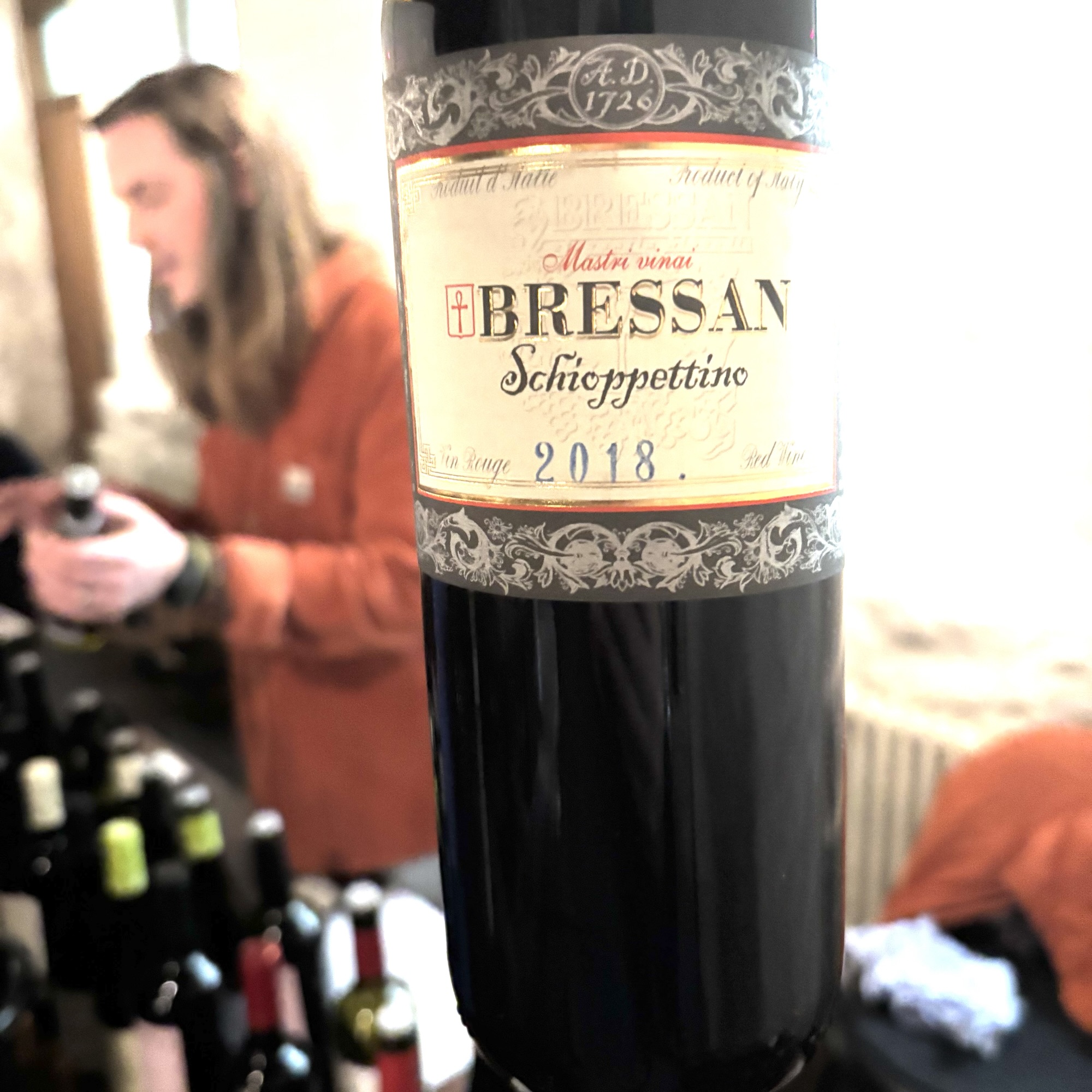
Shypoke is a century-old ranch near the northern end of the Napa Valley. The terrain is based on alluvial river silts which Meg and Peter Heitz believe give very distinctive wines. Perhaps first comment goes to the alcohol content, so to get that out of the way, I’d say it’s high but gets the benefit of the doubt for being so in balance. Just four barrels were made of this deeply cherry-fruited red. It definitely suggests warm climate, yet it is also sophisticated, and structured. I think it will age a decade more (am I right?), but it is still impressive. I would not have guessed Sangiovese, but that makes it distinctively Napa.
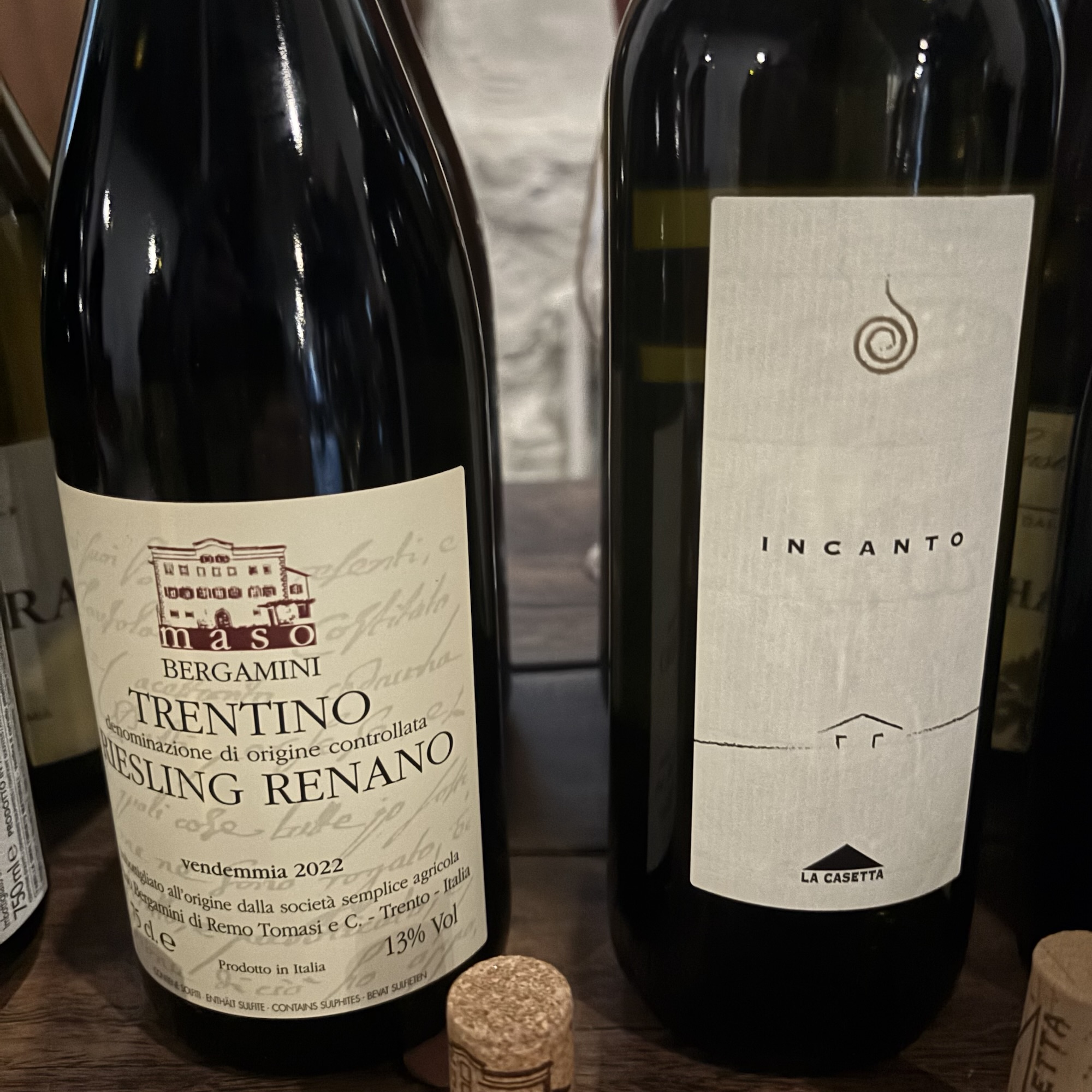
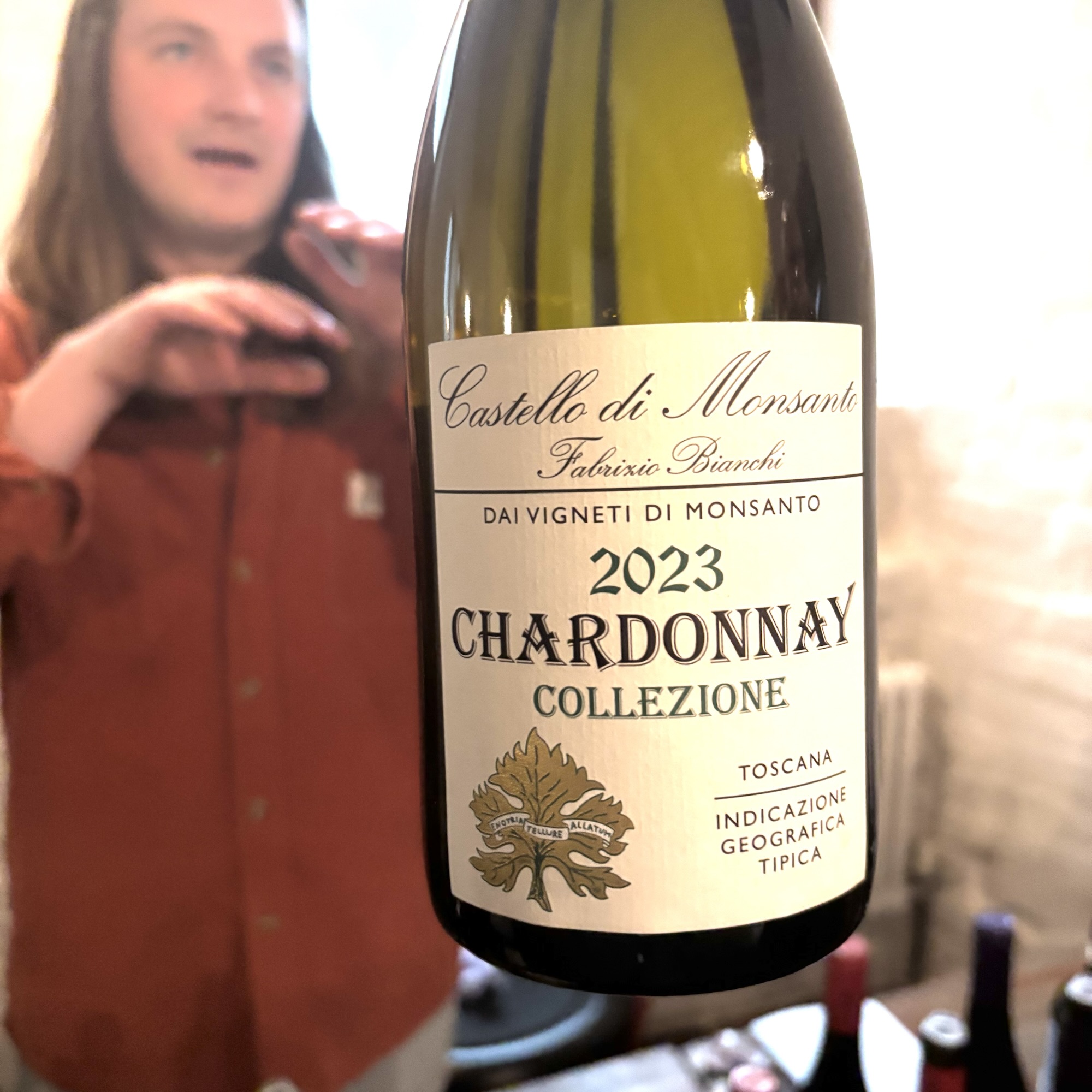
Bel Canto Cara Mia Vineyard Red 2017, Cadence Vineyards (Red Mountain, Washington State) (14% abv)
Cadence, who are Ben Smith and Gaye McNutt, make this wine from the Cara Mia Vineyard about 200 miles east of their winery just south of down town Seattle. Ben is an ex-aerospace engineer, and Jennifer described him as one of the most meticulous winemakers she knows. This wine is a blend of Cabernet Franc (73%), Merlot (18%) and Petit Verdot (9%). There is a complex tech sheet of info about clones and barrels, perhaps reflecting Ben Smith’s meticulous nature, but what we have is 278 cases of classy red wine.
The Cab Franc comes through as more voluptuous than you get from the Loire but the fruit being ripe, and time, has helped the 50% new oak used here to integrate well. That said, this remains structured and quite big, but certainly impressive. Give it a few more years, or perhaps just open and let it breathe a few hours. Decanter Magazine described Cadence as one of the most consistently underrated producers in the US.
I will only mention a couple of wines from the “free taste” lineup because I can see I shall be heading well over my nominal 2,000-word limit.
Ossum Epiphanea Volume 1 2021, “Light Table Wine”, Ernest Vineyards (Mendocino County, California) (13% abv) is a crazy Sonoma County blend of Marsanne, Grenache, Picpoul, Mourvèdre, Cinsault, Counoise, Syrah and Roussanne. I think you might wonder just how “light” 13% is to a European palate, but it isn’t heavy, it isn’t out of balance and it is actually quite delicious. But neither is the price light at its usual £35. Ally Wines has it on offer for a very decent £26.40.
Disciples Red 2018, Bottled by the Crane Assembly (Napa, California) (15.7% abv) is possibly the most “Napa” wine I’ve had for a good decade or longer. Wow! 15.7%! There is fruit in there, both red and darker varieties, along with graphite and a touch of dark earth. But it is super-dense, though structured, not jammy in any way. In that sense it is a well-made wine and not an aberration, but it is quite a bit more alcohol than my old and partly jaded palate can take. To be fair, it tastes more like 15% rather than 15.7%, but all the same. I do know people that would adore this, and I’d buy it with one particular friend in mind were it not to retail for £54.60. Taste it if you ever get the chance, but buy it at your own risk.
So, a few words to sum up. An outstanding tasting, and so nice to get the opportunity to try so many wines outside the US mainstream. The Ally Wines portfolio is way larger than what I tasted here, with a lot more very interesting cuvées from a host more interesting “alternative varieties”. The wines I enjoyed most, from a purely personal perspective (knowing my quirky tastes as you probably do) were:
Outward Pinot Gris Petnat
De Sante Old Vines White Blend
Siletto Family Adroit Trousseau
Kiona’s Oregon Collab Pinot Noir/Lemberger
Those were my favourite four. I was going to mention a few others but I realised that pretty much all of them I’d buy if my four favourites were missing from the shelf. You’d have to grab the other Kiona Lemberger if you saw it, at just £18, and that crazy Ossum Epiphenea at its discounted price. The only wine I’d shy away from would be the Disciples Red, but I’d have met the challenge with enthusiasm in my youth.
Ally Wines has a web site at www.allywines.co and an Instagram feed at @ally_wines . For further information, especially trade clients (though private clients are equally welcome), contact Jennifer Williams-Bulkeley via jwb@allywines.com .
Many thanks to Isobel Salamon and Smith & Gertrude Stockbridge for organising, inviting me and hosting.
Isobel and Jennifer
Smith & Gertrude’s Stockbridge Bar (26 Hamilton Place EH3)
Around this time of year back in 2021 I reviewed Camilla Gjerde’s first book (see article 27-10-2021, “We Don’t Want Any Crap in Our Wine”). Camilla, who was born in Norway but now lives in Sweden, has a Diploma in Wine along with a doctorate in political science. This work was a timely profile of nine women making natural wine at a time when women in wine were beginning to have a bigger profile for their work. It is a lovely book in terms of design, layout and content, far from being a throwaway frippery. Though a “feel good” book, the author translated the passion, and indeed success, of the participants, so we ended up feeling inspired, as, I must say, were her choice of women winemakers.
So, I have been looking forward to receiving Camilla Gjerde’s second book. The title is Natural Trailblazers, with a sub-title “13 ways to climate friendly wine”. This is an altogether more prickly topic to write about. Effectively, we are looking at what people in wine, whether making it or selling it, are doing to decrease their carbon footprint in order to do their own small bit to ameliorate climate change/climate chaos (substitute as you wish).
It would be a good place to remind readers who have already come across Camilla and her work before that we are here very much in an area that she believes in deeply. In fact, Camilla’s own contribution is that, as with her previous book, her journeys around Europe to visit the participants for this latest work are all undertaken by train with her trusty Brompton folding cycle. Well, barring the occasional necessity of getting in a car (a dash across Paris in a taxi to avoid missing a train connection is something that has been forced on many of us). It is poignant (and possibly deliberate?) that the last chapter is loosely based around a rising star of Alsace, Yannick Meckert, who has totally given up flying.
As with the first book, Camilla worked with photographer Cecilia Magnusson, who follows Camilla on her journeys, only visible by an occasional photo of two folding Bromptons. Cecilia works in Stockholm, mostly in portrait photography for magazines and advertising, but her sensitivity to nature is evident. She has taken some lovely photos which bring the text to life, although I would say that the matt finish on the printing does render a small percentage of them a tint too dark for me (though I think this is a trend I see in almost every wine book printed on otherwise superior matt paper these days).
The back of the jacket entreats us to buy a copy with the words “Meet thirteen visionaries of natural wine, who are each leading the way towards a low-carbon future”. Those visionaries are grouped into three areas: in the vineyard; in the winery; and on the move. Quite simply viticulture, winemaking and transport. The “Notes” referred to below allow full fact checking should you so wish. All assertions are evidence-based.
Before we begin our journey through the book, I would like to address one issue some readers might have. Isn’t this all too little and too late? I think the following quote, from Physical Chemist and Nobel Laureate Ilya Prigogine is worth contemplating:
“When a complex system is far from equilibrium, small islands of coherence in a sea of chaos have the capacity to shift the entire system to a higher order”.
Wine is quite a good example of outliers, rebels, experimenters, call them what you will, transforming the norms of viticulture and winemaking by bringing their work at the periphery into the mainstream.
In the vineyard we leap in with a visit to Katie Worobeck, a young Canadian who worked from 2017 at Ganevat. Her Maison Maenad, near Orbagna in the Southern Jura, had its first harvest in 2020. The first wine of hers I tried was De L’Avant, a 2021 Côtes du Jura Chardonnay from rented vines in Les Varrons, a famous site near Rotalier that certainly Labet fans will know. For me, this rang the bell of “star in the making”, and similar confidence has been placed in her by several Jura insiders, both in France and the UK. Luckily in 2022 she was able to finance the purchase of three hectares of her own from the sale of a house in Canada.
Katie is committed to agroecology and regenerative farming. She is quoted as saying “I think everyone should do something, and if you do something, you need to do the best you can.” This is surely the mantra of the whole book. Katie is inspiring, but she is also driven. Such strength, as exhibited by so many participants in this book, is astonishing (and that is both physical and mental strength).
Christine Pieroth (Piri Naturel) farms in Germany’s Nahe, a small and perhaps these days less well known than it once was wine region. It is named after a river between the Mosel and the Rhine, flowing through the Hünsruck Mountains to join the Rhine at Bingen.
Christine is already making quite a name as a wine producer but her first harvest was only 2018. She does have a whole seven hectares of vines though, farmed organically, inspired by permaculture. Her two areas of focus, at least for the purposes of this book, are hybrid vines and trees. Well, more than trees. A recurring theme is the introduction of trees, bushes and hedges into the vineyard.
Agroforestry (as it is called) is not new. I have mentioned it many times over the years but mixing trees and shrubs in with the vines is beginning to take off. Sadly, there are old-fashioned conservatives too dumb to see why forward-thinking viticulturalists are doing it. Pretty much every time Jeff Coutelou plants trees in his Languedoc vineyards some Le Pen-voting, chemical-ingesting, brain-free zone comes and burns them down.
Christine is also introducing PIWIs, the increasingly used German name for hybrid vines showing high resistance to fungal diseases. Some of these vine varieties, many pioneered in Switzerland and Germany, are beginning to be seen as one viable solution to the various effects of climate change, where “global warming” is also very much “global wetting”, as this past summer has illustrated. Humidity with rain is really a grape’s worst enemy in most situations.
Next, we visit Les Frères Soulier in the Gard, whose vineyards do not look like vineyards (no-till agriculture with animals), Catherine Dumora in the Auvergne (machine-free viticulture), and the wonderful Romaine and Hans-Peter Schmidt (of Mythopia in Switzerland’s Valais). Mythopia probably needs no introduction, but this chapter did make me sad, reading about the difficulties the Schmidts are facing. All I knew previously was that they make amazing wines, among Switzerland’s finest, if albeit increasingly unaffordable to ordinary worshippers like myself.
In the winery we meet Thierry Hesnault (Loire) for ancestral methods, Paolo Bertani (Puglia) for kegs and cans, Eric Texier (Rhône) for kegs and pouches, and Géraldine Dubois (Lyonnais) for keeping sales local, by bike.
On the move gets very interesting. Many will have heard of Sune Rosforth one way or another. It was his idea to bring wines to Copenhagen (since 2012, no less) by sailing ship, aboard the lovely Tres Hombres (pictured). If Sune’s profile is quite large in natural wine circles, Christopher Melin is fairly unknown outside of Copenhagen, but he and his team deliver around 90,000 bottles of wine a year by cargo bikes (90% of his sales). Ida Sundqvist is fighting to get as much wine as she can transported to Sweden by train.
The final chapter, as I have already mentioned, takes us to Alsace. Alsace is, for me, the most exciting centre for natural wine in Europe right now. The movement once settled on Mittelbergheim, south of Barr, around the circle of winemakers surrounding Jean-Pierre Rietsch, but it is beginning to spread further and further north. In Alsace’s northern sector (the Bas Rhin), where once very little of note was reported by the more conservative wine press, we are now seeing an explosion of young and radical winemakers. Not only are their wines natural, they are also pushing the boundaries of viticulture, or rather perhaps pulling them in.
The participants in this final chapter are rising stars Yannick Meckert (organic, no-till and given up flying), Florian Beck-Hartweg (how many different ways to lower your carbon footprint and also increase carbon capture), and Jean-Mark Dreyer (“the grower who wants to wear snowshoes in the vineyard”). The latter assertion may or may not be entirely serious, but this Rosheim grower is both a zero-sulphur and a zero-tractor man of whom Yannick says “if a tree wants to grow in the vineyard, he lets it grow”.
Such a fascinating chapter. You may think some of the views expressed are too extreme. I think these guys are experimenting, finding what does and doesn’t work, but coming from a different philosophy to the standard capitalist model of make as much wine as you can and maximise revenues as well. Their philosophy is to tread lightly on the earth, work with nature to make a living without the desire to get rich, and to act as guardians of the land for future generations.
Some of you may think they are crazy, but I guess they are just making their small contribution to the collective solution to what is a massive problem we all face, and tellingly this is done with full acknowledgement that wine is a luxury. They are not tasked with feeding a hungry world, but as that gets harder by the day using current methods, we can’t afford to ignore the small progress these pioneers are making.
Do you remember when natural wine was at the periphery, raged about by some wine writers and wine producers? Today, when people outside the wine trade ask what I write about, a good eight or nine out of ten know what I’m talking about when I say “mostly natural wine”. Perhaps in five or ten years they will also have been buying wine from cans, pouches and kegs, will know about no-till farming and agroforestry, and will have modified, however slightly, their modes of transport.
As for this book, it’s not just a nicely put together good read, which it certainly is. It also highlights topics that are essential, not just important. In doing so it expresses how hard it can be to achieve anything in a world that often seems blind and deaf to the unfolding climate disaster of our global industrial world. Camilla has managed to do this in a way that is entertaining to read, not dry like a manifesto or a polemic.
But it also shines a beacon of hope. That beacon shines from individuals whose message is to do what you can. That every small step is a step in the right direction. As the natural wine movement grew from small beginnings, so too will the environmental movement in wine, and indeed it is already, self-evidently, doing just that. It is not as if the individuals profiled in this book are the only contributors to solving these issues, but they are certainly applying very different thinking to most individuals.
As Manda Scott says in an article in Permaculture Magazine (“Thrutopia – Permacultures of Intelligence and Wisdom”, No 119, Spring 2024, pp53ff), “No problem is solved from the mindset that created it”.
I definitely recommend this book to anyone who can see and hear!
Natural Trailblazers by Camilla Gjerde, with photography by Cecilia Magnusson, is self-published under the Now What Publishing imprint (2024) and runs to just over 230pp (hard cover). It is available in some book shops and wine stores, but perhaps can most easily be purchased from Camilla Gjerde’s web site www.camillagjerde.com (also accessed via her Instagram @gjerdecamilla ). The UK price is £26 plus standard UK shipping (I think this is £5.95).
A lot has changed since I moved to Scotland in 2022. I think one of the main changes I had to get to grips with was that nobody knew me up here. In London I’d get invited to all the tastings and then spend a lot of the morning saying hello to people I know (certainly not complaining), but up here I had no profile and people more often wondered who was this old guy with a notebook? In fact, I must express my gratitude to trade members and writers up from London for making me feel the warmth I was initially missing.
The one exception was an introduction from someone whose kindness I can’t repay properly, who gave me an introduction to India Parry-Williams. People in Scotland who have any interest in natural wine will immediately know India as one of the co-founders of Edinburgh’s first and best known low-intervention wine fair, the Wild Wine Fair, or “Wild” as it has become known, to sit alongside “Real” and “Raw”.
India’s day job is as manager of retail, social media and events for Cork & Cask, a wine shop in the Marchmont area of Edinburgh, south of the city centre, about a ten-minute walk from the southern end of the Meadows. Regular readers will be aware that over the past few years I have singled out several wine shops to write about, and the criteria is more or less that if this shop were the only one left on the planet it would happily service all my drinks needs.
Previous inclusions have highlighted Butlers Wine Cellar in Brighton, Solent Cellar in Lymington and Feral Art et Vin in Bordeaux. These places tend to have the feel of a “London wine shop” outside London. Edinburgh does not lack good places to buy wine, and I won’t pretend that Cork & Cask is the only place I shop, but they do certainly fulfil the terms of the last sentence of the paragraph above. For me that means a strong game with natural wines, an adventurous range, increasingly a need for a good, deep and well-chosen range of single malts and a few curiosities from time to time. Oh, and the most friendly and helpful staff I could wish for.
Cork & Cask was opened in 2013 by Chris Mitchell. India came along in 2014 and the management team was completed by the arrival of Jamie Dawson in 2019. Jamie is in charge of the wine and spirit buying, plus the wholesale arm of the business. As I mentioned, India co-founded Wild Wine with Jo Radford, owner of Edinburgh’s now famous Timberyard Restaurant (where the Fair still takes place). Jamie is one of the hands behind “Blind Summit”, an indie whisky bottler specialising in often unique single cask Scotch Whiskies. The extremely well-trained and knowledgeable team is completed by Sandy, Sam and Connor in the shop and you get the impression that this really is a team game.
Cork & Cask does a lot. The retail shop sales are supplemented with a web site (expanded 2020), plus a thriving wholesale business for Edinburgh restaurants and bars. The shop is the busy hub. It is located in a part of the city inhabited by a lot of students and lecturers at the city’s several Universities and colleges, along with young families. It’s an area which over time has developed the sort of independent businesses that these customers want to see. They like a shop that works closely with small, independent, importers, they know about sulphites and agri-chemicals in wine production, and they prefer artisan over industrial.
The shop is pretty much an equal split between wines, beers and spirits, with Chris having the knowledge to develop a fairly unrivalled beer selection here, but it was India and Jamie who answered my questions.
When asked what sells right now, the first answer was the indie whisky bottlers. I know to my cost how good the range is, and I owe thanks to this place for my discoveries of smaller distilleries like those on the Isle of Harris (the Hearach, see article of 8 October 2023), whose rather special gin was already my favourite, and Arran’s Sauternes Cask, of which I’ve just bought another bottle.
The business is fortunate that Jamie has long experience in selling spirits, so has some longstanding relationships and even friendships with both established producers and new independent bottlers. The latter are the source of some of the most exciting releases on the revived and vibrant whisky market. His finger is firmly on the pulse. Jamie lives in Leith (as, coincidentally does India), which is Edinburgh’s old port. This really is whisky central, both historically but also now once more in the modern age as a centre for both creativity in the trade and for its whisky-loving community.
If you want some tips, Jamie suggests the small Leith releases from Fragrant Drops and Woodrow of Edinburgh for their single cask malts, and also Thompson Brothers for excellent, high malt content, blended whiskies. Like me, he loves Arran (from the Lochranza Distillery), and my favourite, Kilchoman farm distillery from Islay.
It would be unfair, though space is tight, not to mention his specific recommendations, Dailuaine Mystery Cask by Fragrant Drops, Woodrow’s Pulteney 15-y-o, Pintail Caol Ila Pineau des Charantes finish and the new Torabhaig Sherry Cask finish, Cnoc na Moine, singled out for really good value. This is, as you see, what my wine budget is up against now!
All the gins here are Scottish, vodkas organic, and so on. There are also four own-branded whiskies on the shelves. There is a focus on local products, including in white spirits and liqueurs, emphasising locally-foraged ingredients.
Cork & Cask is quite unusual in that its range of wine is somewhere between 70% and 75% organic, and on their web site they currently list 270 “organic and biodynamic” wines, plus a further 130 “natural wines”. The range of small run bottlings changes frequently, so in reality the numbers are way higher. Wines like those of Jura producer Labet, or even New Zealand’s Hermit Ram, are in and gone in a flash. Who says Edinburgh doesn’t know its natural wine. That said, with around 100 bottles under £15 it’s far from being all posh stuff.
I must also add that as well as being one of the few shops to cater for my Alsace predilections, I have found many of my Austrian natural wine favourites here, and equally a good spread of Portuguese bargains and wines from “the New Germany”.
The locals are of the right demographic that they are interested in natural wines, but are also keen to explore new grape varieties, new regions/countries and new winemaking methods. You just know I’m going to love a place that sells some of the most exciting Alsace producers, the odd wine from Bugey, and even, as I mentioned recently elsewhere, has a section (albeit small) of wines from Lorraine.
Perhaps they do sell more wine of other regions though? India lists Portugal, and Sherry (India and Jamie love Sherry so their enthusiasm rubs off) as current big sellers. This is a shop that has more examples of dry and unfortified Palomino than Pinot Grigio on the shelf. English winery, Westwell, a relatively new addition, is picked out as one that is very popular, which goes even further to show how savvy both buyers and customers are here.
India told me about one group of regular customers who come in after work on a Friday, and who seem to love the lighter, funky, reds. These lads now attend Wild Wine, and the twice-yearly Cork & Cask Wine Fairs (see below), a group of lads who they have seen over time become really interested in the whole natural wine thing.
Another thing about Cork & Cask that might surprise you is their range of fifty-plus ciders and perry, a range looked after by Sandy. That’s a lot. The ethos is the same as for wine, an emphasis on small, low intervention, independent producers like Oliver’s (Ross on Wye), Little Pomona (Hereford) etc. There’s a focus on ciders from England and Scotland (which makes brilliant cider, as I’ve discovered), though also with one or two producers from Spain and France.
Beer is a last but not least here, because beer was what started the whole business, Chris being the beer expert. There’s a stipulation that all the beers stocked are made in the UK, Germany or Belgium. This includes an unrivalled focus on small Scottish brewers, and if you want to find a new release from a small Scottish brewery, this is a place to start. To cater for demand the enormous beer range includes forty non-alcoholic options, and, tellingly, a selection of gluten free beers. The Cork & Cask Insta feed has been a beer education for me.
What do Jamie and India like drinking at home? I always like to find out the kind of thing that makes retailers excited personally. Jamie likes petnats and fruit-led skin contact wines when out, and volcanic wines at home. Special mention goes to grape varieties Mencia, Bastarda and Albariño. India professes a special love for Sicily. She mentions producers Lamoresca, Barracco and Alessandro Viola there, along with Cabernet Franc, but confesses that if she’s out somewhere and doesn’t fancy the wine list, she’s likely to go for a margarita (I’m more for a negroni but I’m with her in spirit). I suspect that they do drink rather more widely though.
Events are always important for a wine shop, and Cork & Cask do the usual run of events, ranging from one to coincide with the Scottish National Whisky Festival (which I think is this weekend), and receptions for up to 900 people, down to free shop tastings, corporate evenings, restaurant collabs (including regularly and ongoing with BYO Mara’s Picklery round the corner) etc, which are mostly all up on the web site, along with a range of monthly discounted selections.
Major among these events are the two Fairs they put on in a church hall near to the shop, a Winter Wine Fair and a SummerFair. This summer’s event had more of a beer and cider focus, but the Winter Fair in 2024 is at St Giles Church on 9 November, but I think may be sold out. It is a remarkable event. What India and Jamie manage to do is to attract a remarkable number of small importers to bring a selection of wines for participants to taste. For £20, including a £5 voucher redeemable in-store, it’s a bargain.
The event has grown. When it began in 2018, they sold around 100 tickets, but now 300 tickets sell like hot cakes. It’s not surprising. Last year’s event (see my three articles of 8, 12 and 16 November 2023) had drinks (at least 200 bottles) poured by (among others) Indigo Wines, Dynamic Vines, Keeling Andrew, Modal Wines, Roland Wines, and Vine Trail. This selection gives the natural wine connoisseur a good idea of some of the delights you’ll find in the shop (though the photos sprinkled through this article should help).
One thing I’ve never talked about before in an article like this is sustainability. Wine shops don’t mention it often enough but Cork & Cask have thought about it a lot, in relation to waste and its disposal, deliveries, packaging and more. With 80% of the range organic or better, the aim is 100%. They also belong to a bottle return scheme for beer bottles and are talking to a Scottish gin brand about a similar scheme for “refills”. That thinking also means nearly all of the wines are from Europe, not further afield, although I am always pleased to find the odd antipodean etc (the aforementioned Hermit Ram was in my last order).
Cork & Cask really does have it all, catering for the knowledge hungry new customer to the demanding obscurist (ie me). A brilliant range sold by amazing people about sums up Cork & Cask, and I am forever grateful, Ruth, for introducing me to India, and Jamie. Michelin Travel Guides say “worth a detour” about some places. I say “worth dragging a small suitcase to and from the station”, which I can tell you is no small distance. Of course they do deliver, and there is a bus, but there aren’t many wine shops which are as fun to browse in and where the staff are as nice when faced with my obscure wine meanderings.
At the end of the day this is a small shop run with a strong ethos of serving the community, but if you are further afield then as a customer you will feel no less a part of that community.
Cork & Cask is at 136 Marchmont Road, Edinburgh EH9 1AQ
Graft Wine held their Edinburgh Autumn Tasting on 15th October, at Hawksmoor, conveniently in the centre of the city. It has been a long time since I tasted Graft’s portfolio and the ten producers on taste showcased a whole bunch of wines I’d never tried before. Graft Wine was a pre-Covid amalgamation between Red Squirrel and The Knotted Vine, both of whom sold some exceptional wines. Over time a lot of new producers have been introduced and the wines on show appear to me to be almost totally absent from retail shelves in Edinburgh.
I would suggest that any wine shop reading this should contemplate what I’ve written. Grab a few of these and you will have some wines that are different to the bottles, albeit amazing wines, that I see in quite a number of stores. I have included a “My Choice” note for each of the wines I’d definitely buy if I spotted them on your shelf, along with my much-debated Wine of the Day. However, there’s a whole host more I’d seriously consider, including either of the two Jura wines that don’t get a “my choice” mention, and all of the Ravensworth wines.
Most of the wines below are at minimum organic and also described as vegan.
The notes below will be brief. If any wines pique your interest, get in touch with Graft through Rob Woodhead (account manager) via robert@graftwine.co.uk , or Jenny Meutelet (Marketing) via hello@graftwine.co.uk .
CASA MONTE PÍO (Rias Baixas, Spain)
This is a small estate in the Salnès Valley (Rias Baixas) established in 1979 and run by Pablo Martinez. Albariño and Mencia are the varieties here. We had two of the former on show, Raixera 2023, raised in stainless steel, and the Monte Pío cuvée itself, made in wood. We get a clean and fresh wine of precision contrasting with a rounder wine with juicy fruit. The wood is a third new, and so the Monte Pío might benefit from further age. Whether by auto suggestion (salnès meaning salt), both wines display a nice salinity typical of much of Rias Baixas.
However, very good as those two white wines are, the wine that captured my imagination was actually the red. Benquerido 2021 is made from 100% Mencia. With relatively low alcohol (11.5%), this had a mineral freshness but smooth fruit. So many Mencia wines are over-extracted and too powerful these days, but this was lovely. I would buy this, for sure, so it gets a “My Choice” award. A gem!
CORVERS-KAUTER (Rheingau, Germany)
The name derives from the two families who have been making wine around Rudesheim, now with vineyards at Oestrich and Winkel, for a hundred years. Dr Matthias and Brigitte Corvers have 12 hectares on steep slopes above the Rhîne, farming organically and making vegan-friendly Riesling and Pinot Noir (mostly), with some very rare Röter Riesling.
Secco Rosé 2023 is a cheapish sparkling wine made from 90% Pinot Noir with a little Cabernet Sauvignon. It has CO2 added so it has a bit of a sekt vibe, but it’s soft, fun, and should be cheap.
Of two Rieslings shown R3 2023 (Rheingau Riesling Remastered) is off clay, loess and quartz across all three villages already mentioned. At 12.5% abv it is dry but has rounded fruit and a softness. Plump Riesling but still fresh. Schwerelos Kabinett 2023 is also 100% Riesling and at 11% abv not too shy for a Kabi, and is livelier than R3 with tension and a touch of minerality. This one gets a “My Choice”.
That said, their Rheingau Pinot Noir 2022 is a pale, cherry-scented wine with a touch of texture, tannin and smooth fruit. Quite accomplished in a field of increasingly fine German “Pinot”.
DOMAINE DES CARLINES (Jura, France)
We have a new name and a welcome addition to those Jura domaines available in the UK. I subscribe to Wink Lorch’s mantra of try anything and give every wine, no matter how they are produced, a fair crack of the whip.
Patrick Ligeron acquired vines at Menétru-le-Vignoble, just below Château-Châlon in 2015, and I think Covid got in the way of my coming across these, though I have seen the label to the first wine somewhere before. Eleven hectares are farmed organically, and the wines are also described as vegan. There’s the whole range of Jura varieties, including 3 ha of Savagnin in the Château-Châlon appellation itself, but here Graft presented just three grapes in four wines.
La Vouivre 2021 is a blend of 70% Chardonnay and 30% Savagnin from four plots, which sees 12-15 months in used Burgundy barrels before blending for a further three months. All these are unfined and unfiltered. The Chardonnay element is just so nice, but the blended proportions are spot on too. Lovely mouthfeel, a well-conceived blend. Despite being the cheapest, by a whisker, of the wines on show, this is another “My Choice” bottle.
The next two wines separate the two varieties. La Trémoulette 2019 (Chardonnay) comes from one of the plots used for the above blend. It sees a very similar élèvage, with good depth of fruit and a certain plumpness (14% abv). En Beaumont 2021 is 100% Savagnin from within the Château-Châlon AOC. It’s a tiny half-hectare plot with 40-y-o hillside vines on grey marl. The barrels are topped-up (ouillé). Smooth Savagnin with a bit of grip and texture. The most expensive wine here, it should age well.
Last, but by no means least, is the 2022 Poulsard. Destemmed and macerated at six degrees for ten days, fermentation lasted thirteen days with daily pump-overs. Aged in large 500-litre oak for eight months, it was then blended into stainless steel where it rested for three months before bottling. Pale, but with bite. I’m a sucker for a characterful Poulsard, so this also gets a “My Choice” sticker.
DOMAINE THIBERT (Burgundy, France)
The Thibert family has been in and around Fuissé since 1668. Christophe Thibert came back in 1991 to work the vines his parents had planted in 1967. His sister joined him in 1999. They make a range of local appellation wines, all of the below being 100% Chardonnay, with a freshness typical of the region, and the nuanced terroir from where the wines derive.
Macon-Fuissé 2019 is our entry point. The grapes are on volcanic soils with some clay-limestone. This is mostly aged in stainless steel, 10% in oak, for a little under a year. It is clean and fruity in a medium to lighter style. For an extra £3-£4 you get the Saint-Véran 2018, off Triassic clays with mineral deposits, and Bajocian limestone. Slightly more mineral, this also has an extra level of salinity.
The village Pouilly-Vinzelles « Les Longeays » 2018 sees eleven months in barrel and then a similar spell in stainless steel. It has a bit more weight and signs of nascent complexity, more so than the previous two wines. The weight may be in part due to the clay composition of the soils.
Top wine here is the Pouilly-Fuissé 2018 “Les Cras”. I have to hold my hand up here. I was first to taste this (and almost all the wines on show) and I failed to spot a corked bottle. In my defence it was faint and building. Still, judging the new bottle, I think this wine definitely needs age as it was quite tight. Also, rounder and fatter than the other three, but also much more expensive, as Fuissé has become. I’m sure it will become very fine.
HOLDER (Western Cape & Stellenbosch, South Africa)
Reg Holder worked at Denheim until he decided to go it alone in 2017 in collaboration with viticulturist Etienne Terreblanche. They first created the Pinotage tasted below, adding the Chenin in 2020. Their reputation has soared and these wines are often amongst the best in the country. The Wabi Sabi range was created as a kind of entry level selection, inexpensive, yet the top wines are hardly what one would call expensive and they represent excellent value to my mind.
Wabi Sabi gives us a dry farmed Chenin Blanc (2024) from Western Cape and a Cinsault-Grenache blend (2023) from Swartland. Both well made, to my mind they are obvious restaurant choices. The labels are a bit dull, not wines to draw the eye on a shelf. A lot of producers of similarly inexpensive wines are quite savvy about the labels, as I’m sure you know.
For me, the estate wines are a good step up. Dorper Chenin Blanc 2022 (“My Choice”) comes from two sites in the Bottelary Hills. Whole bunch pressed, fermentation is with the lees in used French oak, some barrels being fermented at lower temperatures. Ageing is nine months on lees, just 2,400 bottles produced.
Dorper Pinotage 2022 does live up to its reputation. Not a variety I’ve been much excited by in the past, this is grippy and characterful, and very good. The fruit comes from two granite sites, one in the Helderberg Mountains and the other up in the Simonsberg. Open-top fermenters with regular punch-downs, then aged twelve months in used French oak of various sizes. 2,800 bottles made.
LAS PEDRERAS (Sierra de Gredos, Spain)
Gredos, west of Madrid, has become a star wine region in little more than twenty-or-so years thanks to a couple of very famous producers. The sweet spot here is Grenache, although this high-altitude vineyard (rising to 1,200 masl) is not a one-trick pony. Bárbara Requero and her husband, Guzmán Sánchez began with 3 ha in the 2021 vintage, so the wines below are only from their second harvest. The results are impressive, definitely a couple to watch.
Burbujas de Arquitón 2022 is dry-farmed, organic Garnacha using vines over 70 years old grown at just over 900 masl in the village of Navatalgordo. Using the ancestral method, they make a delicious sparkling Rosé with 18 months lees ageing. Garnacha can make very good sparkling wine, and trust me, this is very nice. Unlike many petnats, it boasts 13% alcohol, but don’t let that put you off. It’s still very fresh.
Los Linarejos 2022 is 94% Albillo Real with 6% Palomino Fino. The vines at Cebreros are 100 years old. The grapes undergo a short maceration before pressing. Ageing is seven months in oak, then a tiny quantity of Sherry is added. This is dry with extract and minerality, and, I would say, superb (if potentially pricey).
Arquitón Rosé 2022 is Garnacha from Navatalgordo and Burgohondo aged only six months in a mix of 500l and 225l casks. Just 2,100 bottles were made. It has a grapefruit freshness and seems to combine both an impressive structure with sheer enjoyability.
Los Arroyuelos 2022 is a bigger (14%)Garnacha, from close to the winery. 70-year-old vines are planted between 900 and 1,170 masl on granite and sand. Each of three parcels is fermented separately (some destemmed bunches, some whole clusters), with ageing in a mix of used French oak and stainless steel. I loved the wine’s “meaty” nature and it has that amazing bright colour of fine Garnacha/Grenache.
All of the wines from Las Pedreras would get my vote. It will be interesting to see how the critics view them in a few years.
LÉO CHARRUAU (Loire, France)
Léo manages 6.5 ha of his family’s Domaine du Valbrun at Parnay, south of the Loire near Saumur. He farms organically, using an array of wood, amphora and concrete vats, combining tradition with the desire to innovate and experiment. Four of his wines were on taste.
First up a petnat called Bullula, a non-vintage Rosé made from Cabernet Franc. Picked, fermented, then six months in bottle on lees with 16g/l residual sugar. Light, fresh and simple but certainly tasty. There’s a nice savoury bite on the finish to contrast with the reddish fruit.
The white wine is a 2022 Chenin Blanc, from 80-year-old vines in the Clos du Moulin. Fermented in large oak (500- and 600-litre casks), it ages for around a year in these vessels before bottling with minimal added sulphur. It is clean, with apple freshness, greengage on the palate and a hint of white peach.
The first of the Cabernet Franc reds is Bois Pivain Saumur-Champigny 2023. The vines, on clay, silica and tuffeau sit among alternate rows sown with wild flowers. Fermentation takes three weeks with gentle pumping over. Ageing is in stainless steel for eight months. Minimal sulphur. It has a classic Loire Cabernet Franc nose, mostly deeper red fruit with some tannin and a tart finish. An easy-going red which you can cool down in summer (though 13% abv).
Les Pouges Saumur-Champigny 2022 is what I presume is a flagship red. Soils are similar to the above, as is the winemaking. I’m not sure what makes this a slightly darker, deeper, red wine and sweeter fruit on the nose comes through. Nice length, young but tasty/sappy now and with potential.
MAISON ALTISOLIS Burgundy, France)
Vincent Quenard may be a name familiar to some readers, but in a different context. Savoie has a few winemakers with this surname, and Vincent indeed left that region to study at Beaune. He decided to stay and began Altisolis in 2023. He doesn’t yet own vines but he has a tiny cellar in Savigny-lès-Beaune, making a tiny amount of low-intervention wines with grapes from the southern end of the Côte de Beaune.
His Aligoté, like his other two wines here, uses grapes harvested in 2022. I said tiny production and there were just 900 bottles of this. It is fresh but not too acidic. Of course, as someone who likes this variety, I’ve tasted finer, and more complex (for what is considered a simple variety by the old folks), but this is still pretty good.
Maranges 2022 shows how far this small appellation based on three villages at the very farthest south of the Côte has come since its creation in 1989. Soils mix clay and limestone. Whole clusters are given a three-week maceration and then a year in old Burgundy barrels. It’s simple, but nice and juicy. It’s a shame Burgundy is so expensive now. I’d be happy to pay £30 for this but its trade price is not much less than that. A shame as it’s a very tasty wine.
Santenay 2022 comes from a lieu-dit called Les Saunières which sits next to one of Santenay’s 1er Crus. Another tiny 900-bottle cuvée, this has a little extra weight and is slightly more serious. Santenay was once “poor man’s Burgundy”, back in the 1980s. Now its stature has grown, especially in the hands of producers like Andrew and Emma Nielsen (Le Grappin). This is worth its price in Burgundy terms, and here I will say that at least it will still be cheaper than the villages like Volnay and Pommard, to the north in the Côte de Beaune.
MIRA DO Ó/SOU (Dão, Alentejo and Vinho Verde)
Nuno Mira do Ó makes well known wines all over Portugal. His Druida range aims to reflect the druidic past of the country. Sou is a separate project with Quinta de Santiago in Vinho Verde country. Druida Branco 2022 is 100% Encruzado fermented in oak (20% new), aged on lees for ten months. It’s a clean and fresh white Dão with zippy acids, yet that new oak element gives a nice bit of weight and structure.
Vidente Tinto 2022 comes from 30-y-o vines at São João de Lourosa, at 500 masl on the right bank of the Dão River. A blend of five red varieties, it ferments slowly in stainless steel at 28 Degrees with minimal extraction. Aged ten months in oak, but goes through malo in stainless steel. Very nice. It’s just that the next two wines are (IMHO) even better, even though the white is not cheap.
Sou Alvarinho 2021 is 100% Alvarinho from Quinta de Santiago’s 7.5ha of vines on the alluvial terraces at Monção. Quite a complex upbringing in different sized vats, some with malo, some not, then nine months on lees. The result is clean and precise, but that does not describe a sensational white wine. “My Choice”.
The red is hardly less good. Sou Dissidente 2021 is a blend of red and white grapes, Alvarinho, Alvarelhão, Vinhão, Pedral, Borraçal and Caínho. The grapes are fermented in tanks, 40% whole bunches with stems, aged 11 months in a mix of tank and old French oak. It has a lovely brick colour, a vibrant red with a savoury edge. It also gets a “My Choice”. The white pips it as perhaps the better wine, just, but this red is considerably cheaper by about £9 (trade price, so even more so retail).
RAVENSWORTH (NSW, Australia)
Bryan and Jocelyn Martin work with Bryan’s brother David to farm around Murrumbateman, starting out in 2001. Murrumbateman is close to Canberra, though it is within New South Wales, not the ACT. Bryan worked at Clonakilla and has brought that degree of excellence with him. This quote sums up his philosophy: “While we haven’t set up a tent in the natural wines campsite, we are very interested in using no chemicals or additives in the process, a gentle touch, just letting our fruit, along with the microflora, do their job…”
Ravensworth do make a rather good Shiraz/Viognier blend in the fashion of that great Clonakilla version, but they also produce a number of what the Australians call “alternative varieties” (and I shall be coming back to the subject of alt varieties in Australia at some point towards the end of the year). So, in an Australian context, we have some more than just interesting wines here. This is a fine producer, definitely on my list for a visit guys, when I’m next visiting family within striking distance (I shall be tapping the Graft folks for an intro).
Fiano & Trebbiano 2022 blends a grape that has become super-fashionable in Australia, even though little is produced, with one that is unfashionable there, as it is in most of its native Tuscany. The split is 70% Fiano from the Hilltops Region (NSW), 30% Trebbiano grown in the Swan Valley (WA). The grapes all had a little skin contact, none more than twelve hours, before fermenting in a mix of concrete, oak and ceramic vessels. The wine spent six months on lees before blending and bottling. Very juicy, fresh and balanced.
Ravensworth Pinot Gris 2022 is up next. Pinot Gris has done so well in Australia that it is no longer considered an Alt Variety (at least by those who run the Australian Alternative Varieties Wine Show). The grapes are from Long Rail Gulley in Murrumbateman and Freeman Vineyard in Prunevale (Hilltops). The fruit sees four weeks on skins so the wine is a pale pink, smoky on the nose, definitely showing the extraction on the palate. Nice acids though, and nice bite. I’d definitely grab one for myself…
But…Hilltops Nebbiolo 2021, here we have something of great interest. I’m quite a fan of Aussie Neb, but I’d not tasted this, or if I have, I don’t remember. Whole berries are fermented in oak for six months, then ageing in foudres lasts another two years. It has a lovely floral scent, the fruit being plump but it’s not a big wine despite 13.5% abv. It has an elegance, even at this youthful stage. This could be my “Wine of the Day”, so lovely is it. It’s certainly the wine I’d have liked longer to assess at home. Australian Nebbiolo (aside from a few cheaper versions) is always worth trying, although this won’t be cheap.
That leaves little room for the Shiraz + Viognier 2021, which I guess is the Ravensworth Classic. Vines are 25-y-o, planted at 650 masl on decomposed granite and red clay. Spontaneous fermentation in 10hl tanks, three-to-six weeks on skins. Ageing is in used and new 228 litre French barrique for one year, then another year in 27hl foudre. It’s an impressive wine, and one with a soul. It should age at least a decade and it’s cheaper than Clonakilla. Probably.
So, a great tasting with some very good wines, a few of which are truly exceptional. Actually, come to think of it, more than a few. Definitely you should consider Graft for a bit of something different, that others don’t have on the shelf or wine list. I was very happy indeed that I was able to make this tasting, and to sample this importer’s wines for the first time since the Covid lockdowns.