
Montrose Part 2 covers the wines of North London-based importer Beattie & Roberts and the wines of Domaine Ami in Burgundy. As I have mentioned elsewhere, I’d probably never heard of Beattie & Roberts before I discovered one of their wines last year, from Les Valseuses, a micro-domaine just outside Arbois, in the Jura. What a lovely list they seem to have, though no Valseuses on show here. They also have a wine bar near their home base of Newington Green, called Cadet. It’s a joint project with charcutier George Jephson, a small food offering provided by chef Mike Murphy. The wine bar showcases their full retail wine list for sale.
Domaine Ami was represented by Paul Perarnau, who runs this domaine with Willy Roulendes. It is based at Paris L’Hôpital, close to the southern Côte de Beaune appellation of Maranges. Both men had previously worked with prestigious names, and Paul even worked for Dynamic Vines for a while. Their wines are imported by Raeburn Fine Wines.
BEATTIE & ROBERTS
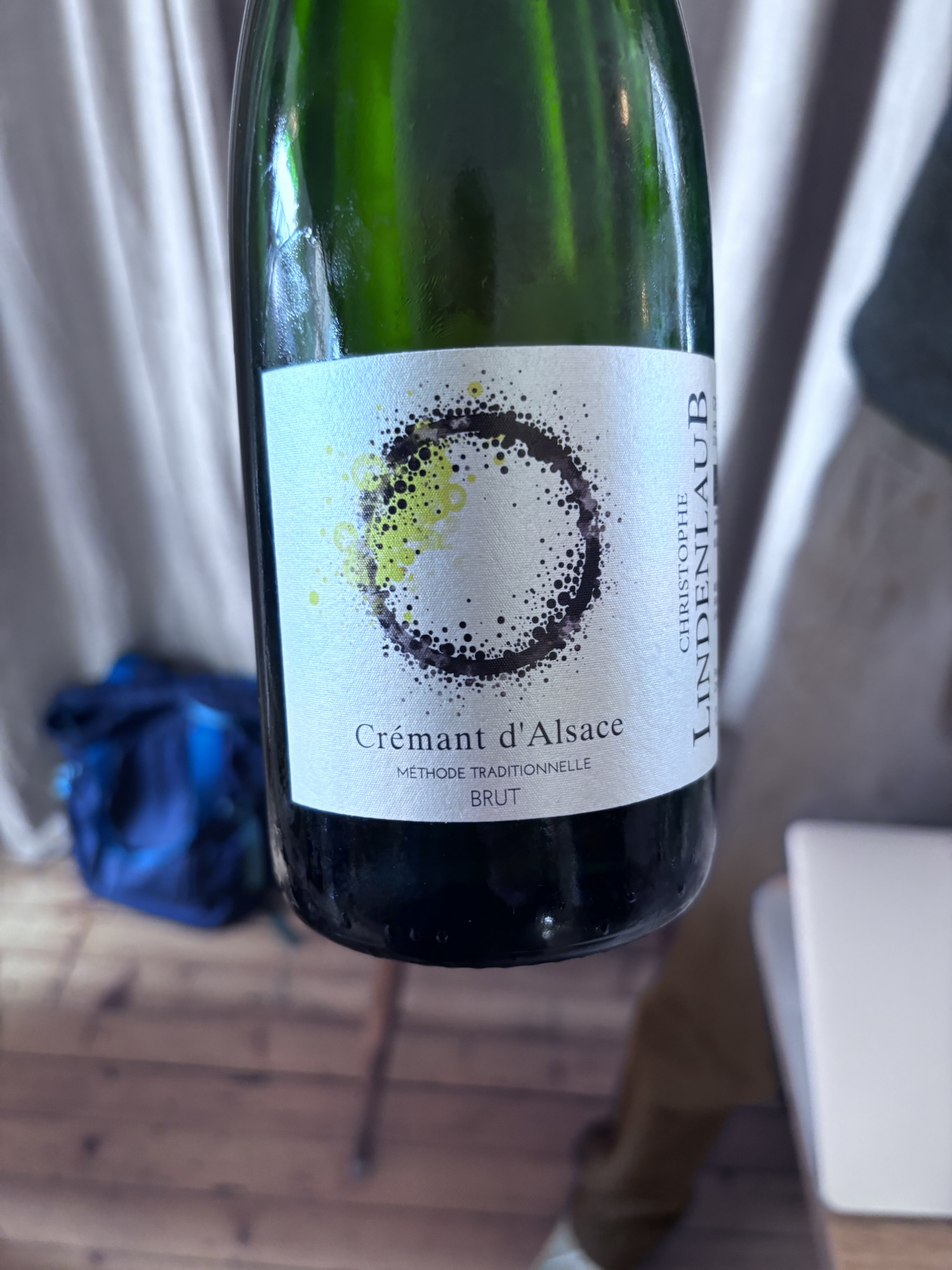
Crémant d’Alsace 2023, Christophe Lindenlaub (Alsace, France)
The first of Christophe’s wines on show was his Crémant. The grapes come from his vineyards around Dorlisheim, right up in the far north of the region (south of Mutzig and west of Strasbourg). Once ignored, this is now the wild frontier, the place to look for undiscovered natural wine gems, except that Christophe is not undiscovered. Nor is Crémant d’Alsace these days.
Much of the Crémant from Alsace is mainly Chardonnay, but this is pretty much equal parts Sylvaner and Auxerrois. It only sees 12 months on lees, so it isn’t complex. But what it is gives you clean and fresh fruit carried on a brittle spine of brisk acidity. Another wine whose time has come, judging by the sunshine and riot of yellow daffodils outside my window.
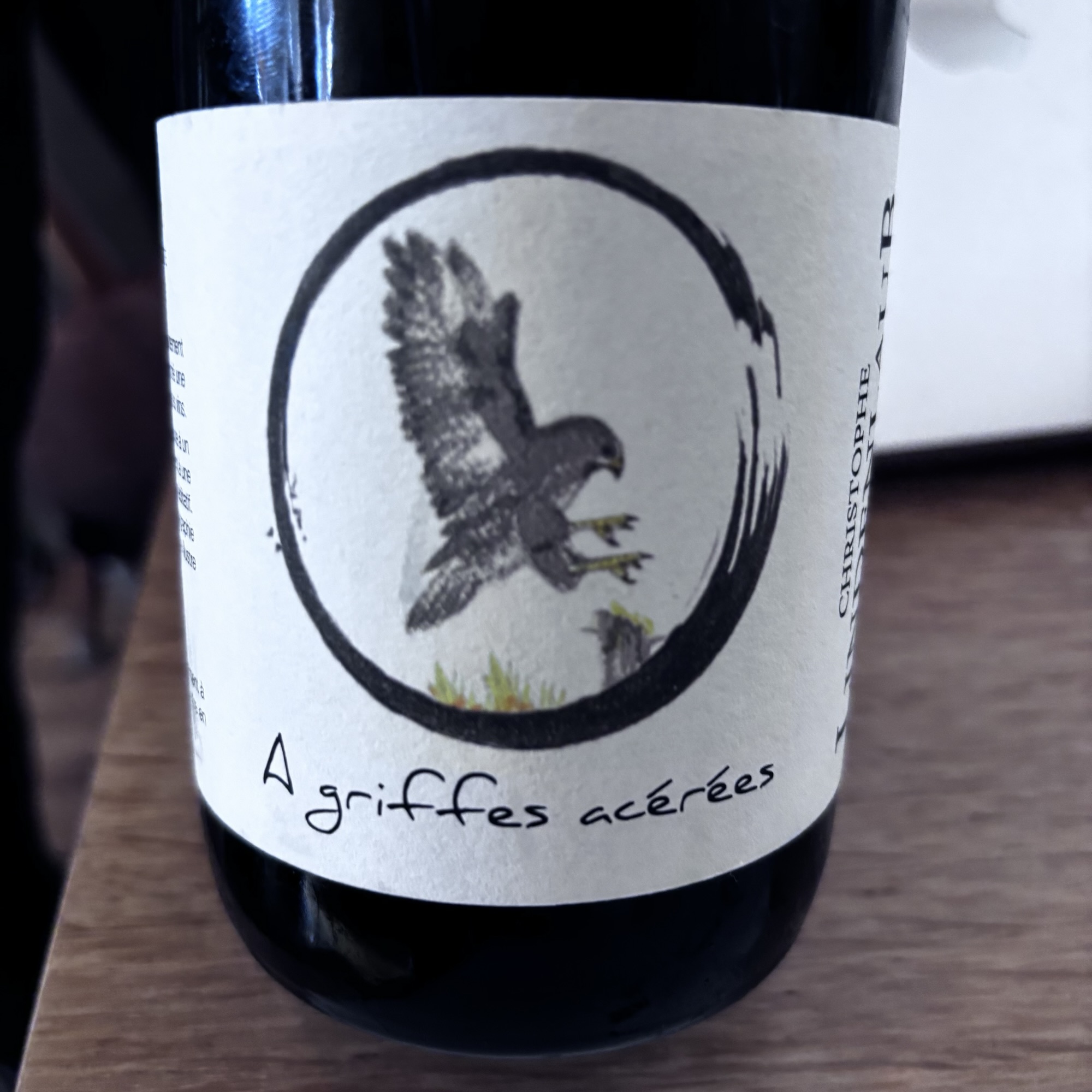
Riesling « A Griffes Acérées » 2023 was also poured. Christophe makes this by direct press juice from his highest parcels of Riesling at Mutzig. Zero additions, zero added sulphur, it is linear and fresh from ageing in stainless steel for 12 months. A nice “wet pebble” gentle texture underlies the fleshy citrus. Two very good wines.
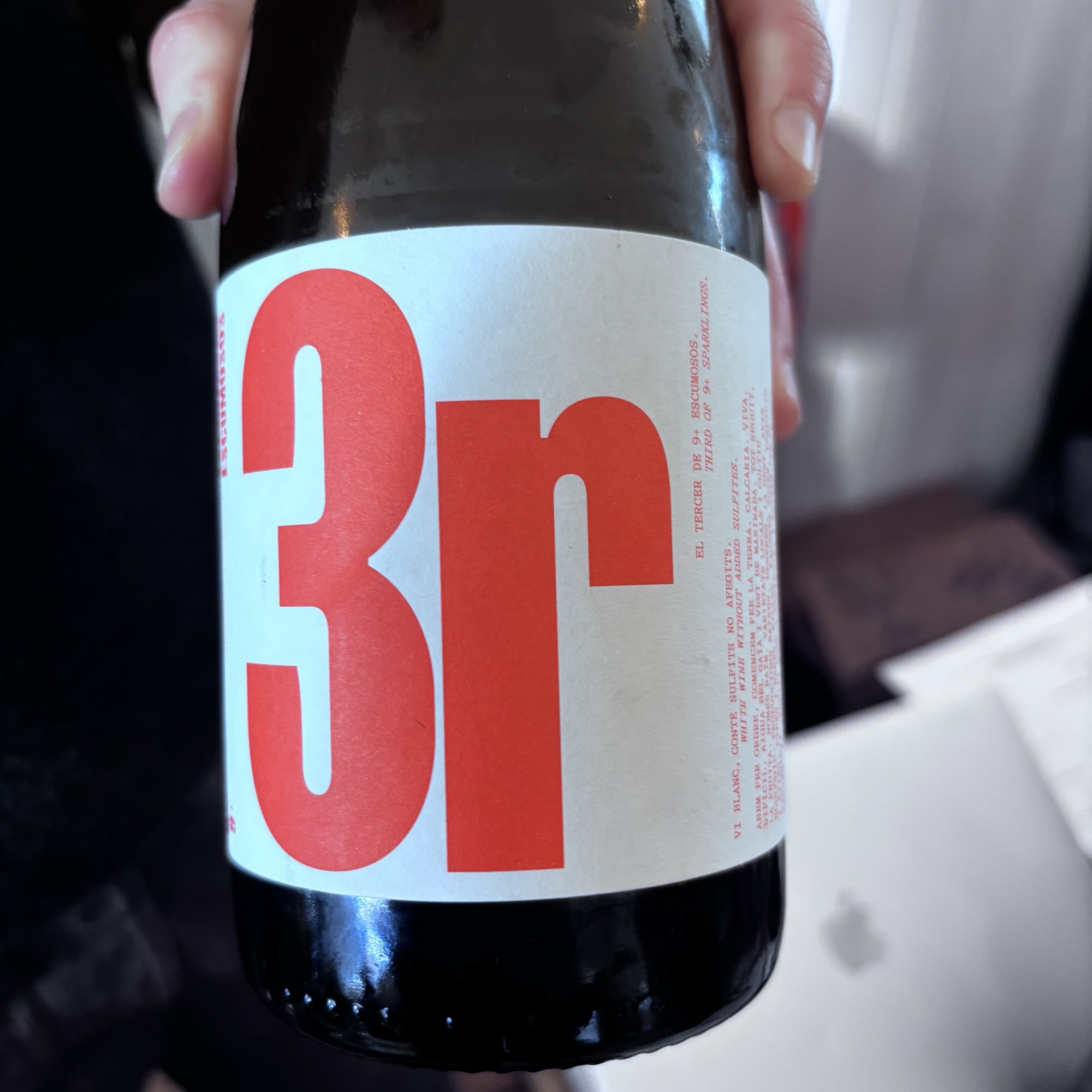
Escumosos 3r 2022, Celler 9+ (Catalonia, Spain)
This domaine is close to the sea, just east of Tarragona in Catalunya. The varietal composition is mostly Cartoixa, a synonym for Xarel-lo, common in Cava. This is a sparkling wine with fruit off rough chalky soil, made by the Ancestral Method. It has a fruity demeanour for sure, but is made very interesting by a mineral texture and more fresh acidity. It would also make a lovely aperitif.
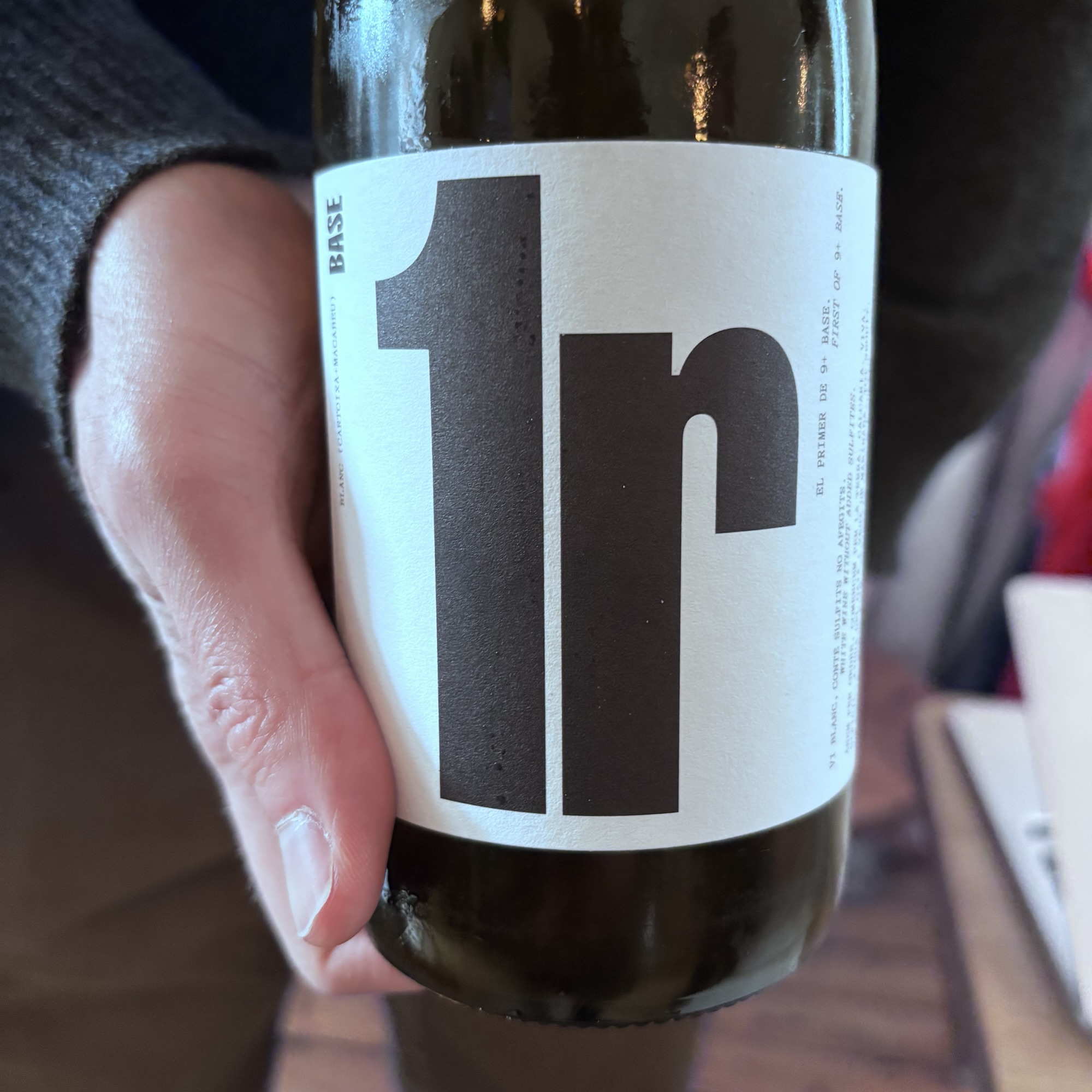
1r Base Blanco 2024 is a delicious still wine from the same estate. 80% Cartoixa and 20% Macabeu gets just six months in stainless steel, so the result is salty and lemony and very fresh. All of these 9+ wines are natural, with no added sulphur.
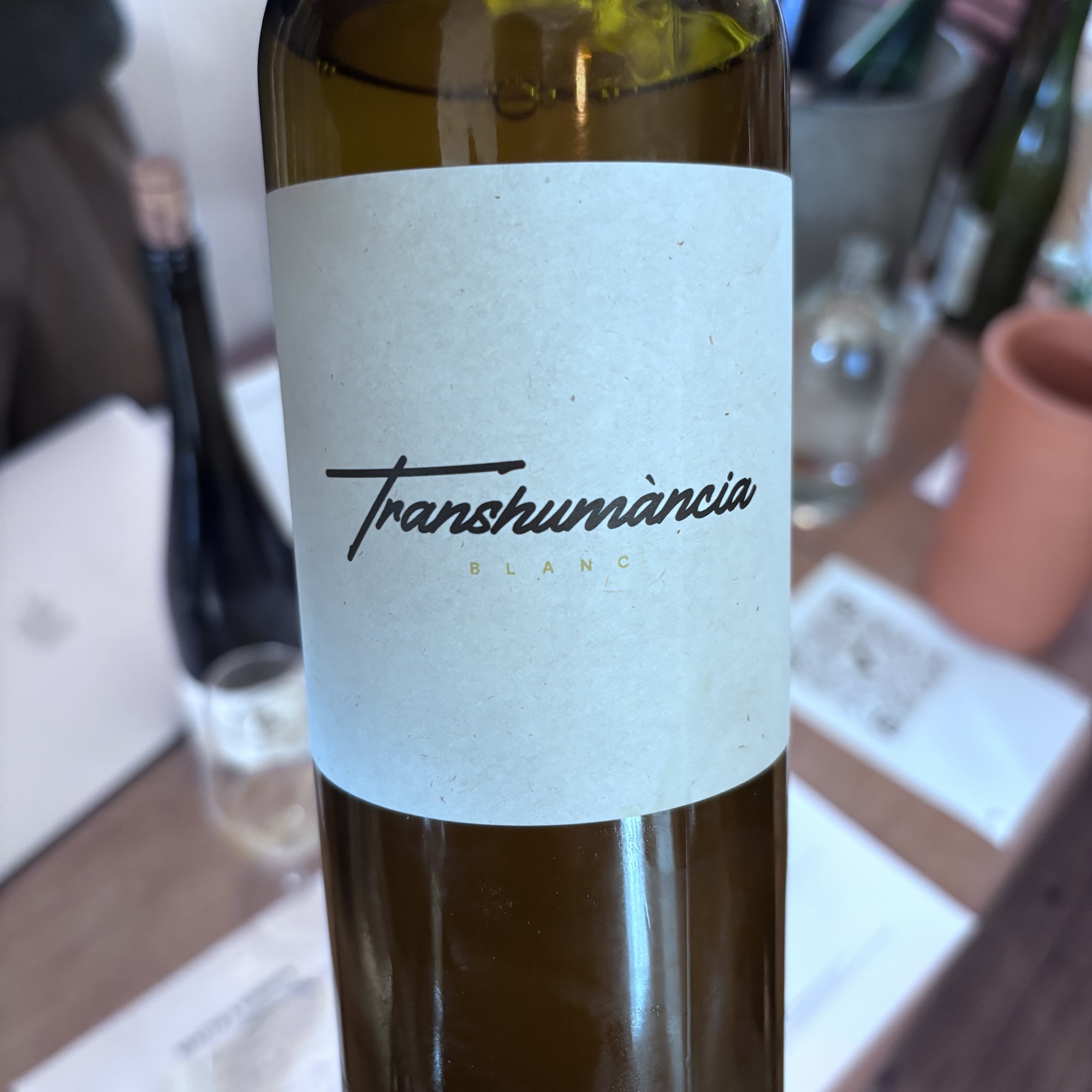
Transhumància Blanc 2024, Domaine Cotzé (Roussillon, France)
Muscat à Petit Grains was harvested at Domaine Carterole in Roussillon. Whole bunch fermentation (10 days), then ageing in fibreglass before being bottled in spring 2025. This is a very good wine. Amazing to get such tension and salinity out of Muscat. The bouquet has typical florality you’d expect from the variety but the palate has stone fruit and texture.
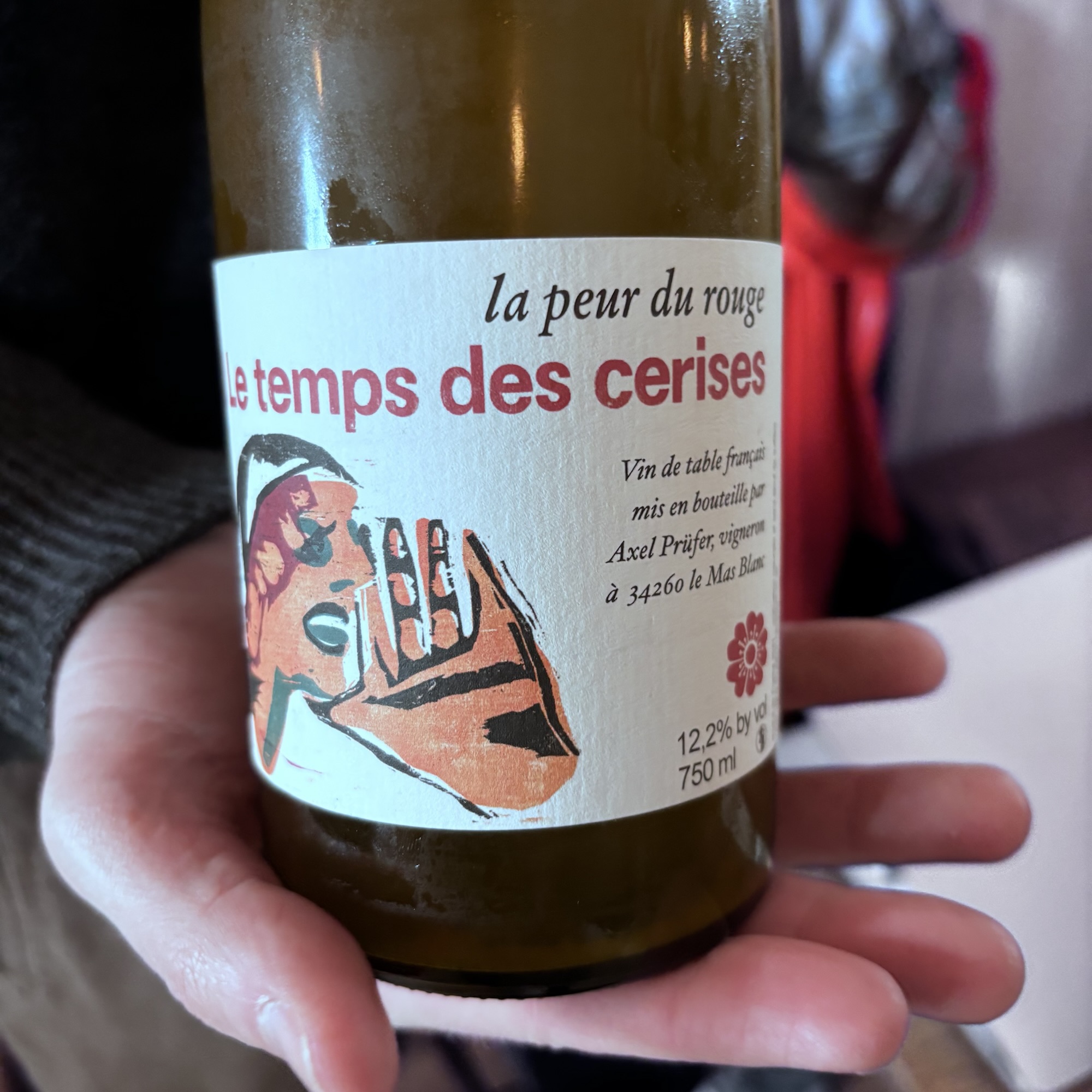
La Peur du Rouge 2024, Domaine Le Temps des Cérises (Languedoc, France)
Axel Prüfer was born in former East Germany, but after working in the South of France, including with Eric Pfifferling at L’Anglore, he set down roots at Le Mas Blanc, a hamlet near Béziers. This “fear of red” is a blend of Chardonnay and Clairette. A five-day maceration is followed by ageing in tank. The result is a golden yellow colour with tropical fruits and a lovely balance (12% abv shows the vines are up in the hills, away from the heat).
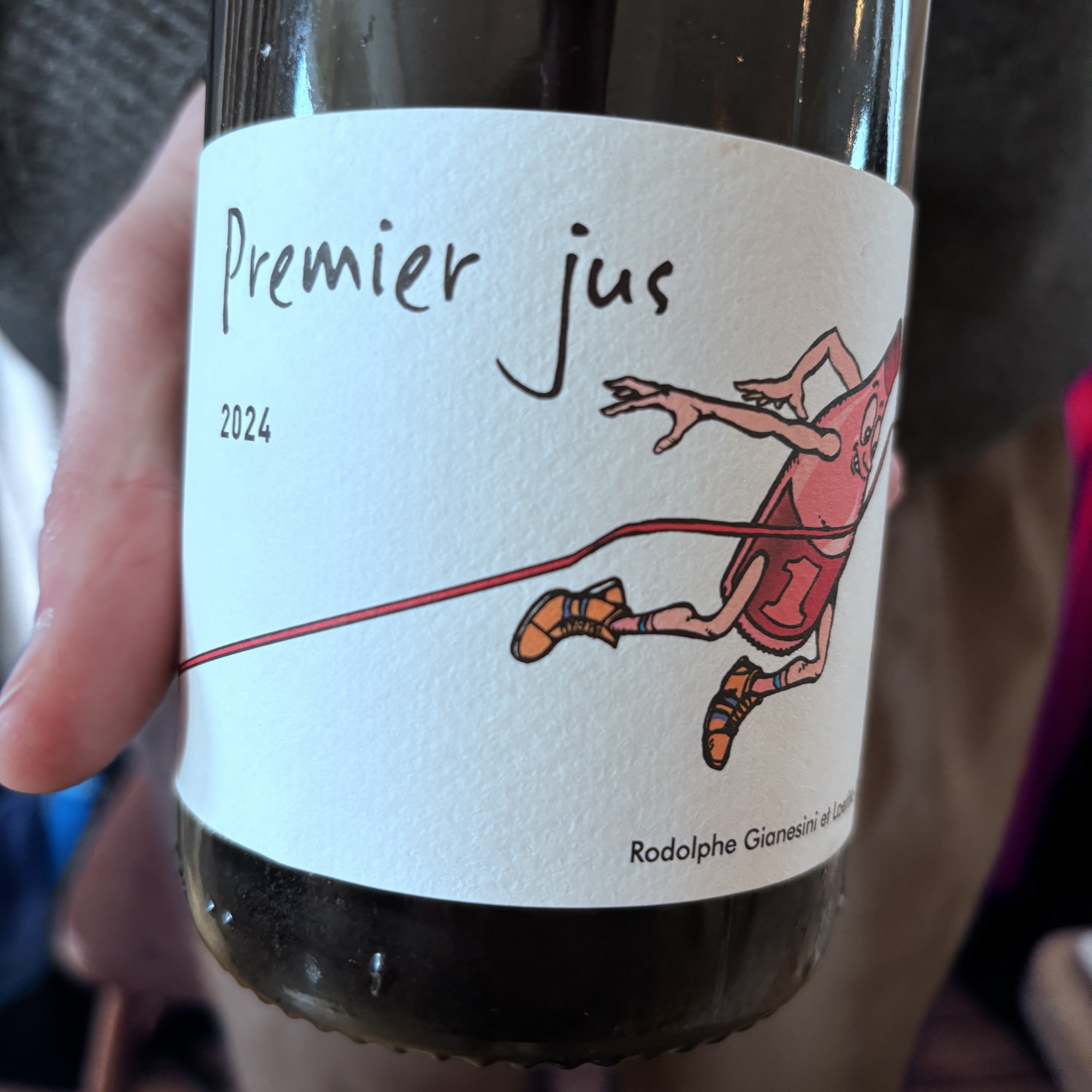
Premier Jus 2024, Domaine Fond Cyprès (Languedoc, France)
We stay in Languedoc, but here we are in the Corbières mountains at the village of Escales. Carignan and Grenache Noir are harvested from north-facing slopes. The Grenache goes into a large tank after pressing, and an infusion of whole Carignan berries is added to the fermentation. Is the result a dark Rosé or a light red? Whatever it is, you get a light-bodied wine with nice aromatics. I would lean stylistically to light red, only because I did detect just a little bit of tannin in what is otherwise pleasantly smooth. Another excellent 12.5% abv wine from a region where the alcohol often runs free.
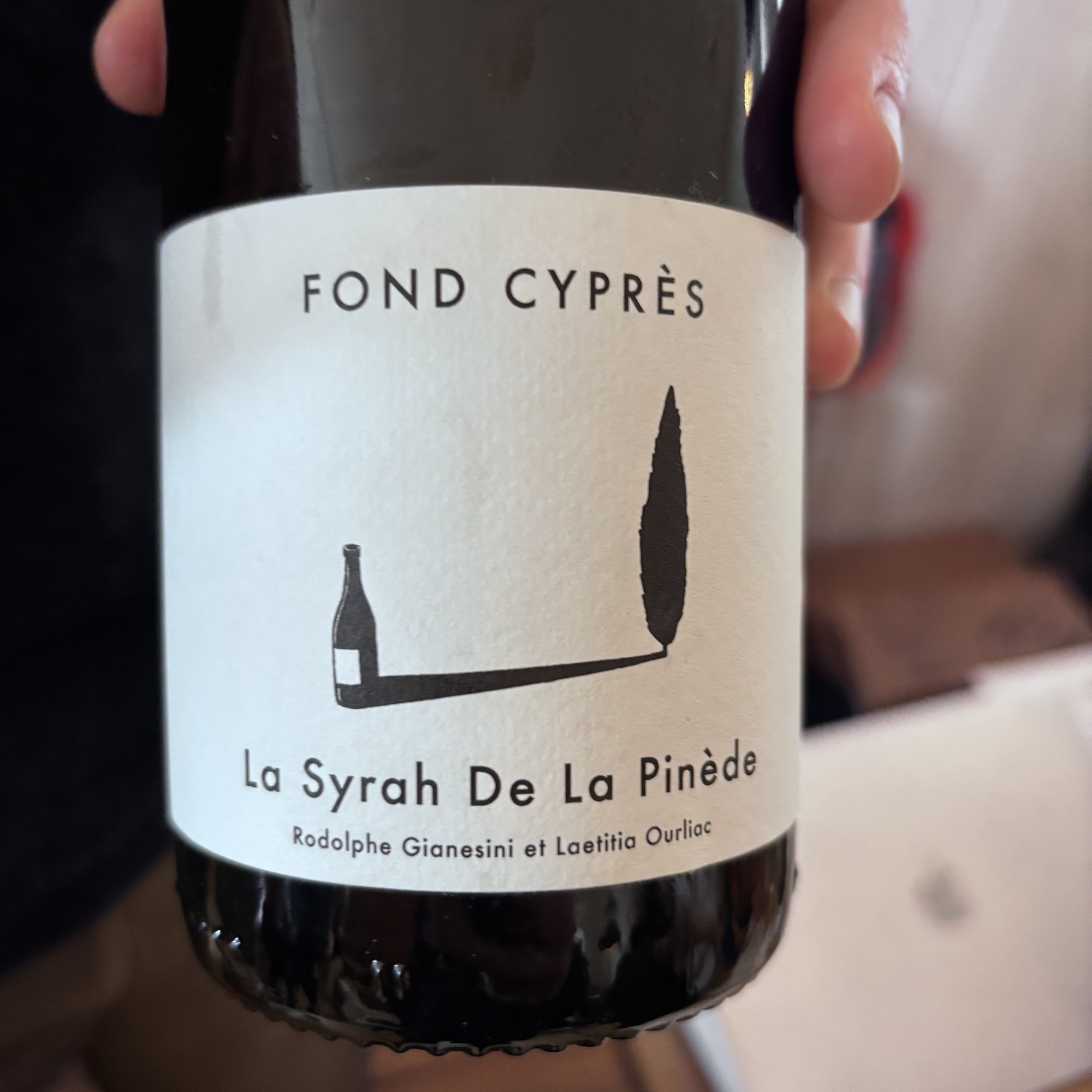
Syrah de la Penède 2023 is more of a traditional red from Rodolphe Gianesini and Laetitia Ourliac at Fond Cyprès. It’s a single parcel wine from a vineyard backed by forest. They do a four-week maceration of fully destemmed grapes in wooden vats, then the pressed must goes back into oak for one year. You get deep and dark, leggy fruit, quite full and chewy even, but the fruit is nevertheless dark and smooth. B&R suggest it is similar to a Northern Rhône Syrah, and they are probably right. It needs some time, I would suggest, but I think this retails at a little over £30. As such, it’s another example of a route for exploring a grape, in this case Syrah, without today’s cost for a Côte-Rôtie, or even one of the finer Saint-Josephs. You get a wine of individual character and personality.
Riptide 2024, Domaine Cotzé (Roussillon, France)
More Roussillon from Domaine Cotzé here, a blend of four varieties: 40% Carignan and 20% Morvèdre with a two-day maceration, plus 30% Muscat of Alexandria and 10% Syrah, given a slightly longer five-day soak on skins. The wine when blended is in no way heavy, and it’s perhaps surprisingly light until you notice it weighs in at only 11.4% alcohol. Yet it does combine a floral bouquet and a mix of red and dark fruits with a deeper earthy, savoury quality. Lightish but far from weedy. A modern Roussillon wine in the best sense, in that it’s not at all ponderous or jammy, nor is it too chewy..
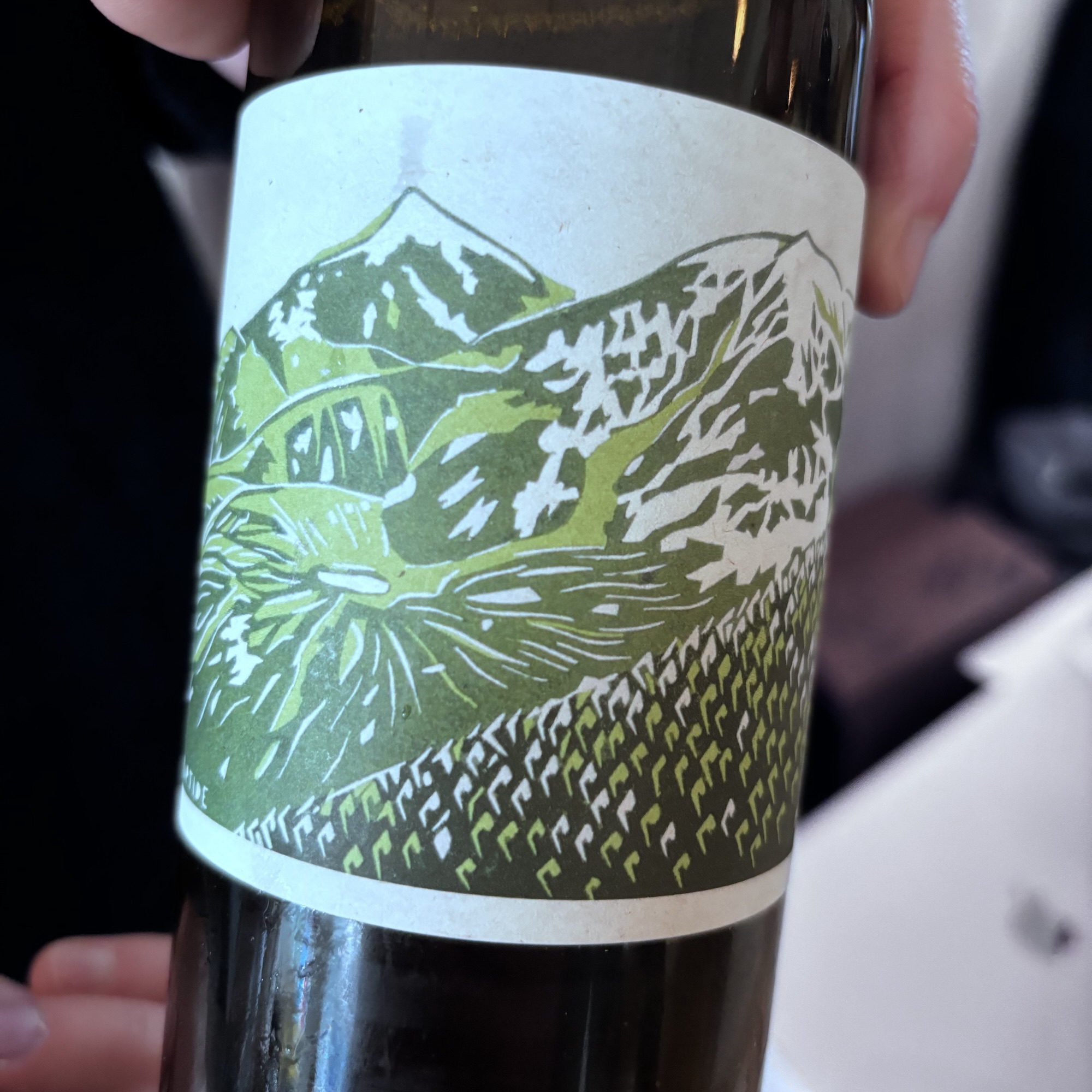
DOMAINE AMI
Domaine Ami is, as I mentioned in my introduction, a relatively new domaine near Maranges at the southern end of the Côte de Beaune. When I started going to Burgundy in the mid-1980s Maranges was a backwater. The appellation was granted here in 1988. Two friends who had studied together, Paul Perarnau and Willy Roulendes, managed to join to create Domaine Ami, initially as a negociant, but now with five hectares at Paris L’Hôpital (3ha rented, 1ha owned, 1ha owned by investors).
Willy had worked at Domaine de Montille, learning about biodynamics with Etienne, before managing the Clos du Moulin aux Moines in Auxey. Paul started in finance, then worked at Dynamic Vines in London, before joining Willy at Clos du Moulin, gaining further experience with Dominique Hauvette in Provence. His final job before Domaine Ami was as Sales Director for Bruno Paillard in Reims. I think Paul has a famous sister, AthénaÏs de Béru (Château de Béru, Chablis).
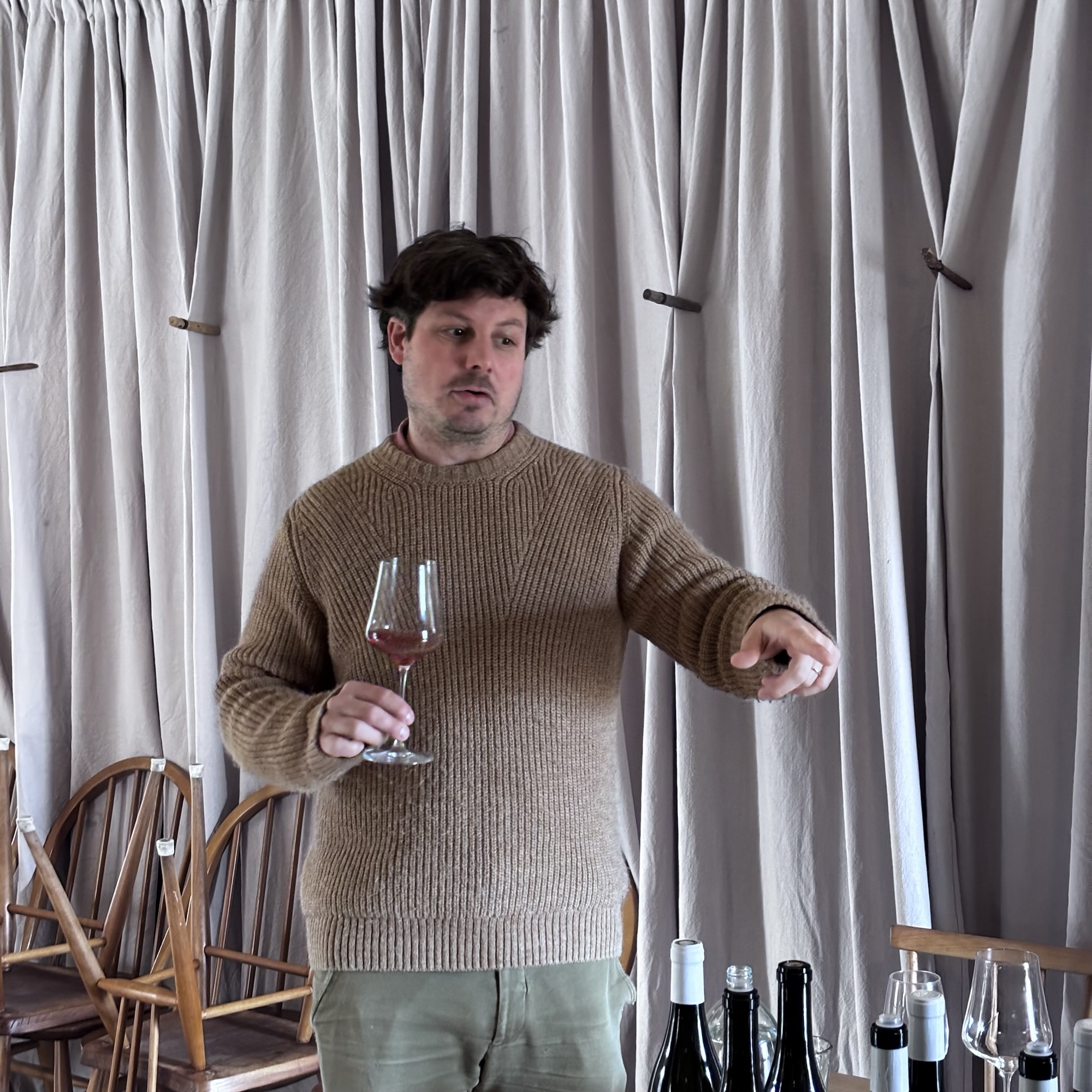
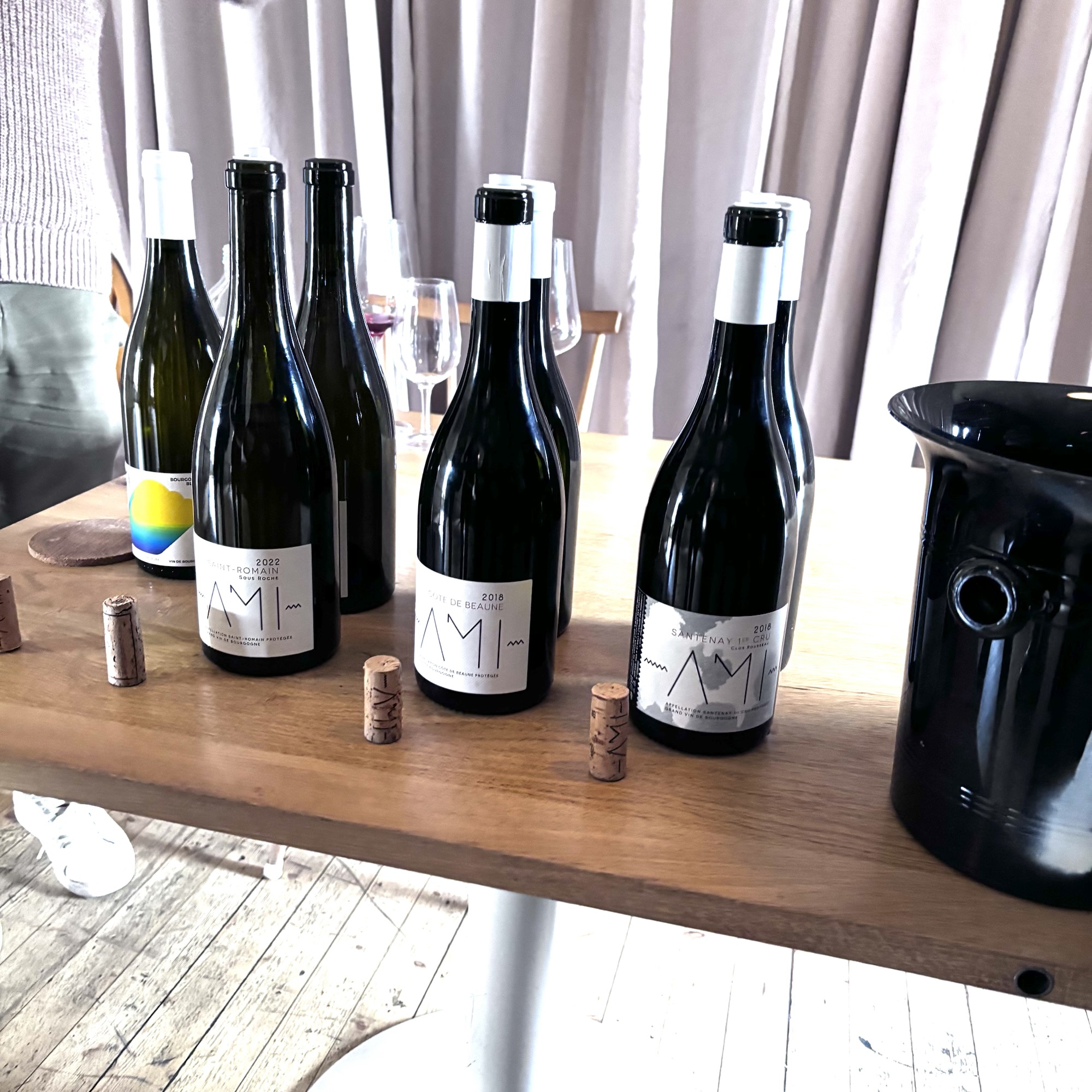
I tasted eight wines. The style seems to be to make fruity cuvées but which are also savoury and food-friendly. They also say they aim to make affordable wines, if Burgundy can truly fit that description generally, but certainly within context they are less expensive than many.
I say the wines are fruity, but they do aim for slightly longer fermentations, and only punch down the cap in the small tanks they use just a little in the second week, to, as Paul said, “release the sugars”. They also believe this method helps instil a bit more depth of character. If they add sulphur at all to these wines, it will be below 20 mg/l.
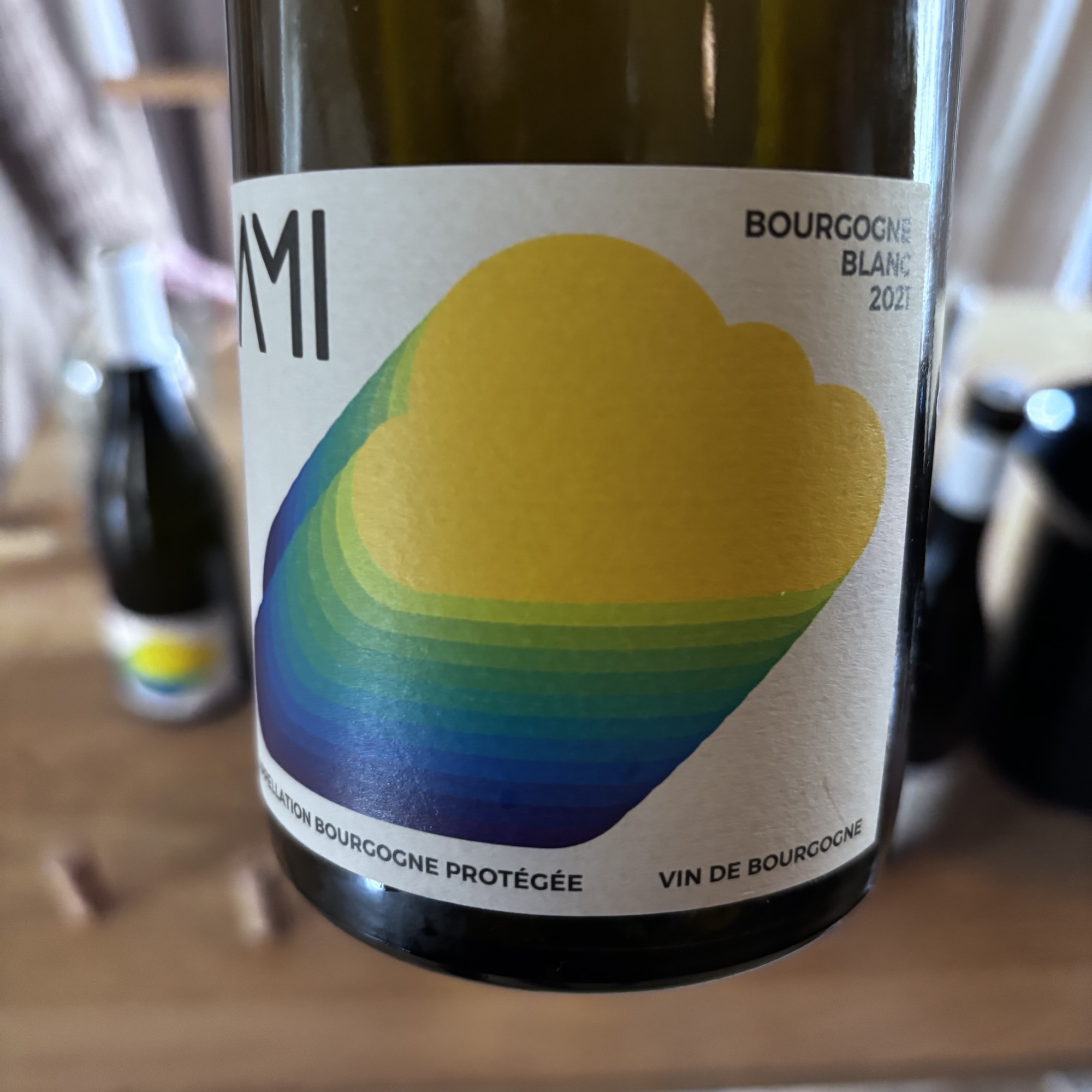
Bourgogne Blanc La Tête dans les Nuages 2021 really surprised me. It comes from the bottom of the slope at Maranges and is an easy-going wine with depth. This was the white “Nuages”, a Chardonnay (there’s a red from Pinot Noir too). This is actually a lovely wine if you don’t want to climb the appellation ladder with its concomitant costs. Organic grapes, no sulphites added, apple and pear fruit notes, quite delicious. It is Chardonnay, with occasionally a little Aligoté in some vintages. It undergoes one of their longer, slow, fermentations and is aged on lees (usually in older oak) for 12 months.
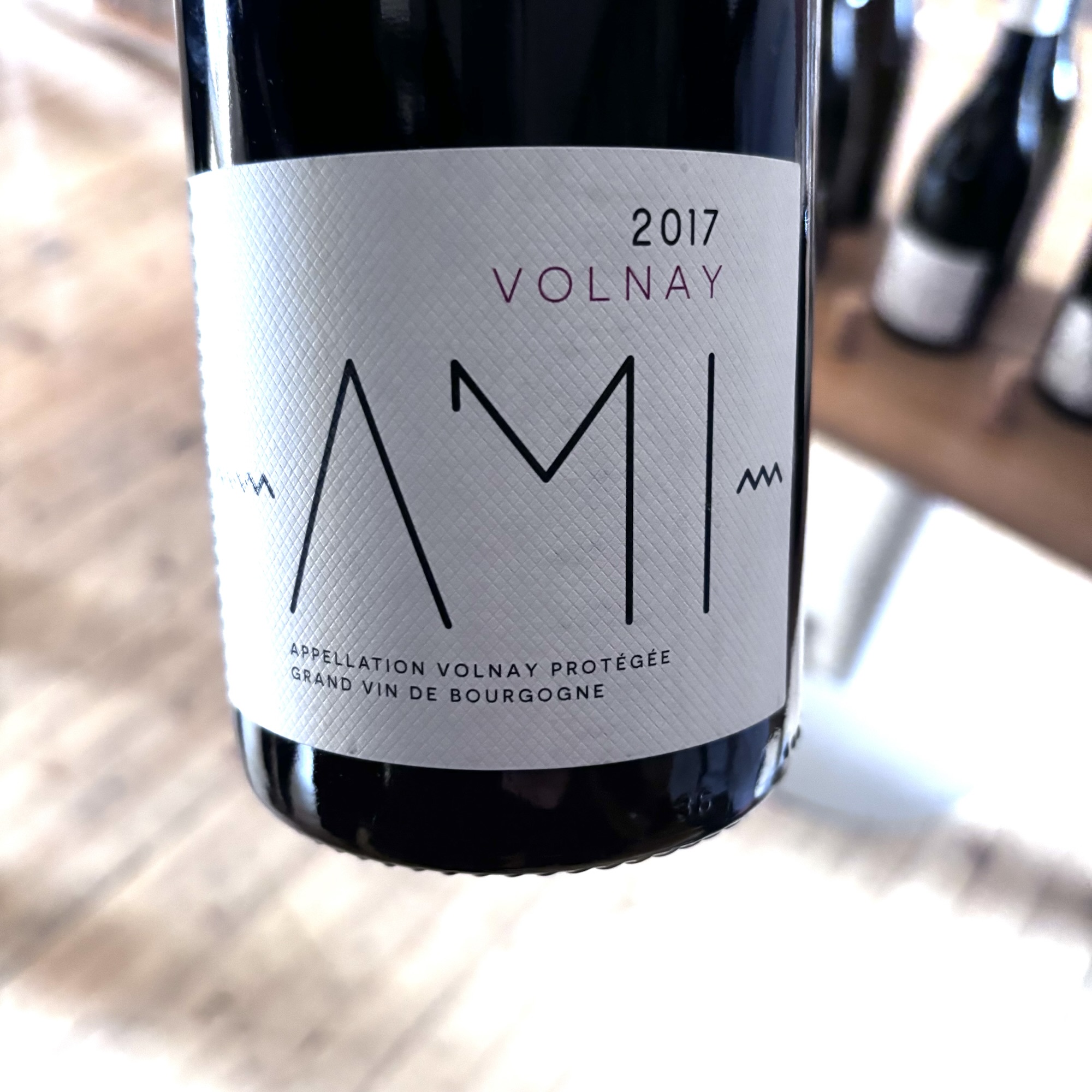
I actually tasted the reds first, Paul going the way I am used to tasting in the Jura. There was a Saint Albin Rouge 2019 (not Aubin) off limestone, a Maranges 2020 called “Ou Maranges”, a Volnay 2017 and a 2015 Pommard, the latter their first vintage, literally a garage wine. All showed increasing levels of fresh fruit purity tamed by a savoury depth with age. The Volnay was slightly atypical because the vines are at the bottom of the slope where there is more clay. It was an attractive wine right now, but if one were generalising, I think 2017 is seen as a vintage for early drinking despite good quality.
Overall, it was nice to taste wines with some bottle age, enough to see them in a positive light.
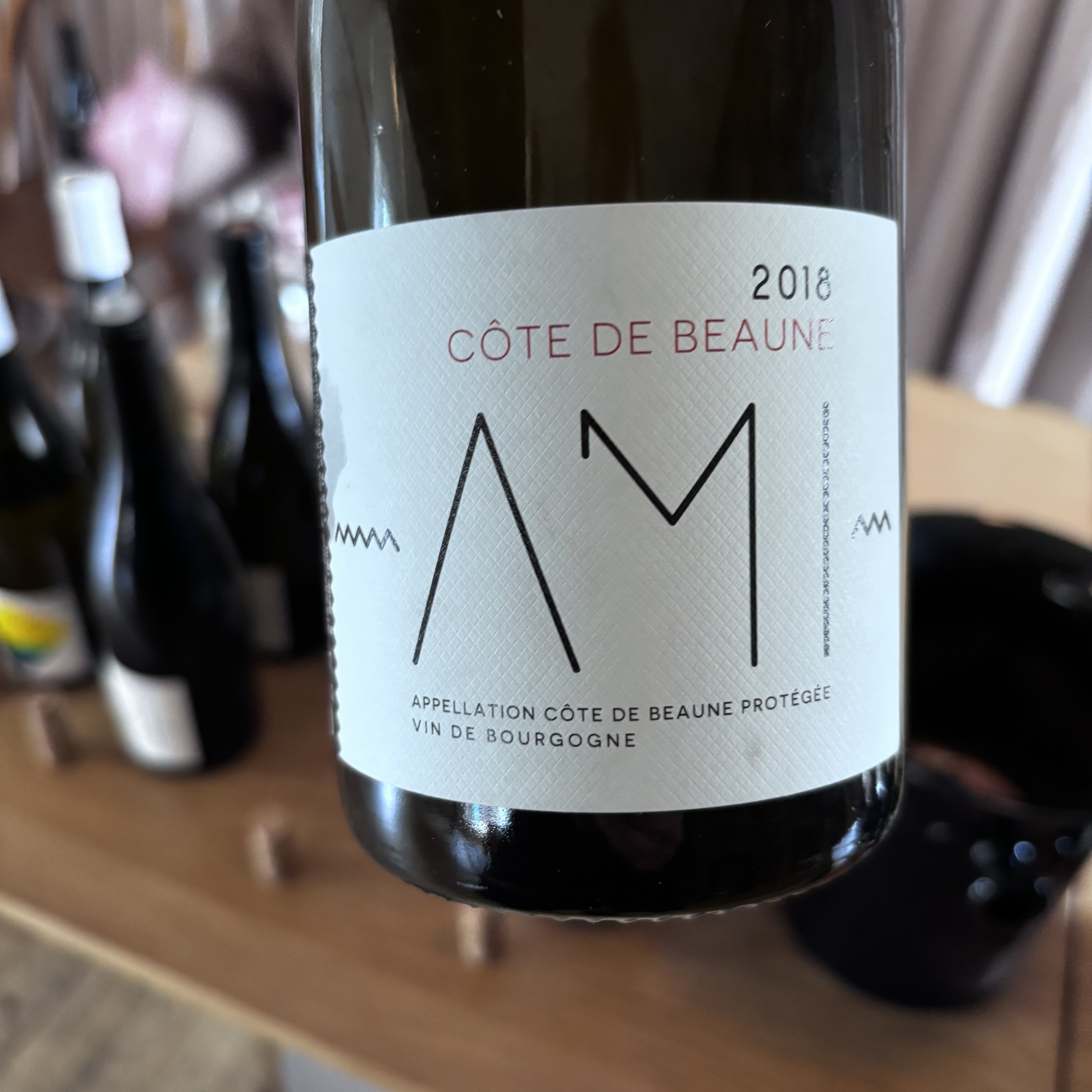
After enjoying the “Nuages” I was looking forward to the white wines. The Côte de Beaune 2018 comes from a plot between Beaune and Pommard close to some Giboulot vines (apparently…well it might mean they are getting less chemical overspill). We have lemony depth, good length, amplified warmth but acidity too.
The Saint-Romain 2022 is perhaps a step up, but ex-VAT prices here rise from £26 to £33, with another £4 plus VAT for the admittedly lovely Santenay Premier Cru Clos Rousseau 2018. Amplified fruit, mineral but not all that acidic, and drinking well.
This is a good young domaine making good wines and with a dynamic outlook. I think the “Nuages” is excellent value despite being far from the cheapest Bourgogne Blanc around (around £24+ VAT, presumably Trade). Contact Raeburns for further information.

 David Crossley's Wide World of Wine
I obviously know some of the Languedoc Roussillon wines and Ami are one of the first Burgundy producers I look for, some nice wines here
LikeLiked by 1 person