
This is the third vineyard and winery visit of the day from our long weekend down in Hampshire. You may remember, if you read the two preceding articles, that I spent this day of visits with Tim Phillips (Charlie Herring Wines), and it was at his place we naturally ended up. This article may be the shortest of the three. It wasn’t a time for extensive tasting, but I did manage to visit the vineyard to talk about what he’s planning there, and to visit the winery, close to which I saw where he’s planning to introduce some goats later in the year.
Tim is English Wine’s great thinker. Another great thinker, though someone I’ve yet to meet, is the young winemaker Sophie Evans, who has started out with a small vineyard in Kent. I vaguely remembered a quote from her in Honey Spencer’s Natural Wine No Drama (Pavilion 2024), so I looked it up. She talked about visiting Tim, who she’d heard about, because he was “the only person I knew of in the UK using essential oils like lavender to slow the development of unwanted fungal diseases…”.
Again, after reading the Second Edition of Jamie Goode’s Regenerative Viticulture (2025), I get to see so many of the ideas expressed in that book put into practice. In fact, Tim is doing so much “regeneration”, not just in the vineyard but on the land surrounding the winery (much of it being rewilded before the goats arrive), that it is all too much to list. Hopefully the photos I took will tell at bit of the story.
The best part about the day was that, for once, I spent most of it with Tim. In fact, we managed to get together socially in the evening, a rare thing these days. I think we are on the same wavelength about most things, and it was good to have a chance to chat about things other than wine (not least, Mull, and innovative design). But we did talk about wine an awful lot.
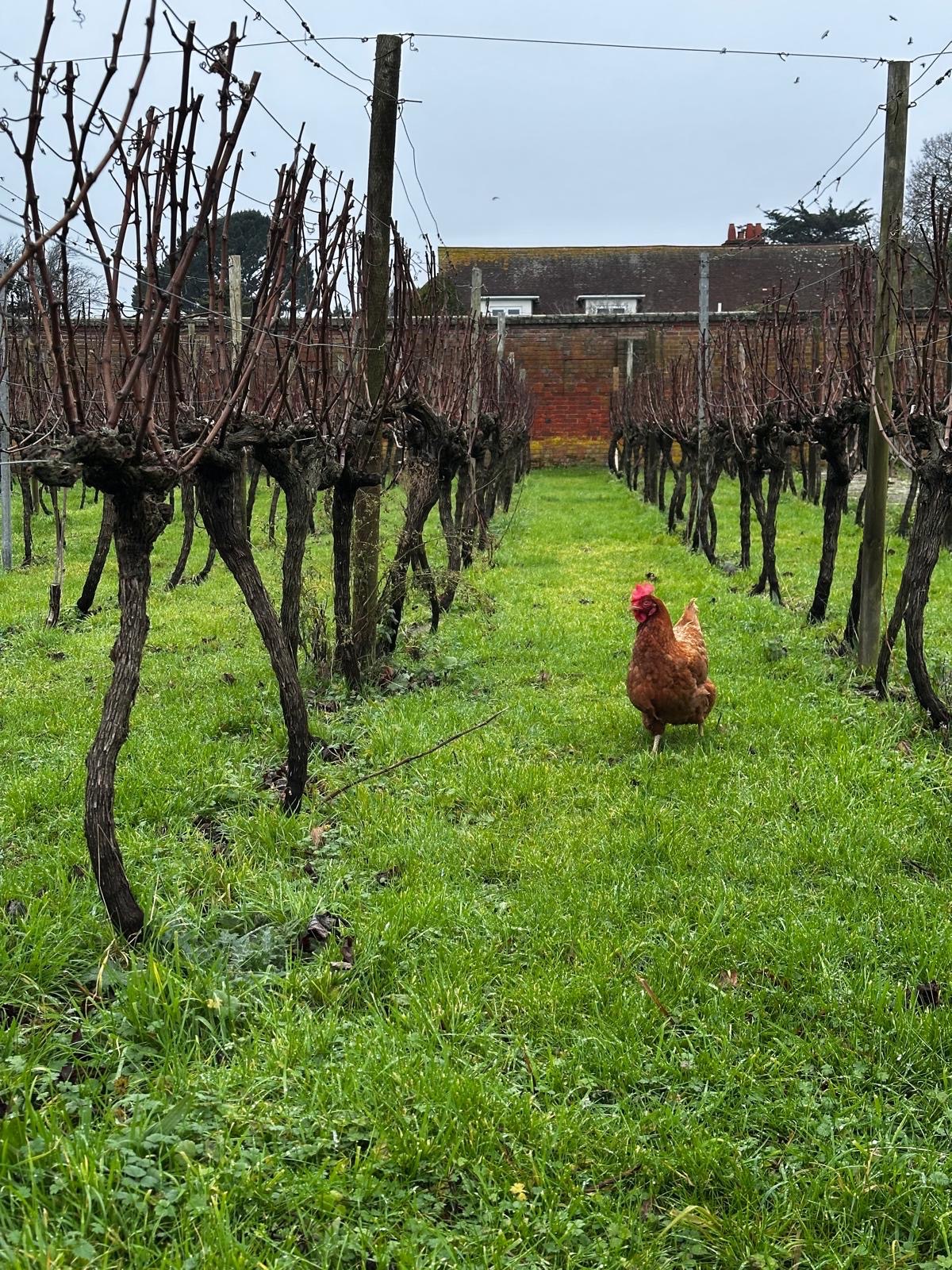
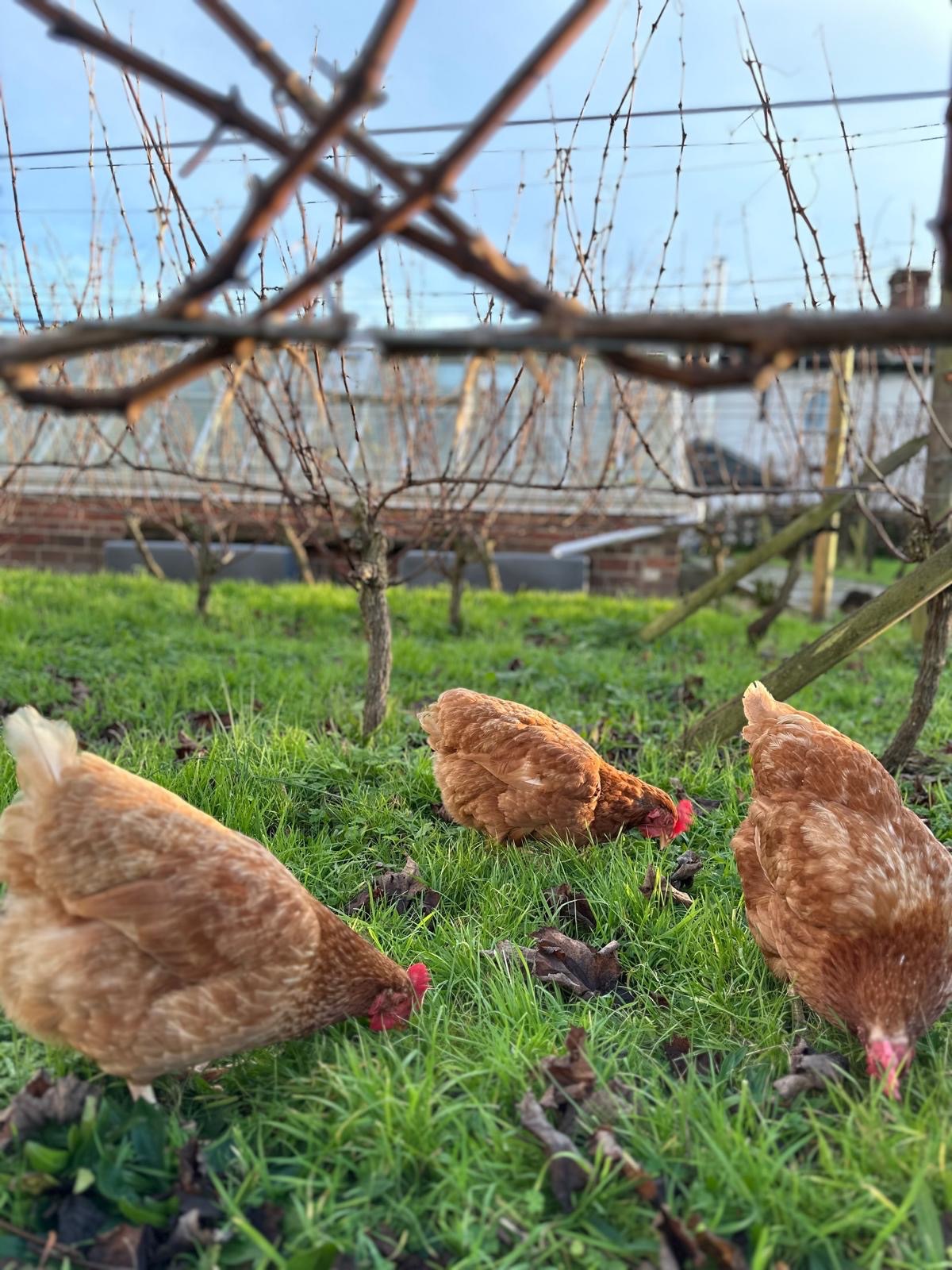
At Tim’s walled vineyard his chickens add more than a nice visual touch to a stroll in the vines. They fertilize them too. I can’t remember how much weight in chicken shit Tim reckons they poop out year round, but it sounded impressive. At the moment three structures take up room in the vines. One is the shed, which now has a green roof. Second, the Victorian greenhouse, which you can just see in the photo to the right. That provides Tim and his family with an impressive amount of produce. The third is the chicken coop.
This is going to be moved elsewhere, giving Tim room for seven or eight more rows of vines, and guess what Tim plans to plant? Ever the experimenter, he wants to put in Souvignier Gris, the Piwi variety that you may have read about in my previous article, on Guillaume Lagger, at Wharie Wines. Tim did say that it was nice having another experimental winemaker nearby to chat to, and bounce ideas off. To be honest, when I look at Jamie Goode’s “Regenerative Toolkit” (see his book mentioned above), I think there were only two things listed that Tim isn’t currently doing, Piwis and biochar (unless Tim is doing biochar and hasn’t mentioned it).
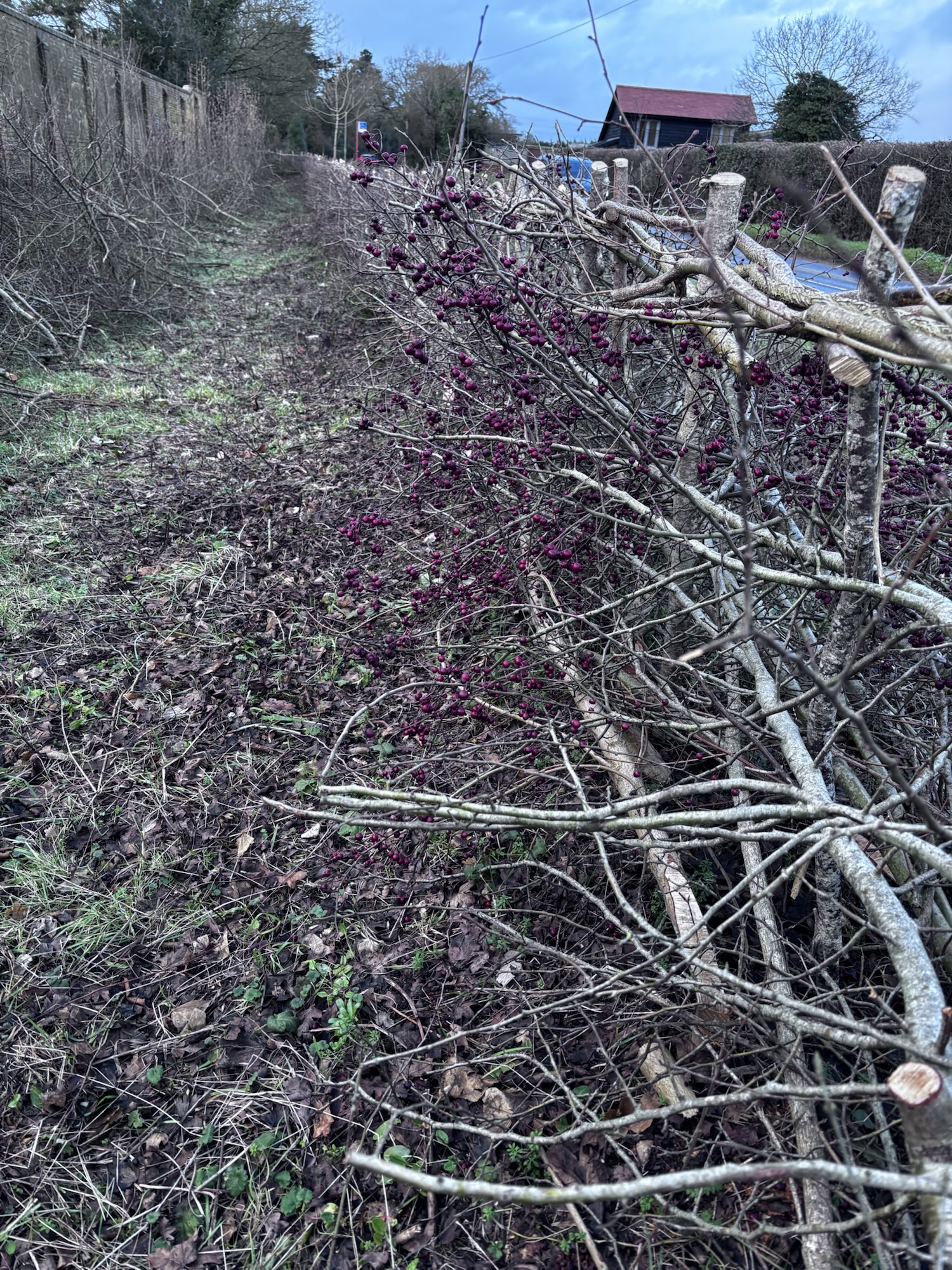
Tim has plenty of trees already, although in the adjoining orchard, not inter-planted among the rows, but he’s been wanting a nice hedge for a long time. Finally it is done. It will fill out over the years, but this beautifully laid boundary hedge is another piece in the biodiversity jigsaw.
Tim’s winery sits on some wonderful land. It seems remote, although in truth it is merely hidden from the habitation around it. I had never really realised how close it is to Lymington as the crow flies, merely because to drive there is fiddly. It’s where his family live now, and he’s been creating a lovely environment there. He began with a large pond behind the winery, big enough to paddle a coracle if you wanted, but it’s also a lure for wildlife. Not just the small creatures. Next to it is a stand of trees which Tim copices, and deer are frequent visitors. It’s amazing how the pond and its surroundings have matured over the years I’ve known it, and it is a model, albeit on a smaller scale, for what we are attempting ourselves (though I’m not expecting deer, despite their ubiquity around here).
Further from the house and winery is a field which was once pretty much a normal field. It now has scrub, and fruit trees, suitably protected for when the goats arrive. Their shed is the perfect structure for the solar panels which provide electricity for the house and winery. Tim isn’t just a winemaker. He makes wonderful cider, and he’s very happy to admit that the cashflow this gives him is very useful for a man who likes to release his wines with proper age.
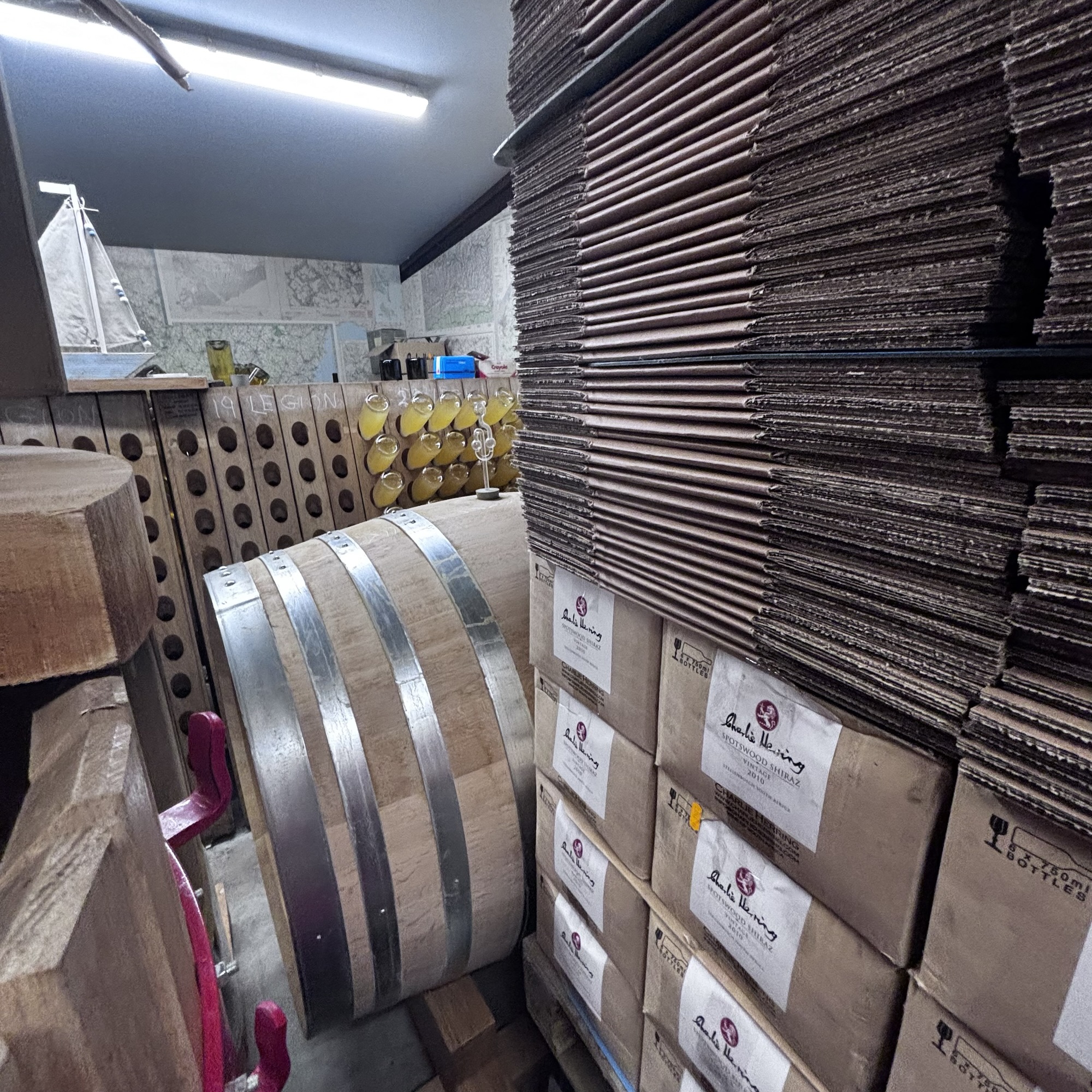
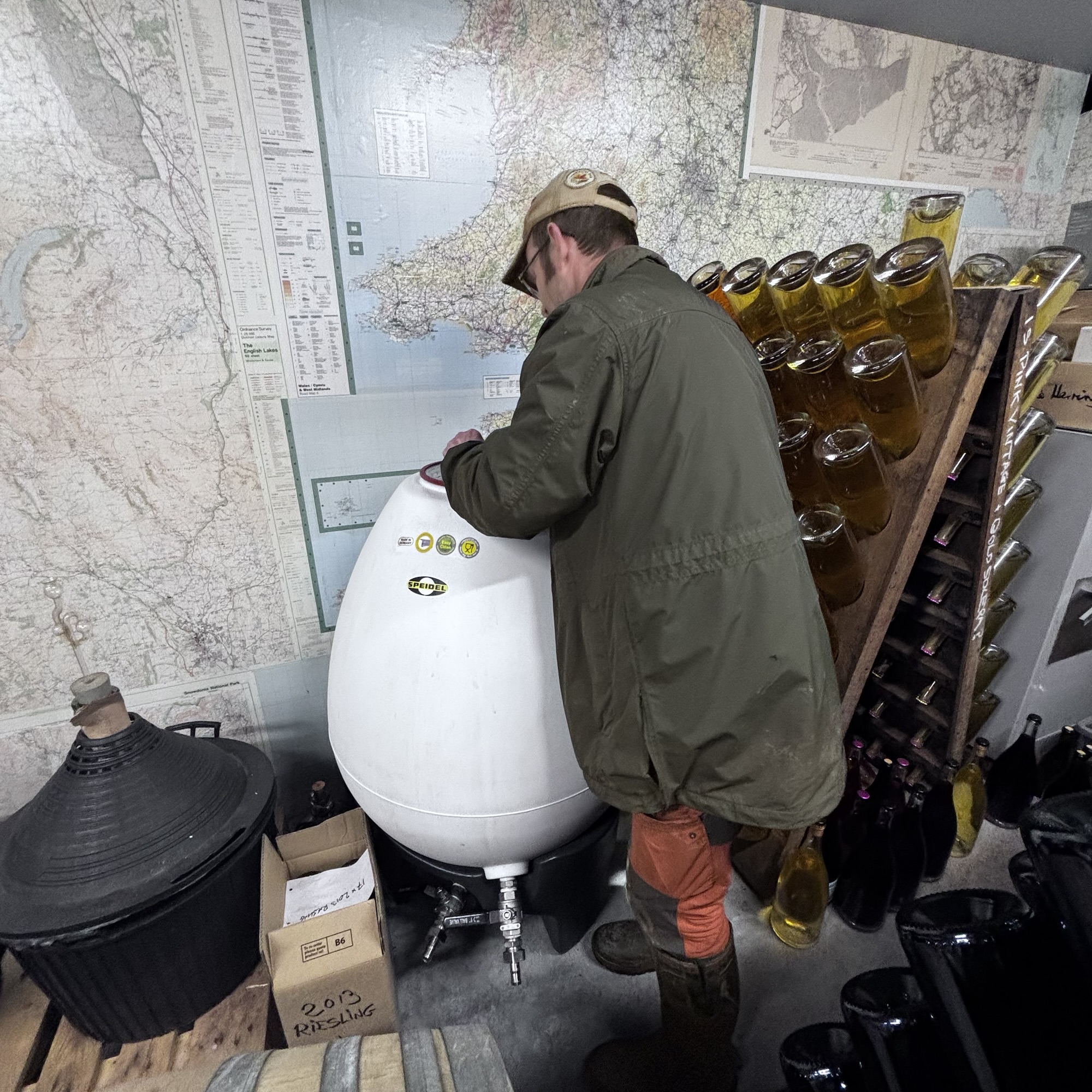
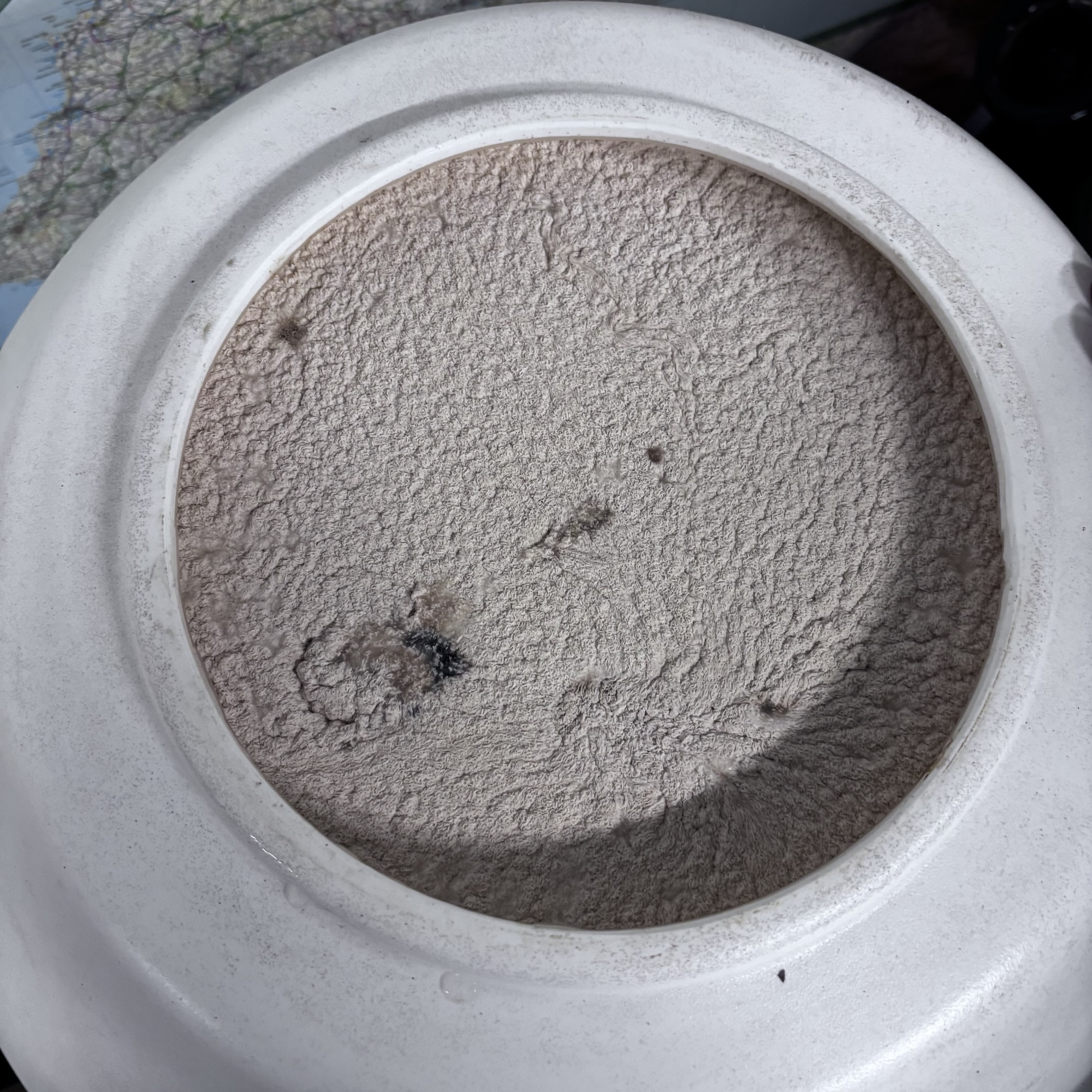
Here are a few photos of the winery. It is small, and at first it looks cramped. However, Tim has it very well organised, as you’d expect if you know him. It is just nice to show you where the artisan gems he crafts come into being. Check out his use of glass bonbons (he has several), the pupitres, and his egg, which has a great layer of yeast cells on the top. The large cask (bottom right) is a Stockinger, which Tim is naturally excited about. The wines he made in South Africa (same photo, boxed) are quite different to what he’s doing now, yet they are probably no less exciting, and available.
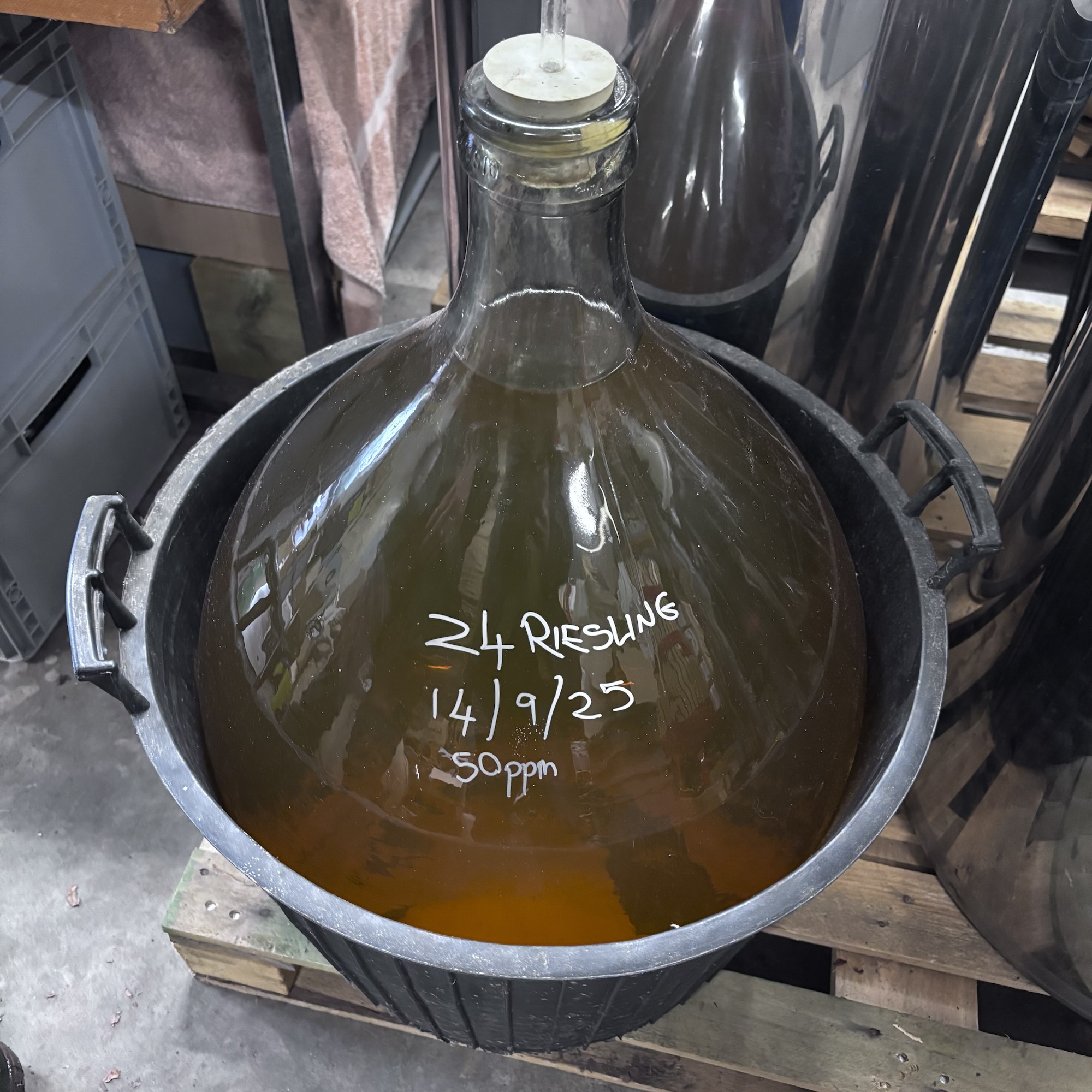

My only regret when visiting Tim is how little wine he has to sell, though there is always something. I did manage to bring home two very different bottles, but I am still wishing I could have got some cider (Perfect Strangers), and I was annoyed that I forgot to buy some from The Solent Cellar to stick in the box I had sent up to arrive after we got home. Still, we shall hopefully be down in the summer.
Spending time with Tim is always inspiring. Hopefully those making wine who I know have visited him will agree with me. I would urge anyone in wine who can get to see him to do so. Listen, and then drink his wines (as I did last night). You just have to remember, as this small article might hint at, that he’s always a very busy man.

 David Crossley's Wide World of Wine