
Recent Wines for October, Part 2 begins with a pétnat from Hungary. Then we go to Lavaux, for one of the cheapest Swiss wines I’ve found in the UK. A Kentish pétnat cider breaks the flow, before we finish with an old favourite from Marcillac in the Aveyron, and another wine from our own shores, a remarkable English Sparkling Riesling.
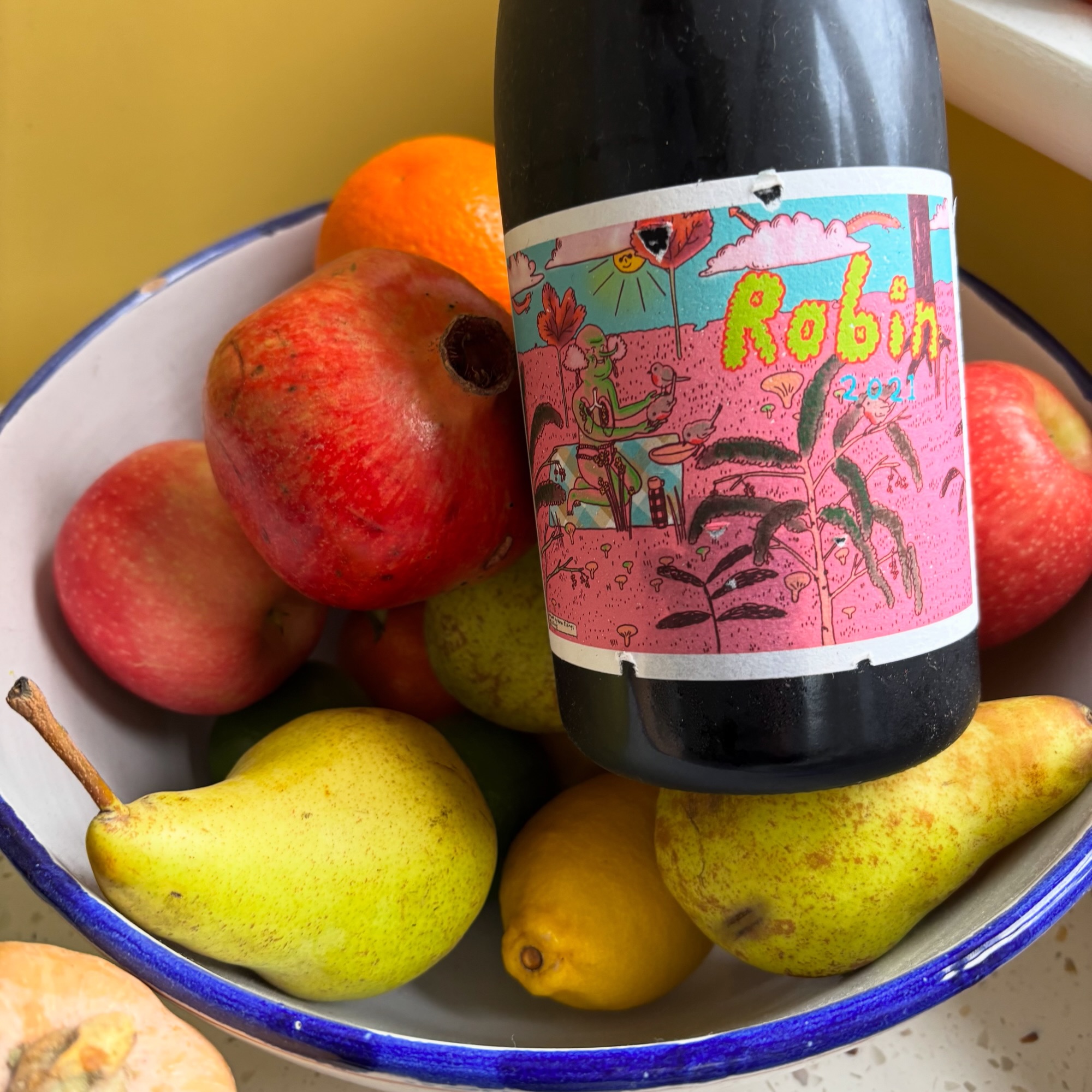
Robin 2021, Annamária Réka-Koncz (Barabás, Hungary)
This is Annamária’s pétnat, made in Eastern Hungary principally from Királyléanyka (circa 60%) with Furmint (30%) and Rhine Riesling (10%) in this vintage. The Furmint is sourced from a friend at Màd. Hand-disgorged but with a small deposit, it is possible that the bubbles have subsided just a little from when I first had this vintage. That was in August 2023.
It is interesting to see how it is possible for a pétnat to age. The Furmint was from quite old vines and the depth of that fruit does, I think, come through here. However, the fruitiness of the Királyléanyka (aka Feteasca Regala in Romania) still shines through. If anything, it’s a softer wine now, more mellow, and less overtly mineral. It may be a touch darker and there is a bit of lees deposit in the bottle.
It’s now more “smooth and savoury” than it was in 2023. There’s something of the kind of depth you can get in some Champagne after autolysis, although without quite as much complexity. I will say, I think I have stored it properly, though.
Although this has long gone from Importer Basket Press Wines’ web site, they are, I understand, getting the latest shipment from ARK imminently. This 2021 still appears to be listed at Prost Wines for the same £27 I paid two years ago, along with the 2022 vintage for £32.
Chasselas 2024 Lavaux AOC, Famille Testuz/La Cave Beau Reveil (Vaud, Switzerland)
I’m sure that if you didn’t know where Lavaux is a month ago, you certainly will now (because you read my recent Swiss articles, right?) If you didn’t, it’s between Lausanne and Montreux in the Canton of Vaud, the vines situated for the most-part on the steep terraces, constructed by Cistercian monks in the eleventh century, and now designated a UNESCO World Heritage Site.
The Testuz family farms 3ha of vines near the village of Aran-Villette, between Lutry and Cully, not far east of Lausanne. Cave Beau Reveil is their negoce arm, from which they make a larger range of wines from the different Lavaux villages. They grow mostly Chasselas, along with some Pinot Noir and Merlot, in their own vineyards.
This is a blend from across Lavaux. It was one of the “critics choice” wines at the recent Wine Society Press Tasting, which some notable critics have described as the best tasting the Society has ever put on. Okay, this wine is quite simple as Chasselas goes, although people have a perception of the variety producing simple wines. I doubt many critics have experienced the relative heights Chasselas can aspire to, and also what it can age into (it is well worth seeking out an aged wine from the two Lavaux Grand Crus of Calamin and Dézaley).
It has classic Chasselas flavours: a fresh but not tart lemon acidity, a bit of stone fruit, along with a herbal finish. The texture, slightly chalky, softens the overall perception. It has a savoury quality too. Alcohol, labelled at 12.3%, is well balanced.
This is quite a long note for a simple wine, but that’s because of the price. The Wine Society is knocking it out at £14. It belies the myth that all Swiss wines are expensive. It won’t wow collectors of Daniel Gantenbein’s wines, but if you don’t know Swiss wine, this is a pretty inexpensive way to dip your toe in.
It is possible that Rick at Dreyfus Ashby Wines may import the Testuz Family as well, although the Dreyfus Ashby web site says that “your country is not allowed to view this resource”. I’m not sure where it thinks I am?

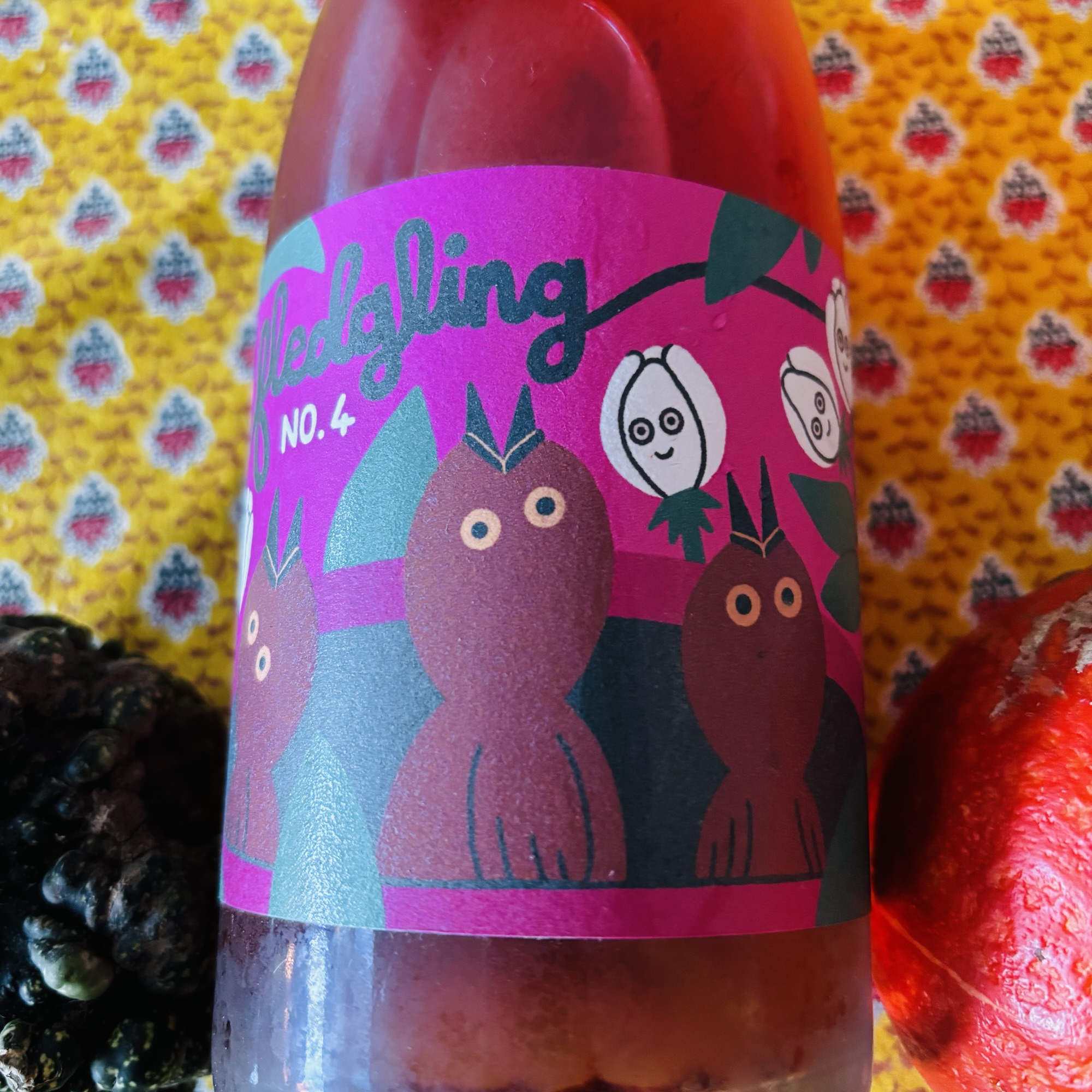
Fledgling No4 Red Cider “Redlove Wild Ferment” 2022, Nightingale Cider Co (Kent, England)
This is unusual, but that’s why I bought it. A mix of the label and the colour. If you think cynical old wine obsessives (who like cider too, of course) cannot be swayed by a standout label, you are wrong. It is also three years old, which goes against the perception that cider is best drunk young.
Located at Tenterden, in Kent, also known for Tenterden Vineyard (now part of Chapel Down and the English Wines Group), which was planted in 1977 by Stephen Skelton MW, no less, after his return from Germany the year before. Back then, the English wine industry was in its precarious infancy, and cider making was seen as more profitable. However, we are talking “big cider” rather than the artisan farmers who are making the wonderful “craft ciders” we can find today (not sure I like that term, considering how fake the word craft often sounds when placed before beer these days…let’s stick with artisan natural cider for Nightingale).
Nightingale have been growing apples since 1948. Sam Nightingale first bottled his own ciders in 2013, going full-time as a cider maker two years later. He makes natural ciders from 100% juice, no additives, which are both vegan and gluten free.
Fledgling No4 is a single varietal cider from Redlove apples. There isn’t enough of a Redlove crop to make Fledgling every year but 2022 was abundant. As a pétnat, it is made by the same Ancestral Method that pétnat wine is made by, with the fermentation finishing in the bottle. It’s dry, naturally it’s appley, and the bubbles are fine. It has red fruit aromas and red berries on the palate. Acidity is nicely zippy, even with age. Alcohol is 7.1%.
As for the colour, Redlove is a red-fleshed apple. That gorgeous red colour is completely natural. No drop of red wine, no additives. As I said, 100% juice.
My bottle cost £12 from Aeble Cider Bar and Shop in Anstruther, Fife (Scotland’s wonderful cider specialist). That Nightingale believe it can age is born out by it still being listed on their web site (£13.50). It also won a bronze medal at the Japan Cider Cup in 2024. I think you will agree that the label is totally made for Japan. I love it too. If an artisan has thought about the label (viz Westwell, L’Octavin, Gut Oggau…) maybe they thought a lot about the wine as well.
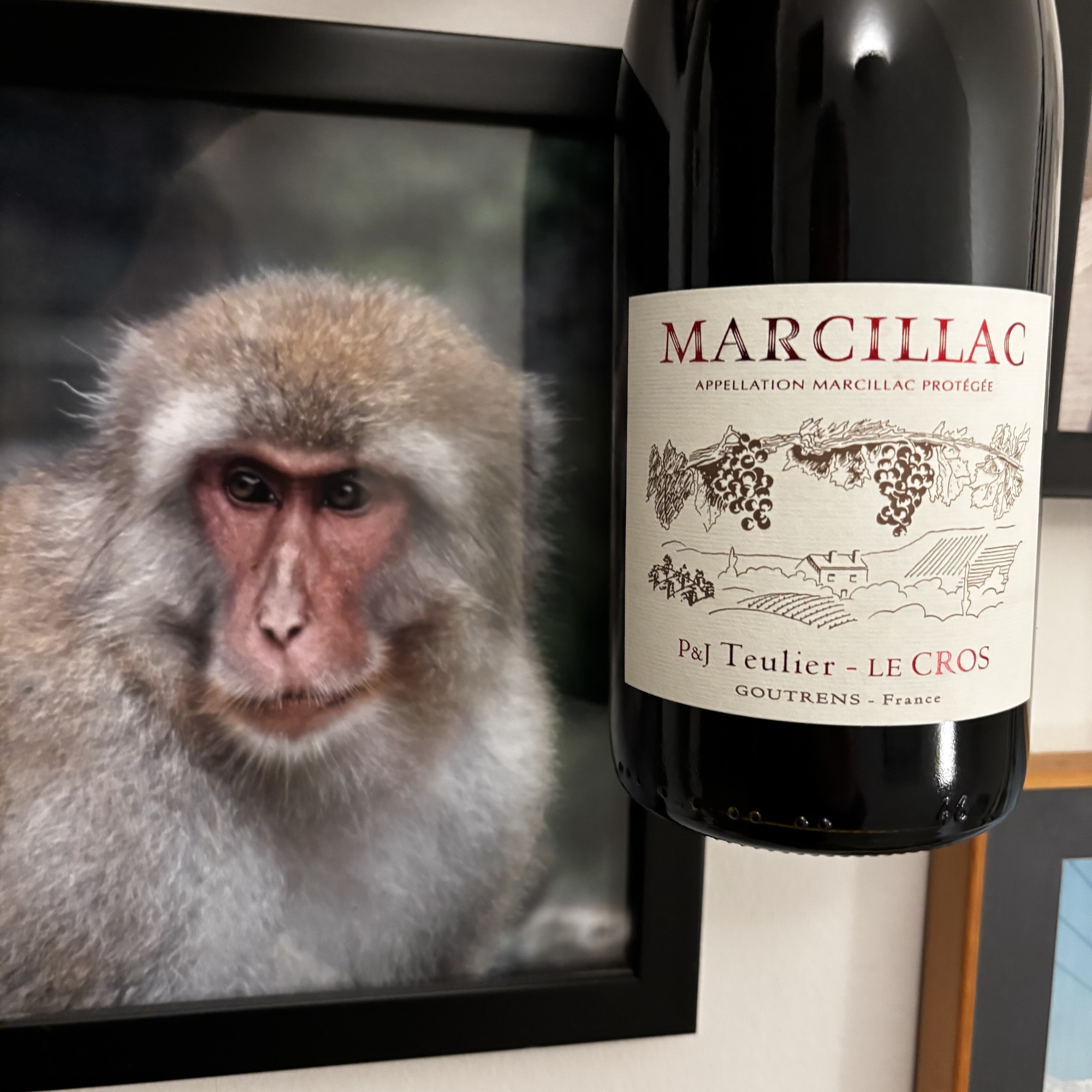
Marcillac “Lo Sang del Pais” 2023, P&J Teulier/Domaine Le Cros (Aveyron, France)
Although it is many years now since I have visited Aveyron, it ranks as one of my favourite parts of France. Always one of France’s poorer Departments, it sits just south of the equally wild and rugged Cantal and Lozère. The architecture of its red stone towns and villages, the drama of its river valleys, and its history, are all amazing.
The religious treasures at Conques make it one of the must-visit places for any connoisseur of medieval Europe, but its once lost vineyards of Estaing, Entraygues et du Fel and Marcillac were a real draw for me too in the days when I dreamt of writing “The Lost Vineyards of France”. Those vineyards are no longer lost.
Perhaps Marcillac has always had potential. It used to be the source of wine for the coal mines, for which the region was once known. As the mines closed and the trains to Paris didn’t run that far, then viticulture, often on hard to work terraces, dwindled and almost died. The Teuliers started out at Goutrens with just one hectare, but from the 1980s began acquiring more sites, often needing to replant on slopes with a gradient over 60%. Now the family, as in father Philippe and son Julien, farms 30 ha.
Like the Roc des Anges cuvée I wrote about in Part One of October’s wines, Lo Sang del Pais is a wine I pretty much purchased every time I made an order from Les Caves de Pyrene from way back in the mists of natural wine time. I had probably read Paul Strang, that expert on the wines of Southwest France, who I think it was who drew my attention to a wine from a region I had such a soft spot for. As with the wines of Nicolas Carmarans, when I spot an Aveyron wine I usually grab it.
This is a natural wine, made wholly from the variety here called Mansois, but which is better known, if known at all, as Fer Servadou [100% Mansois according to their web site, though other sources claim it has a dash of Cabernet Sauvignon and Merlot]. Of those thirty hectares farmed, around twenty of them are planted to Mansois. Vine age for Lo Sang averages 25 years. The fruit, hand-picked of course as it is all grown on steep hillsides, sees a 15-20-day maceration in stainless steel with various measures to keep the cap moist. Élevage lasts about twelve months, also in stainless steel.
The bouquet is all raspberries whilst the palate has crunchy fruit, dark and brambley, with just a touch of tannic structure. A simple wine, but few wines show their terroir like this does. It has that taste sensation which some describe as iron filings (which I haven’t tasted, and the hint is surely in the name “Fer”), or others have said like blood in black pudding. I get both. But more than anything it tastes of those wild, steep, once-abandoned terraces in valleys once redolent with the smell of coal dust.
I assume that Les Caves de Pyrene still imports and sells this cuvée. My bottle came from The Wine Society for £11. Everything what they used to call French Country Wine should be.
*Looking up a fact which had slipped my mind, a Google search came up with an article I wrote myself top of the list. It’s gratifying whenever I discover I’ve been one of only a few UK writers to cover a region. Anyway, though I say so myself, it’s a nice article, and informative. Search for Wines of the Aveyron and a Little Vicarious Travel (6 May 2020), or just type Aveyron into the search box, top right, should you want to read more.
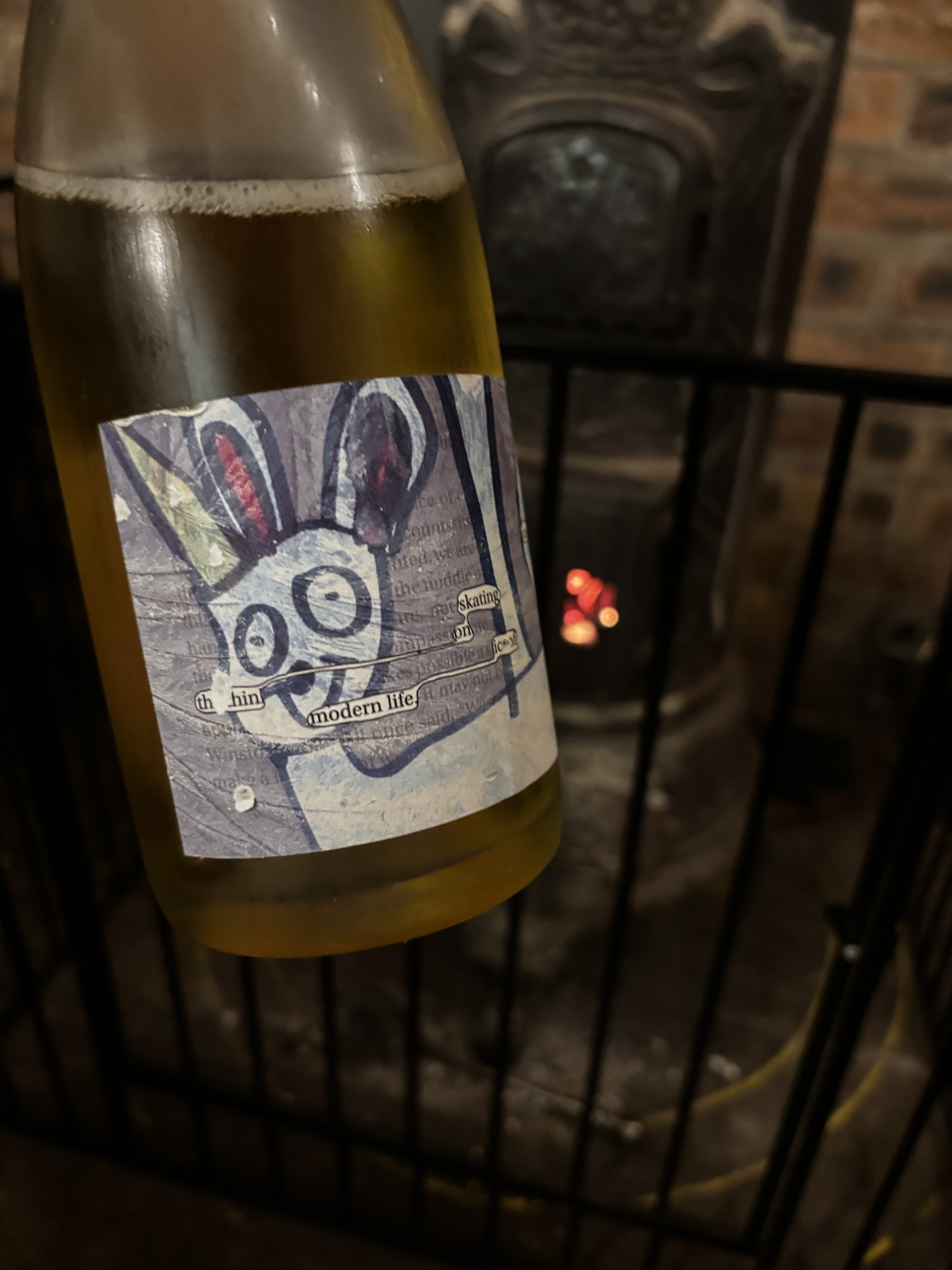
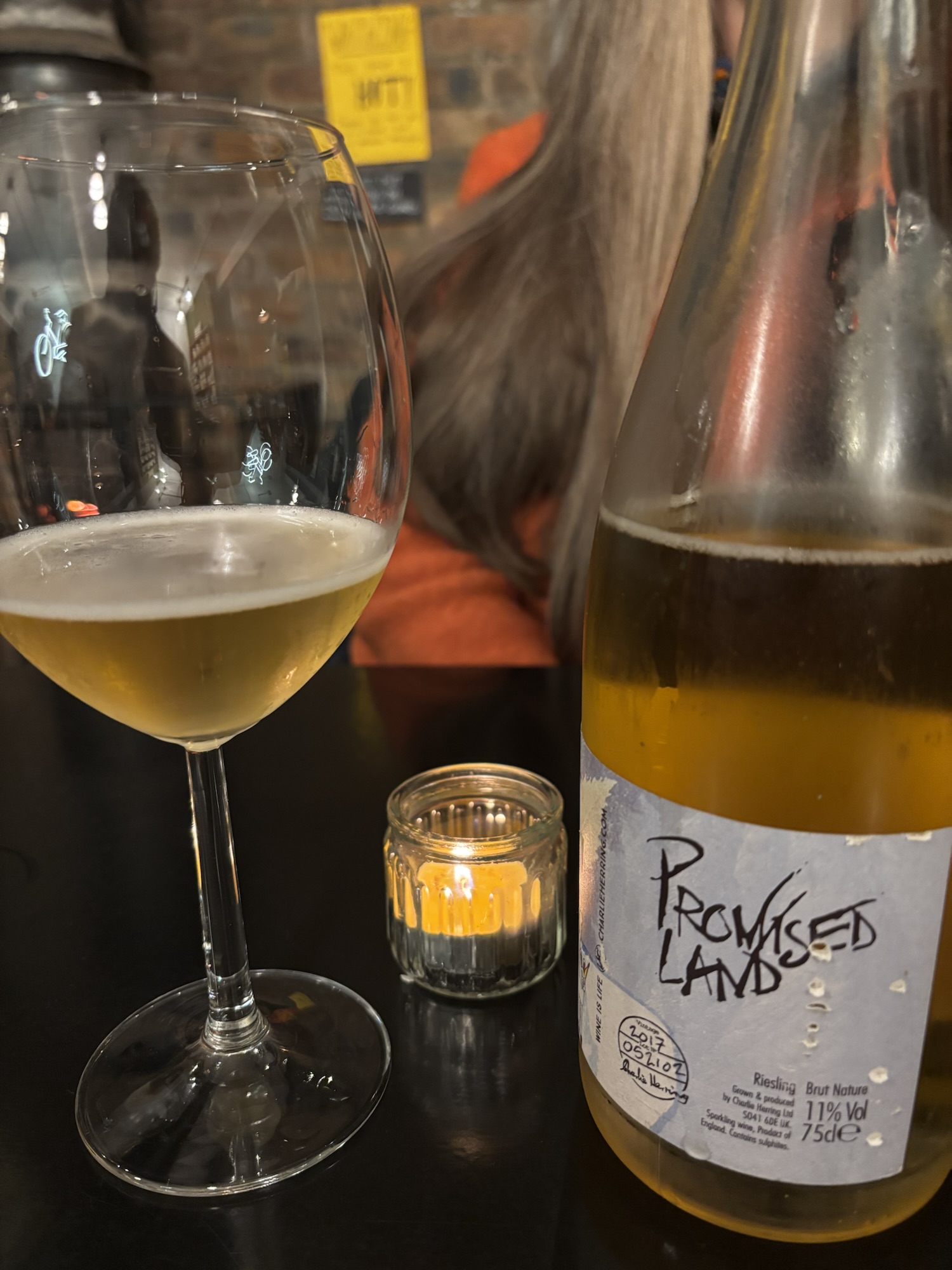
Promised Land Sparkling Riesling 2017, Charlie Herring Wines (Hampshire, England)
Tim Phillips is no stranger to this blog, but his wines are as rare as teeth in the hens that wander freely in his walled vineyard near Lymington, so perhaps he gets mentioned less than he deserves. There are two reasons I hesitate to open Tim’s lovely wines. One is rarity…I never know if and when I can replace bottles. Second is whether they will be ready to drink. His wines benefit from age, and although I try to buy more than one of each wine, I can’t always manage it and mistakes made opening a bottle too early could be annoying.
Luckily, I do have another bottle of this sparkling Riesling. Ripening Riesling in England would be laughed at by some so-called experts, but the walls of the old Victorian kitchen garden which is now Tim’s vineyard retain heat, and the site is sheltered somewhat, not only by the walls, but on account of it being just over two miles inland from the Isle of Wight.
Promised Land is made as a traditional method sparkling wine, dosage free (Brut Nature), and of course it is a natural wine too. I guess Tim is making something akin to what, in Germany, is now called Winzersekt, and which is undergoing a fantastic revival. The minimum time on lees that German wine law requires for these estate-grown and bottled sekts is nine months. Tim needn’t worry on that score, yet he is right to give his wines extended lees ageing.
The bouquet takes time to build to a crescendo of fruit, but the palate is explosive. Acidity is as strict as the psychopathic German teacher I had at school whose 45-minute homework always took us three hours, and who preferred a cricket bat to a cane (which I thankfully avoided), but there is enough tropical fruit with lemon and lime riding on top here to make the experience thrilling.
Despite the exciting ride, I won’t open my next bottle for a couple more years. We thoroughly enjoyed it, and the whole 11% abv bottle went at one sitting (with vegan Sri Lankan food from the wonderful Sri Lankan Delights), but I would next like to see a wine showing its potential for complexity next time. I loved it, but I add the caveat that I’m a real Saarwein fan so acidity is my friend. It may need more time ideally, but boy this is so good!
Genius winemaking, full of soulful introspection combined with remarkable intuition. That’s what it takes to make a wine like this in England. As usual, purchased direct from the vineyard and as ever, in very short supply. However, if you are quick, you might find that Solent Cellar in nearby Lymington has some of Tim’s new Seyval Blanc cuvée, called Charlie Don’t Surf. Whether this is a nod to Apocalypse Now or The Clash, I’m not sure, but it is sure to be fabulous.

 David Crossley's Wide World of Wine