
Our final visit to a Swiss wine region from our latest trip takes us to the vineyards around Geneva. I’d place a bet that more than half the people reading this article haven’t drunk Geneva’s wines and some may not be aware that the city is served by a thriving vignoble. Of course, “thriving” must be taken within the context of my remarks about the crisis in the Swiss wine industry, which you can read about in my previous article (on Lavaux).
Nevertheless, Jancis et al say, in the World Atlas of Wine (8th edn, Mitchell Beazley, 2019) that “Geneva’s vineyards around the southwestern end of the lake have changed more than any in Switzerland in recent years”. Those changes are many, but not least is the dramatic rise in quality, driven by a decent handful of artisan and family estates, and by a revitalised co-operative.
The region itself divides into three parts. Entre Arve et Lac is broadly northeast of the city, but on Lake Geneva’s southern shore. If you were to extend this area into France then before you reach Evian you will have entered Crépy (home to the fine wines of Dominique Lucas/Les Vignes du Paradis), along with the three other French appellations of Marignan, Marin and Ripaille. The Arve, by the way, flows by this sub-region and joins the Rhône just after it exits the lake.
Entre Arve et Rhône is smaller and sits between the two rivers almost south of the city. The Wine Atlas is very dismissive of these two sub-regions. Of this one it says “make[s] a rather mild wine”. Of Entre Arve et Lac the authors say that its wines are “pretty dry and pallid”. I don’t agree with that, but perhaps those views are about seven years old, maybe more.
Rive Droite, however, gets what appears to be a thumbs-up. Rive Droite sits to the west of Geneva and is the source of around 65-70% of Geneva’s output in wine. It encompasses an area known as Le Mandement, where the bishops of Geneva had their vineyards. It is Rive Droite that we shall be visiting.
Once again, I am honouring my pledge to give you something you won’t find in the Academie du Vin’s Smart Traveller’s Wine Guide Switzerland (by Simon Hardy and Marc Checkley). Doubtless pressed for space, the authors there chose to include a trip through Entre Arve et Rhône, between Corsinge, via Jussy, to Cologny on the edge of the city.
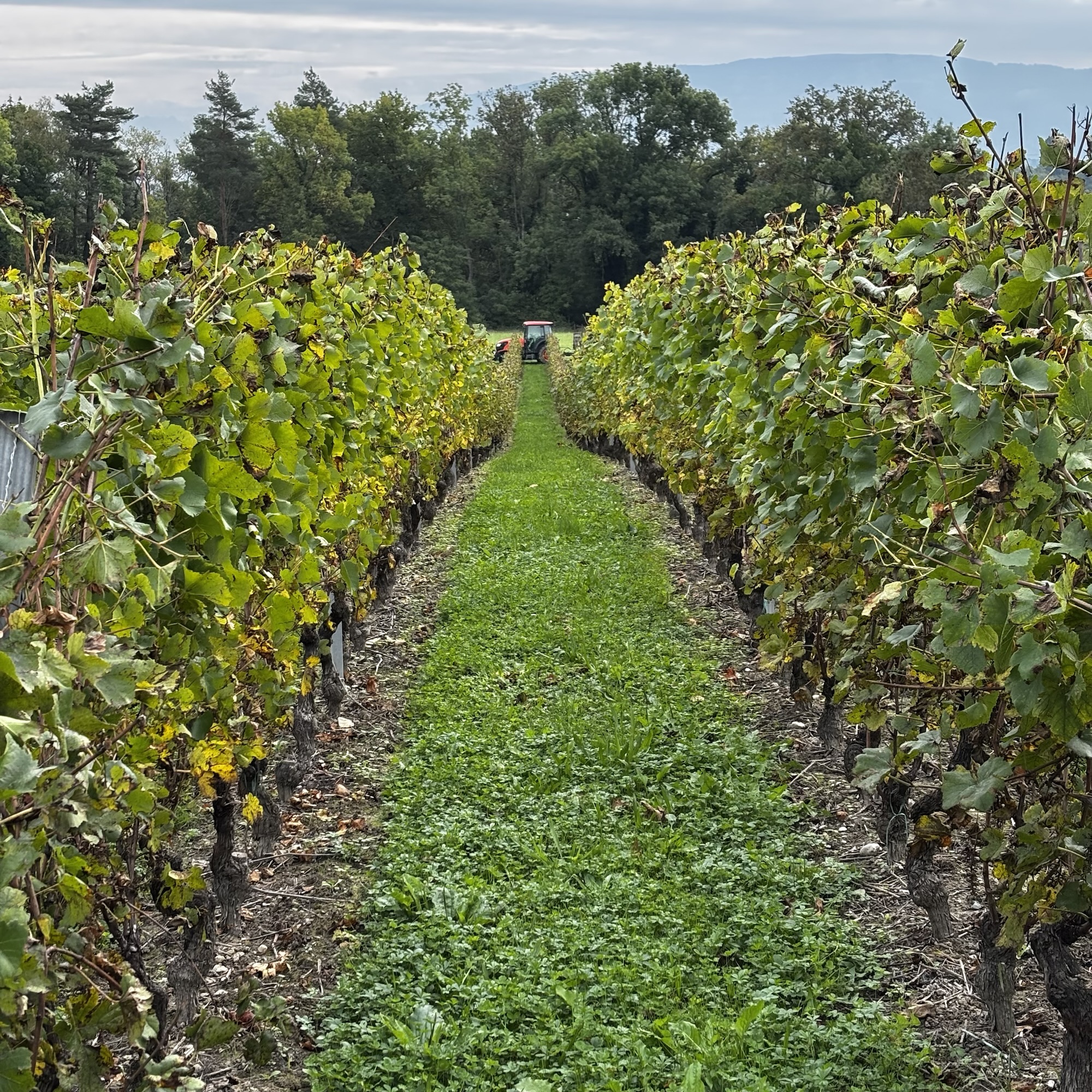

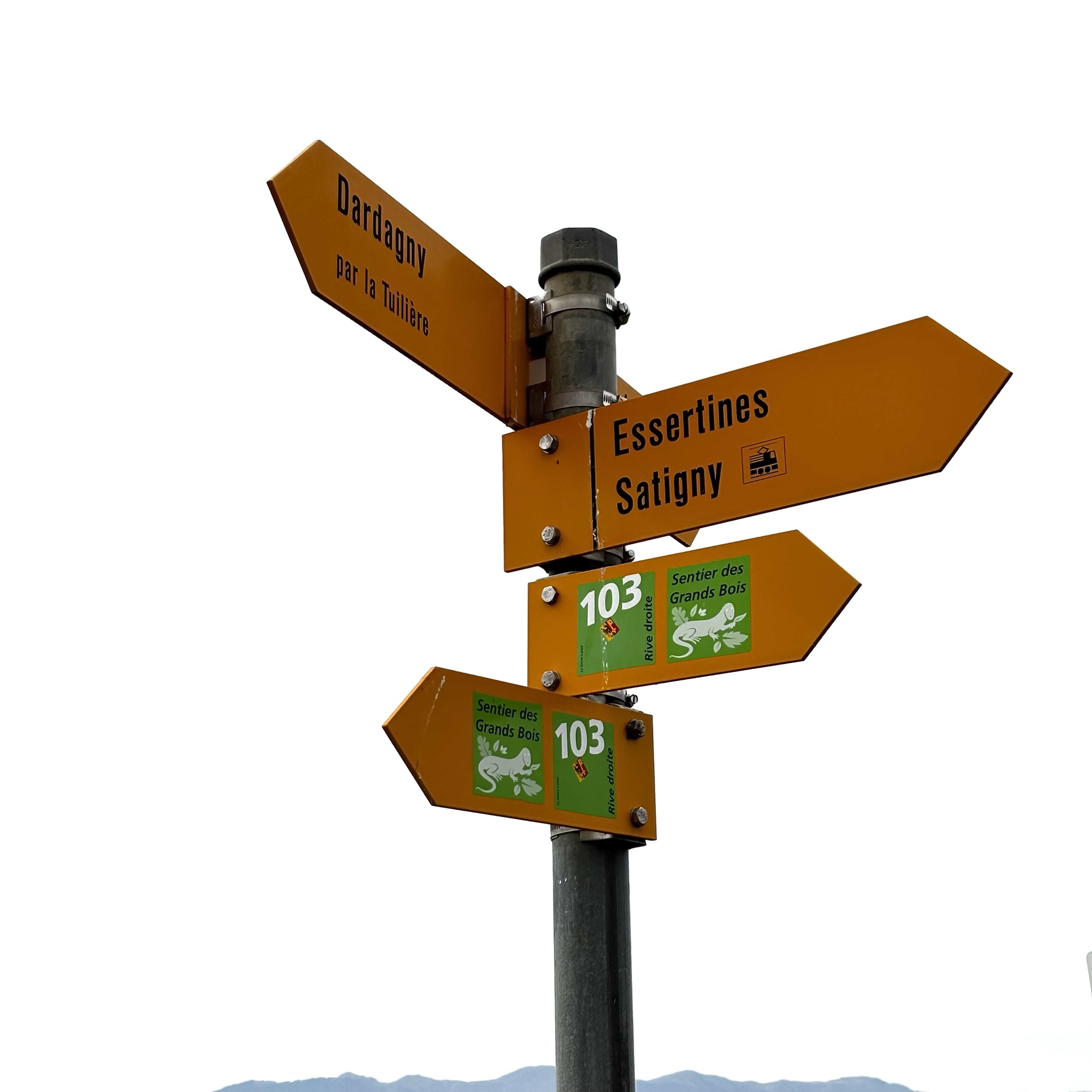
I will go to Dardagny on the Rive Droite, but first I will mention Satigny. These are the two major wine villages here on the Rhône’s right bank. Dardagny is the prettiest of the two, and the one where you will find the producers I rate highly in this article, but Satigny is the location of La Cave de Genève. This co-operative, once perhaps considered very ordinary, has undoubtedly been one of the drivers for change in the wider region.
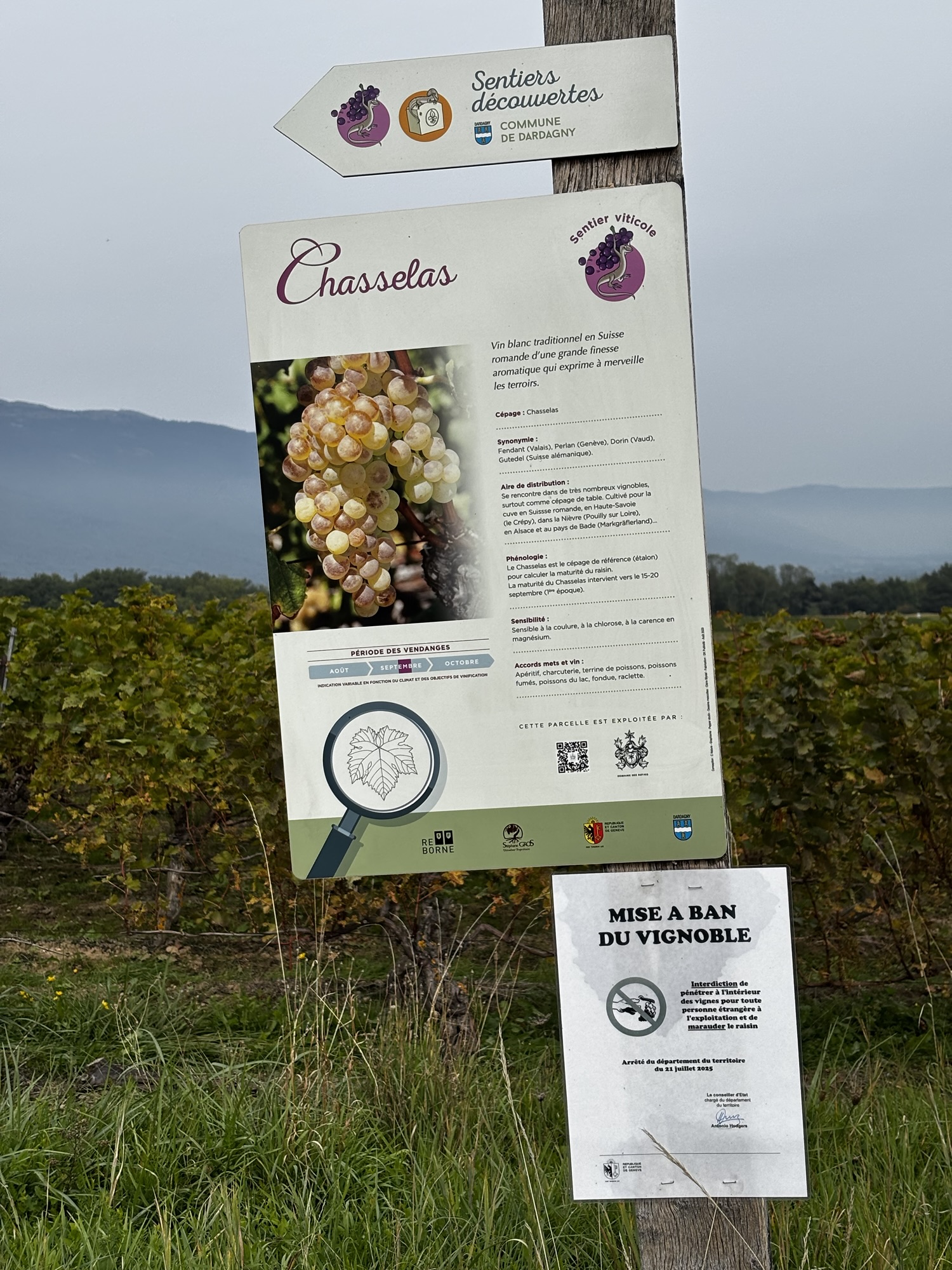
That change encompasses perhaps three things. First, the move from a preponderance of red wines (Gamay is still the most planted variety I think, although Pinot Noir is fast catching up). White wine now accounts for over half of production and is rising. Everything from Chardonnay and (often excellent) Chasselas, Aligoté, and even Scheurebe and Kerner, are appearing.
Second, many of the new disease-resistant PIWIs, along with older hybrid varieties have been planted alongside those more recent white varieties. I think Gamaret and Garanoir were the first I tasted, maybe twenty years ago, but many more have appeared since. The Geneva Region as a whole allows 21 red varieties and 24 white at the last count.
Third, and by no means least, the co-operative has switched up a gear. It no longer rolls out with a yawn a moribund range for an ageing local clientele, but is now looking at a wider market, one that appeals perhaps to a younger and less conservative audience. Part of the co-operative’s image also includes a move towards a more sustainable future, as well as a greater awareness of a host of environmental measures around both viticulture and winemaking.
La Cave de Genève in Satigny is definitely worth a visit if you fancy a relatively inexpensive introduction to the many styles of wine in the canton.
For me, Dardagny is the go-to village for Geneva’s wine. It doesn’t quite have the charm of a Meursault, or a Mittelbergheim, but it’s not far behind. It’s close enough to Geneva to make a day trip, taking about 45 minutes by a variety of public transport options from the city centre if you don’t have a car. However, the village café and shop (Tea-Room de Dardagny, Rte du Mandement 491) does seem to close immediately after lunch for a while despite the advertised hours, so maybe take a picnic (or see my restaurant recommendation later on).
Below I will mention three of my favourite Dardagny wineries, but I will just add that the gently rolling hills on which the vineyards sit are as pleasant to walk as any other vineyards, and you get the Jura Mountains to the north as a backdrop. On this visit we also found a very nice marked woodland trail with a steam, a cave, and an abundance of mushrooms (some of the most evil fungi I’ve seen for a long time, it must be said) along the Ruisseau de Roulave (search for Vallon du Ruisseau Roulave nature reserve, see photo on right below).


Domaine Les Hutins
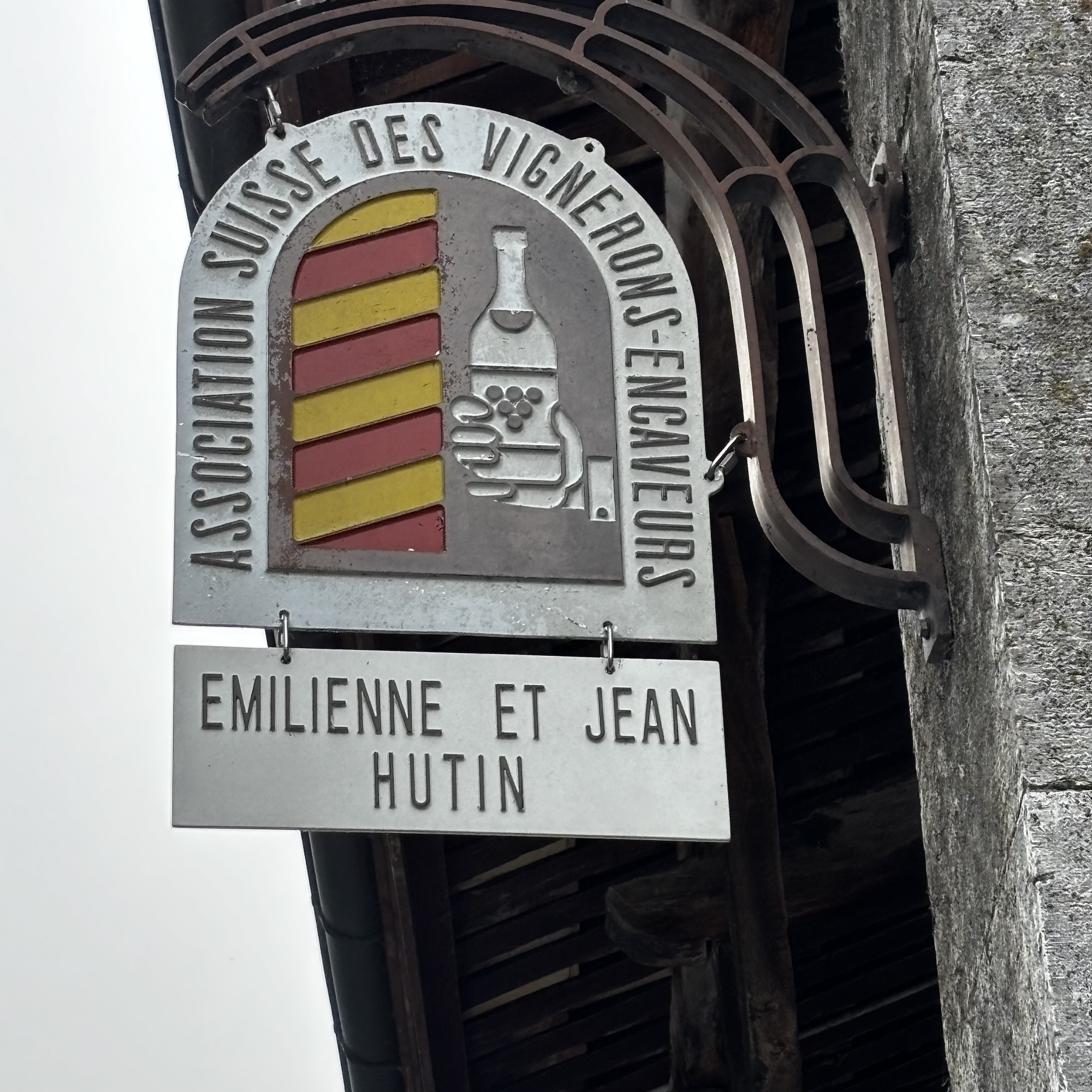
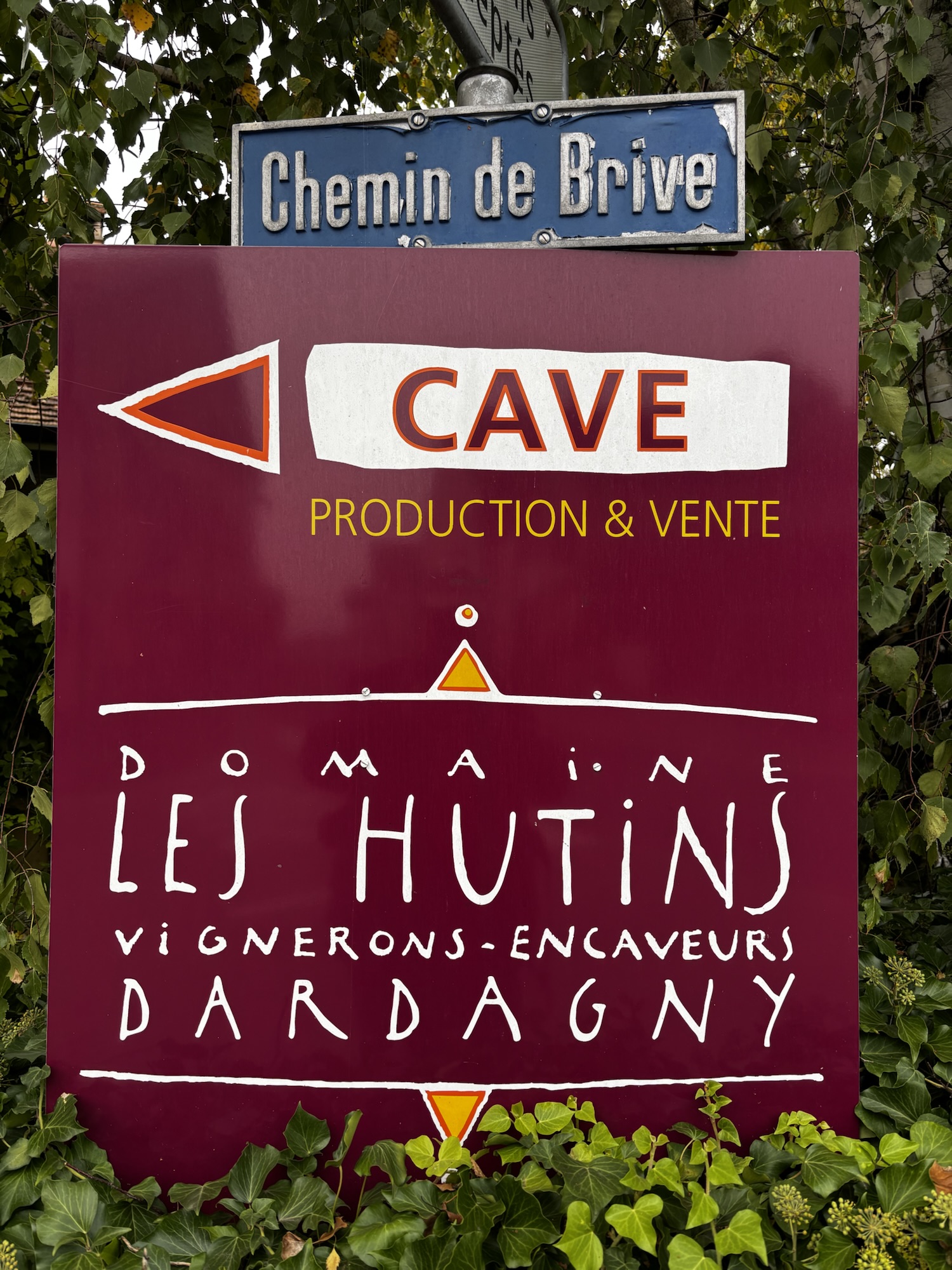
Tucked away but well signposted a couple of minutes off Dardagny’s main Route du Mandement at Chemin de Brive 8, Hutins is an exemplar of Genevois winemaking, and my favourite producer in the appellation. They still make Gamay and Chasselas here, albeit very good versions, but other varieties have taken over their focus.
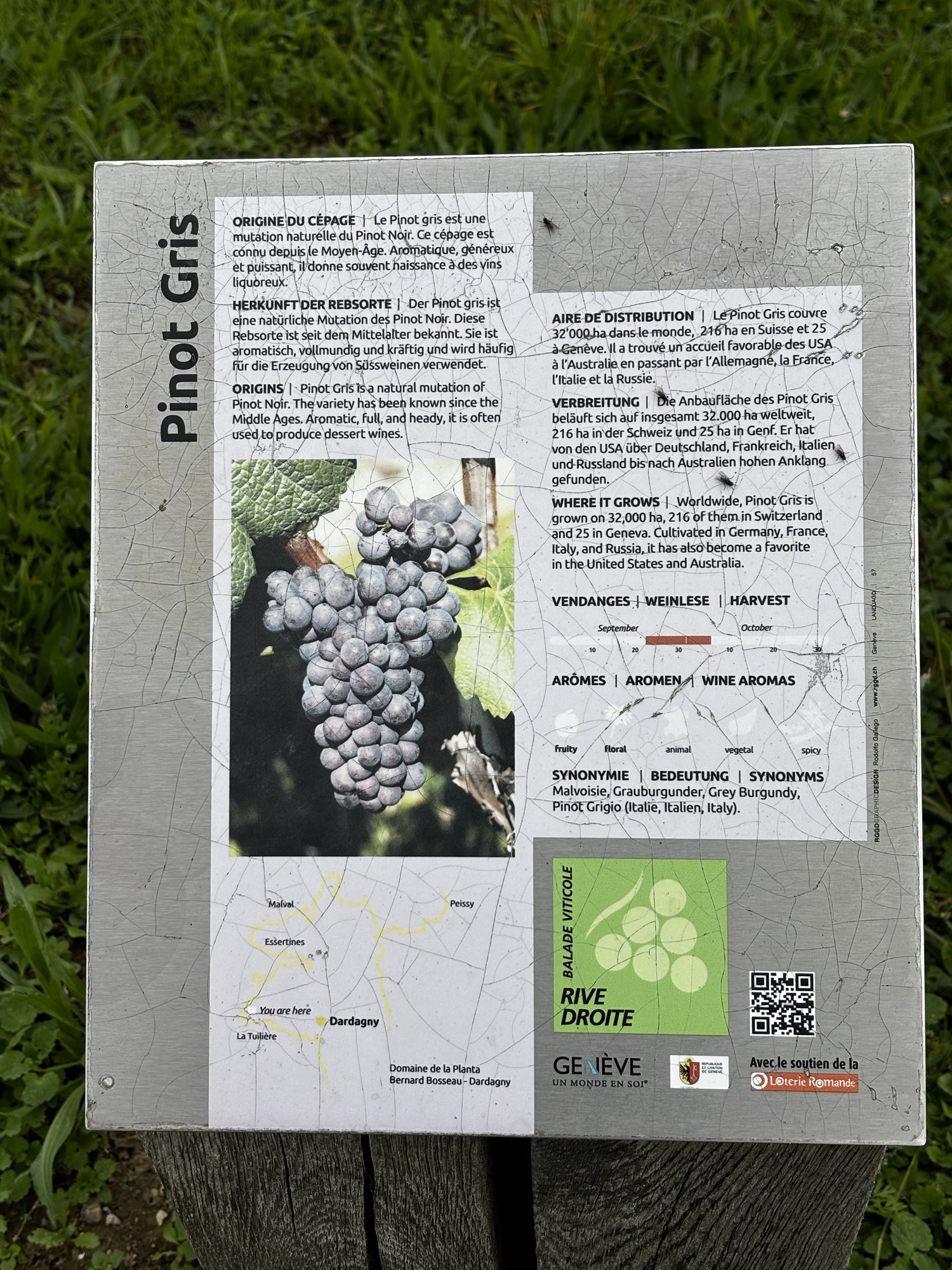
For whites we have Chardonnay, Pinot Gris and Sauvignon Blanc, whilst the top reds tend to be from a range that includes Pinot Noir, Syrah and Merlot. It is their barrique Sauvignon Blanc which was included by the prestigious Mémoire des Vins Suisses Tasting when the domaine was admitted in 2009.
Other wines to look out for are a red blend of Gamaret with Cabernet Sauvignon and Merlot, and if you are on my wavelength, a wine labelled as Savagnin Rose Aromatique. This is Gewurztraminer, but they use this particular synonym because the wine is dry with an ethereal fragrance, and is somewhat understated compared to what most people think of when Gewurz is on the label.
I would argue that the family are currently at the top of their game, and of course the estate is fully organic. The wines all share a certain elegance. The revolution began here in the 1980s under Emilienne Hutin-Zumbach’s father and has progressed under her management ever since. I wasn’t able to have a tasting this time, understandably as harvest was still in full swing, but I was at least able to drink some of their wine (see the next article). I wish they had a UK importer!


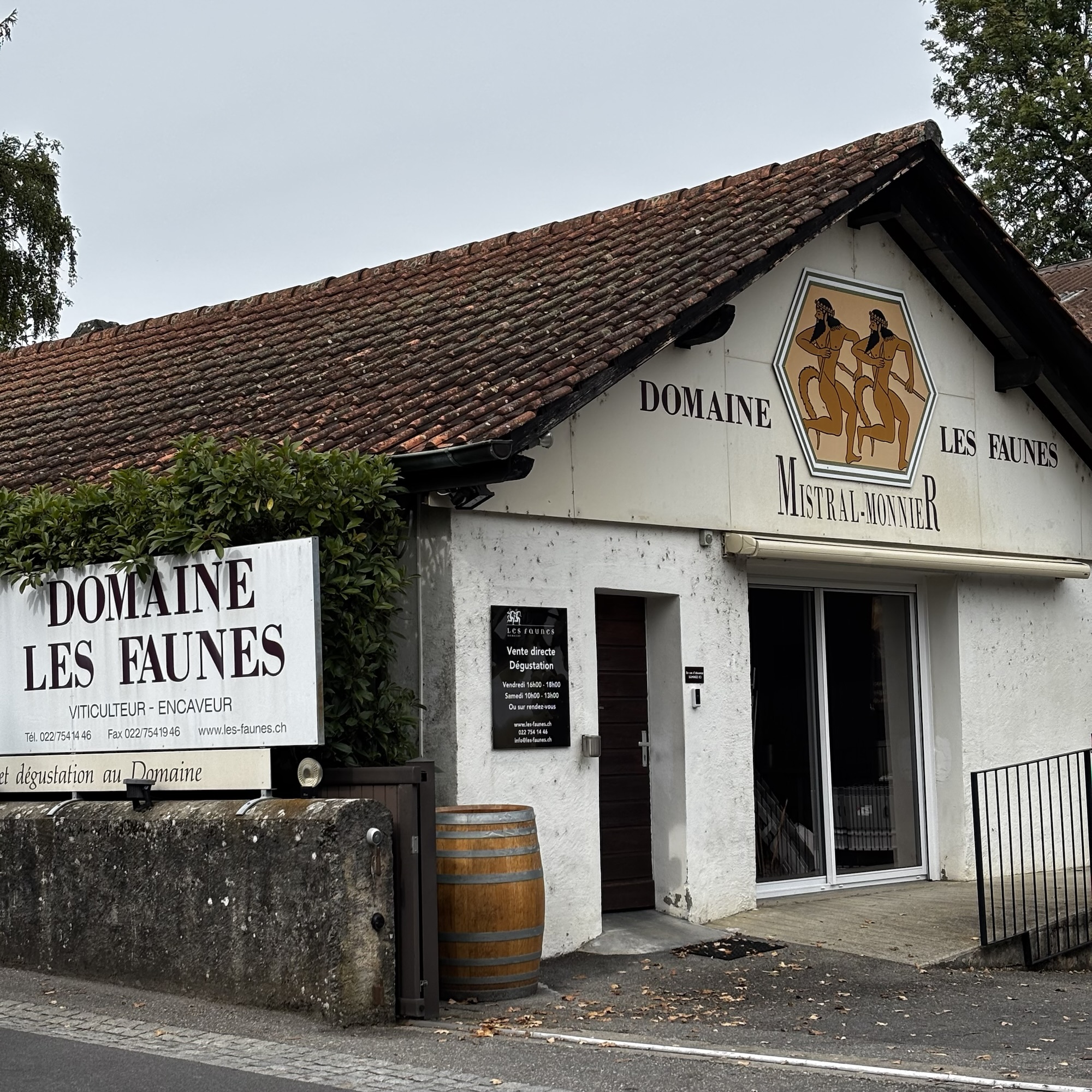
Domaine Les Faunes
I first visited Les Faunes many years ago, on one of the “portes ouvertes” days which are such a big thing for Swiss wineries. It brings to mind the open days small producers like Tim Phillips (Charlie Herring Wines) has in Hampshire, where the true fans can come, taste, chat and buy. The estate is three generations old, not long in a Swiss context, but the current generation are certainly “young, innovative and dynamic” as their own web site describes them.
That current generation is Ludovic and Frédéric Mistral and they have made some changes, most notable of which has been to reduce their vineyards to 16 hectares, and to halve yields, thus being able to better focus on quality. It’s hard to choose particular wines, but bear in mind that none of the still wines sell for more than 20CHF (there is currently near parity between the Pound and the Swiss Franc), with just the sparkling wines at 25CHF. Not their best red, but the Pinot Noir at 10CHF seems very cheap for a very decent wine. Gamaret is always worth a try.
The Pinot Noir Rosé is what was known as Oeil de Perdrix here until the winemakers of Neuchâtel reserved the term for themselves (rather as Chasselas was once also called Fendant here before the vignerons of the Valais reserved it). This estate is one that has introduced Scheurebe, and they also make a Viognier, but if those are a bit too out there, there’s the ubiquitous Chardonnay and Aligoté too.
This is altogether an estate making some innovative wines at prices which destroy the notion that Swiss wines are expensive.
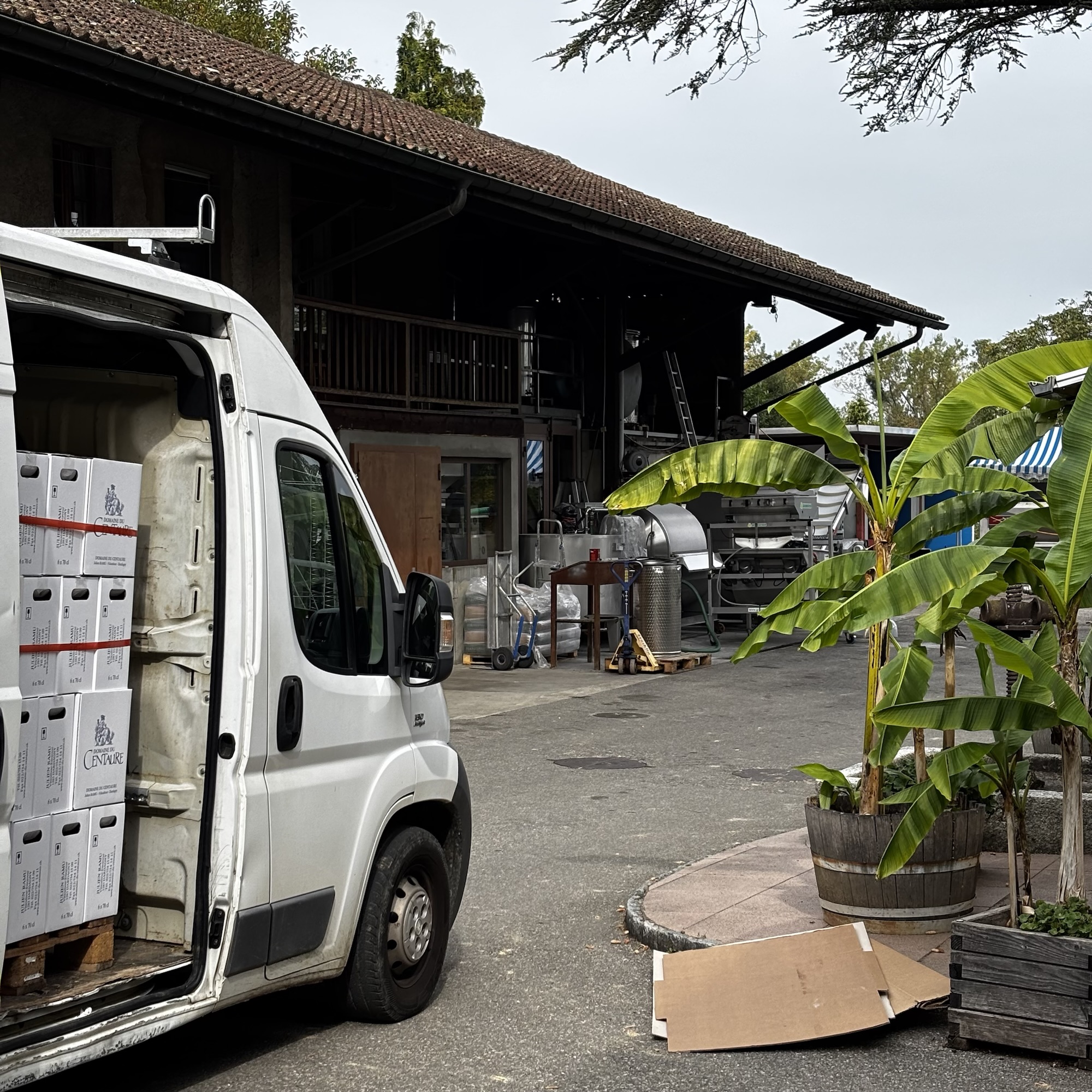
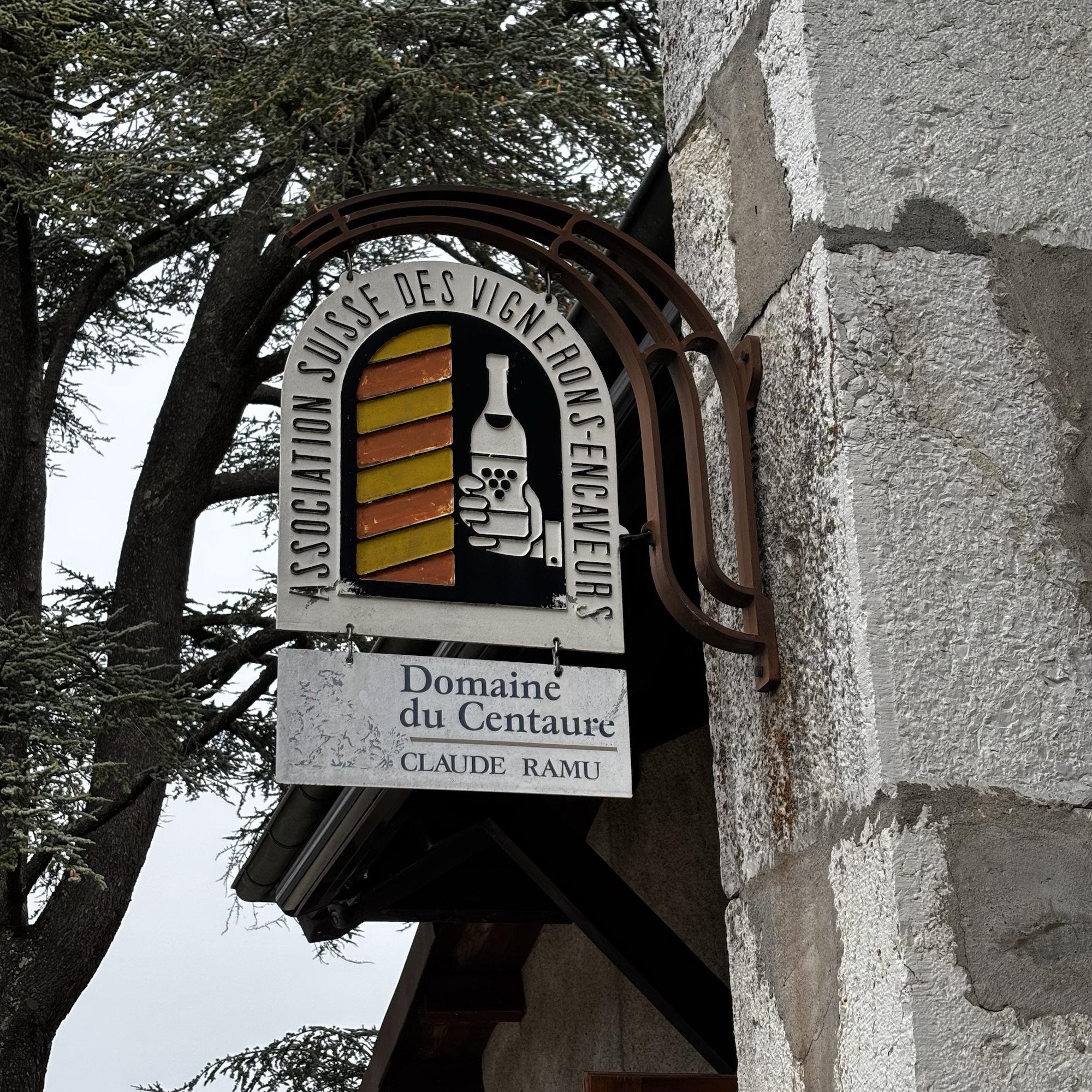
Domaine du Centaure
Faunes, Centaures, it sounds like Dardagny has a theme going on. The Ramu family were here first, tracing their presence in Dardagny back to the fourteenth century. Claude Ramu was in charge when I first knew these wines, and it was he who began estate bottling. Julien Ramu is now taking over with plans to continue Claude’s work towards making artisan wines of serious quality.
The winery has an address on the main Route de Mandement, Dardagny’s main street, but the winery is in fact almost hidden away in a courtyard off that road. To find it go from the café in the opposite direction of the château and it’s just a minute or so walk, off on the left, past another producer whose winery is by the road.
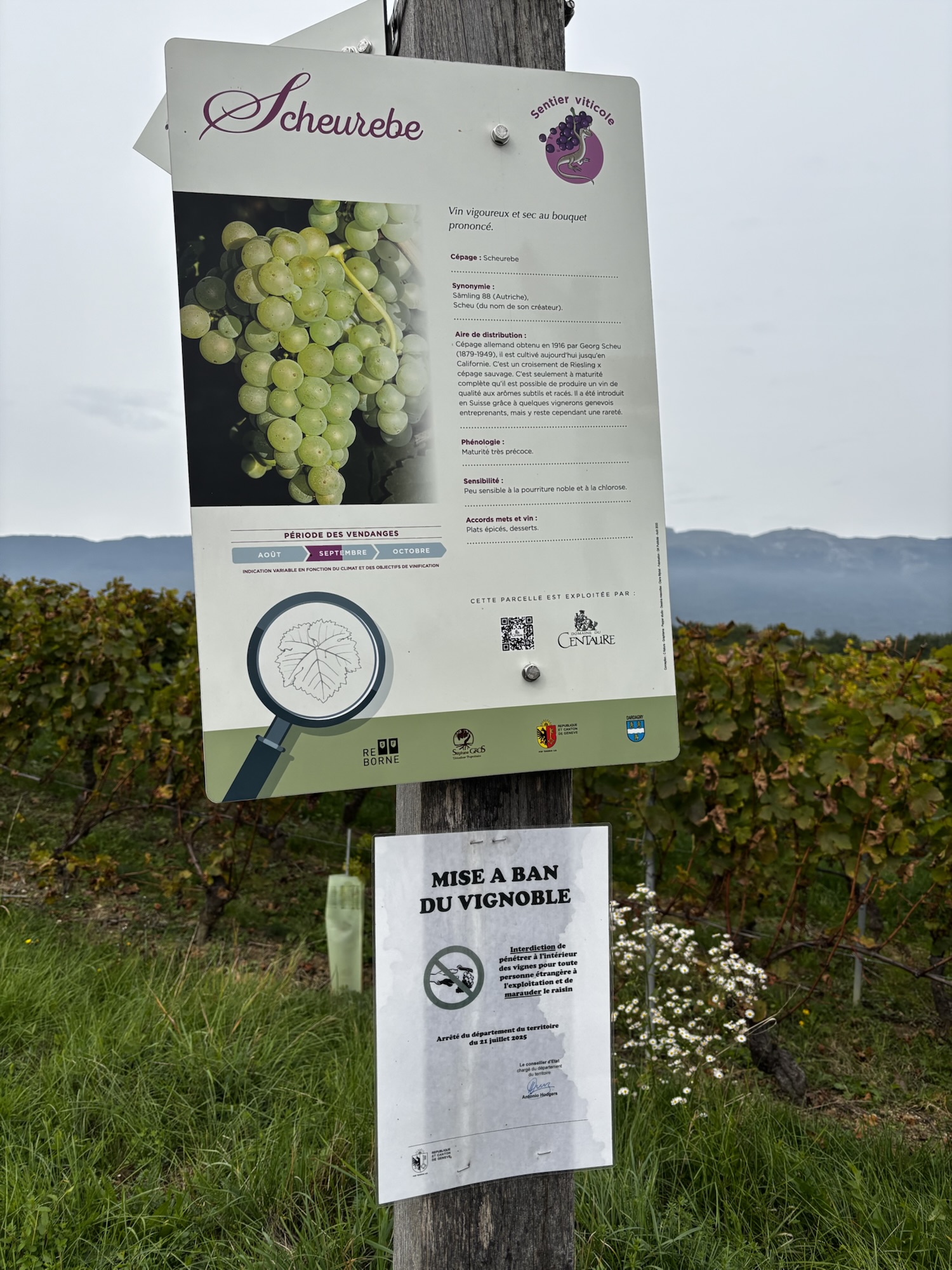
Centaure has the usual selection of Geneva cuvées from Chardonnay, Pinot Noir and Gamay, but alongside the almost ubiquitous, but always interesting, Gamaret, you will find both Scheurebe and Kerner here.

I should mention a couple of other Geneva producers not in Dardagny before we leave the region. Domaine Grand ‘Cour is at Peissy, which is further east of Dardagny, closer to the city. Jean-Pierre Pellegrin is usually described as one of the stars of the Geneva Appellation. He now has son Bruno on board. Jean-Pierre seems to be known affectionately as “the watchmaker” locally, because of the precision of his wines. Sue Style in The Landscape of Swiss Wine (Bergli Books, 2019) says that he is “[t]he winemaker who has done the most to raise the bar not only for Geneva winegrowing but for Swiss wines in general”. High praise.
There are affordable wines here, especially the blends such as Chasselas with Pinot Blanc, or Gamay-Pinot Noir. There are also very fine wines that cost a little more, including one of the finest Viognier outside of the Rhône, and a potentially sensational blend of Kerner, Riesling and Sauvignon Blanc. This might just be the best winemaker you’ve never heard of, or at least if I’m hyping him up too much, it does go to show that there’s a world of wine out there that the doyens of UK wine taste just don’t know about.
Another name to mention is Domaine de la Vigne Blanche at Cologny in the Entre Arve et Lac sub-region. This is one of two Entre Arve et Lac producers you will find in the Academie du Vin guide mentioned at the beginning of this article. It is now a certified organic domaine (BioSuisse) using a range of biodynamic methods as well, with something over seven hectares grouped in four separate parcels. The show is now run by Sarah Meylan-Favre, whose grandfather founded the small estate.
As always, there are a wide range of bottlings, but I would draw attention to the Esprit de Genève Cuvée. This is a blend which a small number of local producers make (I have a bottle in my cellar), here comprising 50% Gamay, 30% Gamaret and 20% Cabernet Sauvignon. The blend may differ from producer to producer (I also have a Gamay/Garanoir/Syrah by Sophie Dugerdil), but it is always a premium blend, usually wholly or partially aged in oak, which is intended to promote Geneva’s different terroirs and the canton as a whole. The abovementioned Domaine des Hutins makes a version blending Gamay, Gamaret and Garanoir too.
Finally, I will mention a producer I don’t know at all, but the second Geneva vineyard to get a mention by Hardy and Checkley in the Academie du Vin pocket guide. It’s called La Gara, and is based at Jussy, which is only just inside the Swiss border to the southeast of the city. It sits within the park of a house with a famous garden, the vines and winery run since 2020 by Adeline Wegmüller. The vineyard was originally created in 1753, with seven varieties now planted.
Interesting wines include two Chasselas (one unfiltered, and I’m a sucker for the vibrancy of unfiltered Chasselas), an Assemblage cuvée made from Gamaret, Garanoir and Syrah in 2024, and “Palindrome”, a serious-looking Pinot Noir. Adeline says that ecology is at the heart of what she does. It looks like visits are by appointment only, but with some fine-looking gardens to appreciate, it’s somewhere I’d like to find time to visit. It looks another nice trip out from the city.
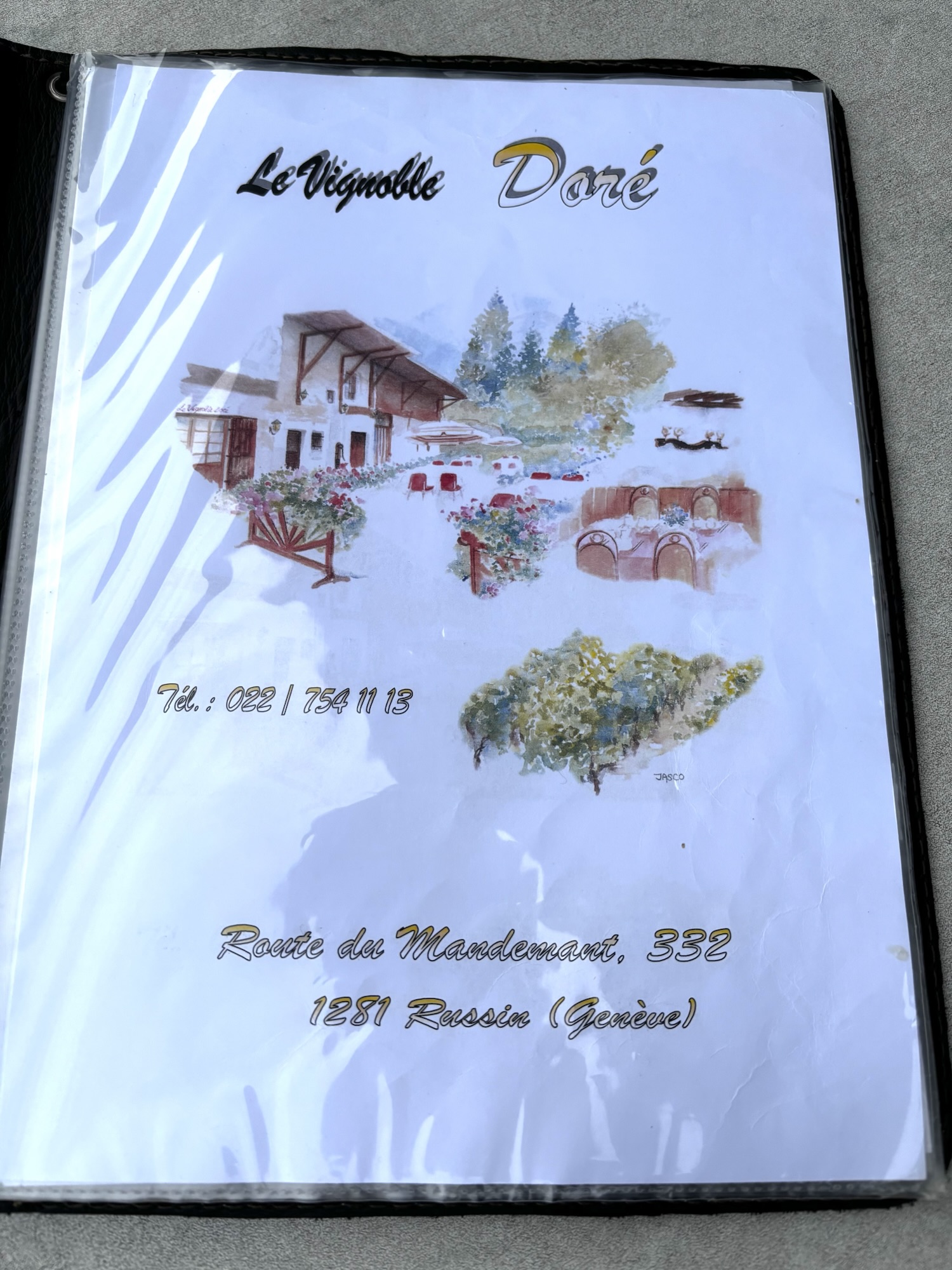
If you want to ditch the sandwiches, and the café in Dardagny is closed, you could visit the Café-Restaurant Vignoble Doré, which is in the village of Russin, a four-minute drive away (or approx. 20 minutes by bus…because I think it stops eleven times on the way). I mention it because it’s currently game season and indeed we were able to eat some tasty game (lots of sanglier, especially) on our trip. I’ve just been sent a photo by some friends tucking into the game menu there today, as I type. I’ve only had coffee there, but by all accounts the food is very good.

*Note that Switzerland still bottles wine in 70cl bottles, not 75cl. This is changing, but even the current token Swiss wine sold by The Wine Society, which will have appeared on my Instagram by the time you read this, is bottled at 70cl, though it must be said that most export bottles will nowadays be 75cl.

 David Crossley's Wide World of Wine