
Part Two (of three) of my review of Timberyard’s Edinburgh Spring Tasting covers the wines of Passione Vino. Part One, already published, covers Carte Blanche Wines.
Passione Vino is an importer/merchant I don’t know too well, although you may have read my articles on the recent Clay Wine Fair, where they had a table. Passione Vino is an Italian specialist (who’d have guessed) which began trading in 2003. As well as their import business they have a bar/osteria between Old Street and Shoreditch in London, which incidentally gets great reviews so maybe if you’re in London, check out their web site. Sales and accounts up north are handled by Greg Turner, who I met for the first time at the aforesaid Clay Wine Fair. He gets bonus points for remembering me, but he is a great ambassador for the PV brand. Let’s see how PV shaped up against CB, shall we…
PASSIONE VINO
I think there were nineteen wines on this table, though I’m not really counting, but it means I need to be brief. As I did in the last article, I shall list some of my absolute favourites at the end. That is a hard task. The wines here were all very well chosen, and there certainly were some real gems.
Arcari & Danesi Franciacorta Dosaggio Zero DOCG 2020 (Lombardy) is an excellent example of a wine from Italy’s premium sparkling wine region. Some Franciacorta wines, like some of their Champagne counterparts, are well made but lack genuine excitement. This one is pretty good. Organic and biodynamic viticulture produces a blend of Chardonnay with a bit of Pinot Blanc which sees three years on lees with no dosage. This cuvée sees no cane sugar. A fine bead leads to a lovely textured palate, fresh and steely but with good lees development clearly showing.
Iborboni “Cripto” Metodo Classico, Aversa Asprinio Spumante DOP takes us pretty much to the other end of Italy (Campania) with a sparkling wine made from the very rare Asprinio variety. Asprinio is known for high acids and they generally come with an admonition to drink young. However, this is an enjoyable sparkler, and I love acidity in refreshing fizz. Good value and an interesting bottle to pull out for wine friends.

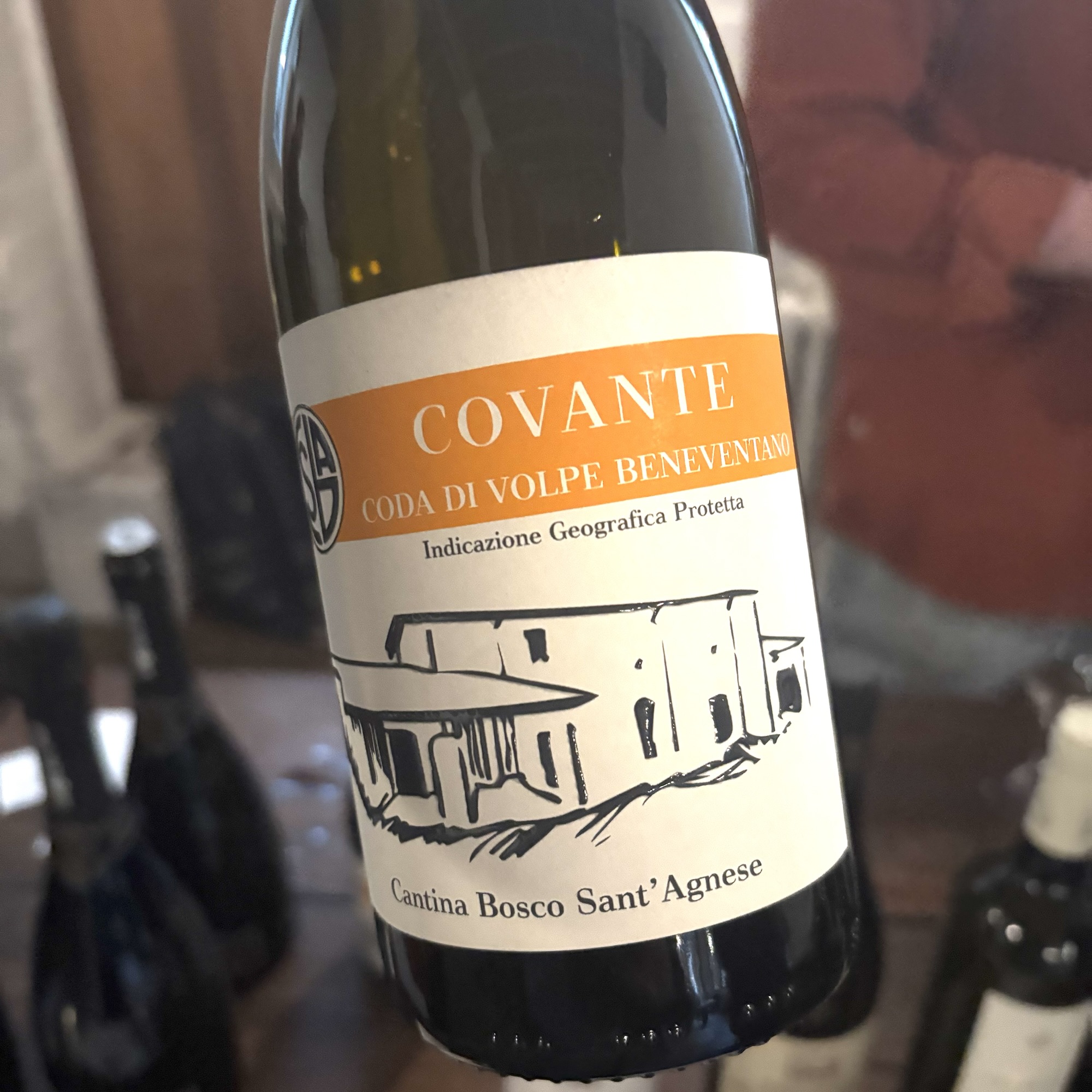
Bosco Sant’ Agnesi “Covante” 2022 is a wine made from Coda Di Volpe, also from Campania. Made in tiny quantities, this is a gold-flecked wine with scents of citrus. The palate is much less neutral than when this variety comes from the larger producers. It has medium weight with pear and a quince-like bitter finish. I think it retails for a reasonable £27-ish, considering the tiny quantity that is made. I liked this, but it was somewhat overshadowed by the next three bottles.
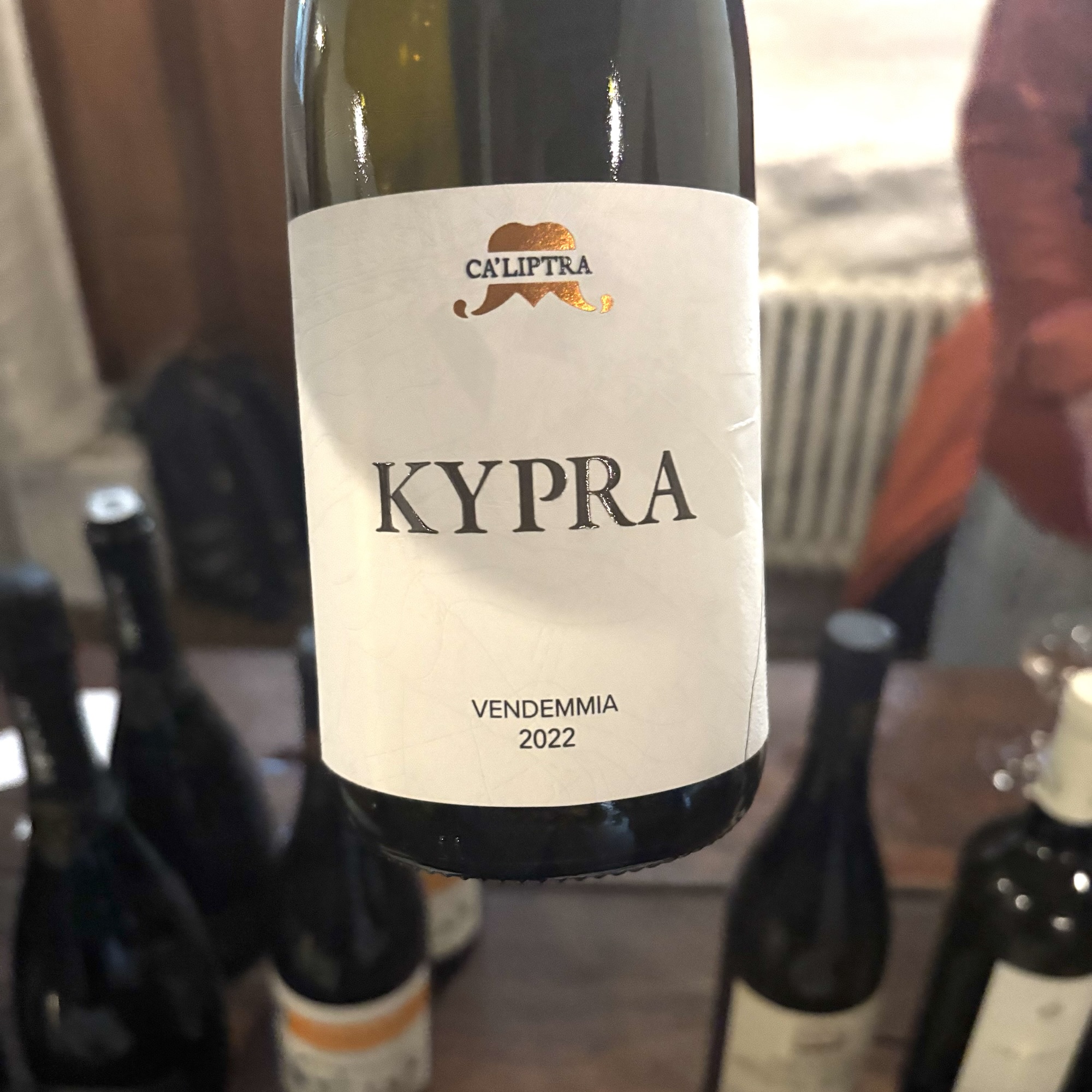
Ca’ Liptra “Kypra” 2022 is a Verdicchio from Cupramontana in the Marche. Concentrated yet elegant, this has concentrated lemon pith flavours with a fresh, floral nose. Vinification is in cement. Exciting. I know PV mention the very same under several suggested food pairings but my notes read “perfect quiche wine”. Perhaps made for picnic perfection.
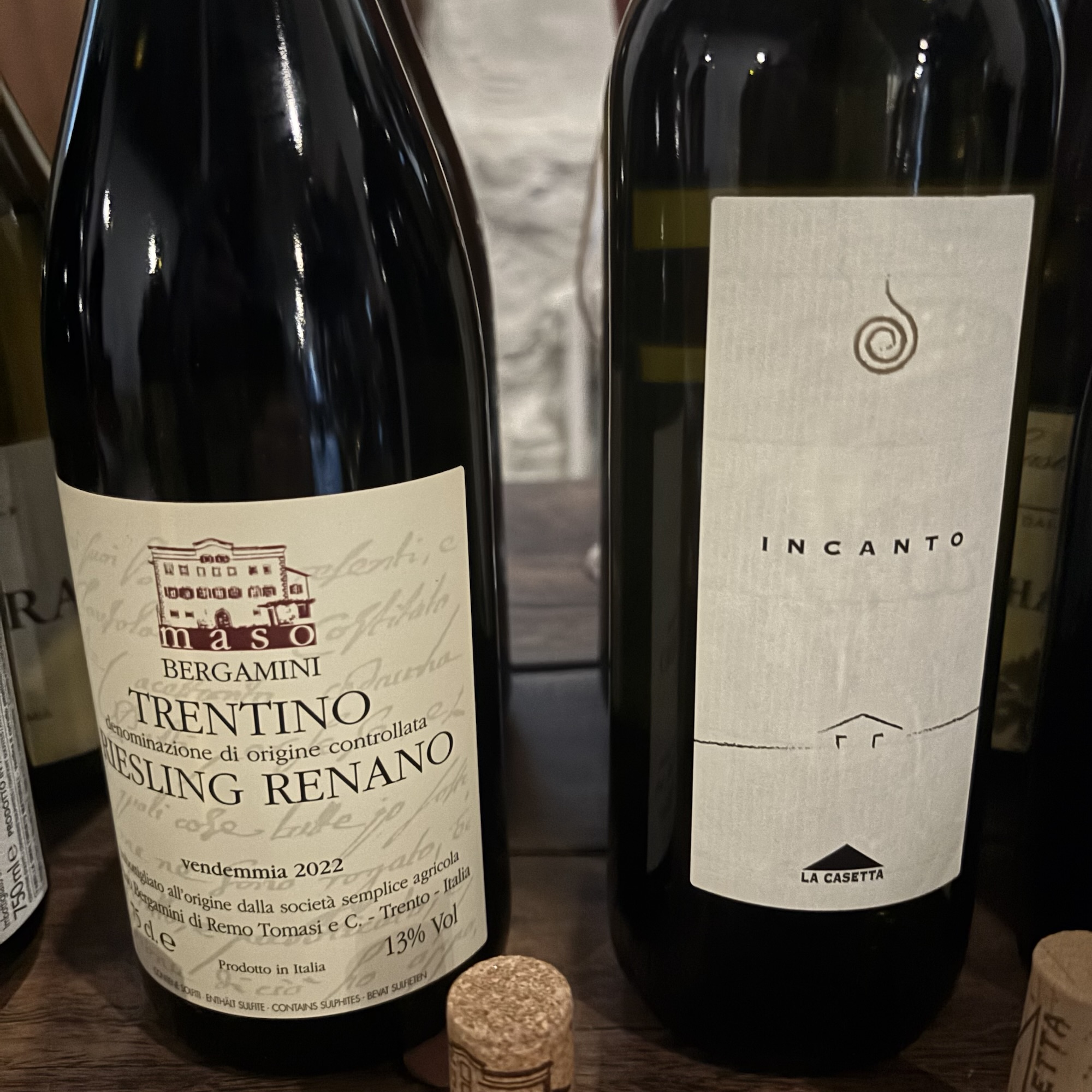
Maso Bergami Riesling Renano 2022 is from the wide Trentino DOC. Grown at a little over 500 masl, it is aged in traditional large old oak casks. The bouquet is floral, the palate waxy. I’d say that the nose doesn’t prepare you with the wow-factor you get when you taste it. I believe that this wine has seen some noble rot on the grapes, although it is a dry wine. That might help explain the sheer concentration here, which made it one of the standout wines on the table, and well worth the £40 retail price.
La Casetta “Incanto” Pigato, Terrazze dell’ Imperiese IGT 2023 comes, of course from Liguria. We can argue the distinctions between Vermentino and Pigato, for which the latter is supposedly a separate clone, identifiable by its speckled berries (hence the name). This is another wine with a nose that is a little more “shy” than its palate. Quiet bouquet, then the palate, Boom!. Softly textured, fresh, some concentration, overall lovely mouthfeel. Don’t be put off by the dull label.
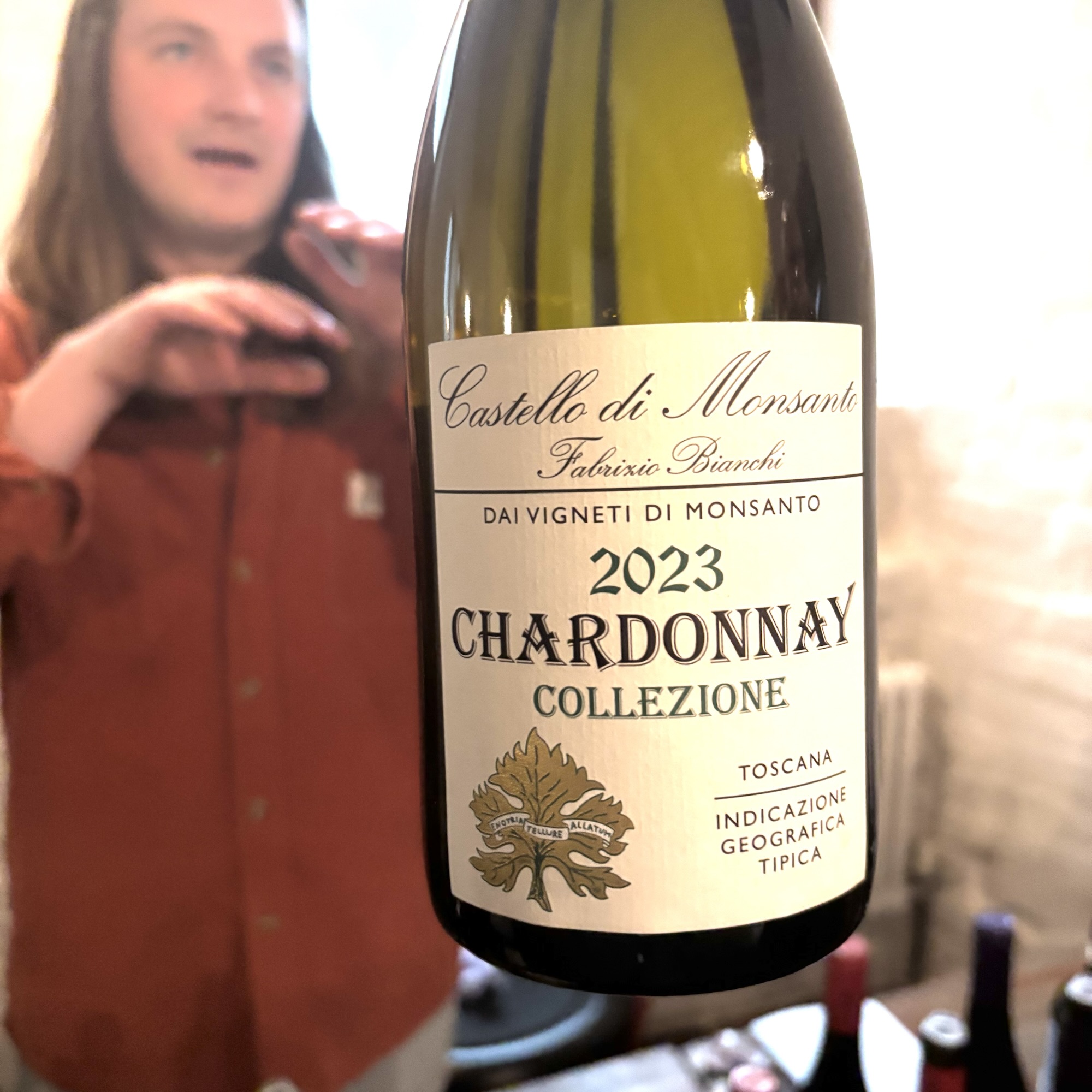
Castello di Monsanto “Fabrizio Bianchi” Toscana Bianco IGT 2022 comes from a Tuscan estate which needs little introduction, although I think far fewer readers will know its white wines than its reds. The grapes are 100% Chardonnay, a wine which harks back to diversification in the Chianti Classico vineyards in the 1980s. It is named after the grower who planted the vines. Those first Tuscan Chardonnays, boy were they oaky (remember Isole’s?). This is nothing like that. It’s very elegant, the wine being aged two-thirds in stainless steel and one-third in oak tonneaux on lees for seven months. Only two things would stop me buying it. First, the three previous wines, and second, this estate’s superb Chianti Classico is three quid cheaper, and if I saw that on a shelf it would be gone.
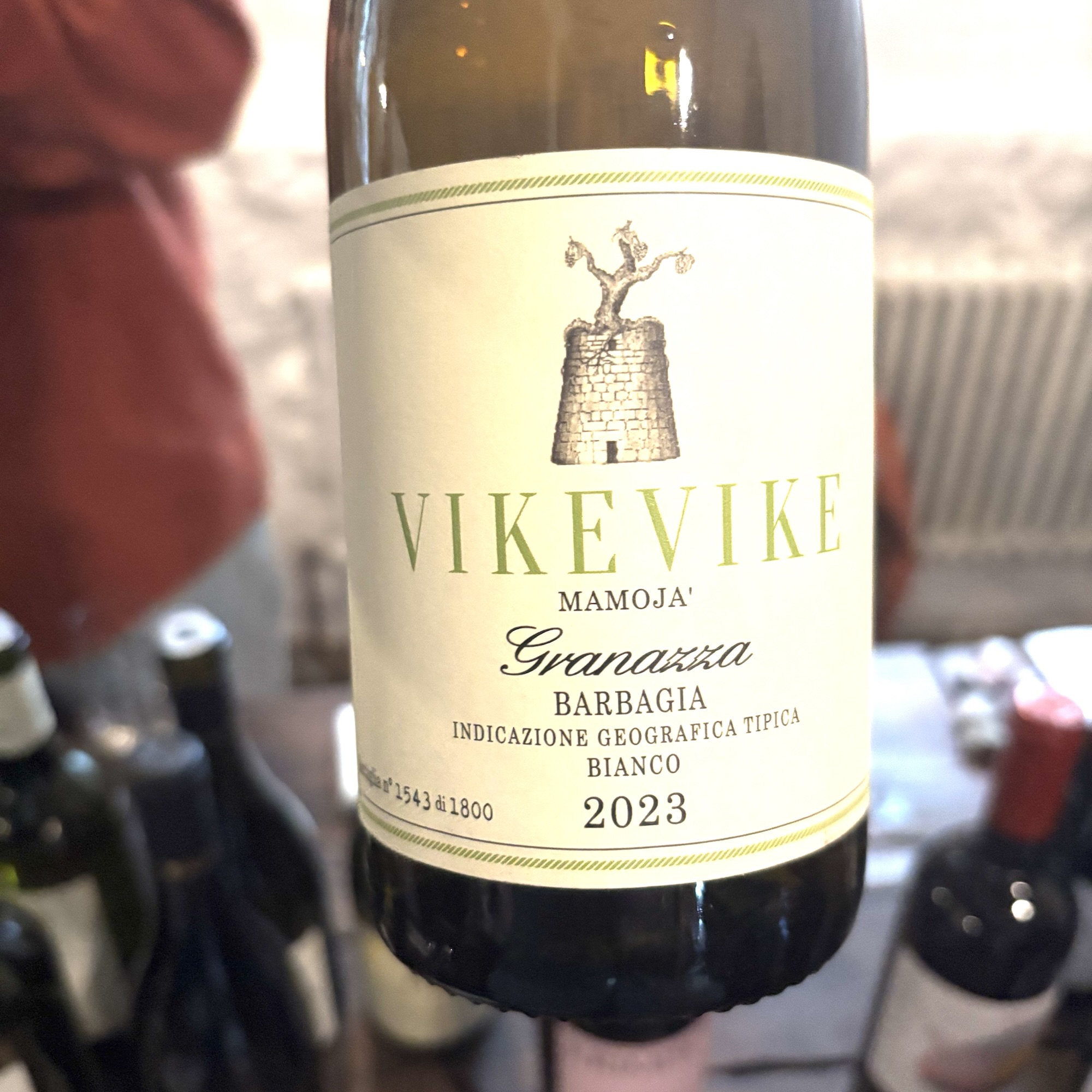
Vike Vike Barbagia Bianco 2023 comes from a part of Sardinia where the wines are uniformly expensive. Grape hunters will find the Granazza variety (I’ve seen several spellings but went with the one on the label) in this lovely Sardinian wine. Only circa 1,800 bottles are made from what was once a mere blending variety, yet one autochthonous to Sardinia for centuries. The wine, whilst not exactly Green Chartreuse, definitely looked green in the low light at Timberyard. There’s lemon on the nose, but definitely mint as well. Herbal notes dominate a mineral palate. It’s a fine wine, all the better for being slightly unusual, but the £63 retail price is beyond poor wine writers, I fear.
Aldo Viola “Krimiso” Terre Siciliane IGT is made from the classic white variety of northwest Sicily, Catarratto, here grown at Alcamo. This is a wine that saw a six-month gentle maceration of unpressed whole bunches on skins, but in stainless steel. The darker colour reflects this, as does the wine’s tannic structure, suggesting further age. It does show elegance and class though. (apologies – no photo).
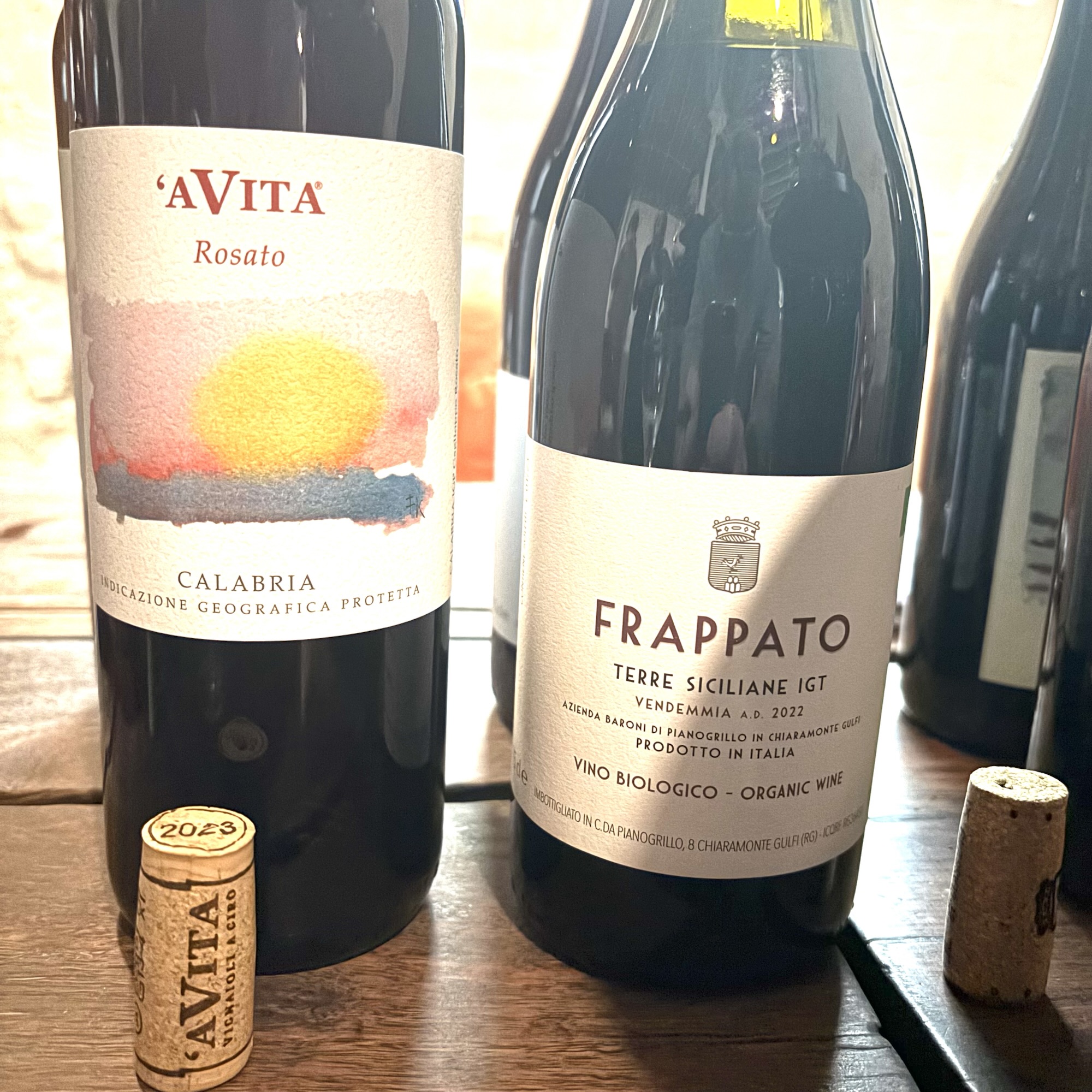
A’Vita Rosato 2023 is a pink Calabrian IGP wine from the Ciró region. I only know red Ciró from the large producer, Librandi, but this is a different kettle of fish. Some call producers like these the Ciró revolutionaries, and A’Vita arguably started the renaissance of small estate producers here.
The focus is resolutely on terroir, and the vines used here are actually a mere ten metres from the sea. The grape variety is Gaglioppo, one of Calabria’s obscure but well known varieties. Twelve hours on skins in stainless steel is enough to produce a pale cherry colour. Ageing, also in innox, is for a short few months after which you get a pure raspberry bouquet and, by contrast, a textured mineral/saline palate with a bitter-ish finish. Not your average Rosato, I love it and want some for summer. I really do. £31 retail. Greg says it tastes like Campari. Spot on Greg!
Pianogrillo Frappato 2022 is another Terre Siciliane IGT/IGP. Frappato is one of my two favourite Sicilian varieties (with Nerello Mascalese, of course, with which it is usually a total contrast). My Sicilian education involved plenty of Frappato from COS. This one sees a short fermentation and ageing yet it is more “serious” than many examples I’ve come across, and indeed more savoury. A very nice wine but not necessarily what you might expect. I like it.
I Mandorli Rosso Toscana IGT is (it says here) a non-vintage cuvée blended from 80% Sangiovese with 15% Cabernet Sauvignon and 5% Cabernet Franc, made and aged in concrete. It’s light and fruity, what I think would be a very good choice on a restaurant list, though this estate makes some expensive wines and this isn’t cheap, at least retail (if £32 is correct, that would double at least in a restaurant). I tasted an excellent Vermentino from their Suveretto vineyards at the Clay Wine Fair, my favourite of three Vermentinos there, but I think it costs more than fifty quid a bottle.
Sandro Fay Valgella 2021 is a single site Valtellina Superiore, one of several sold by Passione Vino. I’ve a big soft spot for Valtellina, a forty-kilometre slope along a river valley (the Adda) in Northern Lombardy. I’ll seek out Nebbiolo (known as Chiavennasca here) from anywhere outside of Piemonte, just to try it, and certainly in the hands of a few producers in Valtellina (especially ArPePe, of course, but also including Nino Negri and Sandro Fay) it makes wines to rival Barolo and Barbaresco. Valgella is one of the four “crus” you need to look for (along with Inferno, Sassella and Grumello). The vines are on terraces. I think “Inferno” gives you an idea of the “Côte-Rôtie-like” slopes, just below the Swiss border. Fantastic wine but would I be wrong to say drink at ten years old (plus)?


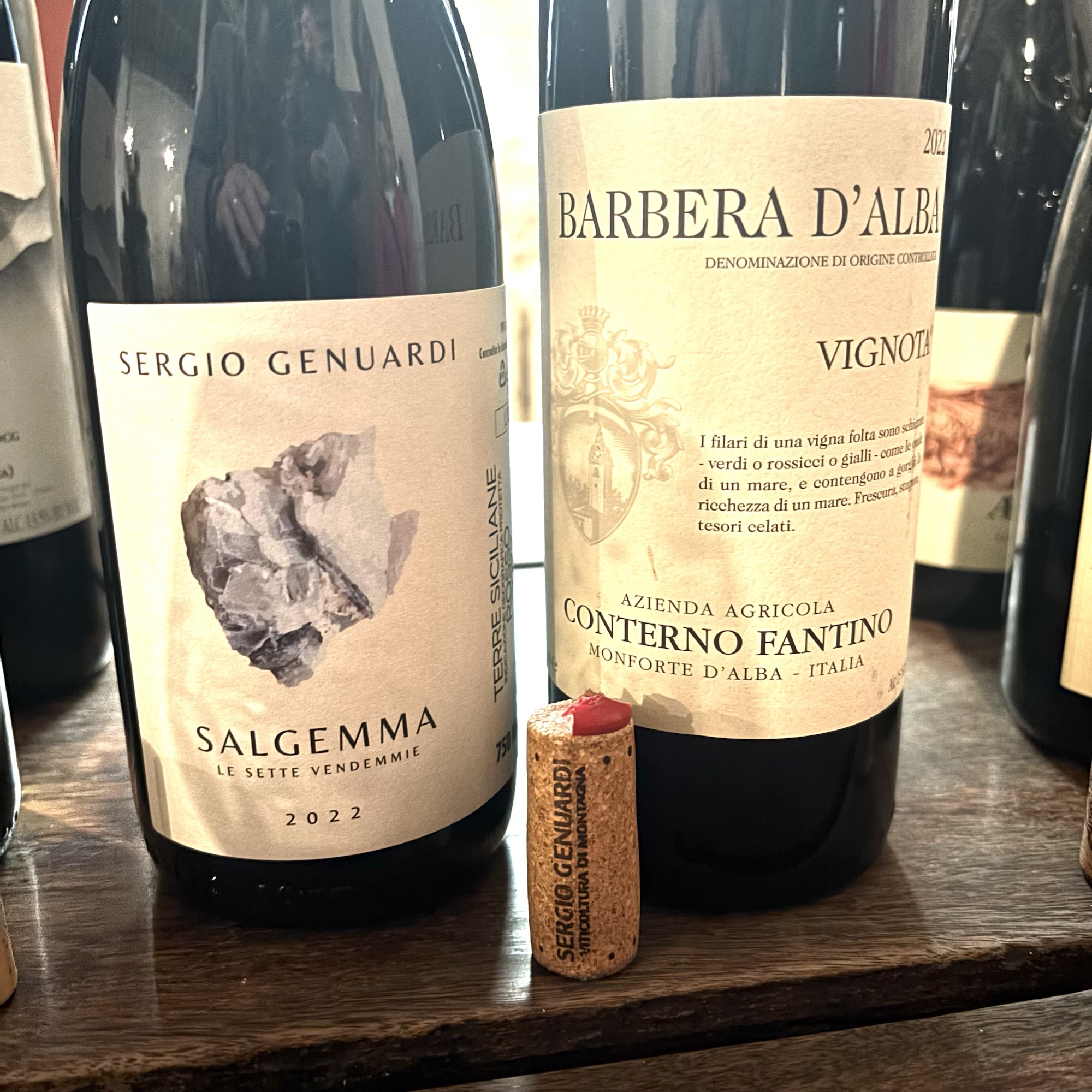
Sergio Genuardi “Salgemma” 2022 is yet another Terre Siciliane. PV seems to know Sicily very well, and in this case it’s quite pertinent. The variety in this wine is Nero d’Avola. Sicily has rather a lot of very commercial, sometimes over-ripe and over-alcoholic, Nero. This is thankfully not one of them. Grown inland from Agrigento, this is one of four cuvées made by Sergio from a single hectare of vines. This is only his second vintage and, although his output hardly seems commercial, this is a remarkable wine. It’s probably the best Nero d’Avola I’ve ever tried, and I have certainly drunk plenty of good ones among the dross.
Conterno Fantino is another very famous name on the PV roster, a producer of fine Barolo since 1982, based at Monforte d’Alba, one of the Langhe’s famous villages. Befitting a fairly large estate of twenty-seven hectares, they produce far more than just a range of Barolos (can’t bring myself to type “Baroli”). This wine (2022 vintage) is a single-site Barbera under the Barbera d’Alba DOC. What can I say. It is smooth, impressive, very nice actually, but it weighs in at 15% abv. Okay, I know 15% can be well-balanced but even half a bottle still gets you more than tipsy. Some people like to suggest you can have a glass of wine and still drive. Not this one. At £38 it’s pretty much on the nail for top quality Barbera these days, though.
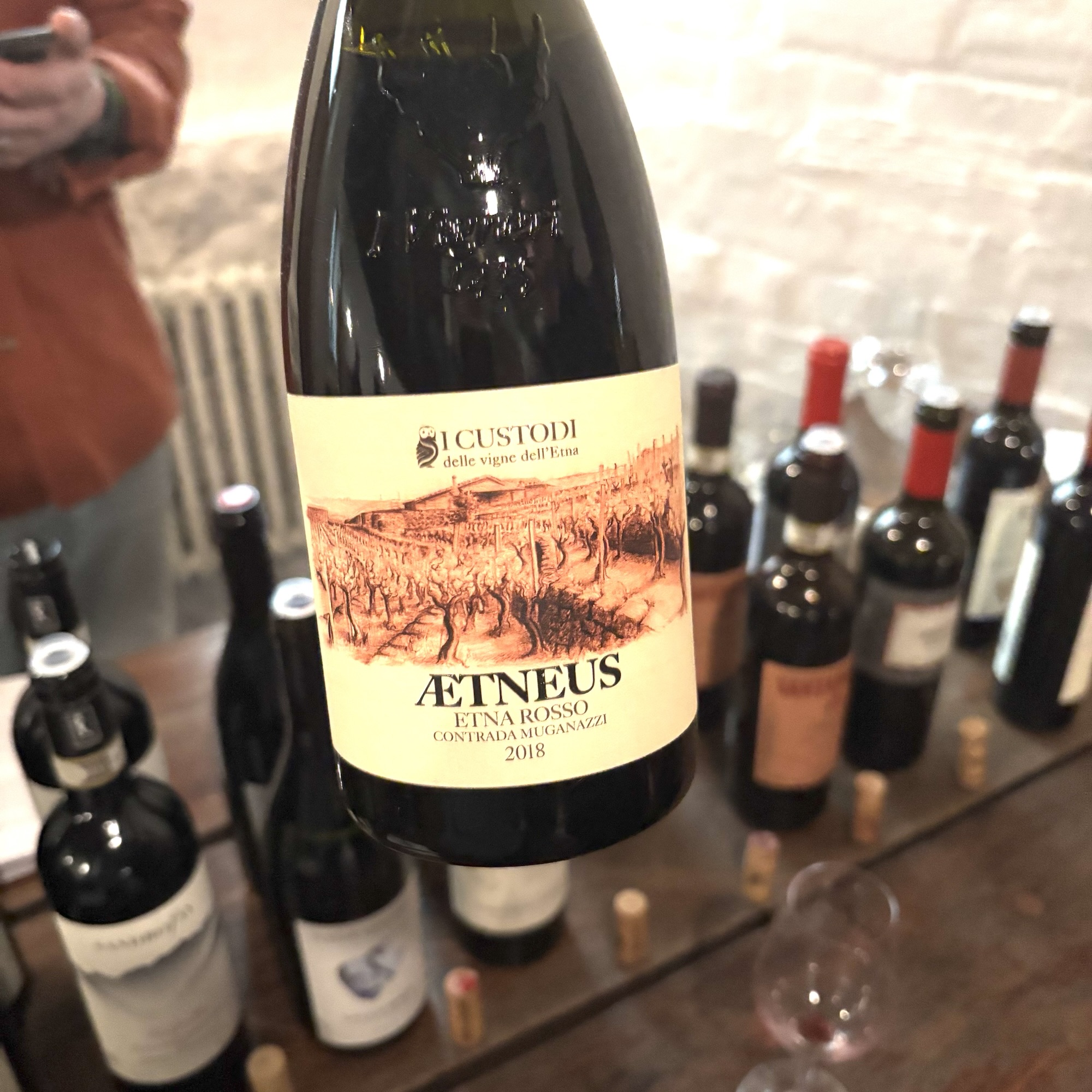
I Custodi “Aetneus” Etna Rosso 2018 is a nicely aged single Contrade wine from the northern side of the volcano. Vines are at 750 masl and higher. The varietal split is 80% Nerello Mascalese and 20% Nerello Cappuccio. This is a top producer and the vines are over 100 years old. Expect when aged to see similarities with very fine Burgundy. This wine in bottle looks sold out on the PV web site, but they do have magnums for £128. If you can afford it, grab some before someone decides to “tax the rich”. I think in magnum this would be magnificent with perhaps three plus years in the cellar. It will, of course, potentially live a lot longer.
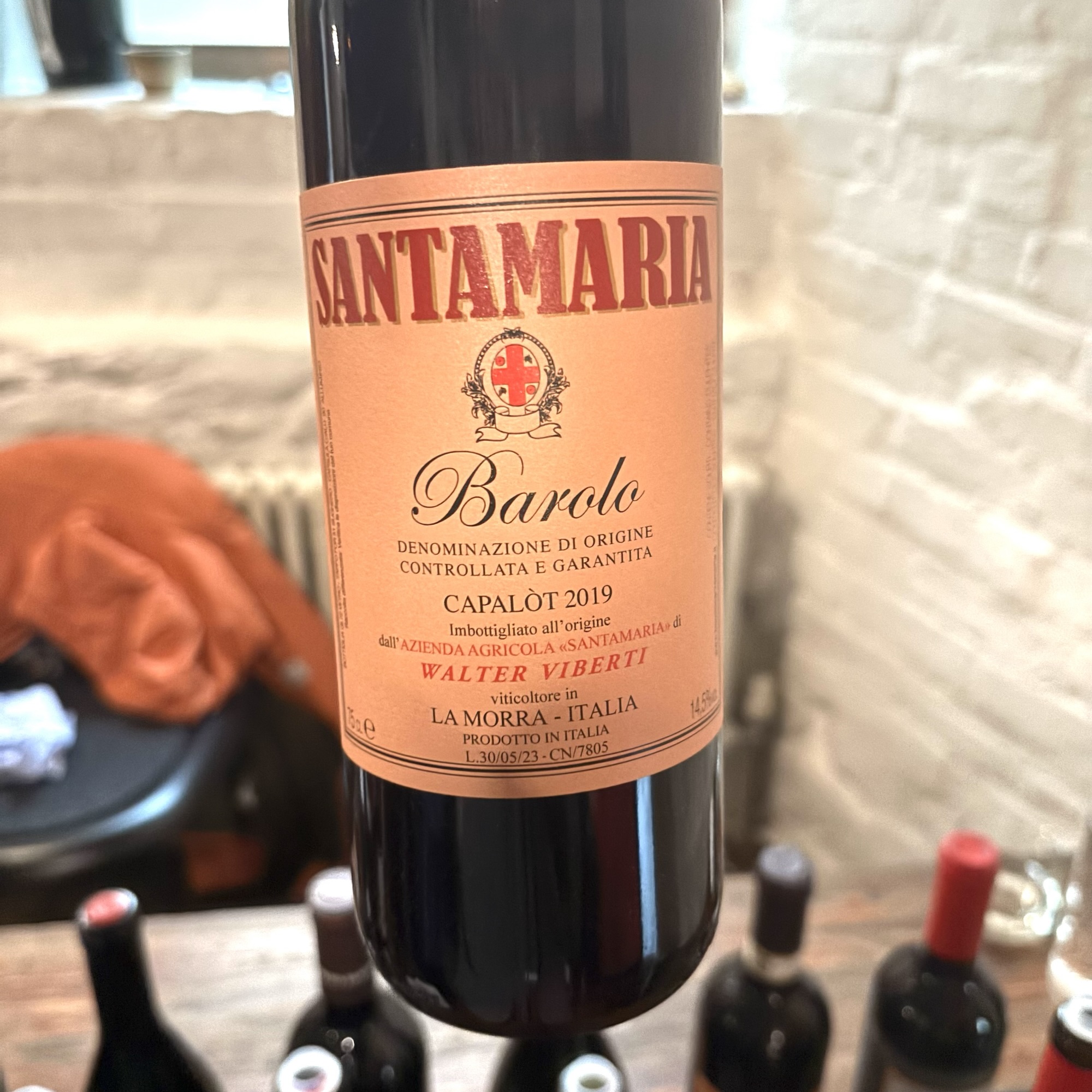
Walter Viberti Santa Maria Barolo “Capalot” 2019, is from a producer I’ll admit to never having come across. It’s a wine that is very nice, very engaging, and at the same time really interesting. I say the latter because its whole feel is very much old school. I’m old enough to have lived through the ridiculous, mostly media-hyped, so-called Barolo wars. Well, media-hyped except for one famous producer burning his father’s big old wood and bringing in some toasty new barriques, and a couple of brothers falling out.
Much as it was all just a bit of a pillow fight in the dorm, this single cru Capalot (from just north of La Morra, the only “Capalot” cru wine I can recall ever seeing) was aged in 1,000-litre old oak casks, as Barolo generally was back in the day. After two years in wood, it is kept another year in bottle before release. And yet this is a fairly approachable wine with a classic floral bouquet and some dark liquorice on a spicy palate. Although I usually age my Barolo, I’d love to see what this tastes like next Christmas.
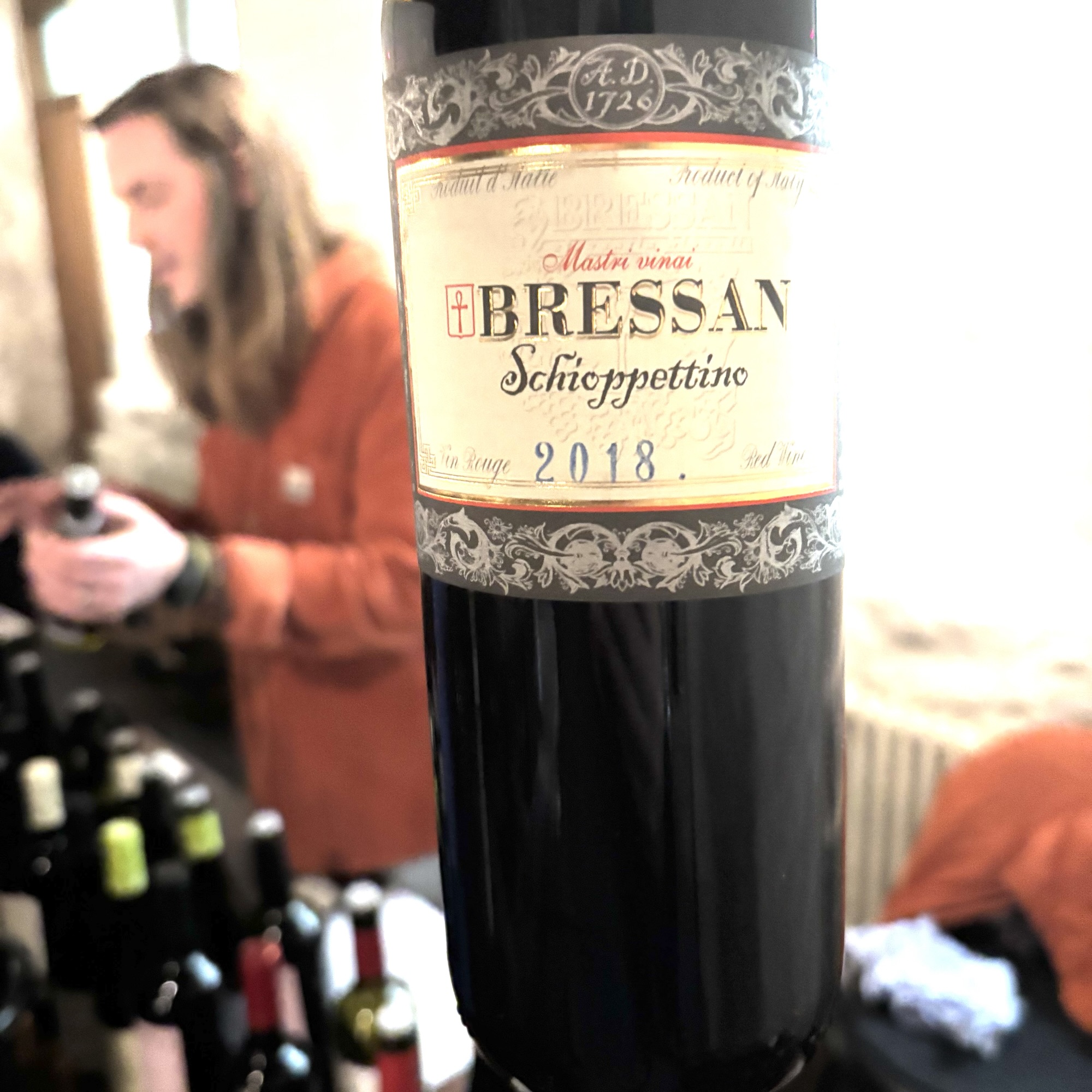
Bressan Schioppettino 2018 was one of my wines of the day here. From the Friuli region’s autochthonous red variety, this is bottled as Venezia Giulia IGP. We have all heard, I’m sure, about the high concentration of rotundone in Schioppettino, which gives the wine its peppery concentration, maybe with a hint of Szechuan Pepper heat as well. You will find high-toned acids here, with underlying blueberry fruit. It’s quite complex, partly I suspect as it was aged in five types of wood (oak, cherry, pear, chestnut and acacia) and is also very nicely different if not in fact unique. Top producer, stunning wine, which I suspect would benefit from a good many years ageing yet. Hmm, £59 retail. If you can afford it, highly recommended for cellaring. Sometimes the most exciting wines are just out of one’s grasp these days.
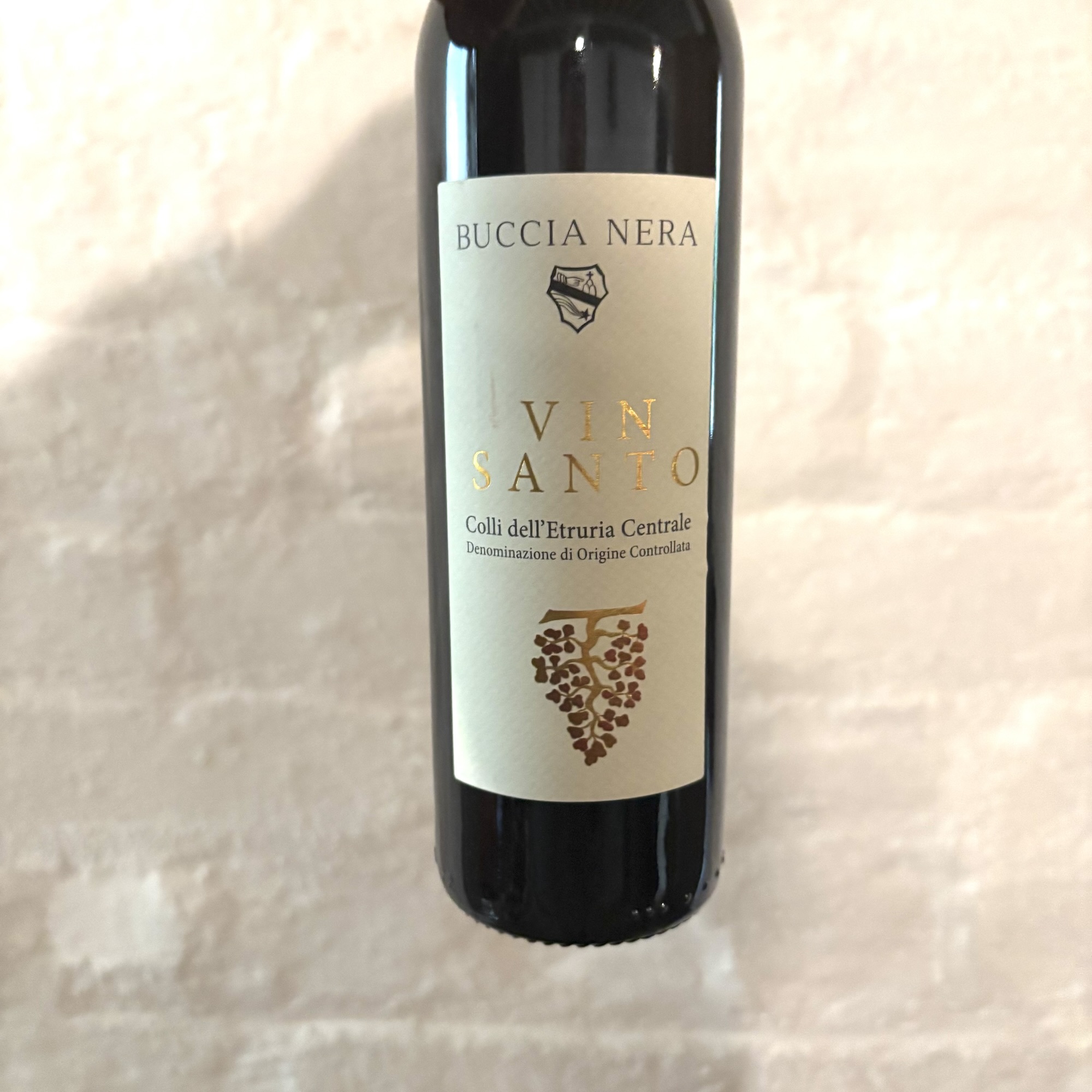
Buccia Nera Vin Santo Colli Etruria Centrale DOC 2020 was a lovely way to finish at the Passione Vino table. I didn’t spit this Tuscan Vin Santo. I’ve drunk these wines for decades, but they are now restricted to Christmas treats. This is a very easy drinking version. The nose is fresh and the wine is bright on the tongue, and even though it is just approaching the sweeter end of the VS spectrum these days (sweeter than the nose suggested, but not too sweet), it wasn’t at all cloying. The grapes are dried for four months and then fermented in chestnut and oak. The result is a whole list of fruits (fig, apricot, apples and raisins) on the nose and palate. Like all good Vini Santi, it is long and complex with decent acidity, and 15.5% abv, which is fine for a sipping wine. £37 for 500 ml, which I guess compares not too badly at all with current VS prices, and for these types of wines generally.
So how did we do? I’d say a draw in a very high scoring game, but then I’m only joking, it’s not a competition. My favourite wines here were, as with Carte Blanche’s offering, very hard to choose. Also, these are my own choices, based on both objective and subjective considerations. Try to see whether my notes on the other wines strike a chord with you.
I did say I loved the three wines from Verdicchio, Trentino and Liguria, with the Riesling Renano made by Maso Bergami topping that trio. I’d buy all three, but I would love someone in Edinburgh to stock that Maso Bergami (and tell me). The Vike Vike wine from Sardinia was just so intriguing, very special, but out of my league now. I really did like the A’Vita Rosato from Ciró an awful lot, and that’s certainly in my bracket (but don’t expect your typical pink wine). The Sandro Fay Valtellina Superiore would definitely be on my list, and so would I Custodi’s Aetneus from Etna. In order to cap what could be a long list, and this time an expensive one, I could easily be more than tempted by the Bressan Schioppettino, but I may need to buy some Lottery scratch cards first.
Great wines enthusiastically presented. Part Three will, as I said in my intro to Part One, cover the wines presented by David Morris (Mountain People Wine, Monmouthshire) and more generally, those of Edinburgh-based Element Wines.


 David Crossley's Wide World of Wine