
I thought I’d be starting the new year with a concerted attempt to drink some inexpensive wines, but whilst most of these wines (twelve bottles over parts one and two) are around my usual £30/bottle mark, there are a few bottles which cost less, one of them spectacularly so.
The half-case featured in Part 1 begins with a biodynamic blend from Alsace, and aged “sous voile”. Then we get what must be a quite rare Burgundy by now, followed by another very different Pinot Noir, moving from one of France’s most famous regions to one of her least known. A dramatic shift takes us to Australia’s Riverland and a grape variety I had never heard of, before our France-dominated first part takes in a Vin de France from the Beaujolais and a great value Chardonnay grown on the fringes of Chablis.
One minor apology. Taking photos of bottles next to Christmas decorations seemed like a good idea in the early days of January, before they get put away for another year, but I admit it does seem odd posting them four days into February.
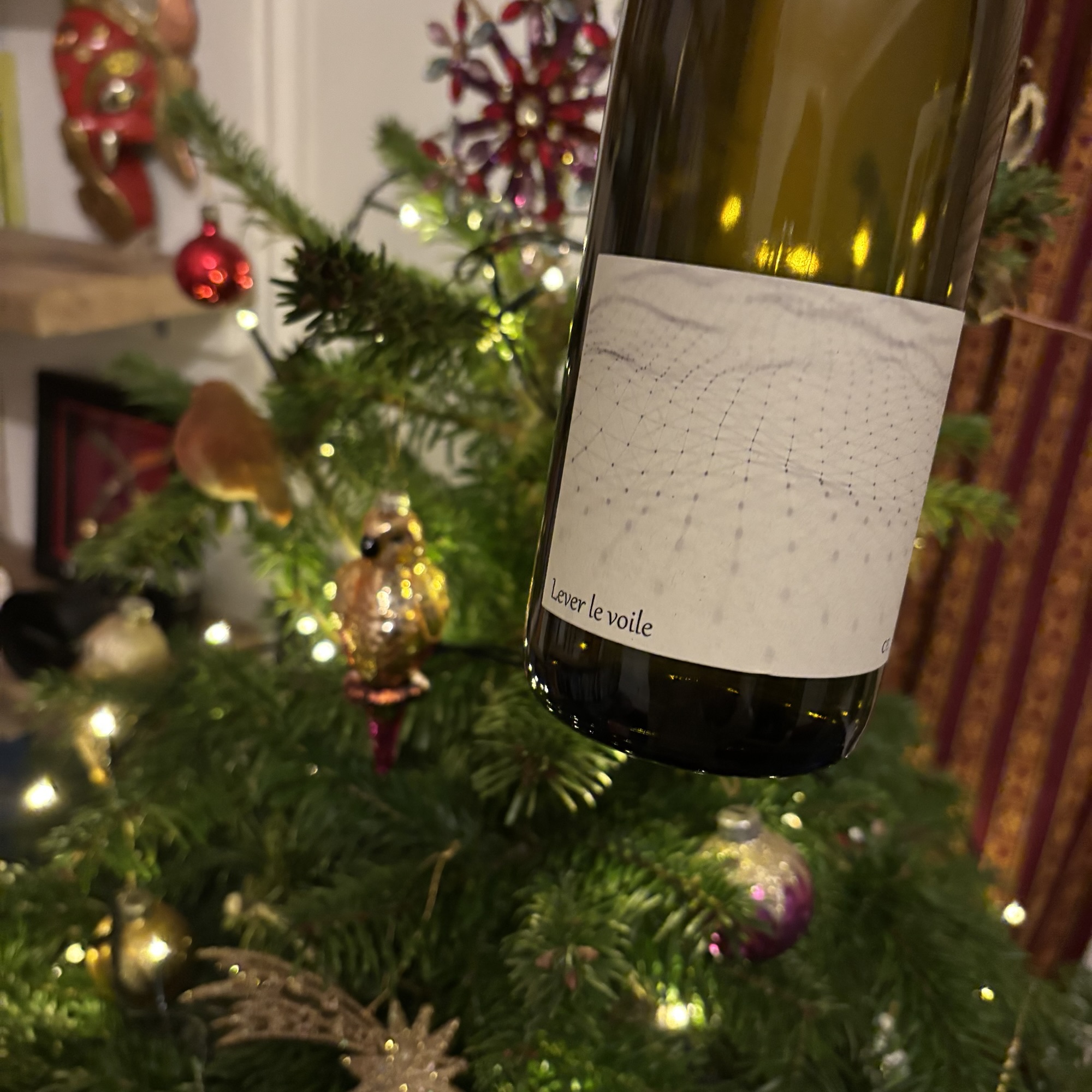
“Lever le Voile” 2020/21/22, Charles Frey (Alsace, France)
This domaine is run by a family which emigrated to Alsace from Switzerland in the early 1700s. Charles Frey started Maison Charles Frey in the 1960s, based at Dambach-la-Ville. He was joined by his son, Dominique, in 1984. Dominique converted to organics in 1997 and Charles’s grandson, Julien, came on board in 2003. Together they farm 14 hectares of vines.
Whilst not a natural wine, all the domaine fruit is organic and this bottle is part of a range of biodynamic wines. The blend is Sylvaner and Pinot Gris off granite. A Sylvaner solera was started in 2020. This wine, comprising Sylvaner from the three years in the solera, and Pinot Gris from 2021, were aged sous voile (under flor).
The colour is yellow gold. The bouquet shows some flor influence, but by no means overwhelmingly so. It’s certainly milder than a Vin Jaune, or a Fino Sherry, by a long way. You will find peachy stone fruits on the nose, along with a stone fruit texture on the palate. There, you will also find grapefruit acidity, orange peel maybe erring towards marmalade, ginger, apricot and a touch of hazelnut. Or is it walnut? I don’t pretend I can always tell the difference in wine, unlike in “real life”.
Dry but with a certain richness, more than I’d expect in a wine of only 12.5% abv, it has pretty good length too. It maybe lacks the excitement and certainly the wild side of the most adventurous fully natural wines from the region, but it’s definitely a wine I enjoyed, very much so. Also, hey, Alsace under voile. You don’t see that every day! I liked it enough that I later bought a bottle of another Frey white blend to try.
Lever le Voile cost £36 from The Solent Cellar.
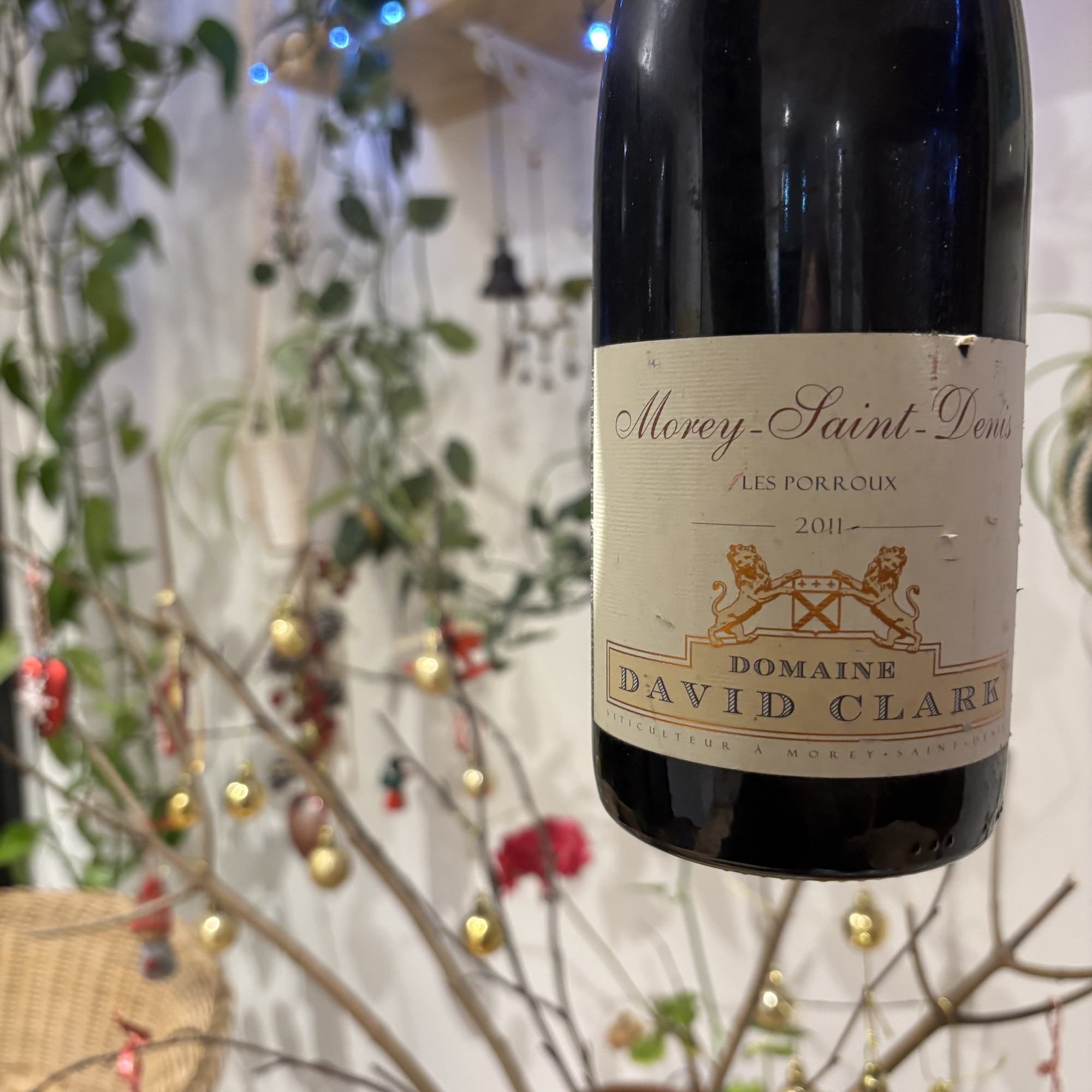
Morey-St-Denis “Les Porroux” 2011, Domaine David Clark (Burgundy, France)
David Clark was a formula One race engineer for the Williams team before he started a tiny artisan domaine in the village of Morey-St-Denis on the Côte de Nuits in 2004. He started out making Bourgogne-Passetoutgrains and then Bourgogne Rouge of exceptional quality, before “adding a barrel of Morey-St-Denis in 2006” according to Jasper Morris (Inside Burgundy, Berry Bros & Rudd Press, 2010).
Although David went on to add a little Côte de Nuits Villages and Vosne-Romanée village wine in the following years, ending up with a total production of around 4,000 bottles per year, this domaine was sadly short-lived. This meticulous and super-talented winemaker decided he’d had enough soon after and gave up, 2012 being his last vintage.
I was very lucky to meet David, although it was a very tough day. Lunch, with a stunning array of fine Burgundies, was in the boardroom at Berry Brothers, followed by a dinner at 28-50 in Marylebone, both in fact with Jasper Morris, for whom David Clark was something of a discovery. He was a lovely man, self-effacing and to my perception, ego-free. His wines were genuinely beautiful, even those of the lowest appellations. I do wonder what he is doing now.
This 2011 was my last bottle of David’s wine. As with everything he made, he didn’t use any chaptalisation, all old oak and everything was bottled by hand from the barrel. I don’t know what he used for pest and disease control though. The bouquet here is deep and evolves in the glass, slowly and gently. The fruit is, like the overall palate, velvet-smooth except for just a little texture on the finish. The acidity is pure fruit in nature, raspberry and red cherry.
Even objectively, this is extremely good, and drinking very well. Subjectively, the experience was bound up with a lot of memories, both of the many wonderful David Clark wines I have drunk, for that time I met him, and also for what seems almost a previous life, in London. I was reminded of that life when I unexpectedly bumped into Jasper in the Berry Bros shop in London just days later.
You can still experience this wine, at least in the 2012 vintage. Berry Bros has a six-pack of it for £500 in bond.
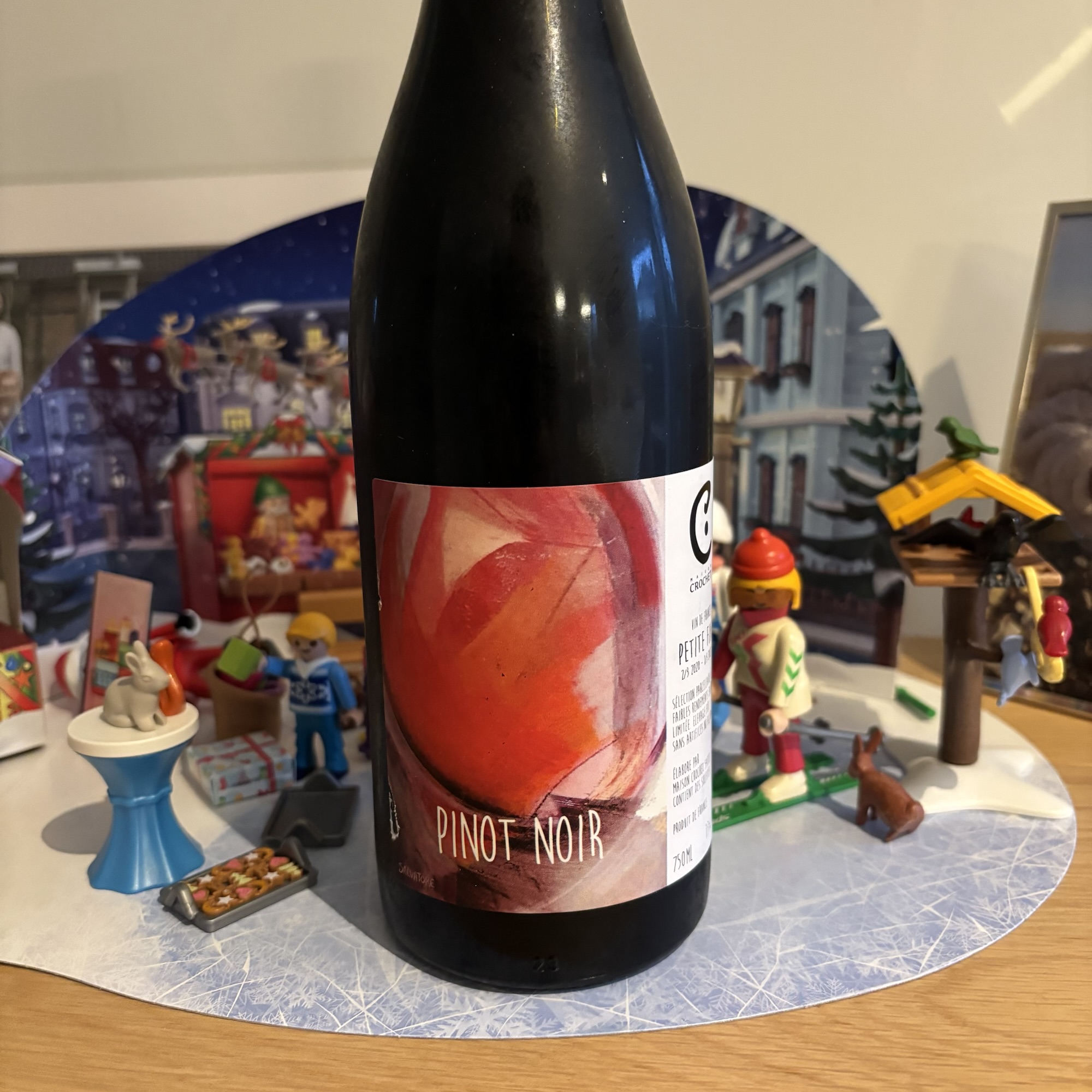
Pinot Noir “Petite Fin” MV, Maison Crochet (Lorraine, France)
I’m drawn to try the whole range of Crochet wines, partly because they come from an obscure region, though of course they are also good. There are two Pinot Noirs I have seen at this retailer (see below), and this is, by about eight or nine pounds, the more expensive.
Maison Crochet might sound like a negoce house, but it is in fact a five-hectare family domaine at Buligny, around 30km southwest of Nancy. If they wanted to be part of an AOC it would be the Côtes de Toul. The reason they opt out? In 2017 they began farming organically, and current incumbent Wilifried Crochet has now moved to making wines via biodynamics, and natural wines, which this small appellation’s policing committee presumably doesn’t get!
This cuvée is a single parcel, but it is a blend of two vintages, two-thirds 2020 and one-third 2021. Fermentation was in stainless steel with a ten-day maceration on skins. Ageing was fifteen months in a mix of old oak for the 2020, and around seven months in stainless steel for the ’21. A “tiny” amount of sulphur was added. Nothing else.
I guess I’d call this structured but generous. It has nice fruit. It may not have the class of the previous wine, but Wilifried Crochet is making really interesting and characterful wines somewhat off the beaten track. Also, they mostly happen to have some nice labels, although oddly the cheaper Pinot Noir, which I am yet to try, has a rather dull one. I shall still get round to trying it though, because it costs under £22 and this superior cuvée cost £30. Imported by Sevslo in Glasgow, my bottle was purchased at Cork & Cask in Edinburgh.
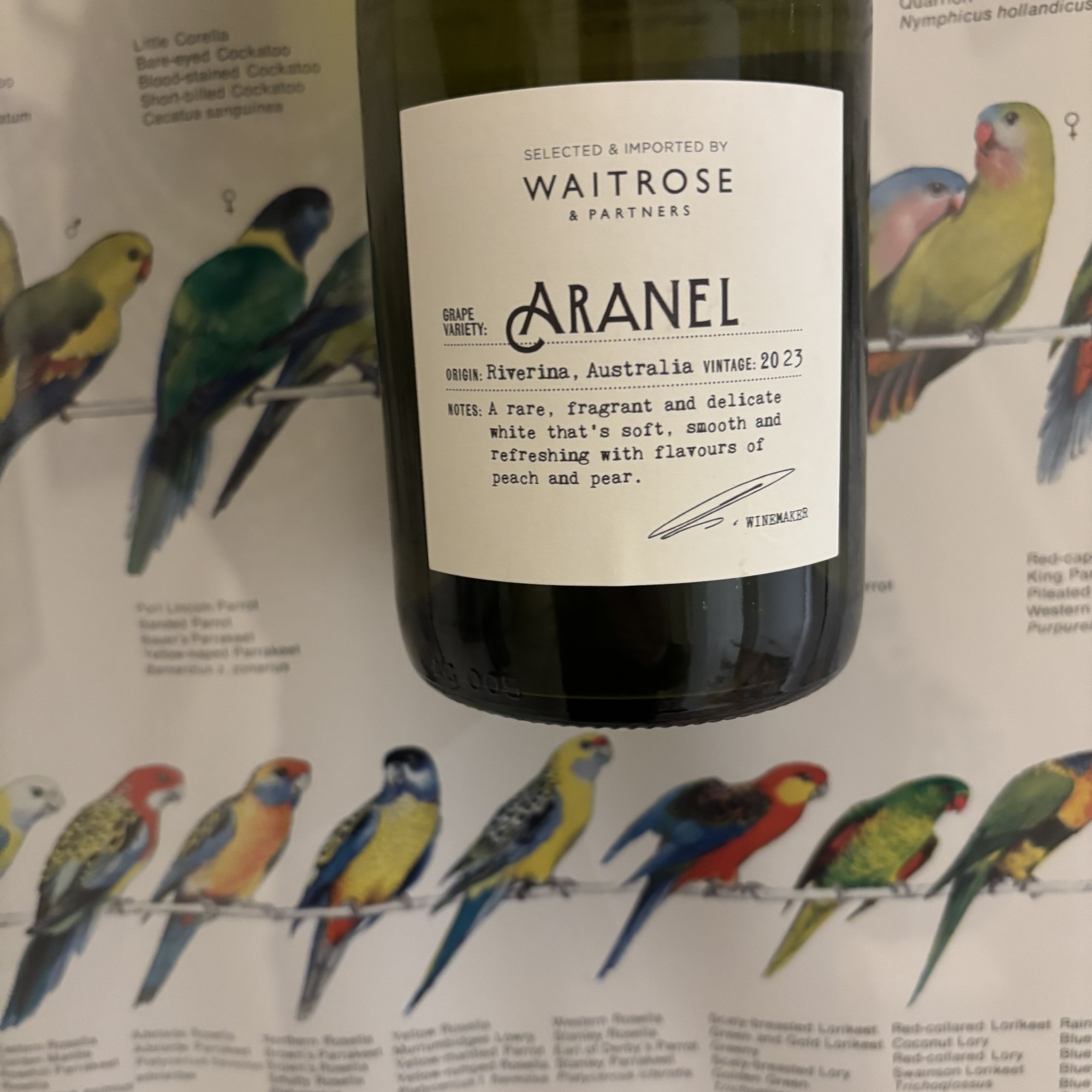
Aranel 2023. Berton Vineyards (NSW, Australia)
This is a wine sourced in New South Wales’s Riverina region for Waitrose Supermarket’s “Loved & Found” range. Has anyone else never heard of this grape variety? It appears to be a crossing of Grenache Gris and St Pierre Doré (France, 1961 by Paul Truel), the latter being allegedly a distant relation of Chardonnay (via Gouais Blanc, of course). In its native land it only really appears in the small, Upper Loire, region of Saint-Pourçain, although on my admittedly only visit to St-Pourçain I certainly didn’t come across any mention of it. They do have a fair bit of Tressalier (aka Sacy) up there though.
In Australia you will only find Aranel in Riverina, and within that region only Berton have taken it upon themselves to grow it. That is strange because most sources suggest it is a variety full of potential, good in drought but with equally good disease resistance, and with potential to produce grapes with both good sugar and acids.
I’m not sure why it hasn’t caught on? The wine is clean and fresh but it also has the body you’d expect from a wine of 13% abv, meaning it’s not big and overblown but there’s definitely a little weight. It combines attractive floral notes with broader peachy fruit in a simple smooth-bodied white.
As the marketing blurb says, it has a “refreshing dryness [and a] pithy finish”. It’s certainly by a good stretch both the nicest and the most intriguing cheap wine I’ve drunk for a long time, even better than the M&S Refosco I wrote about in December, though I wouldn’t want to go overboard. It’s no fine wine, simply a great drinkable, food-friendly dry white wine, but at £8.99 it delivers much more than I certainly expected. Certainly, the Waitrose buyers have done well enough to make me look out for more in the Loved & Found range when I’m next in a branch.
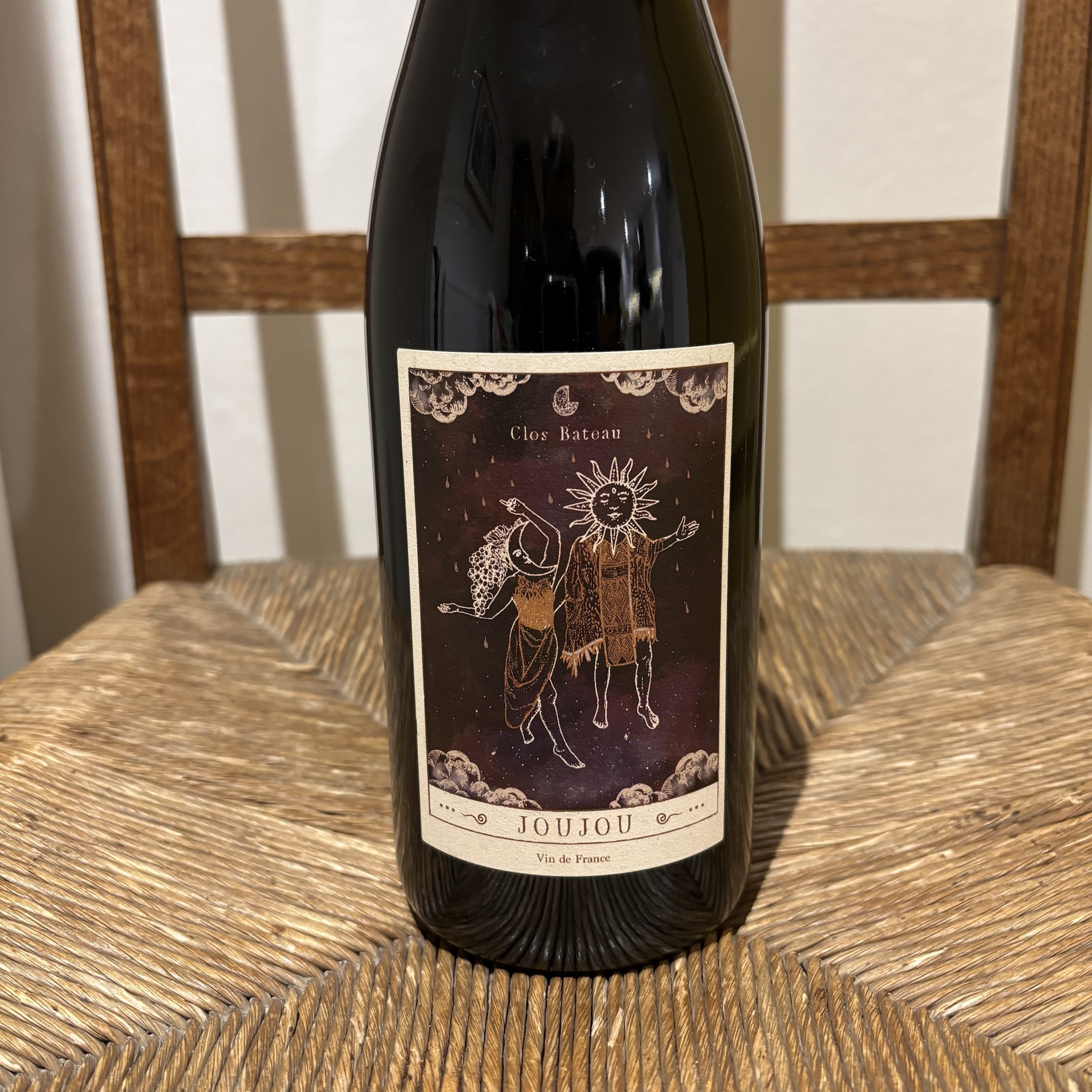
Joujou Vin de France 2022, Clos Bateau (Beaujolais, France)
This was a bit of a find, though it wasn’t me who actually found it. Instead, I’m grateful to Edinburgh wine polymath Isobel Salamon who found it and passed on the recommendation. I was later told by the retailer that the producer may not send any more to the UK, which would be a shame.
Sylvie and Thierry Klok-de-Visser started their five-hectare vineyard in Lantignié, in the Beaujolais region, in 2019. Their intention is to create a biodiverse ecosystem where vines play only one part in their eight-hectare farm, which also includes fruit and nut trees, sheep, pigs, and of course herbs for their biodynamic preparations.
Of that 5ha of vines, which are certified organic, they have 3.4ha in cultivated production, plus another 1.6ha of old wild vines, which they plan to keep as such. Joujou is made from Gamay taken from three small plots at around 330 masl. The fruit is fermented as whole bunches (some via carbonic maceration, some semi-carbonic and some direct press). Ageing was for ten months in what they describe as a large fibreglass dome. A run of 5,300 bottles was produced.
The result is a vibrant old vine bottling which has a beautiful, verging on soulful, bouquet of mostly cherry but it’s also floral. The fruit, off granite, quartz and clay, is elegant and combines Gamay deliciousness with something, how can I put it, intellectual? If I went too far there, it’s definitely classy. Although I’d never heard of it, nor the Klok-de-Visser family, apparently the wine is quite sought after in France.
This cost around £30 from Edinburgh’s Communiqué Wines, based on the edge of Stockbridge. The importer is Ancestrel Wines, based in London’s Forest Hill, where they have a bottle shop and bar. I had an excellent Swiss Petnat made by Matthias Orsett from them, via Spry Wines, a while ago (see Recent Wines October 2024) and their web site is full of interesting bottles.
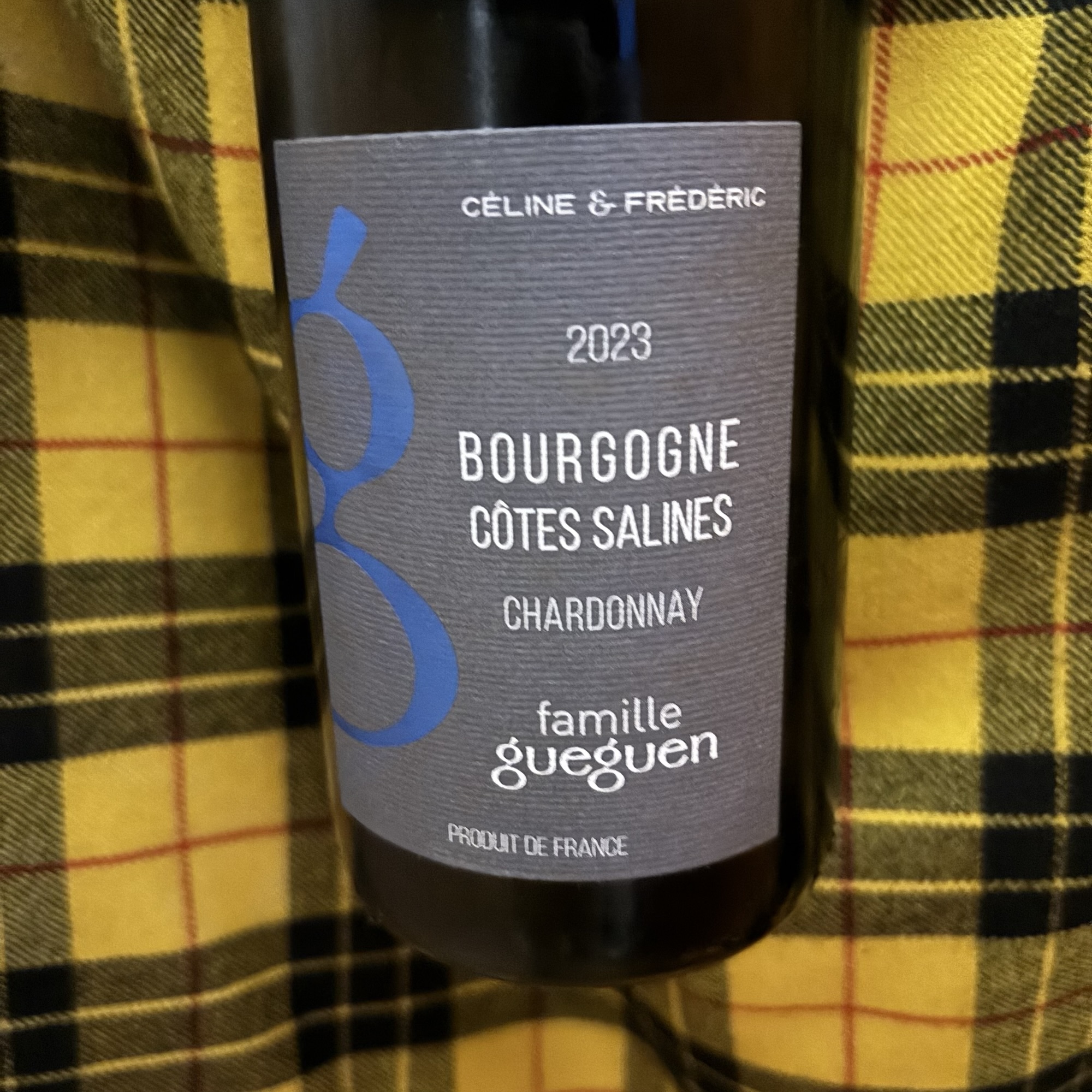
Bourgogne Côtes Salines 2023, Céline & Frédéric Gueguen (Burgundy, France)
The Gueguen family, Céline and Frédéric, farms vines in and around Chablis, based in the village of Préhy, which is situated at the southern end of the Chablis AOC. Céline previously worked on her father’s estate but created her own domaine with her husband in 2013.
This Côtes Salines is Chardonnay made from vineyards on the same Kimmeridgian limestone as Chablis, over Jurassic clay with Burgundian limestone, but is just outside of the appellation. The vines are a very respectable 30-years-old or more. Aged in stainless steel (no oak) it spends ten months on lees before bottling.
This wine doesn’t pretend to be Chablis but it is a clean and fresh Chardonnay with a bouquet of delicate white flowers, and a palate which has a mineral and saline character, reflecting its name well. In fact, I haven’t been able to ascertain whether the Côtes Salines actually exists (presumably it does, otherwise it would not be allowed on the label?). I’d call this cuvée precise and modern but not lean (alcohol is 12.5%).
It’s a fairly low intervention wine, made with indigenous yeasts, but hardly a natural wine. For one thing, the grapes are machine harvested. However, it is very good for its price. Now you can pay up to £25 for this wine, but Solent Cellar in Lymington (Hampshire) imports a range of wines from Céline and Frédéric Gueguen direct (ten lines), and they knock this out for a very palatable £16.99. Other sources include Cockburns of Leith (Edinburgh, vintage listed as 2020) and The Good Wine Shop (London branches)(2022).

 David Crossley's Wide World of Wine
I am a huge fan of Gueguen wines including this Côtes Salines. Such a steal at 16.99! Great question about the area.
LikeLiked by 2 people
They have kind of hit the hot spot for value versus quality with this one.
LikeLiked by 1 person