
Does anyone actually remember December 2024? With the new year now upon us, 1st December, when I drank the first wine here, seems a very long time ago. That wine was a supermarket Refosco from the Veneto. Here in Part 1, it is followed by a Crémant from the Jura, something a little bit different from England, a salty white from New Zealand, a juicy Austrian red, and a majestic thirteen-year-old German Riesling. All are low intervention wines, except for that first wine. Its inclusion is on account of its interest, but more of that below. Part Two, with six more wines, will follow later.
Refosco 2023 Trevenezie IGT, bottled by Domus Vini for Marks & Spencer (Veneto, Italy)
This is an IGT established originally in 1995, and renamed Trevenezie in 2017. The large zone covers the same ground as the “Delle Venezie” DOC, meaning all of Fruili-Venezia-Giulia and Veneto. That’s around 5,000 hectares. The DOC has a focus on Pinot Grigio, so whilst the IGT may produce far less wine, those wines might be more interesting.
That is certainly is the case with this wine. It is part of UK supermarket Marks & Spencer’s “Found” range, which highlights what, to most people, are obscure grapes. Refosco is autochthonous to this region. I’m sure quite a lot of readers will have tried one before, but I’m equally sure most people generally haven’t.
We have a wine “bottled” by a presumably large wine company and it has no credentials for being organic, nor for its viticulture being sustainable, although it is reassuringly listed as “vegan” on the supermarket’s web site. The wine itself is dark as ink. The bouquet is mainly dark fruits. Blueberry is to the fore, but there’s dark cherry too. The fruit on the palate is dense, but we get texture and grip (I think the wine was aged six months, presumably in stainless steel). There’s also that typically Italian slightly bitter finish which gives a savoury element, and which I think makes such wines more food-friendly.
The winemaker was Giacomo Vedovato and he was using a particular Refosco clone called “peduncle rosso”. That’s probably meaningless for a large-production wine, except that this does have character and personality, expressed most through the wine’s wild edge. I didn’t hesitate to include it here because it has more personality than its price tag suggests. I think it will be a while before I drink a wine quite this cheap that I find worth bringing to wider attention.
That price is £8, available from Marks & Spencer as part of their Found Range. Waitrose supermarket has a similar range, called “Loved and Found”, and I’m about to drink something genuinely obscure from that – the Aranel variety, from Australia’s Riverina region.

Crémant du Jura « Indigène » Extra Brut, Domaine A&M Tissot (Jura, France)
If you read my “wines of the year” article published a week ago you will have come across my inclusion of this wine for the month of December. The rest of this first part, and the second part which follows, show just how much competition Stéphane Tissot was up against to claim one of my twelve spots, one for each month of 2024.
To clear things up, as we always do when it comes to this producer, Domaine A&M Tissot is named after André and Mireille, the parents of the now renowned Stéphane. Stéphane runs this domaine, located on a lane to the left of the church in Montigny-les-Arsures (close to Arbois) with his wife, Bénédicte. The biodynamic wines they make are as fine as any in the Jura, and one or two are as fine as any in France.
As with the various Dupasquier domaines in Savioe, there are other Tissot domaines in and around Arbois and some have a better reputation than others. I get annoyed when the occasional wine merchant importing the wines of one of the other Tissots uses just the surname in a confusing (to customers) way (rant over, but some do the same with “Overnoy”). Surely no one would argue against this particular Tissot being in a class of its own.
This Traditional Method sparkling wine is made from four varieties. We have 50% Chardonnay and 40% Pinot Noir, with a little dash, 5% each, of Trousseau and Poulsard. Ageing before bottling for the second fermentation is in oak. The unusual thing about this wine is that the prise de mousse was, at this time, made using the fresh must from his Vin de Paille, rather than a sugar solution. I’m not sure why but this wine, disgorged in June 2018, was one of the last Indigène to use this technique. Stéphane now uses frozen must.
So, this has seen six years post-disgorgement ageing, and it always shows as one of the finest wines to be labelled as Crémant in France. The acids are still fresh and the spine of the wine has a brittle delicacy, and yet there is that roundness of fruit from ageing, along with some more bready tertiary elements. You get richness, and you get a nuttiness. There is definitely plenty of yeast autolysis to get fans of aged “Champagne” excited. A gorgeous, complex, wine that surely Champagne afficionados would love as much as fans of Le Montrachet should love Stéphane’s Clos de La Tour de Curon Chardonnay.
This bottle was purchased at the domaine’s shop in Arbois. In the UK expect to pay around £40-£45, perhaps from Lay & Wheeler, Berry Bros, Oxford Wine Co, Shrine to the Vine, Gnarly Vines and The Sampler.

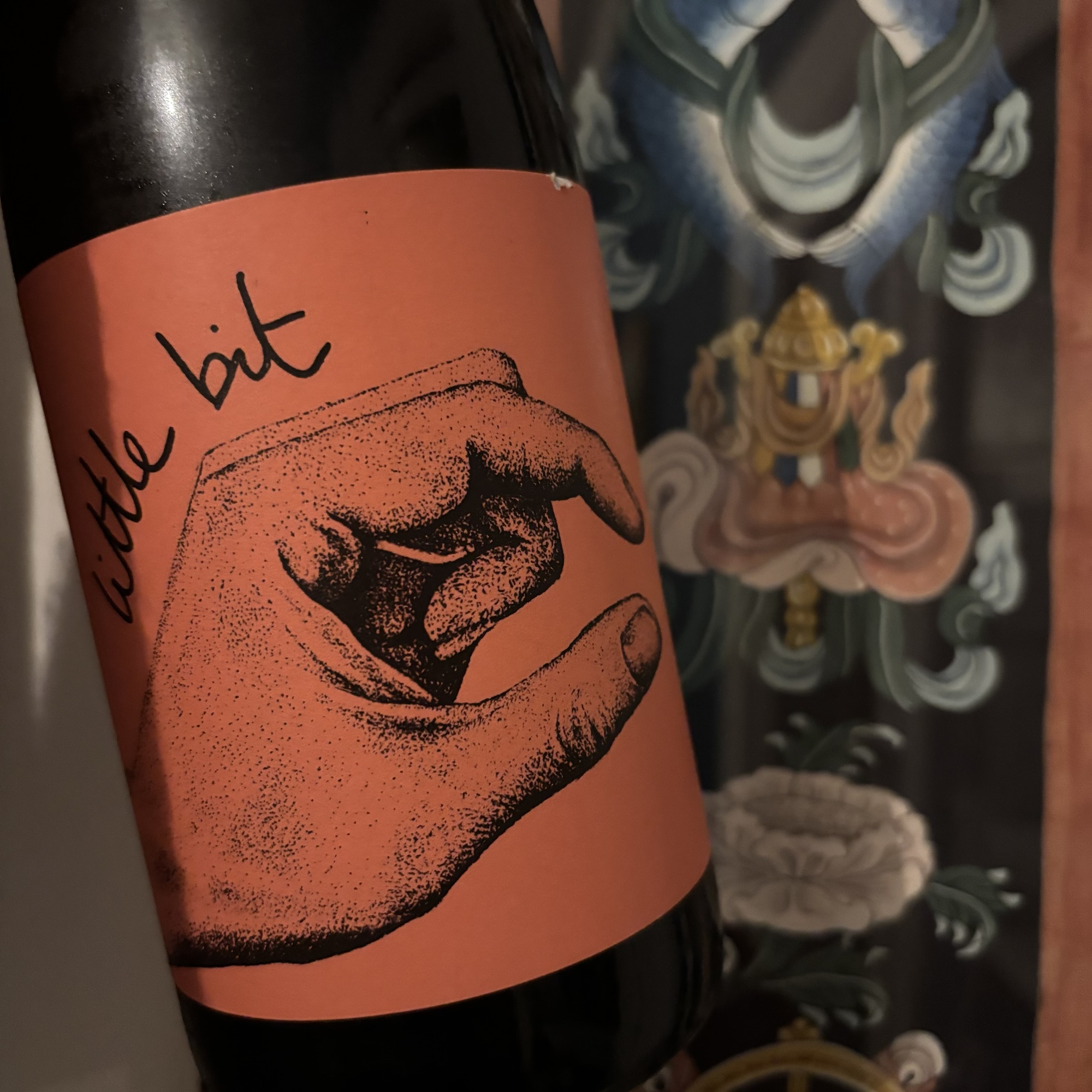
Little Bit 2023, Westwell Wines (Kent, England)
This is the wine that is a little bit different, excuse my pathetic pun. Westwell, as you may know, is one of my very favourite English producers, and for a while they have been making excellent still wines alongside their sparkling output from vineyards on the slopes of The Downs, along the old pilgrim route to Canterbury. This wine is something of an experiment.
When Adrian Pike and his team press the grapes for the Westwell sparkling wines they do so gently, in order to extract less of those elements which would intrude on those wine’s undoubted finesse. That leaves a fair bit of juice in the grapes that might go to waste. They have been experimenting with the juice of what is the third pressing of Pinot Noir and Pinot Meunier and in 2023 put this juice into stainless steel tank, where it underwent “a constantly evolving wild ferment”.
The result is to say the least both tasty and really interesting. The bouquet is gently floral and (red) fruity. The palate has plenty of red fruits from what in any case was a very fruity vintage, and there’s a little bit of texture too, which grounds it all. The alcohol is just 10%.
The resulting wine has the delicacy of a Rosé, matched by a pale pink/peach skin colour. There’s just a little grapefruit nip on the finish. It’s great fun, even more so as the price tag is just £16. I’m not sure how much they bottled, but this is a genuine bargain for a fun, delicate, natural wine. Westwell wines are always reasonably priced, compared to what some producers ask for their still wines in England, but this one is even more so.
This bottle came direct from the estate as a rare sample for me to try. My opinions here are genuine. I loved it for what it is. I haven’t been alone in saying positive things on social media.
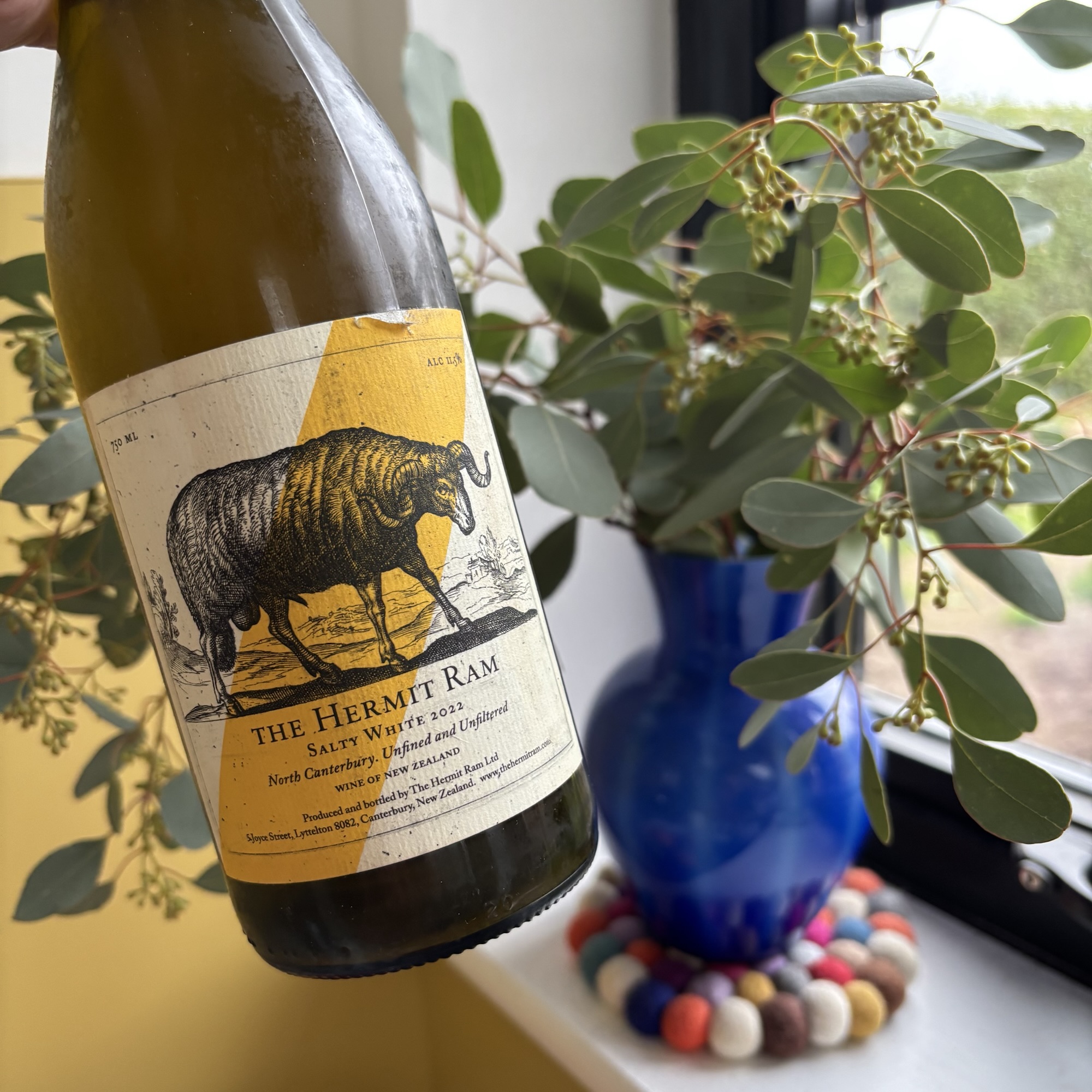
Salty White 2022, The Hermit Ram (North Canterbury, New Zealand)
This is also something of an experimental wine, this time from Theo Coles, the master of NZ artisan natural wine from organically grown fruit. We have North Canterbury-grown Sauvignon Blanc, Riesling and Pinot Blanc fermented in a mix of stainless steel and amphora, with two barrels oxidatively aged, developing a layer of flor. It all sounds scarily “un-New Zealand”, doesn’t it, encouraging flor in a country whose wines began with the super-cleanliness of their dairy industry transferring to their modern wines. You wonder that this wine was allowed to leave the country.
The colour is quite deep gold. The first notes on the nose are pineapple, then tangerine. As you’d expect from the name, the wine is pretty packed with salinity. I’d say more so than any overt flor-induced nuttiness, yet there are some flavours of hazelnut which appear after a while, along with zippy acids and a pleasant hint of bitterness, or perhaps less bitter but just savoury.
The result is slightly away from the norm, certainly for New Zealand, but I think this is the most exciting of Theo’s always exciting wines I’ve drunk for a while. You might not immediately say “flor” but it does have a slightly oxidative feel under the fresh acidity.
This was £26 from Cork & Cask (Edinburgh), imported by Uncharted Wines. Excellent value in today’s market, though I’m tempted to say that in our post-Brexit, post-inflation, market, £26 is the new £18. The first three wines in Part 2 (to come) all cost £26 as well. I would say that all four represent a great price/quality ratio, or “bang for your buck” as others might say.
Malinga Rotburger 2021, Weingut Heiss (Niederösterreich, Austria)
Back in November 2023 I drank Christophe Heiss’s “Hotrot”, a blend of Zweigelt, St-Laurent and Blauburger. This wine is a varietal Zweigelt, but Christophe has chosen to label it with its alternative grape name, Rotburger. Herr Zweigelt, after whom this crossing between St Laurent and Blaufränkisch was named, seems to have had a dubious wartime reputation and I think more people are beginning to use the Rotburger nomenclature, except for export to America, where for some unfathomable reason it is a grape name that doesn’t appear to market positively.
The winery is at Engabrunn, in Kamptal, east of Krems and a little north of the Danube as it flows towards Vienna. Kamptal is not a region that comes first to mind for Austrian low-intervention wines, but there are a few great young producers now making natural wines here. Christophe Heiss is making some lovely wines with pristine and vibrant fruit as a theme.
What we have here is a simple wine, but that is by no means faint praise. Concentrated dark bramble fruit, ripe, but with a delicious bite to it like a good bramble (blackberry to you all down in England) jam. It is totally well balanced with 11.5% abv. Although it would be a great summer red wine, slightly chilled, it was equally good cellar-cold in December in our snug Scottish abode.
Modal Wines imports this. I keep drinking absolute cracking bargains from Modal. I’m not sure how Nic Rizzi does it, but he has a nose for bargains. It was purchased retail from Smith & Gertrude (Portobello, Edinburgh), but outside of Edinburgh contact Modal Wines direct for online sales. Both have sold out of this Rotburger, and the “Hotrot” (there’s still some Pinot Noir listed by Modal online), but hopefully new vintages will be available soon. Price perhaps around £25.

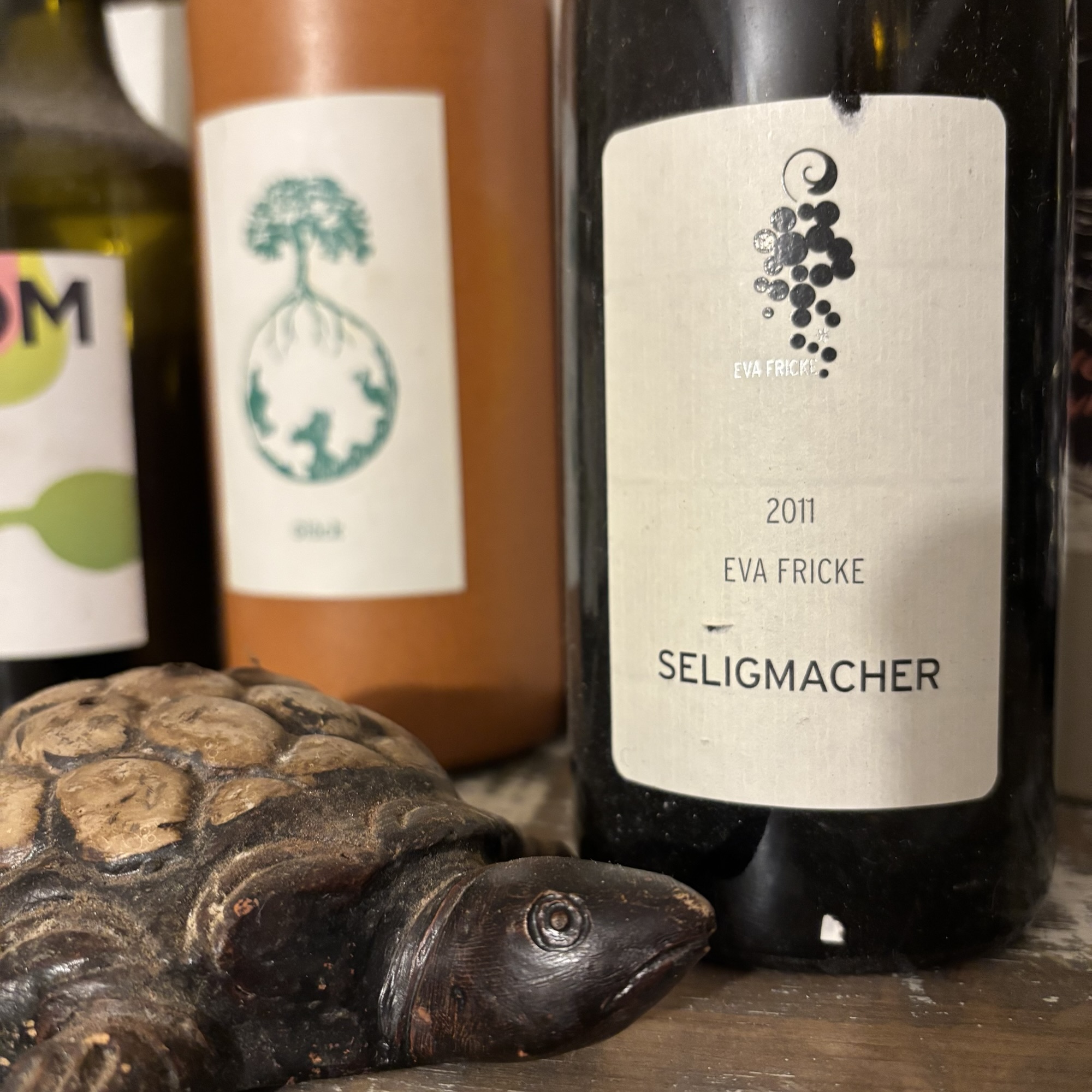
Lorchhäuser Seligmacher Riesling 2011, Eva Fricke (Rheingau, Germany)
Eva is certainly one of the finest producers in the Rheingau and I have been lucky to have drunk several bottles of this lovely wine. As all things come to pass, this was my last bottle. It’s one of those wines which I would have loved to share with other lovers of German wine, but that never worked out. All the more reason I need to shout out loud for this.
It just so happens that 2011 was Eva Fricke’s first vintage of her own. It makes this wine all the more remarkable for its quality, not least because it is considered an entry level cuvée among her 17 hectares of specific sites that she farms. The quality comes from Eva’s international experience, plus her stint as chief winemaker at Leitz.
Of course, experience is one thing but it cannot alone explain the precision here, coupled with fruit and complexity and intensity in a thirteen-year-old wine. Stone fruit, white early summer floral notes and a squeeze of lime form a strong but elegant bouquet, lime leading the palate’s acidity beside mouth-filling peach, orange and a hint of lychee. It’s dry but not bone dry. It seems to me to perfectly express the terroir’s high concentration of quartz in its mineral edge.
This is thrilling wine which seems to combine a lightness of acids dancing on the palate with a more solid fruit core (and 12.5% abv). It’s in a very good place right now. My bottles are from too far back to remember their origin. I would try Lay & Wheeler or Berry Brothers, where you may find some for around £120 for six in bond, which once more is nothing for the quality here.

 David Crossley's Wide World of Wine
For once I know most of these wines! Tissot is someone I can’t get my head around, I tend to prefer other producers but everyone I respect keeps singing the Tissot praises. A blind spot.
LikeLiked by 1 person
I go back many years with these wines, even to the non-natural wines made by his father. His range is wide (his wife may think too wide), but the majority are exciting. Prices are not what they used to be. I remain a big fan, though I have my favourite cuvées.
LikeLiked by 1 person