
I was very pleased to attend a tasting/masterclass introducing Ally Wines to the Edinburgh market on Monday. Ally Wines (pron. Al-eye, not Al-ee) is a London-based importer of small production artisan wines from the West Coast of America. Under the strapline of “Curiously Cool American Wines” Jennifer Williams-Bulkeley brings into the UK a range of wines from California, Oregon and Washington State, with a focus on cooler climates and alternative grape varieties. Her producers are quite often winemakers or viticulturalists at larger, often famous, producers but they are also engaged in producing wines under their own labels.
The wines on show were from an eclectic selection of grape varieties, hardly any Chardonnay or Cabernet Sauvignon in sight, as well as there being a good few blends. As the Ally Wines website says, “This is not the American wine narrative so much of the world takes on board”. The event was organised by wine educator Isobel Salamon and hosted by Smith & Gertrude in Stockbridge, Edinburgh.
We were talked through a dozen wines by Jennifer, and there were some other odd bottles to taste ourselves. The brief notes below (necessarily brief as there are quite a few wines to discuss) will, I hope, give a flavour of the wines, their diversity, and a picture of what this importer is trying to introduce to the UK. Prices quoted include VAT. I’ve jotted down a few conclusions at the end.
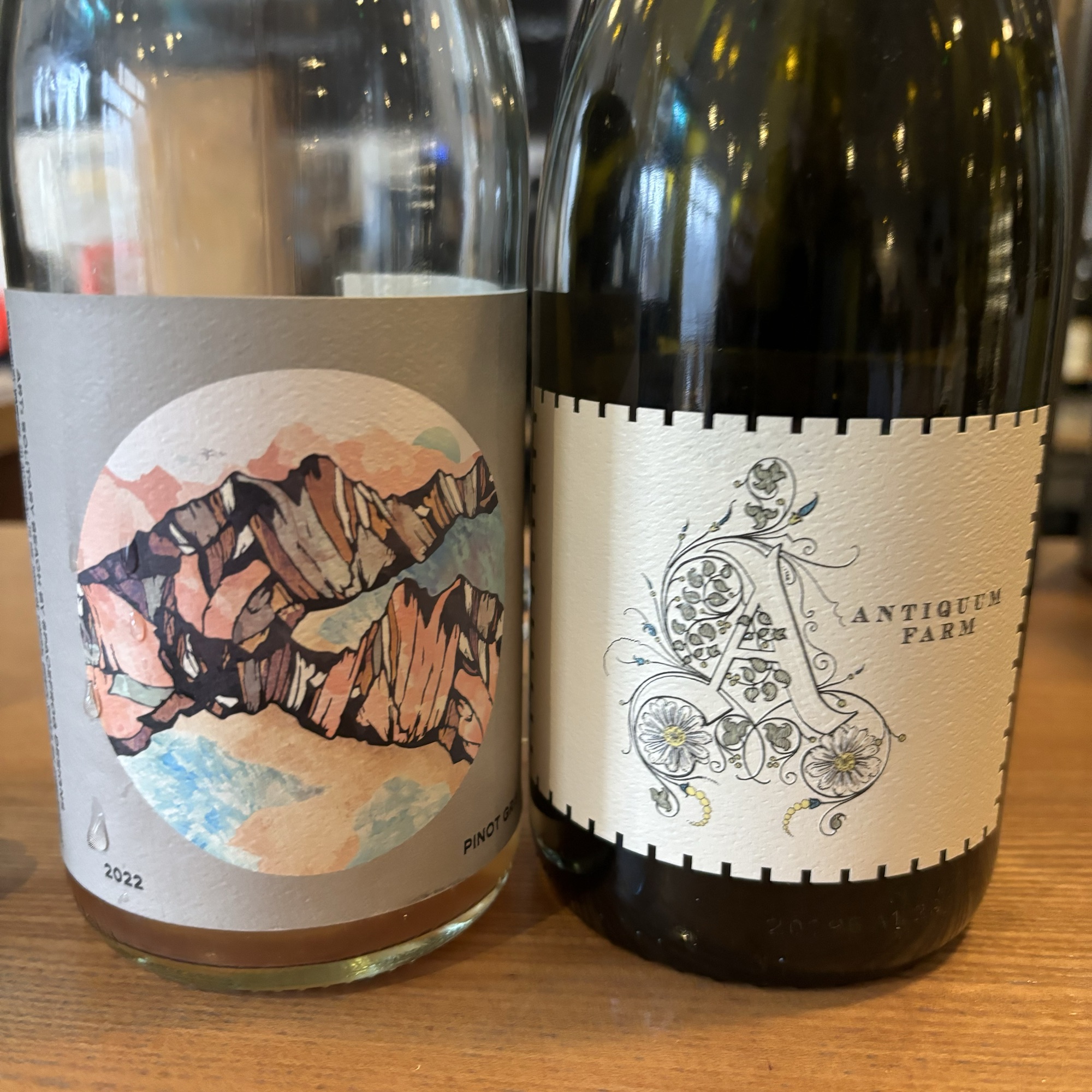
Outward Pinot Gris Pétillant Naturel 2022 (California Central Coast) (12.2% abv)
The source of the fruit is the Bassi Vineyard at San Luis Obispo, off a young site cooled by the Pacific Ocean fogs. It is biodynamically farmed and made by the ancestral method, fermented with native yeasts. The wine was disgorged after a short two-months on lees in bottle. Just 66 cases produced. A simple wine, tinged pink from the skins, zippy with a fine spine of acidity carrying the fruit. A very tasty wine, delicious. I would buy this, for sure. About £37.
Daisy Pinot Gris 2022, Antiquum Farm (Willamette Valley Oregon) (13.2% abv)
Stephen Hagen is a native of Oregon’s Willamette Valley, and he makes wine at Antiquum, based at Corvallis, where he lives with wife, Niki. This is an example of regenerative farming and as well has having just over 20 acres of vines, the couple also run herds of grazing and breeding animals (sheep, pigs, geese and chickens). This Pinot Gris, vinified en blanc, was pressed gently and then fermented in a mix of stainless steel and neutral French oak, followed by six months on lees. It has a mineral base and a softness to balance the gentle acids (it underwent spontaneous malo). Initially you get apples and pear, but it opens to broader tropical notes. About 500 cases were made, £36.
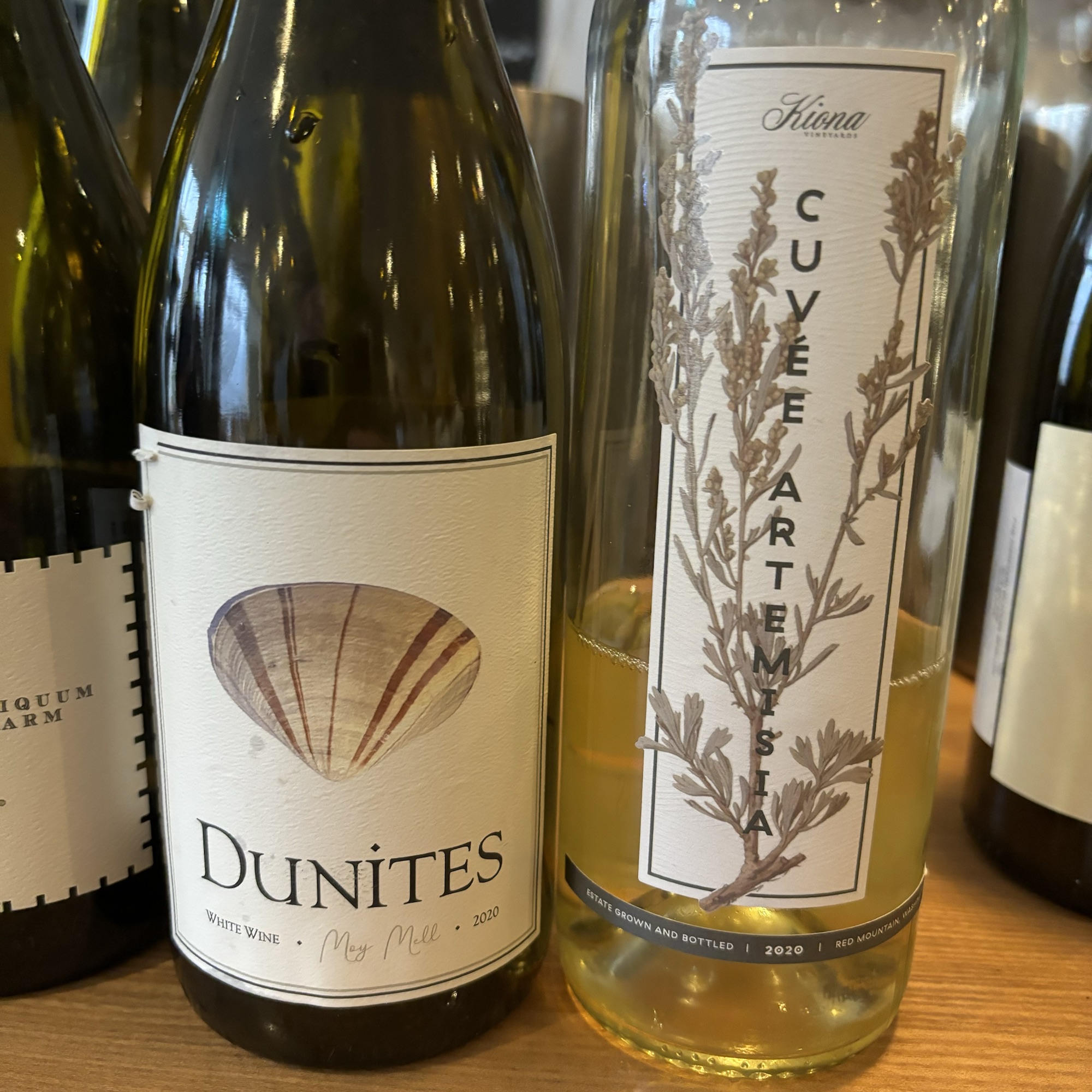
Moy Mell 2020, Dunites (San Luis Obispo, California) (11% abv)
The label’s name refers to a group of refugees, free thinkers who settled the dunes of San Luis Obispo County in the 1930s. The couple who run the label have joint experience in twelve vineyards around the world and aim to make terroir wines reflecting the coastal influence, on hillside sites on ancient sea bed uplifted by tectonic activity. Freshness and purity are their goals. This blend is 50% Pinot Noir (en blanc), 35% Albariño and 15% Chardonnay. It has fun, racy, acids and appley freshness. Moy Mell apparently means “meadow of honey” in Gaelic Irish. £28.60.
Cuvée Artemisia 2020, Kiona Vineyards (Red Mountain, Washington State) (13.5% abv)
Kiona is a family winery based at Benton City in Washington State. The Williams family farms five sites, all of which they own, planted by John Williams and Jim Holmes in the 1970s in what is now the Red Mountain AVA. They were also noted pioneers in the Yakima Valley. Their “Artemisia” white wine (named after the mountain’s native sagebrush) is sourced from three sites and comprises 50% Semillon, 19% Sauvignon Blanc, 19% Roussanne and 12% Chardonnay in the 2020 vintage. Fermented in a mix of “clay” and barrel, it is aged ten months in oak (30% new). It’s very much a product of an AVA with a big diurnal temperature shift. It is both ripe-fruited, but with great acid balance, really elegant for a wine of 13.5%. £25.20.
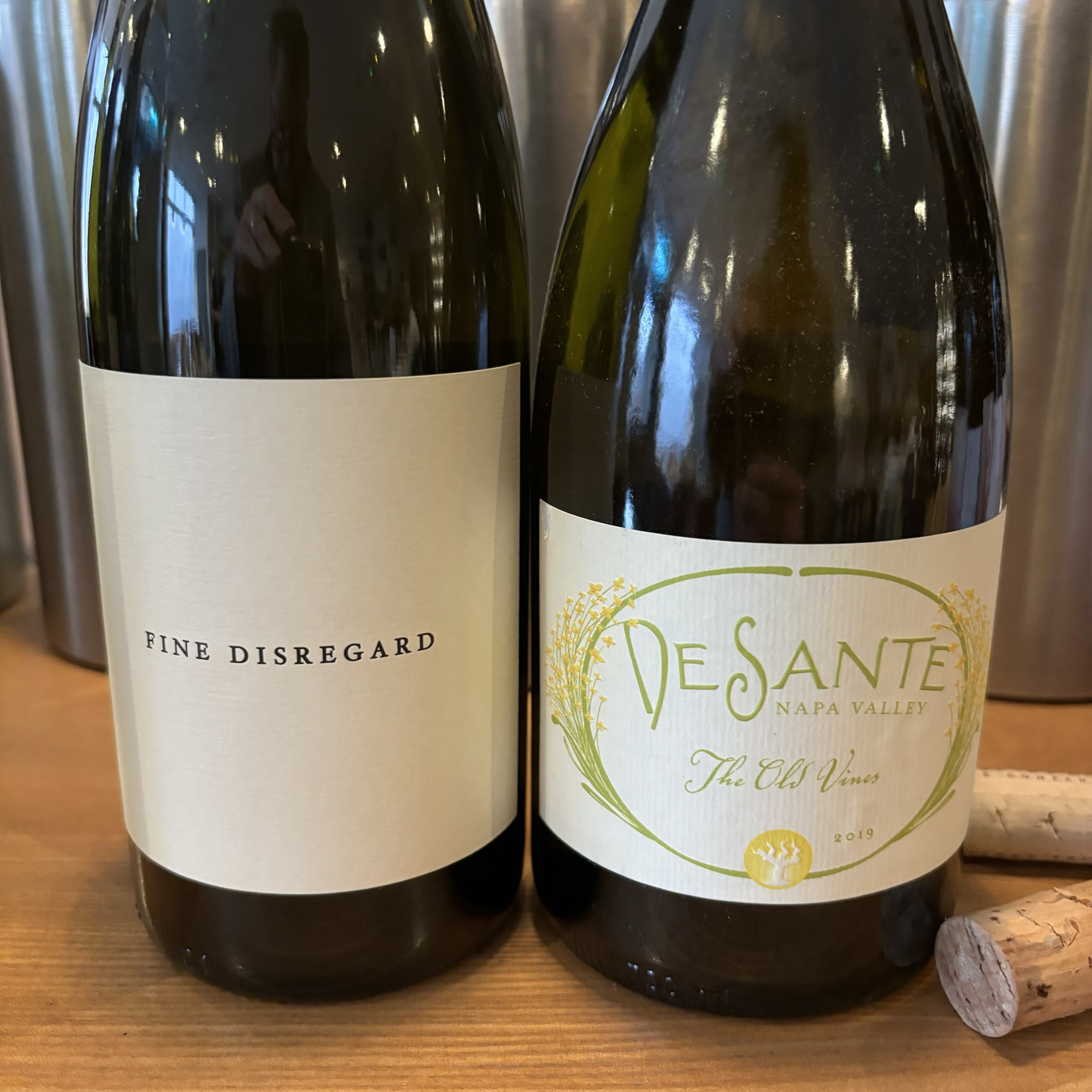
Milhouse Semillon 2016, Fine Disregard Wine Company (Napa, California) (12.2%)
The organic fruit was sourced from a vineyard in Napa Valley’s Oak Knoll District whose soils are comprised of alluvial runoff from the Vaca Mountains. The daytime temperatures here are a good ten degrees lower than at the upper end of the valley. Some of the vines here produce a rare pink-tinged Sémillon mutation which has occasionally been found in South Australia. It has good body and mouthfeel for such a low alcohol wine, and as an extra dimension it has evolved nutty notes as a mature wine (and this does prove how well Sémillon can age). Fine Disregard are based in Saint Helena. £31.20.
The Old Vines 2019, De Sante (Napa Valley, California) (12.5% abv)
This frankly remarkable wine is made by David and Katharine De Sante, David having previously worked at Cullen and Katharine at Pierro, both in Western Australia. They started their own label in 2001, working with old vines and a mix of varieties ranging from the usual suspects to the unfamiliar. This field blend from the “Proof Vineyard” near Oakville includes Golden Chasselas, Green Hungarian, Pinot Blanc, Sauvignon Vert, and Semillon among others. Appley (tarte-tatin), slightly earthy, with yellow plum and greengage, and with hints of honey, and a waxy texture, all make this super-interesting. The only treatments used are natural tisanes and fusions. Fermentation is on lees in used oak. £44.40.
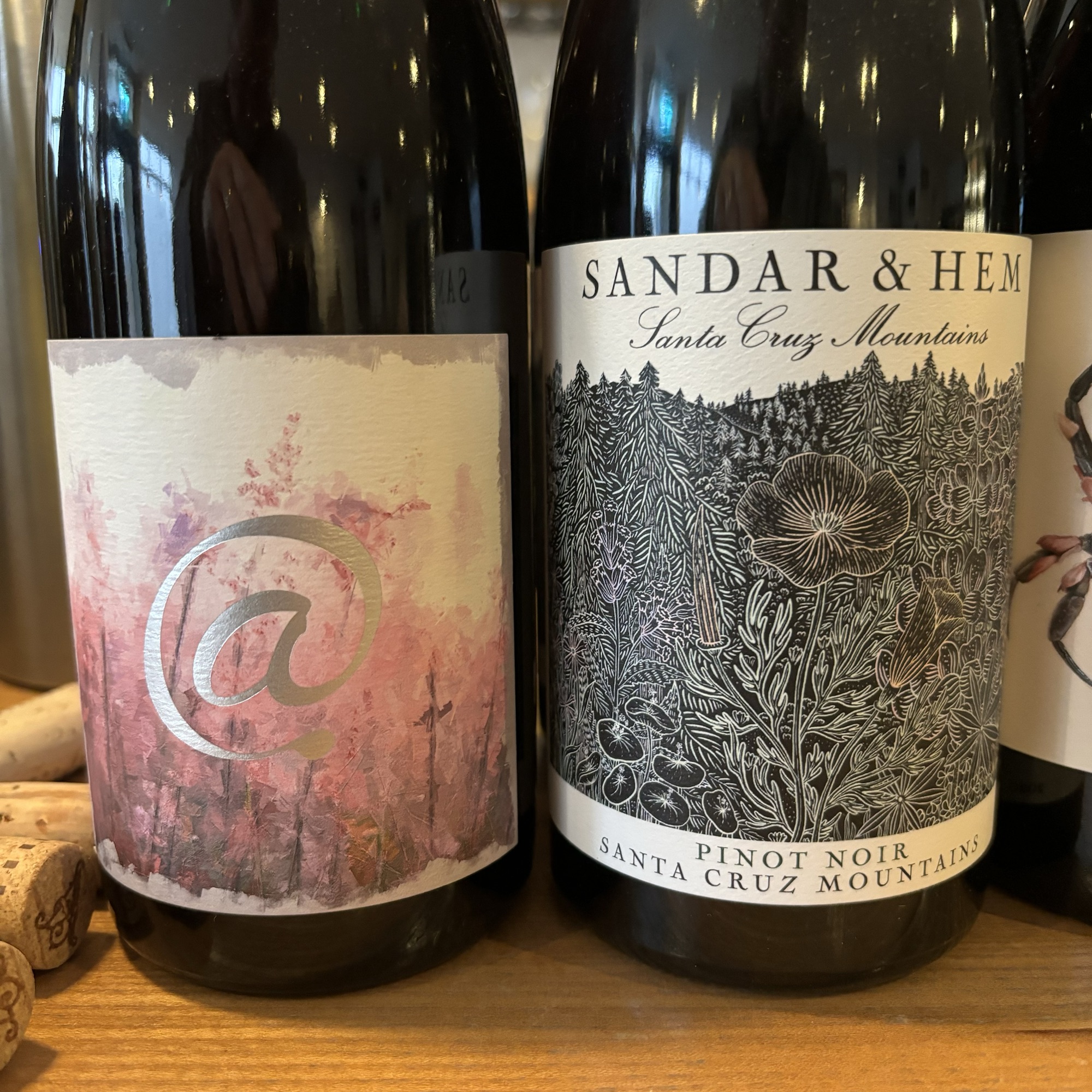
Adroît Trousseau 2020, Siletto Family Vineyards (San Benito County, California) (abv not seen)
We are on a roll here. I have always very much enjoyed Arnot Roberts’ Trousseau and I like this one very much as well. Chris Miller, a Master Sommelier, is the winemaker, and he also makes the wines for Seabold Cellars. I couldn’t find this bottle on the Ally Wines web site. I’m therefore missing both price and alcohol content, but what I can say is that it has delicious bright strawberries and cherries fruit with a nice savoury/slightly bitter finish. Nice texture too, just 217 cases produced. There was some debate whether it is a Rosé or a red. For the record, I’m in the “pale red” camp, but a wine to serve cool. There are Adroit Aglianico and Chenin wines on the Ally Wines site, ranging from £21 to £29.
Pinot Noir 2020, Sandar & Hem (Santa Cruz Mountain, California) (13.5% abv)
This is a very small production Pinot, just 150 cases, from the cool and densely wooded Santa Cruz Mountain AVA north of Santa Cruz itself. This is the source for some pretty pricy wines but here we have something more affordable. A ruby-red Pinot which comes from sites in the northern part of the AVA, a sub-region known as Northern Skyline, with a high elevation above the fog line. This selection sees 18 months in French oak (15% new). It exhibits bright, youthful, cherry fruit from what has been described here as an exceptional vintage (though a hot one, and there were fires). There is a “Pinot smokiness” here, but nothing to do with smoke taint. £34.80.
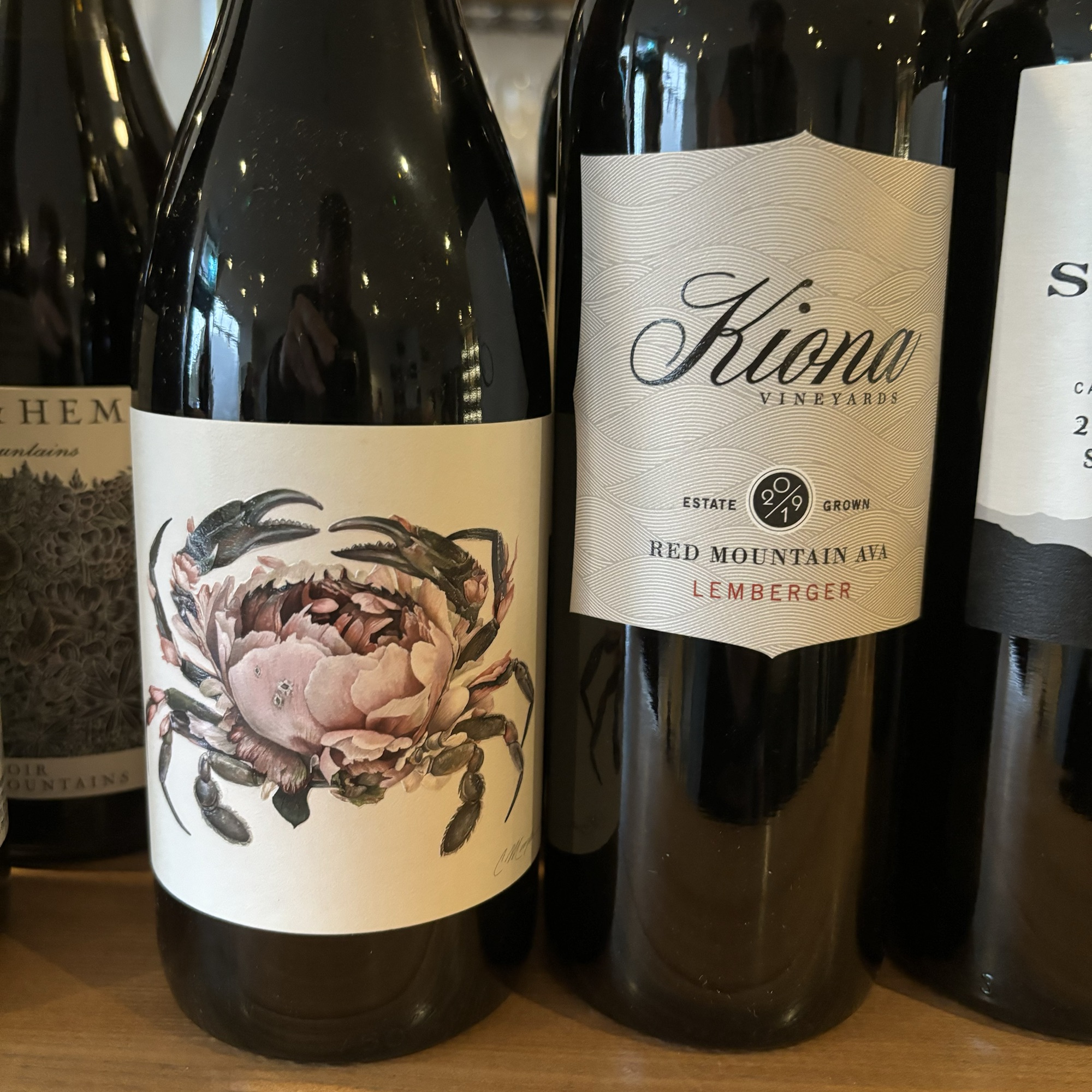
Lemberger 2021, Kiona Vineyards (Red Mountain, Washington State and Oregon) (13.7% abv)
Well, the label affixed to the back says Lemberger whilst the main back label suggests a composition of 75% Pinot Noir, 24% Lemberger and 1% Cabernet Sauvignon. In fact, this is a rare interstate collaboration, the Pinot coming from Björnson Vineyard in Oregon and the Lemberger (and Cabernet) from Kiona in Washington State. If Lemberger is not that well known under this German synonym, it certainly is as Blaufränkisch, its Austrian name (this variety has more aliases than almost any variety I know, including Frankovka in Czechia and Kékfrankos in Hungary).
With big legs and a dark colour, its fruity Pinot element is nicely complemented with a spicy, ferrous Lemberger element. Lovely wine. It says it is vegan, and makes a point of the use of lighter glass for environmental reasons. £POA. It’s the wine generally known as “the crab label”, though on closer inspection I think it may depict a crab becoming a flower, and a very nice label it is too.
Red Mountain Lemberger 2019, Kiona Vineyards (Red Mountain, Washington State) (13.5% abv)
The Lemberger on Red Mountain was planted forty years ago, and the family produced the USA’s first ever commercial Lemberger in 1980. The original 1.8 acres of the variety has now grown to thirteen. 2019 was a reasonably cool vintage but a good summer enabled a long ripening period. As with the above wine, it’s not 100% Lemberger. There’s 14% Merlot and 5% each of Cabernet Sauvignon and Carmenère. Now it is drinking fruit-forward, but there’s a bit of texture and a crunchy finish. It’s hard to believe that the price quoted, £18, is not an error. Although perhaps I objectively prefer the previous collaborative cuvée, this must be one of the best value US wines I’ve tasted for some time.
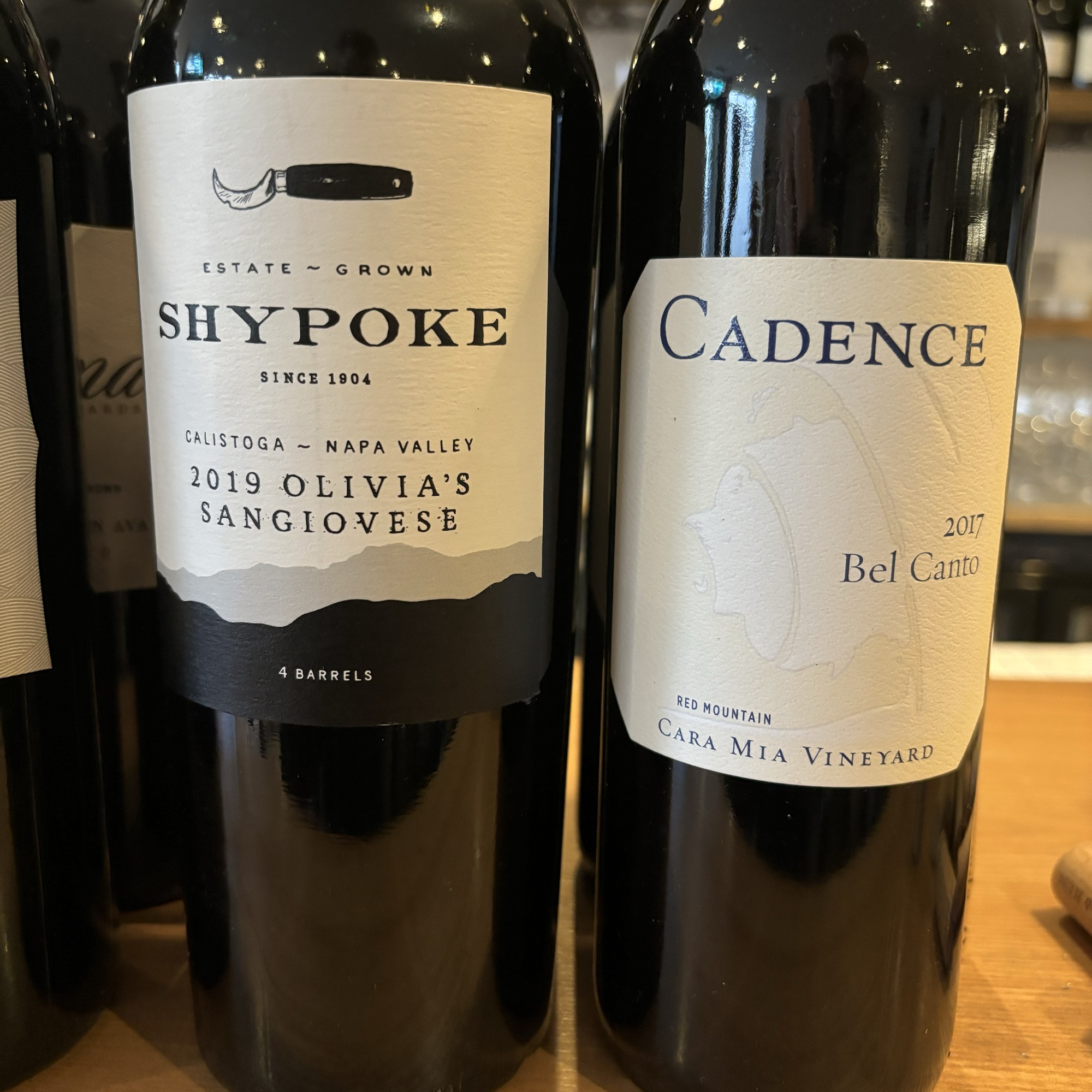
Olivia’s Sangiovese 2019, Shypoke (Calistoga, Napa, California) (14.2%)
Shypoke is a century-old ranch near the northern end of the Napa Valley. The terrain is based on alluvial river silts which Meg and Peter Heitz believe give very distinctive wines. Perhaps first comment goes to the alcohol content, so to get that out of the way, I’d say it’s high but gets the benefit of the doubt for being so in balance. Just four barrels were made of this deeply cherry-fruited red. It definitely suggests warm climate, yet it is also sophisticated, and structured. I think it will age a decade more (am I right?), but it is still impressive. I would not have guessed Sangiovese, but that makes it distinctively Napa.
Bel Canto Cara Mia Vineyard Red 2017, Cadence Vineyards (Red Mountain, Washington State) (14% abv)
Cadence, who are Ben Smith and Gaye McNutt, make this wine from the Cara Mia Vineyard about 200 miles east of their winery just south of down town Seattle. Ben is an ex-aerospace engineer, and Jennifer described him as one of the most meticulous winemakers she knows. This wine is a blend of Cabernet Franc (73%), Merlot (18%) and Petit Verdot (9%). There is a complex tech sheet of info about clones and barrels, perhaps reflecting Ben Smith’s meticulous nature, but what we have is 278 cases of classy red wine.
The Cab Franc comes through as more voluptuous than you get from the Loire but the fruit being ripe, and time, has helped the 50% new oak used here to integrate well. That said, this remains structured and quite big, but certainly impressive. Give it a few more years, or perhaps just open and let it breathe a few hours. Decanter Magazine described Cadence as one of the most consistently underrated producers in the US.
I will only mention a couple of wines from the “free taste” lineup because I can see I shall be heading well over my nominal 2,000-word limit.
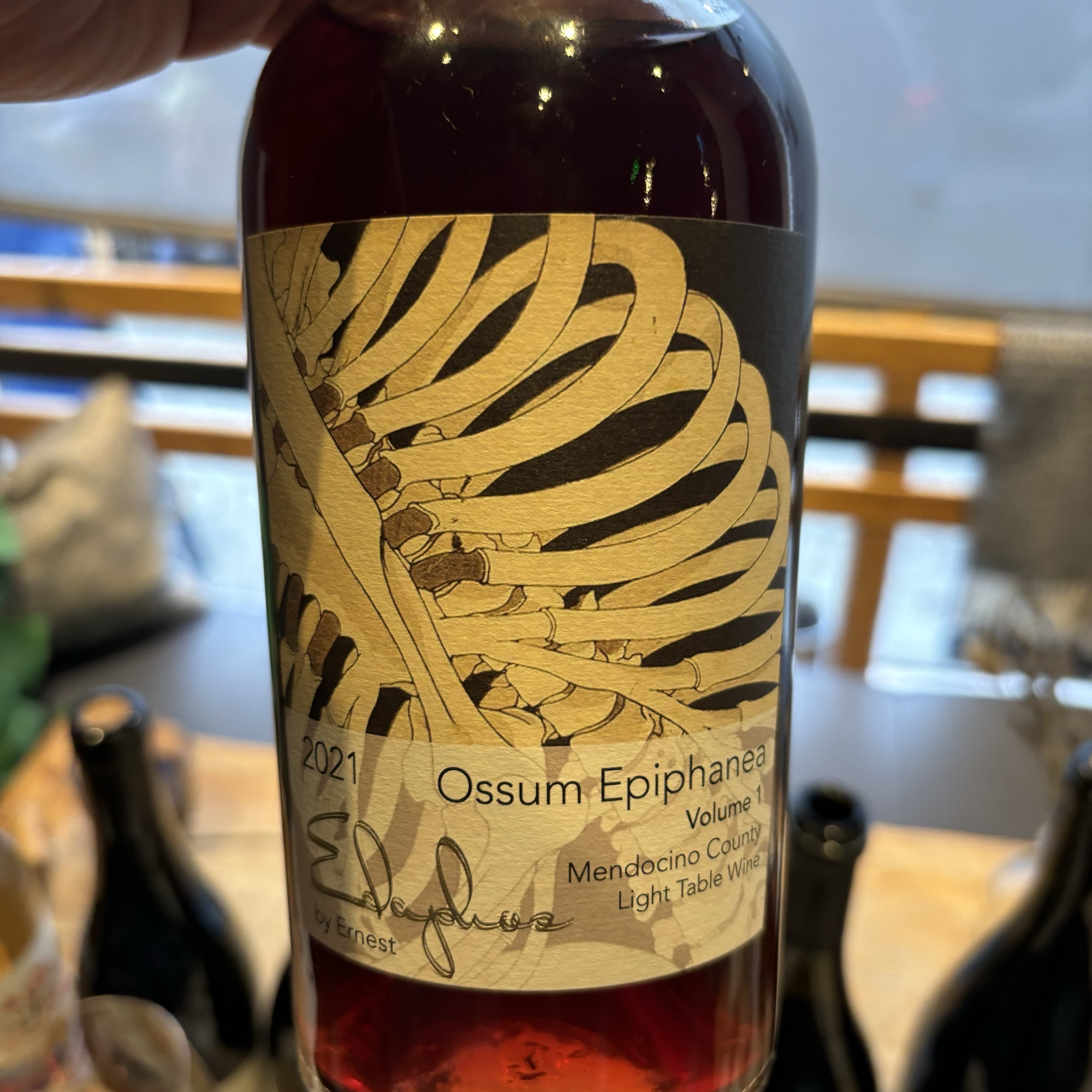
Ossum Epiphanea Volume 1 2021, “Light Table Wine”, Ernest Vineyards (Mendocino County, California) (13% abv) is a crazy Sonoma County blend of Marsanne, Grenache, Picpoul, Mourvèdre, Cinsault, Counoise, Syrah and Roussanne. I think you might wonder just how “light” 13% is to a European palate, but it isn’t heavy, it isn’t out of balance and it is actually quite delicious. But neither is the price light at its usual £35. Ally Wines has it on offer for a very decent £26.40.
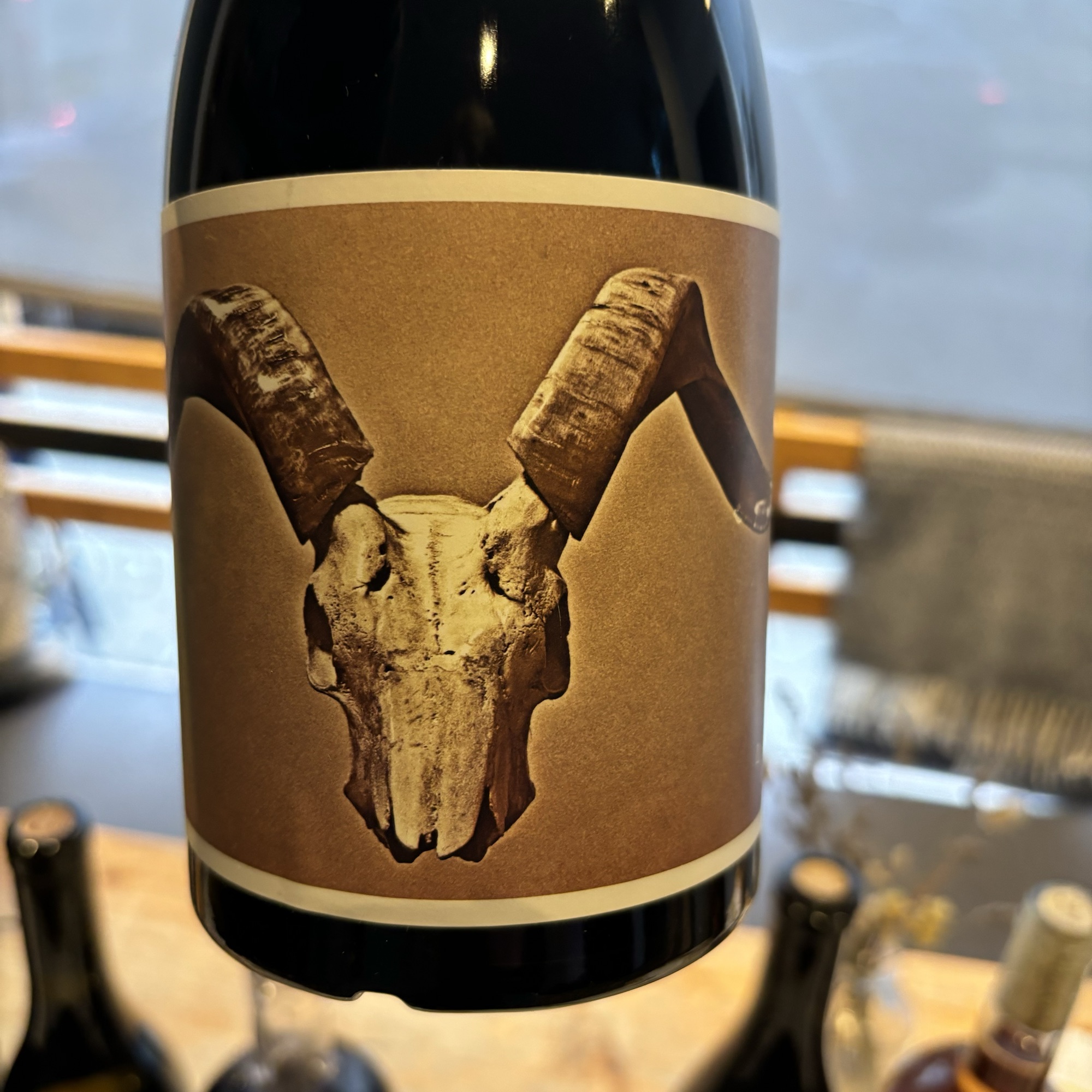
Disciples Red 2018, Bottled by the Crane Assembly (Napa, California) (15.7% abv) is possibly the most “Napa” wine I’ve had for a good decade or longer. Wow! 15.7%! There is fruit in there, both red and darker varieties, along with graphite and a touch of dark earth. But it is super-dense, though structured, not jammy in any way. In that sense it is a well-made wine and not an aberration, but it is quite a bit more alcohol than my old and partly jaded palate can take. To be fair, it tastes more like 15% rather than 15.7%, but all the same. I do know people that would adore this, and I’d buy it with one particular friend in mind were it not to retail for £54.60. Taste it if you ever get the chance, but buy it at your own risk.
So, a few words to sum up. An outstanding tasting, and so nice to get the opportunity to try so many wines outside the US mainstream. The Ally Wines portfolio is way larger than what I tasted here, with a lot more very interesting cuvées from a host more interesting “alternative varieties”. The wines I enjoyed most, from a purely personal perspective (knowing my quirky tastes as you probably do) were:
- Outward Pinot Gris Petnat
- De Sante Old Vines White Blend
- Siletto Family Adroit Trousseau
- Kiona’s Oregon Collab Pinot Noir/Lemberger
Those were my favourite four. I was going to mention a few others but I realised that pretty much all of them I’d buy if my four favourites were missing from the shelf. You’d have to grab the other Kiona Lemberger if you saw it, at just £18, and that crazy Ossum Epiphenea at its discounted price. The only wine I’d shy away from would be the Disciples Red, but I’d have met the challenge with enthusiasm in my youth.
Ally Wines has a web site at www.allywines.co and an Instagram feed at @ally_wines . For further information, especially trade clients (though private clients are equally welcome), contact Jennifer Williams-Bulkeley via jwb@allywines.com .
Many thanks to Isobel Salamon and Smith & Gertrude Stockbridge for organising, inviting me and hosting.
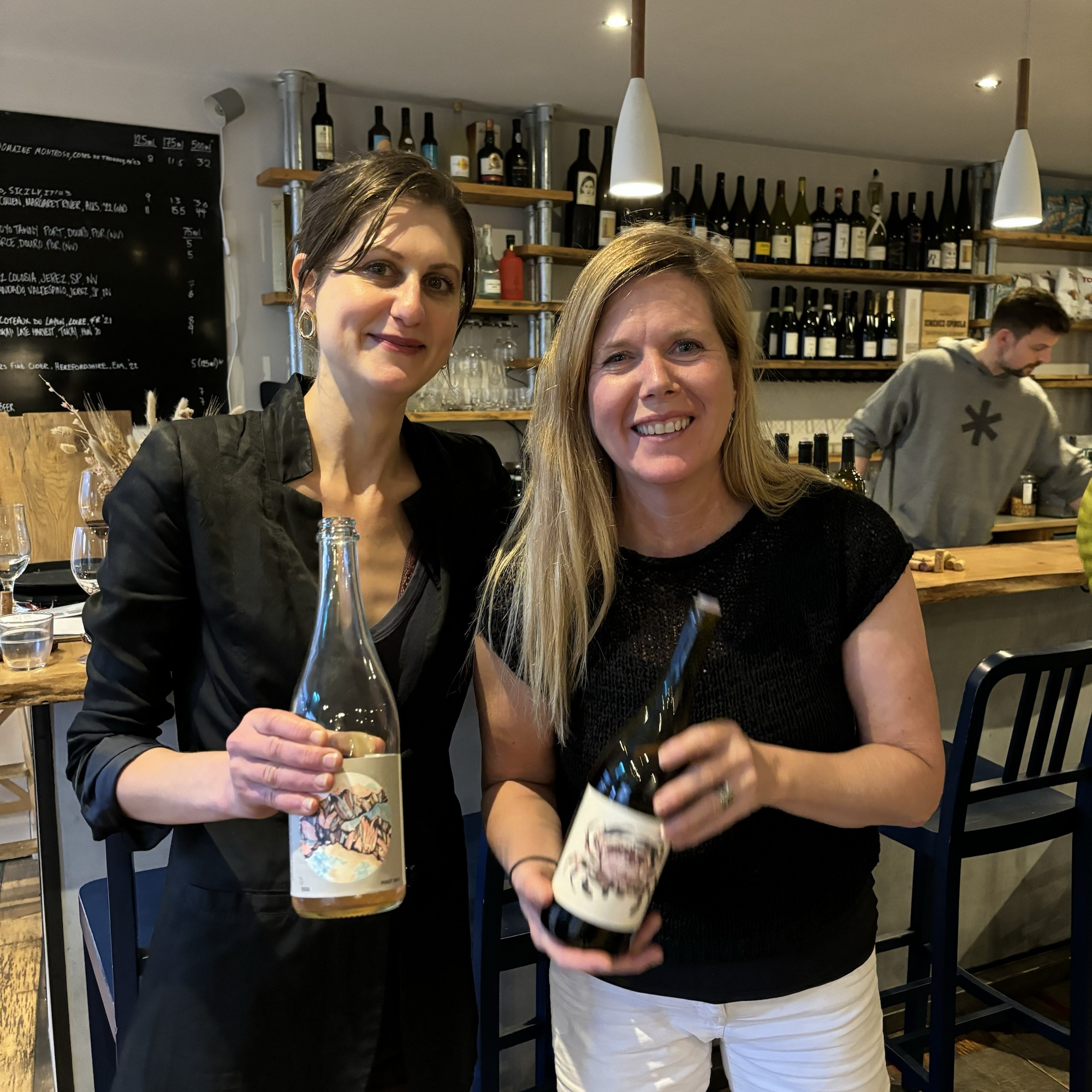
Isobel and Jennifer

Smith & Gertrude’s Stockbridge Bar (26 Hamilton Place EH3)

 David Crossley's Wide World of Wine