
July has been a month for hoovering up a few wines I’ve written about before, so again there are only five wines to tell you about in Part 2. I should explain that I don’t see myself as a wine “critic”, so you won’t find wines here that I don’t like. Even the cheap ones, like the second bottle here, have merit and interest.
We begin with another wine from Moravia’s great experimenter, then head down from Czechia to Corsica for another example from Waitrose’s Loved & Found series. Then a poignant moment of reflection for one of my very favourite winemakers who died tragically on the first day of last month. Austria’s Burgenland is one place in Europe where you will find a host of excellent pétnats, so we have one of those (it being summer), then we finish with a winter wine for one of the cold days we’ve been having occasionally this year, an amber or orange wine from Kakheti in Georgia.
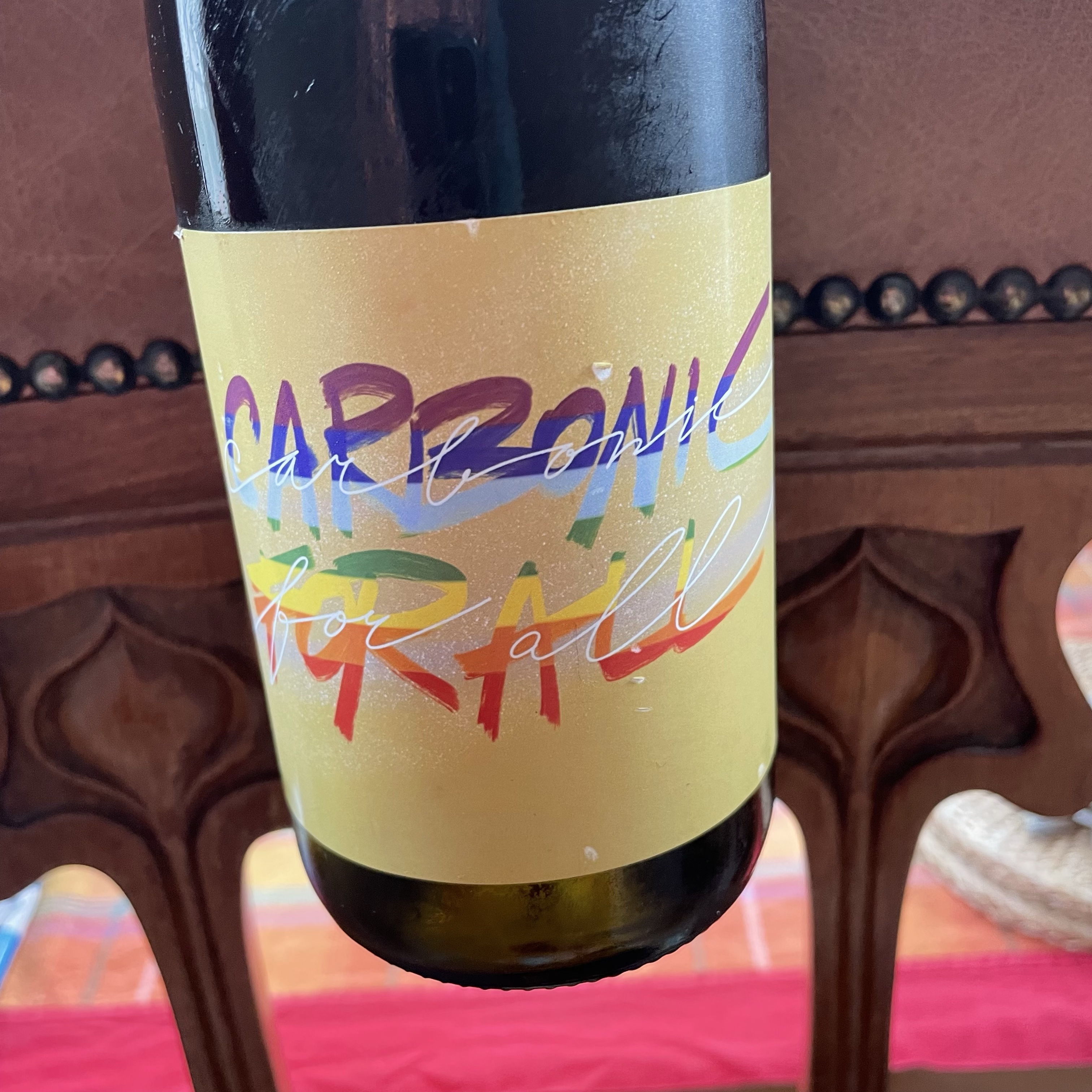
“Carbonic for All”, Petr Koráb (Moravia, Czechia)
I make no apology for drinking a lot of Koráb’s wines and plugging them relentlessly. Whilst I believe we all should be buying more Czech wines in general, and they are becoming easier to find, at least in metropolitan restaurants (Ottolenghi’s now has Czech house wines), Petr is a restless spirit whose relentless experiments provide something new in every bottle. Sometimes I get frustrated that I can’t buy a wine I loved in a subsequent vintage (“Raspberry on Ice” remains fondly remembered), but that’s part of the deal.
This Cuvée blends 60% Welschriesling with a hybrid developed at Geisenheim in the 1940s, Hibernal. This is a Seibel x Riesling cross. It’s a variety which is proving interesting in Southern Moravia and a good number of producers have it planted (I must drink Petr Kočařič’s varietal version soon).
The thinking behind the carbonic maceration here is to add texture and freshness to the wine by using what most would see as a red wine process (cf Gamay at the cheaper end of Beaujolais as the classic example). The Welschriesling is perhaps the most identifiable variety, as you’d hope given that there’s more of it. It gives a steely, crisp, element. But the wine also has a quite fruity element, something slightly jolly. I’m guessing this is from the Hibernal. Overall, the wine is light, mineral, and with a savoury touch on the end of the palate. Delicious, of course.
Mine came from Basket Press Wines (£25). Also available from Prost Wines. If you want to try wines that genuinely have a point of difference from much of what is available, even within natural wine (Petr’s wines are resolutely natural), then take a look at his ever-changing portfolio.
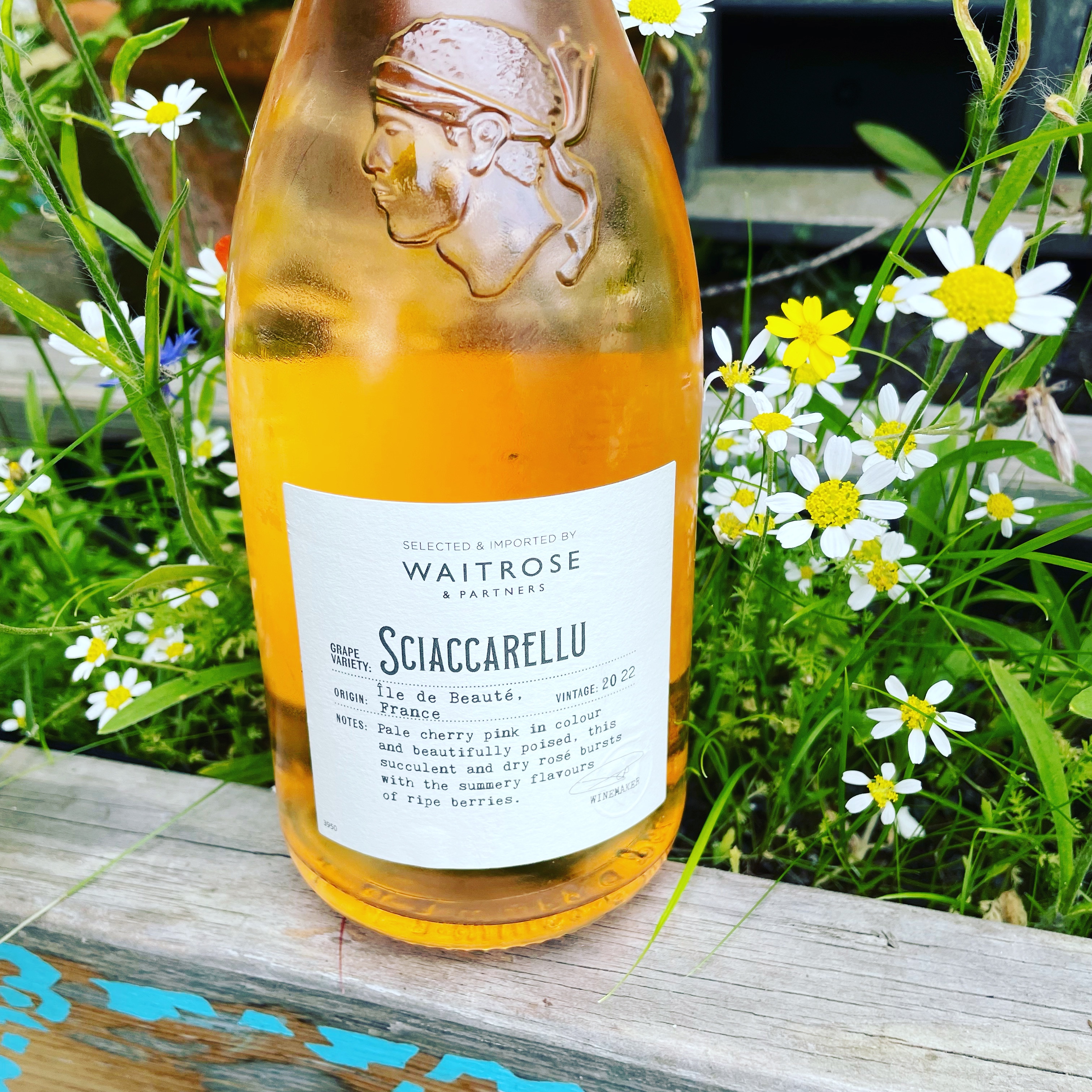
Sciaccarellu 2022, Île de Beauté IGP (Corsica, France)
The keen-eyed will notice I’ve not listed a producer. It seems of secondary importance to UK supermarket, Waitrose, although there is of course an unintelligible winemaker’s signature on the label. The back label shows it to be the co-operative cellar called Les Vignerons d’Aghione. It doesn’t matter. This wine is here because if you want something to glug, or sip, on the beach or at a picnic and your audience doesn’t need Château Simone or some other over-£40 Rosé, nor an overpriced celebrity label, this is well worth a punt, if you can still find some.
The front label describes the flavours in the bottle thus: “Pale cherry pink in colour and beautifully poised, this succulent and dry rosé bursts with summery flavours of ripe berries”. Setting aside the hyperbole, which to be honest isn’t too OTT here, I don’t disagree (though I’m always unsure what “poise” means in a wine at this kind of price).
The grape variety is a resolutely Italian (also sometimes spelled Sciaccarello) by name, and may be named after Sciacca, a small port in Southwest Sicily, but it travelled to Corsica probably before that island became irrefutably French, and it is here that it has become best known. The pink wines it makes have a delicacy and perfume you’d perhaps not expect from a warm climate, usually down to vines in the hills, on rocky but wind-swept terrain.
I’d never call this concentrated yet the red fruit swims in nicely in a wine that’s clean, pure, and thirst-quenching. There’s a certain dilution which will be apparent to most readers, but there’s also a little texture to balance that. Dry and light sums it up, and the alcohol at 12.5% abv is maybe a degree lower than much Corsican Rosé.
From Waitrose, of course, this wine’s major draw is that you get something relatively interesting for £8.99. So maybe not one for a dinner party but, as I said, perfect for the beach.
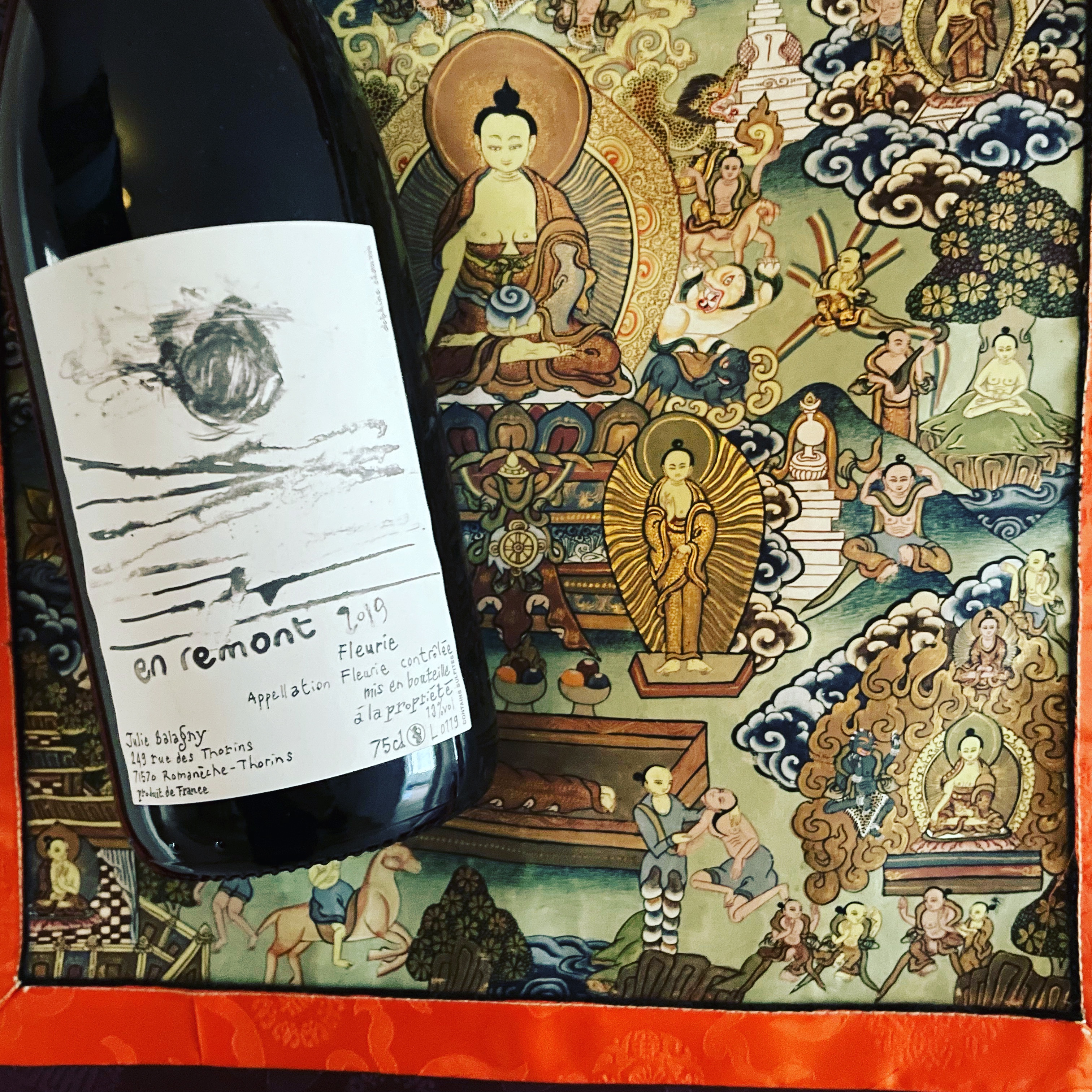
Fleurie “En Remont” 2019, Julie Balagny (Beaujolais, France)
I am not going to shy away from telling you that I was genuinely shocked and saddened by the untimely and tragic passing of Julie Balagny in circumstances I won’t repeat here, but were reported in the French press. She became my favourite Beaujolais producer simply because she made wines that were often on the edge, yet were as thrilling (that’s the key word) as anything I have drunk. They were wines which might not please the purists, but she crafted wines whose small imperfections not only created their soul and personality, but helped to highlight their inner beauty (we know the Japanese word for it, don’t we).
En Remont is a steep hillside vineyard of typical granite, and the vines are 100 years old. It’s a wine of complex layers, silky, and soulful. A wine you can almost stroke. Of course, it has tannins and is too young in an ideal world, but this is not an ideal world. It was the only bottle of Julie’s that I had in the cellar and I had to drink it in her honour, to thank her for all the pleasure she gave me. I might never drink her wine again. It’s sure to be snapped up, what’s left. But this was a beautiful wine, irrespective of its youth, and a fitting wine to honour her memory. She made some of the purest alcoholic fruit juice on the planet. Thank you, Julie.
Julie Balagny was imported by Tutto Wines. They may have some left, although they are unfortunately unable to ship to me in Scotland (I think it’s cheaper to ship Equipo Navazos direct from Spain, expensive as that is, than to ship from bond to East Lothian).
Pretty [n^ts] 2021, Alex & Maria Koppitsch (Burgenland, Austria)
I tend to call this “Pretty Nuts”, as do others, though that probably refers more to the name on the label than the wine inside the bottle. It’s Alex and Maria’s petnat from the north shores of the Neusiedlersee at Neusiedl-am-See. The blend is a simple 50:50 of Blaufränkisch and Syrah taken off the Neuberg, a hillside vineyard rising to 260 masl, situated north of the lake. I think (don’t quote me) it’s over towards Gols, which is just a few kilometres to the east of Neusiedl.
Whole bunches were placed in the old family screw press. The ancestral method means a second bottle fermentation and these were disgorged by hand after cooling outside in January. 2021 saw 3,000 bottles made of ultra-frothy gently sparkling wine which smells and tastes of ripe strawberry with other red fruits in a supporting role.
There’s a softness to the fruit but underneath you get a nice mineral bite in a wine that’s basically dry, but note that in 2021 they left 8.4 g/l residual sugar, nicely balanced by salinity and acidity. In the subsequent 2022 vintage, where a little more was made (3,200 bottles), there was only 4.6 g/l. But forget the tech data, this is simply a beautiful pink petnat. Koppitsch wines are now beginning to be spoken of in some circles in the same breath as the region’s other star natural winemakers. Their rise is well deserved.
The UK importer for Koppitsch is Roland Wines, so a wider distribution is now likely.

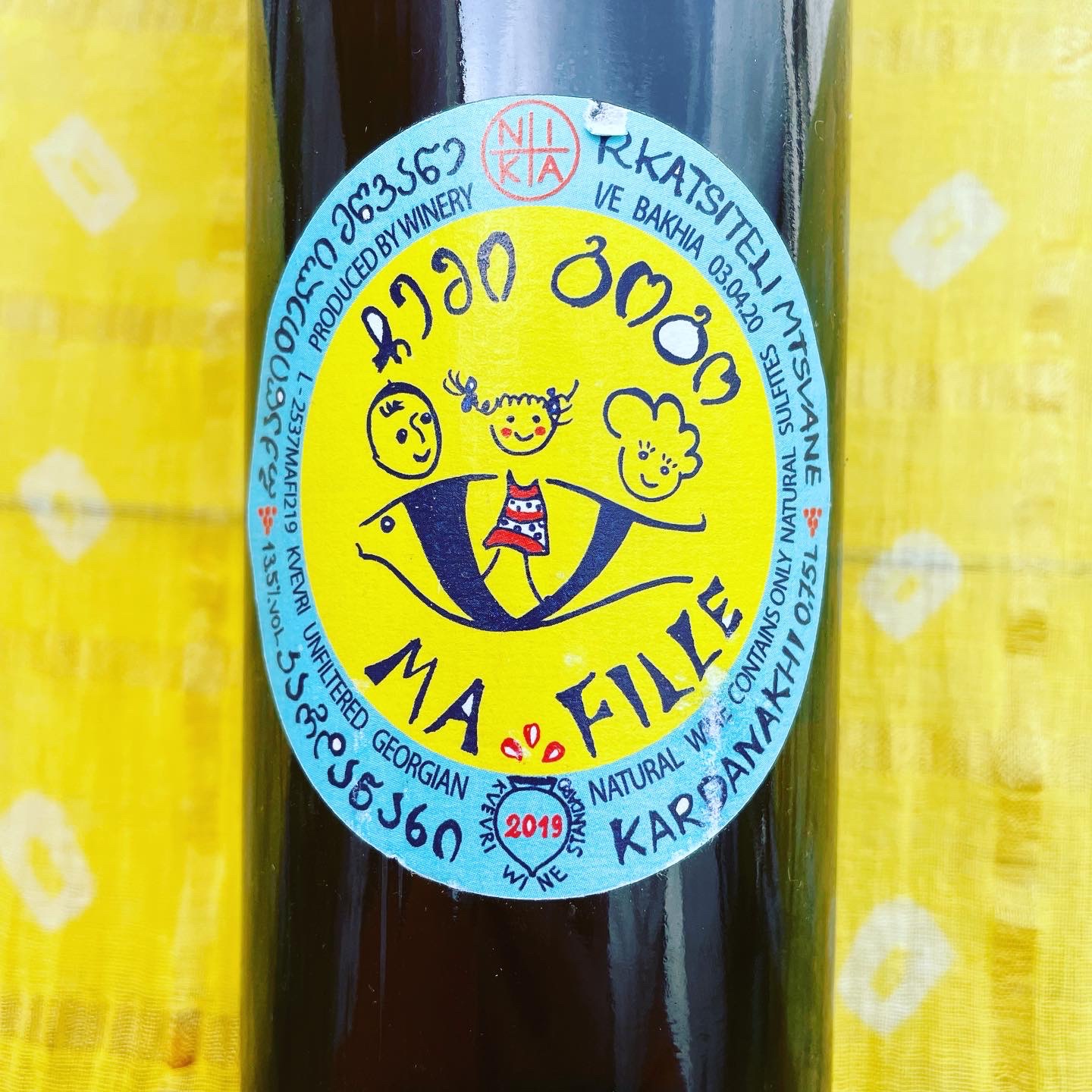
“Ma Fille” 2019, Nika Winery (Kakheti, Georgia)
Nika winery was founded in 2006 in Anaga, by Nika Bakhia and his partner. Nika is also an artist and sculptor so he has an artistic vision for his wines. Part of this is an adherence to tradition, so they are made in qvevri and are natural wines, subject to no synthetic inputs.
We have a blend of Mtsvane and Rkatsiteli varieties from a vineyard called Tsagaphi. This was purchased in the same year that the couple’s daughter was born, to whom it is dedicated. The terroir is notably hard and stony. The grapes spend around nine months on their skins in qvevri, giving a wine that is indisputably orange in colour, structured, with tannins quite obvious. This might put some off if they are not used to the full-on orange style. However, there is a gentle, floating, nuanced bouquet of orange peel and winter spice. The palate has a slightly soft, chalky texture underlying the stone fruit.
I wouldn’t say you’d include this in a beginner’s lineup of skin contact wines, and perhaps it needs a little more time. That said, we had around a third of the bottle on the second day and it had improved. We simply stoppered it and put it in the fridge, remembering to bring it close to room temperature before finishing. These wines don’t really need chilling. It just accentuates their hardness and structure.
We have here a wine some might find challenging, but for anyone comfortable with, and used to, a bit of serious skin contact, you will find this artisan Georgian very interesting.
This was imported by Basket Press Wines. They are out of this vintage, and only have Nika’s red left in stock right now. More lines presumably due to come in the autumn?


 David Crossley's Wide World of Wine
Nice descriptions. Thanks for sharing.
LikeLiked by 1 person
I’m heading to my local merchant this weekend to buy some Pinot Grigio (it’s for the dog-sitter, honest) & I shall pop into the Waitrose opposite for the Corsican rosé, if in stock.
LikeLiked by 1 person
I’m popping into Valvona’s tomorrow for some PG if they have some…La Specogna’s Ramato 😜.
LikeLike