
Part 2 of December’s Recent Wines begins with a gem of a wine from Swartland in South Africa. We then knock back what was currently my last bottle of Nepalese wine, before a star English sparkler. After an unusual “rancio” wine from near to Banyuls, we finish the month and the year with a great value Chablis, and a wine I hadn’t drunk for many years, from Bergerac. If January kicked off here with some stars, back in December I was lapping up more good value bottles, and one or two of them I would recommend very highly.
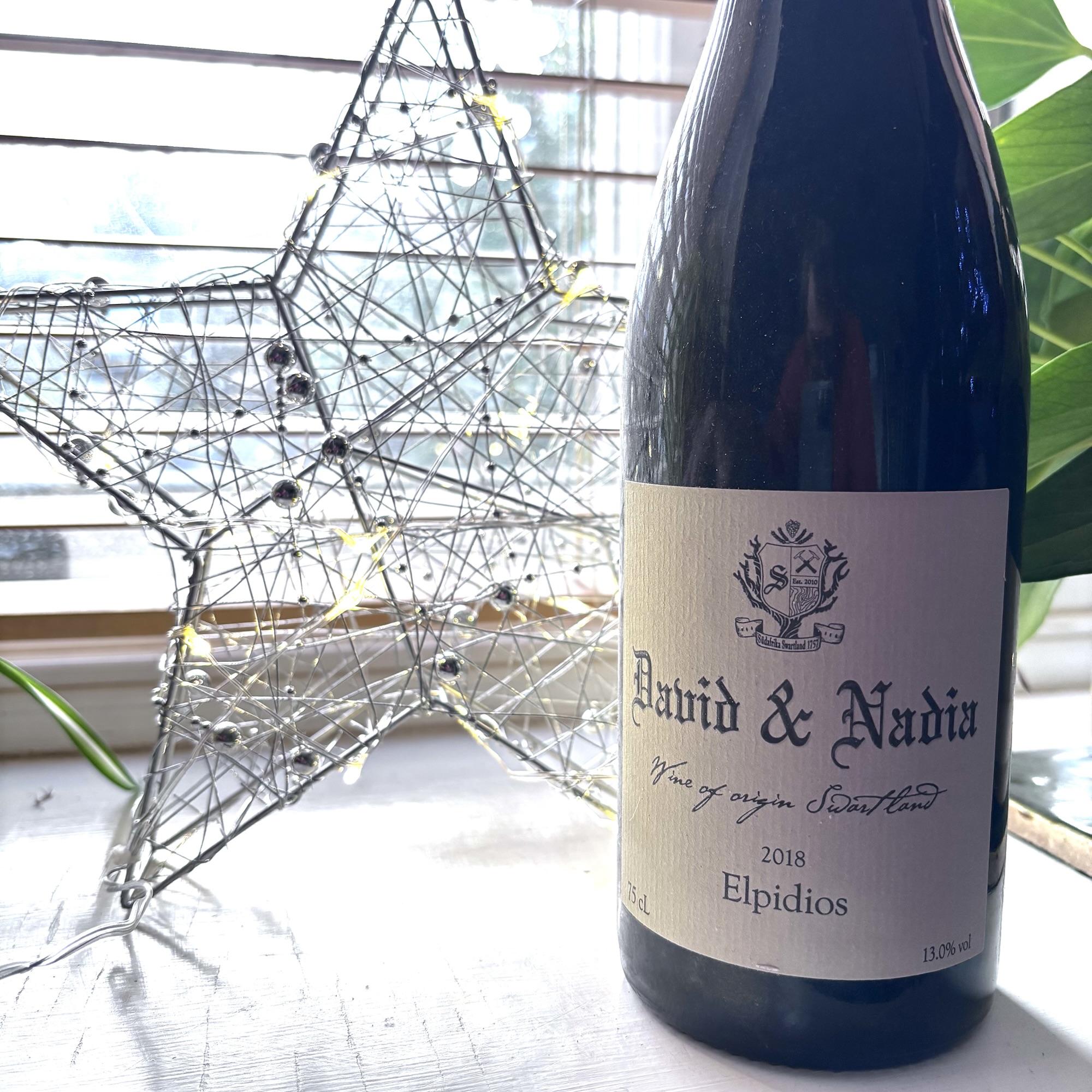
Elipideos 2018, David & Nadia (Swartland, South Africa)
The David and Nadia in question are of course David and Nadia Sadie. This is a veritable name to conjure with in South African wine, but this is a young couple who created their own label in 2010. The fact that David doesn’t use his surname on the label is very possibly down to not wishing to confuse anyone. This is not a project in any way related to Eben Sadie and his famous Sadie Family Wines from the same region.
All that said, David and Nadia have definitely established their own label as one of South Africa’s finest, as this Mediterranean blend, Elipideos, amply demonstrates. They make wine on their Paardebosch Farm in the Siebritskloof of the Paardeberg in Swartland, though they are pretty close to the Sadie Family winery. With AA Badenhorst between them, this is magical soil they sit on.
Elipideos blends Grenache and Syrah with around 12% each of Carignan, Cinsaut (sic) and Pinotage. They farm organically and make wine with minimal intervention. This cuvée is mostly aged in concrete with some of the blend going into older foudres. The wine also sees eighteen months in bottle before release, an admirable policy which is one reason I was able to pick this wine with bottle age off the shelf.
There are still some lovely grippy tannins here, but plenty of dark cherry and berries forming the bouquet are also mirrored on the palate. The wine is saline and spicy on a long finish. My first David & Nadia wine, other than at a tasting, I thought this was brilliant. It reminded me a little of a really good Châteauneuf-du-Pâpe, except with just 13% alcohol here, rather than the more usual 15% upwards the senior Southern Rhône often extracts these days. And almost certainly cheaper too!
My bottle came from Smith & Gertrude’s Portobello bar in Edinburgh. I think I paid £29. They currently have David & Nadia’s Grenache Noir and Aristargos Cape white blend for a similar price. Justerini & Brooks, who sell a whole range of this producer’s wines, usually have Elipideos for £172/6 (equiv £29).
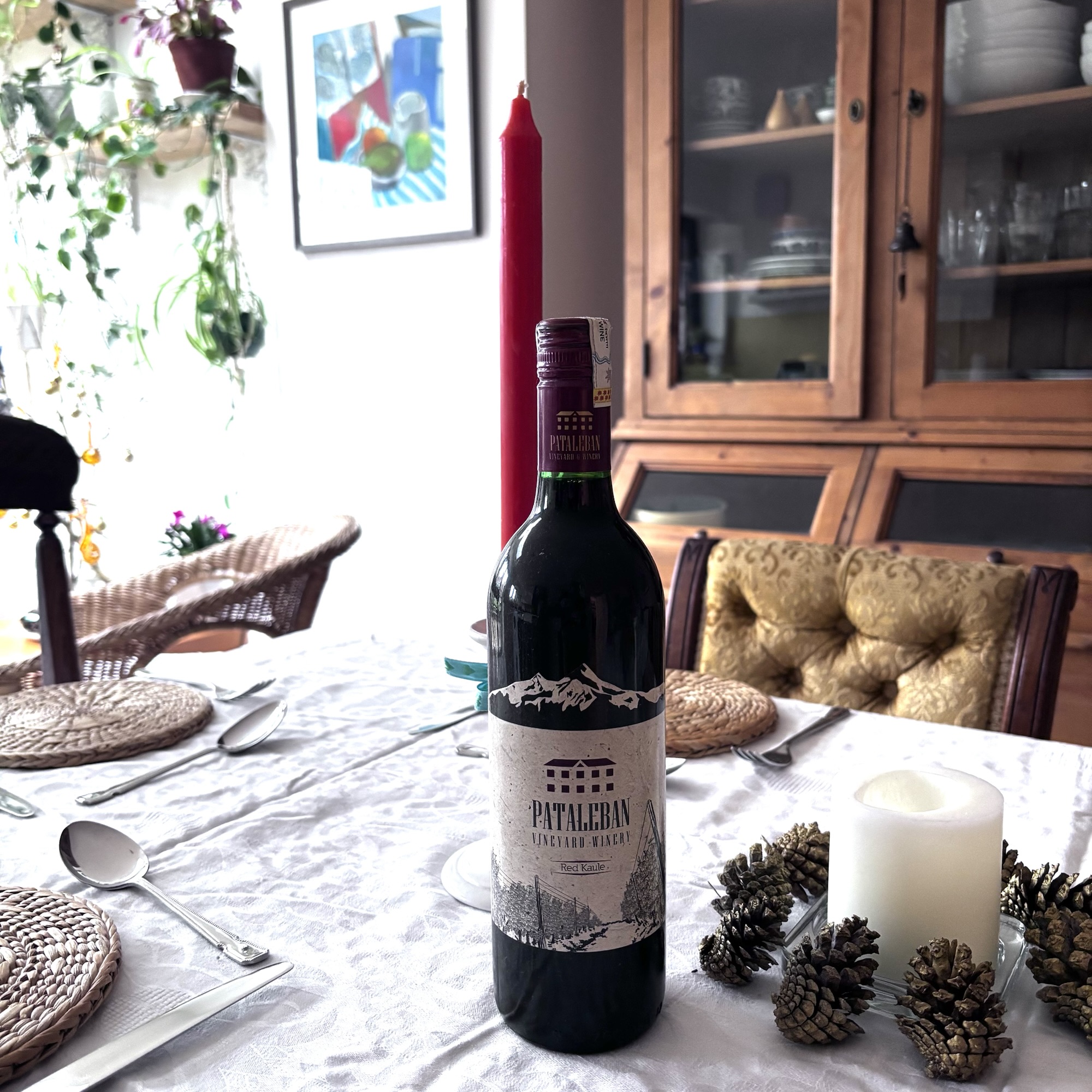
Red Kaule 2020, Pataleban Vineyard Winery (Kathmandu Valley, Nepal)
Pataleban, Nepal’s first commercial winery, has a nice resort hotel not far from the western side of Kathmandu, just above the valley, off the route to Pokhara. It isn’t far from the capital at Chandragiri, although the traffic here can be like the M25 on a really bad day. The resort is surrounded by green hills with some pleasant, gentle, walking, and if the weather is good the views of the Himalayas from the terrace are exceptional. On a good day you may see Langtang, Ganesh, Manaslu, and Annapurna Himals and the Dhading Valley.
The winery is further west, and to be honest you will be hard pushed to find it without assistance from the team, who may drive you from the hotel (guests can book various vineyard and winery tours too). Pataleban’s vines are at four hillside locations, including Kaule, Kewalpur, and at the resort hotel. The latter is where the initial vineyard was planted with mostly hybrid vines, reflecting the assistance owner Kumar Kaki received from Japan in the early days from consultant Dr Okamoto Gora.
Now the vineyards contain 20 grape varieties, some hybrids but increasingly more vinifera. I can’t tell you which grape varieties are in this blend that comes from the Kaule vineyard, but it is a ruby red colour, with a mix of red fruit and some underlying blackcurrant on the nose. The palate perhaps stresses the darker fruit a bit more. There’s a little tannin but this is mostly smooth and fruity. Naturally half the excitement here comes from drinking a wine from Nepal, with the added pleasure that it’s pretty good considering how hard viticulture can be here (weather, logistics and bureaucracy). Compared to the branded wines I’ve drunk from India (which tend to be too expensive in comparison in Kathmandu), this also has personality.
Purchased in Kathmandu in November 2024, it cost around £8.
Blanc de Noirs 2018 Cuvée Noella, Breaky Bottom (Sussex, England)
As Peter Hall passed away last Autumn it was once more very poignant drinking one of his wines at Christmas. An obituary on Jancis Robinson’s site called him “one of the greatest, if not the greatest, British winemaker to have lived so far”, a sentiment that you all probably know I would agree with.
In the tradition of naming each Breaky Bottom cuvée after a family friend or relative, Noella was named after Peter’s first nanny. I’ve written a lot about this vineyard before (which should not be hard to search for). Suffice to say that once Peter shifted all his production to bottle-fermented sparkling wines he began to make English wine that became a benchmark for other artisans to follow.
For artisan wines are what we have here, from a small estate nestled within a fold of the South Downs, near Rodmell. It’s a site every bit as beautiful as the wines Peter made, and indeed as Peter and his wife, Christine, such wonderful people. Peter was a very special individual, certainly with an emphasis on individual. I think it takes individuality to make wines as majestic as Breaky Bottom wines undoubtedly are, though preferably when allowed to age.
This was the first time Peter had harvested enough black grapes, Pinots Noir and Meunier, to make a Blanc de Noirs. 2018 gave Sussex an Indian Summer. The free-draining chalk allowed for grapes of healthy ripeness, but with great finesse and the possibility of a special complexity in the finished wine. Fruity, but without loss of acidity. A wonderful wine within the pantheon of great BB wines, and one which will age further, for sure.
This is still available. £264 for six bottles direct from the vineyard/mail order. Corney & Barrow is the UK agent. My supplies come from great friends of the Halls, Henry and Cassie Butler, at Butlers Wine Cellar (Brighton). They may have sold out, but Fourth & Church in Hove, who they supply, may still have it by the bottle for £49. Of course, I would recommend you try any BB cuvée if you haven’t yet done so.

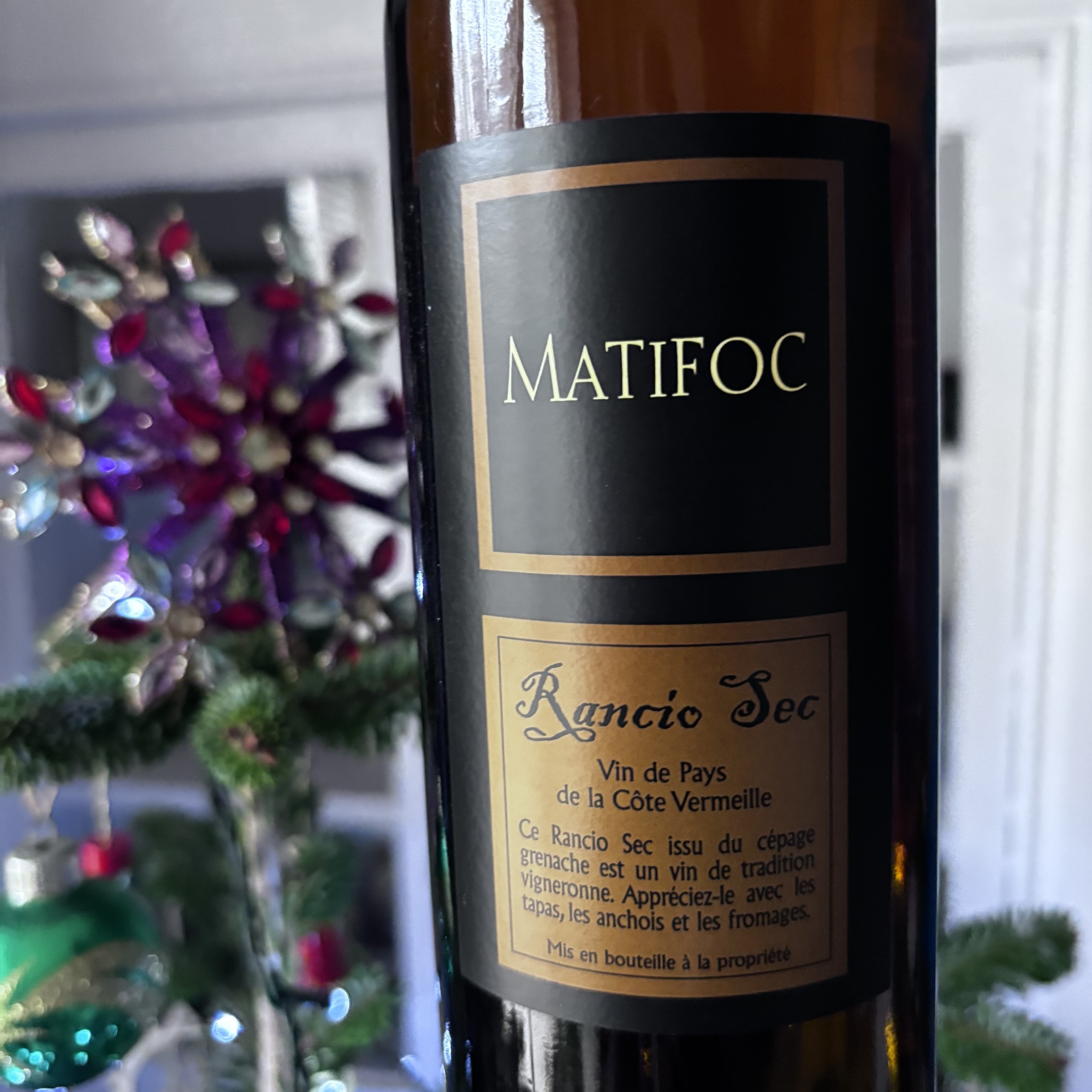
Matifoc Rancio Sec NV, Vin de Pays Côte Vermeille, La Cave de L’Abbé Rous (Roussillon, France)
This is one of those wines that this blog is made for, really. It’s what would be considered old fashioned by many wine drinkers, but it is a blessing, for the more adventurous among us, that wine like this still exists.
We have 100% Grenache Noir, harvested from the steep terraces near Banyuls-sur-Mer, close to the Spanish-Catalan border. Very old bush vines soak up the heat on the rocky terrain, close to where the Pyrenees tumble into the sea. Macerated on skins, the wine is fermented dry and aged between eight and twelve years in glass demijohns (“bonbonnes”), outdoors in the sun.
Some fortified wine here is made within the AOP of Banyuls Vin Doux Naturel (VDN), with still, unfortified table wines, red and white, made under the AOC Collioure. This is an IGP wine, I suspect because it doesn’t have spirit added as “mûtage” (like Port and Banyuls), yet it is made oxidatively. Its 16.5% abv is natural alcohol, from super-ripe fruit fermented dry.
The result is oxidative, but closer to either a Palo Cortado or a dry Oloroso Sherry than most Banyuls. Light mahogany in colour, it is very dry with a mineral bouquet. On the palate it is nutty on quite a blunt attack, with bags of salinity. Then there’s that rancio earthiness, clearly oxidative, but very fresh and bright. It stops and makes you think, in part down to its uniqueness. It comes into its own with a cheeseboard, but was also a surprisingly good match, despite its dryness (maybe because of), with Christmas cake.
Another superb gift from a clever family member, it came from Cornelius in Edinburgh. I notice that you can also find it at The Solent Cellar for English readers (£18.99).
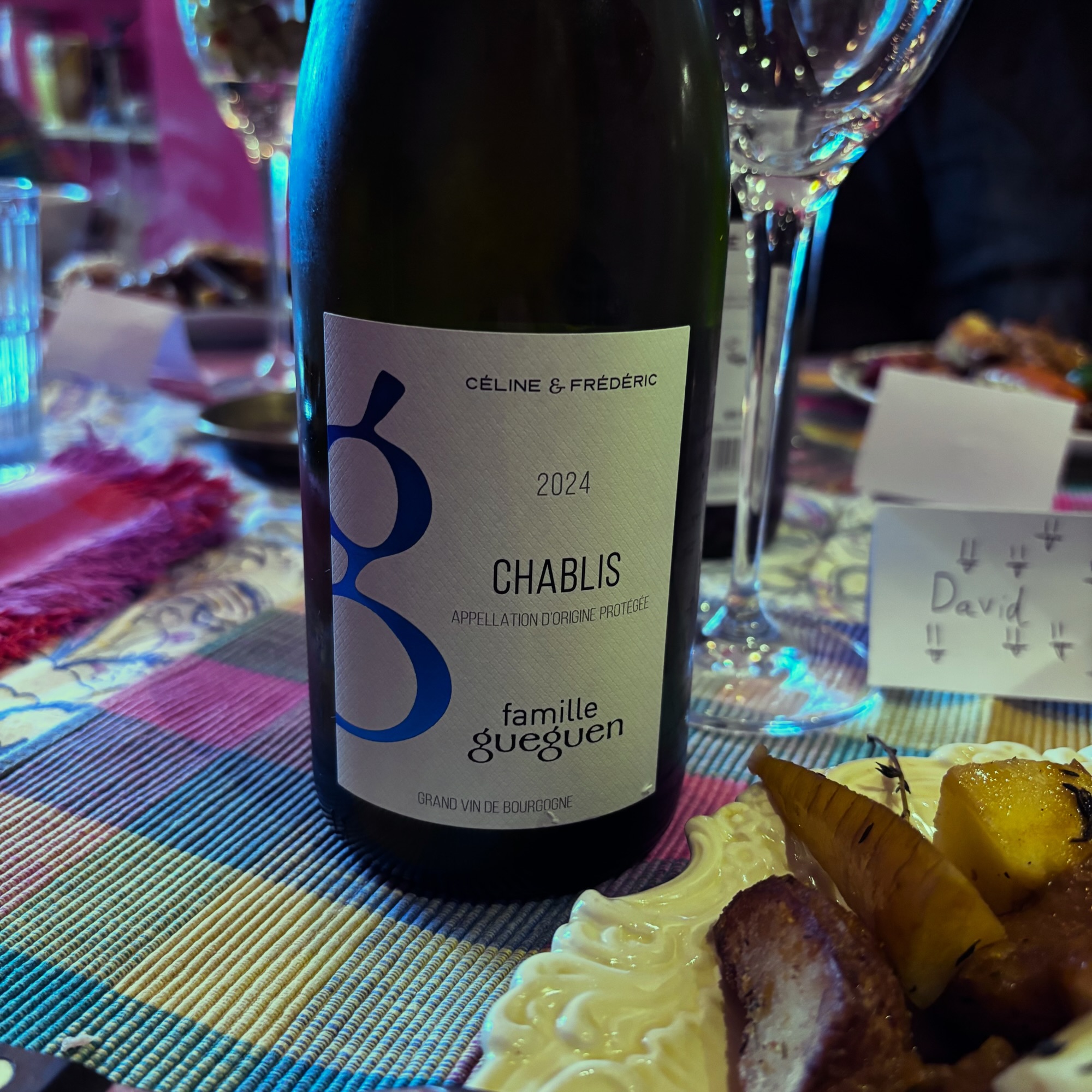
Chablis 2024, Famille Gueguen (Chablis, France)
Chablis has been much-maligned and much copied (and forged) in equal measure in the past. It is a relatively large region about 100km north of Beaune (note to North American friends, no, not in California). It is closer to the vineyards of Champagne than to the Côte d’Or, and yet it is very much considered Burgundy. However, the new breed of expensive still white wines from Champagne have a tendency to look towards Chablis for minerality, if towards Puligny and Meursault for occasional richness.
I won’t talk about terroir here. That is best saved for when discussing Chablis’ Grand- and Premier-Crus. However, it is worth noting that the much-quoted “Kimmeridgian” clay limestone is mostly found beneath the Crus, with Portlandian soils more prevalent outside those sites.
A few producers sell their various Chablis for a lot of money, but there are a good number of family domaines which lack such fame and fortune. The key is finding them. The Solent Cellar imports Céline and Frédéric Gueguen’s wines themselves (though I believe they are not the only UK source). They bring in a range of cuvées from various Chablis down to Aligoté, Saint-Bris, Bourgognes Côtes Salines (very good value) and Crémant.
This Chablis comes from a seven-hectare site at Préhy, on the edge of the AOC’s southern extension, but nevertheless on Kimmeridgian soils (I’m told). Viticulture is “lutte Raisonnée”. The fruit sees a slow press, fermenting on indigenous yeasts. Ageing is on lees and it does go through malolactic. Aged in stainless steel it just sees a light fining before bottling.
The colour is a nice yellow/greenish gold. The bouquet is white fruits with lemon-freshness, the palate is crisp and balanced. It isn’t some “fine wine” version of Chablis, and it isn’t a De Moor, BUT it is well made, has character, and is a nice wine. It is a proper Chablis for just £23, a price aided by importing it direct from a family that The Solent Cellar has built a good relationship with. I bought three bottles and it served well over Christmas. I shall undoubtedly buy more as it’s really useful for family gatherings, or for visitors for whom a decent Chablis would ring more bells than a natural Chardonnay from the Ardèche that costs twice as much.
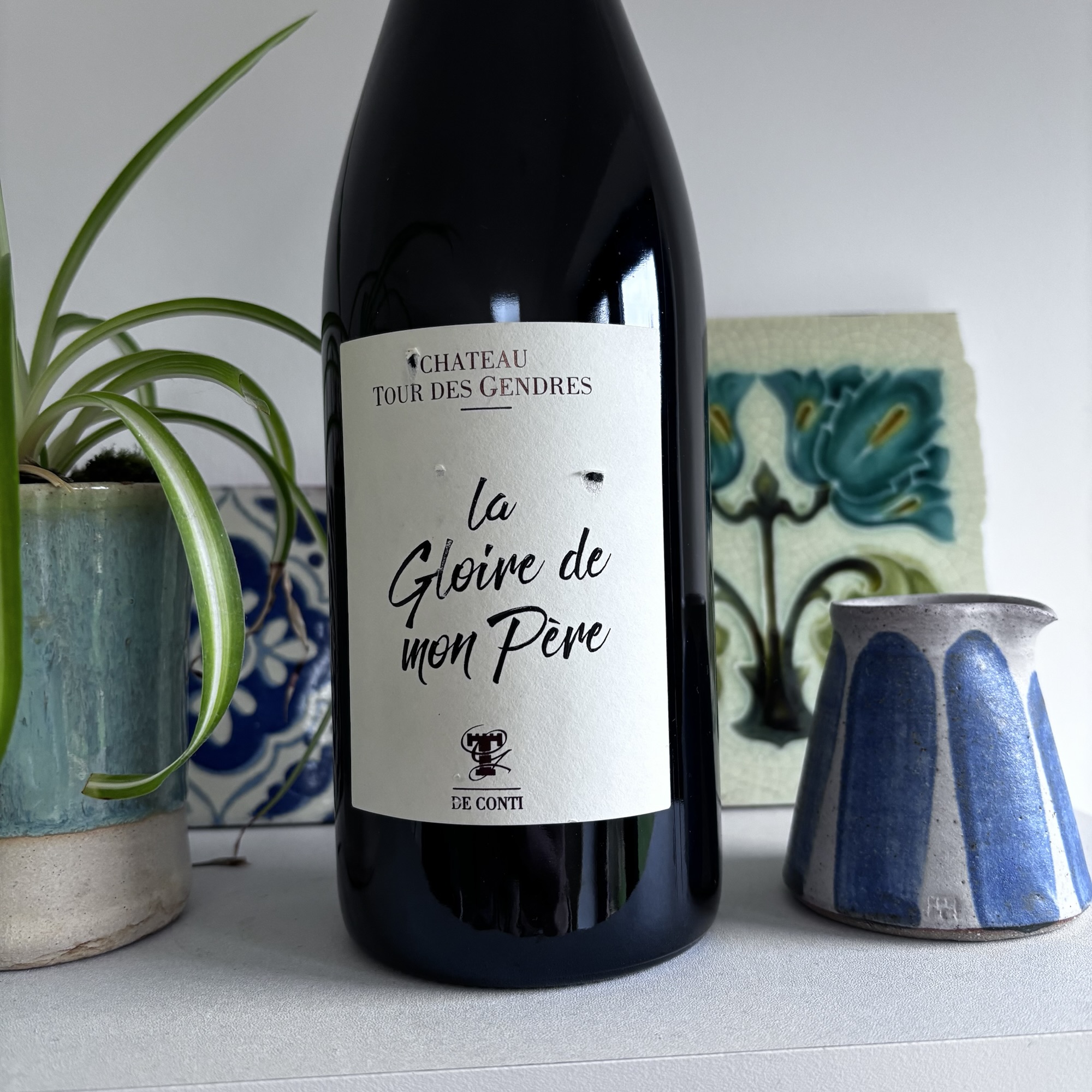
La Gloire de Mon Père Côtes de Bergerac 2022, Château Tour des Gendres (Bergerac, France)
Back in the 1990s the De Conti family was always considered the name in Bergerac wine, or at least for those early customers of Les Caves de Pyrene, who back then specialised initially in the natural wines of Southwest France. I bought this particular cuvée, named after the famous Pagnol novel, several times from Les Caves, but I hadn’t done so for many years until I spotted a bottle when making up a mixed case from TWS.
It is made from a blend of roughly equal parts Malbec (once more commonly called Côt here), Cabernet Sauvignon and Merlot. The grapes are organic and winemaking qualifies as low-intervention The result is a bright and deep purple colour, very ripe dark fruit on the nose, with concentrated dark fruit on the palate. It has a bit of a crunchy bite on the finish, and is an exemplary example of what people used to call a “French Country Wine”, yet I use the term here as a compliment, rather than the dismissive intent with which some classicists used it back in the dark ages of wine appreciation.
Mixing wine and cuisine, it went very well, perhaps perfectly, with the lasagne we make with added harissa to spice it up. This bottling is definitely more “meaty and chewy” than some lighter Bordeaux-copying Bergeracs you might come across, and the alcohol is up at a welcome (on this occasion) 14%. £15 from The Wine Society.

 David Crossley's Wide World of Wine
I believe Tour des Gendres has split up into two domaines (inheritance?). Always a good source of value wines so I hope that continues.
LikeLiked by 1 person