
Aberfeldy. It has a nice ring to it, and it certainly is a nice place. Great food, drink, walks and more in an attractive market town on the southern edge of the Scottish Highlands, surrounded by mountains which are majestic green and grey in the sunshine, somewhat forbidding in the rain. One of the town’s finest walks, through woodland up to the impressive Moness Falls (round trip close to two hours with stops) was immortalised by Scotland’s national poet, Robert Burns, in his song “The Birks of Aberfeldy” (1787). With its proximity to Loch Tay and Glen Lyon, Scotland’s longest enclosed glen, it is a great place for a visit, and only two hours north of Edinburgh by road. Yet there’s another reason to visit which I’ve not yet mentioned. Whisky!
Now, some of you may begin to question the slow, creeping, appearance of whisky in a wine blog. I admit that after a flirtation with Scotch Whisky in my twenties I became more interested in other spirits. First it was gin and brandy, later rum, with a burgeoning interest in sake coming in the 1990s, following several visits to Japan. And there’s that worrying taste for the Negroni (only last week identified in one section of the press as the aperitivo of choice for the liberal woke elites). Wine has always been the overriding passion though. Then we moved to Scotland and I guess you just can’t ignore the local liquor. Up here, most people it seems will engage in a discussion about the spirit at some point of an evening. Apart from getting back my taste for whisky, I have come around to viewing the similarities between whisky and wine.
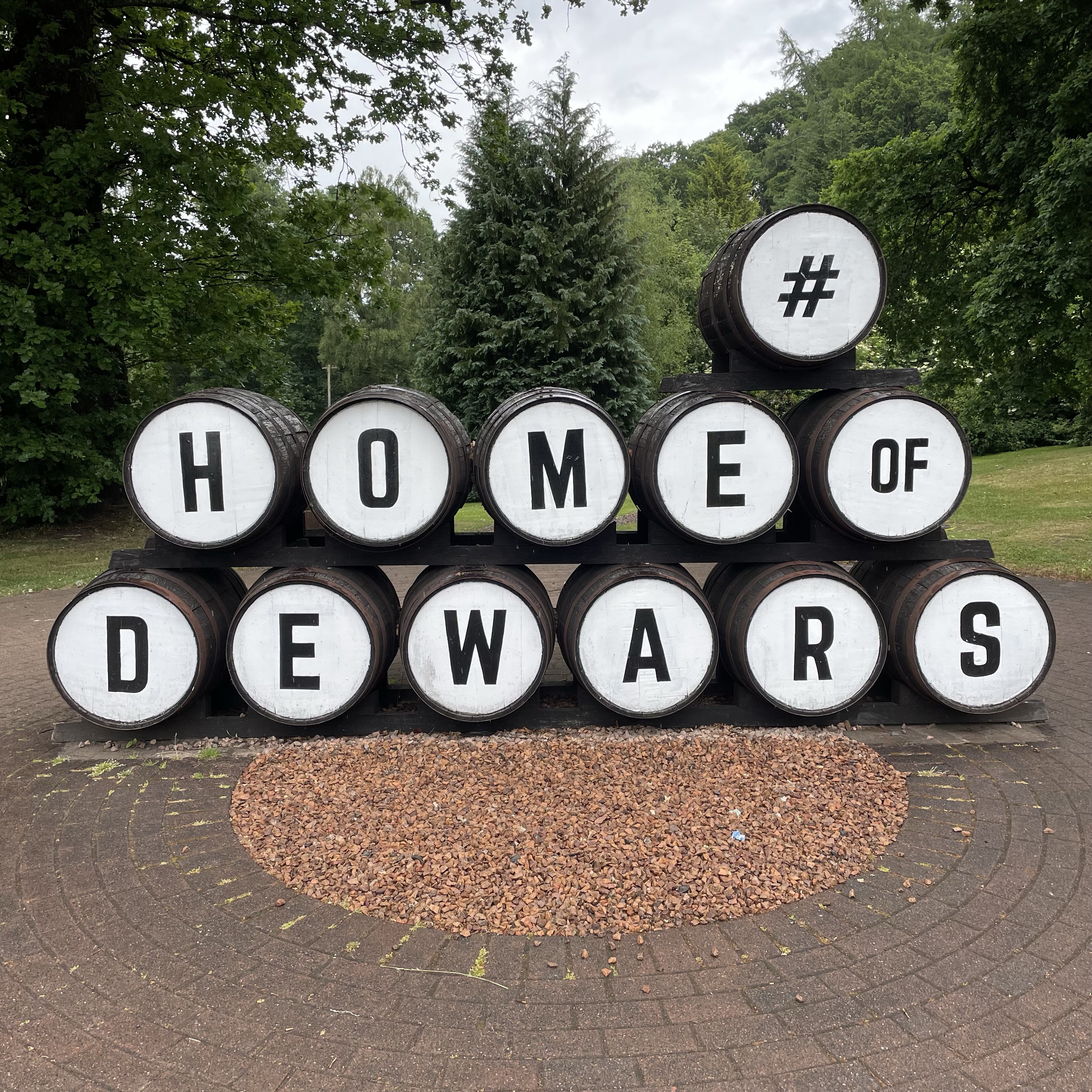
I’m not speaking of “taste similarities”, although you can definitely find some winey elements in the glass, more on the nose than palate. I mean that each distillery is distinct in terms of its product’s flavours and its unique history. Even the larger producing distilleries can claim to be “artisanal”. These are perhaps what you might call cultural similarities. Equally, whisky has its “wine region” equivalents (Speyside, Island etc) and even its “crus” (Campbeltown, Islay and so on).
The other wine connection is the casks used to finish a whisky’s ageing. Not all such casks were used for wine previously. Bourbon casks are the most common because, due to the particular regime for bourbon ageing, they are plentiful, but wine casks are becoming more prevalent.
Sherry casks, perhaps most often Oloroso casks, are frequently encountered but I am drawn to more limited examples. The Isle of Arran Distillery on Scotland’s most southerly whisky-producing island has finished whisky in Sauternes and Valpolicella casks and the former, in particular, has drawn perhaps too many appreciative noises in our current abode.
But I’m digressing from Aberfeldy. The distillery which has taken the name of the town, and is situated just beyond its eastern edge, was opened in 1898 by the Dewar brothers, Tommy and John junior. Their father, also John and the company’s founder, had been born on a croft only a couple of miles from the town, then a mere village which found itself on General Wade’s route to quell the clans (Wade’s military bridge is architecturally famous and as impressive as the enormous statue which sits close by, a memorial to the locally recruited Black Watch Regiment, involved in Wade’s somewhat dubious expedition).
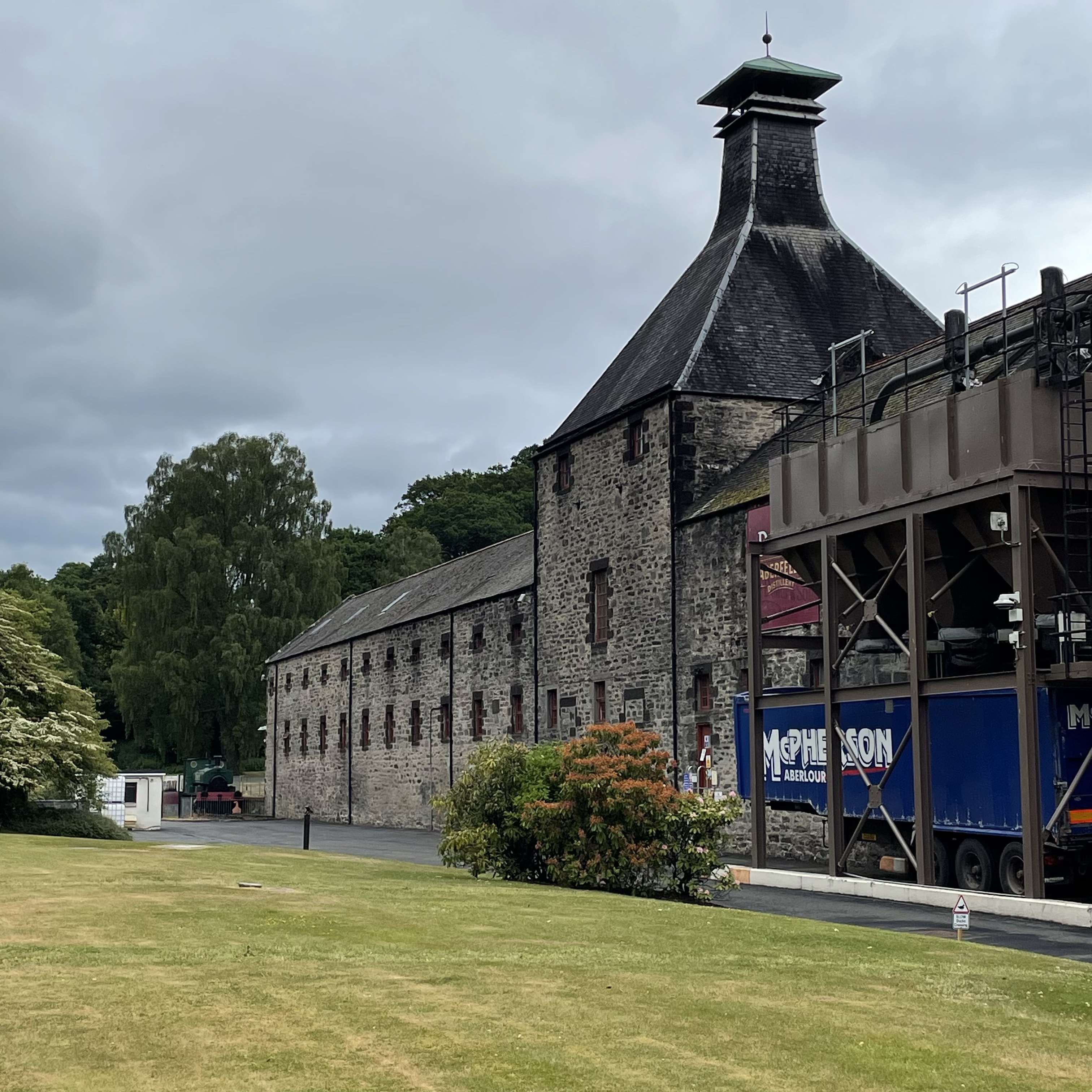
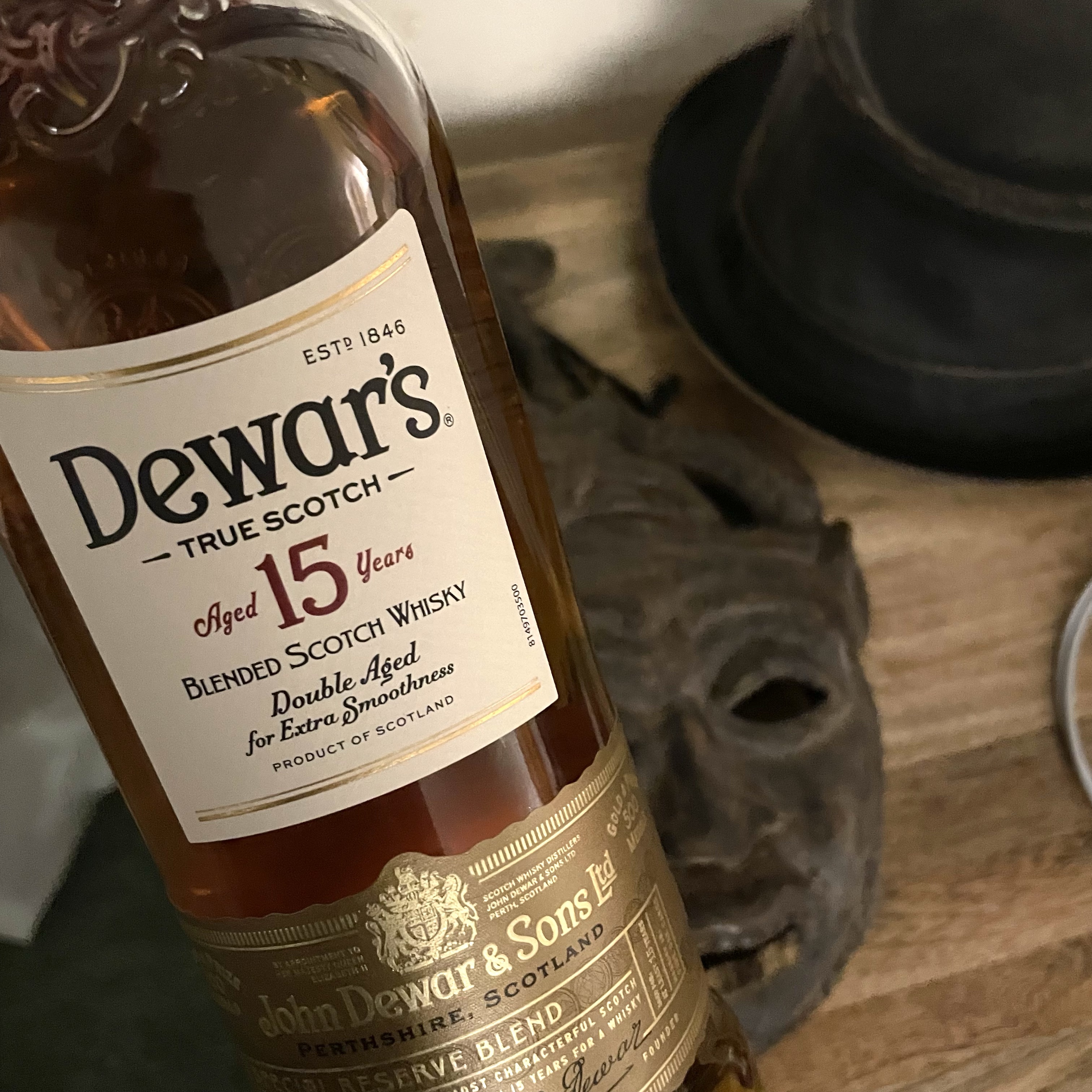
The name Dewar should be familiar to many readers, being one of the great whisky dynasties of Scotland. Dewar’s is the biggest selling whisky brand in the USA, which helps the on-site visitor experience, Dewar’s World of Whisky, to welcome more than 35,000 visitors a year, many coming from over the Atlantic to discover their Scottish heritage, and indeed to show off their impressive connoisseurship.
Of course, like almost all the Scottish distilleries, Aberfeldy/Dewars felt the effects of industry consolidation through the 20th Century. They became part of United Distillers in 1925 (which became UDV on its merger with Grand Metropolitan in 1998), eventually finding its place as one of the Diageo brands. Diageo was forced to sell off some interests because by then the European Union, under its consumer protection competition law, wasn’t too keen on monopolistic tendencies. The Dewar brand, along with Aberfeldy, were purchased by Bacardi Corp.
And there they reside. Bacardi has invested heavily (at least £3 million) in Dewar’s World of Whisky. If Aberfeldy would be hard pushed to claim to be one of the handful of most highly regarded single malts by whisky aficionados, it can rightly claim to be one of the best three or four whisky visitor experiences in Scotland. This is why my son-in-law and I decided to take a tour.
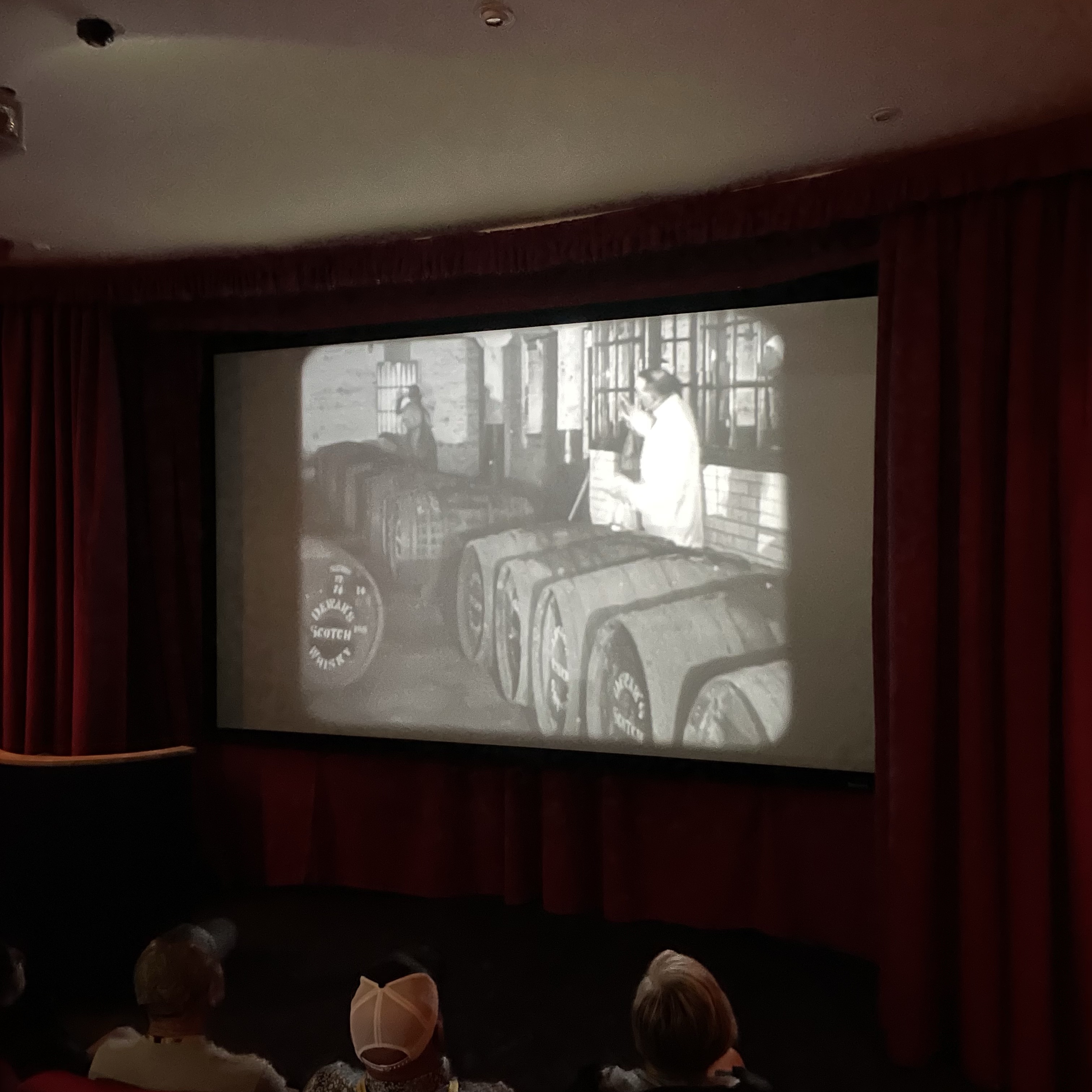
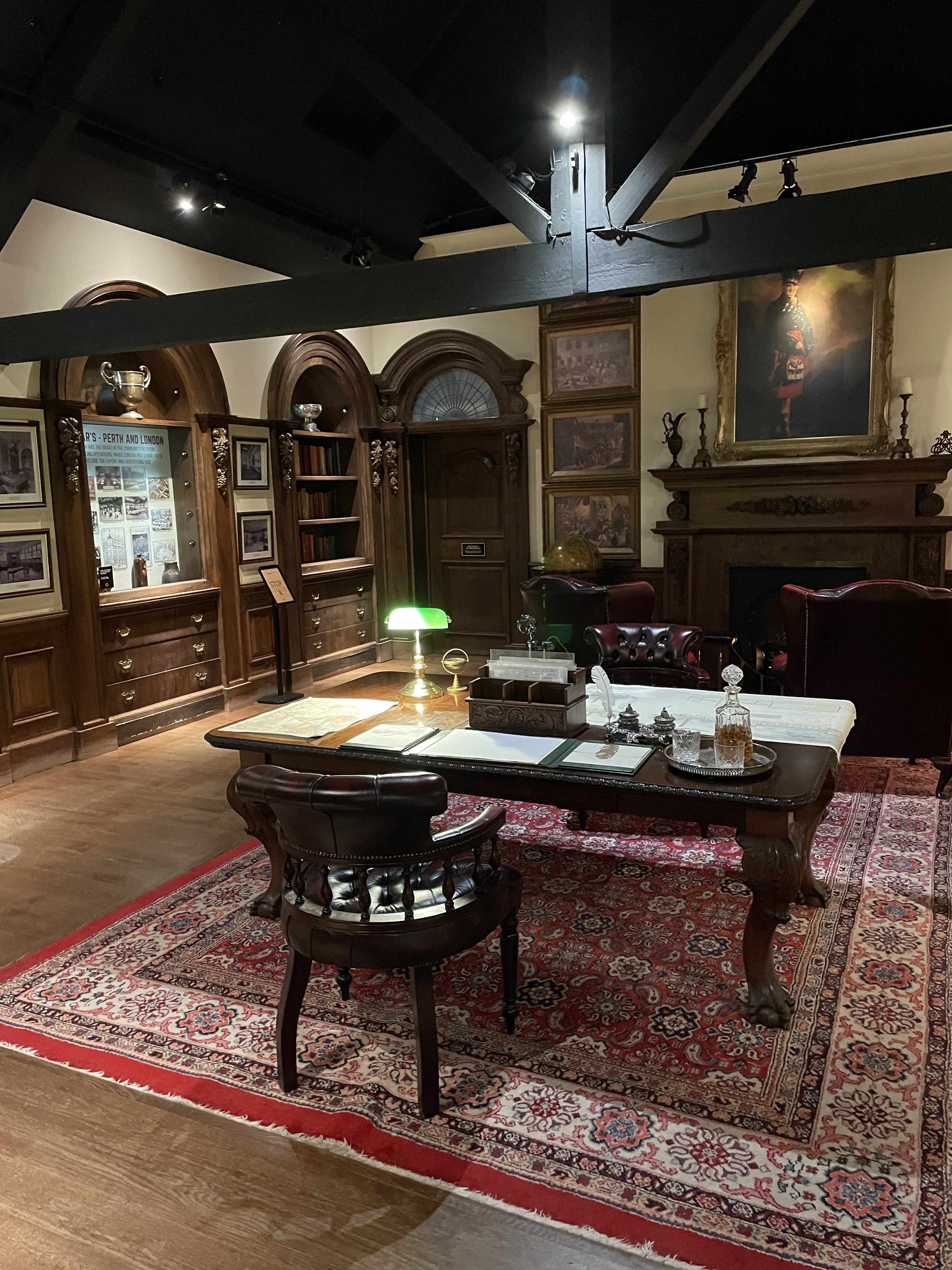
You start out with an enjoyable short film, especially some nice black and white footage, before moving into the museum. This is nicely set out, one half being a replica Dewar’s office with pull-out drawers of artifacts etc, the other half containing various cabinets full of all sorts of relevant objects, which hopefully the photos will give some idea of.
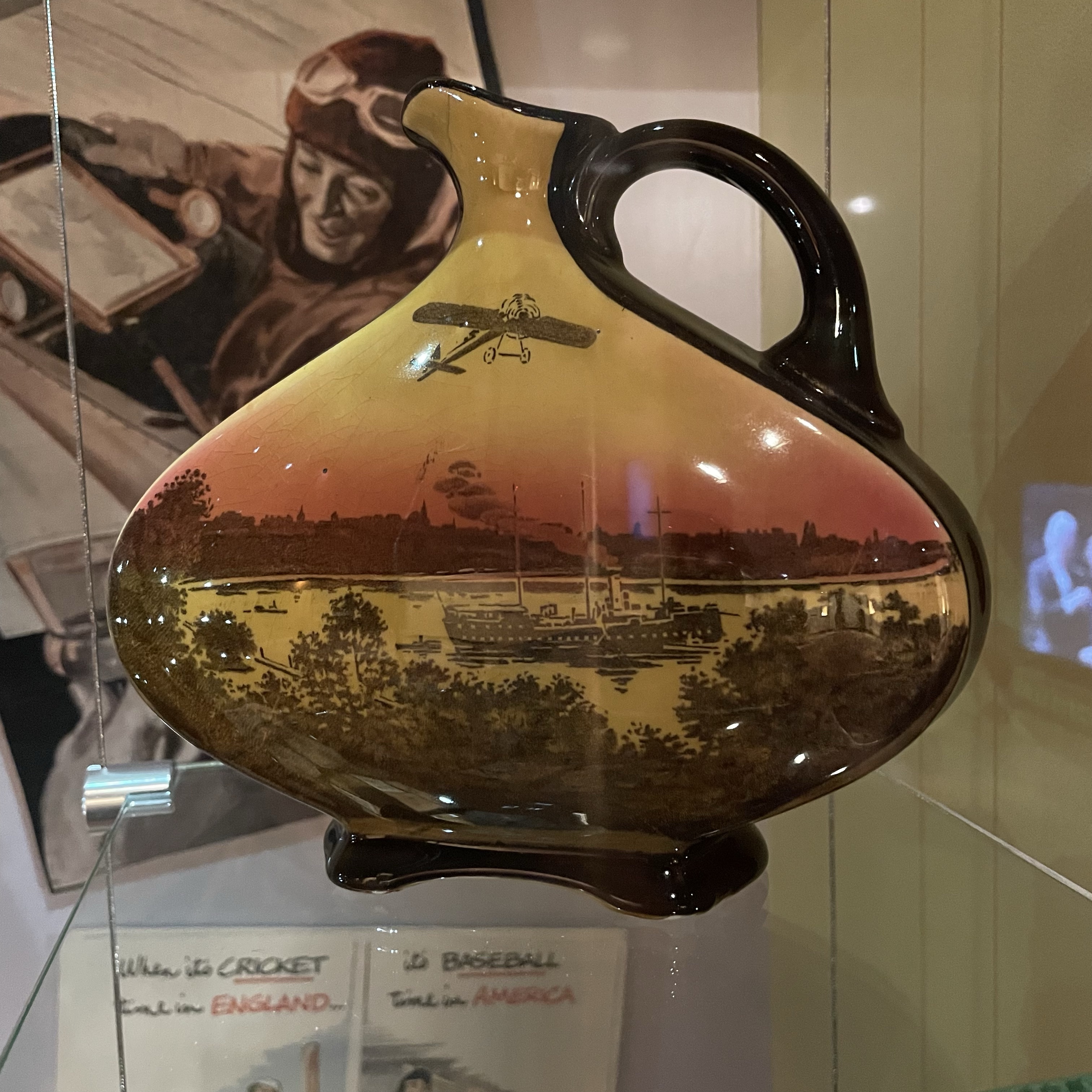
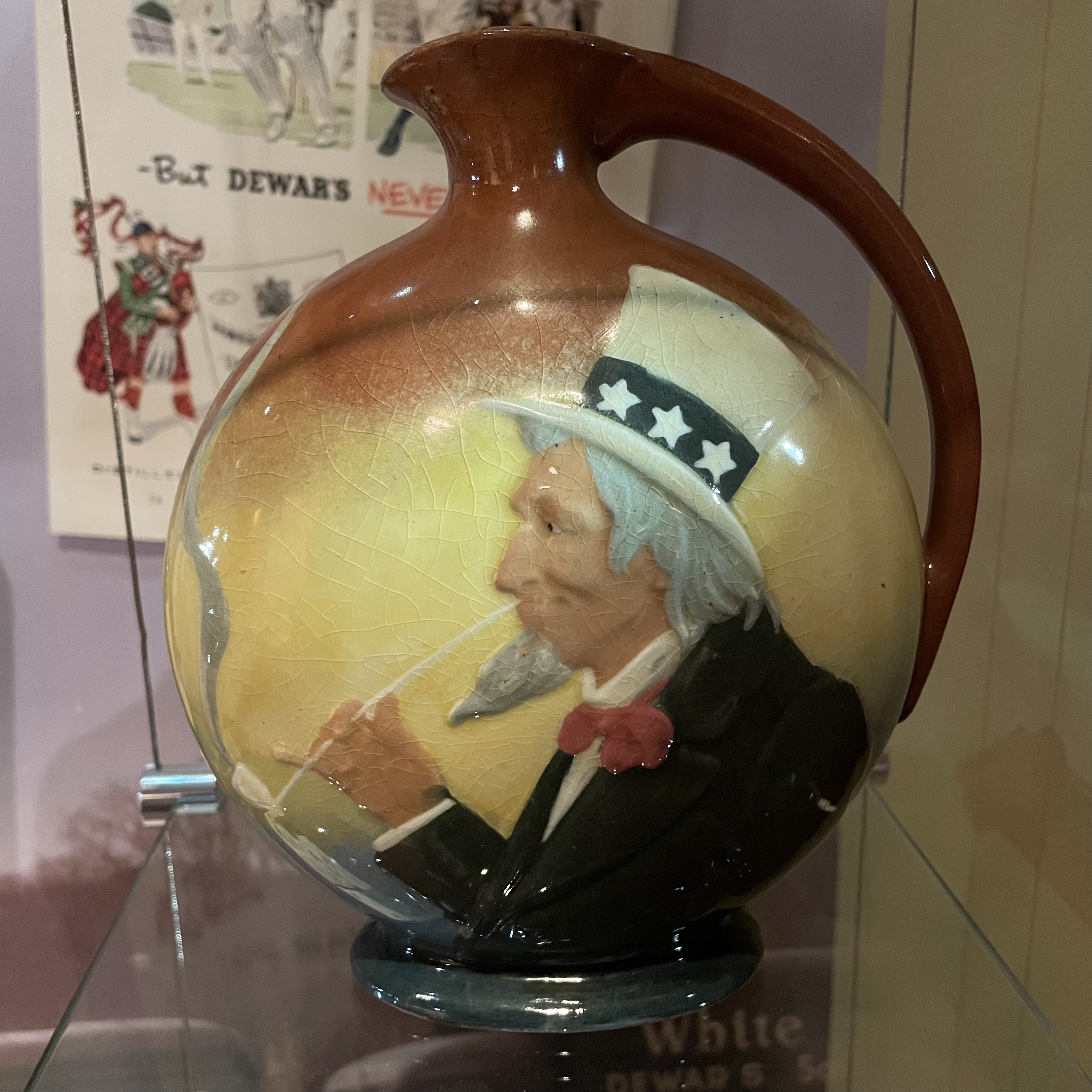
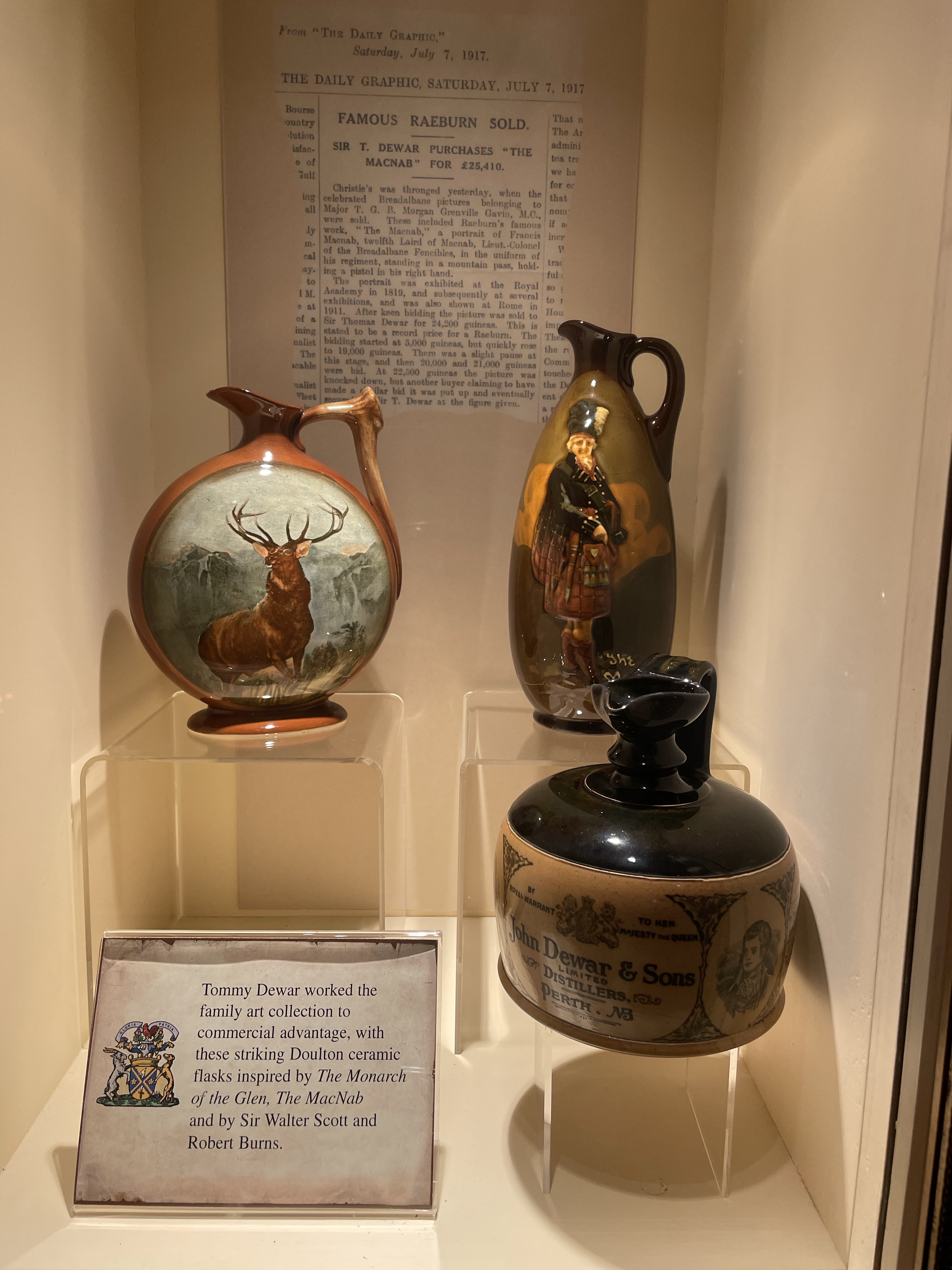
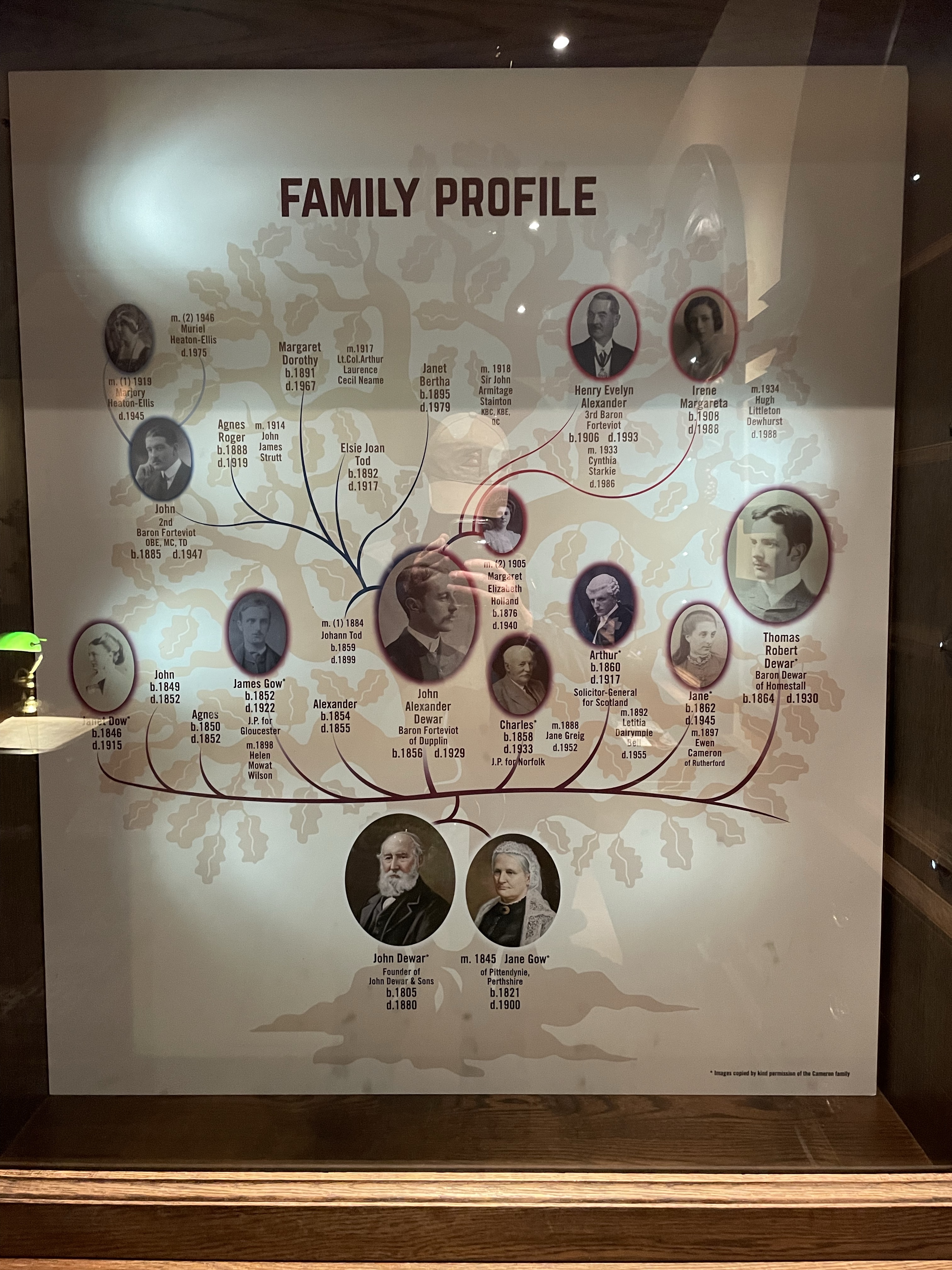
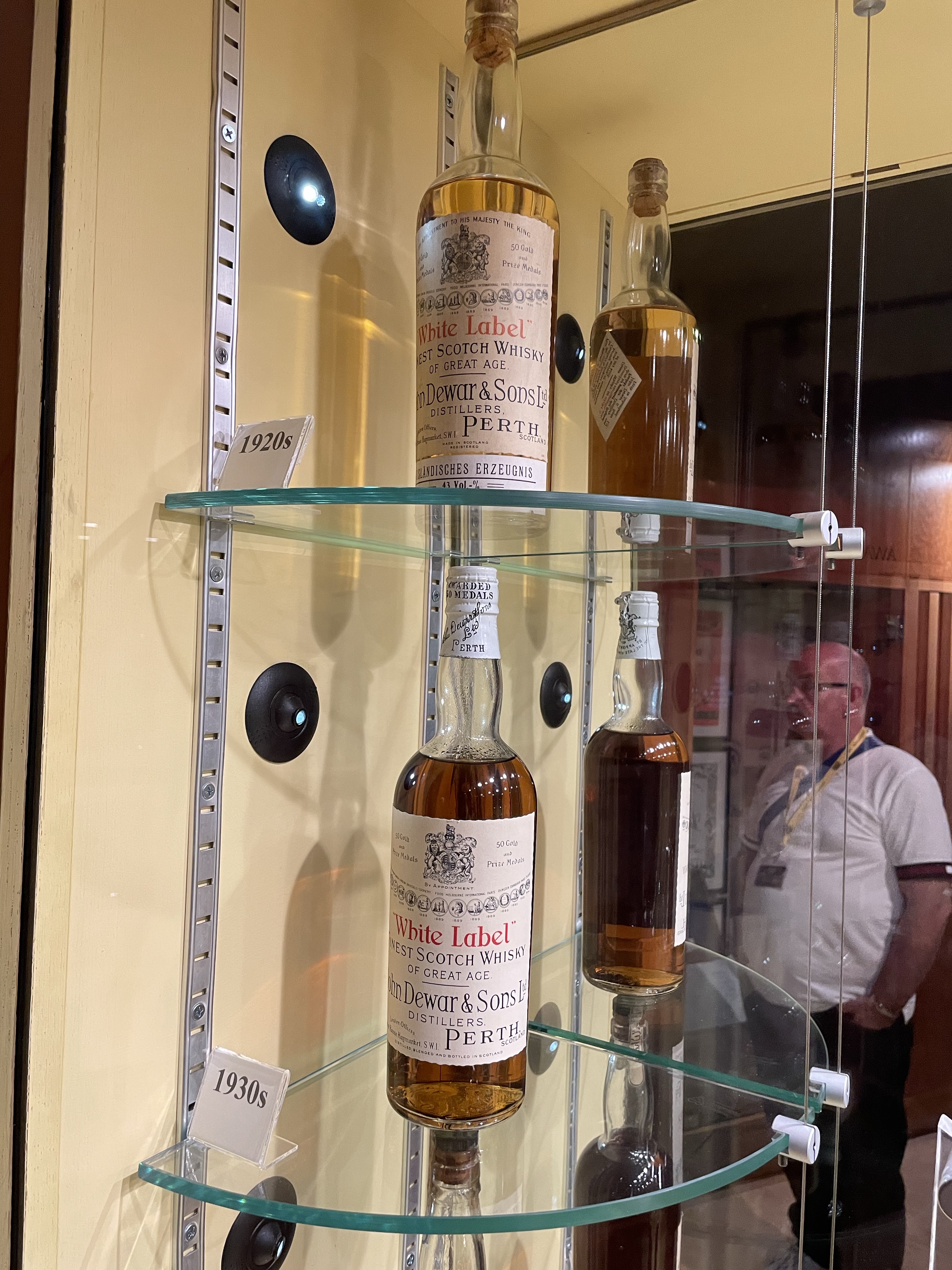
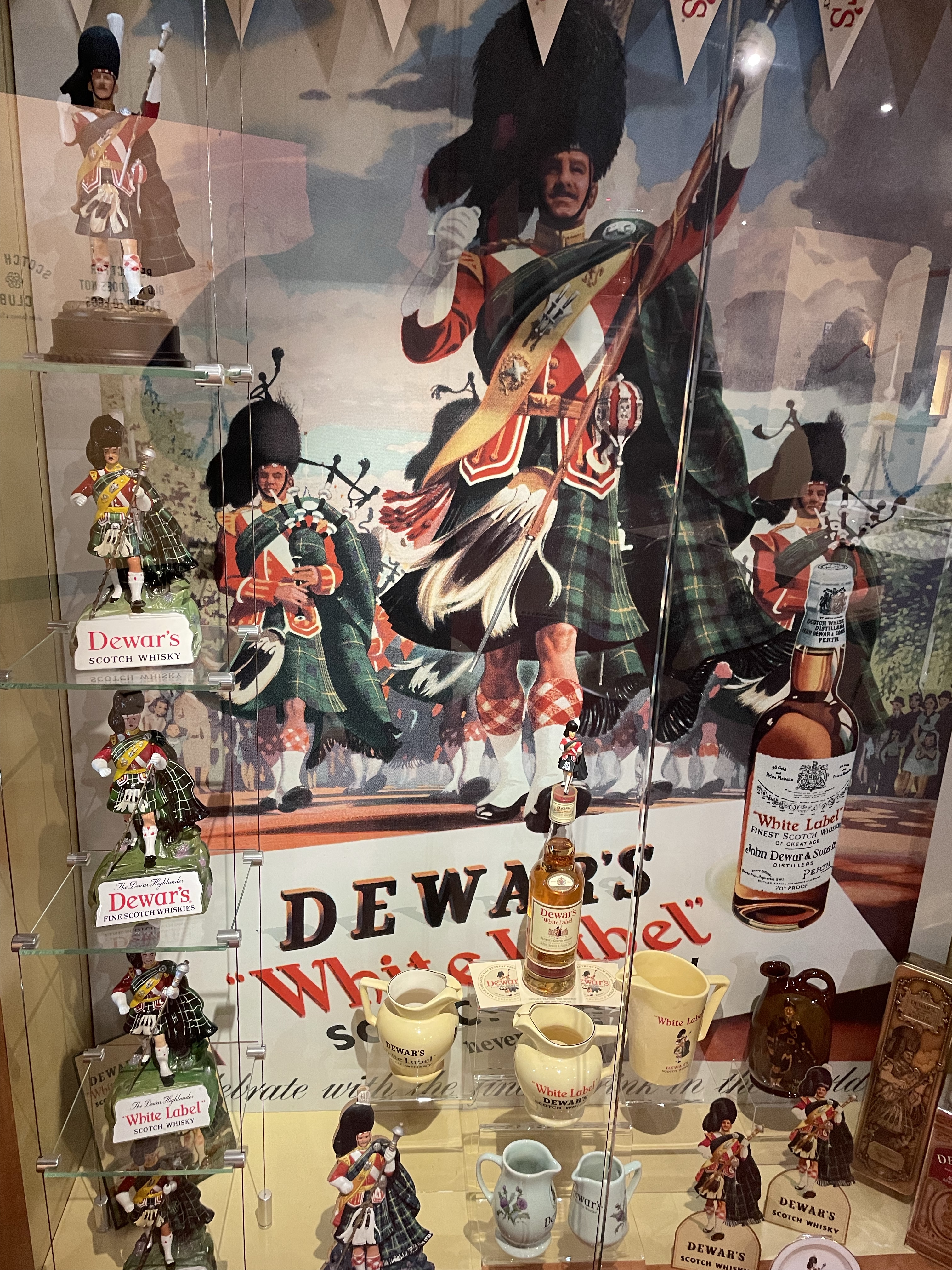
Then you get collected by a guide and taken on a tour of the distillery. It’s all very well reading about the process of creating a single malt whisky, but seeing it does make such a difference, especially if, like me, it is your first such tour. Sadly, unlike in any winery I’ve visited, they won’t let you take any photos inside the production areas, a shame because the four enormous copper stills, the big brass spirit safes, and the giant wooden mash tuns are all highly photogenic. We also didn’t get to see inside the cask rooms, I presume because these must be bonded facilities with limited access. We did see a few barrels but they contained samples “from the barrel” for the visitors taking a superior tour.
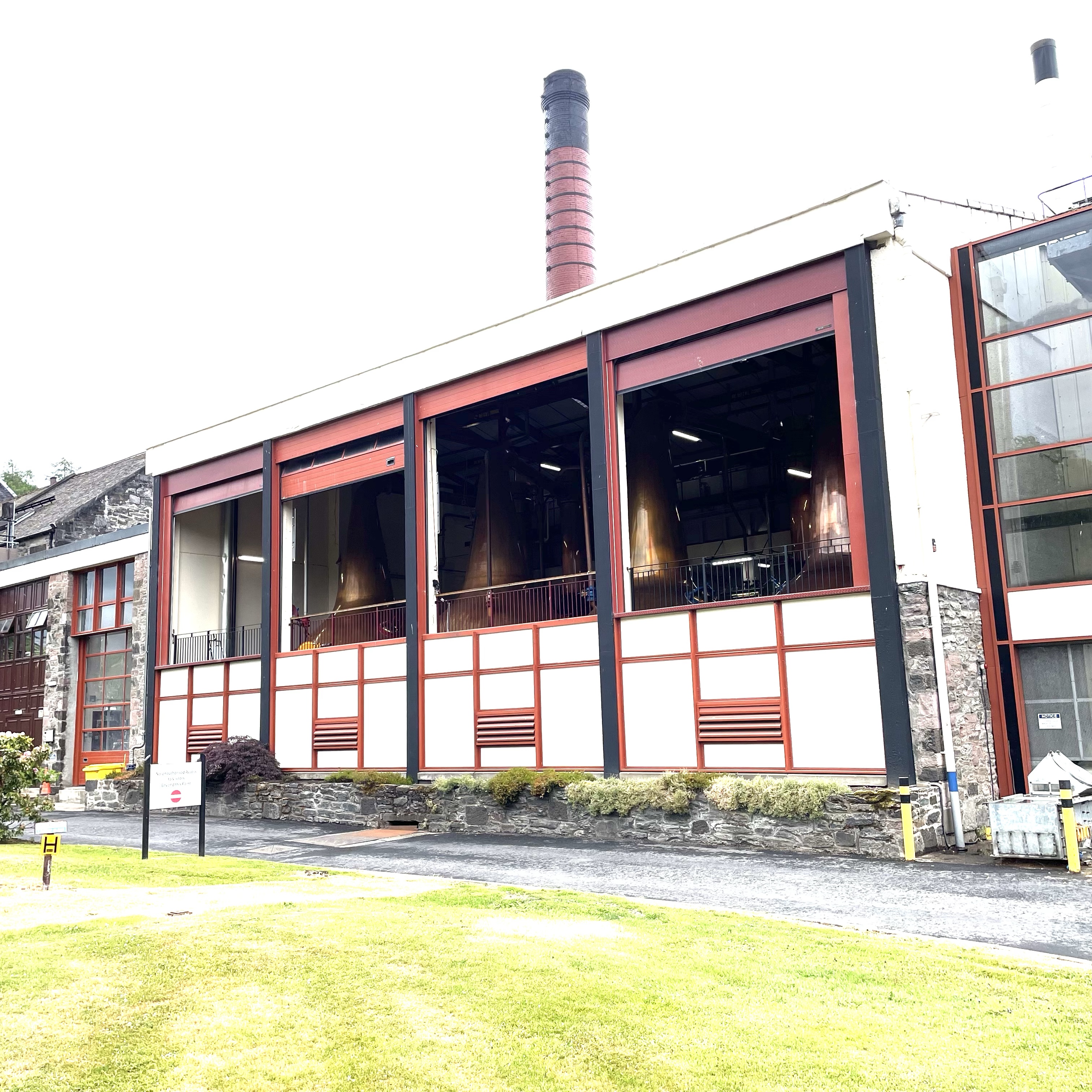
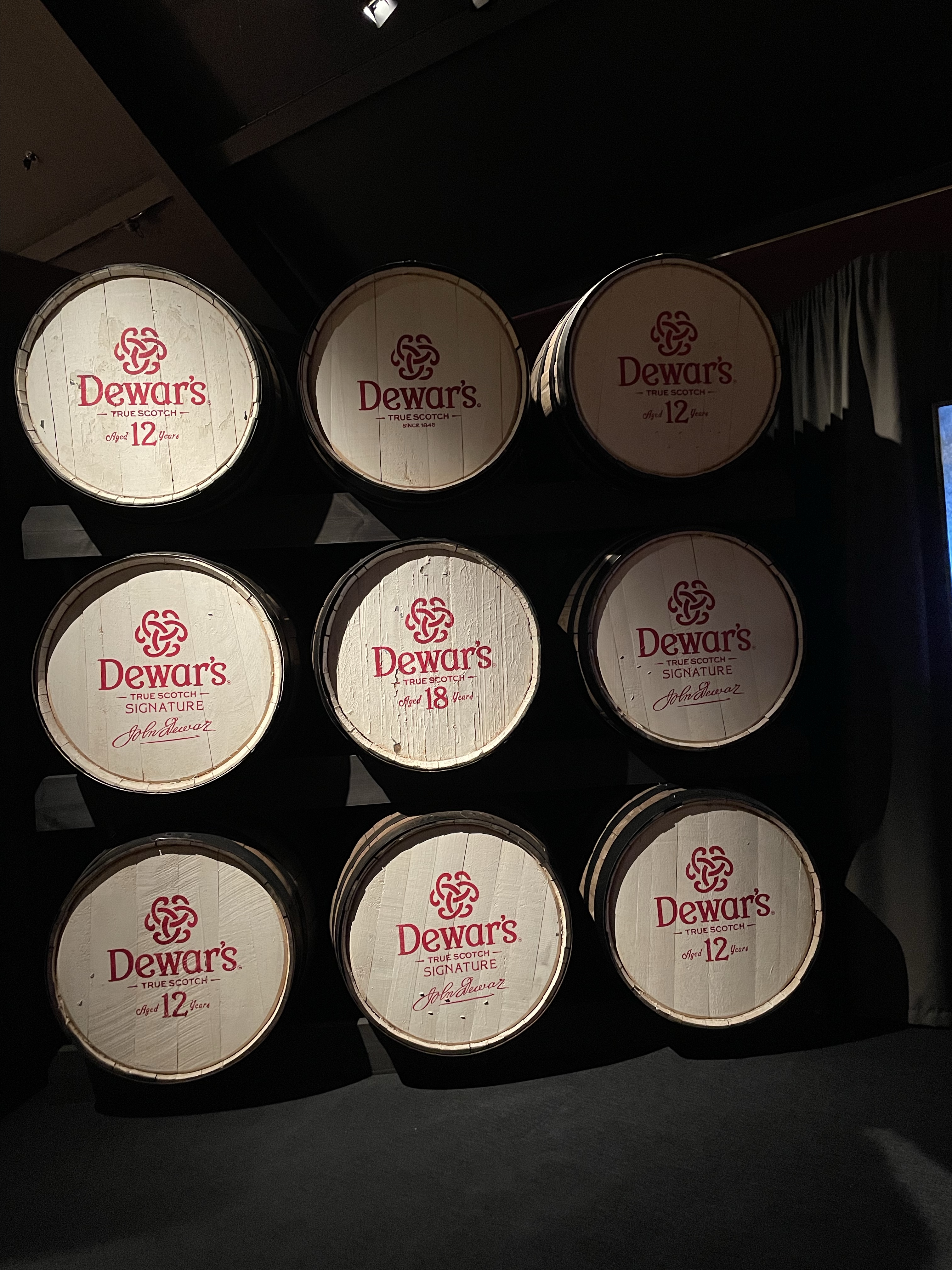
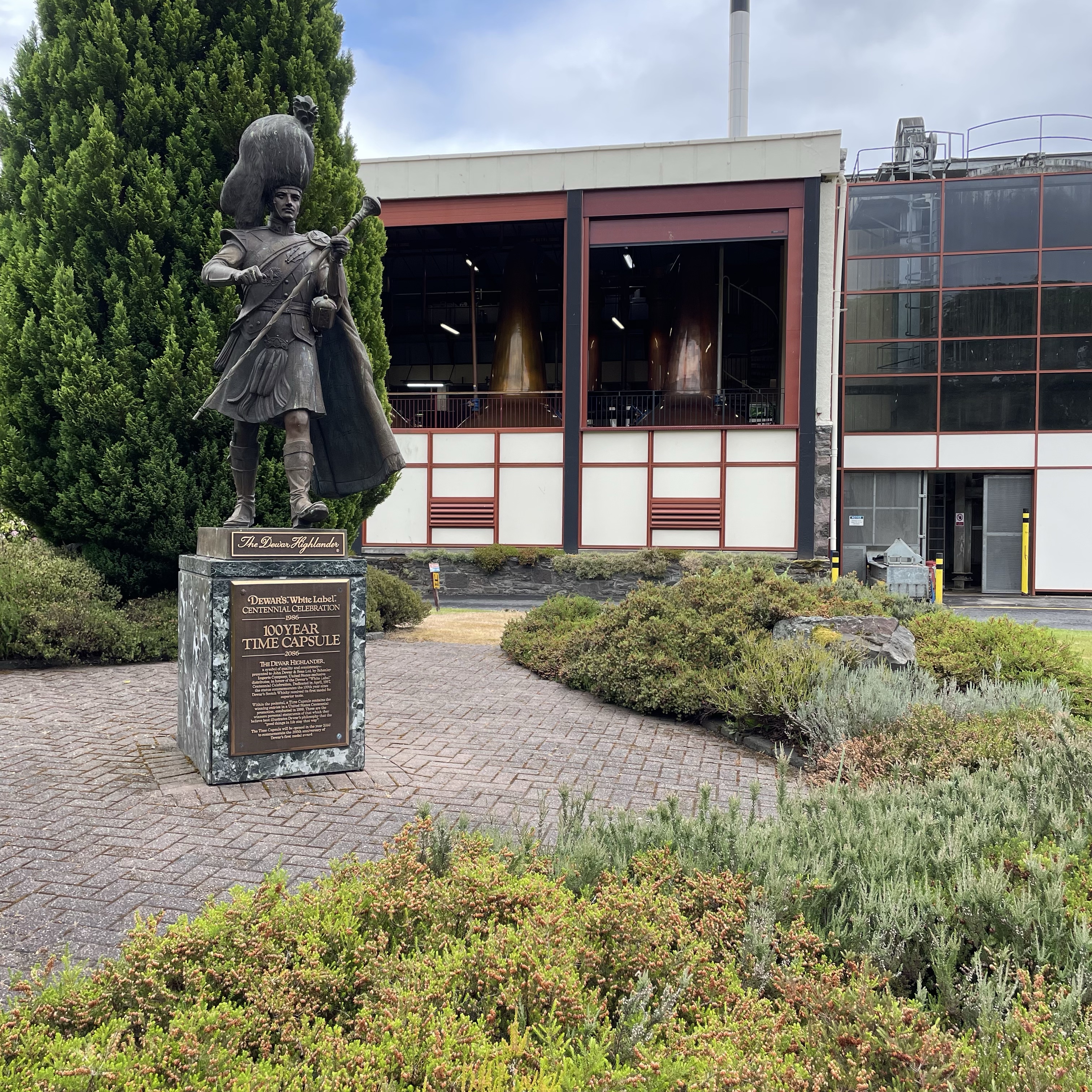
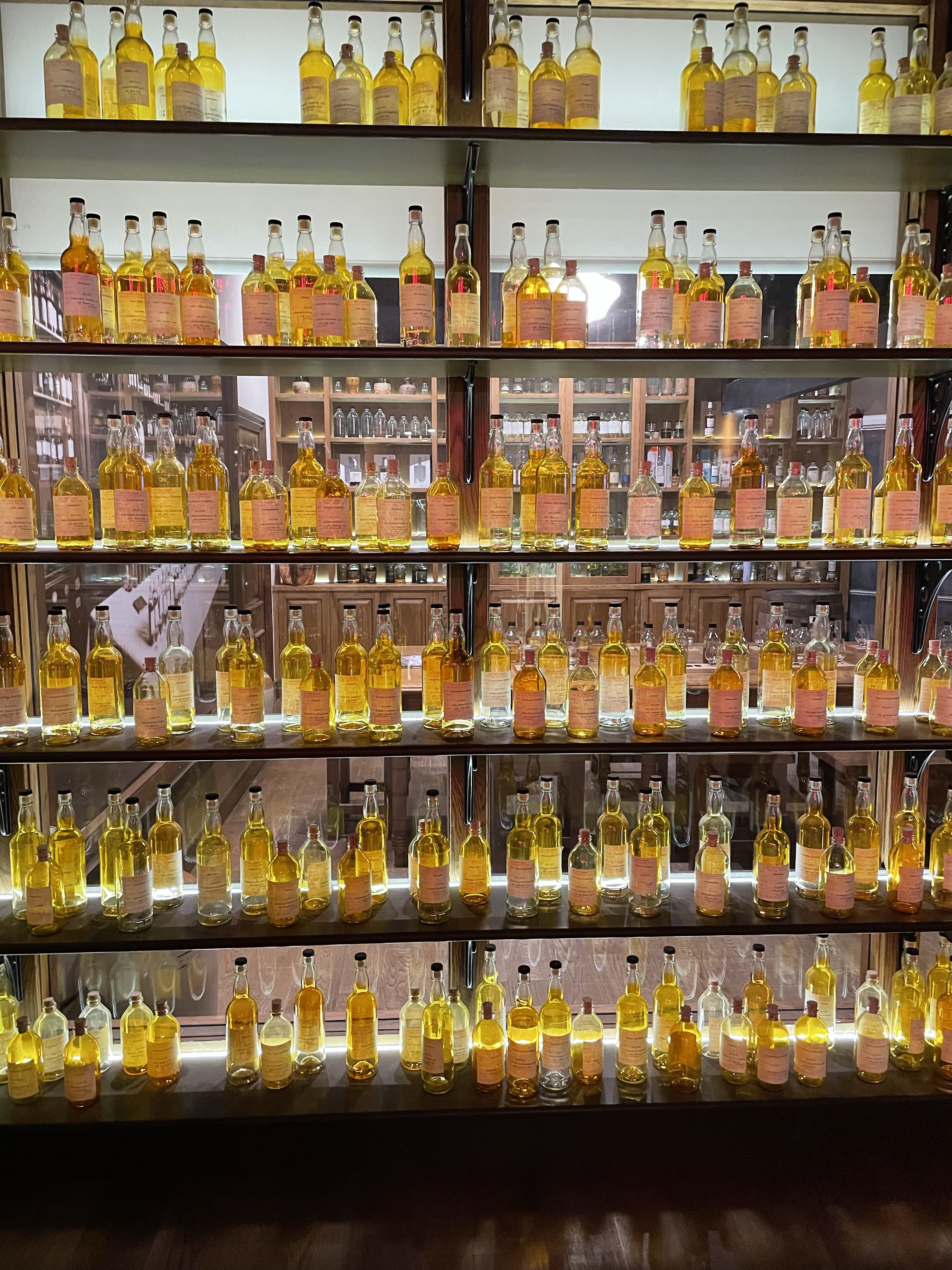
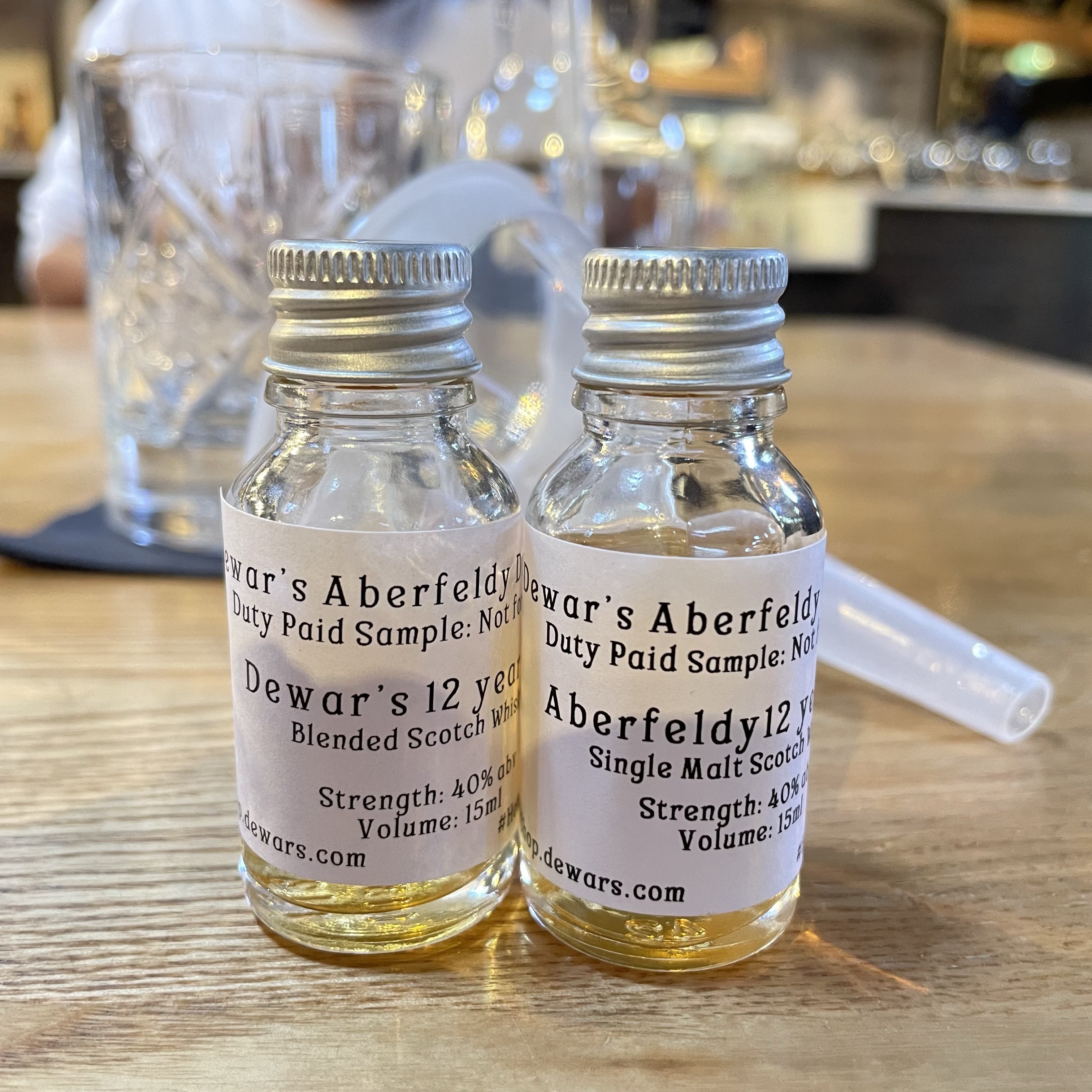
So, what’s available? We booked (booking is essential, I would suggest) the least expensive option, the tour plus a two-glass tasting (a Dewar’s 12-y-o blend which contains both malt and grain whisky and a 12-y-o Aberfeldy Single Malt). This seemed good value at £15/head. A driver’s ticket allows you to take your samples away at no extra cost. The Connoisseur Experience gives you five older whisky samples to taste for £35, or you can blend your own whisky (10cl) for £45. Drams of Your Dreams (£80) is a bespoke tasting, based on what you have tasted previously and what you are curious to discover (usually including 32-y-o and 40-y-o samples).
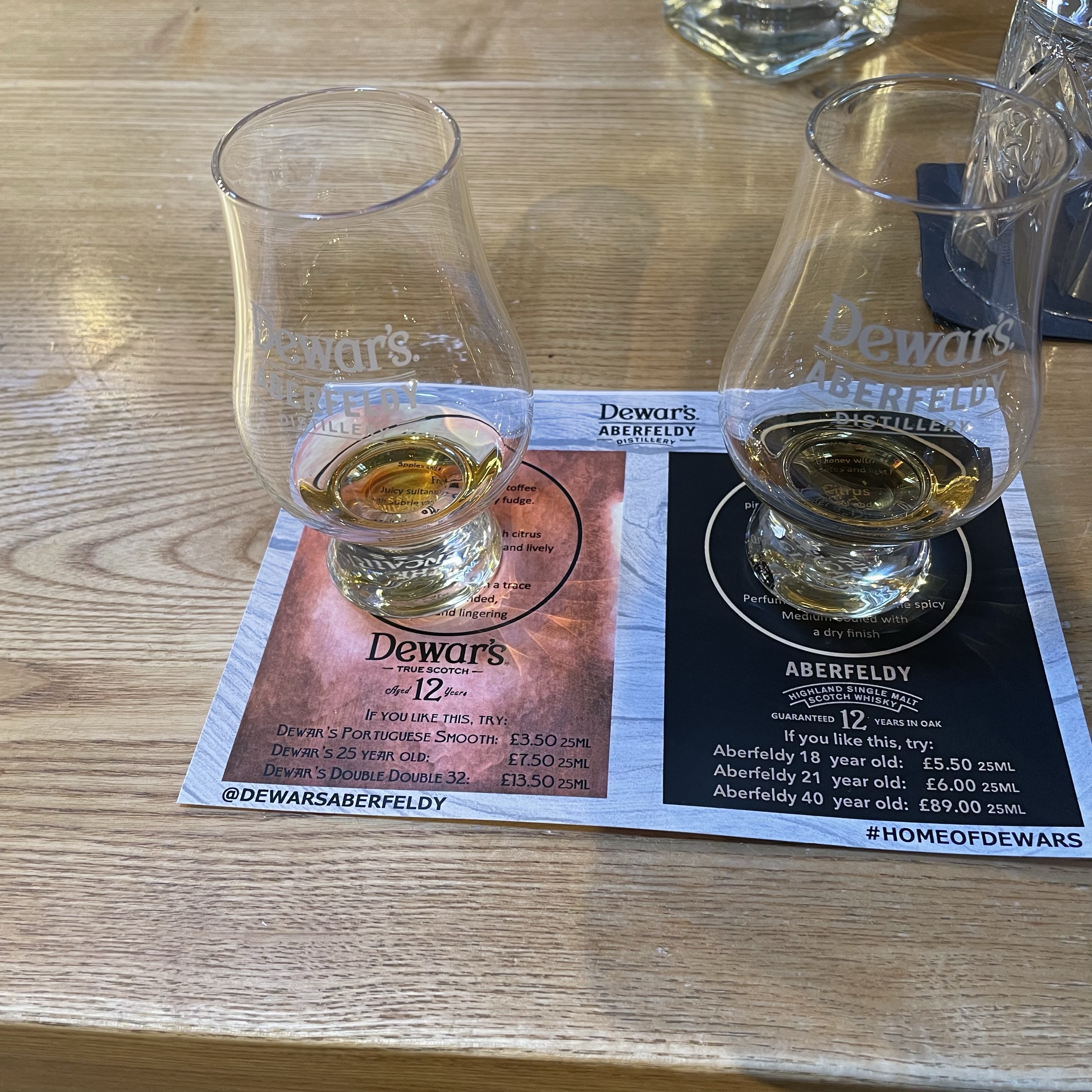
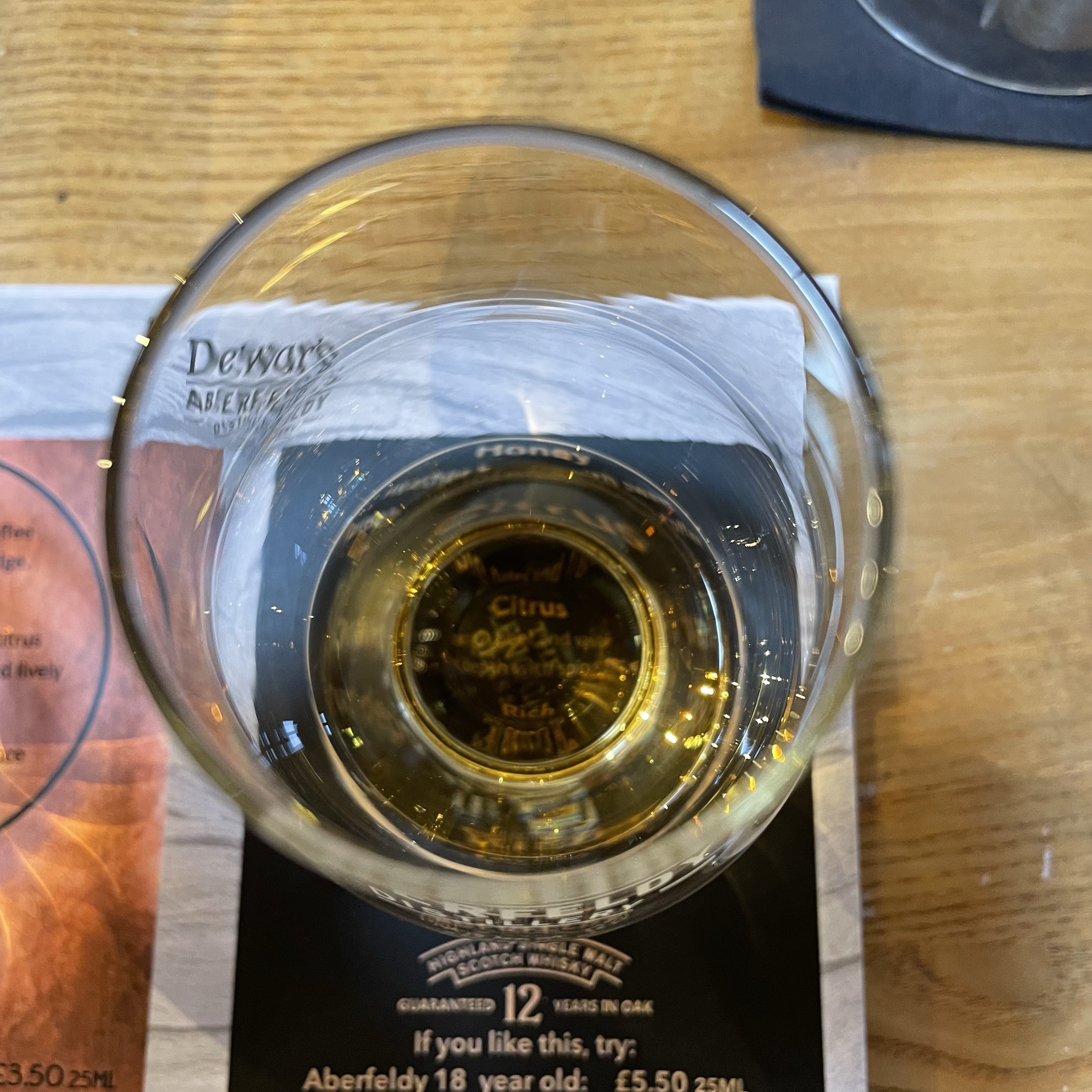
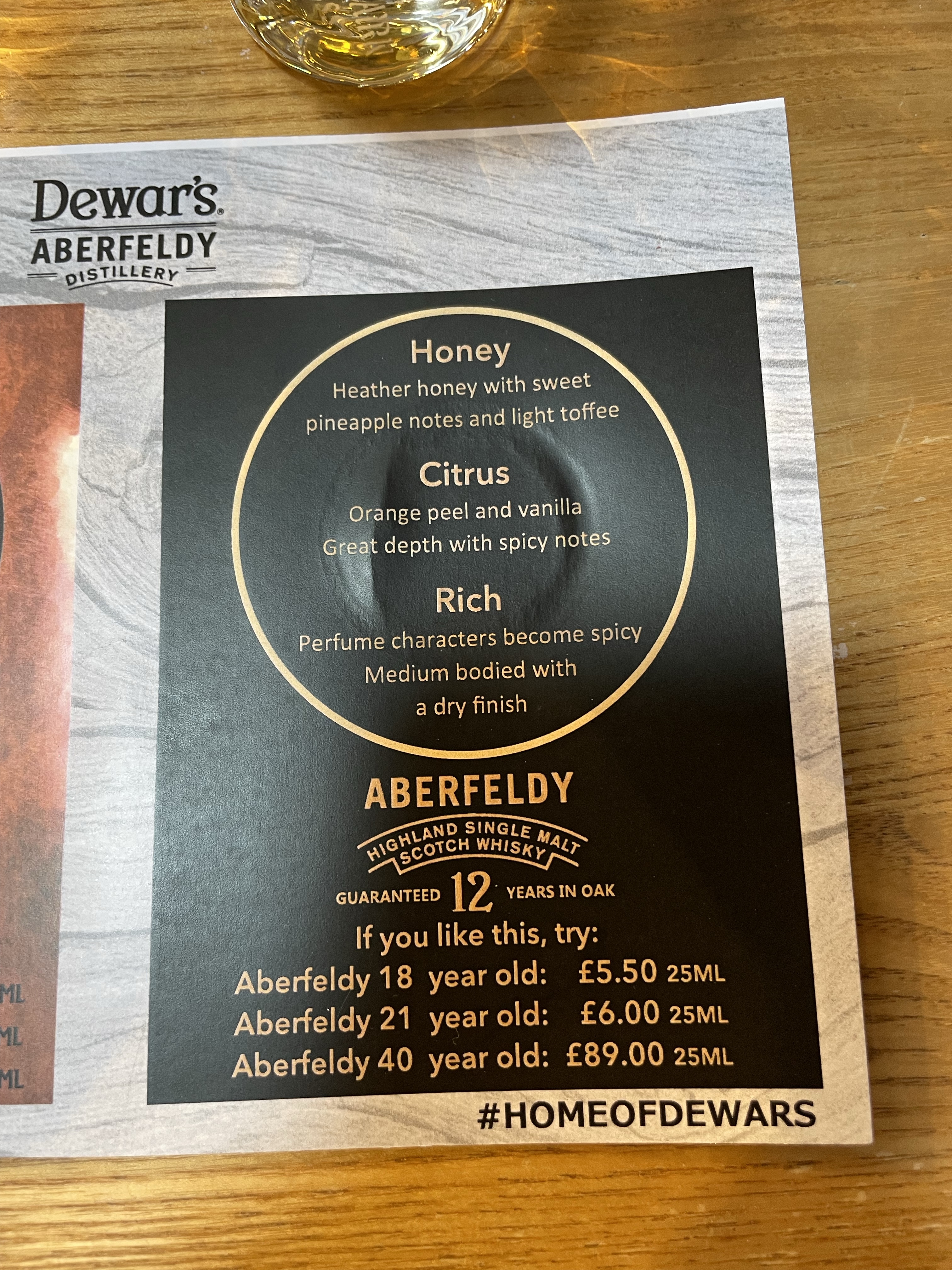
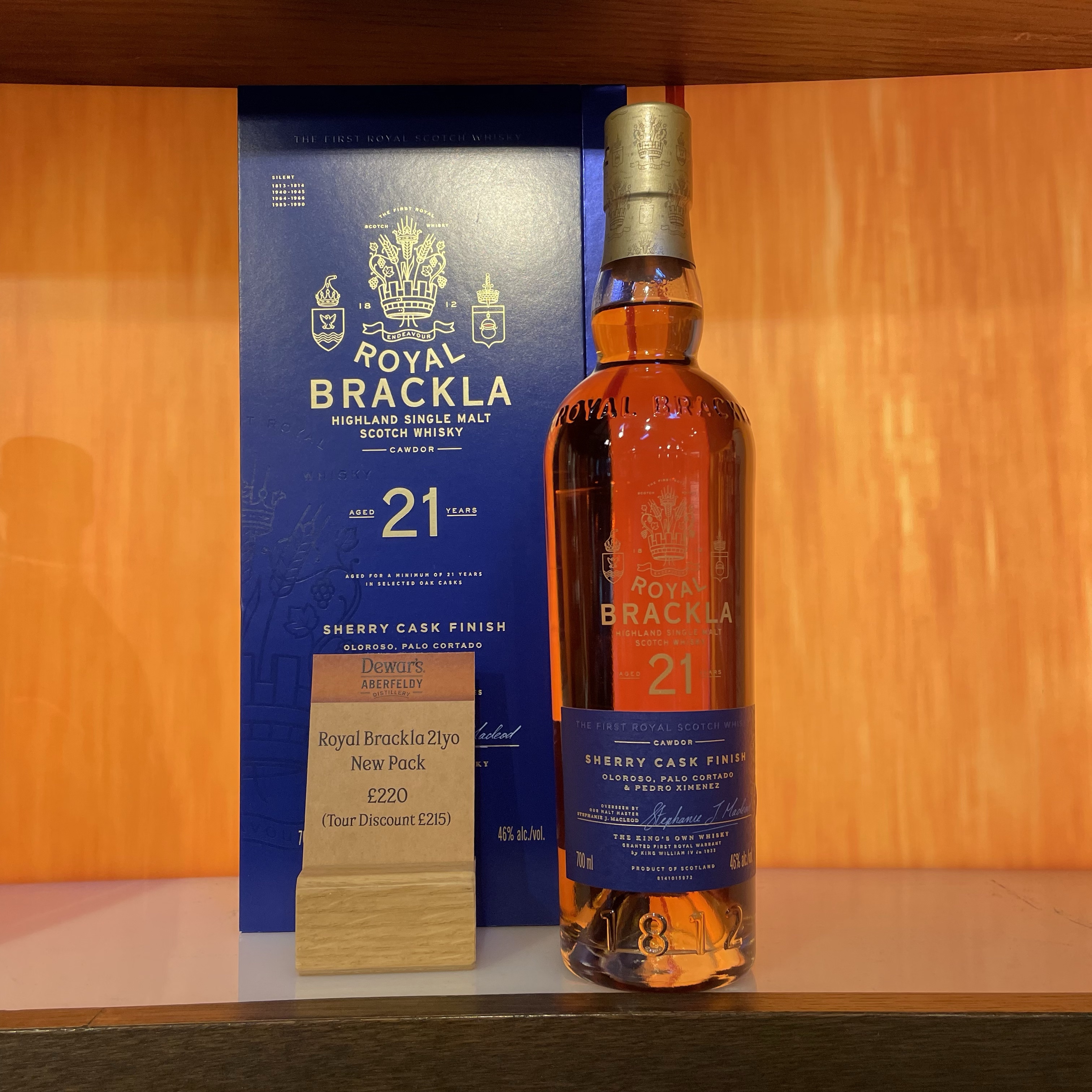
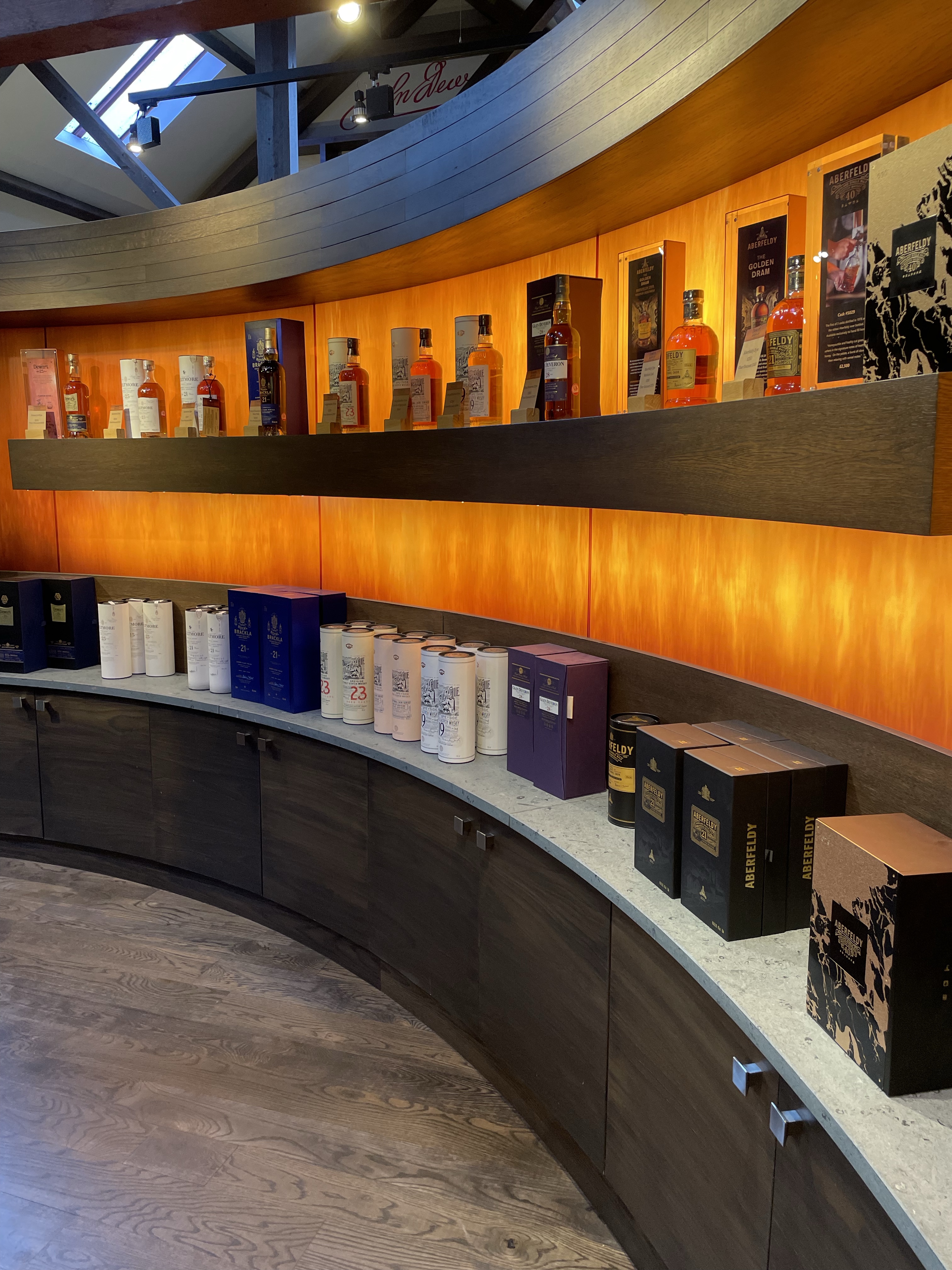
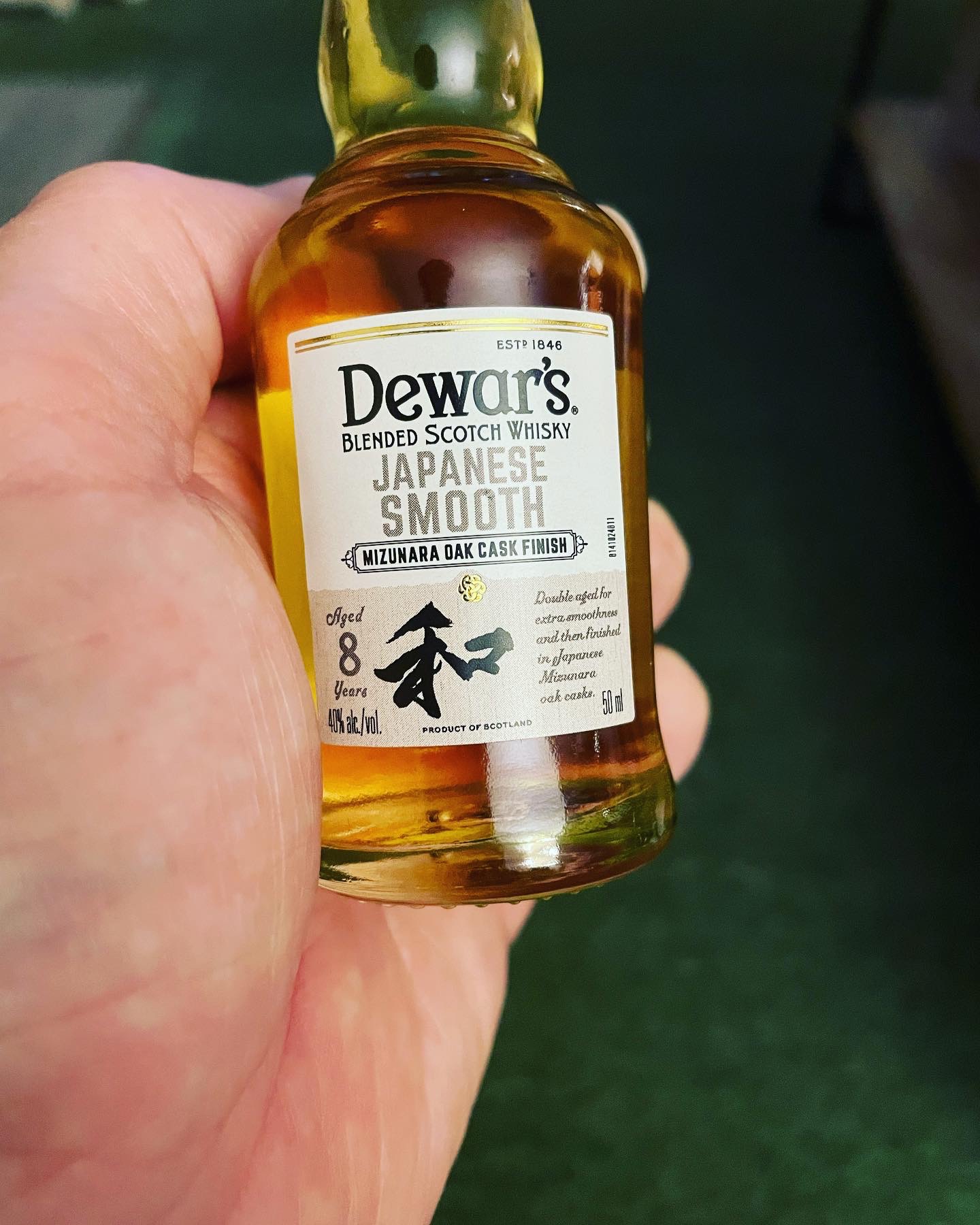
Of course, there’s a whisky bar there, and the inevitable but most welcome gift shop. This was a temptation I couldn’t resist, partly because they had Royal Brackla available (in 12-y-o, 15-y-o and 21-y-o form). I like this Bacardi-owned single malt as a good expression of an Oloroso cask whisky, and it is only usually found on export markets and duty free now. There were some extremely expensive bottles for those able to afford them, but at the other end of the scale plenty of miniatures. I couldn’t resist Dewar’s Japanese Smooth, an 8-y-o blend finished in Japanese Mizunara oak. You can probably tell by now that whisky appeals to my geeky side.
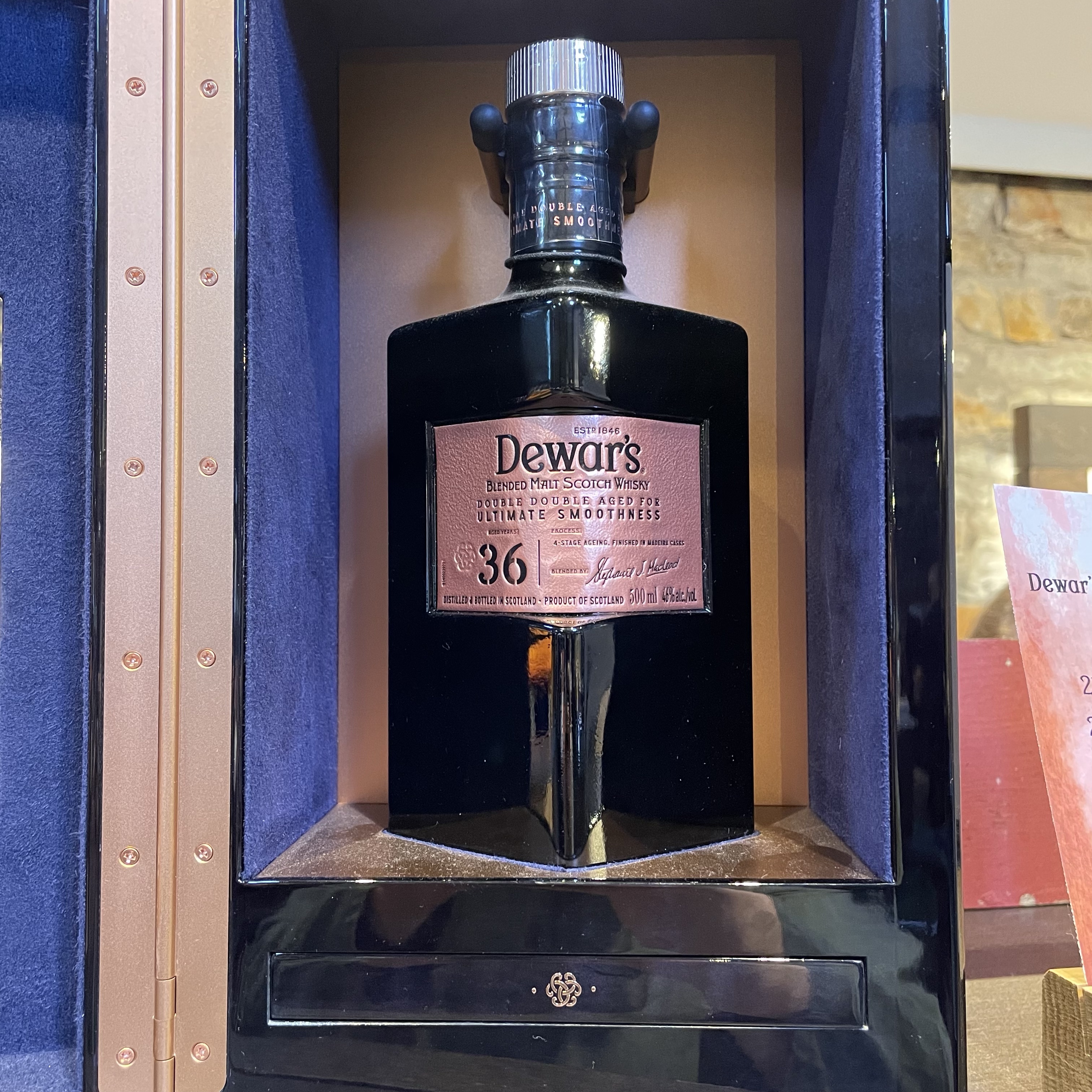
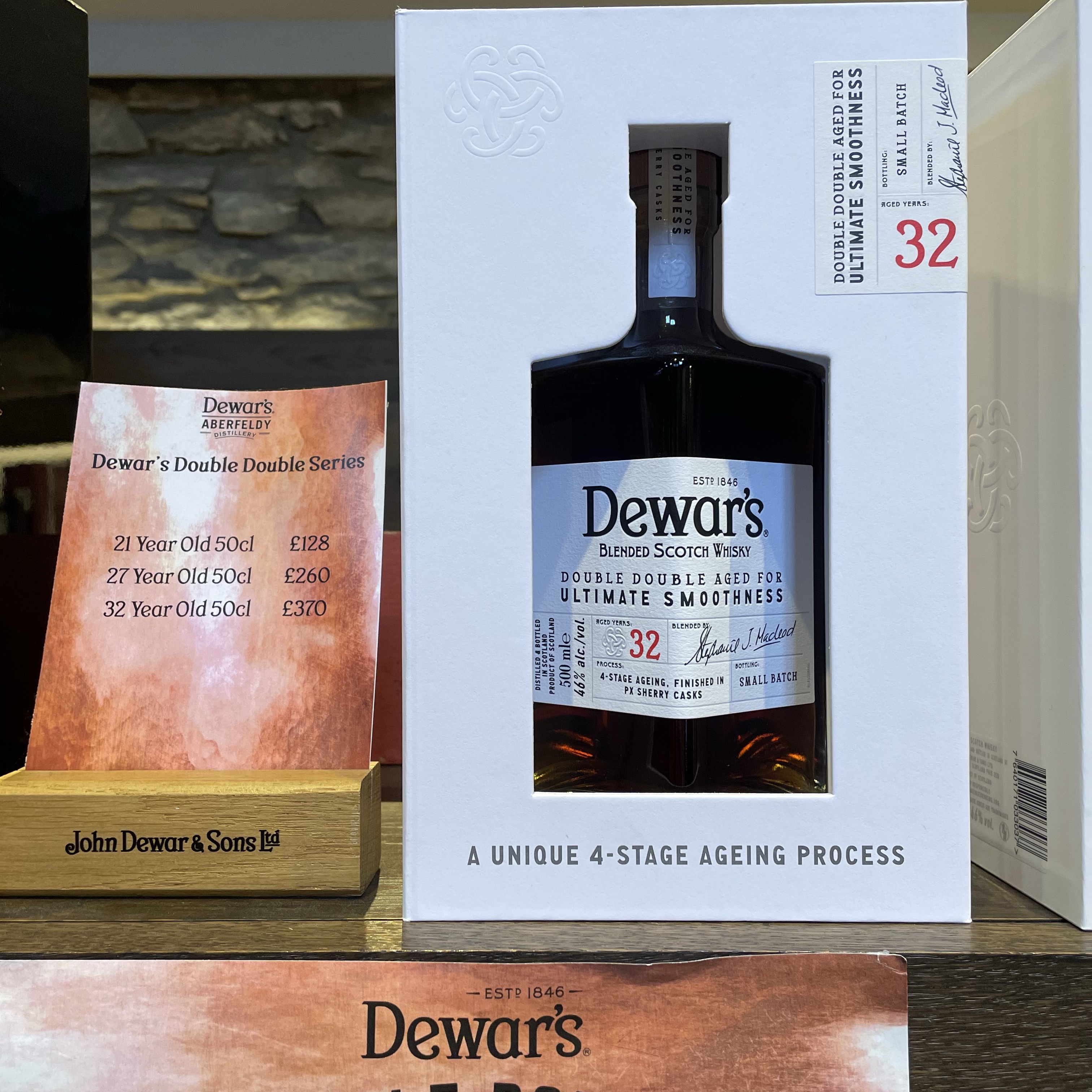
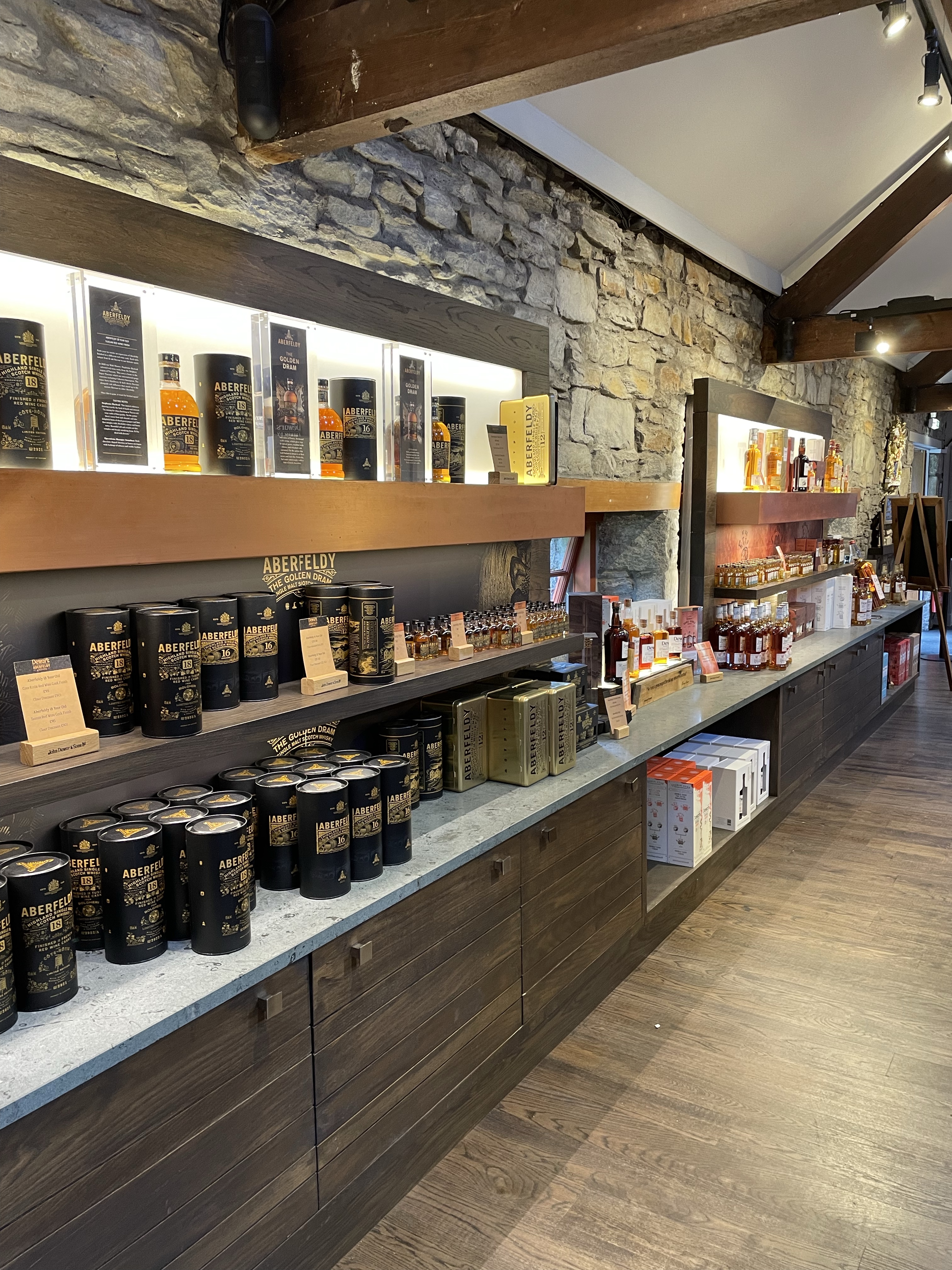
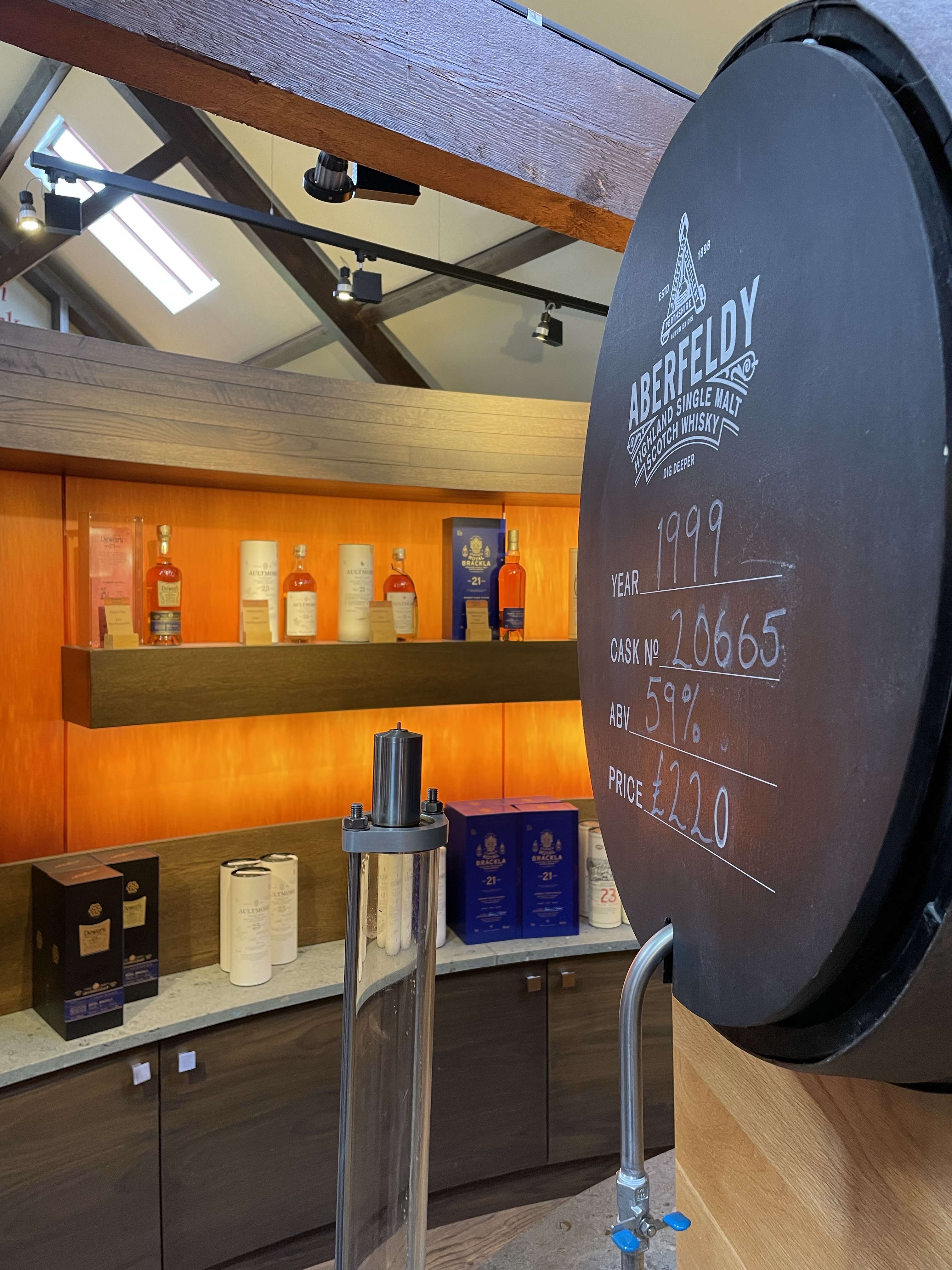
I will finish with my last attempt to persuade you that whisky is worth exploring for wine lovers. It’s a tasting note. Okay, you and I know that there’s an awful lot of pretentious rubbish written in a wine tasting note, but I would suggest that this one, by Charles MacLean in his Whiskypedia (5th edn, 2022, Berlinn Ltd) really does sound so similar to what I might write after a few drams. The glass in question is Aberfeldy. “Smooth and creamy; honeycomb; pears, melon and bruised apples, light maltiness. Taste is fresh, fruity and waxy…Medium body”. The book, by the way, is my malt whisky distillery bible.
Aberfeldy is just off the A9, close to Pitlochry and Blair Athol. We rented a cottage, though hotel accommodation also exists, and the tourist is well catered for. There’s a good Italian restaurant, plenty of cafes and pubs, and a very good butcher. The Watermill Bookshop and Café is also highly recommended. However, we were told that the place pretty much shuts down after the summer season, and getting there otherwise than by car isn’t easy. But as you can see, I found it well worth the effort and I can imagine we’ll be back.
For those missing the wine, normal service will be resumed next week!
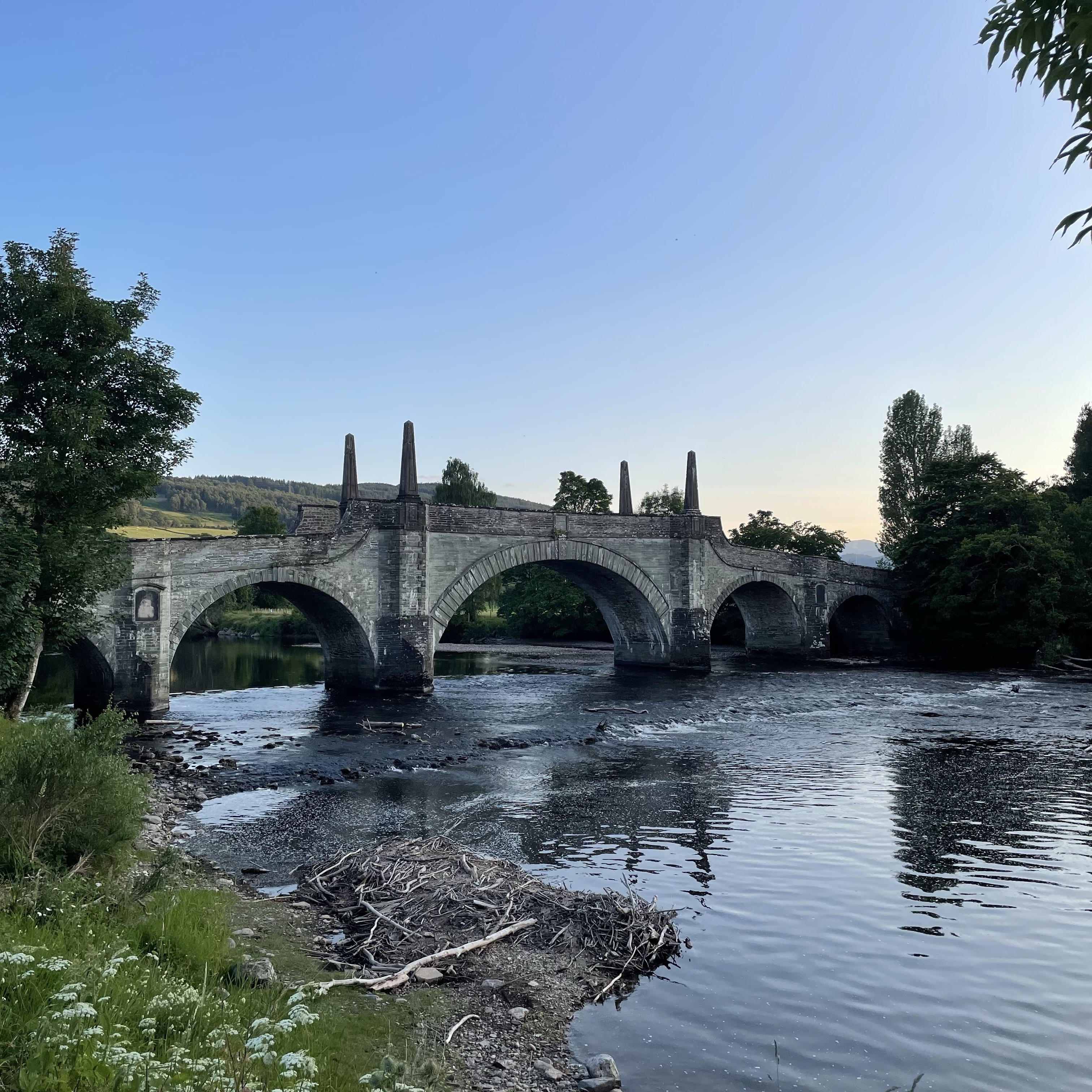
General Wade’s military bridge on the River Tay (1733)
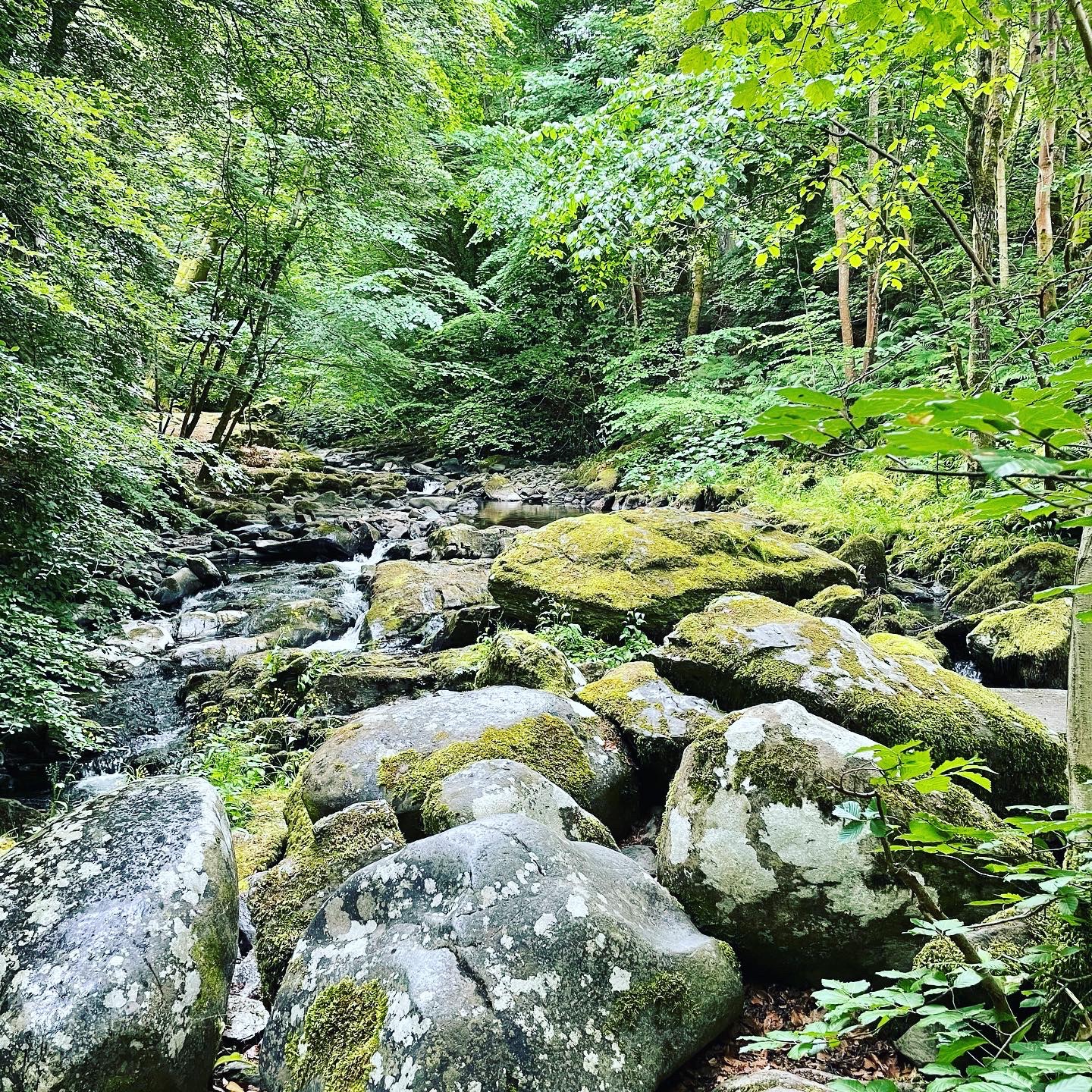
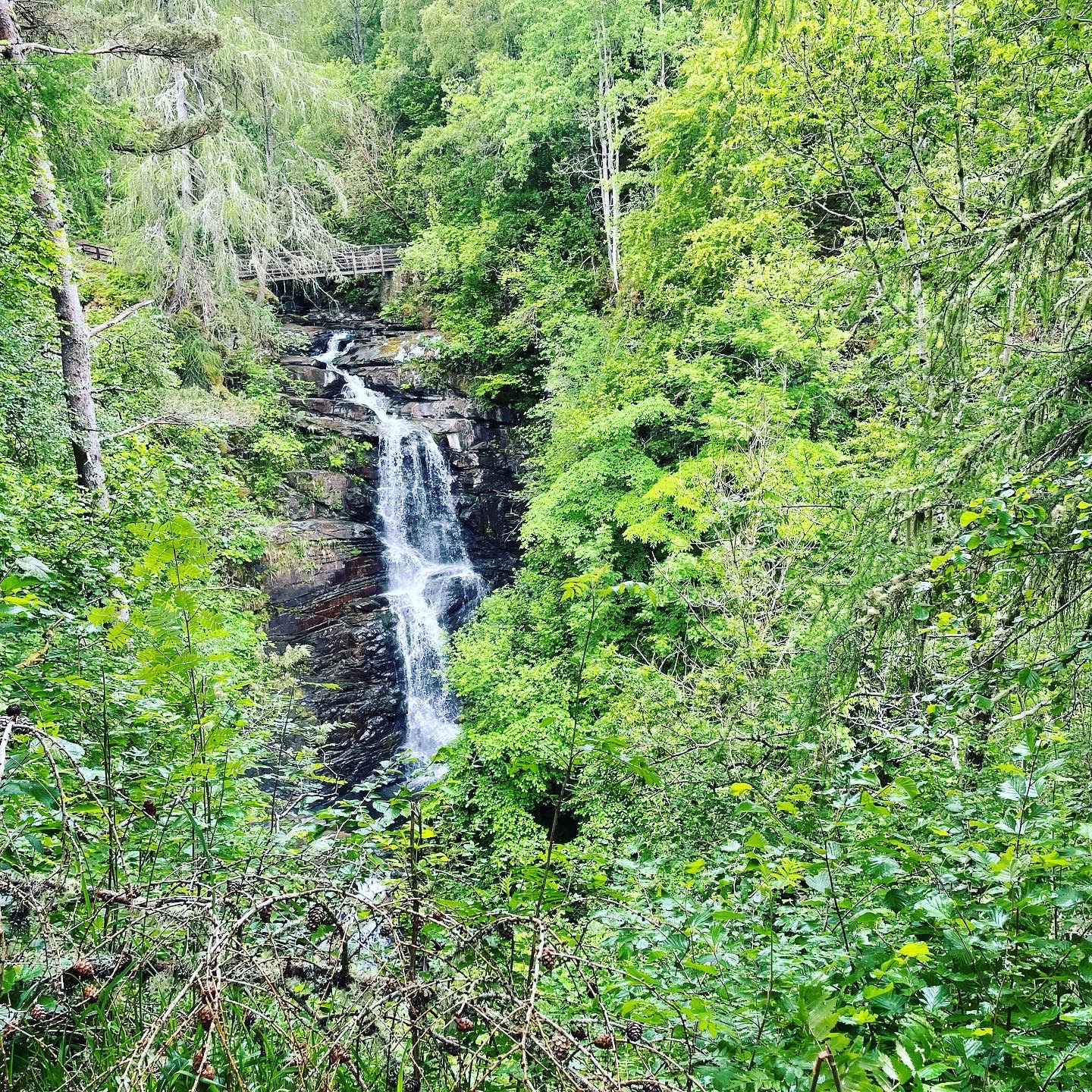
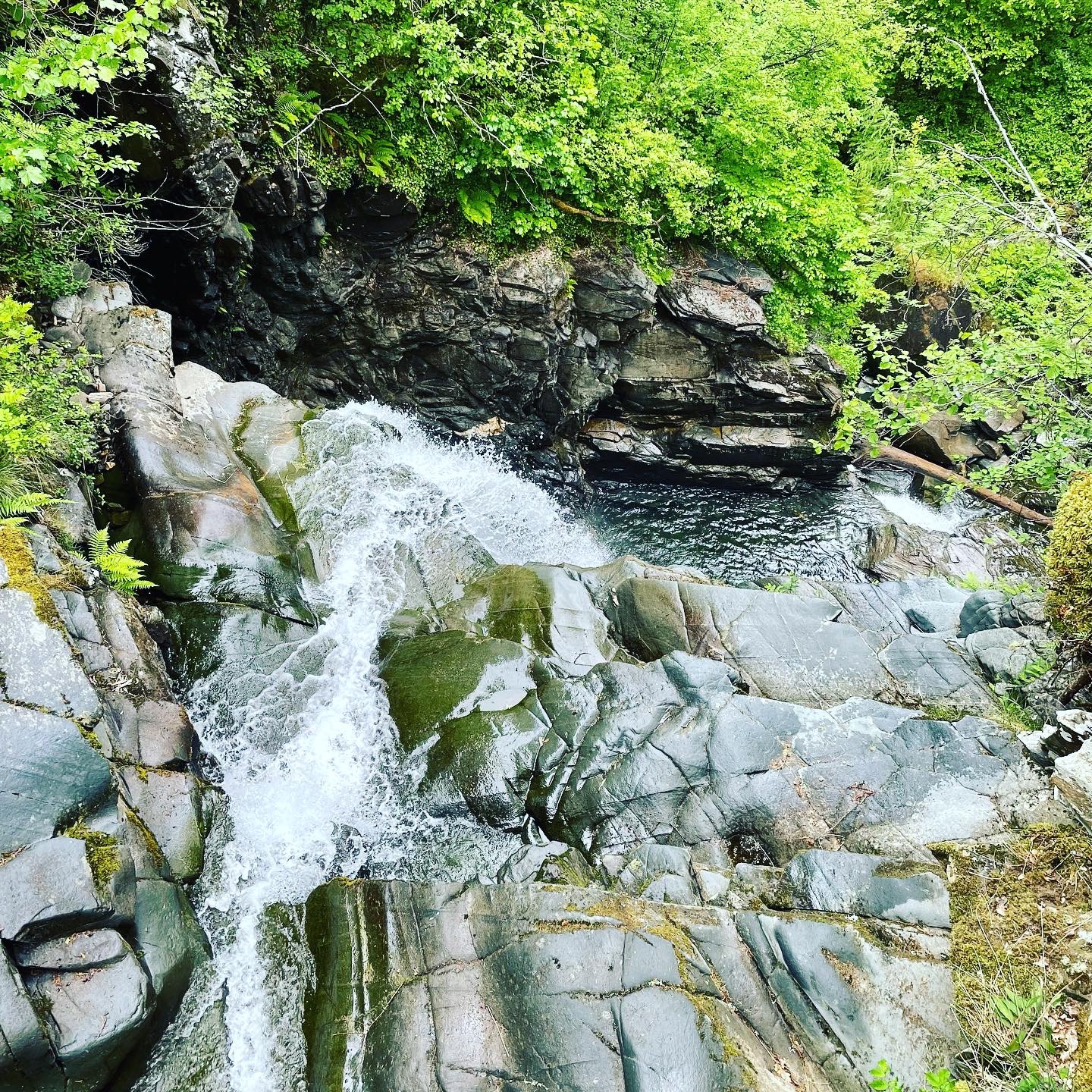
The “Birks of Aberfeldy” and Moness Falls
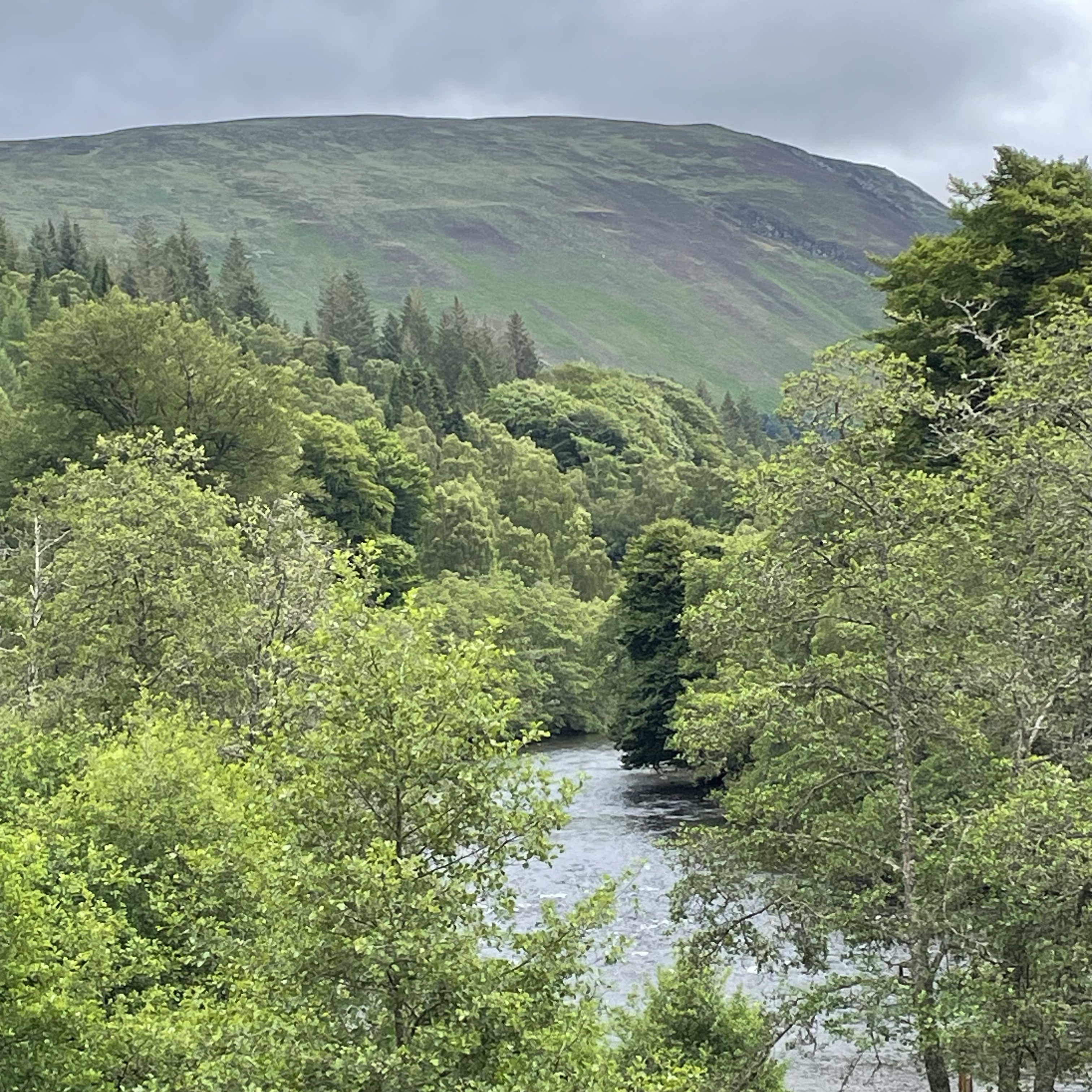
Glen Lyon from Glen Lyon Post Office (great café)

 David Crossley's Wide World of Wine