
May, post-Australia, brought eight wines drunk chez-nous and worthy of bringing to your attention, and I must say that for me every one of them was genuinely delicious. Ranging from the obscure to the well know, and from cheap as chips (considering they have gone up with inflation) to the now unaffordable or unavailable, they were all over the place in terms of location. Below we have wines from (in order) Toul in Lorraine, Baden, Alsace, the Drôme, Beaujolais, Champagne, the Swiss Valais and Sauternes.
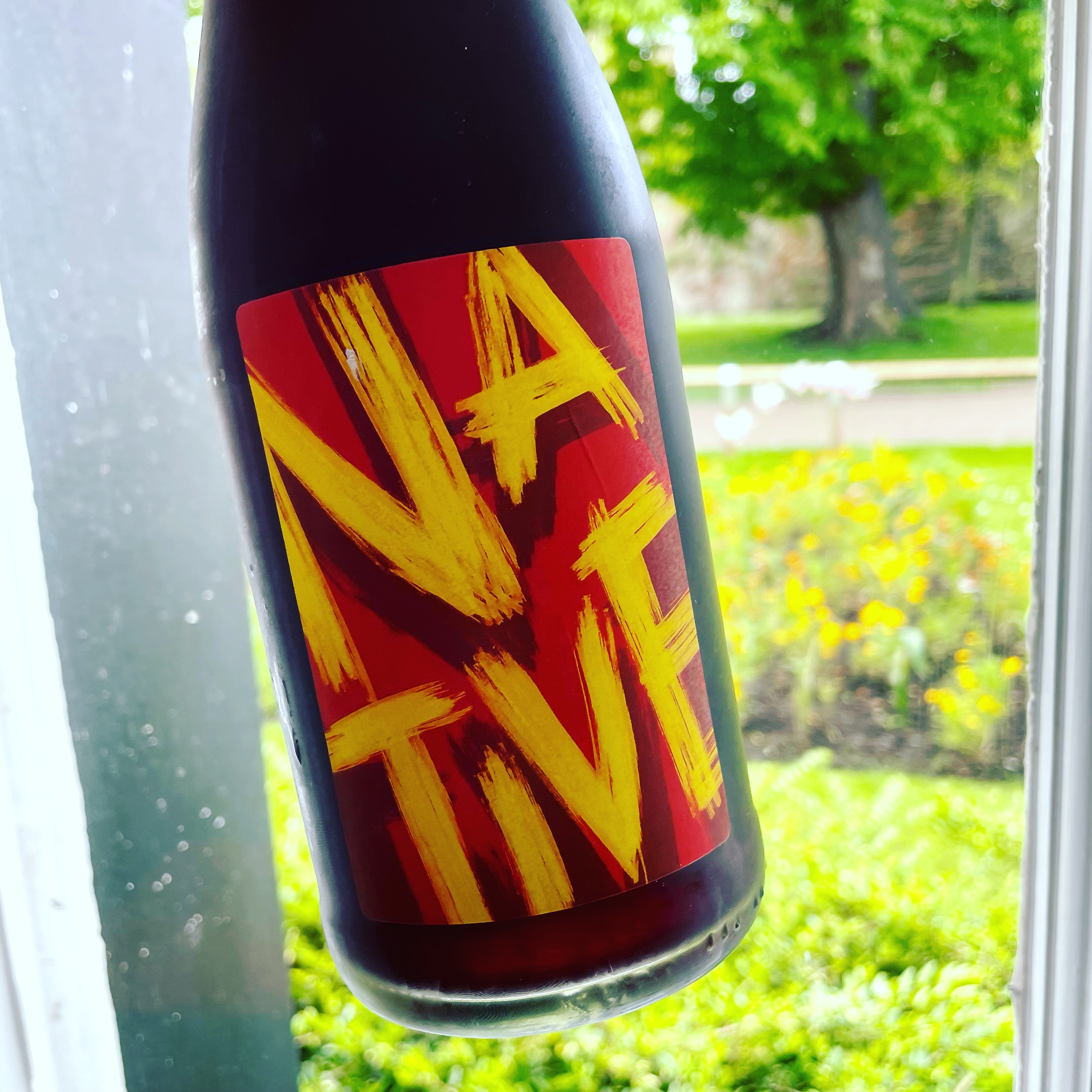
“Native” 2020, Maison Crochet (Lorraine, France)
I got to know about the Crochet family via Vanessa Letort (Du Vin aux Liens, see wine 3 below). The family are assisting Vanessa and her partner with their vineyard project in Toul, on the western side of the Vosges Mountains.
This is a quintessential French family vineyard and winery based in the village of Bulligny in what is the little-known wine region of the Côtes de Toul. This is somewhere from which, despite my reputation as an inveterate explorer, I have only drunk one wine before now, a rather good “vin gris”. The vineyard was established by Lionel Crochet and Sandra Laval in the early 1990s, but their eldest son, Wilfried, took over the reins in 2016. He has undertaken conversion to organics and now to making natural wines from approximately five hectares of vines. They have consequently withdrawn from the appellation and bottle everything as Vin de France.
Native Rouge is a blend of equal parts Gamay, Pinot Noir and Chardonnay. It makes a dry red wine but with fresh acids backing up 13% abv. The grapes come from different soils, much being very old clay or limestone. Destemmed, they all undergo a 14-day maceration. Zero added sulphur, just 1,300 bottles produced.
It is surprisingly complex without losing its lovely vibrancy. The bouquet gives off something like aromas of dark cherry and liquorice. The palate balances cherry with some darker, brambly, fruit. The texture is mineral, verging on earthy but it is unquestionably a red to chill a little, despite the alcohol. Trust me on that. There is a little carbon dioxide on opening, which merely prickles on the tongue. Presumably this is added as protection against oxidation in lieu of sulphur. Glouglou with a spicy twist.
I liked this a lot. Sometimes with wines like this its kind of try it once and move on. I have a bottle of Crochet’s petnat and want to explore others in their range, but I will definitely buy more of this in the future. Around £25 from importer Sevslo and their Glasgow wine shop, Made from Grapes, or Winekraft in Edinburgh.
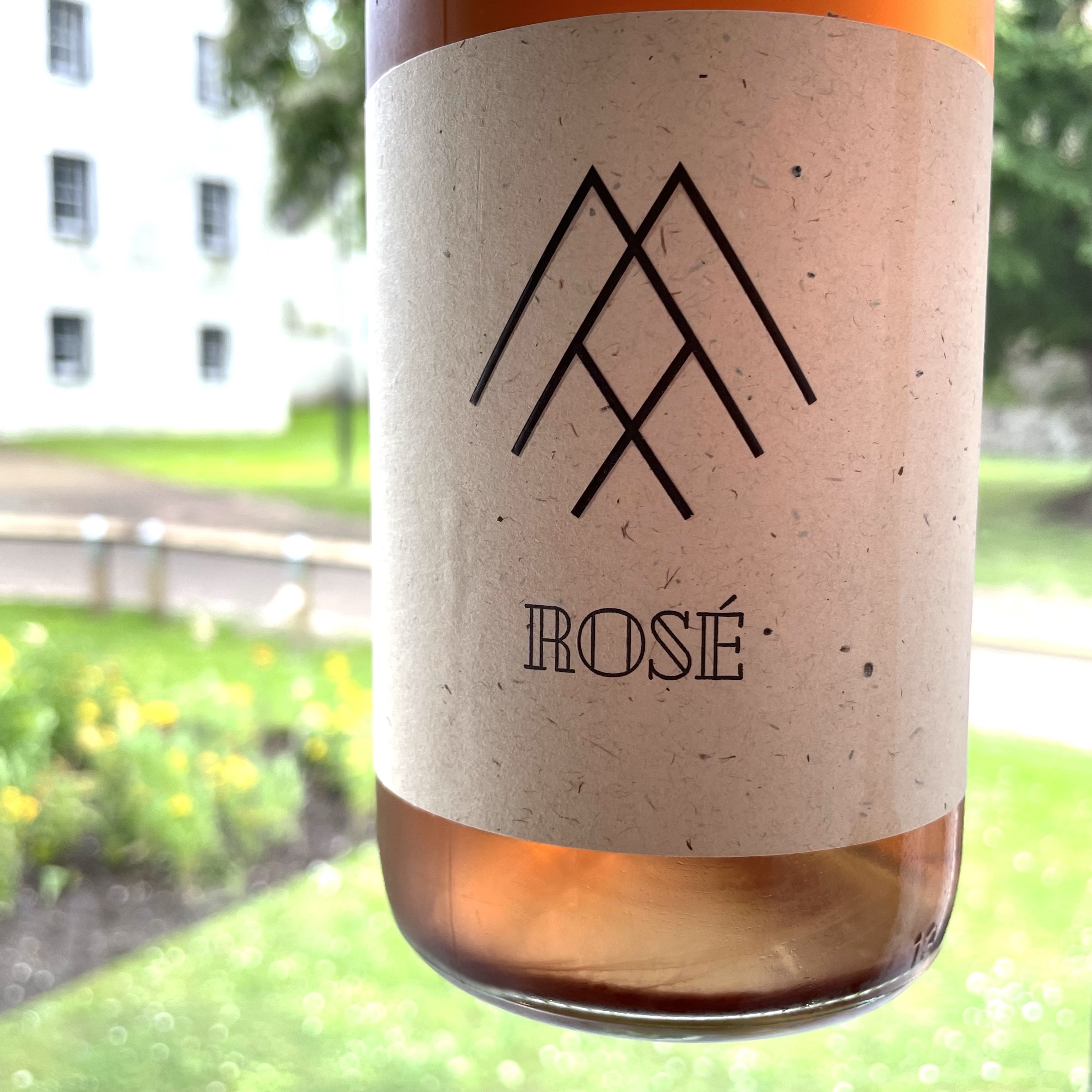
Rosé 2020, Max Sein Wein (Baden/Franken, Germany)
Max Baumann is a relatively new talent who works his vines near Wertheim-Dertingen, on the Main River just west of Würzburg. I was always unsure whether he is in Franken or Baden but he has just cleared it up for me. 95% of his vineyards are in Baden and 5% in Franken, Dertingen being close to the border, created when Napoleon split the region. So we are administratively in Baden but with a Franken climate and culture.
Max gained international experience, including time at Gut Oggau in Burgenland, before creating his own 3.5-ha vineyard. He was always going to make natural wine, and to achieve this he was blessed to start with 60-year-old vines on the rich soils above the river, on a terroir of limestone with red sandstone.
I’ve enjoyed all the wines made by Max and brought into the UK, except that this was my first time with his Rosé. It’s an exceptionally tasty direct-press Pinot, but is it Noir or Meunier (sources contradict each other)? Bottled with presumably some CO2 (like the Crochet above), the nose senses the prickle of gas and the wine has some tiny bubbles. It smells clean though, and blindfolded you could easily mistake it for Champagne. I described this on Insta a few weeks ago as a gorgeous “wake-up” wine. Strawberries on the nose and a good mineral streak on the tongue. It was just what I needed after a seven-hour drive, but would be equally thrilling at breakfast.
Imported here by Basket Press Wines. It might be sold out (couldn’t find it on their web site) but there are other retail sources. UK £25-ish, and Feral Art et Vin in Bordeaux has some for 20€ (thank you Mr Chancellor etc).
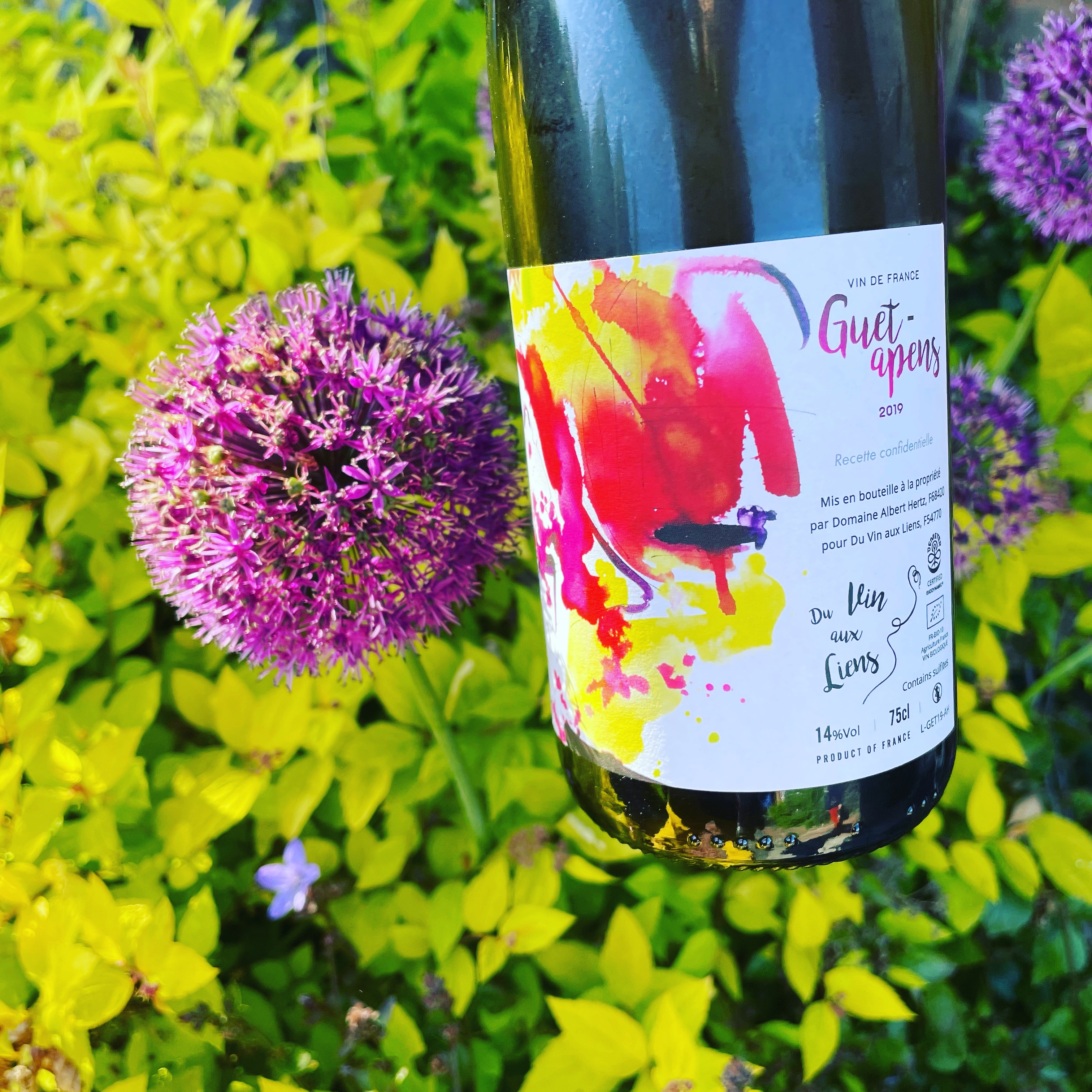
Guet-Apens 2019, Domaine Albert Hertz/Du Vin aux Liens (Alsace, France)
Vanessa Letort worked for and with Christian Binner before she set up her own operation so she knows where to look for cool collaborations in Alsace. Frédéric Hertz, who has now taken over from his father, Albert, has his cellar just outside the ramparts of the picture-book wine village of Eguisheim. Eguisheim is famous for its Comtes, ruined castles, and for the headquarters of the enormous Wolfberger co-operative, but Frédéric is just a small-scale producer converting a 9.5 ha vineyard to biodynamics (Demeter and Biodyvin) and natural wine processes.
Guet-Apens (which I think means to ambush or trap?) is a blend of 40% Sylvaner, 30% Muscat and 10% each of Riesling, Gewurztraminer, and Pinot Gris. The grapes are all co-fermented as whole bunches on natural yeasts and then the wine sees 12 months in old wood.
Not only does this blend work really well, I really was surprised at just how good this bottle tasted. The acidity is good but not too overt, so the wine has some balanced weight. It boasts 14% abv, yet it is dry and fresh enough to carry it off without feeling too weighty. It also has great texture which grounds it as a food wine. We drank it with Sri Lankan food at one of the popups we go to. The same friends who found a very natural petnet a bit funky a month or so ago really adored this. As did I. I think Alsace is finally coming to understand the value of blends after decades of varietal focus.
Try Sevslo, Made from Grapes and Winekraft, £27. Another wine I really want another bottle of.
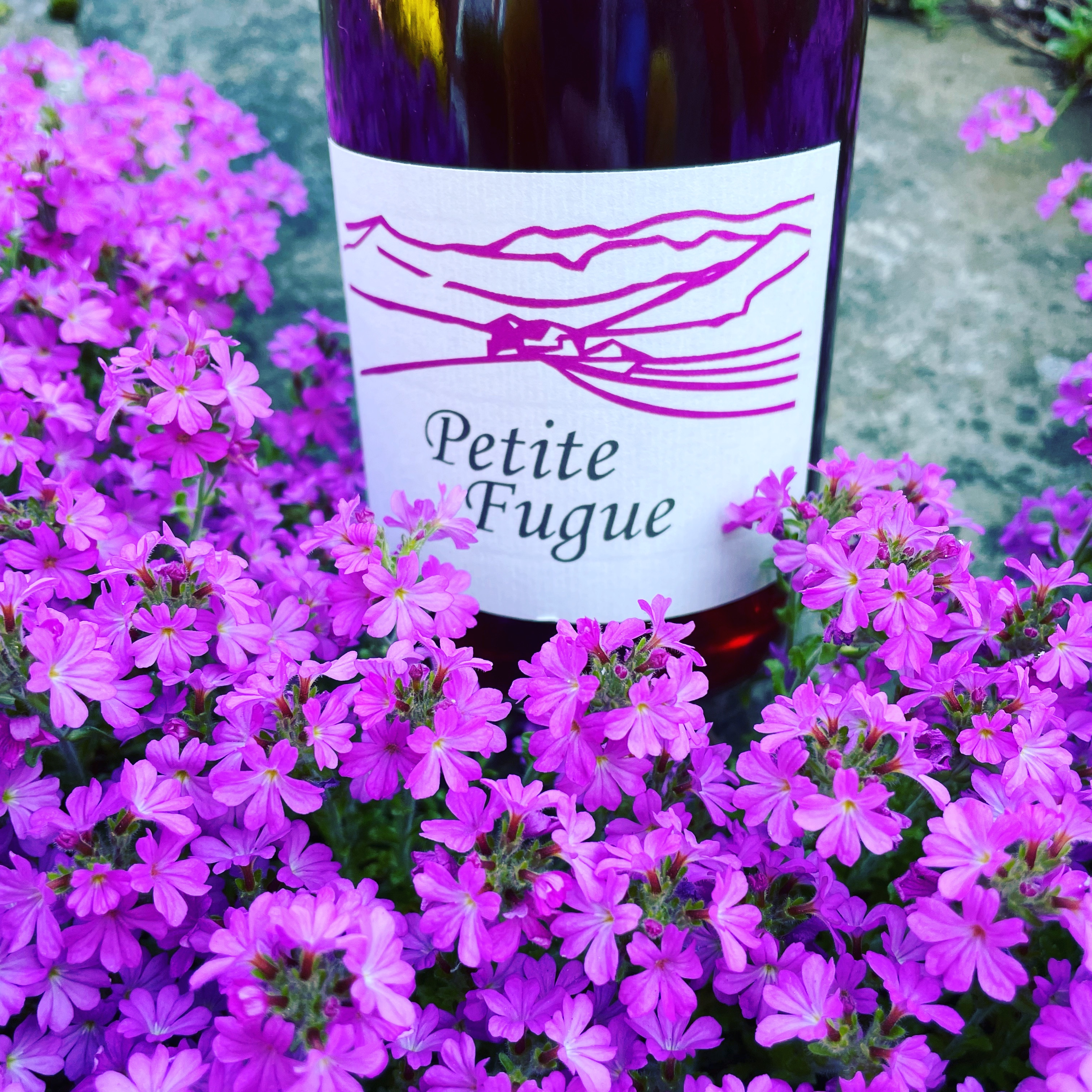
Petite Fugue 2021, Clos des Cimes (Drôme, France)
Elodie Aubert worked in Priorat at Clos Mogador, no less. She may not have picked up a passion for high alcohol, but she certainly did for mountain viticulture. When she established her own winery, her production was based on grapes from the vineyard planted by her grandparents in the 1950s, in the village of Mérindol-les-Oliviers in France’s Drôme Department. Of course, her vines are at 650 masl.
Elodie uses no pesticides, nor herbicides, and to fit with the traditions of the region grazes sheep in the vineyard. She has 8 ha in total, mostly on a steep hillside with a limestone and clay mix, plus a further 2 ha of apricot trees. Her white varieties include Ugni Blanc and, you may be surprised, Chenin. Reds include Syrah and Grenache.
This is a dark Rosé, verging on light red. Think of Tavel in terms of colour. It is varietal Syrah made in concrete tank, where it is aged after fermentation for three months. Despite being darker than the trend for today’s lighter pinks, it tastes fresh and even shows some delicacy on account of its freshness and low (12.5%) alcohol. The tart red berry fruit is super thirst-quenching, but being Syrah, there’s a touch of peppery spice adding another dimension. The concrete adds a fine grained texture, but only a hint.
Sorry to be so boring folks, but this is also from Sevslo and Made from Grapes (Winekraft does not seem to have this, I think, currently just stocking just one of Elodie’s red blends). Equally boring, despite my obsession for drinking diversely, I wish I had another bottle or two of this. Especially as I think it cost a mere £20.
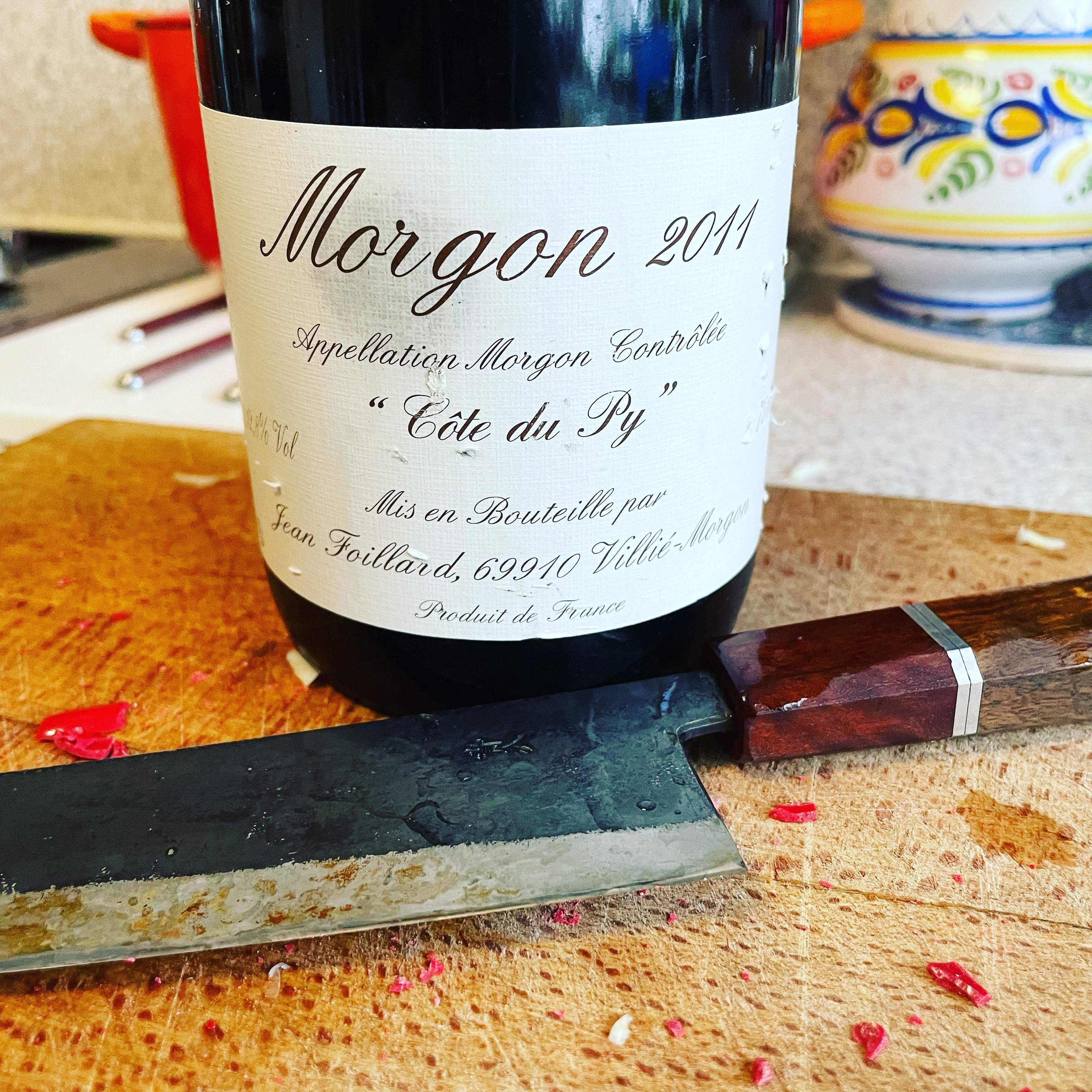
Morgon Côte du Py 2011, Jean Foillard (Beaujolais, France)
If this entry is a little shorter than the wines above, it is because I can’t believe many reading this will not know, or at least know of, this iconic Beaujolais wine. If I might occasionally say that I’ll take a bottle of Foillard Fleurie instead, it would be perhaps an affectation born out of knowing the Côte du Py so well. Drinking this 2011 grounded my appreciation for this often truly great wine. It isn’t all that frequently I get to drink Beaujolais of this age and as well as a great pleasure, it was an education.
I have read commentators who have said that Foillard’s wines are unstable because he uses no sulphur, and that they should be drunk young. I think this is rubbish, as proved to my palate by the last 2010 Fleurie I drank from Foillard, and now this bottle. This inspirational man knows how to make wine without additives, and thanks to his understanding, so now do many more winemakers who have drunk wine and eaten from his barbecue.
The most important word to introduce here is Pinoté. It has always been said, especially by the Gamay connoisseurs of old, that with age Gamay can become almost like Pinot Noir. I am convinced that this has happened to this 12-y-o Py. In the glass the wine changes constantly, but not in a linear way. Some moments you are smelling classic Gamay and others you are sniffing Pinot. The palate is smooooth but it still has some grip (rather than any overt tannin). It is majestic and monumental. I wouldn’t tell anyone to keep this, but it’s certainly still going strong.
This has been a long time in my cellars so its source is uncertain. It will be either The Sampler or Solent Cellar. I’ve bought Foillard from the latter but this vintage might be too early?
Final comment…the knife in the pic. This was made by “Côte du Py Knives”, so I raised a glass to him. I know a good few of you out there might own one too.
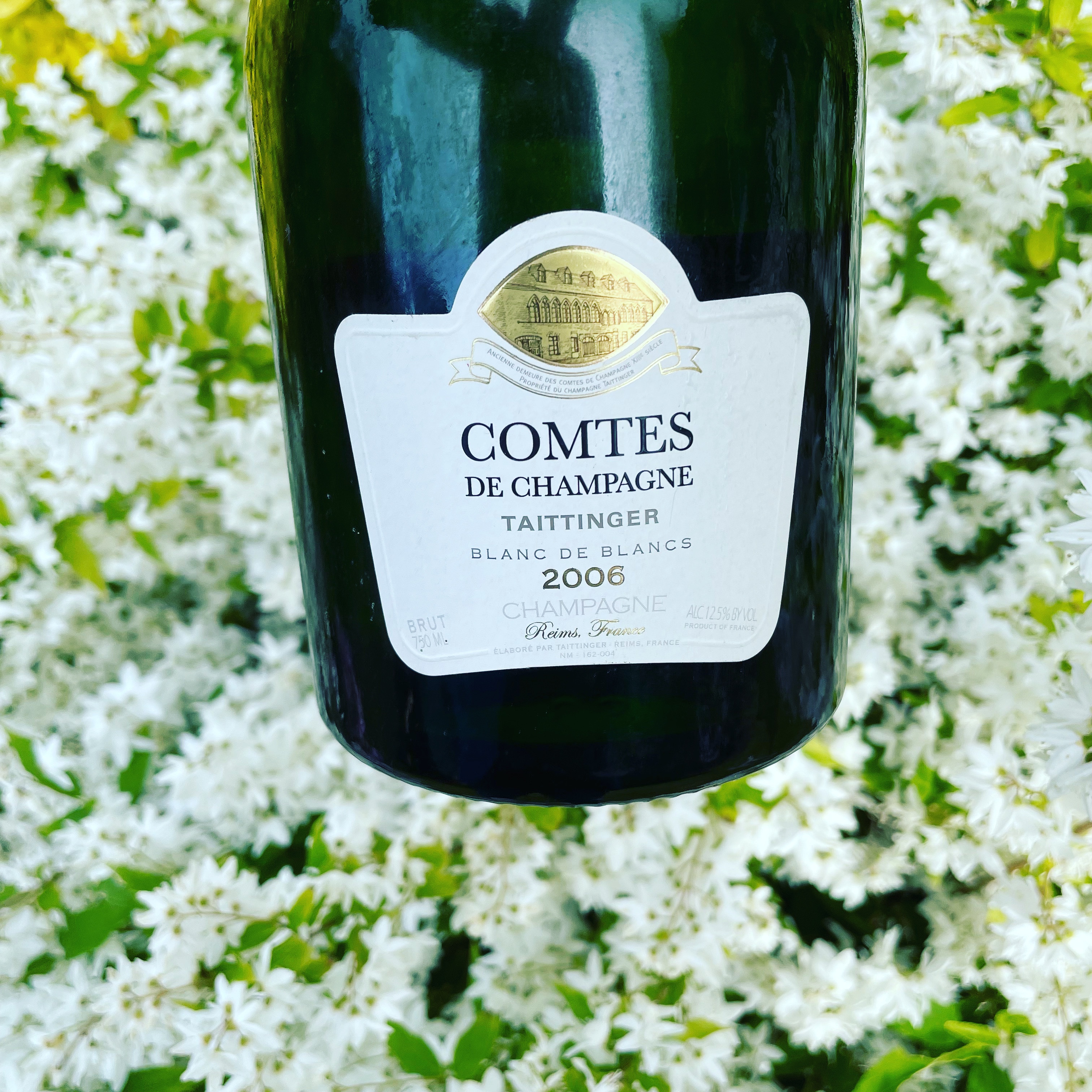
Taittinger Comtes de Champagne Blanc de Blancs 2006 (Champagne, France)
This wine needs very little introduction either, except to say that it is my very last bottle of Comtes. At over £150 a pop now, I can’t really afford it, or if I could I’d be better to spend the money on two or three cheaper bottles. However, of all the Prestige Cuvées from the Grandes Marques, this has always been my favourite. 2006 was and still is exceptionally good.
Comtes is made with fruit from only grand cru villages on Champagne’s Côte des Blancs chalk. For me, whilst I can’t place it above Pierre Péters’ Chetillons, I rate it as one of the most elegant Chardonnays of the region. I think it has a subtlety which others occasionally lack, but like that Péters, it does need plenty of age to show its colours. Peter Liem says (Champagne, 2017) that Comtes is best at 15-20 years old, so this 2006 should be at its sweet point at 17. I suspect many a £150 is wasted on a just-released vintage.
Classy acids tingling down its spine, mineral texture, complexity. For me it is a perfect aperitif Champagne because it has a lightness of touch and vibrancy. I think Dom was actually tasting this when he thought he was drinking the stars. The occasion for such extravagance? Christening a new house, though moving in is a long way off.
Taittinger Comtes is widely available for £150, or more should you wishat one very well known retailer. Not this particular bottle, but previously I have bought it during Waitrose’s “25% off 6 bottles” promotions, although it has necessitated travelling to either Oxford Street or Canary Wharf to buy in person (especially important if you care which vintage). This ’06 came from The Solent Cellar in Lymington. They previously had some 2011 for £140, so keep your eyes open. Waitrose has some Comtes listed online for £155, but of course we have no idea which vintage.
Fendant “La Liaudisaz” 2018, Marie-Thérèse Chappaz (Valais, Switzerland)
I discovered I’m running low on MTC’s wines when I plucked this out, down to just one Arvine. That’s just not good enough as Marie-Thérèse is my favourite Swiss winemaker. She practises what some are starting to call “heroic viticulture” high above the Rhône Valley at Fully. I simply love her wines, so I cannot call myself wholly objective, but I think she produces a range as good (almost) from bottom to top. She makes cuvées of Dôle and Fendant which are exemplary, and as different to the occasional travesties you once found regularly under those labels as chalk and cheese. Her Petite Arvines, including a cult sweet version, are off the scale. All wines are strictly biodynamic.
Of the four (I think) Fendants Marie-Thérèse makes, La Liaudisaz (her cellar is on the Chemin de Liaudise) is the cheapest, although it will still cost you more than £40 in the UK. We think of Chasselas (for which Fendant is the synonym here) as a grape variety to drink young, probably with the fondue or raclette, après-ski. Yet Chasselas grown with care on favoured terrain is capable of ageing perhaps twenty years. By that mark, this is a baby, yet I think it is giving pleasure right now.
At five years old this is herby and dry, and even now it has a complexity and length few will associate with the variety. There’s even a hint of richness. At 12% abv this is not a heavyweight. Fendant never should be. But there is a weight to it in comparison to the Chasselas you might drink in the Western Vaud, or in Cormayeur. It’s not quite the serious wine that Hanspeter Ziereisen makes in Southern Baden, with his prestige Gutedel 10 hoch 4, but it has real soul. It’s something you can’t exactly put your finger on, but is there in every wine this lady creates. As I’m quite fond of Chasselas anyway, not least because of the way some famous wine writers have been sniffy about it, I particularly like this one.
Alpine Wines has a few bottles of the 2018 left at £40.57. They also list another MTC Fendant cuvée from the 2021 vintage for £48.

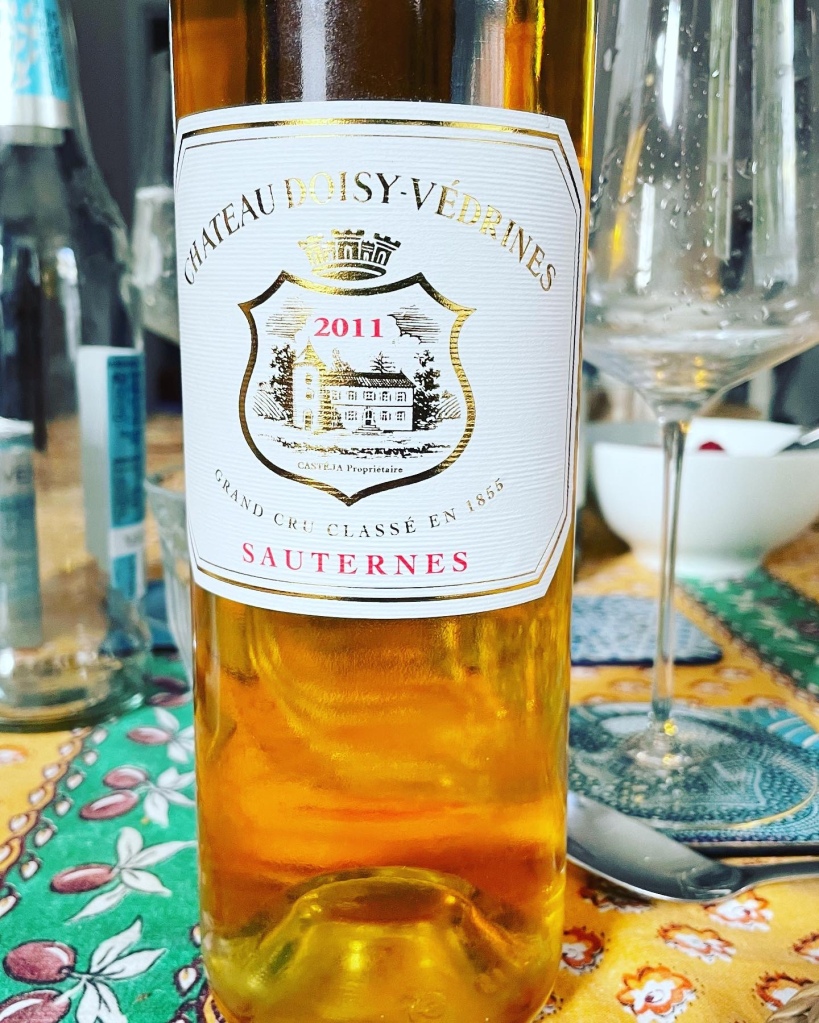
Château Doisy-Védrines 2011 (Sauternes, France)
Most of my friends outside of the trade defer from bringing wine to dinner, for reasons many of you will understand, perhaps having the same problem. One is different, though to be fair after a lifelong love of wine she is now embarking on some WSET courses. Bringing this was quite inspired as well as generous.
When I first visited Sauternes in the mid-1980s it was in a fairly sorry state. Because the wines sold for too little the producers couldn’t afford the strict regime required to keep quality high, and sulphur was over-used as a general disinfectant. A few estates were well known enough to keep the flame alive, but few people outside the traditions of Bordeaux and Paris had time for these sweet wines.
We in Great Britain called them dessert wines, and we drank them as such. The French drank them with foie gras, which still seems to be consumed in enormous quantities at Parisian tables. The Sauternais now seem to be pushing the wines as aperitifs. However, we drank ours with dessert. The traditionalists would faint if they knew it was a chocolate cake with coconut cream and raspberries.
Doisy-Védrines is classified as a 2eme Cru (one of twelve) for what this is worth in Sauternes. It’s a small property by Bordeaux standards, yet covers 35 hectares, owned by the Castéja family, which also owns Doisy-Daëne. The château is actually located in Barsac, not Sauternes, but it isn’t too far from Yquem nevertheless. The property makes cuvées of both. The vines are mostly Semillon, with some Sauvignon Blanc and Sauvignon Gris planted, along with a tiny amount of Muscadelle.
This 2011 doesn’t appear saturated with botrytis but the balance of its famed richness with great acidity is really appealing to me. Not as unctuous as some Sauternes can be, and anyway, my wife isn’t keen on overt botrytis. It’s one reason I’ve never bought much Sauternes and Barsac. The acids carry honey and lemon flavours without cloying. The bouquet adds peach melba to the honey and citrus notes.
I think this property, certainly a few older vintages and maybe even 2011, are available from many of the well-known fine wine merchants (Justerinis, Lay & Wheeler, Berry Bros). The latter does have some on its BBX platform (in bond). The score boys (Parker, WS, WA) give it early-to-mid 90s, not that I think many of you will care. But Neil Martin does say of the 2011 Barsac from this property that it “may vie with 2009 as modern-day benchmarks from the estate”.

 David Crossley's Wide World of Wine