
February. Oh, that dark time. Actually, I’m feeling quite upbeat as I type this because the weeks of wet weather have given way to sunnier days, quite pleasant, with temperatures up to eleven degrees or more (in Celsius, which I presume will mean nothing to some of you, but it is quite pleasant). That sure sign of spring approaching comes first with the snowdrops and crocuses, and now with a few daffodils poking their yellow flowers from their tightly packed stems. The oyster catchers are out in ever greater numbers and the first gannets are arriving, though on a sadder note a good few puffins arrived way too early and didn’t survive the two big recent storms.
The first part of the month saw a mix of new bottles and old favourites. A Swiss producer I didn’t know, another brilliant Czech Sauvignon Blanc from a new favourite producer, my first Raul Perez Bierzo for what seems like a few years and then a brand-new Gamay, fruit from Beaujolais but made near Arbois. We finish with a perennial Auvergnat regular, this time a Chardonnay from someone whose wines I rate highly, ending Part 1 with another old favourite from Chianti’s Classico zone. Remember, all of the wines I include are wines worth reading about, and making a detour to find. Nothing here is as shockingly good as the one coming in Part 2 that is pretty much a certainty for wine of the month, but all but the most accidental visitor here would find these wines worth grabbing…and four of them are £30 or under.
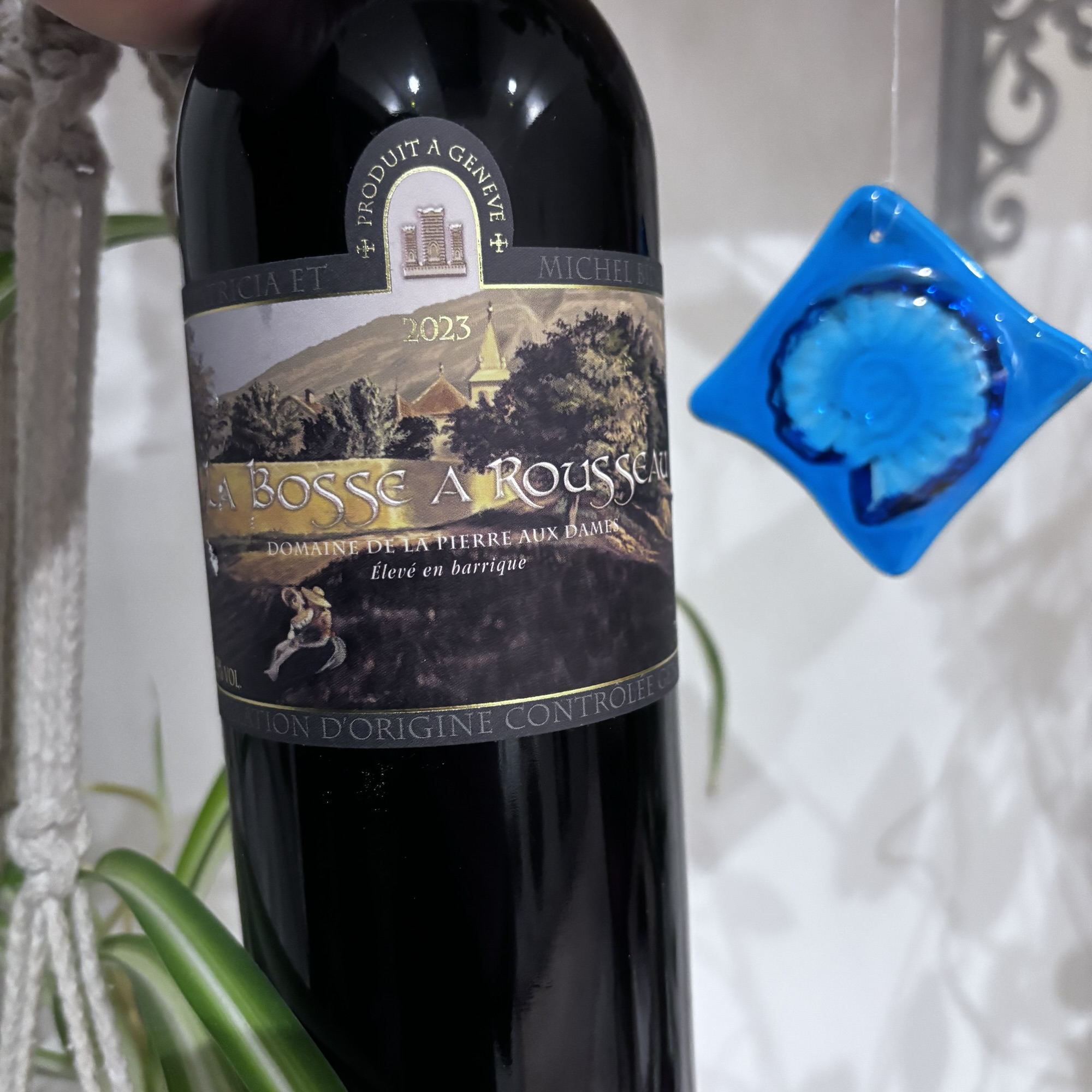
La Bosse à Rousseau 2023, Domaine de la Pierre aux Dames (Geneva, Switzerland)
I’ve never seen this Geneva estate before. They also appear to go by the name of Maison Forte, not to be confused with Maison Forte in Southern Burgundy, in France. They are located at Trionex, east of St-Julien-en-Genevois, in the vineyards to the south of the city. Viticulture is organic, and this cuvée is a blend of Gamaret and Garanoir, aged in barrique. These are interesting Swiss-bred varieties which are beginning to be planted in the UK and are worth looking out for.
Despite its very dark colour the tannins have become well integrated after a couple of years in bottle. It’s only 12.5% abv, which is promising. The bouquet is a mix of pleasant red and darker fruits. The palate has that super-concentrated darker fruit flavour without any real complexity, though you do get a touch of leather and spice in there. Nice acids too.
In fact, I’d expected the wine to be way less approachable than it is. It went very nicely with a rich mushroom and pasta dish, to which a few glugs of the same wine were added. Just what we wanted for an early in the week bottle. It was a gift from Swiss friends so I’ve no idea what it costs and online searching didn’t help. Chances of finding it might be minimal, but we enjoyed it.
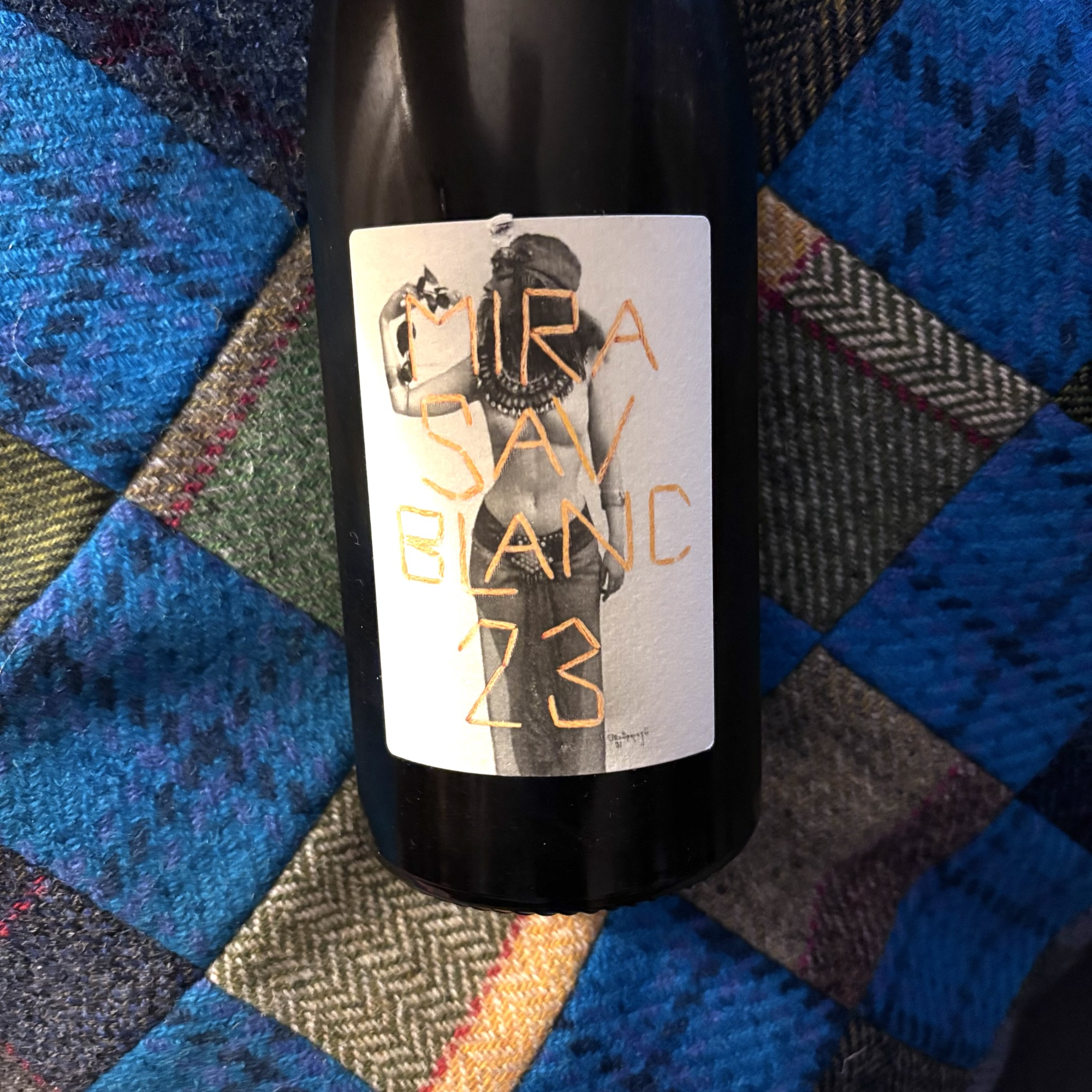
Sauvignon Blanc 2023, Mira Nestarcová (Moravia, Czechia)
Mira has been making her own wines for a few years now, alongside those of her husband, Milan Nestarec, and they seem to get better with every vintage (they were, to be fair, pretty good to start with). Milan may have seen the competition because I think he’s now making his best wines ever as well.
I’ve bought all of Mirka’s wines at some point, but among those I show them to it is her Sauvignon Blanc which seems to excite them most. I drank a couple of the wonderful 2022s, but this ’23 differs from that in one obvious respect: 13.5% alcohol. The ’22 had just 11%. I think the 2023 was still made in a mix of steel and concrete, just a very different growing season.
Where the 2022 was redolent of pear and gooseberry, this vintage has peaches right from the off, on both nose and palate. The peach shows very clearly and with purity through the wine’s acidity, which isn’t shy. As the wine warmed in the glass we got ginger on the finish, which is long and mouth-filling. Electric! It is at least as good as that wonderful 2022, even better, I think.
I have the 2024 in the cellar, but I might keep it a little longer. This ’23 seems to have benefitted from age. The importer, whose web site I bought it from, is Basket Press Wines. The 2024 costs around £36, I think.
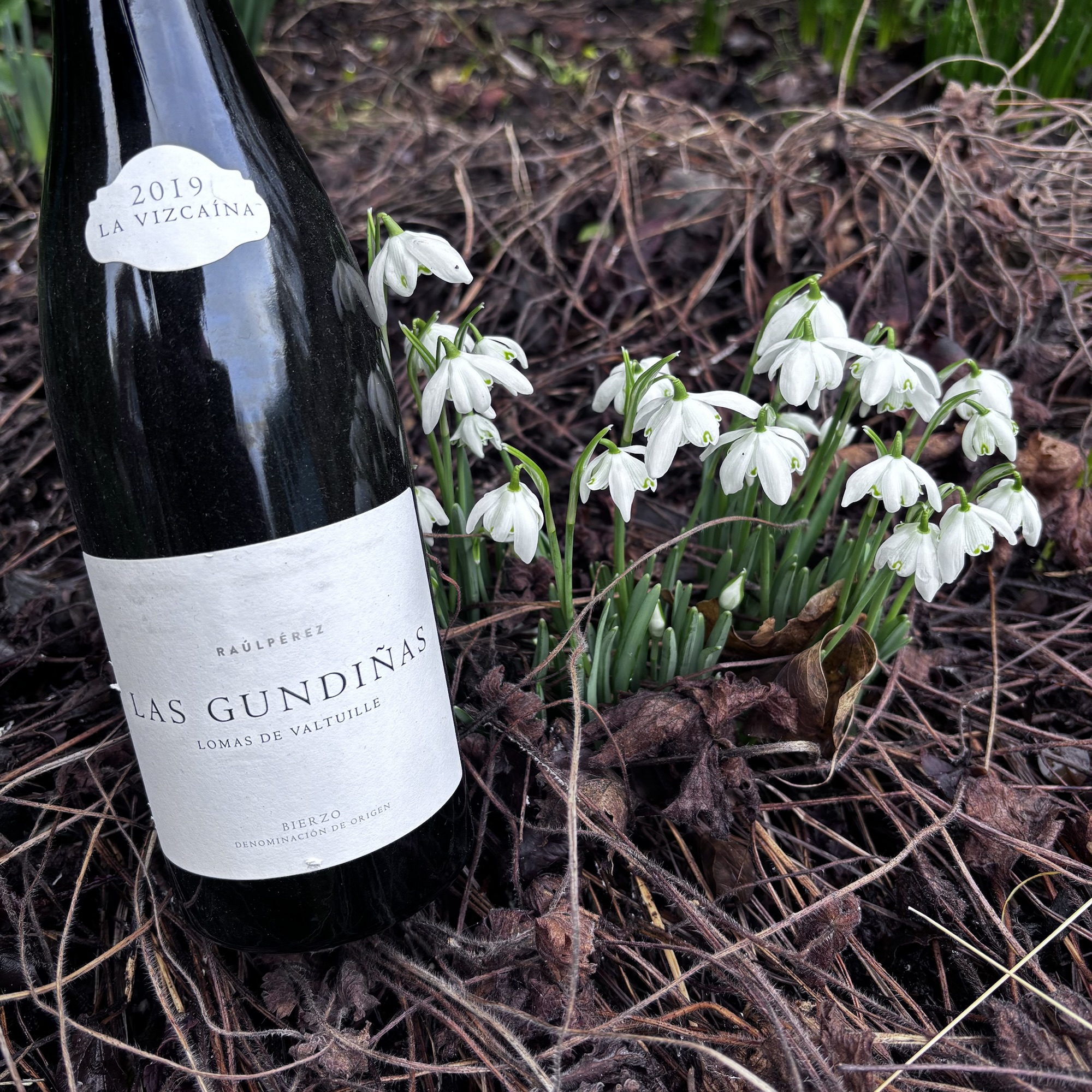
Las Gundiñas, Lomas de Valtuille La Vizcaina 2019, Raul Pérez (Bierzo, Spain)
This should perhaps rather be called “La Vizcaina Las Gundiñas”, but in any case, it is a Bierzo made from mostly Mencia, with other local varieties Alicante Bouschet, Saison and Estaladiña. The latter variety is made as a varietal wine by Bodegas Mengoba, run by Gregory Pérez. There are a few Pérez’s in Bierzo, Raúl being the man who perhaps started the whole Bierzo thing a couple of decades ago. For a time, he seemed to be the most talked about winemaker in Spain.
The vines for this rendition of Bierzo are on clay, and although the vineyards are on slopes, they are not the old terraces which Raúl was famous for bringing back into production. The grapes see a whole-cluster fermentation with a long maceration, taking place in used French oak.
The bouquet has scented cherry, blackcurrant and liquorice. There are some tannins evident but the fruit on the palate is so silky that it smooths them considerably. Of all the sites Raúl bottles from Vizcaina, Las Gundiñas is considered the most sensual cuvée, and I’m not going to suggest that is wrong. For me, comparisons with Côte-Rôtie would not be far off the mark, but this is delicious despite being drunk quite young, and served almost cellar cool. A lovely bottle, this really hit the spot, both in terms of enjoyability, quality and value for money. Tastes like a fine wine to me.
I bought mine from The Solent Cellar (£28, still available).
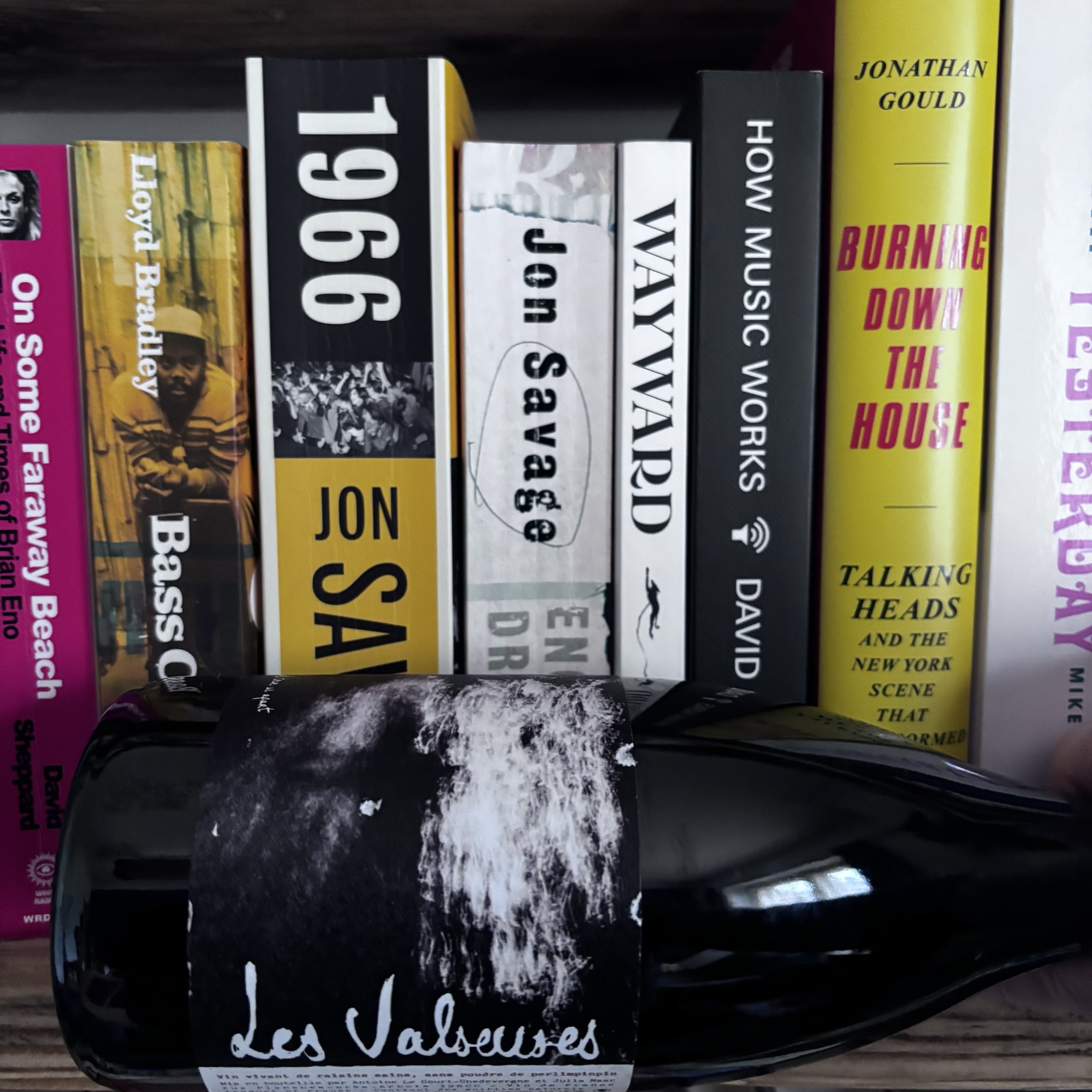
“Love Will Tear Us Apart” [2021] Vin de France, Les Valseuses (Beaujolais fruit via Jura, France)
I cannot believe that the name which Antoine Le Court-Chedevergne and Julia Naar selected for their tiny domaine at Les Planches-près-Arbois was not chosen without being fully aware that “Les Valseuses” does not only mean innocently “the walzers” in French (insert shocked face emoji, perhaps). But their tiny domaine, of less than a hectare, is gaining plenty of attention for the wines they make, not for its potentially rude name.
Antoine and Julia met in Brazil. With such a tiny vineyard right now, they are also buying grapes from further afield and this “Joy Division” cuvée is made from Gamay sourced in Beaujolais. Some sources suggest a dash of Mauzac, but others don’t mention it.
Les Planches, where Antoine and Julia have their winery, and also a lovely-looking guest house called Casa Antolià, is just a few kilometres south of Arbois in great walking country. Here, the River Cuisance which flows (occasionally pretty swiftly) through Arbois, appears from beneath the limestone plateau. You have the famous Cirque du fer à Cheval and the Cascade des Tufs, and you also have some great walks, a couple of which I describe in a popular article for Arbois visitors, on this site. If you want to see how rivers work their way through limestone scenery like this, you can visit the underground cave system known as the Grottes des Moidons (when they eventually re-open).
Anyway, I digress. This Gamay, and maybe a little Mauzac or maybe not, is macerated as whole bunches, and spends ten months in tank to age. Nothing is added, including zero sulphur, and there’s no manipulation like pigeage or pumping over etc. Antoine worked for Alice Bouvot at L’Octavin and this only reinforced his natural wine philosophy. The result is supremely fresh and zippy, with great acidity. There was no volatility but you know it’s a natural wine with no sulphur muting the wild berry fruit. It’s kind of on a tightrope but not falling off. That tension is part of its appeal.
I found this bottle in the Dundee shop of Fife organic brewery, Futtle. Their wine range, all natural, is tiny but usually has a few gems. I don’t believe they have this any longer, so I’m glad I spotted it. Never pass a wine shop as you never know what you might miss. Beattie and Roberts may be the importer. They list a large number of wines from Les Valseuses on their web site. I don’t know them at all but I soon shall as they will be at a trade tasting at Montrose (Edinburgh) early next month.
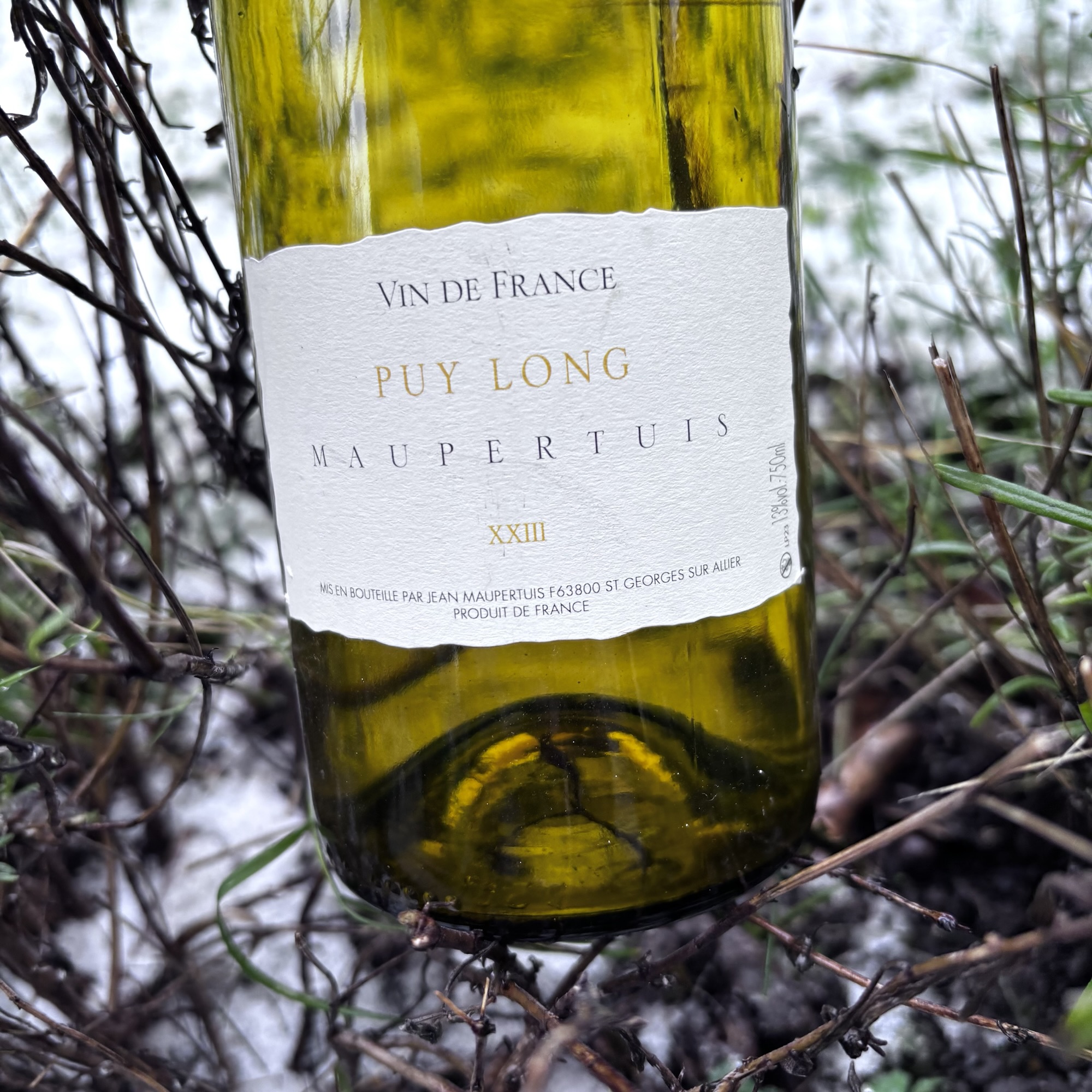
Puy Long XXIII (Vin de France), Jean Maupertuis (Auvergne, France)
The Auvergne has been above the radar for a good while now, but it was once a remote and wild place, perfect for a few wild winemakers to make their mark away from too many people and chemicals. Some consider Jean Maupertuis the “original” natural wine maker in the region, via his first estate, Domaine de Peyra (now no longer operating), in the 1990s.
Jean moved on to farm around 3.5 hectares, mostly at Saint-Georges-sur-Allier. He works primarily with Gamay, both the famous local Gamay d’Auvergne and Gamay Noir à Jus Blanc (the Beaujolais strain). Expect Maupertuis wines to be wholly natural with no added sulfites, to be unfiltered and to be mostly made by whole berry fermentation. I can’t remember a year when I have not drunk at least one of his wines for a very long time, but this might be the first time I have bought this Puy Long.
We have a still Chardonnay off Jean’s mix of limestone and volcanic soils at Saint-Georges. The grapes see a direct, gentle, press and are both fermented and aged in used oak, on the lees. The bouquet is very aromatic and pure, mostly lemon citrus. The palate has both a lightness to it, as in a natural wine that seems to skip gently across the tongue, but also a bit of weight as well, nothing heavy, more a presence.
I’ve seen people suggest pairing it with sushi, which would work very well. We drank it with a stir-fry, with which I would usually be careful about pairing with Chardonnay, especially if it says 13% abv on the label. It doesn’t feel like a 13% wine. I think I can sum this up well by calling this “understated class”. It came from The Solent Cellar (£30), imported by Les Caves de Pyrene.
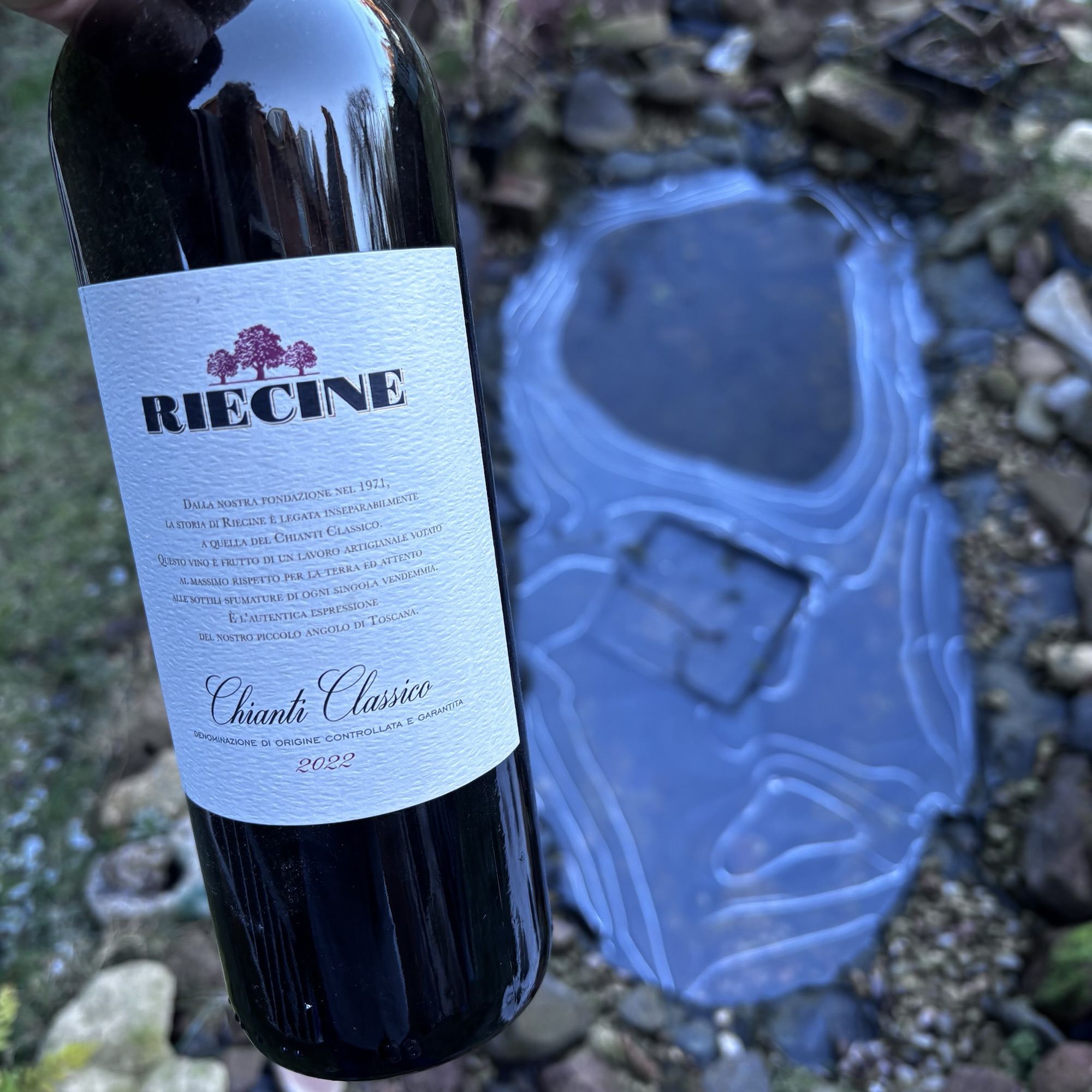
Chianti Classico 2022, Riecine (Tuscany, Italy)
Riecine produces organic and biodynamic wines from just north of Gaiole in Chianti, in the Classico Zone’s southeastern sector. Here, the vineyards are a little bit higher than the Classico norm. The estate is in the lee of Monte Grossi, which rises to just over 700 masl. It’s a much-used generalisation to say that the higher altitude in Chianti gives “fresher”, perhaps more acidic wines, but Riecine wines do always seem to have freshness. However, that is in part down to low intervention viticulture and winemaking, including using native yeasts rather than cultured ones.
The Riecine Classico is 100% Sangiovese, so no addition of minor varieties, or Merlot, heaven forbid. It is fermented in concrete and aged in oak, and the fruit is fully estate-grown from Gaiole. The bouquet is concentrated, with fine cherry fruit dominating, along with strawberry and redcurrant, but I also got a nice waft of tea leaf.
The palate has fine and grippy tannins, but paired with cherry fruit that has both depth and body. The thing I love about this wine, which I’ve drunk frequently if not recently, is that it will age well, without doubt, but it is also open to go for a nice youthful glass or two. We drank it with a haggis-based roast dinner and it went very well indeed, matching the peppery spice of the haggis. My bottle came from The Solent Cellar and I think cost around £24. The importer is Alliance Wine.

 David Crossley's Wide World of Wine